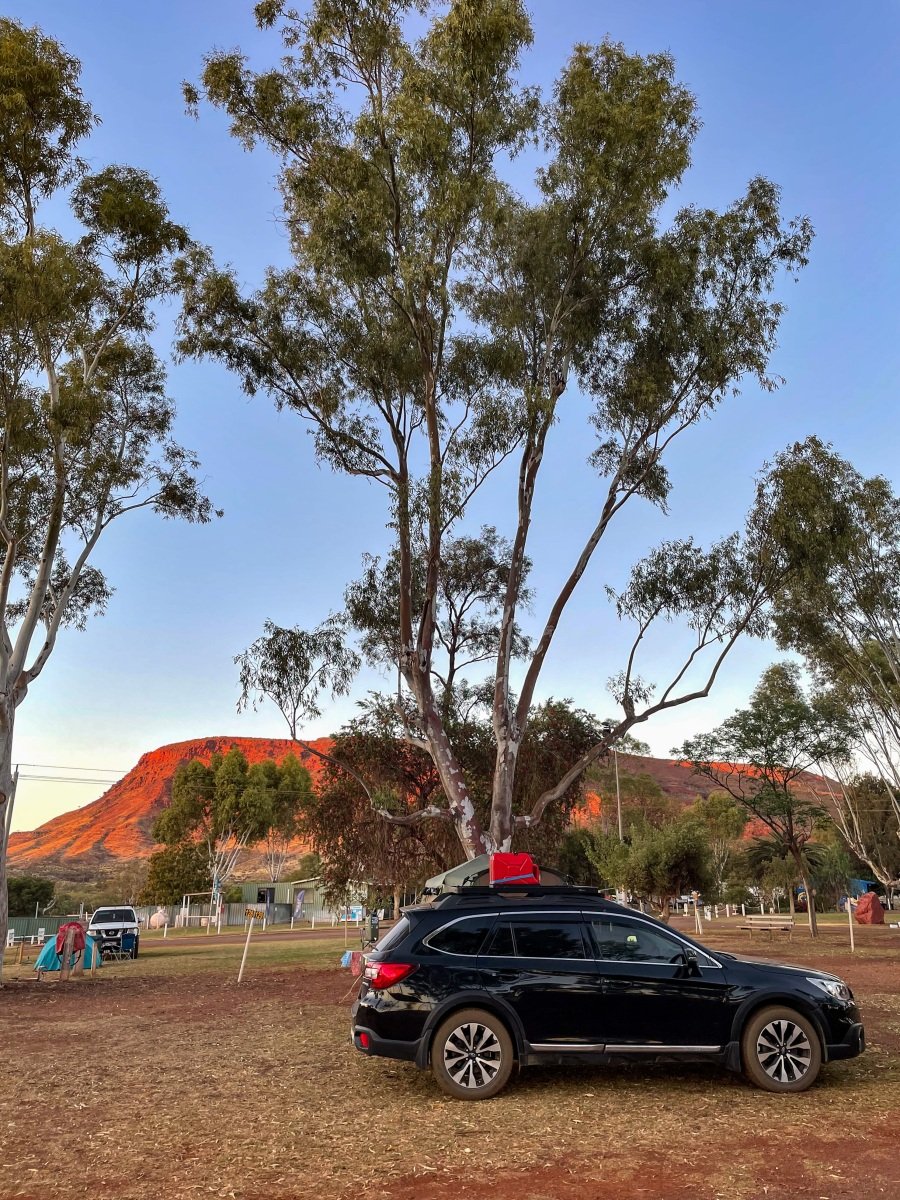
There are a few gorges to check out today, so we start pretty early. We’re spending today near the Dales Campground, tomorrow we’re driving a little further to get to the north of the park. Even though these are close to Tom Price, the drive is still about 1.5 hours each way.
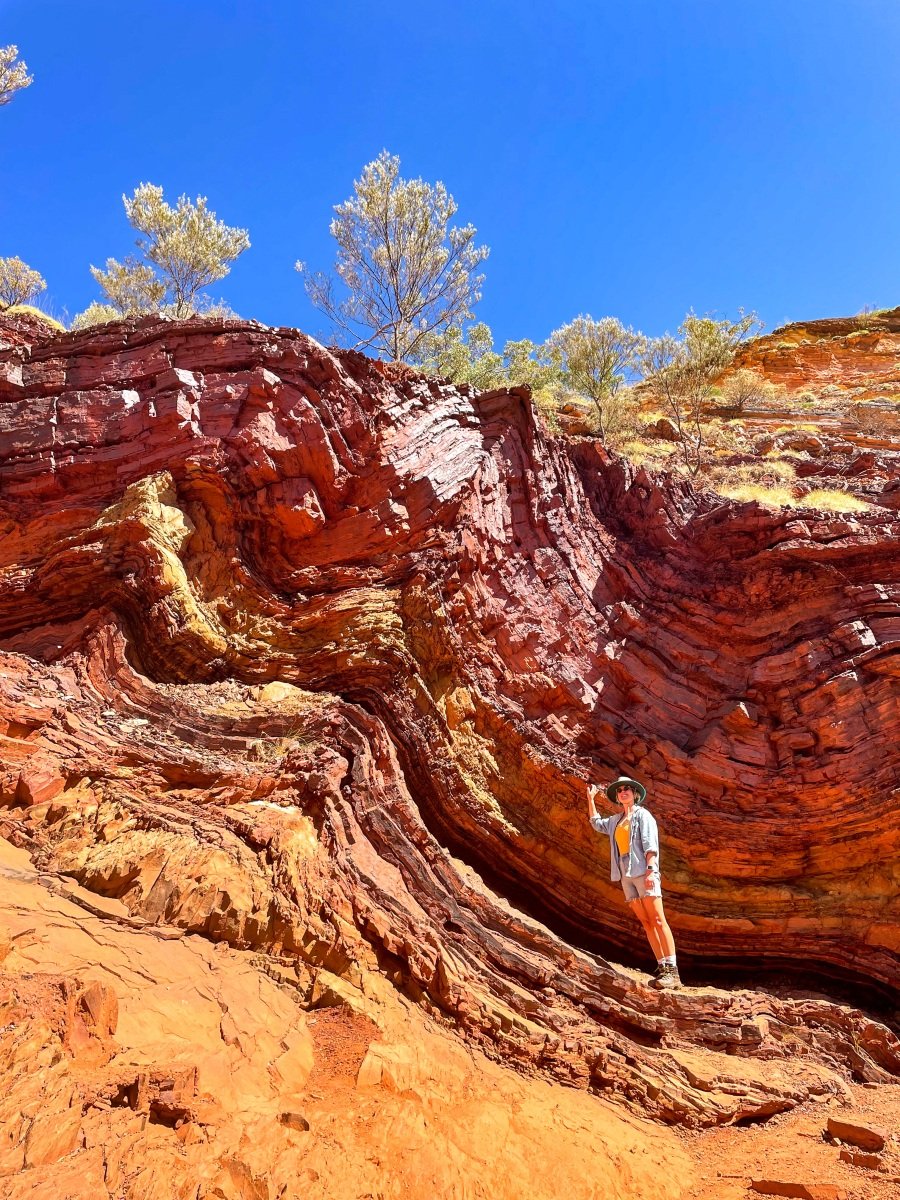
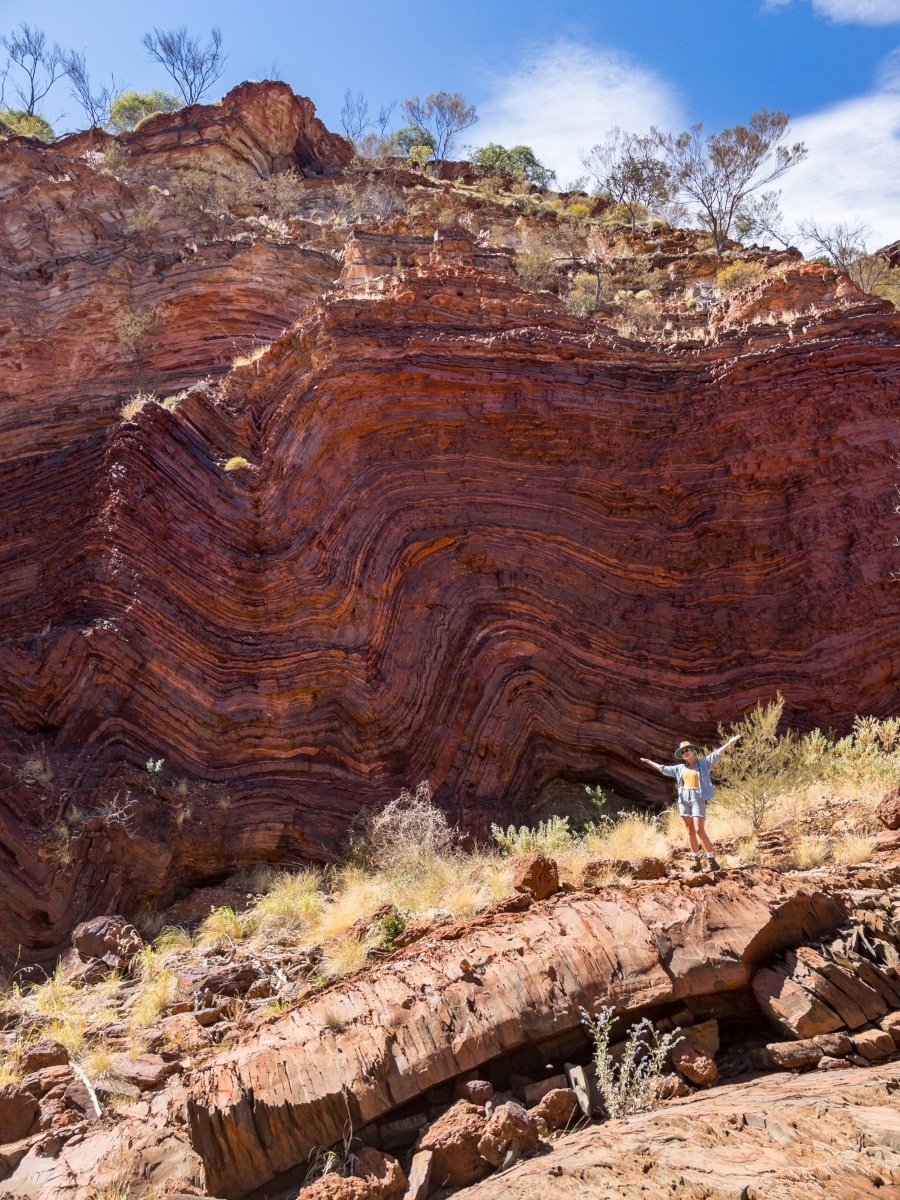
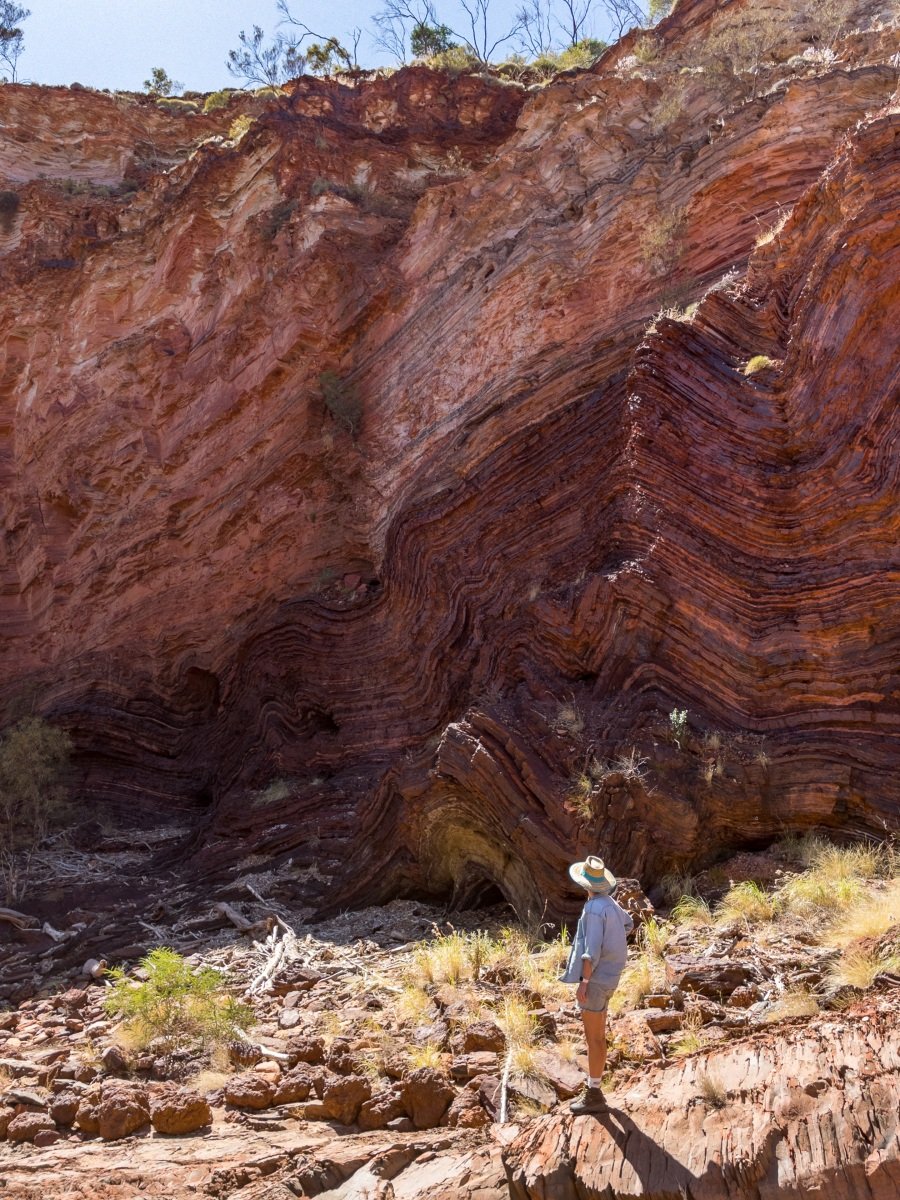
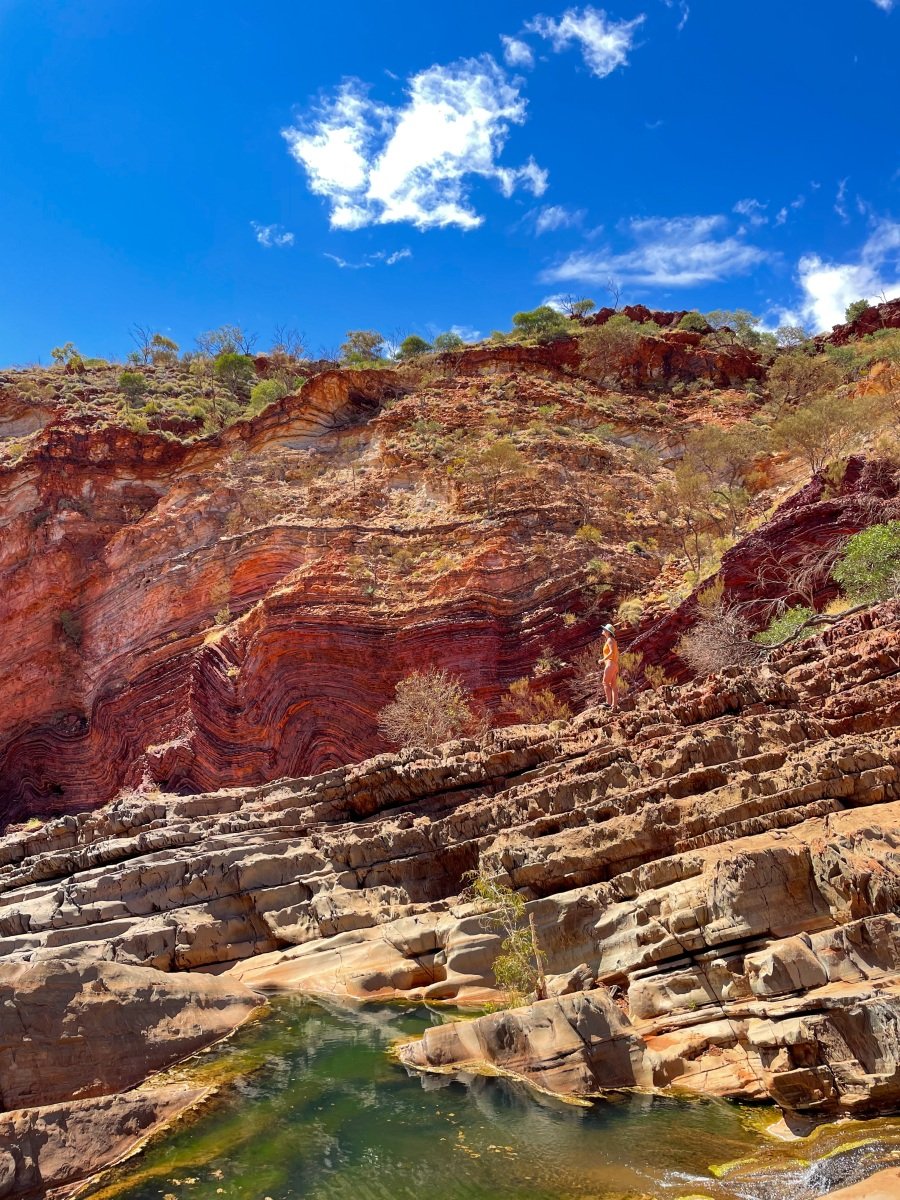
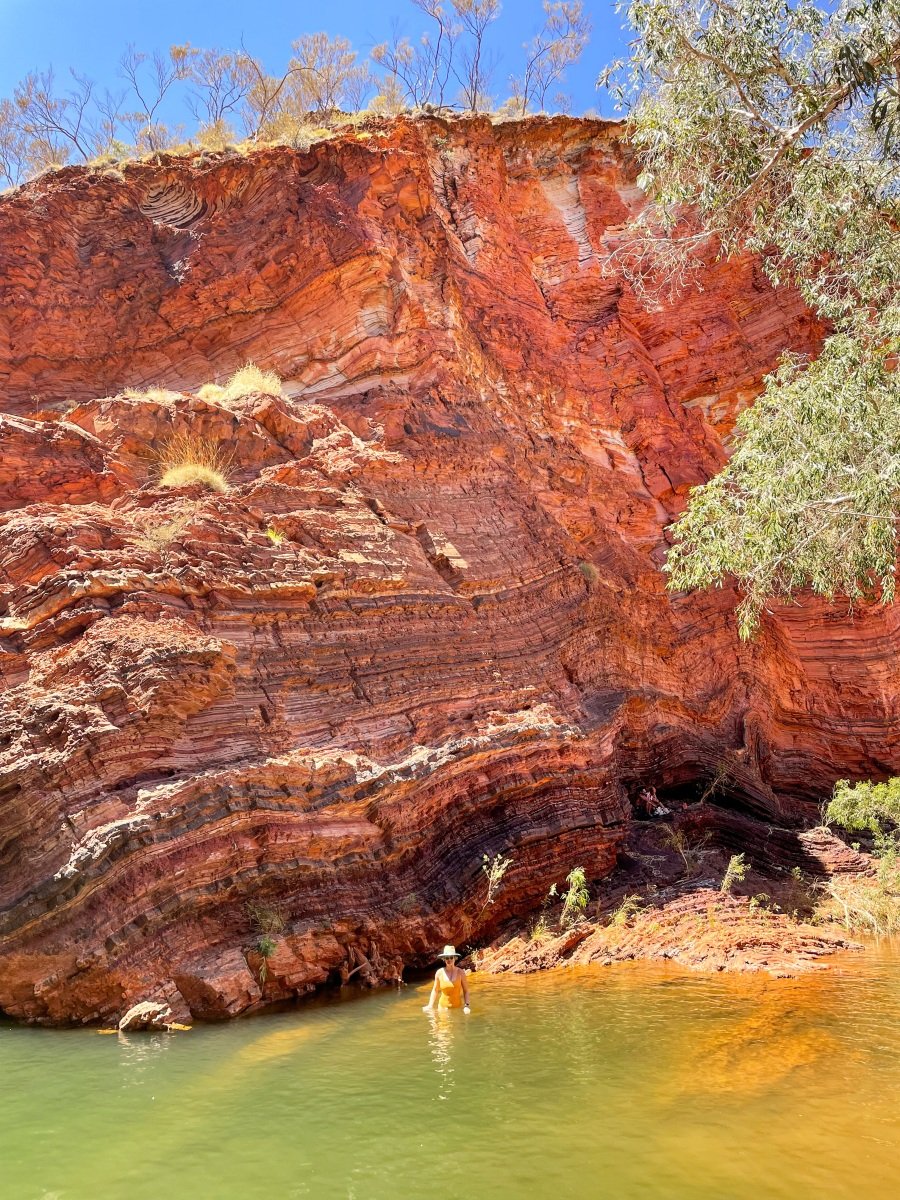
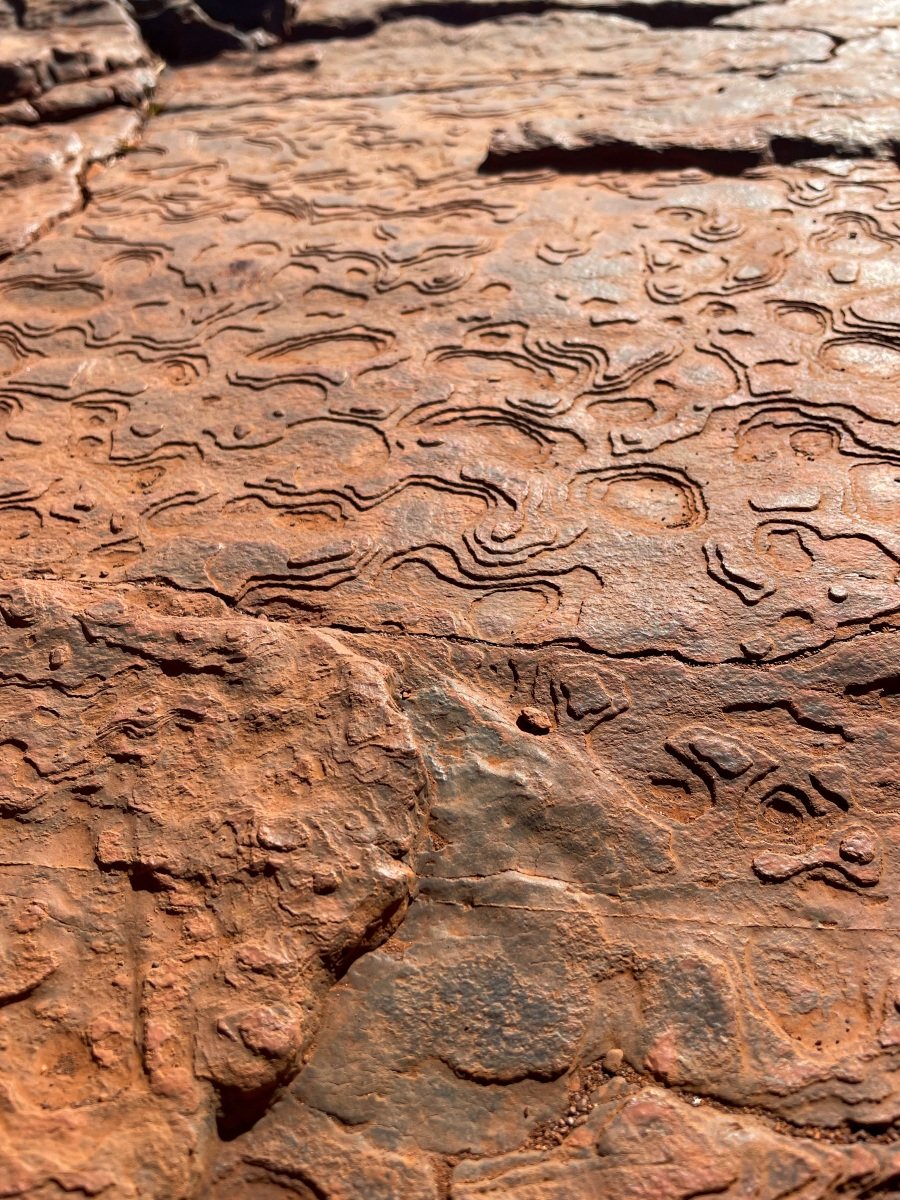
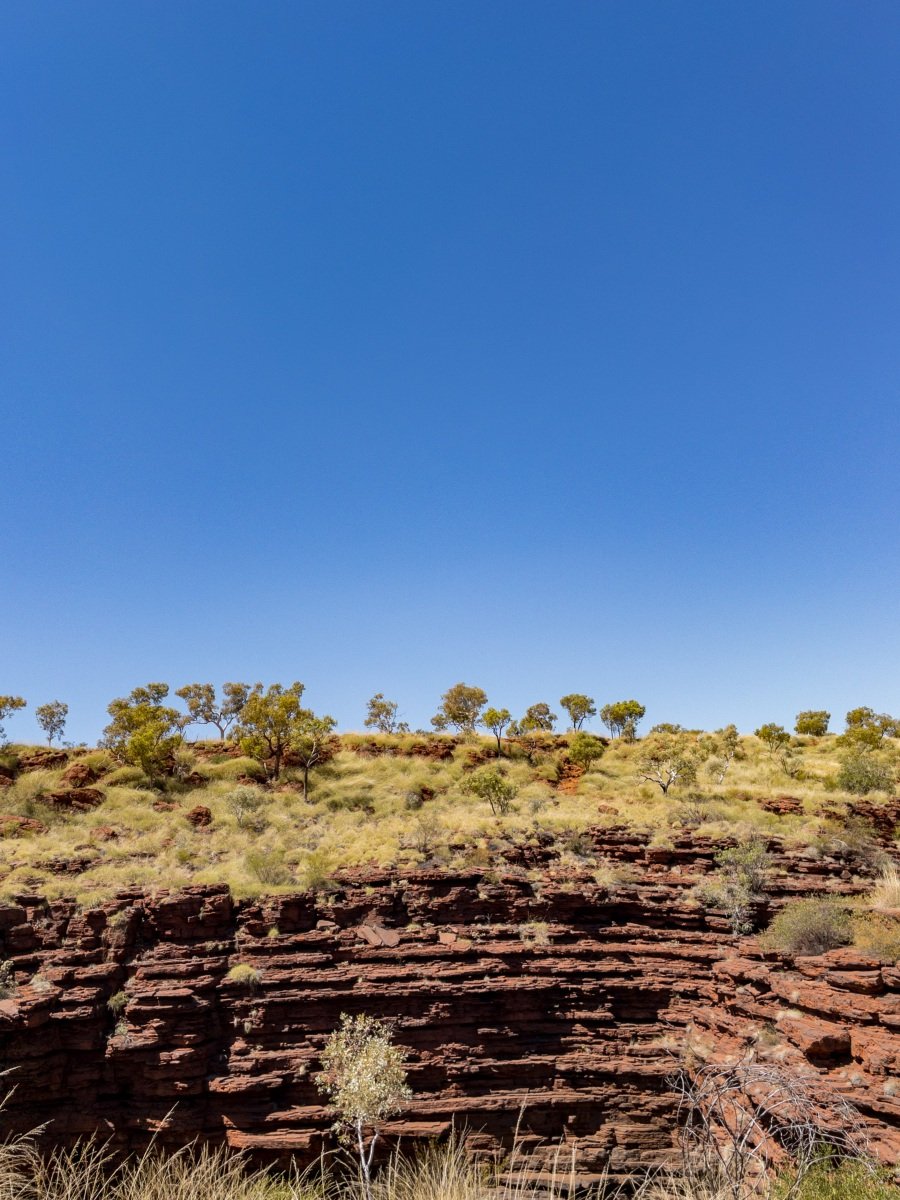
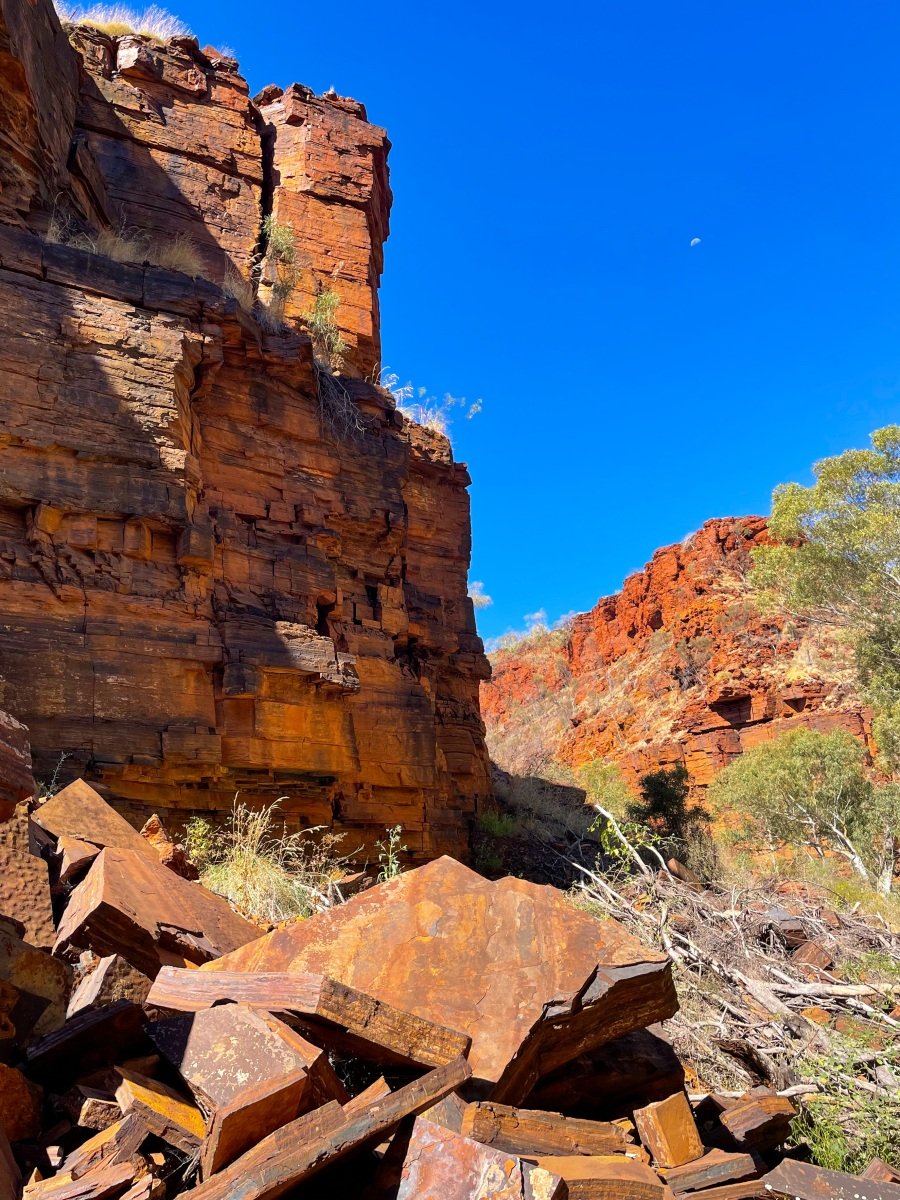
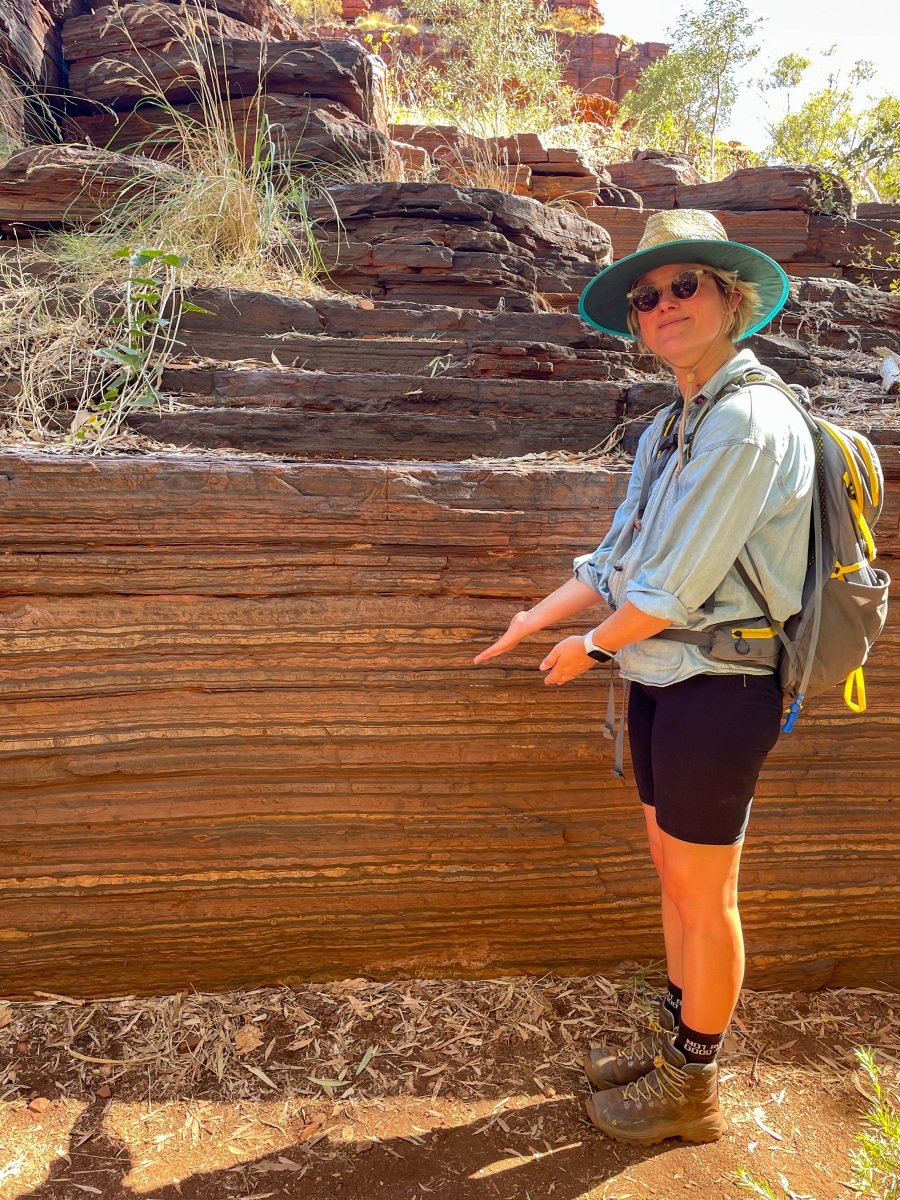
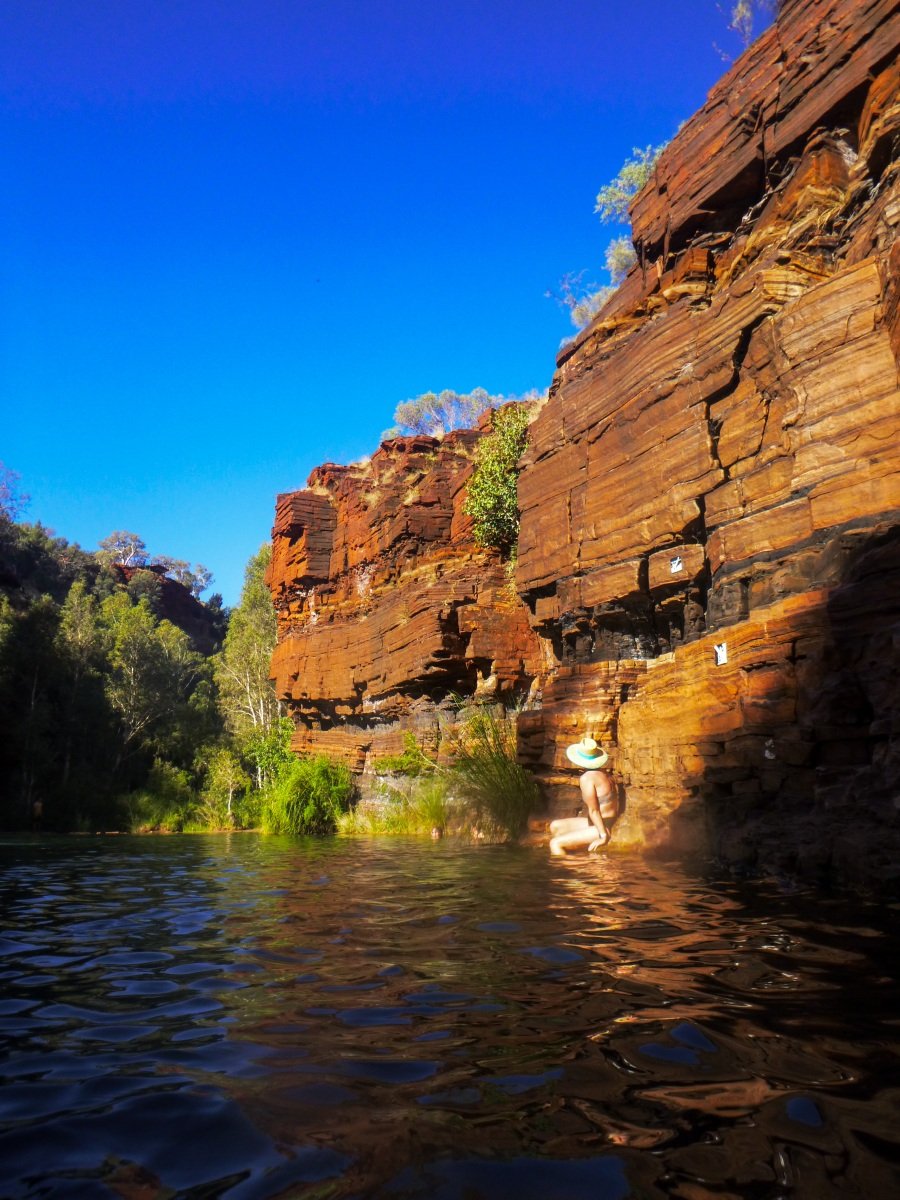
The rocks in Karijini are about 2.2-2.8 billion years old, about half the age of the earth. Much of the strata still lies in the horizontal planes as it was originally deposited (notable exception on tomorrow’s hike!). This areas supplies 40% of the worlds demand for iron ore – it’s very red here.
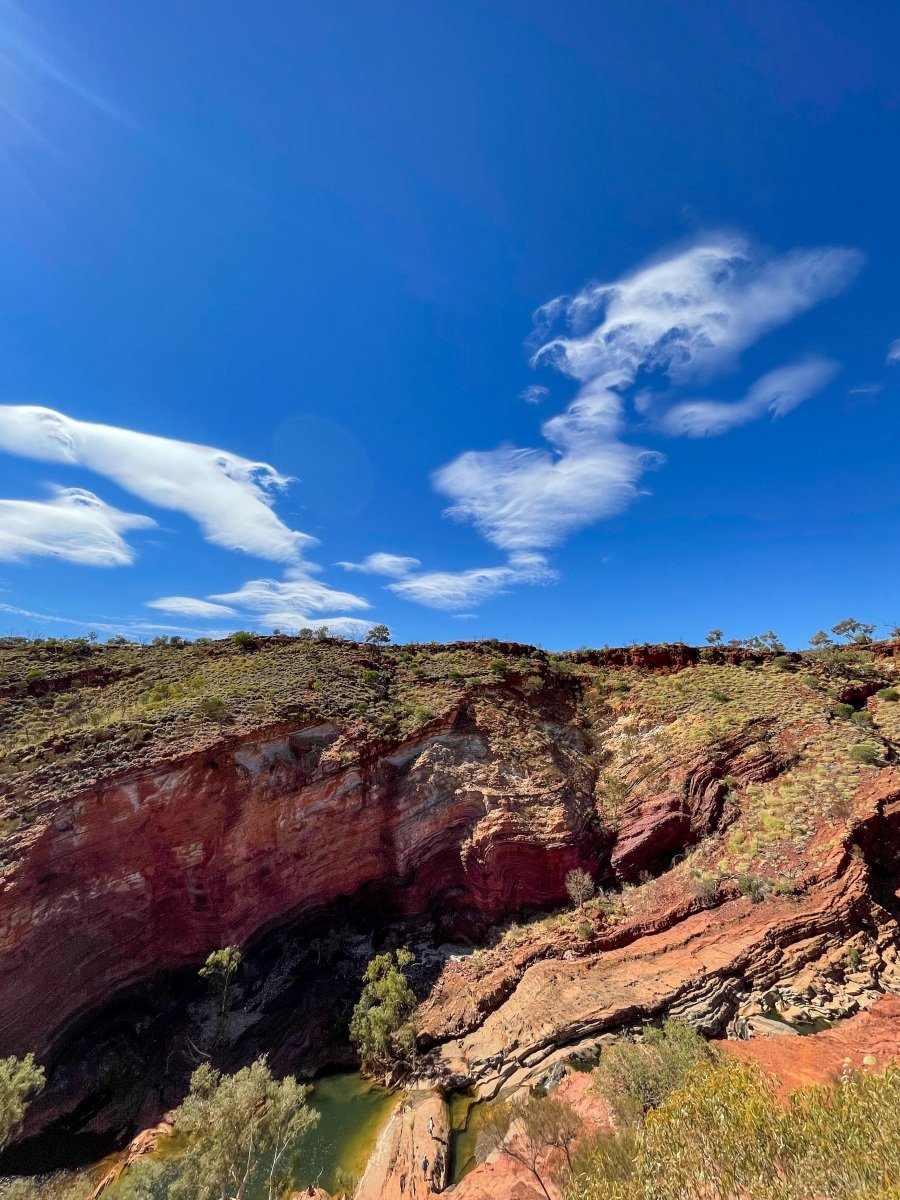
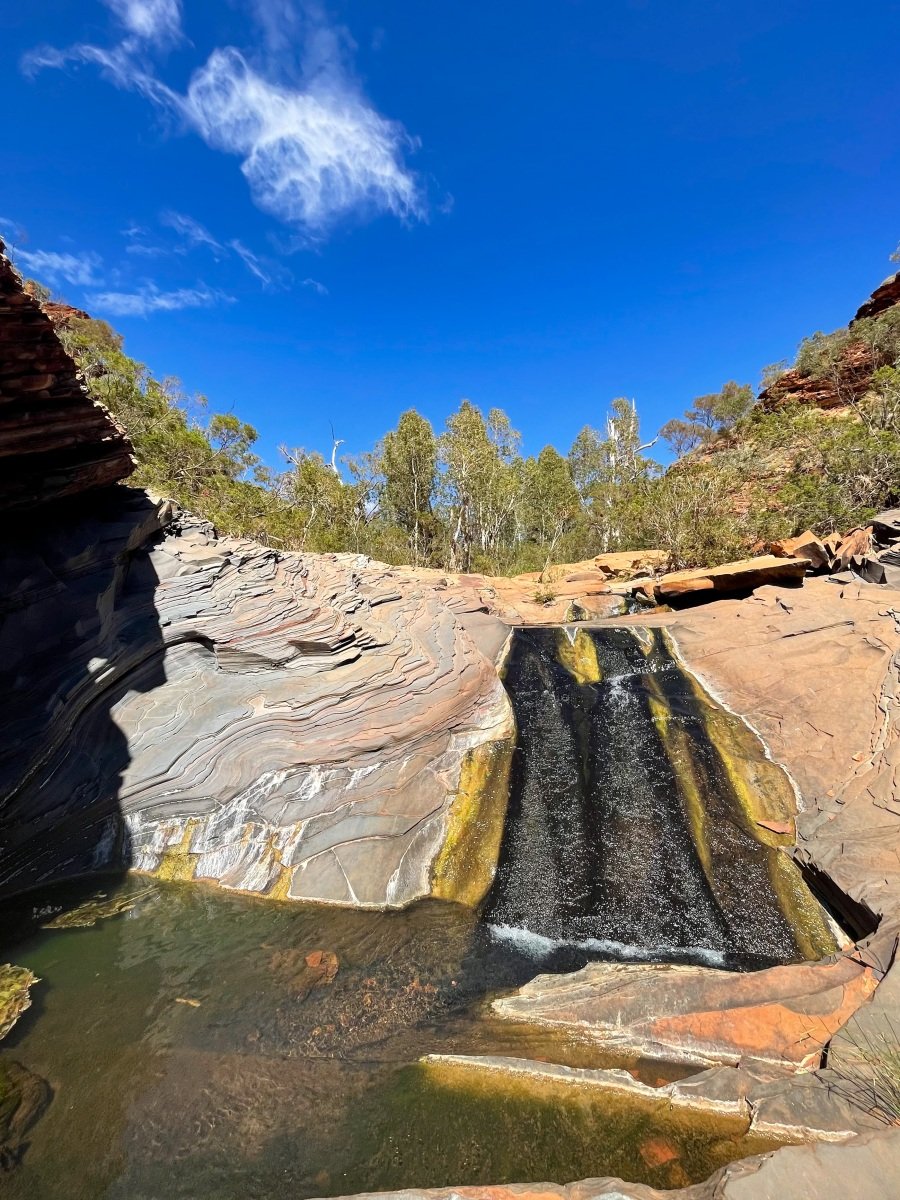
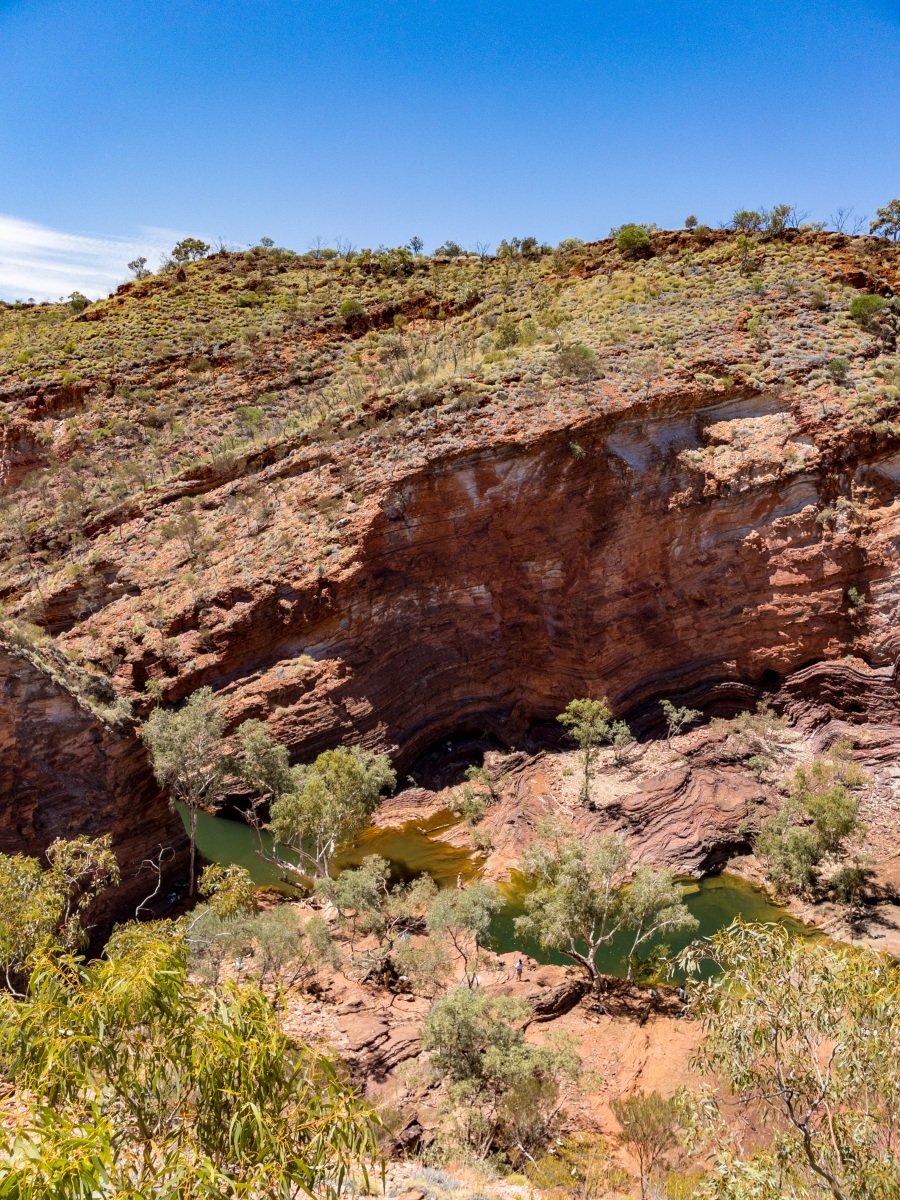
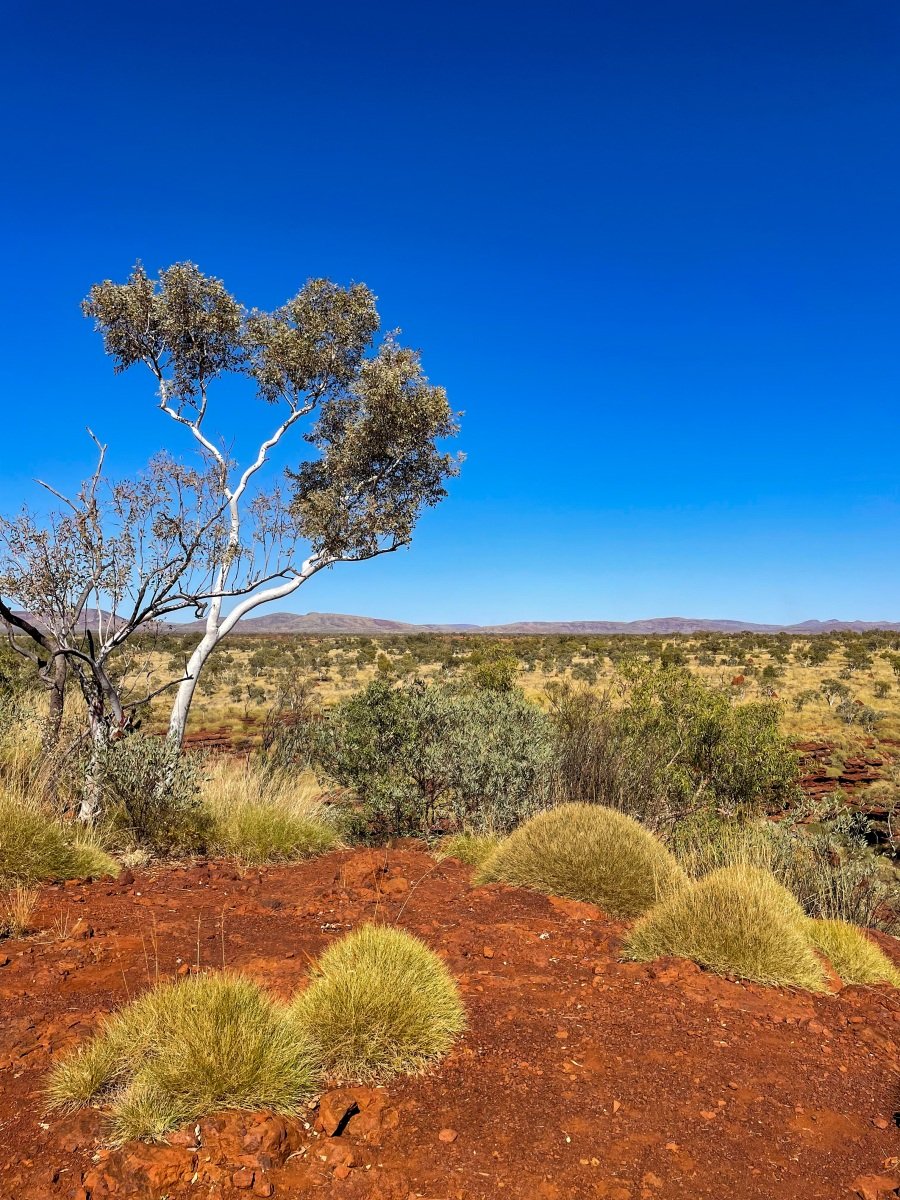
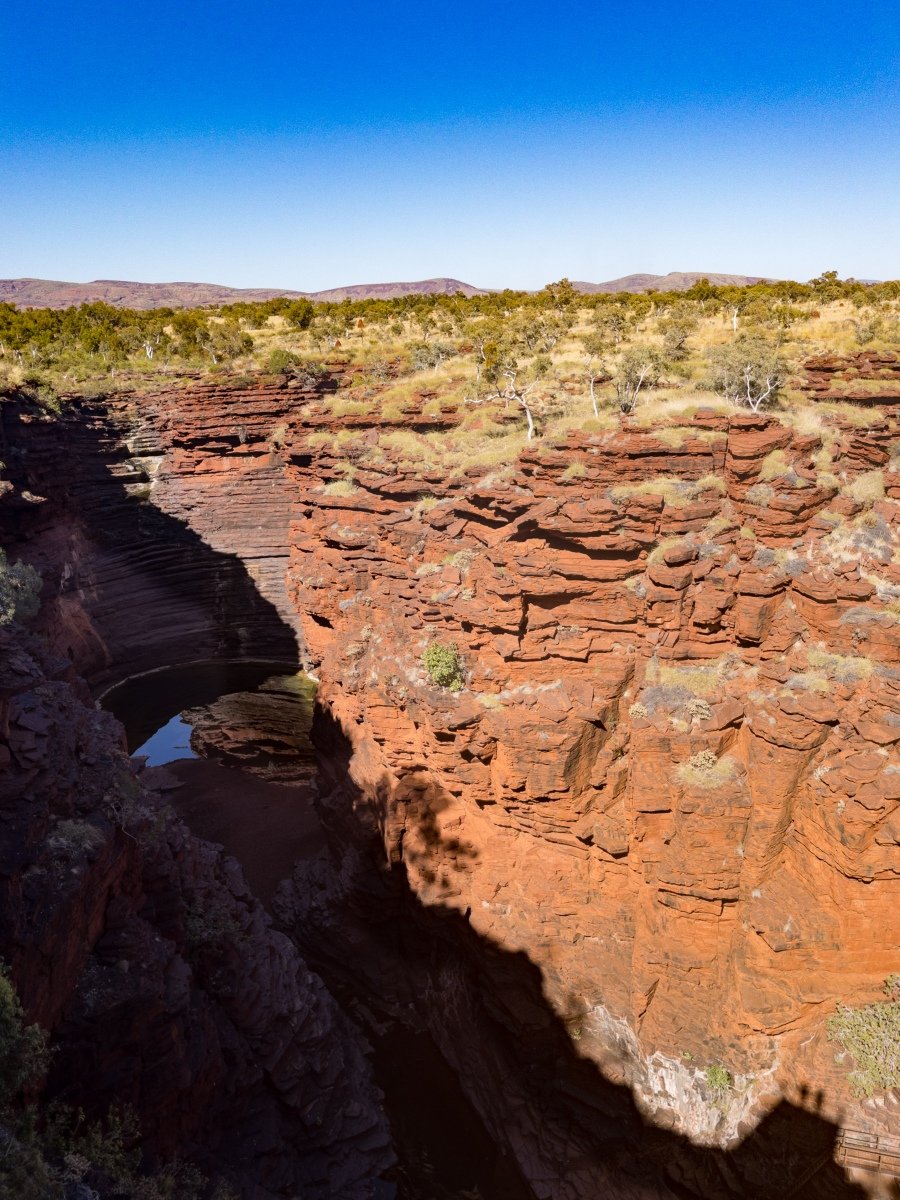
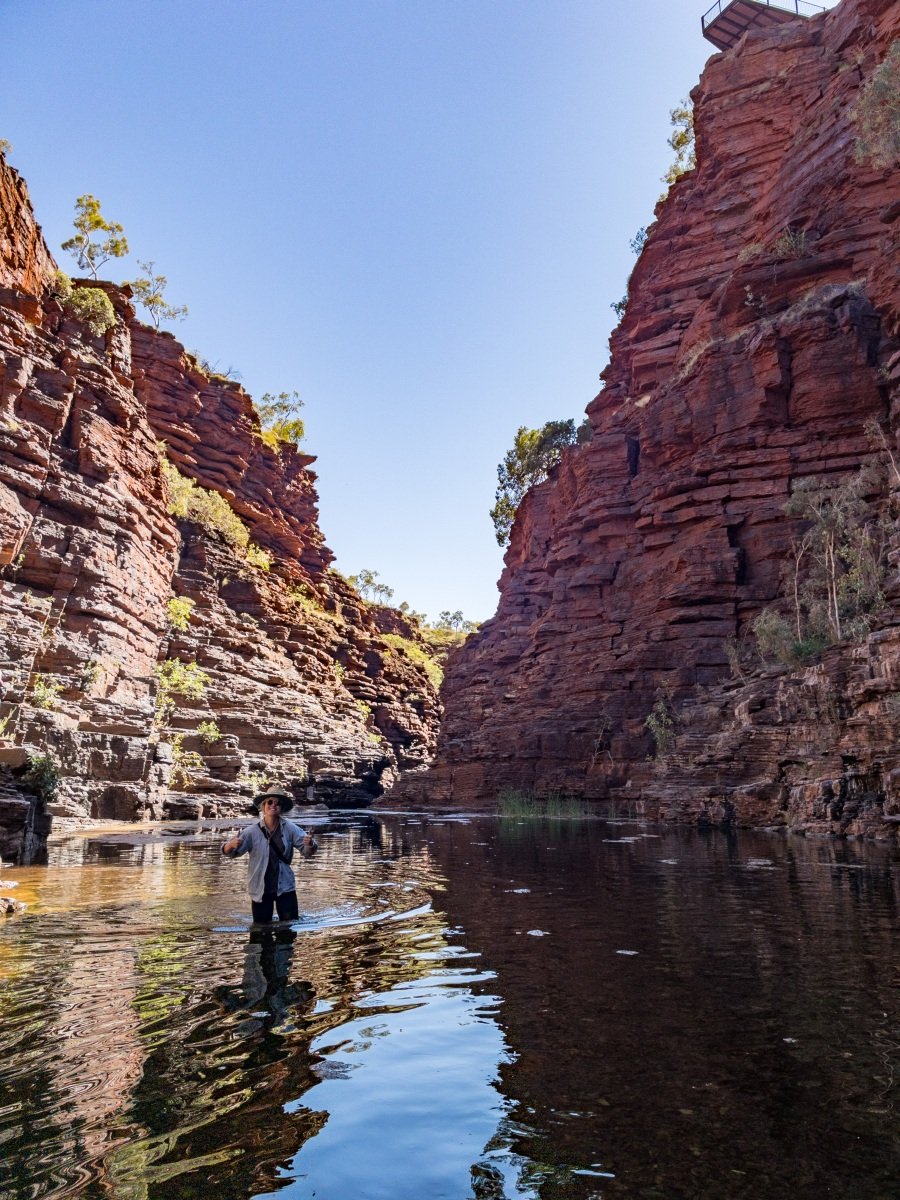
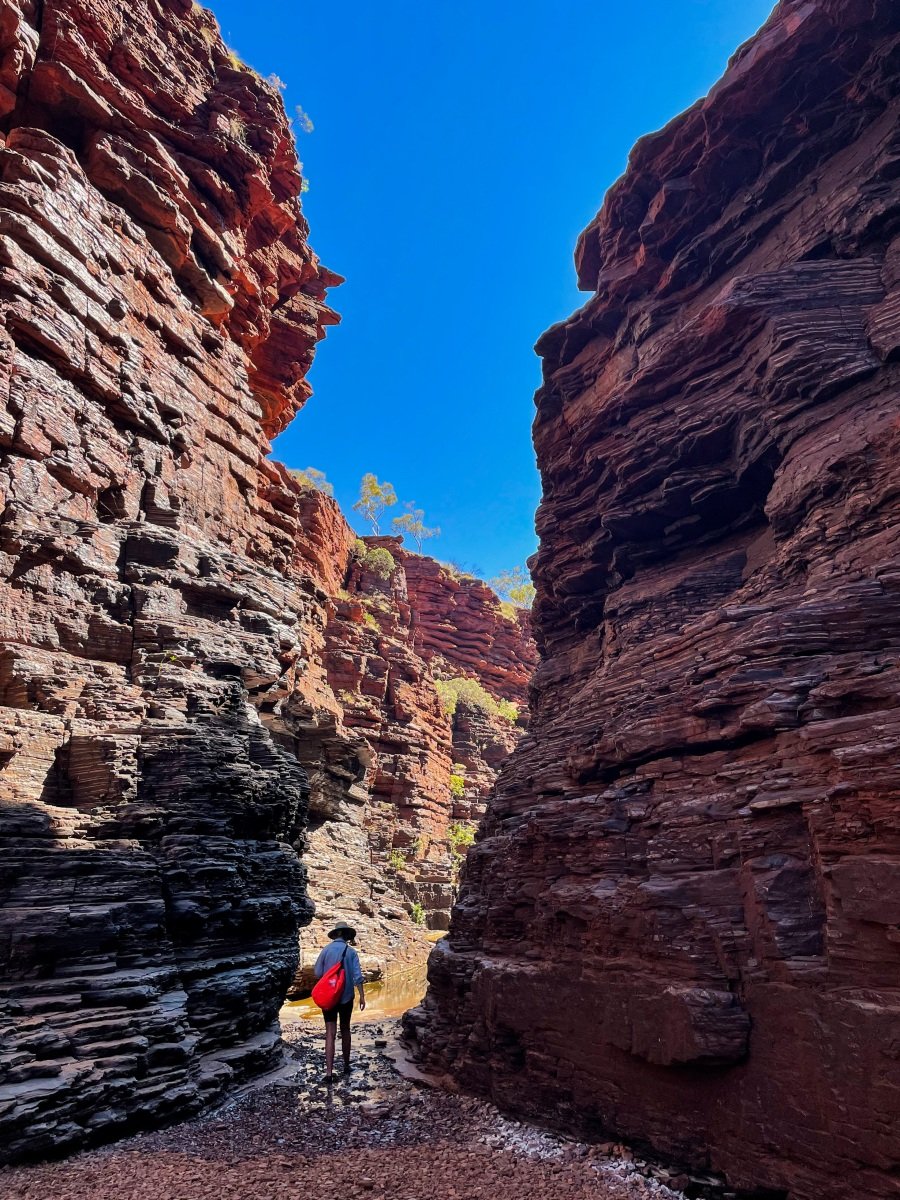
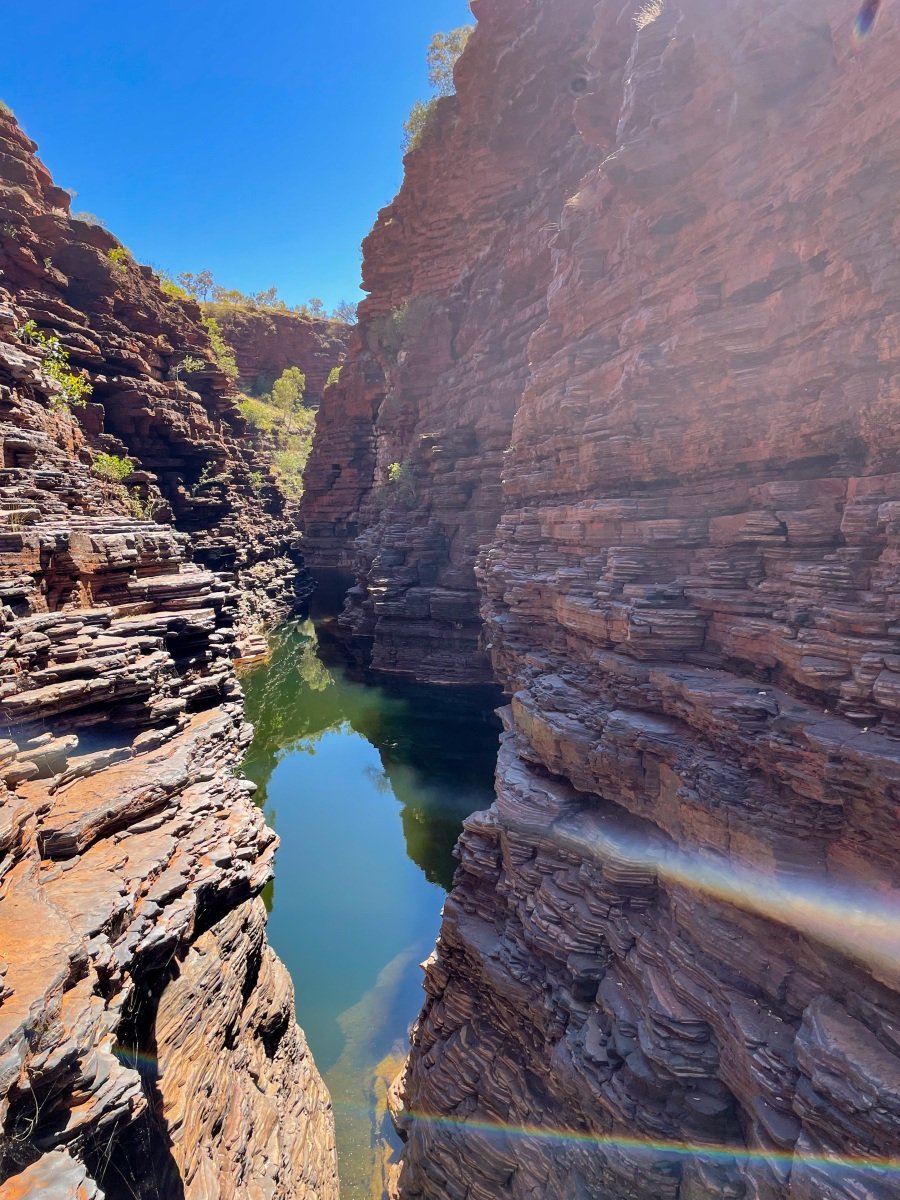
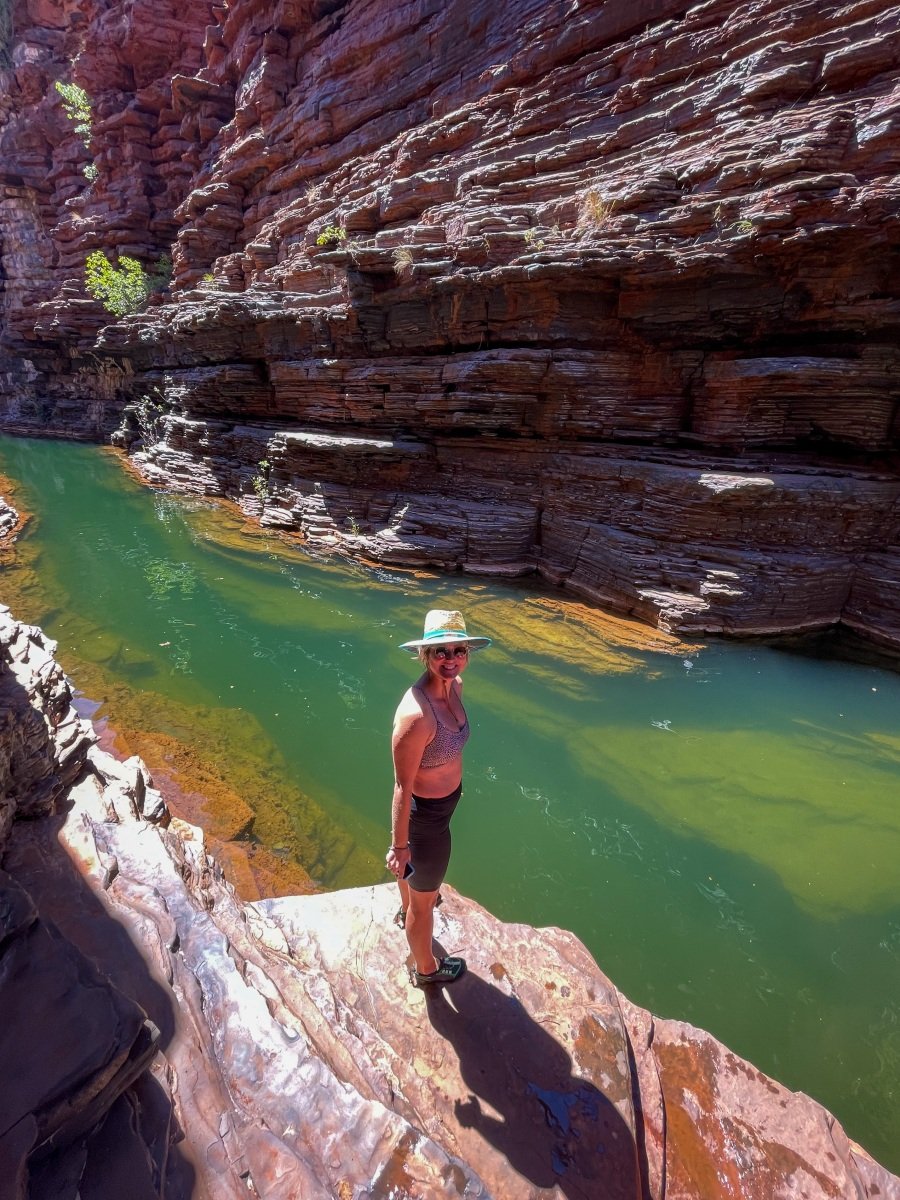
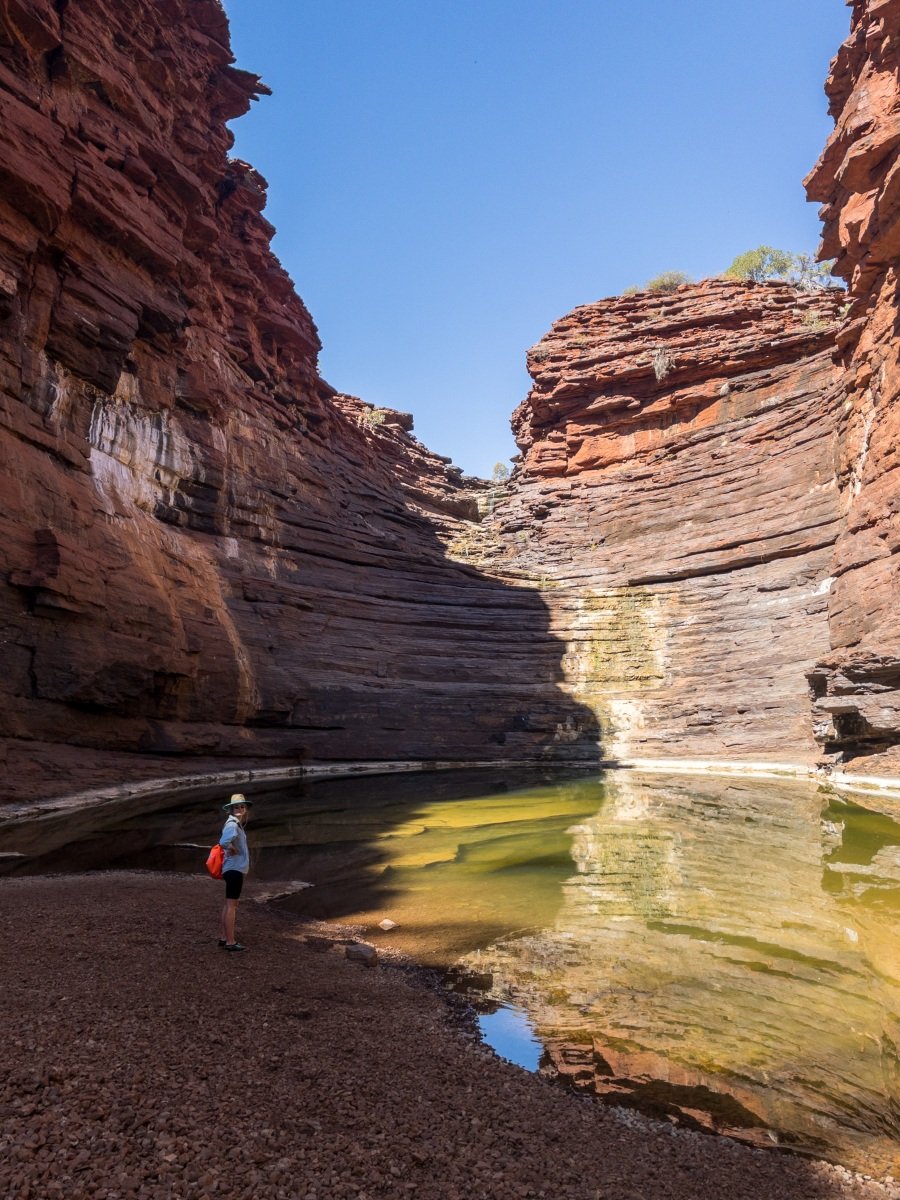
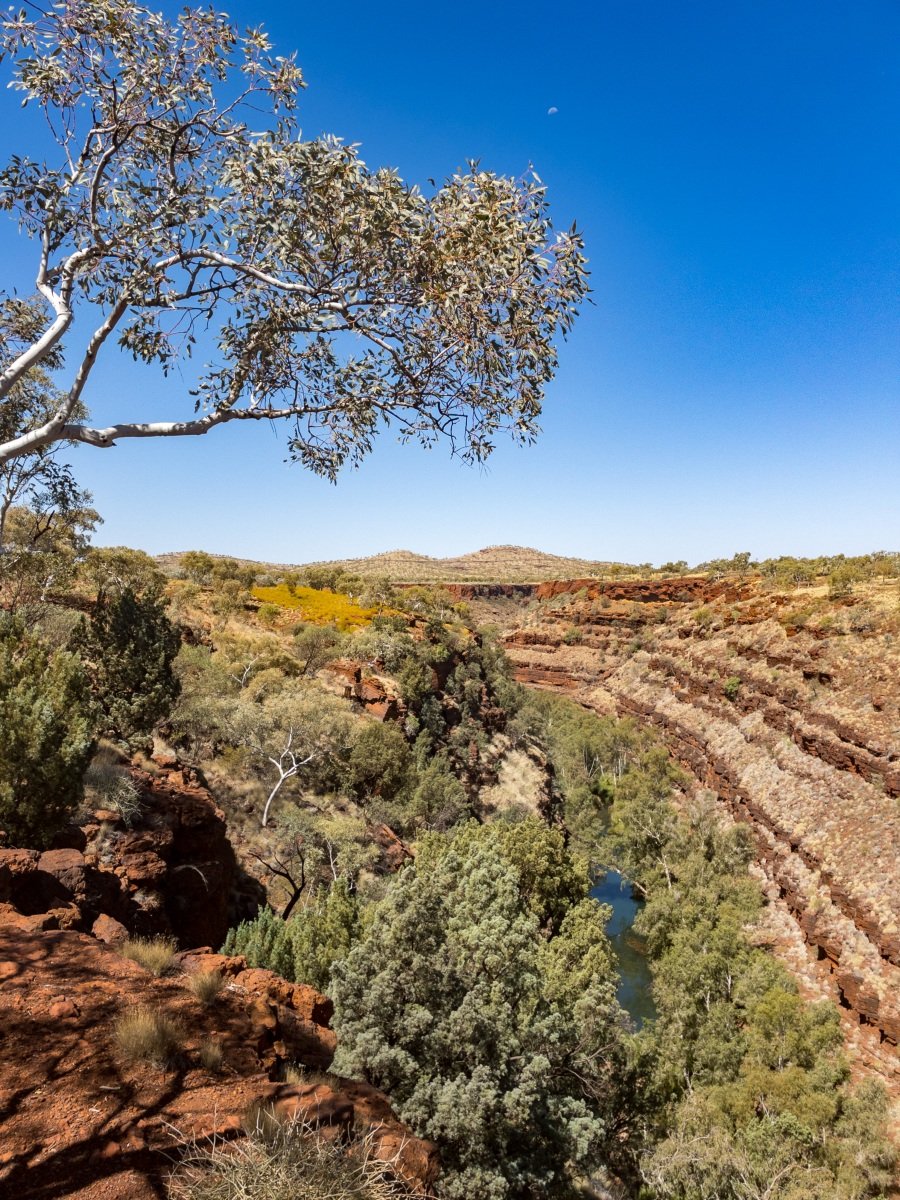
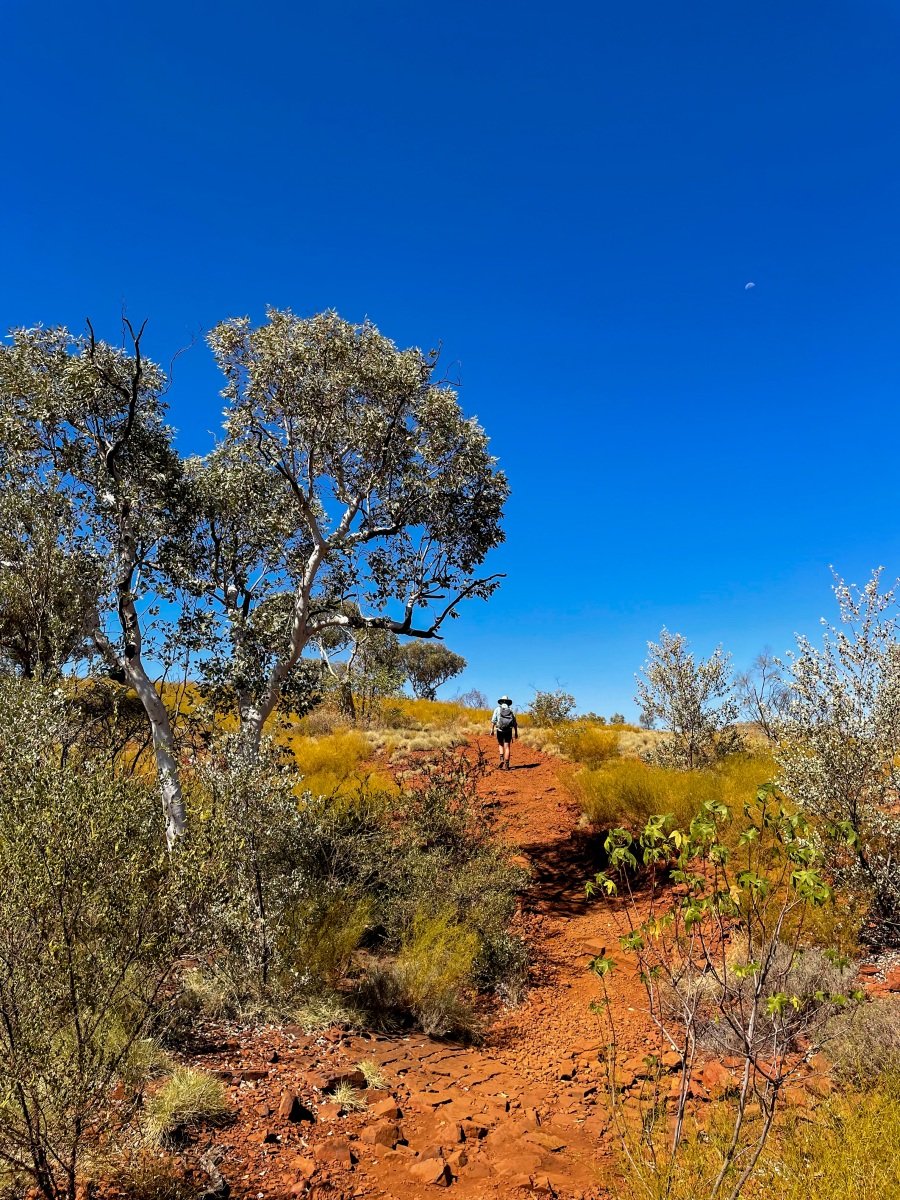
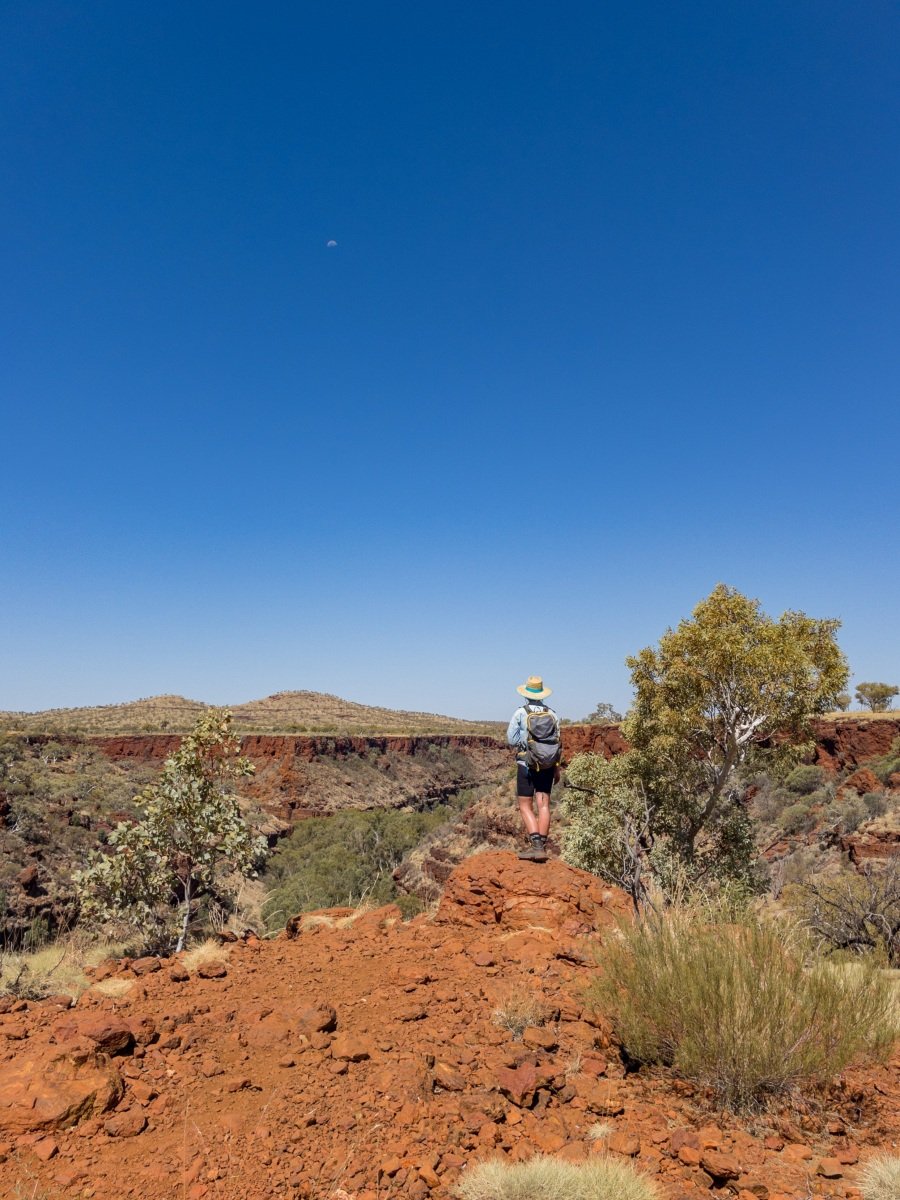
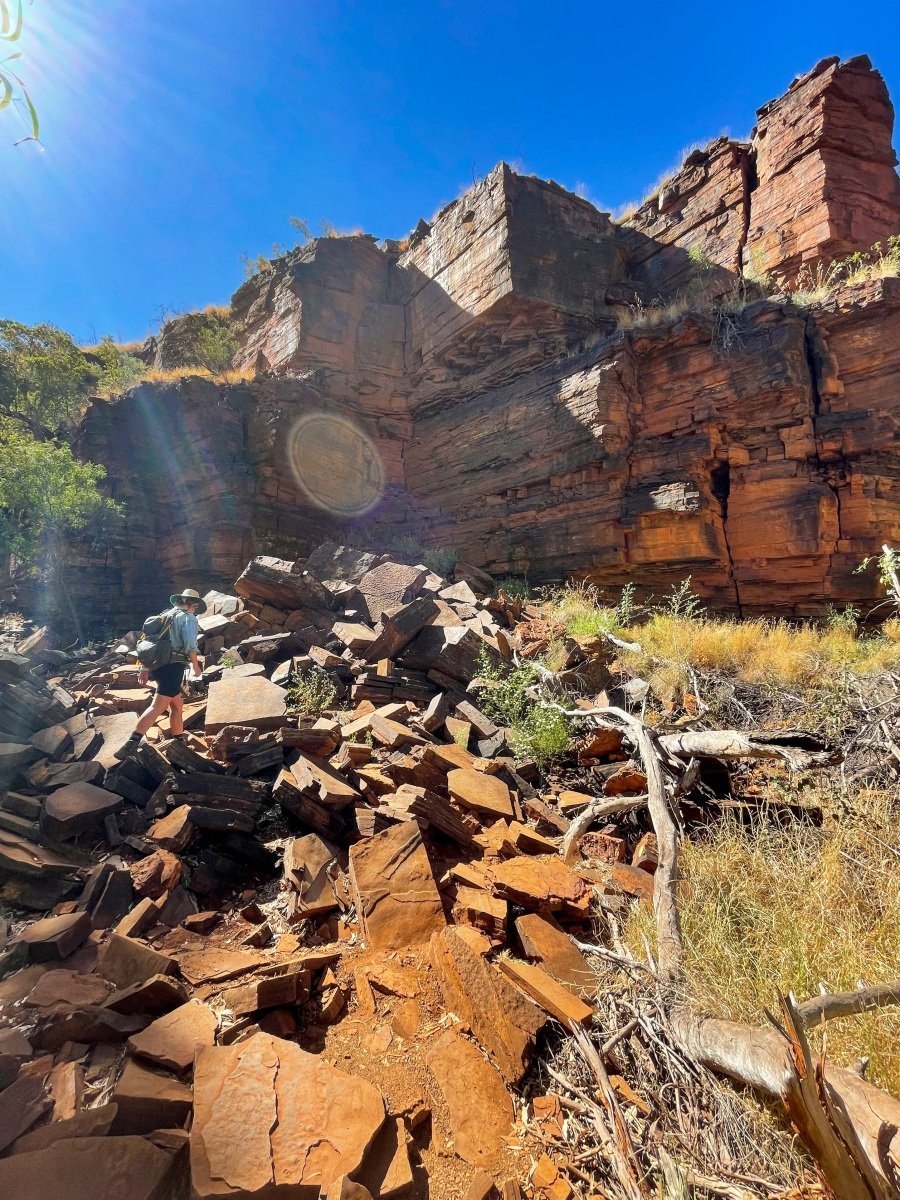
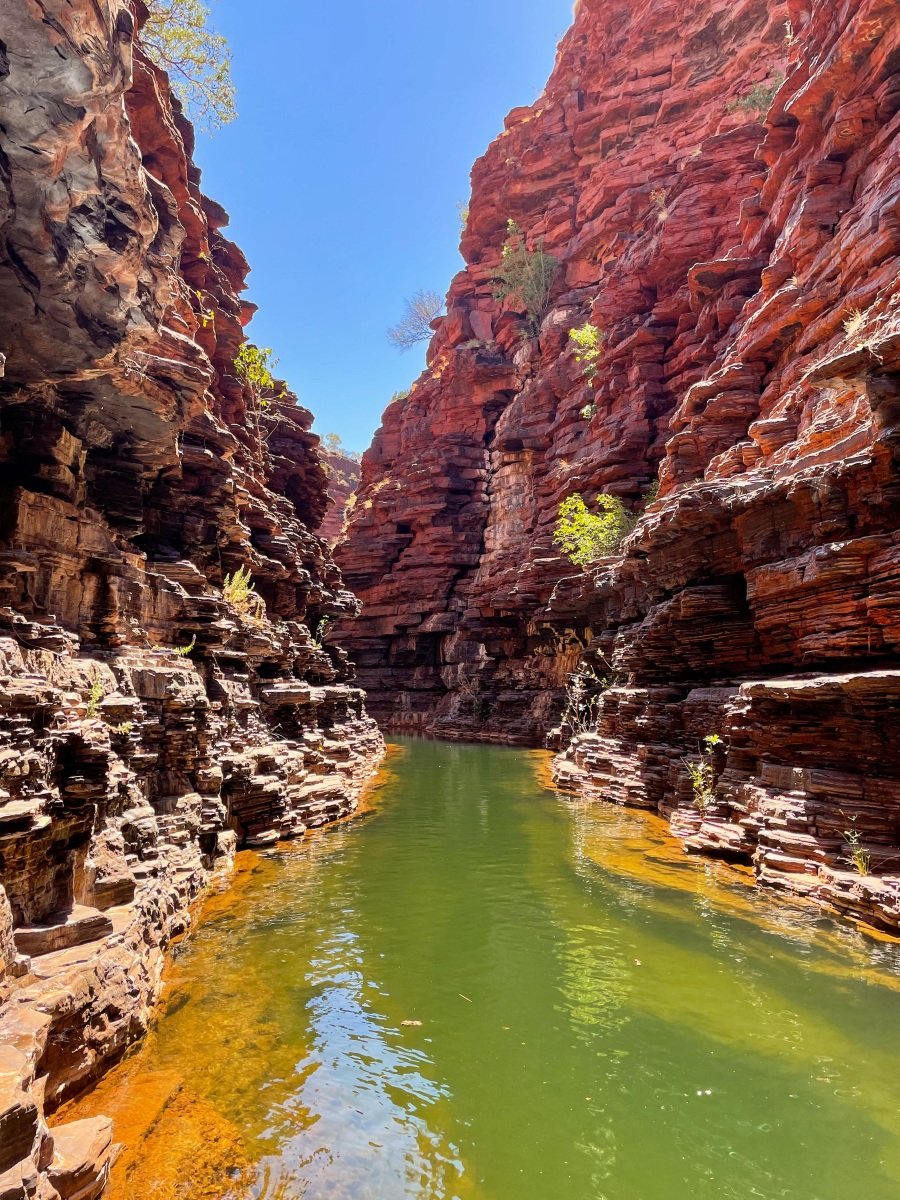
Our first walk is to Joffre Falls. We set off around the rim, looking down into the amphitheatre below. White gums dot the red landscape, casting long shadows in the morning light. Recently stairs have been installed for the climb into the gorge, I can see the fun of having to clamber down one big boulder at a time. The edges of the rock are cut straight and hard, creating a path like giant boxes piled into the corner of a room. The stairs/ladders make the climb more reliable, particularly as they’ll get wetter with more people heading back up again during the day.
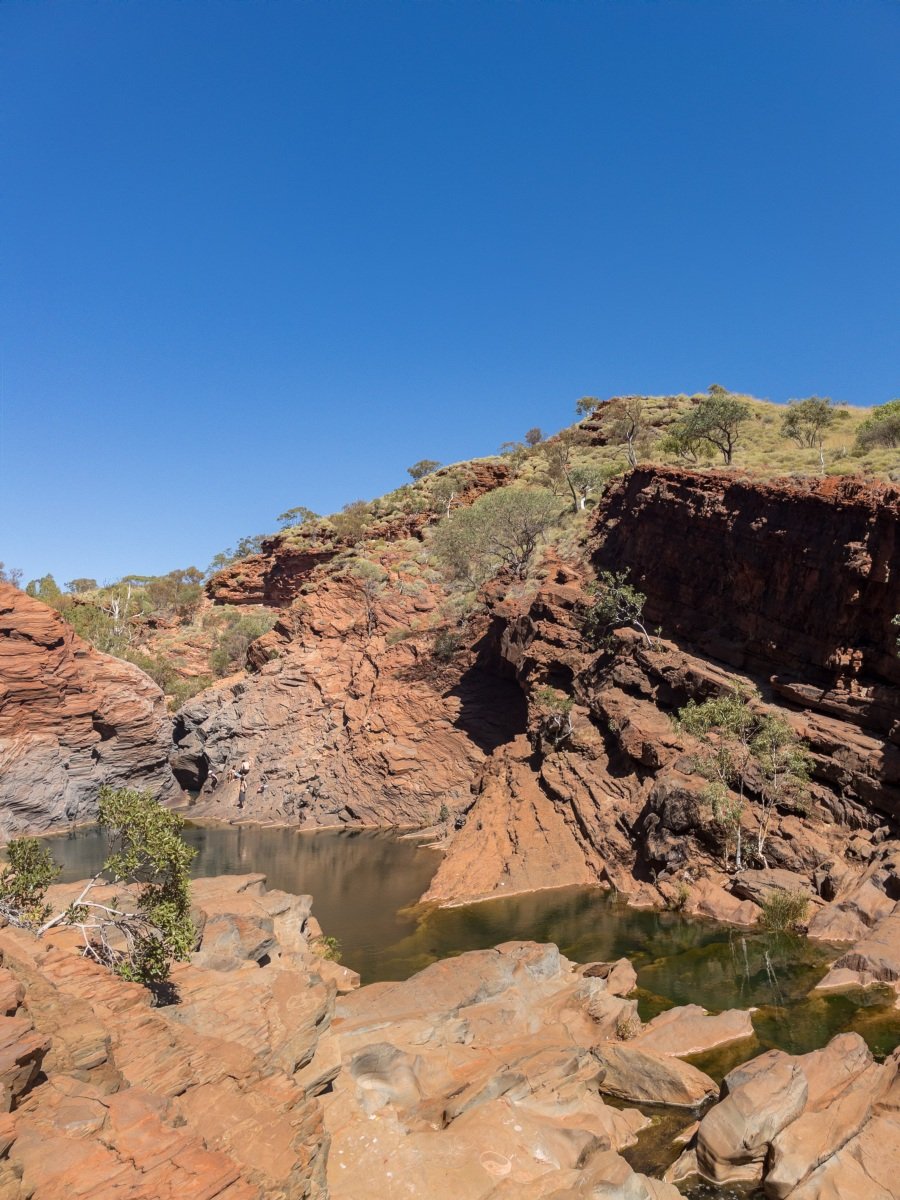
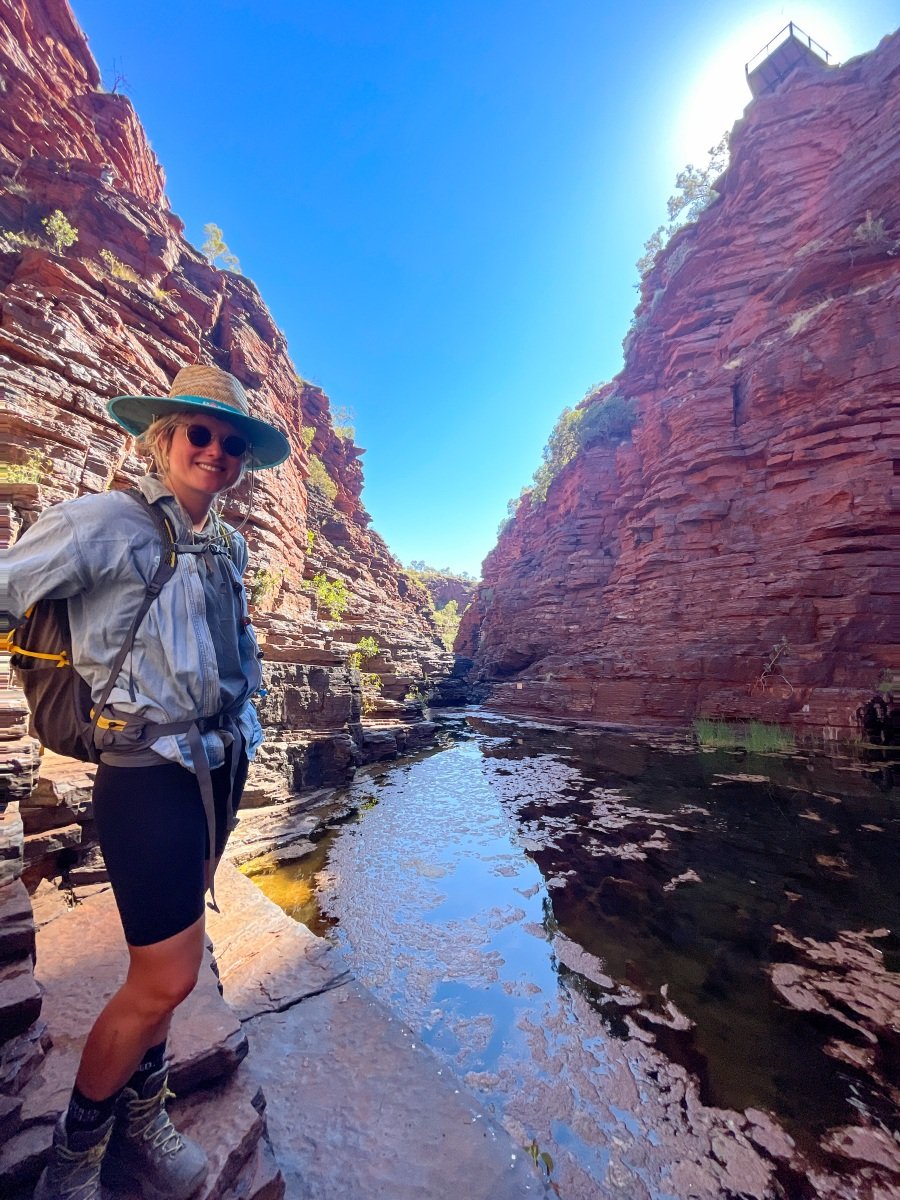
At the bottom there is a pool of water which is nipped off at both ends where the gorge walls come closer together. We head right at first to look into the the amphitheatre we saw from the top. A shallow pool and the hard rock walls make for a fun echo chamber. But the real fun is back the other way.
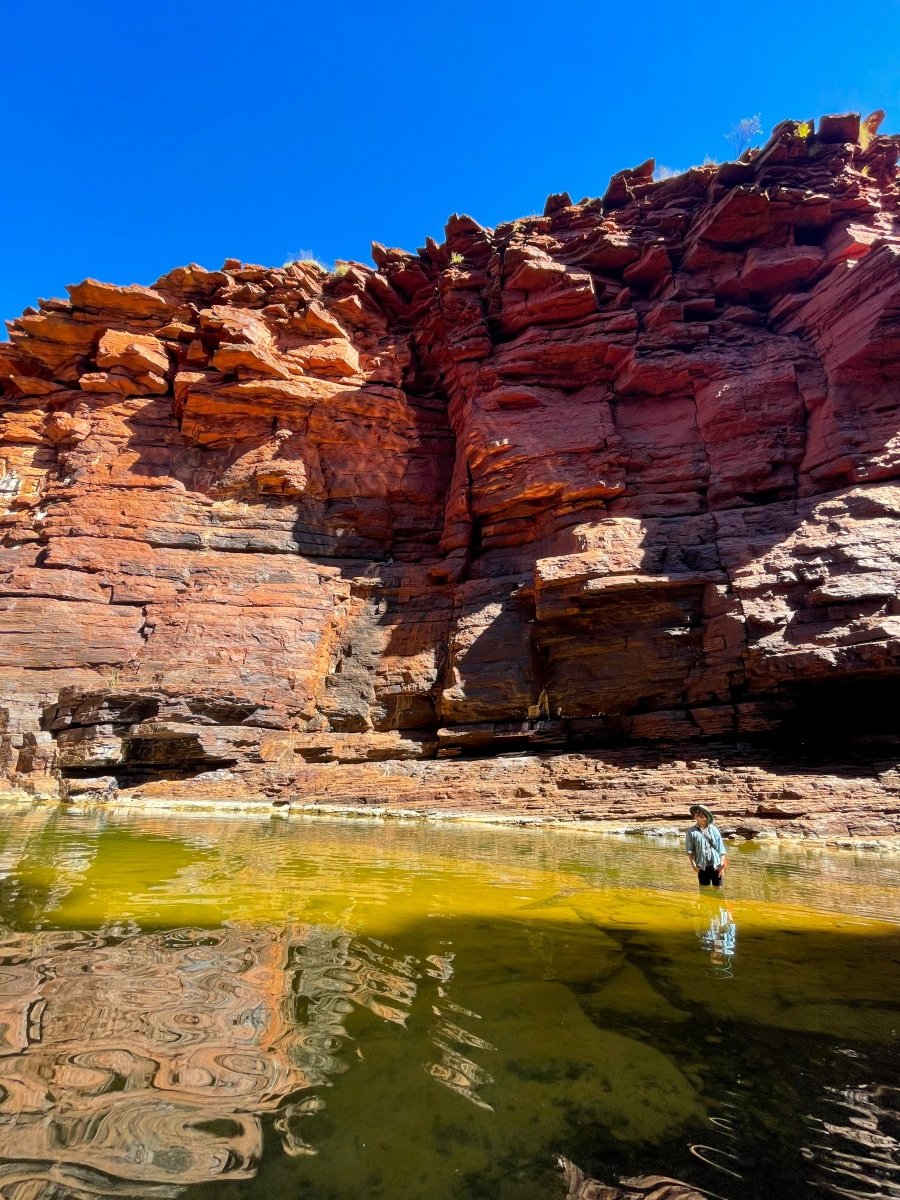
There is just one other couple exploring. They tell us that they saw people further down the gorge when they stopped here briefly yesterday. We carefully wade through the first pool over to the next chamber. The water is about waist-deep and the bottom very slippery, so we’re sliding/skating our feet as we go. I climb up one side of the wall to see what the next chamber looks like while the other couple make their way to the other wall to look from that angle.
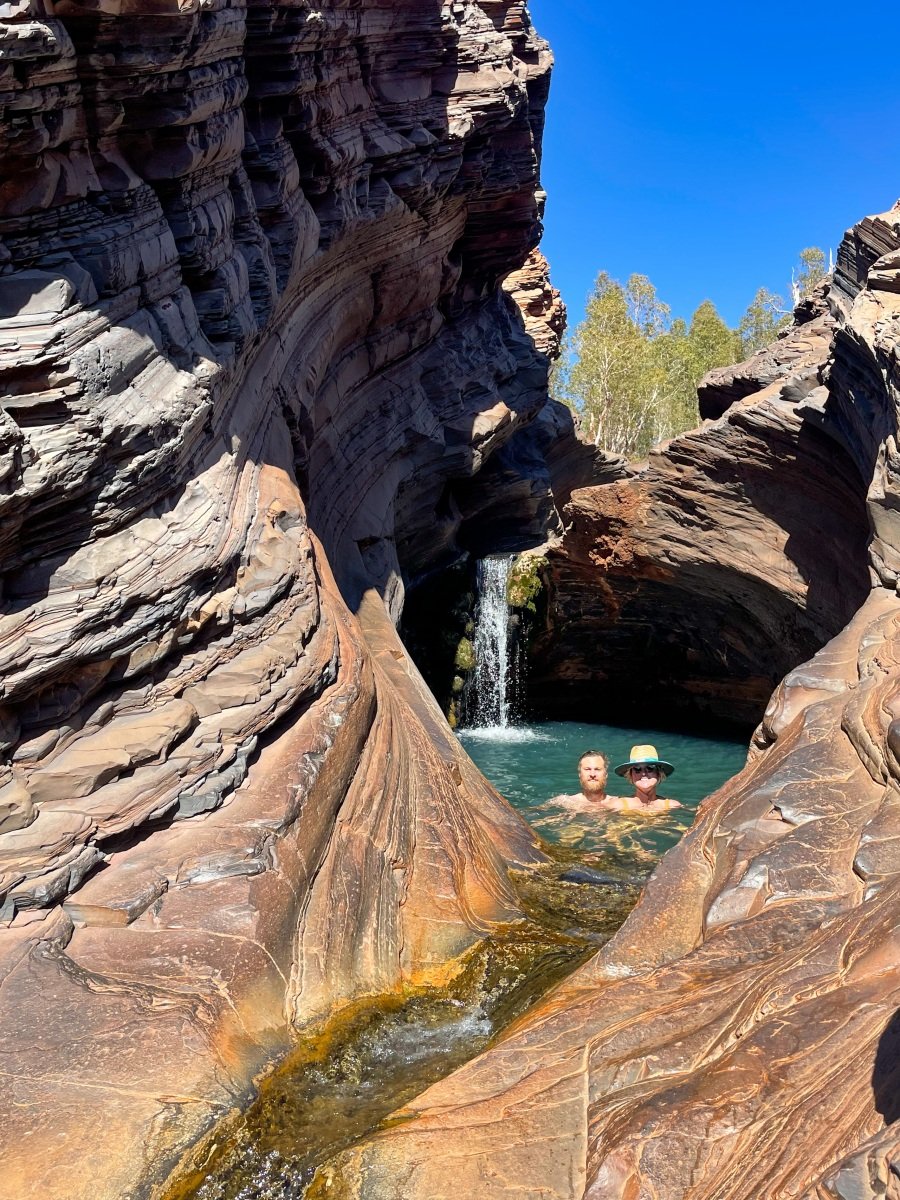
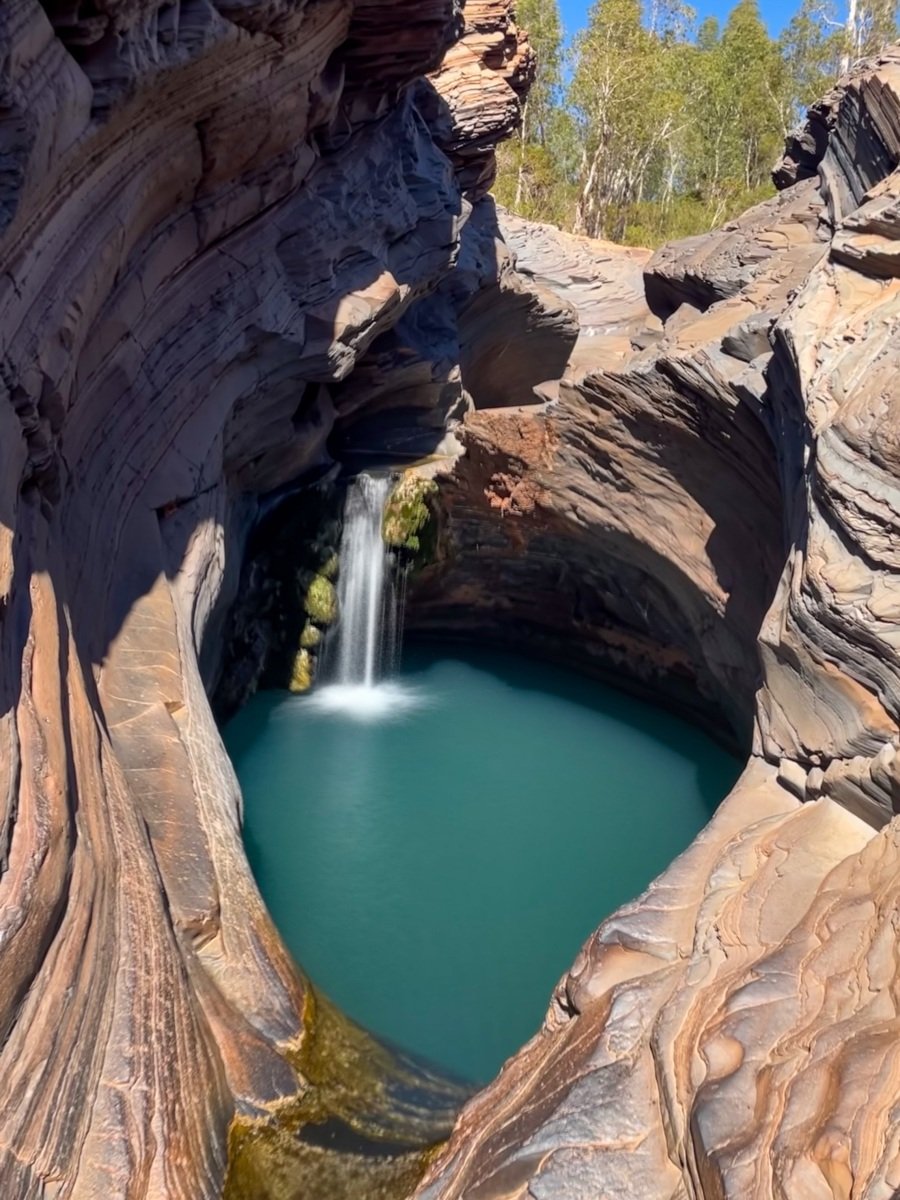
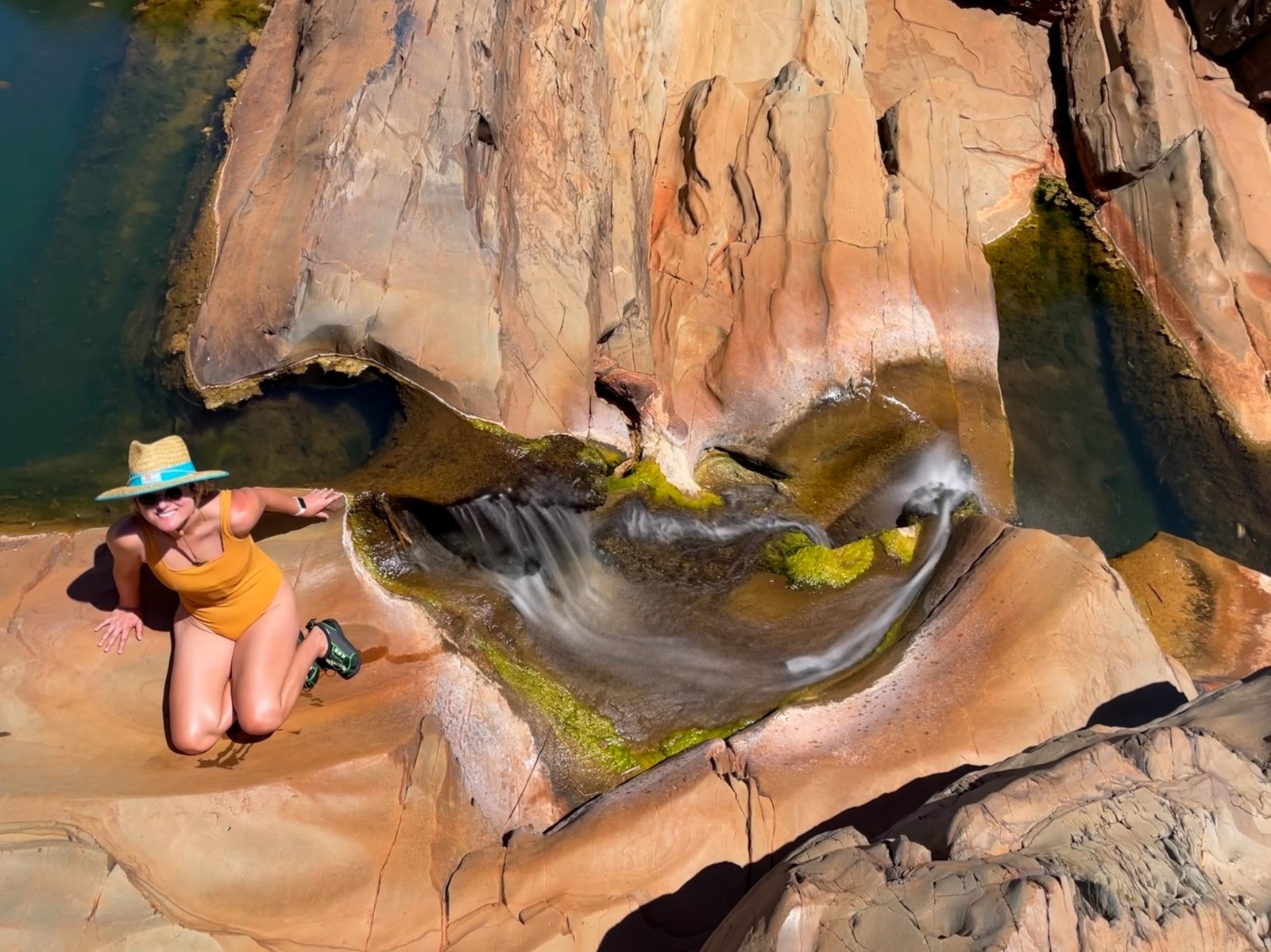
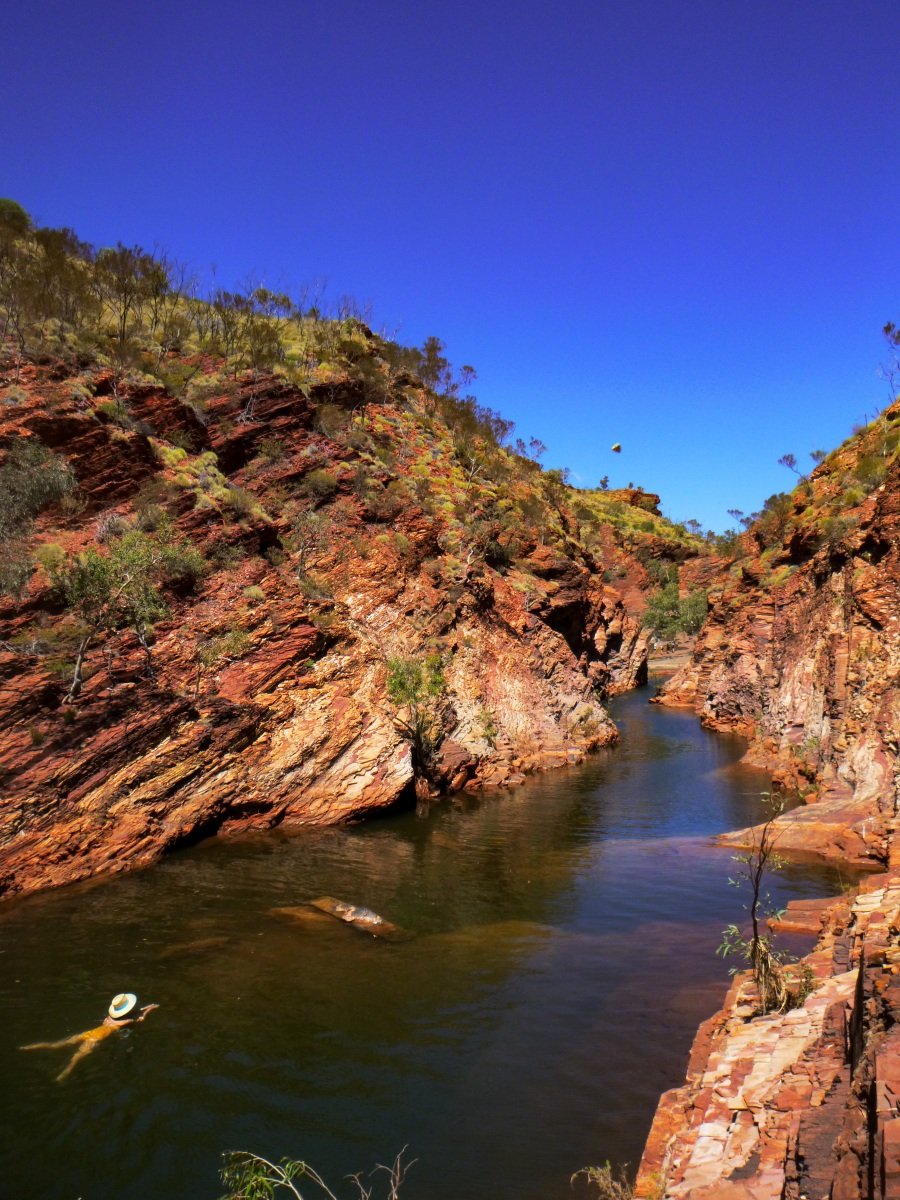
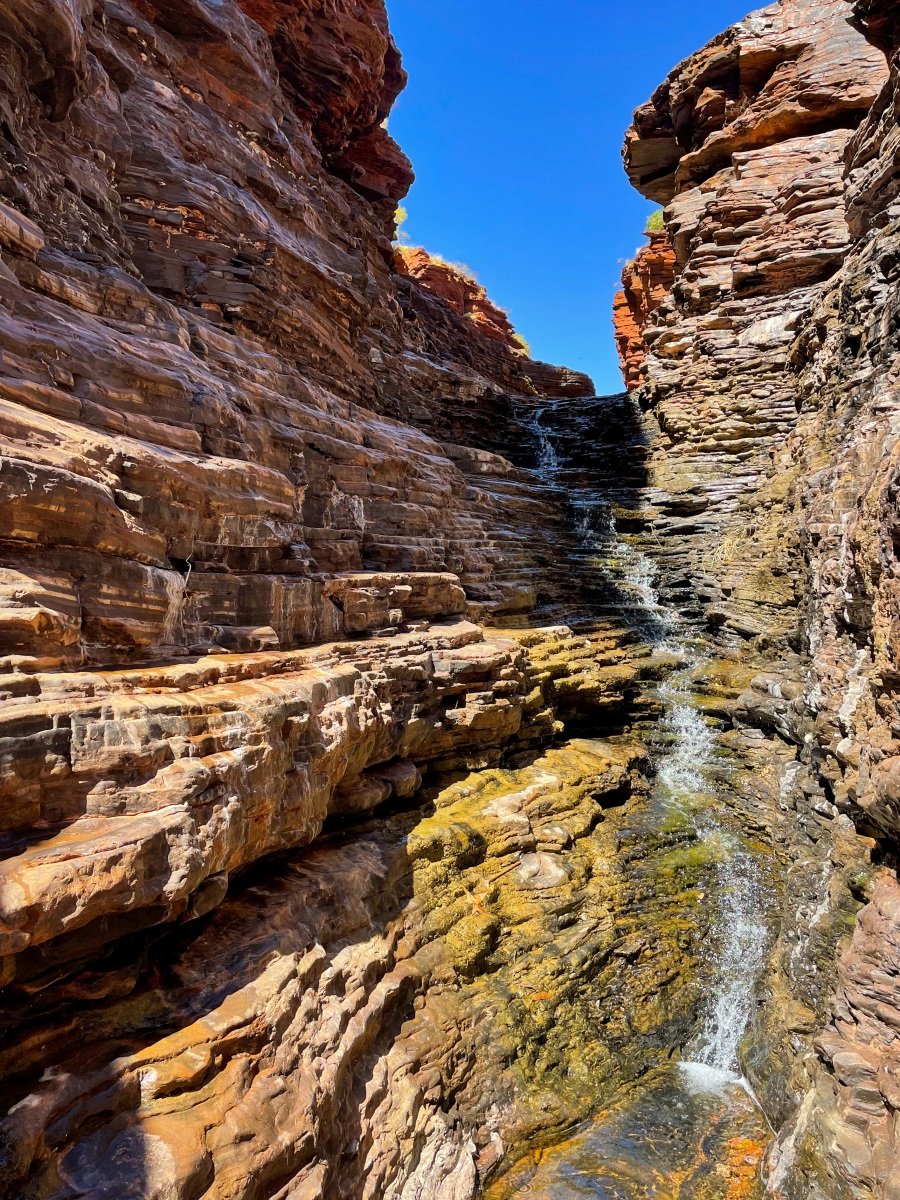
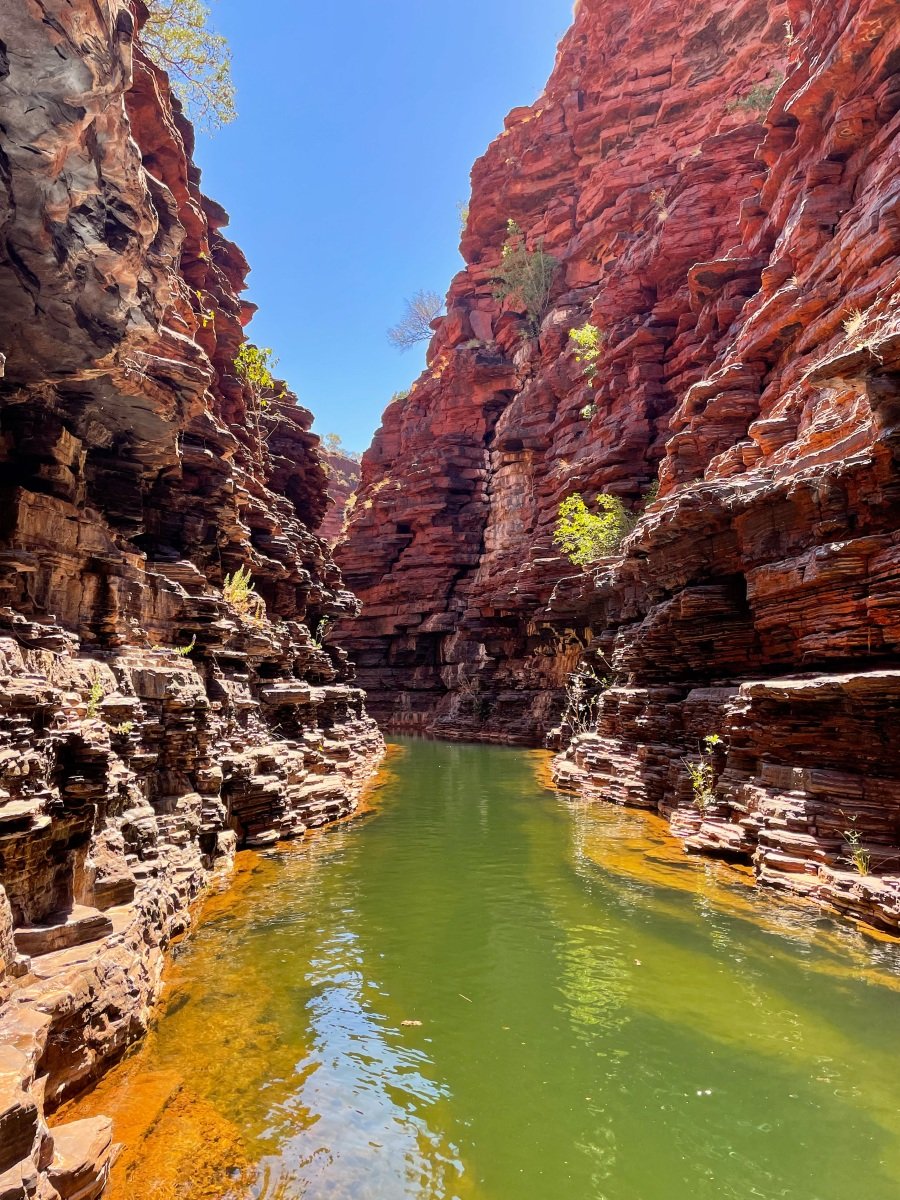
It’s clear that my side isn’t the right way down – there’s a single sheer drop down into the water – but it’s about a 5 metre drop. But from here I can direct the other couple with hand and foot hold to carefully clamber down by the waterfall and along a wall, down to the water below. I stay to give Anna the same encouragement and then set over there myself. Moving slowly over the slippery rock and along the wall to the dry parts, the climb down is pretty simple. There’s a small channel of flowing water which opens into a bowl and then a river. There’s no graceful way to get into the bowl but to slide/jump into the water.
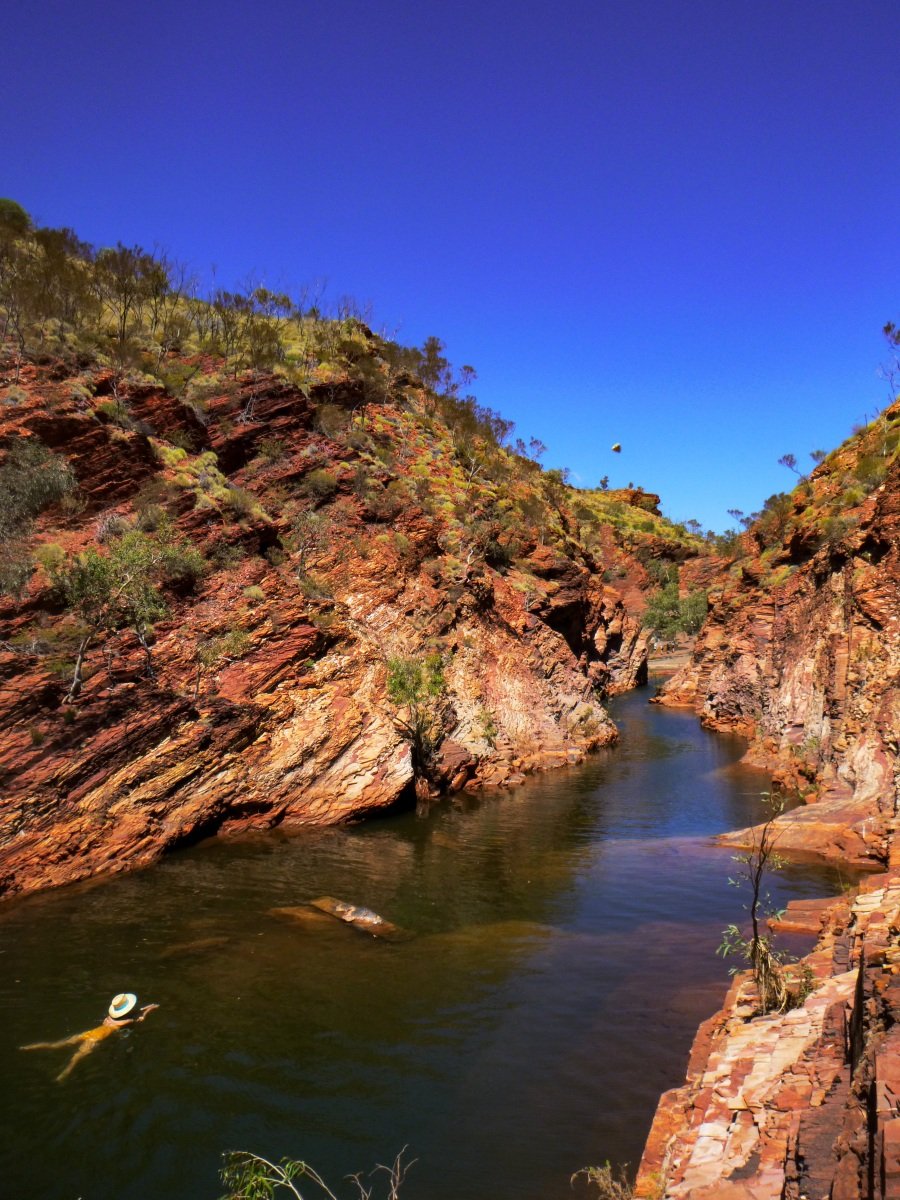
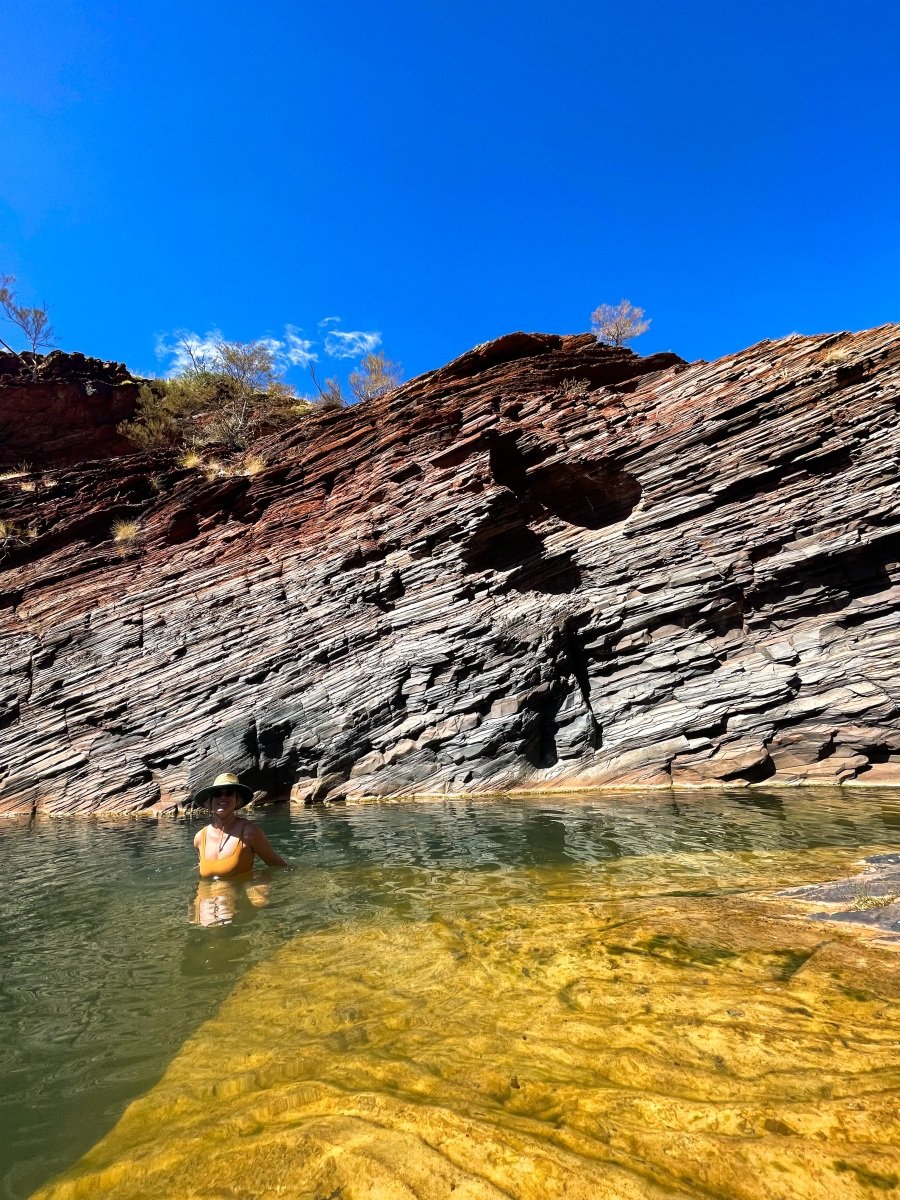
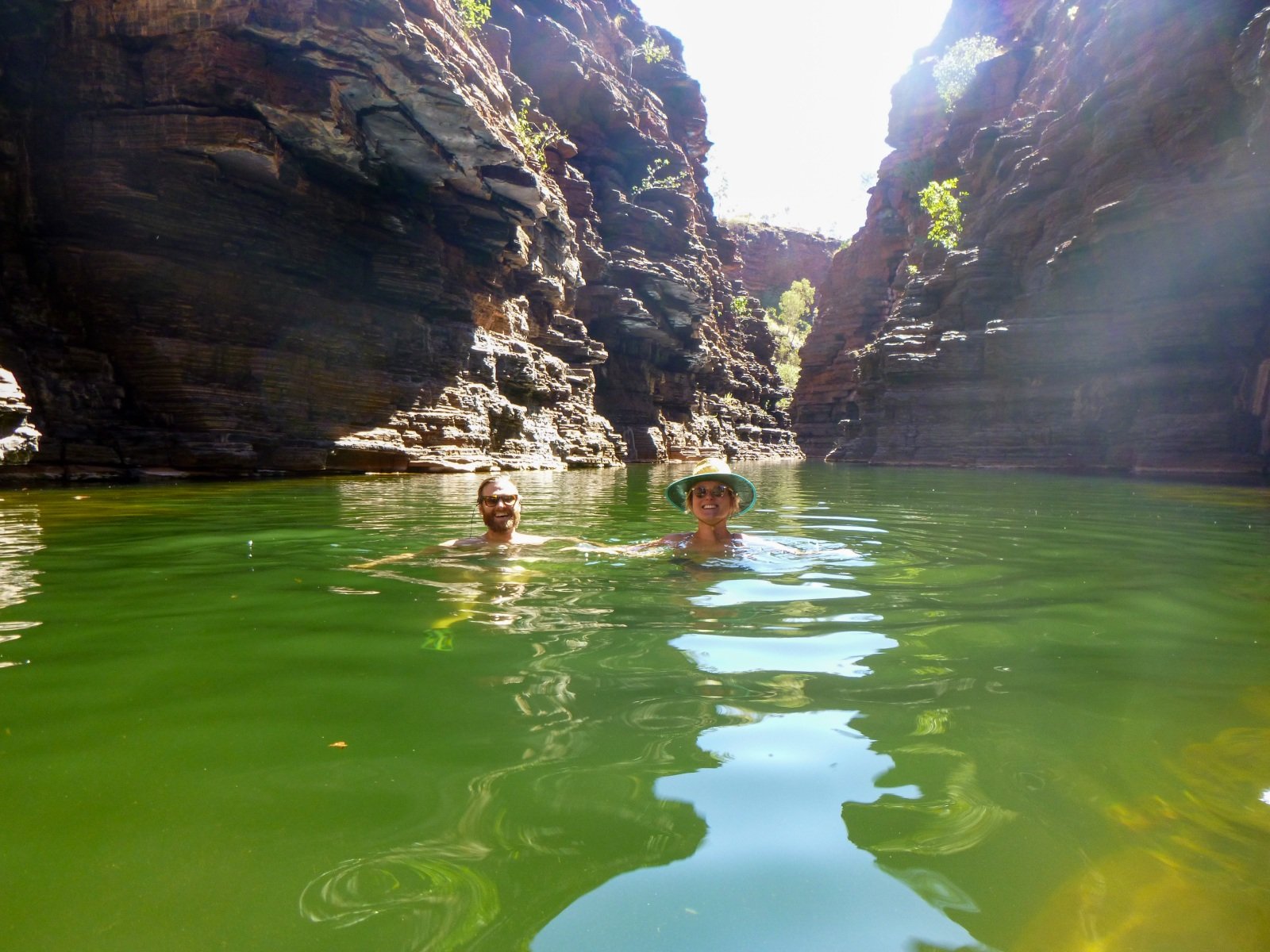
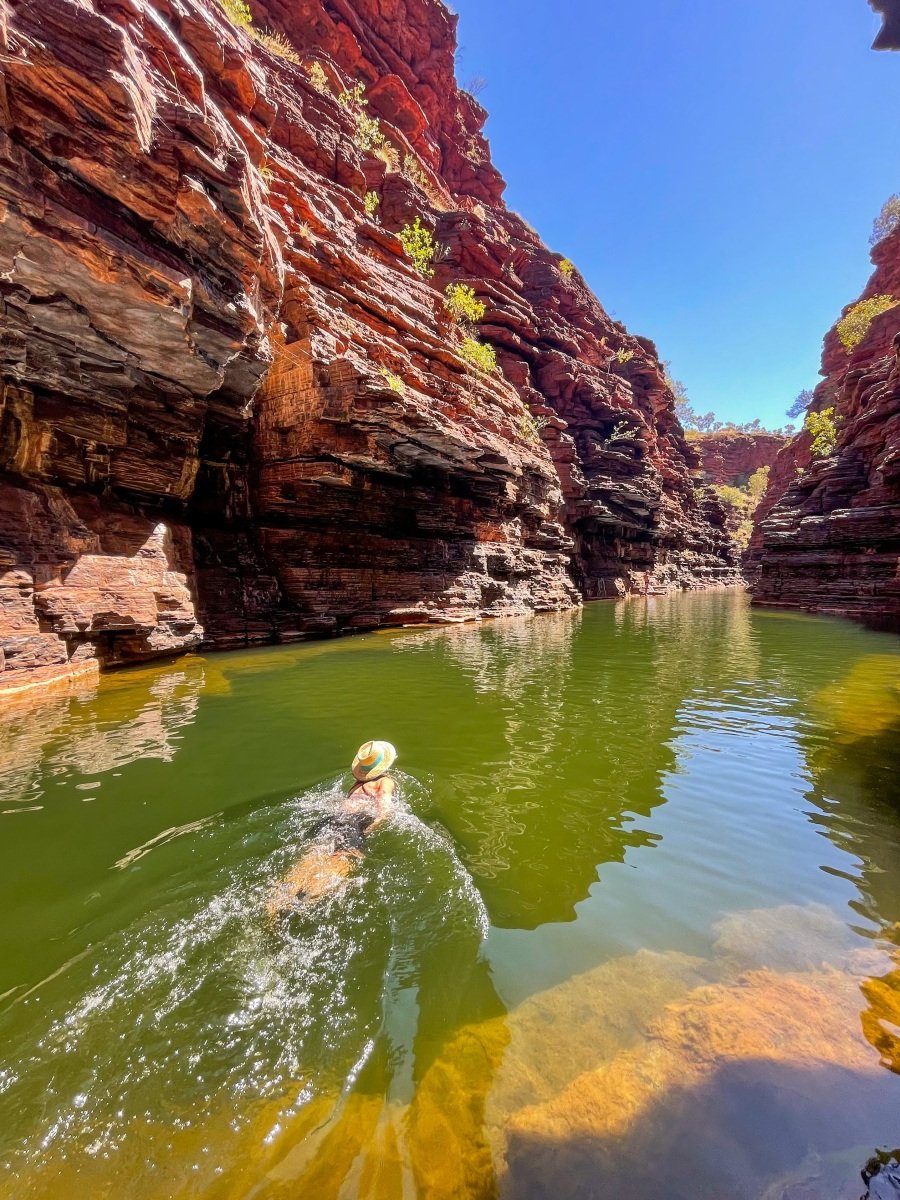
It’s pretty cold! And in turn all four of us exclaim as we jump into the water, scrambling for the warmth of a warm rock shelf to recover our breath.
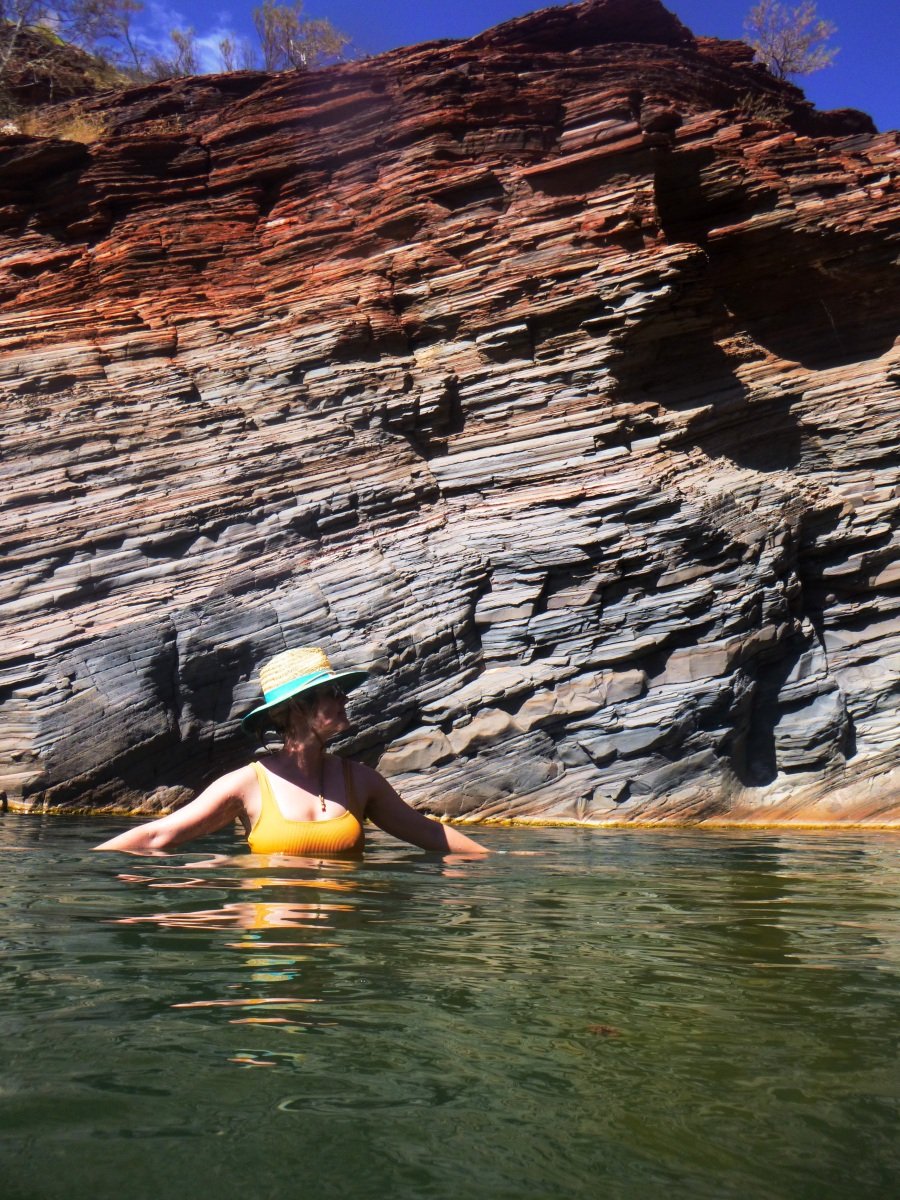
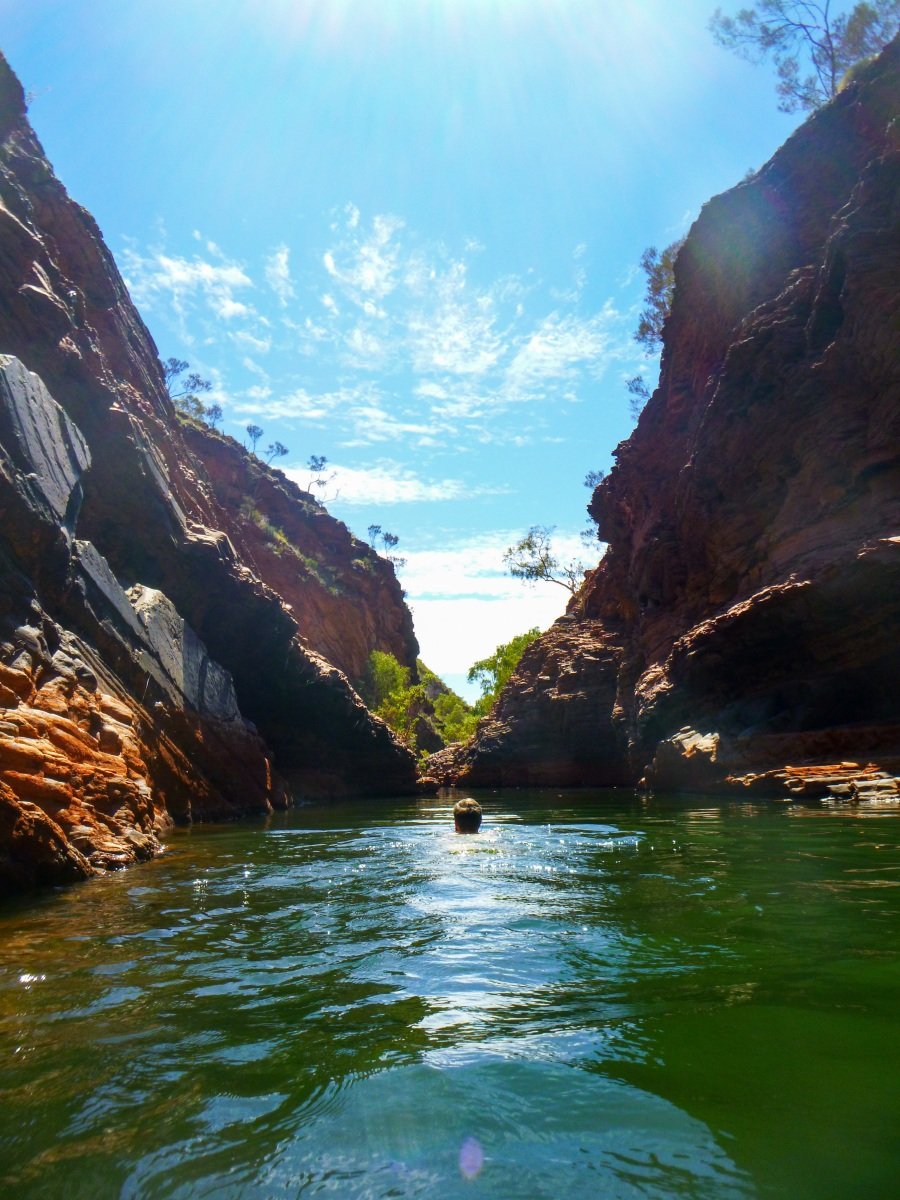
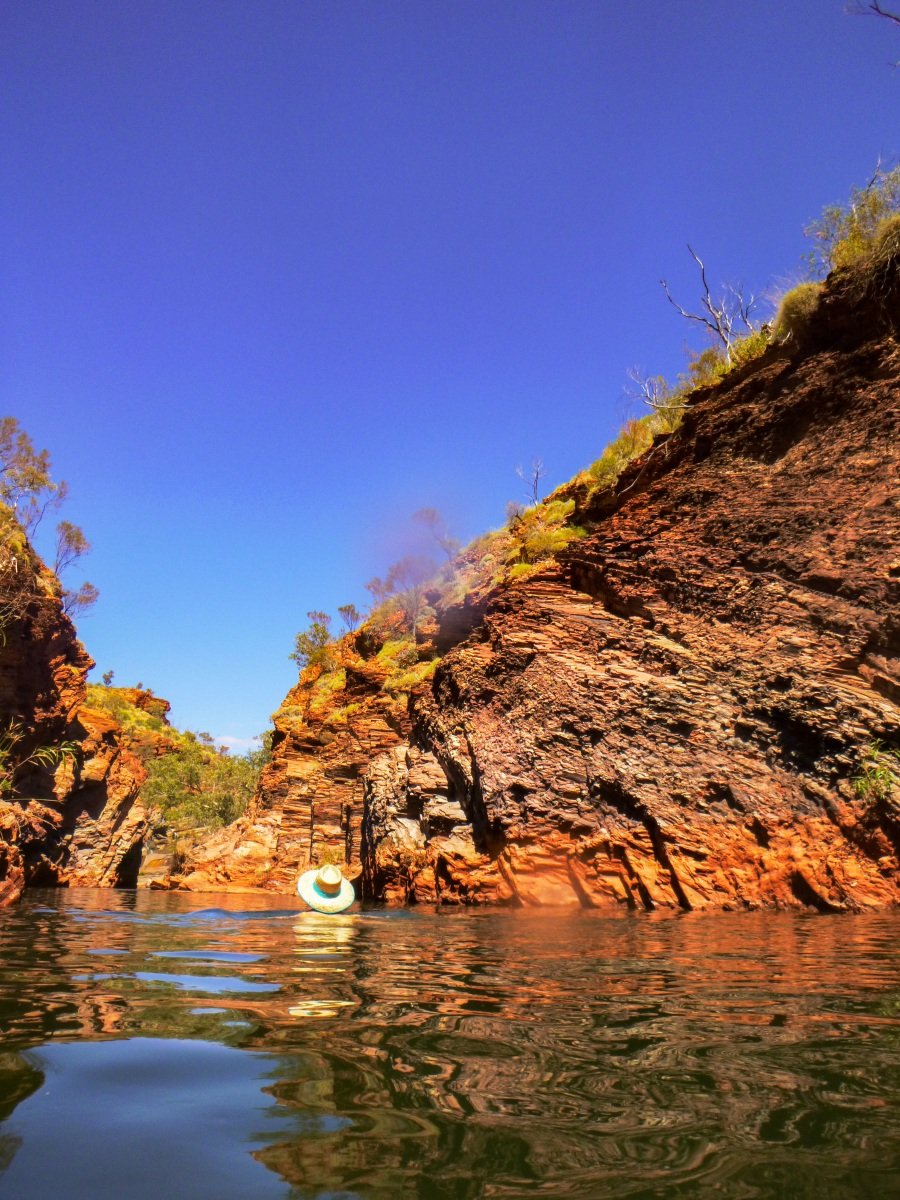
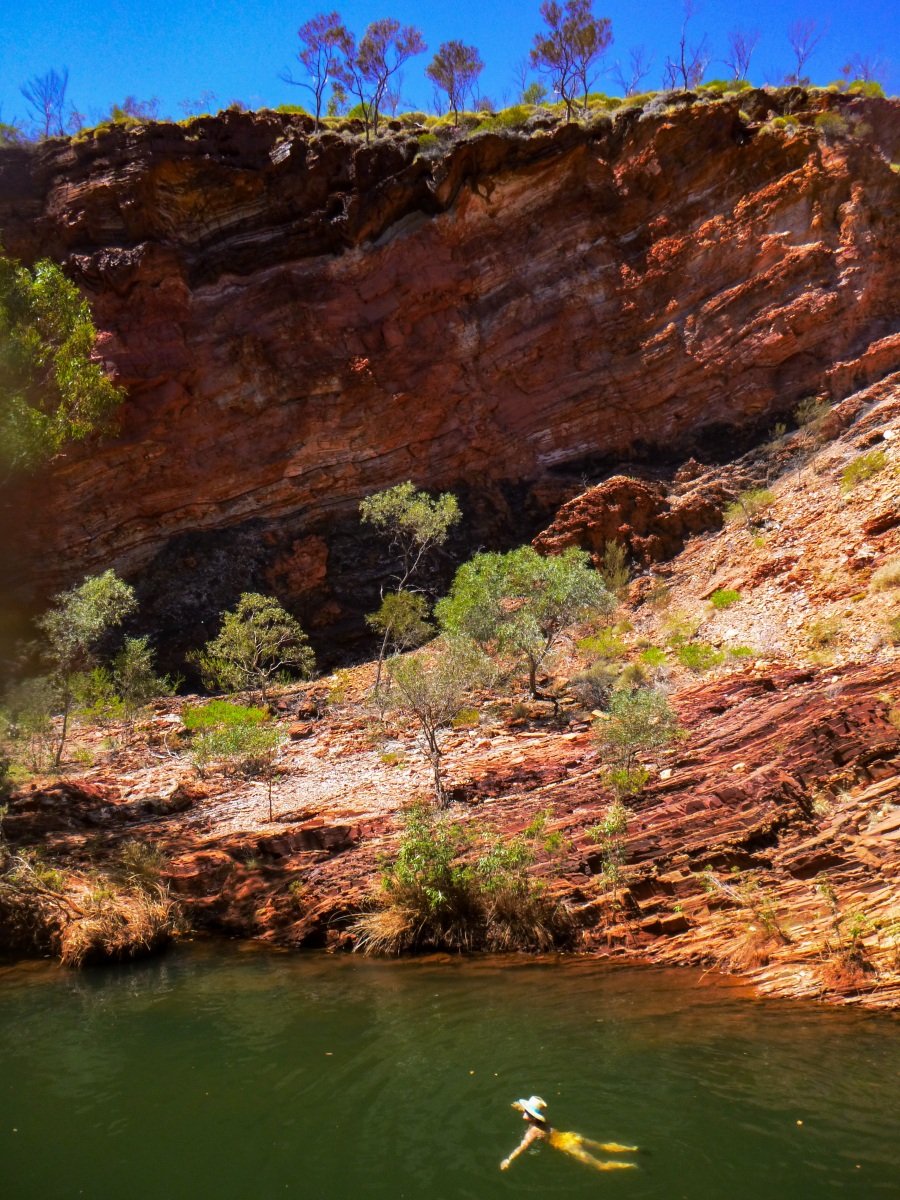
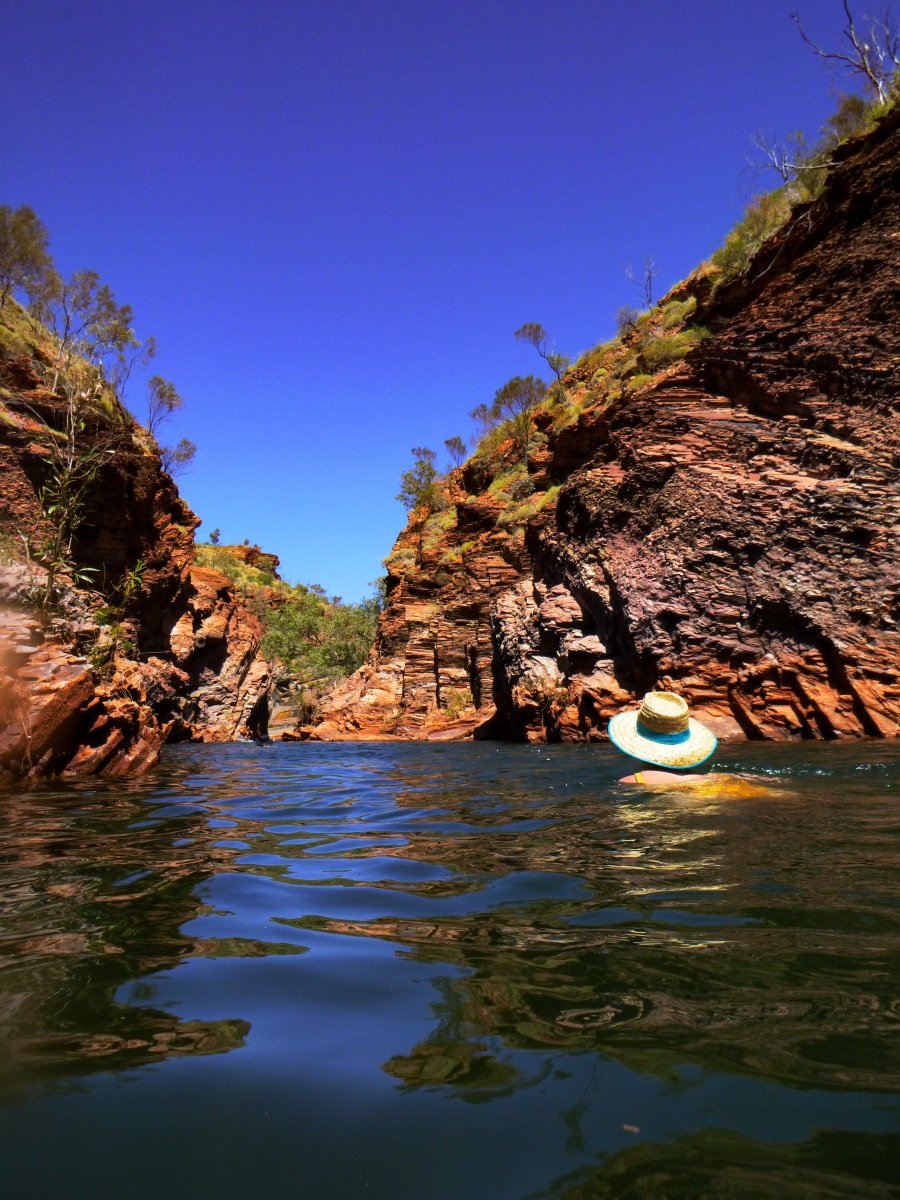
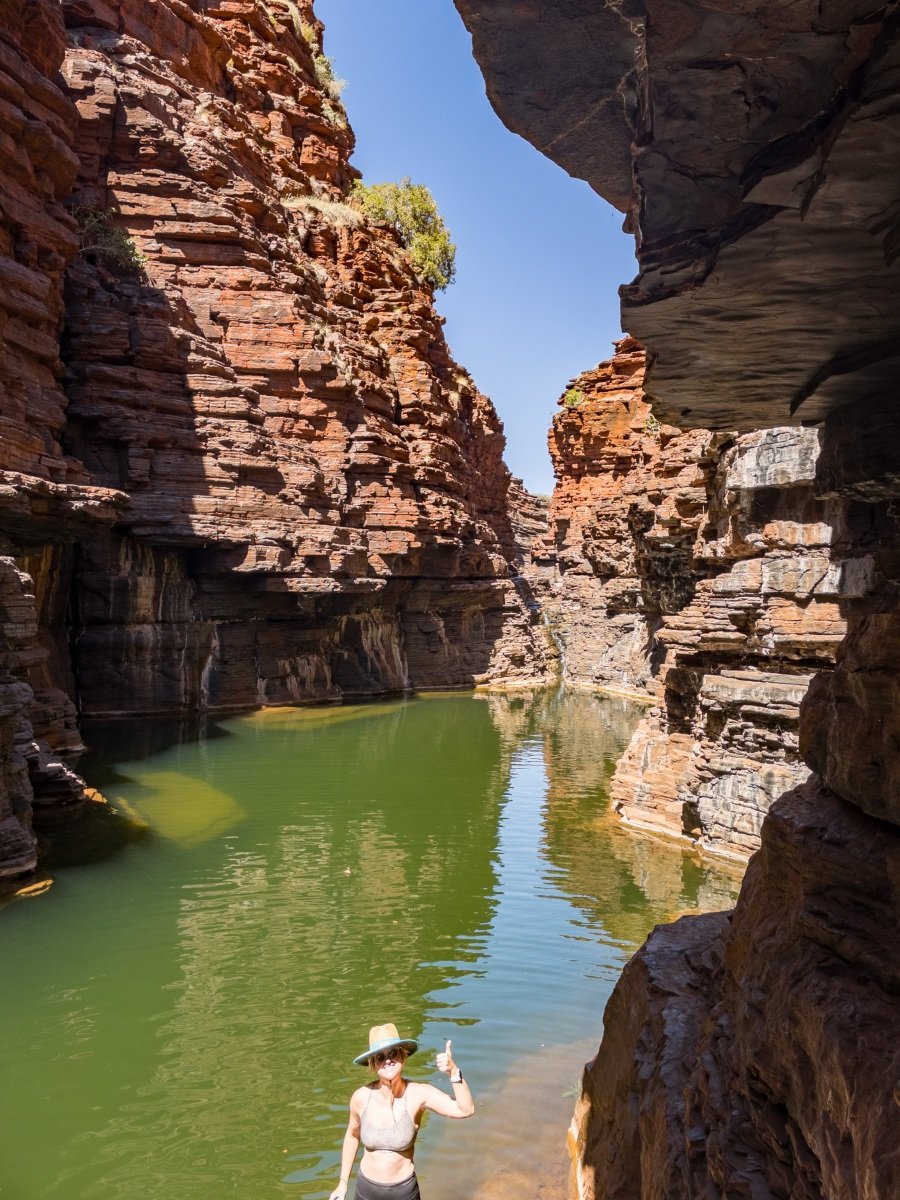
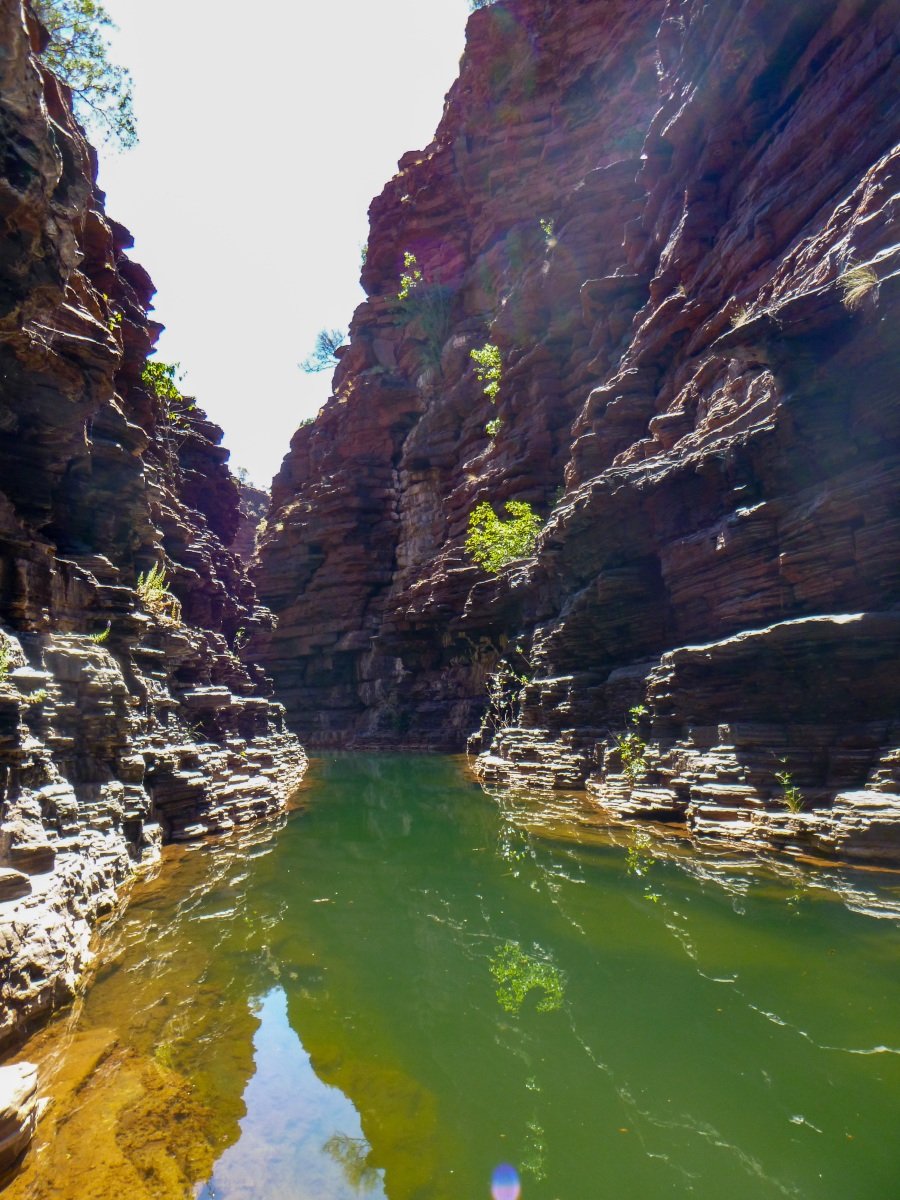
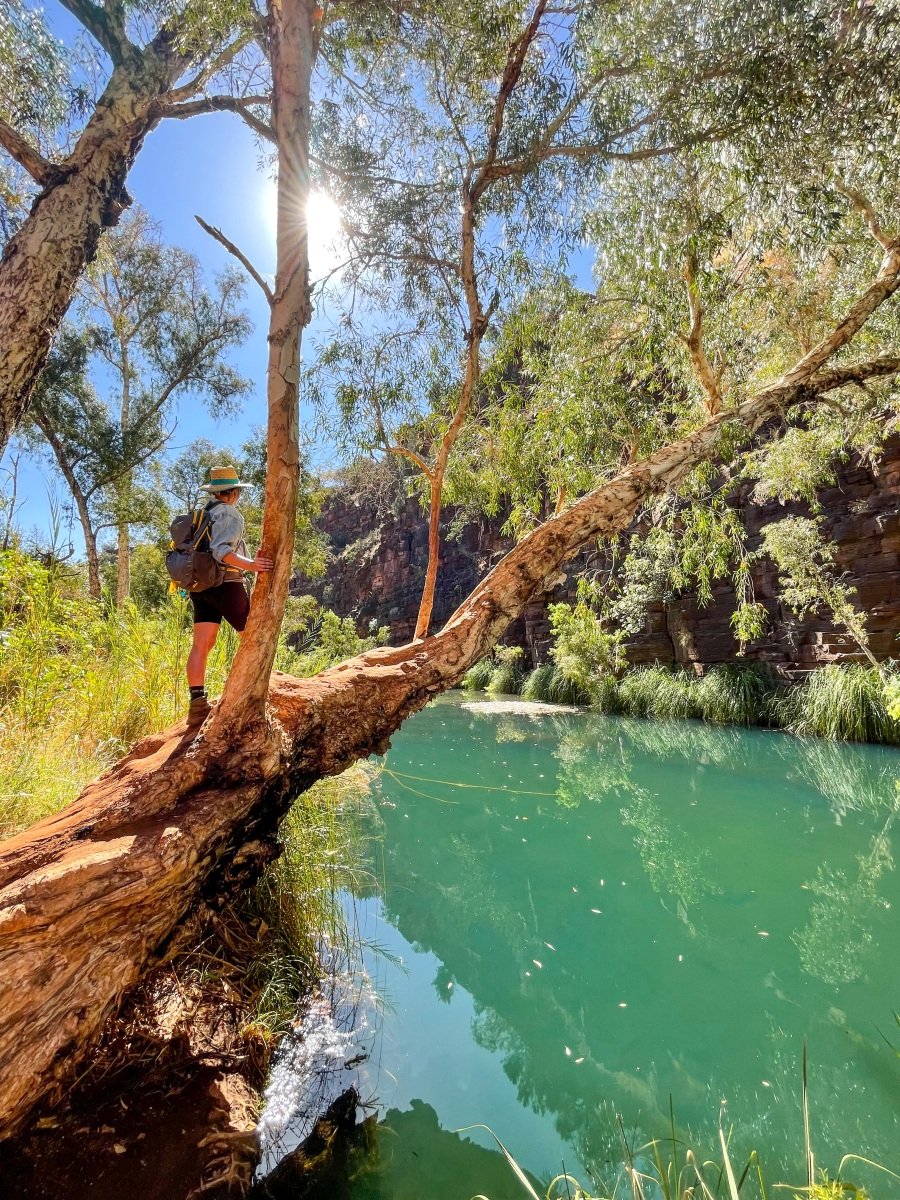
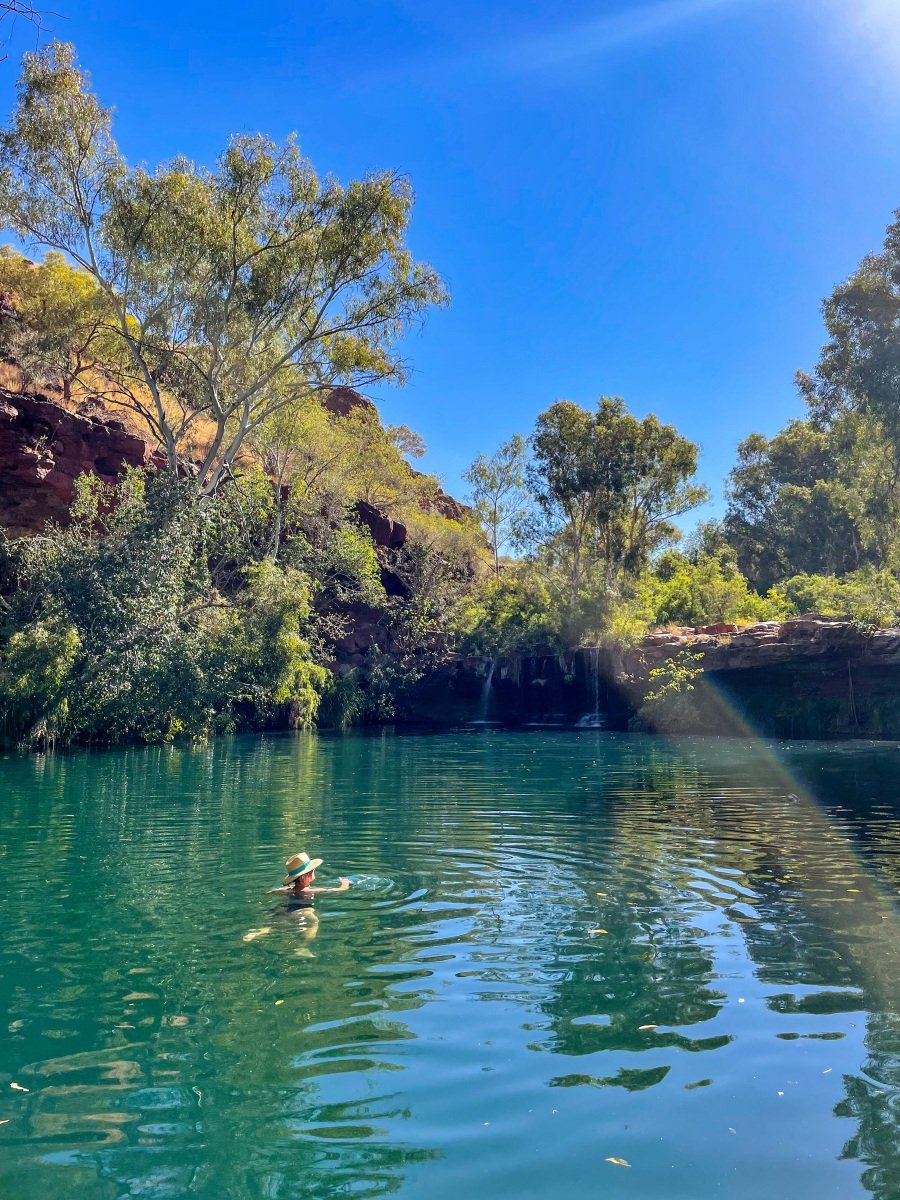
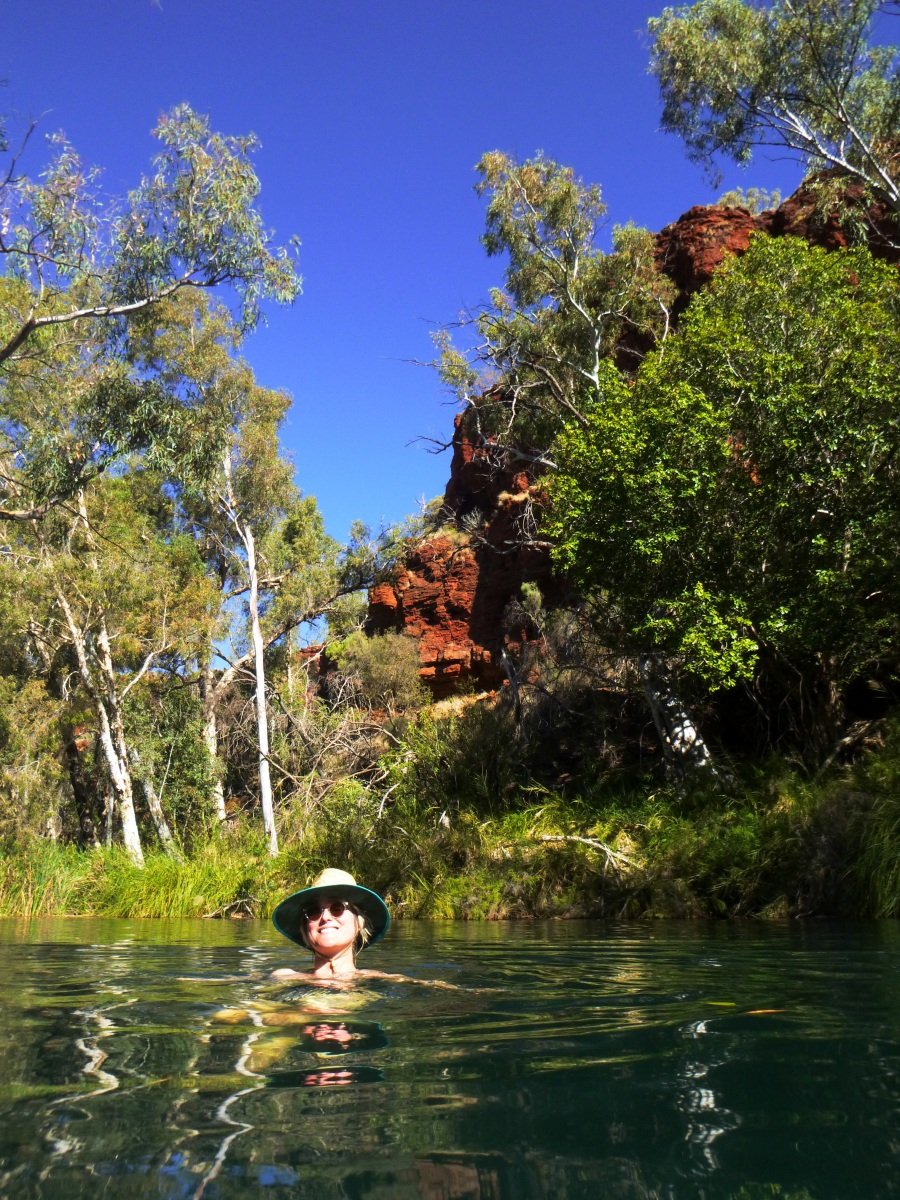
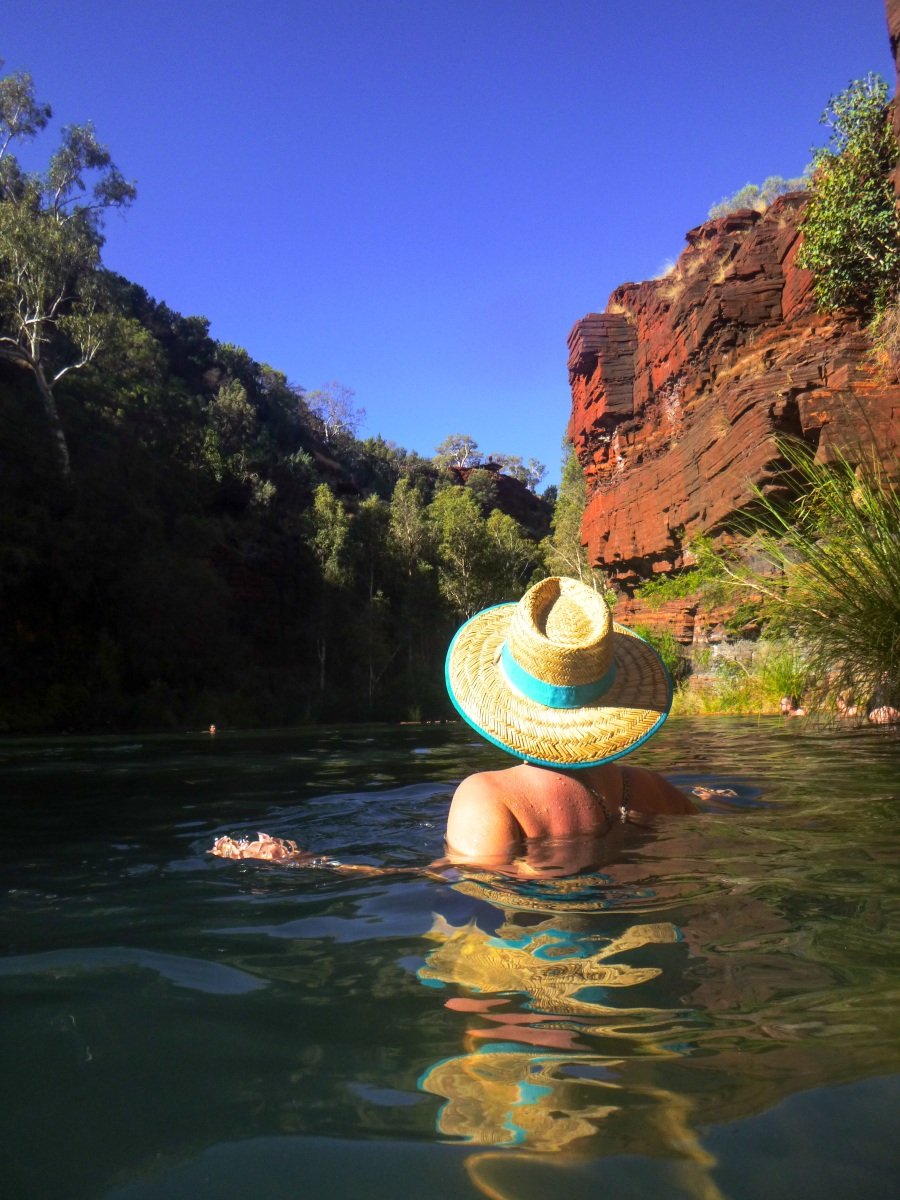
There water is clear and brightly green against the rusty-red-grey rock of the gorge walls. Each strata is worn and knobbly, creating shelves for trees to take hold, and for us to climb onto as we explore this level of water. As we’re playing here we get talking to the other couple. And wouldn’t you know it, they’re from Warners Bay! We compare notes on who we know and places we’ve been – consistently finding things in common. In the end we spend nearly an hour just hanging out down there.
As we’re ready to leave some other people begin figuring out how to get down. We give them a hand before heading back up for a quick snack. Our new found friends give us their business-come-holiday-card to ring them when we’re back and then depart.
[Click on a photo to open a full-screen slide show]
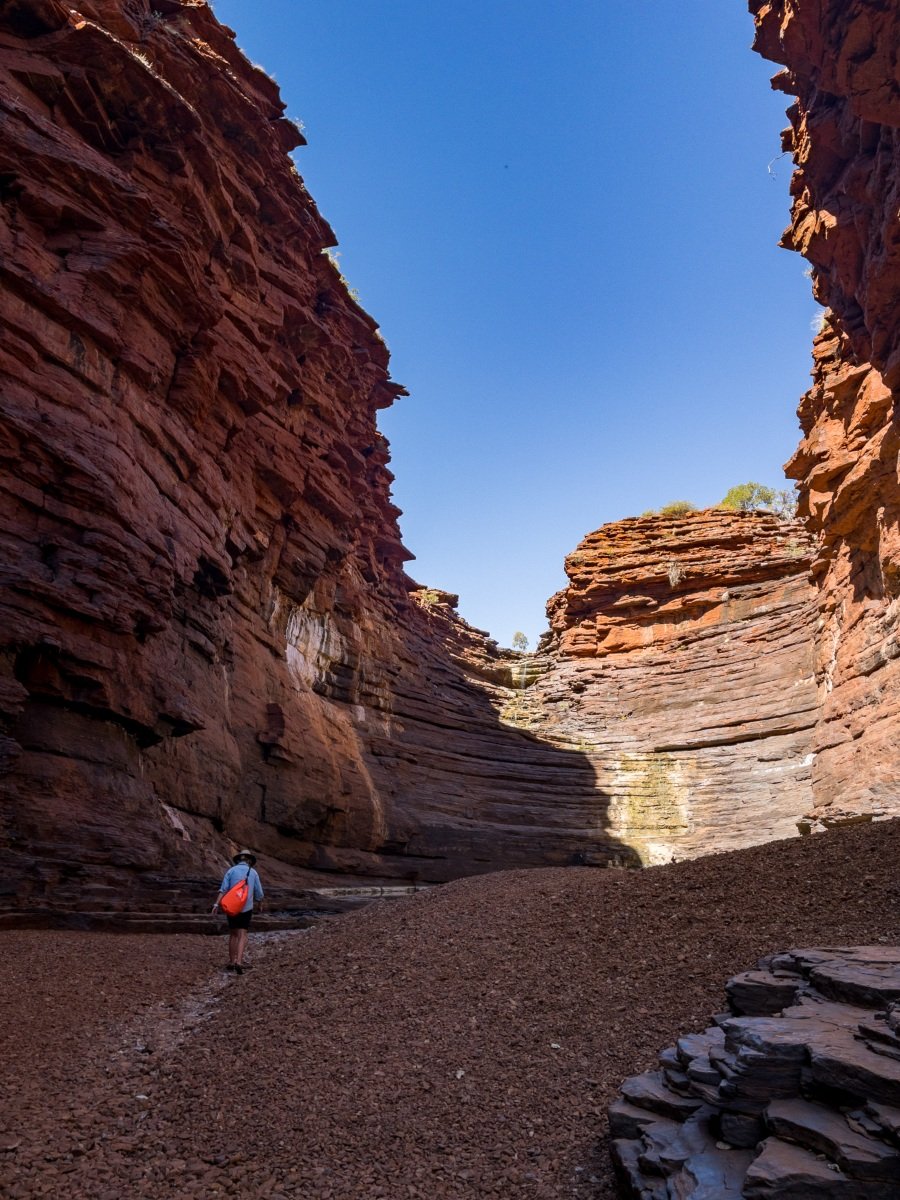
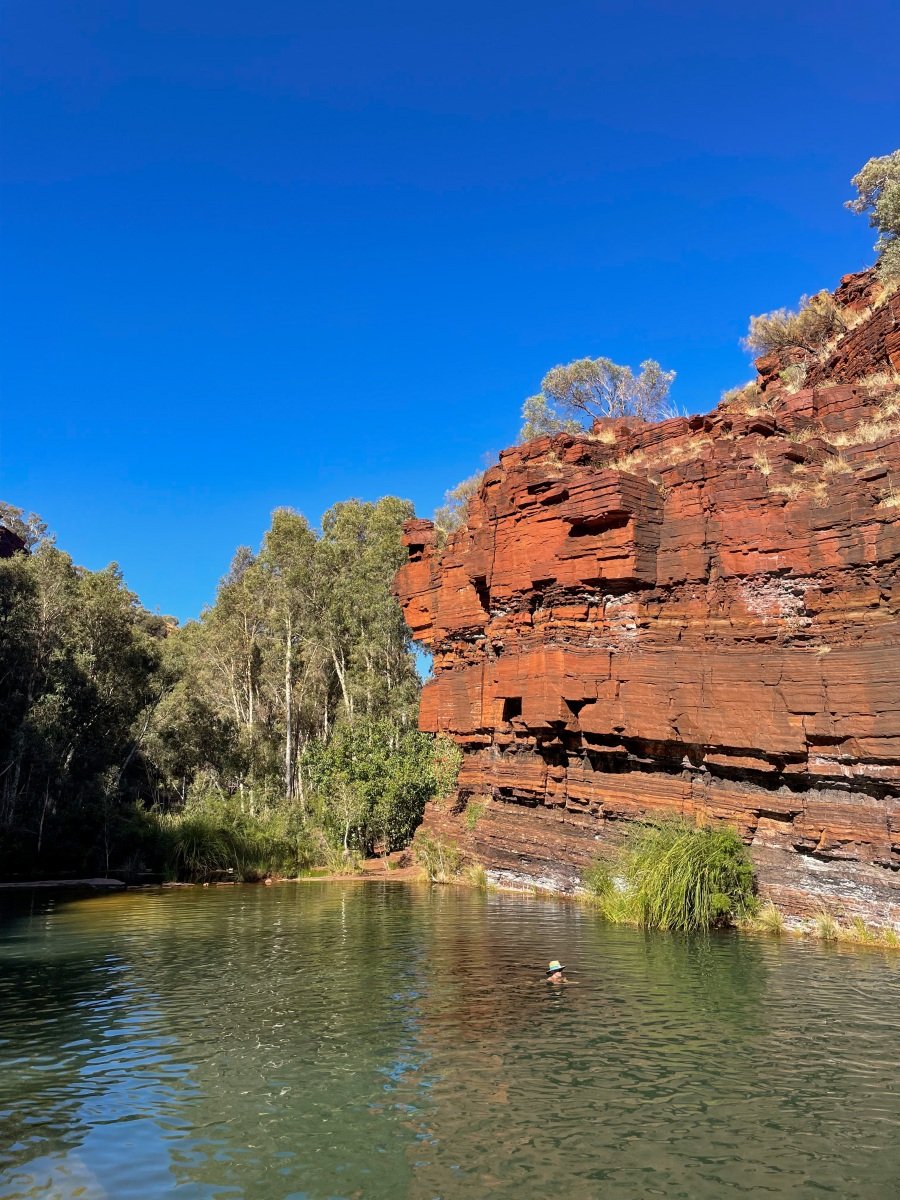
Mid-morning we head over to Dales Gorge. This is a much larger gorge than Joffre, wider, higher and longer. The same white gums line the top rim of the gorge and the very defined rock strata is also present. One of the new features here is asbestos. Naturally occurring blue asbestos is present in some areas of this gorge and I’m really curious to see it.
We walk a few kilometres along the top of the gorge before descending on rock stairs. There has been a major rock fall over one of the popular spots (Circular Pool) and the track is closed in that direction. I understand that the rock presents a crush risk, but also that lots of asbestos was disturbed and they have to make that safe too. So we head around to our right at the bottom.
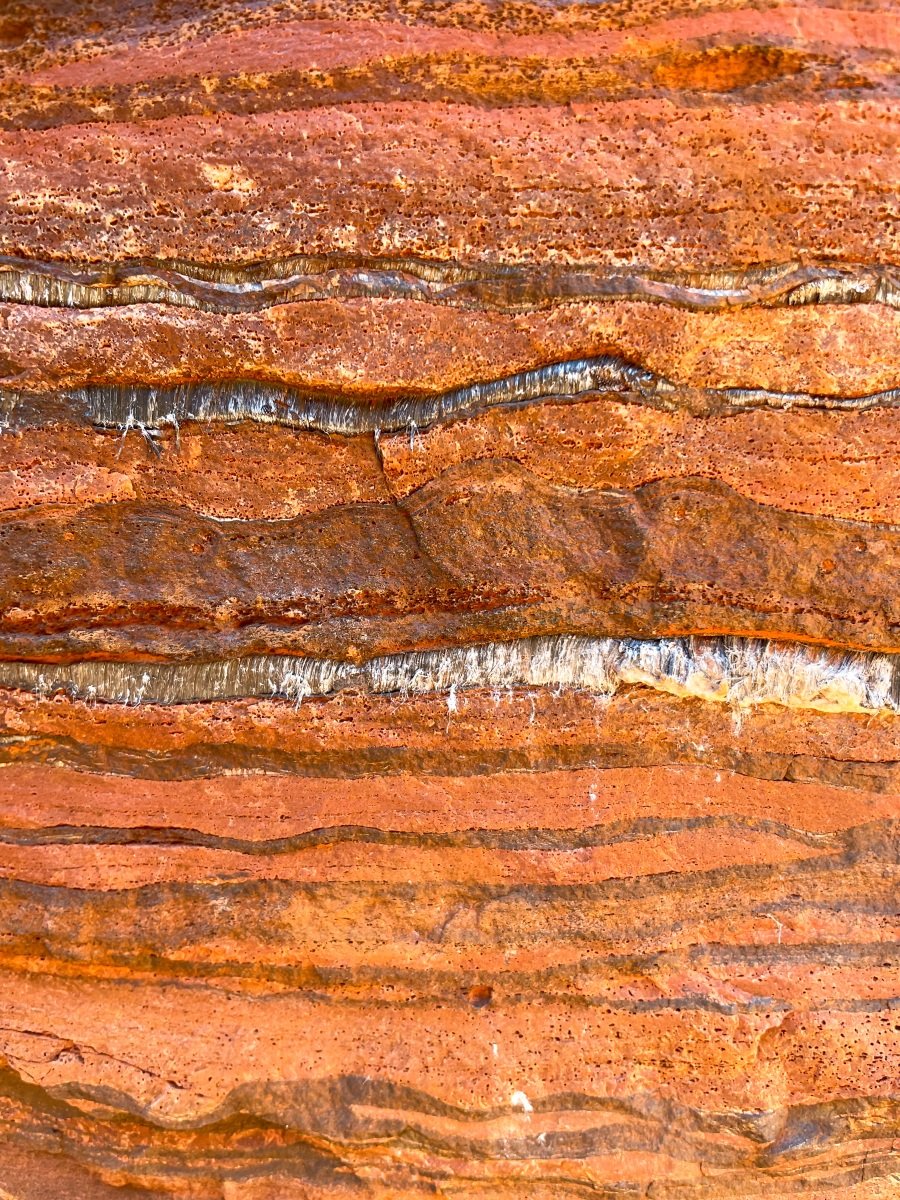
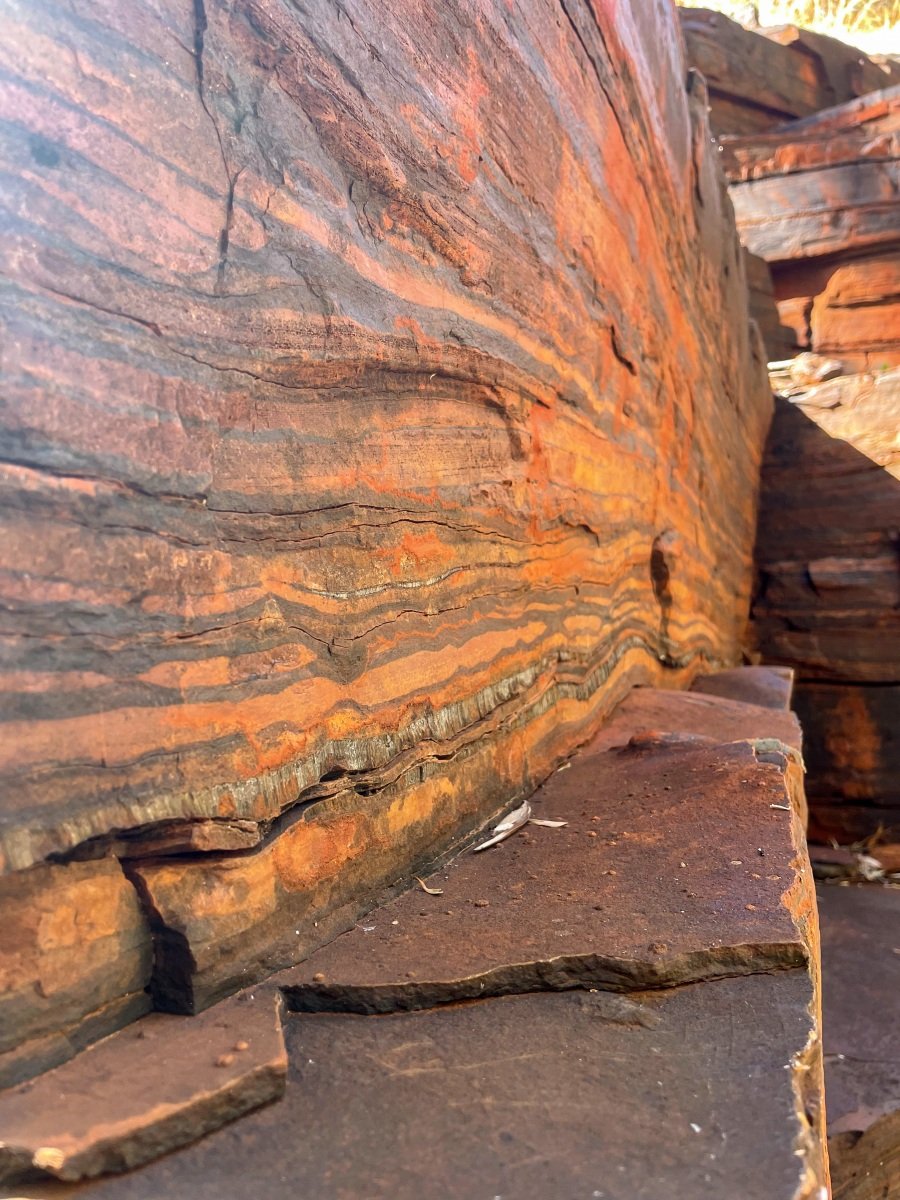
Keeping our eyes open as we walk, Anna is the first to spot some asbestos layers in the rock. It’s fibrous and grey-blue, quite pretty against the other rust-red layers (though the camera doesn’t really do it justice). Once we’ve seen it once we begin so see it everywhere. In more obvious places it’s clear that people have scraped at it, we are not so bold (i.e. stupid).
A few bends later and we have to clamber over a rock fall. The rocks have broken into perfect slabs, full of right-angles and straight lines. It’s quite unnatural looking, almost already taking on the human-made forms that the iron ore is made into.
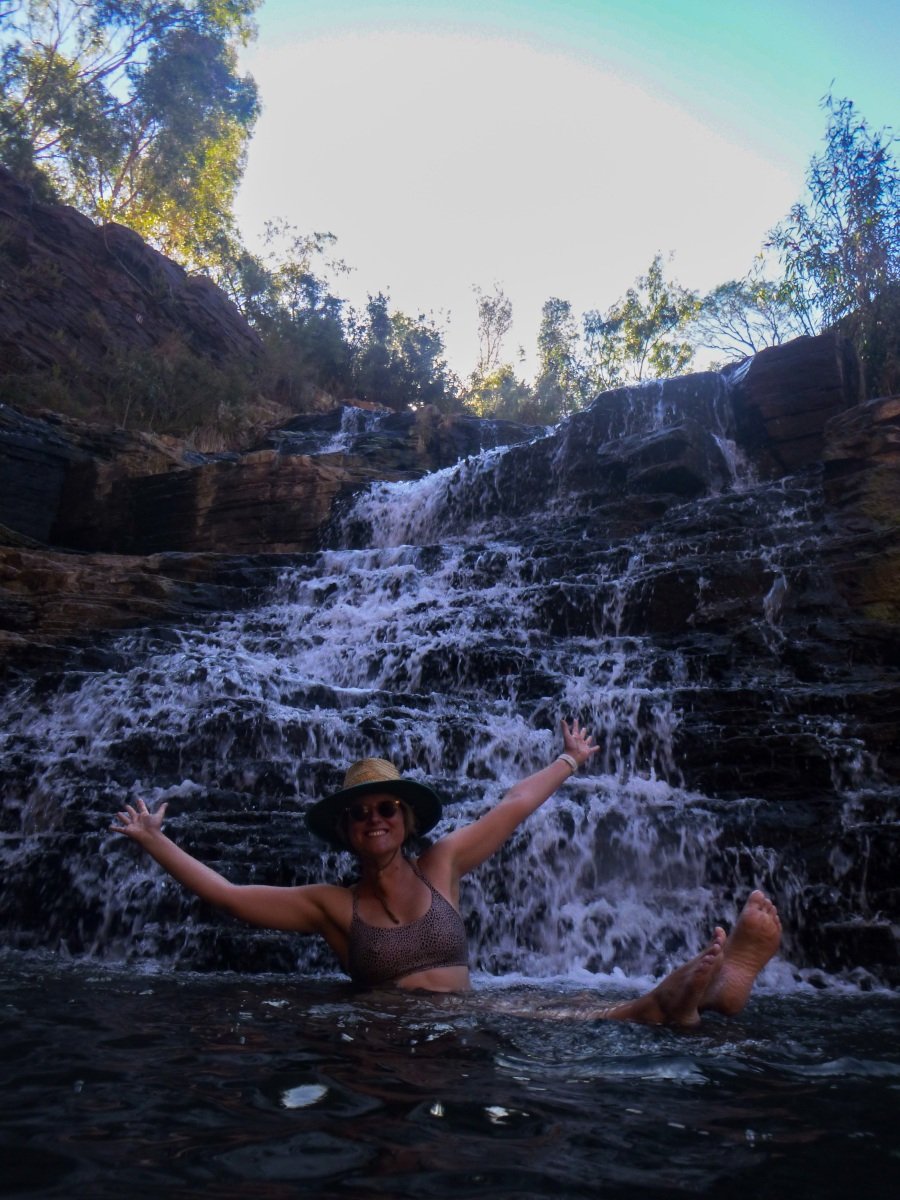
We wind through the gorge, in parts it is soften by green forest; elsewhere it is a harsh combination of water and hard rock. When the water runs higher we tiptoe on small ledges to stay dry. Quite suddenly the gorge opens right up to a big pool and an tiered-seating-like rock formation looking down on us. It’s early afternoon and about 20 groups of people and spread out looking down to the pool below them. We cross the water on a narrow path and climb as past the groups. This is Fortescue Falls.
We have now walked in a big loop back to where we started. There are access stairs from here straight to the carpark above. But before we finish walking, we head a little further along the gorge.
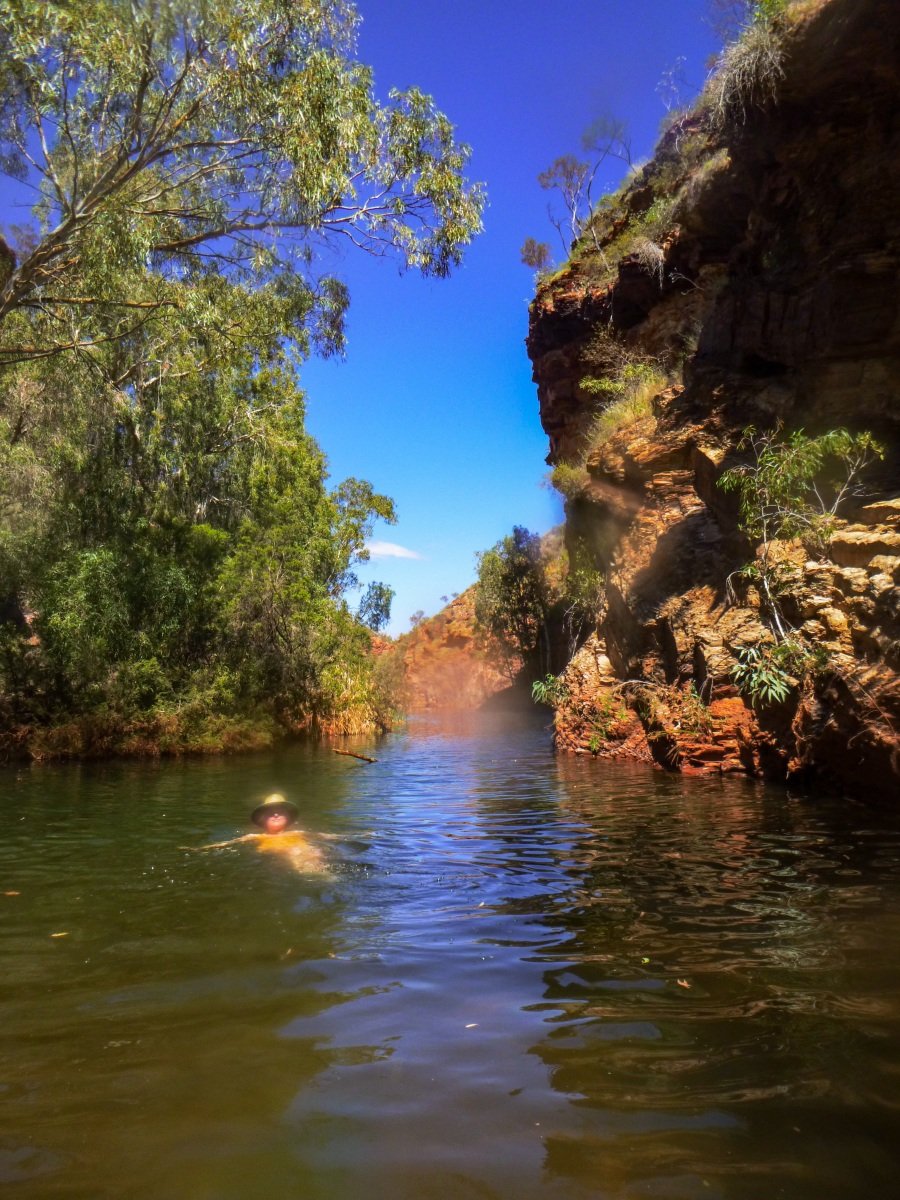
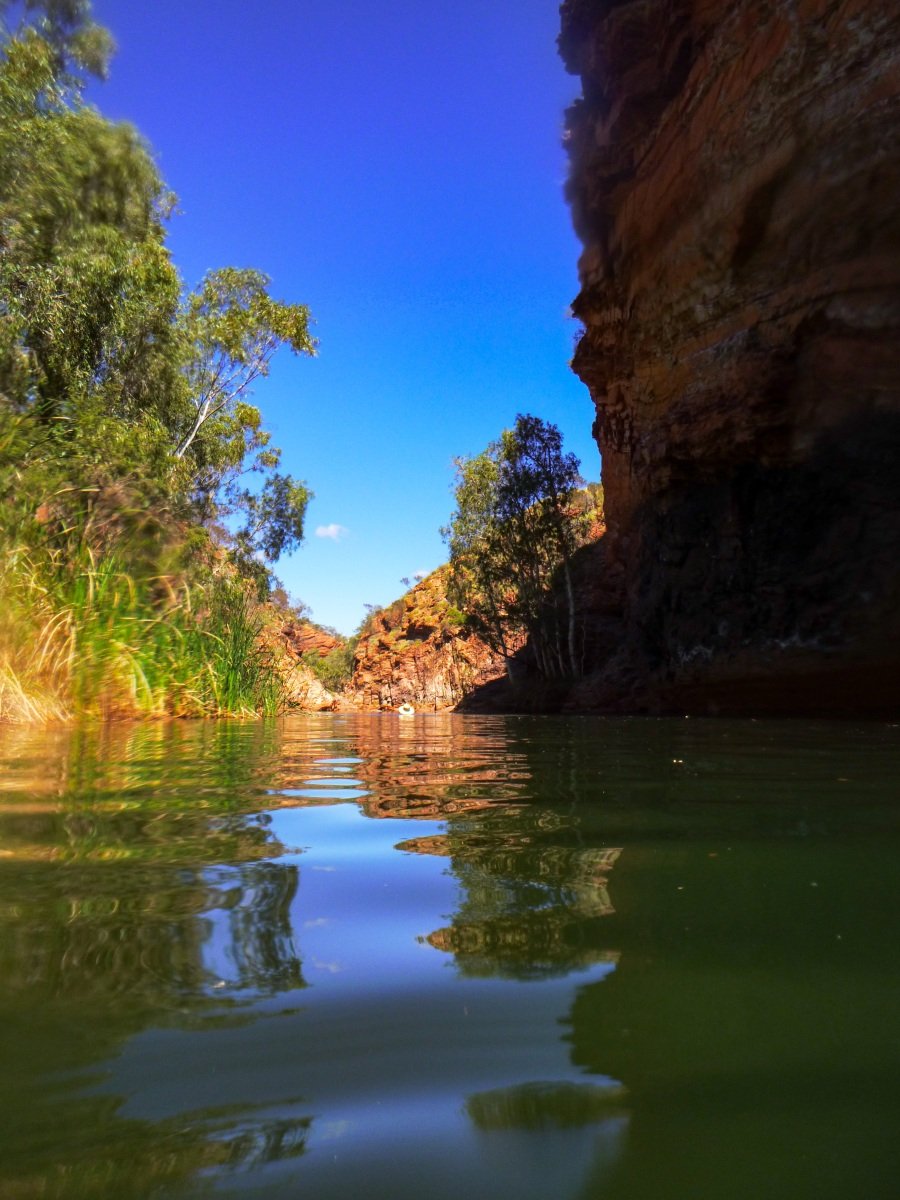
Fern Pool is about another five minute’s walk and presents a shadier place to cool off and eat some lunch. Here we change into swimmers and float about in the tree-covered waters before taking lunch.
Refreshed and rehydrated we set back to Fortescue Falls for another swim and some time to dry off in the hot sun.
Karijini’s reputation really makes sense to me now, it has been so much fun playing and exploring the gorges!
[Click on a photo to open a full-screen slide show]