Cervantes

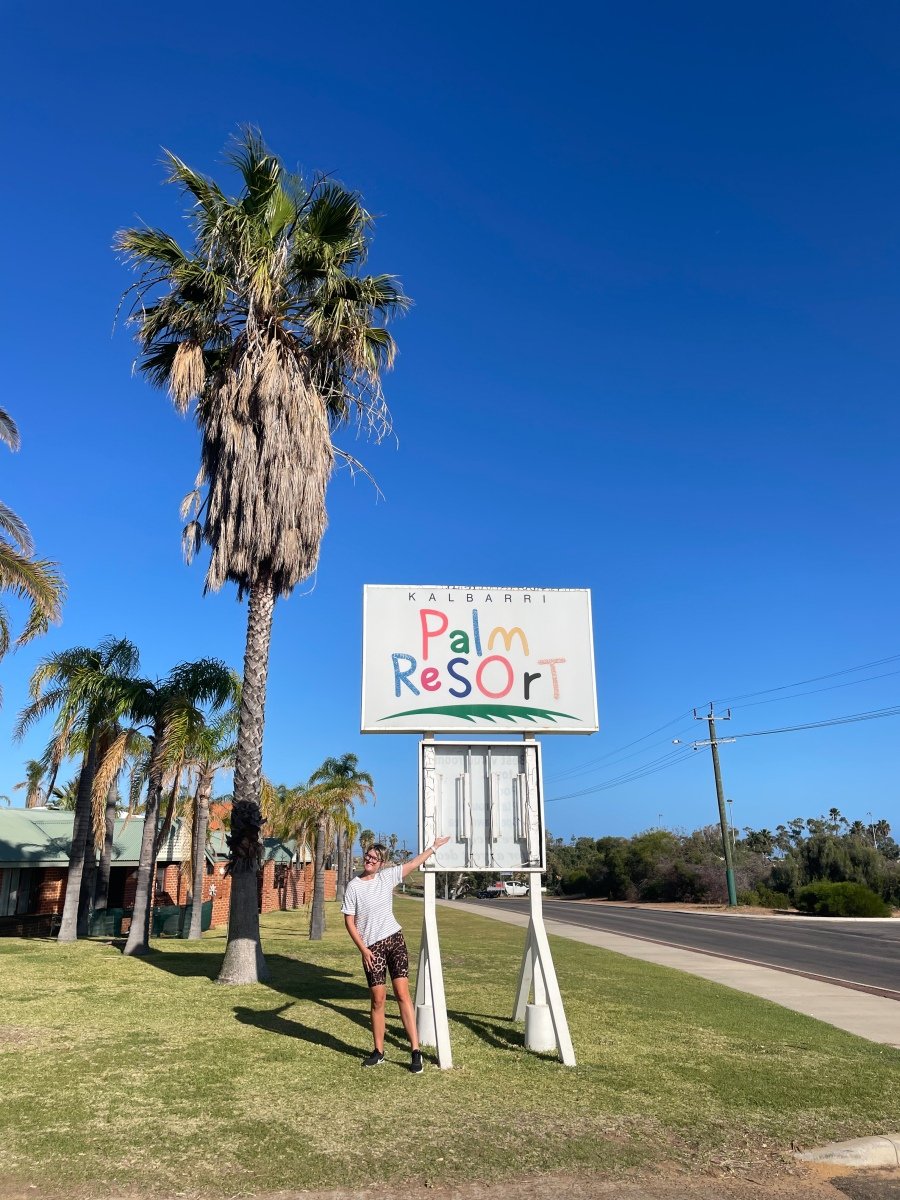
Before we leave Kalbarri the motel owner tells us about Cyclone Seroja which had about five months ago. It had caused wide spread damage to the town, and to the motel as well. They’ve been using the motel mostly to accommodate the tradies who are helping to rebuild everything, and she’s telling us how nice it is to start seeing a little more tourist activity. We really hadn’t noticed the extent of the repair work in the town (we’d mostly be out and about anyway), but as we were leaving the Palm Resort sign is also showing signs of the storm.

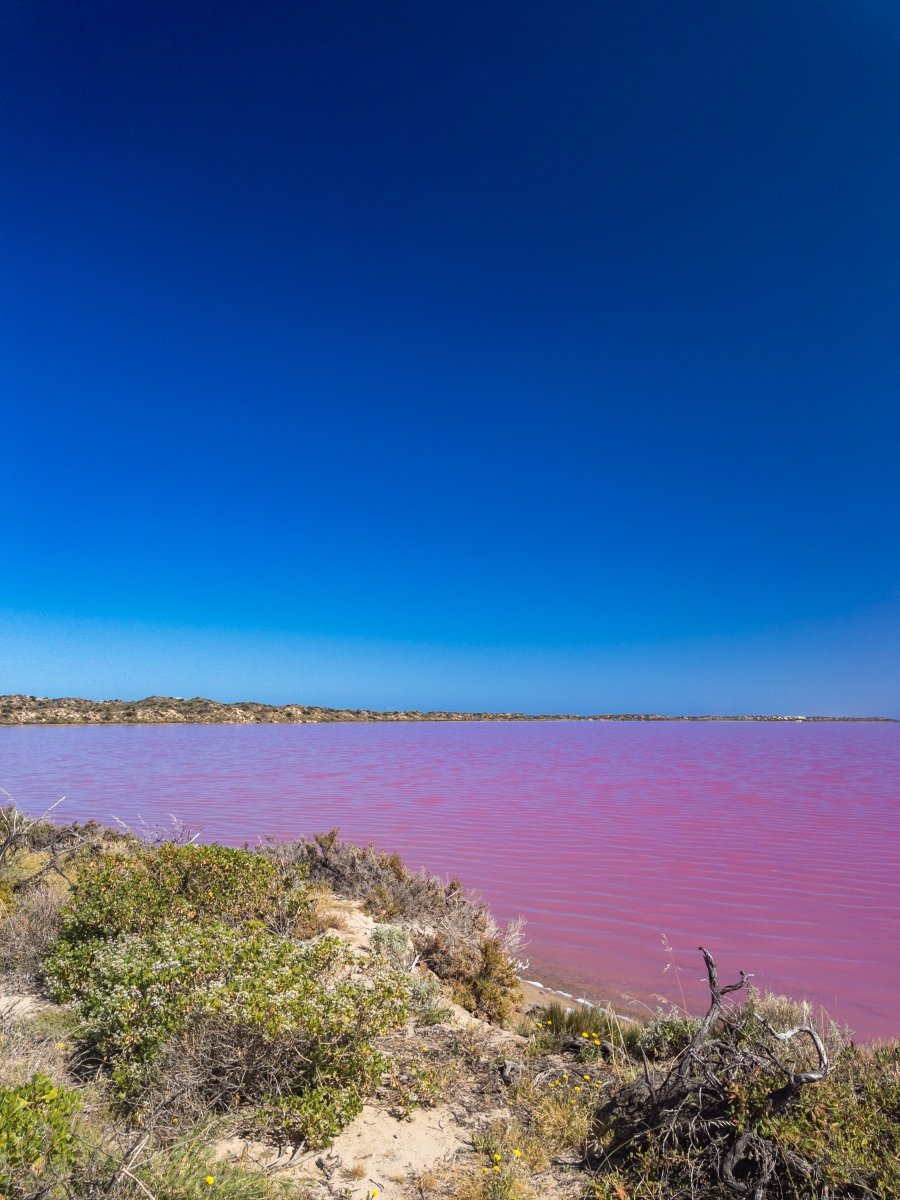
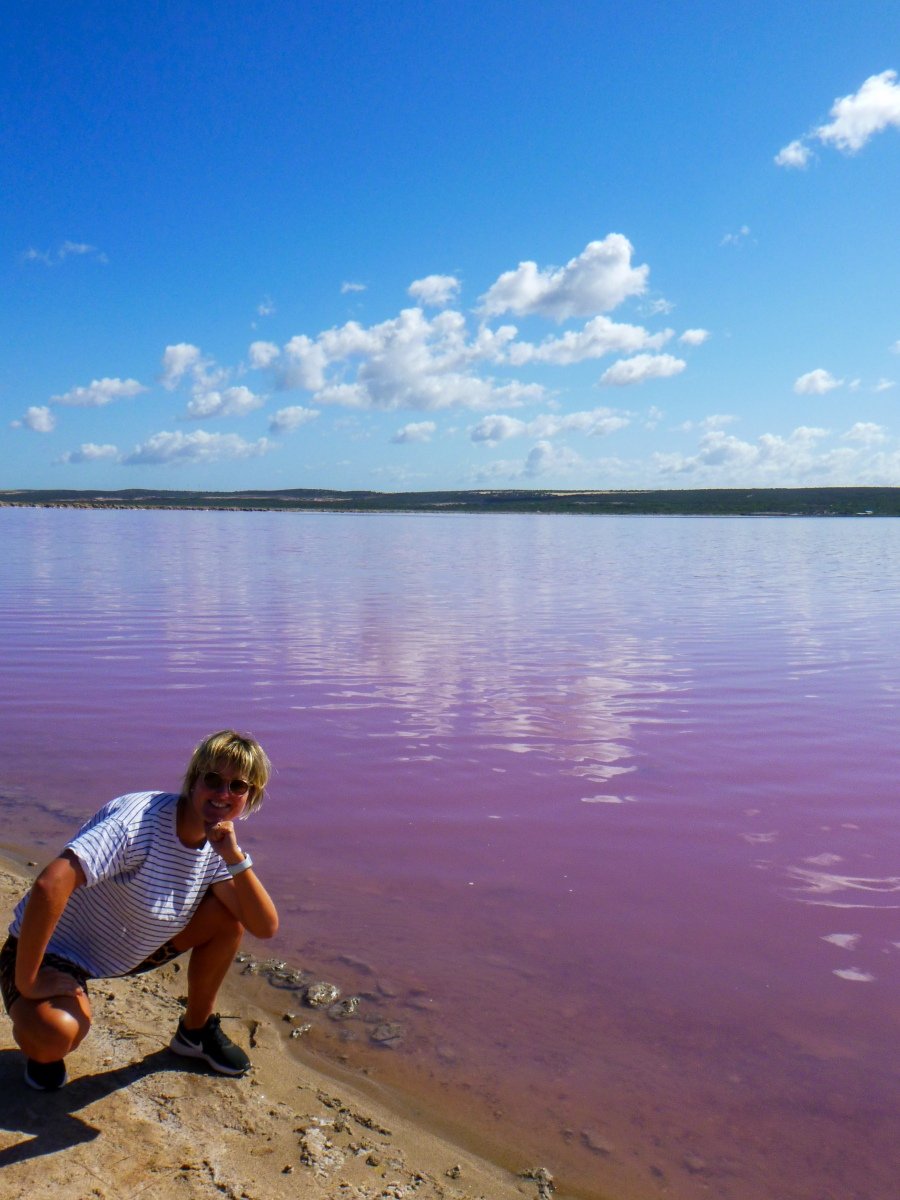
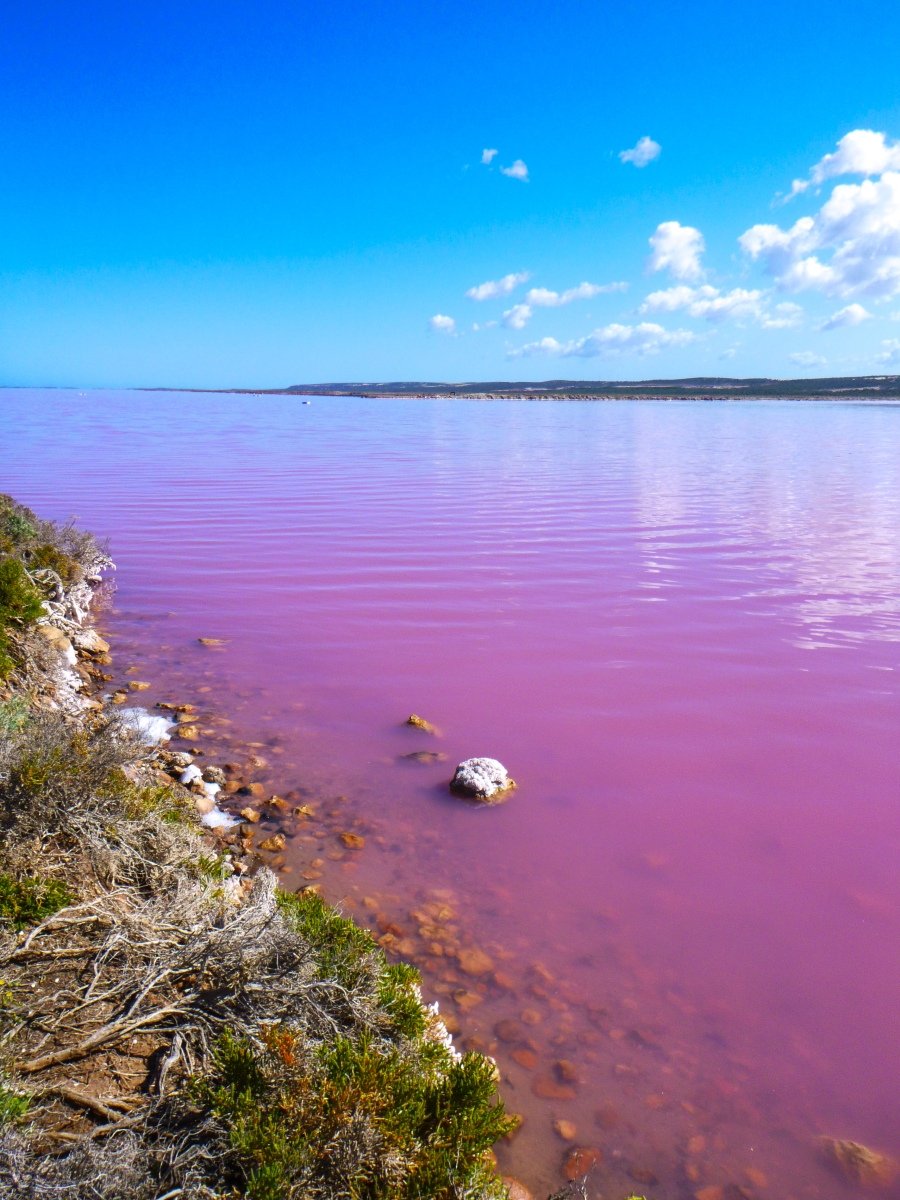
Lots to see today – we’re heading about four hours south to Cervantes, but we’ll be detouring to chase more wild flowers. Our first stop is Pink Lake. Some kind of algae activity which makes the water pink, and it’s quite a stunning sight! There are a few good places to stop and get a good look. At one there are some tourists wading deep into the water, but it just seems slightly gross to be getting right into it. So we walk by the water’s edge finding good angles to photograph the lake.

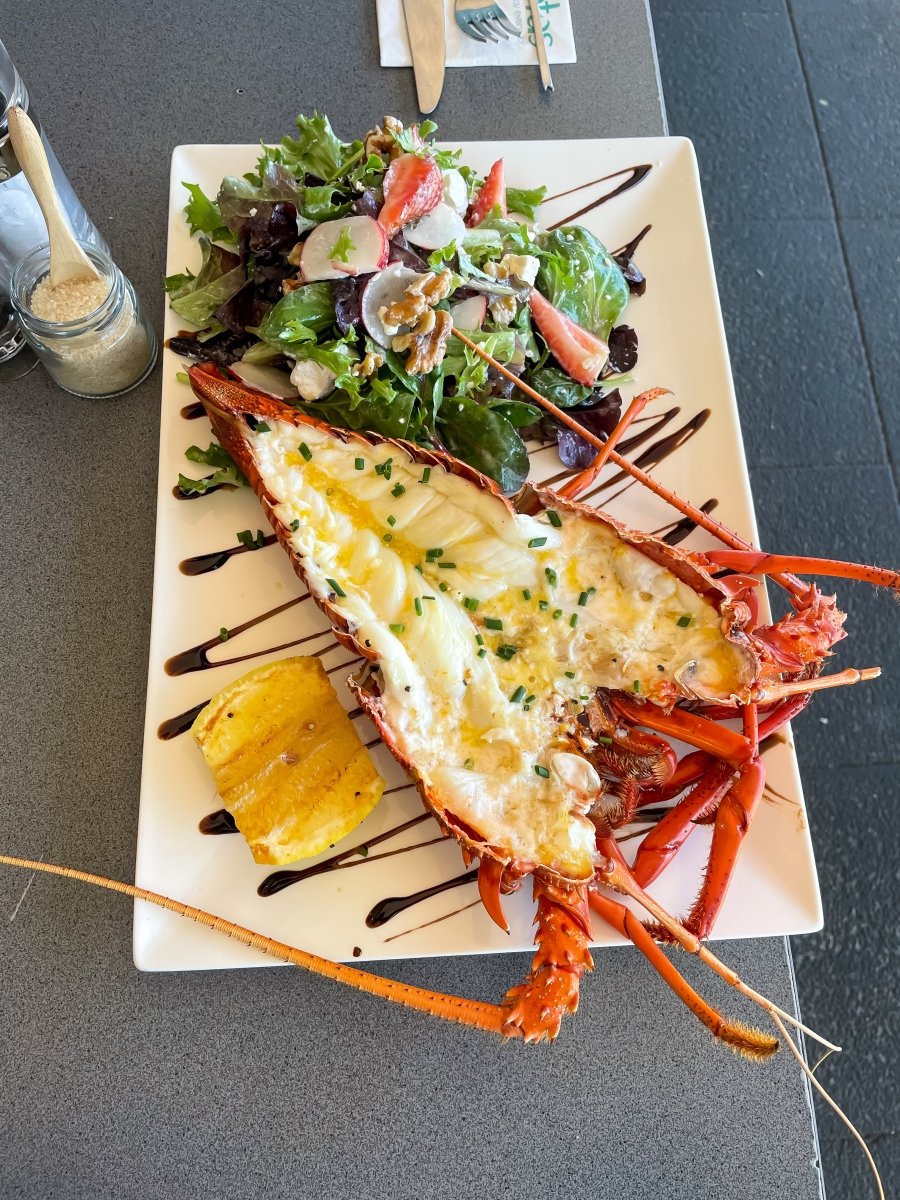
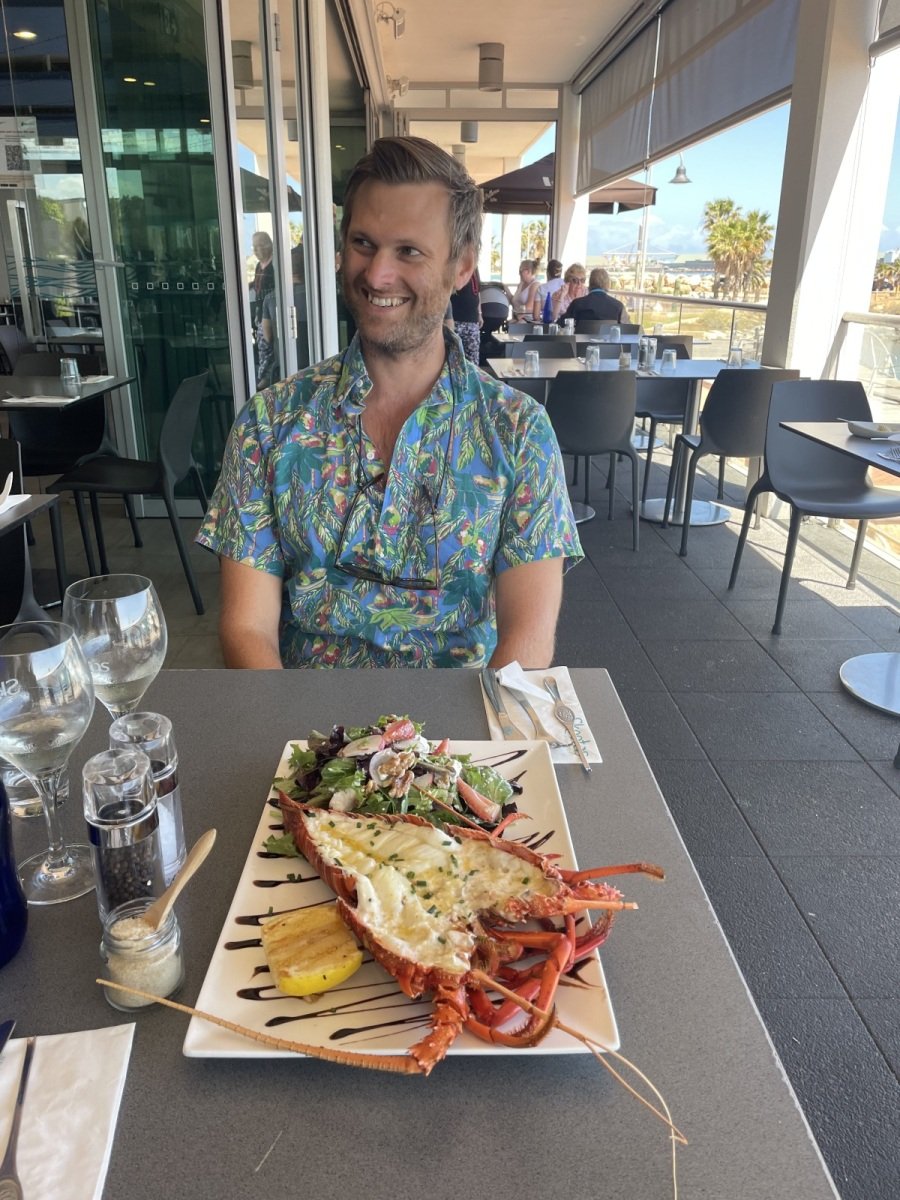
We arrive in Geraldton for an early lunch, we’ve been reading that this part of the WA coast is good for seafood, so we splash out and order oysters and lobster at Skeetas. Even since eating oysters in San Francisco I have a new-found enjoyment for them. And these are great. From time to time the holiday feeling is more noticeable, and there’s something about an early lunch with few other guests on a sunny day that brings that feeling.

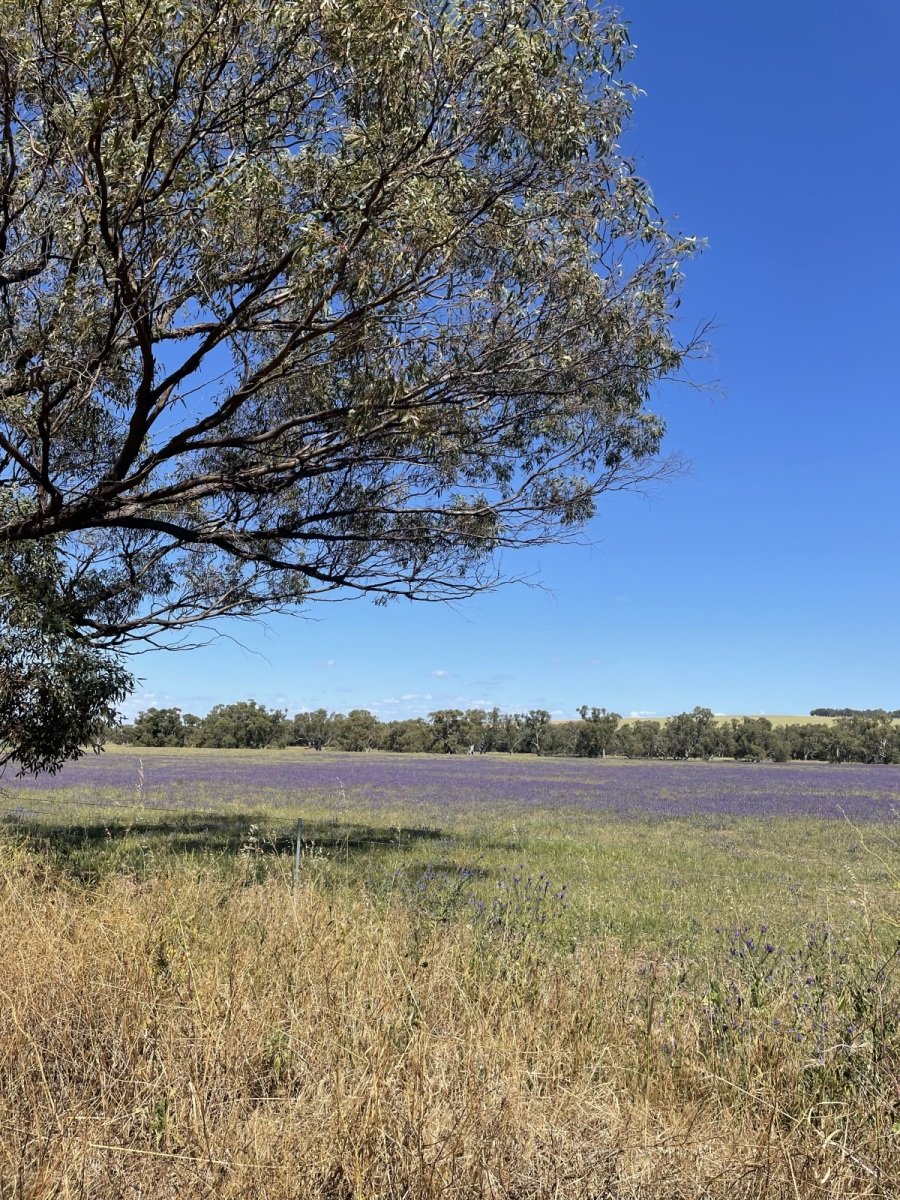
A little research over lunch tells us that wild flowers info can be found at the Mingenew Visitors Centre. We drive an hour and half to Mingenew to find the visitors centre closed and sparse info on wild flower locations. So we wander back in the direction of the highway keeping an eye out for any we can see. There are a few distant field with some flowers, but nothing very accessible. Then we come across a field of purple flowers so we stop for a few photos. As I walk back to the car a bee gets blown behind by glasses and in a panic stings me right below my eye. As my eye swells and waters, Anna is yelling to get off the road (in my pain I must have walked backwards). Anyway, Anna takes on the driving for a bit to let me regather my composure. I support bees should be predicted around flowers!

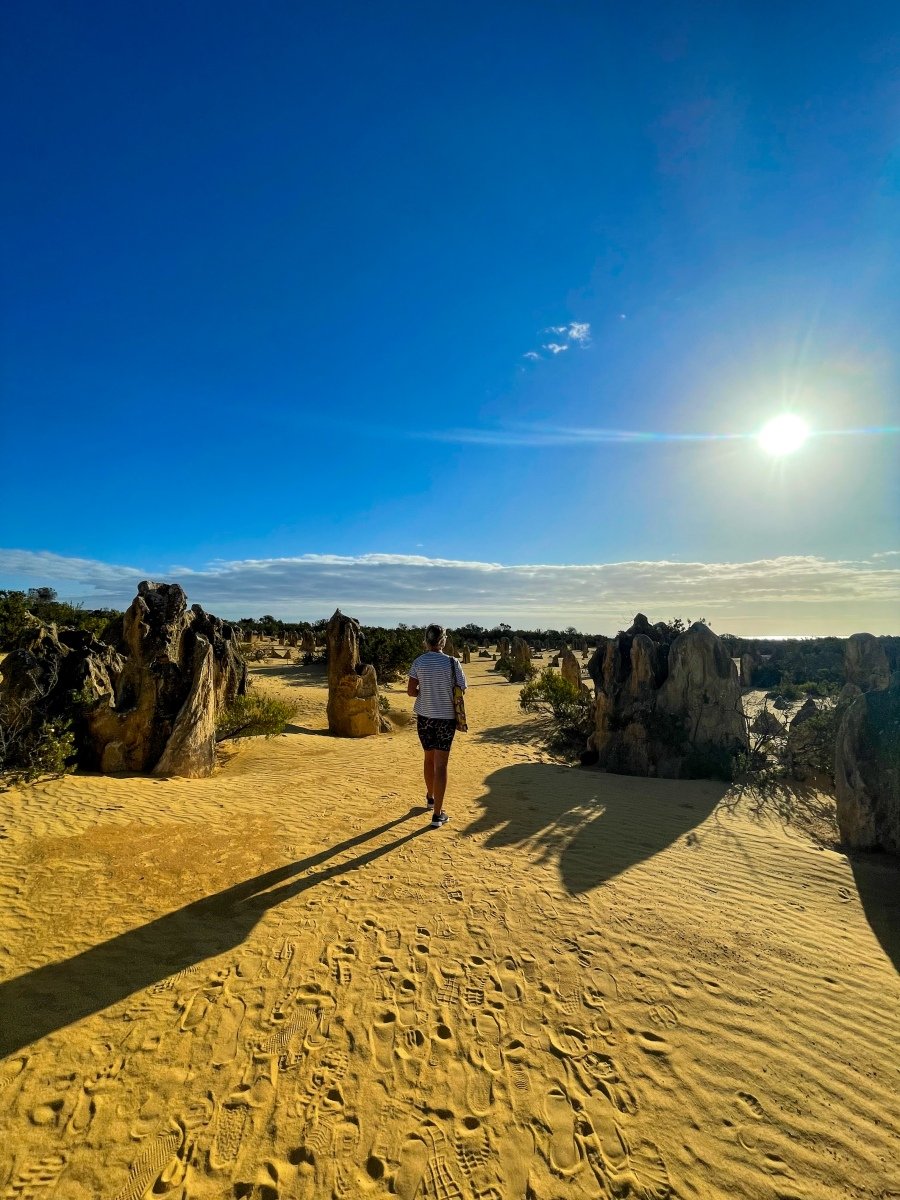
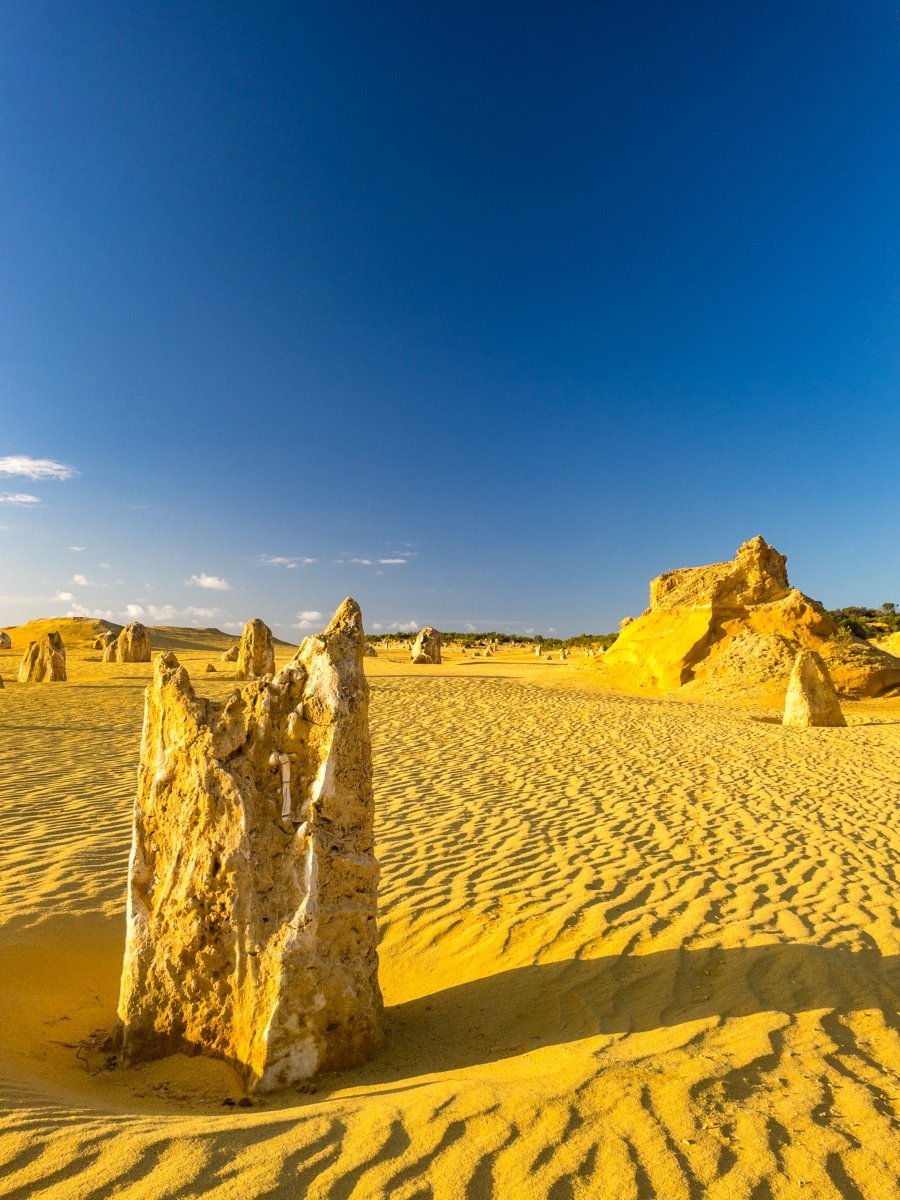
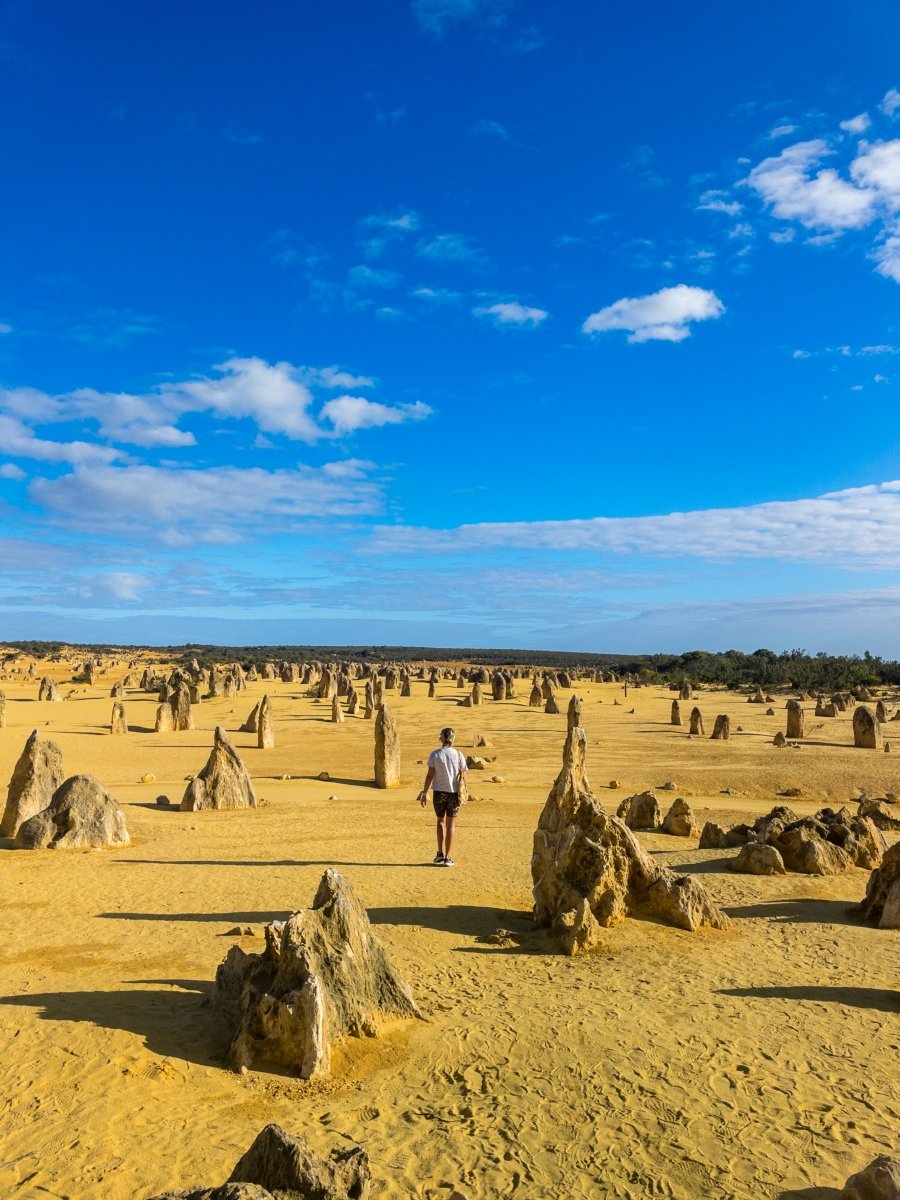
Another three hours down the road we stop at the Pinnacles Desert. The landscape here is truly unique. It’s reminiscent of some of the landscapes in Iceland, in the sense that it feels otherworldly and special.

The pinnacles are towers of limestone, some in clusters, others standing on their own. The towers are mostly human-sized, and so walking amongst them is like walking with sentient beings firmly rooted in place all around me. The towers have characters too, they might be leaning in towards each other like speaking in hushed tones; or standing proud and tall and alone; or some like a family with the smaller children playing nearby. At times the place feels much more like a graveyard, packed with headstones all around the place, then it begins to be like hallowed ground. Long shadows grow as we take our time walking in the sandy remnants of an ancient sea.

Eventually we leave and check into a motel in Cervantes.
Kalbarri – day 2

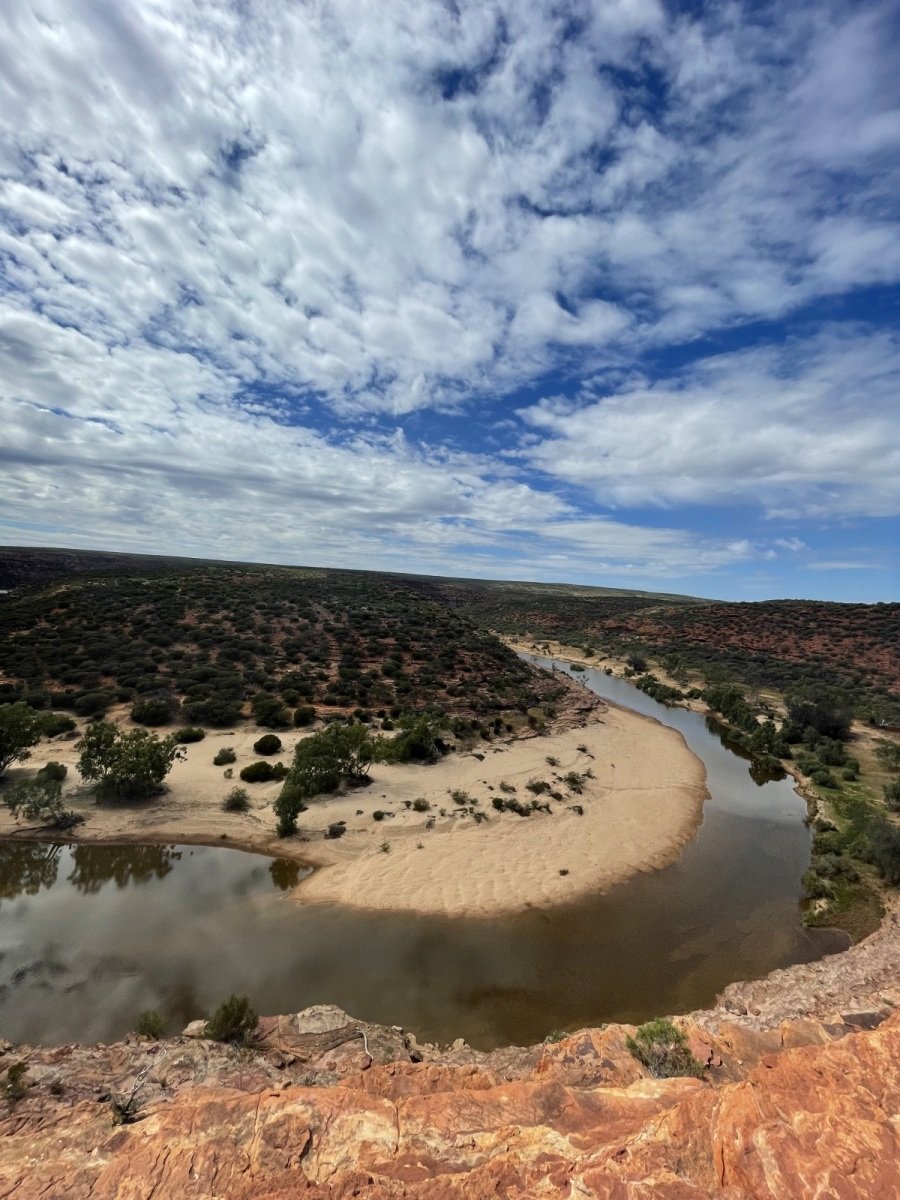
Good walking weather when we head off from the Palm Resort – we’re off to the Loop and Nature’s Window this morning. Puffy clouds streak the bright blue sky overhead as we drive into the park. The heat of the day is building, although right now it’s more of a sense of the heat that will come.

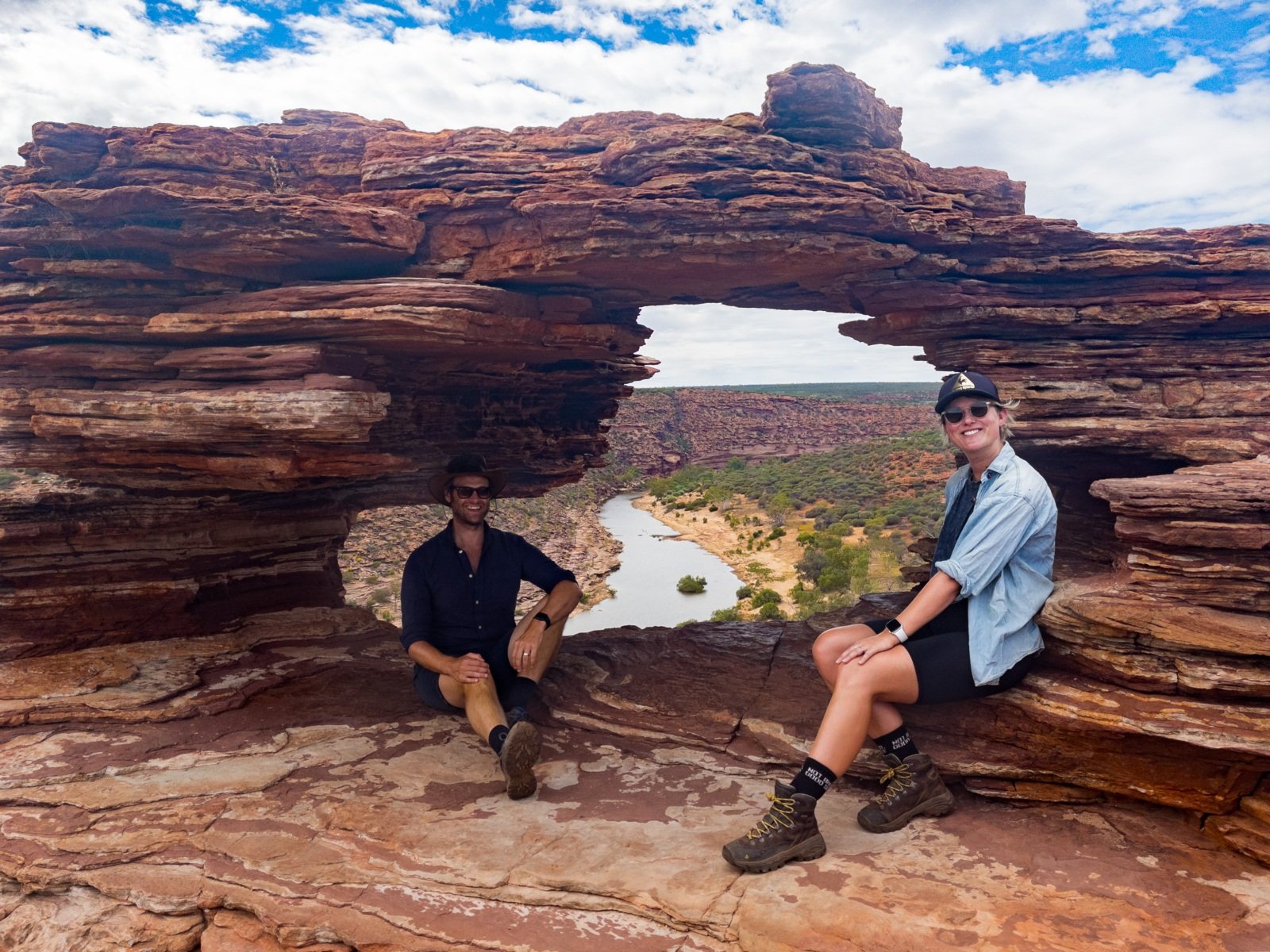
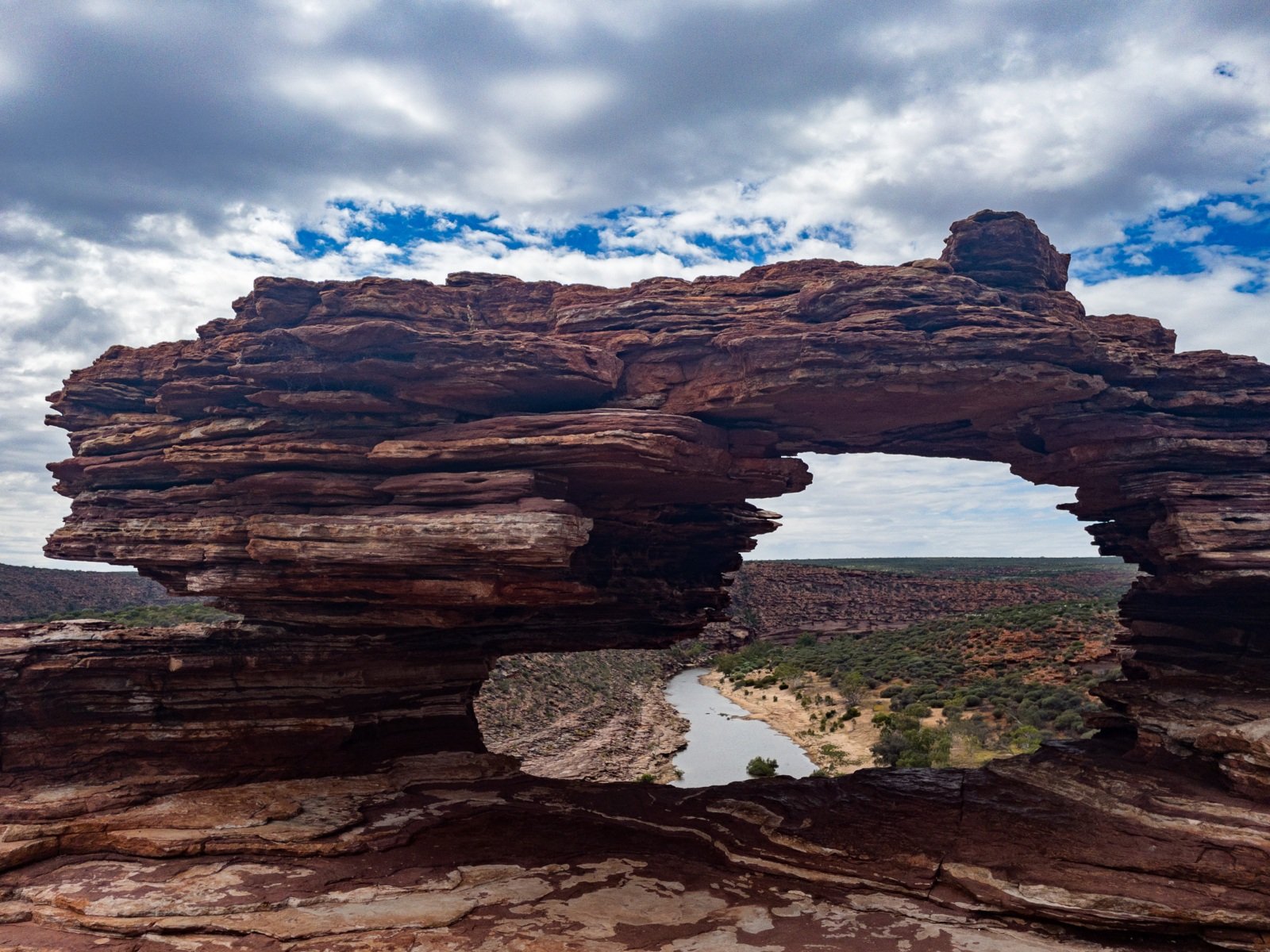
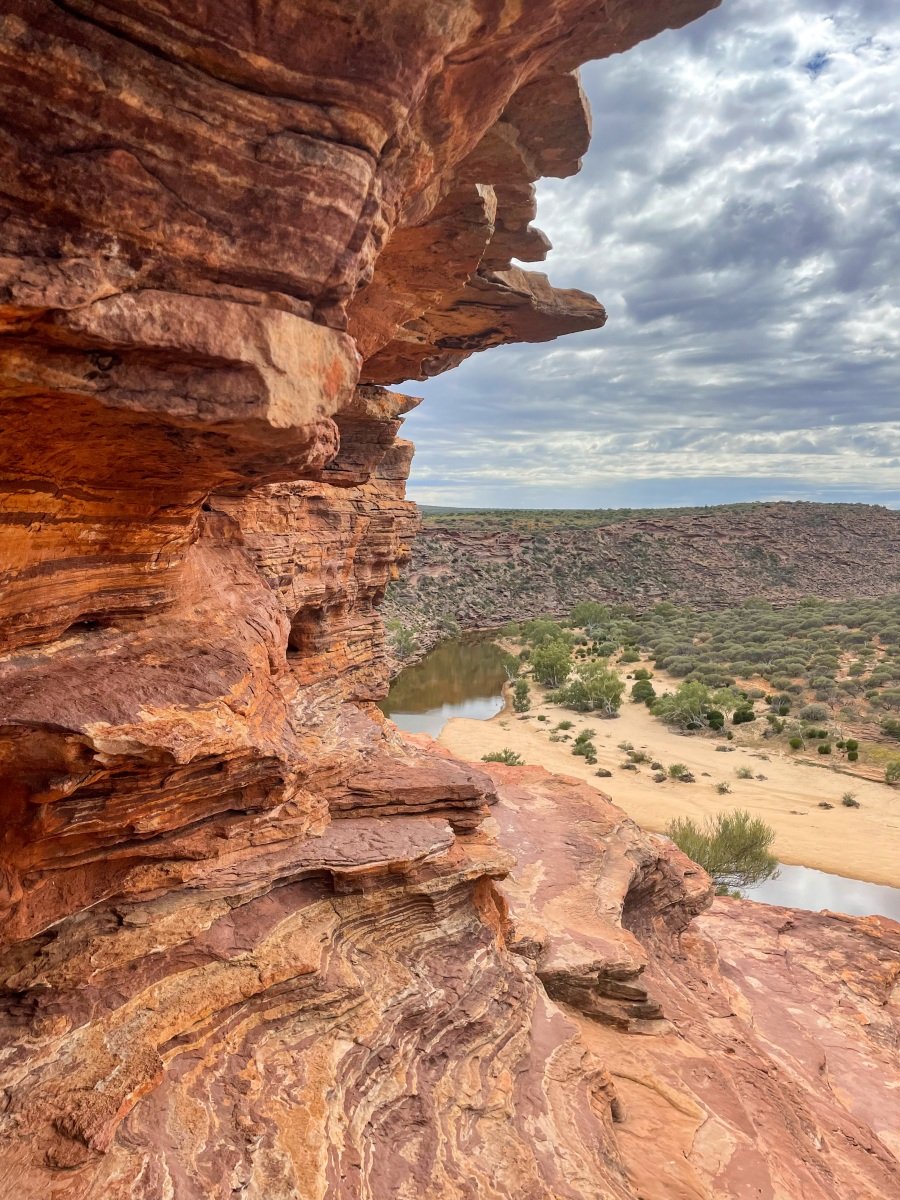
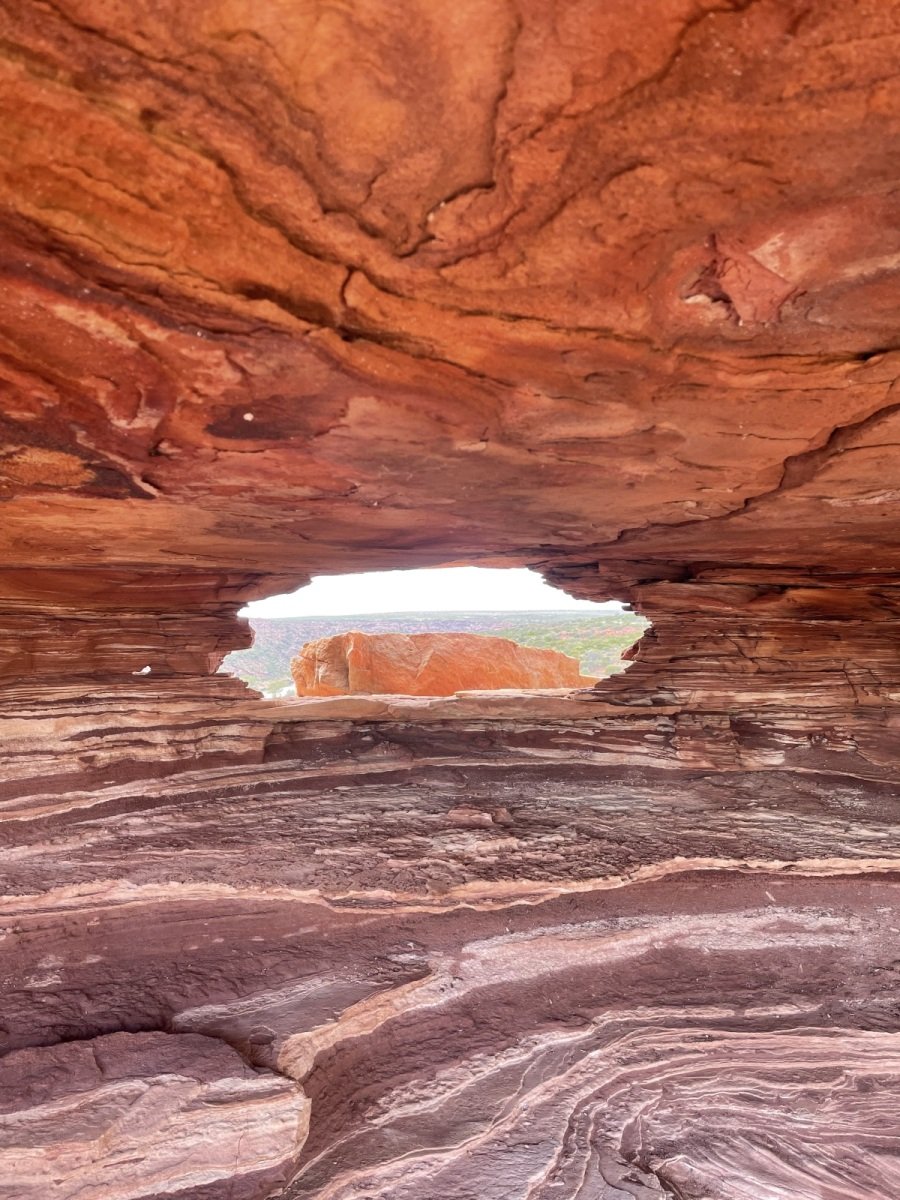
There’s a small crowd of people at Nature’s Window when we get there. After waiting our turn we get some photos through the window and set off on the rest of the walk. It’s about 10km around the rim of the river, eventually head down to the sandy shore before climbing back up to the Window again. The short walk from the car park was easy, past the Window, signs begin warn walkers of dehydration and risk of death (one person died here last summer).

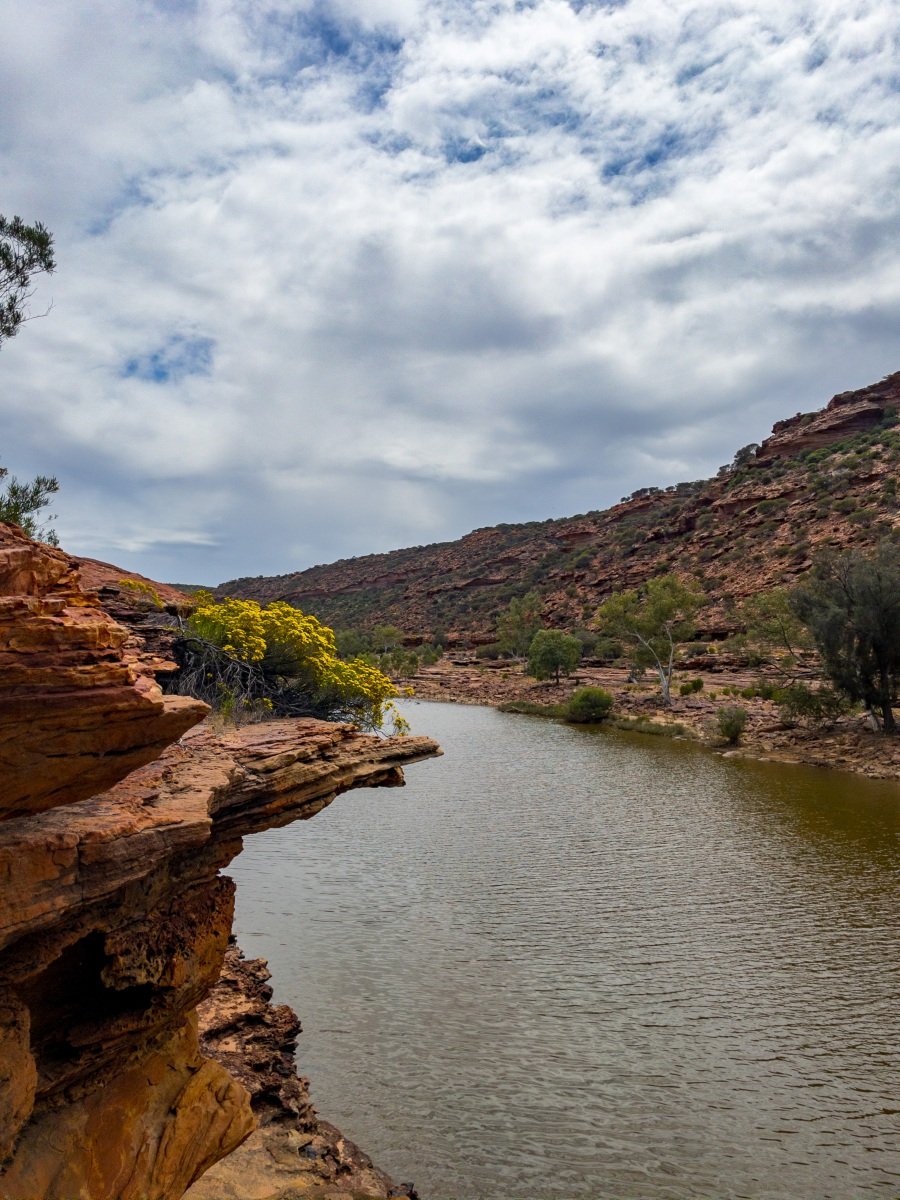
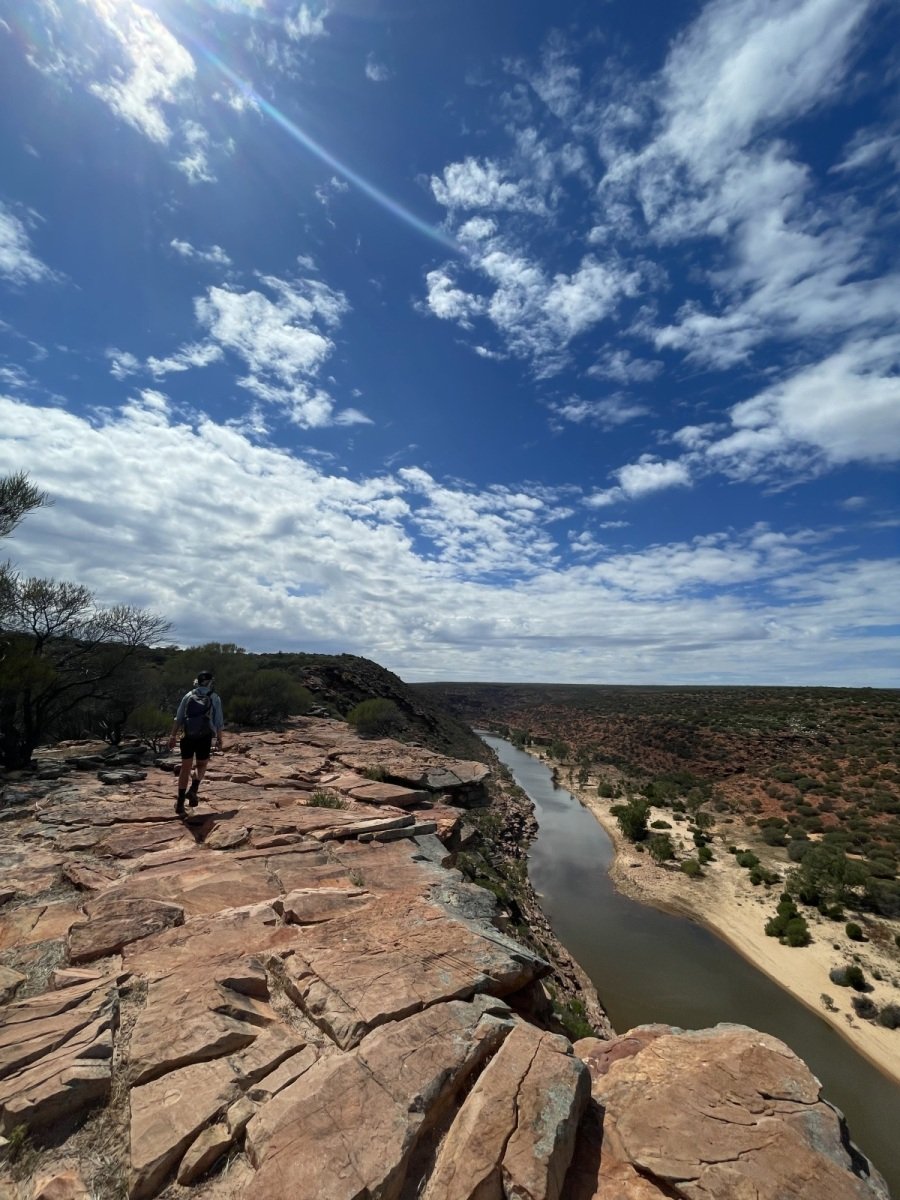
About a kilometre into the hike, the ridge gives a vantage point directly along the Murchison River. We come across a group of six walkers, with young children and a single 600ml bottle of water. They nervously ask us about whether they should continue on the walk, we send them back knowing that between us we have nearly six litres of water and the temperature is rising fast.

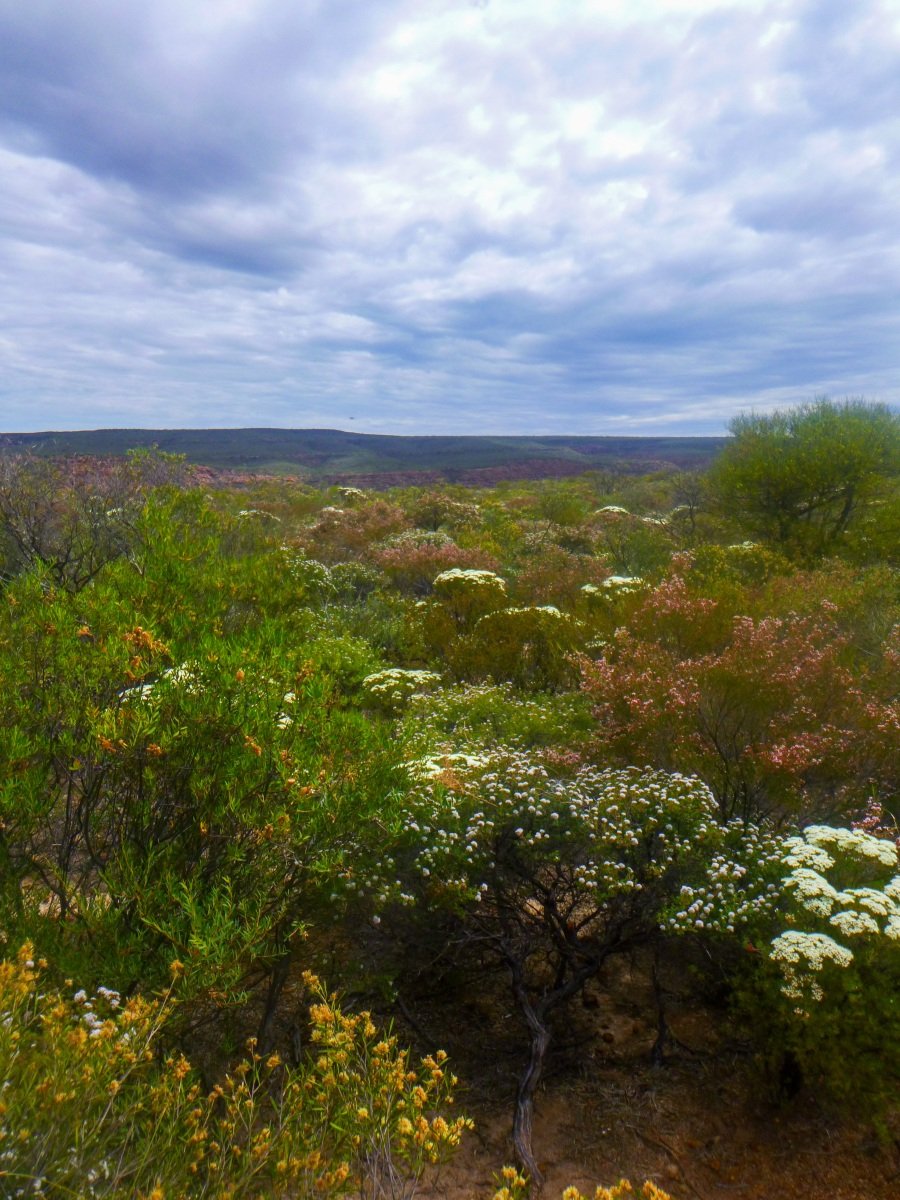
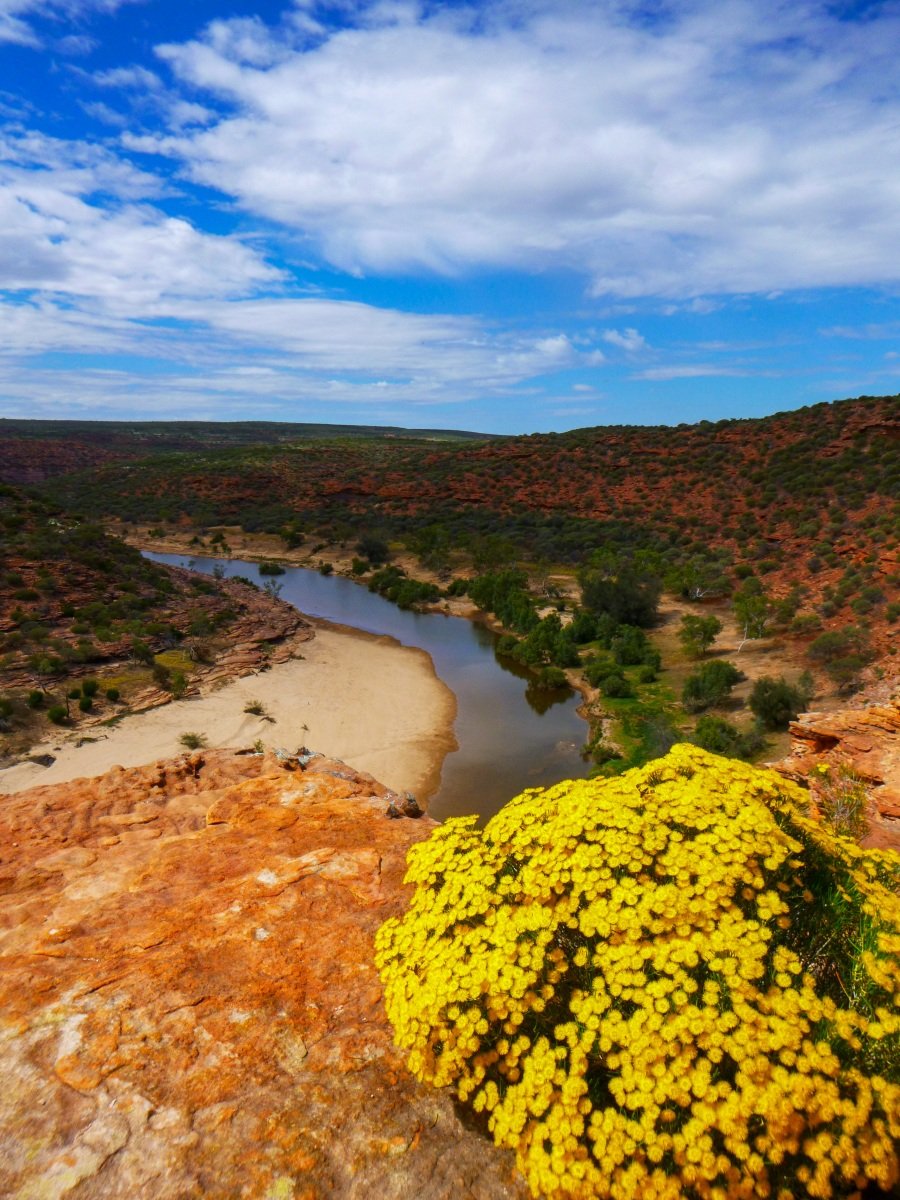
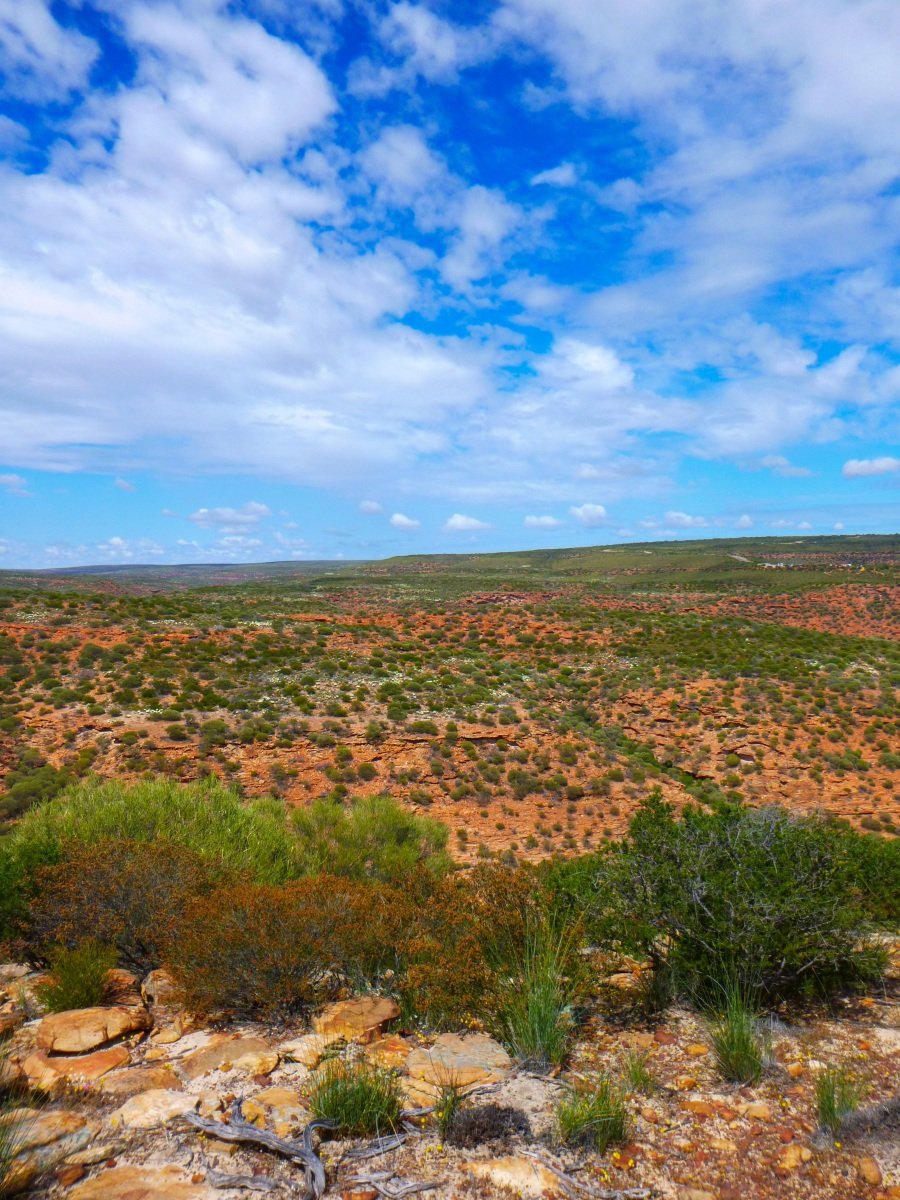
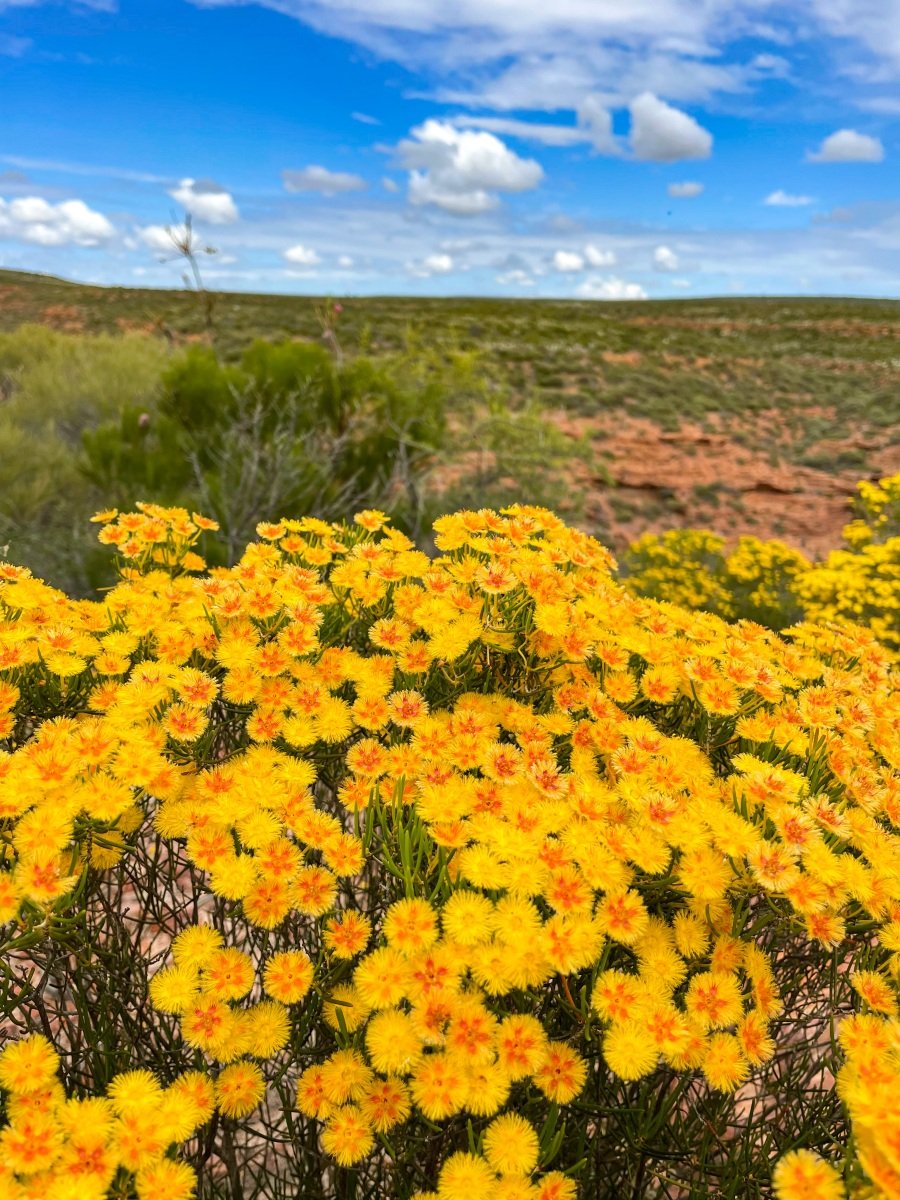
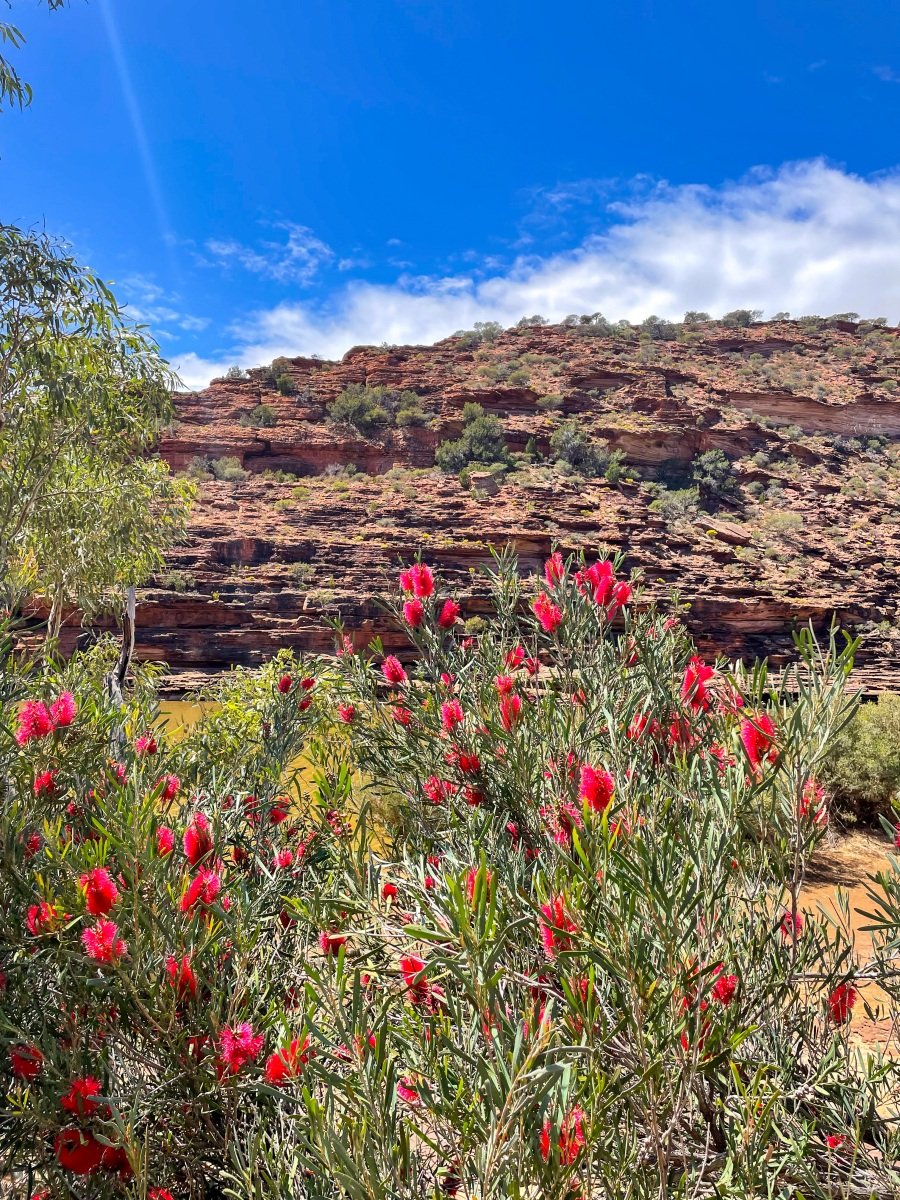
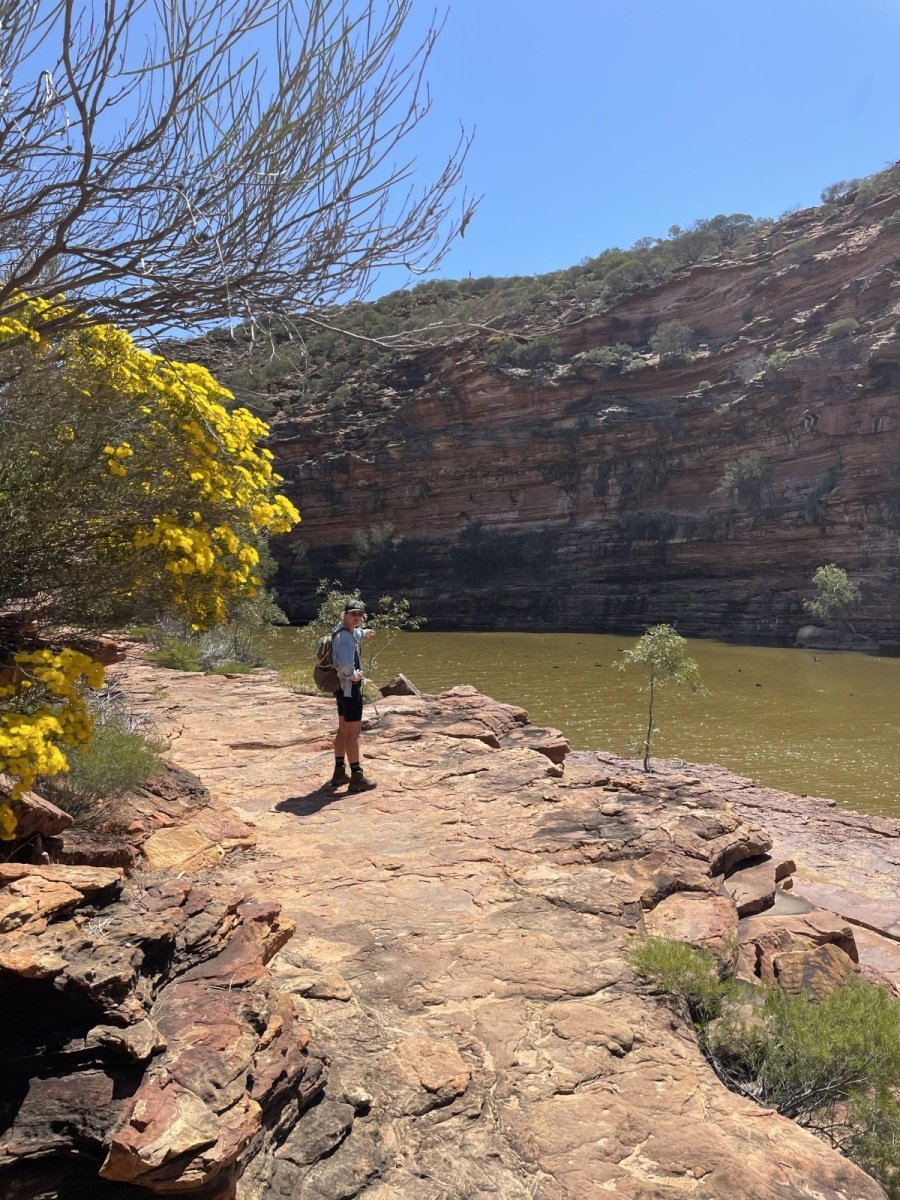
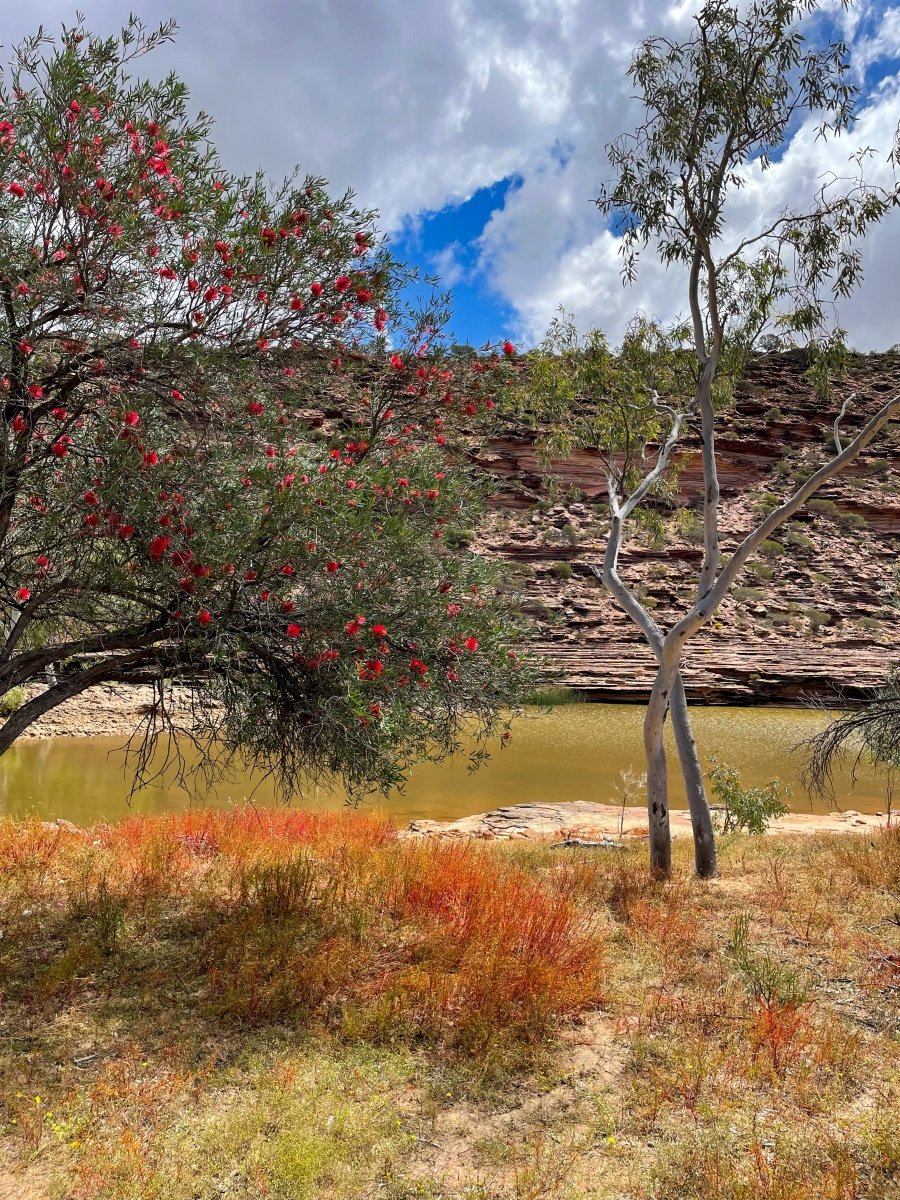
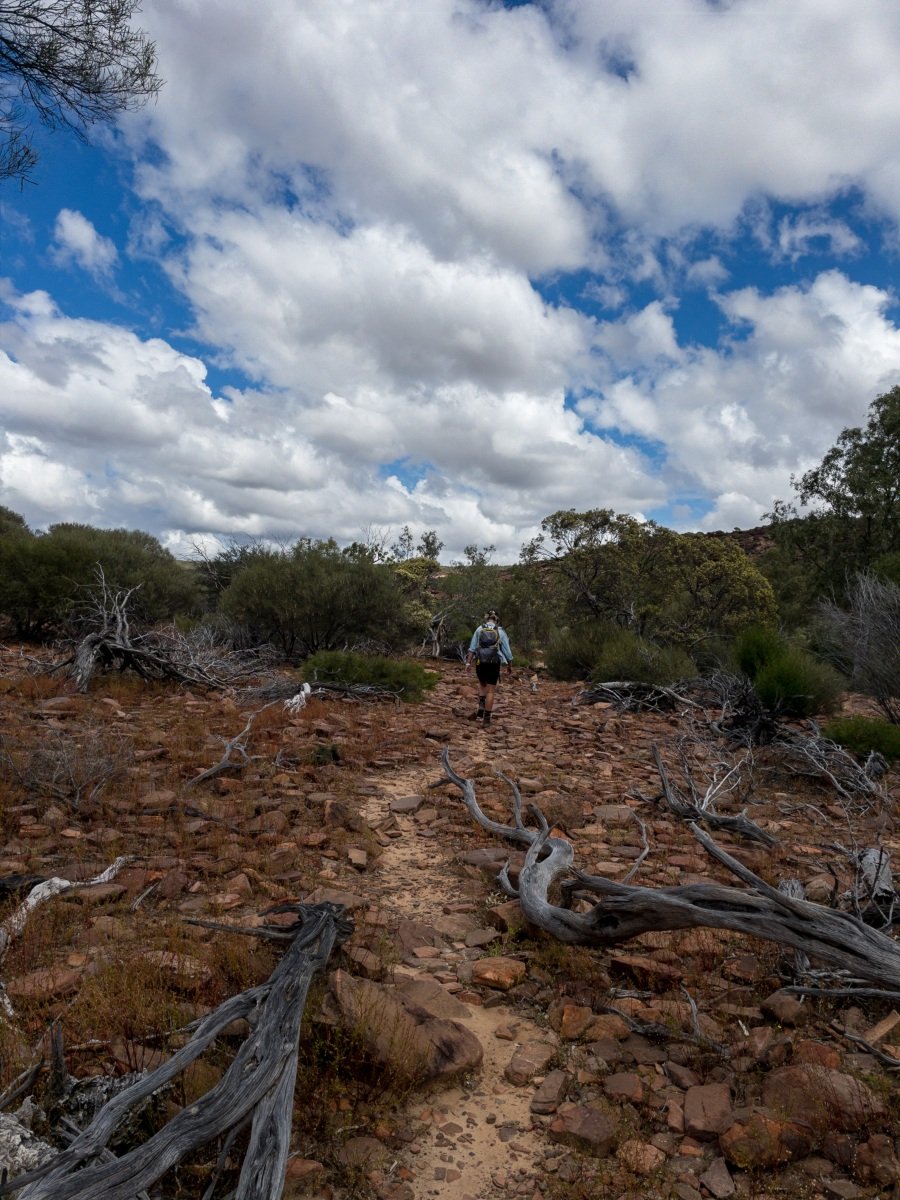
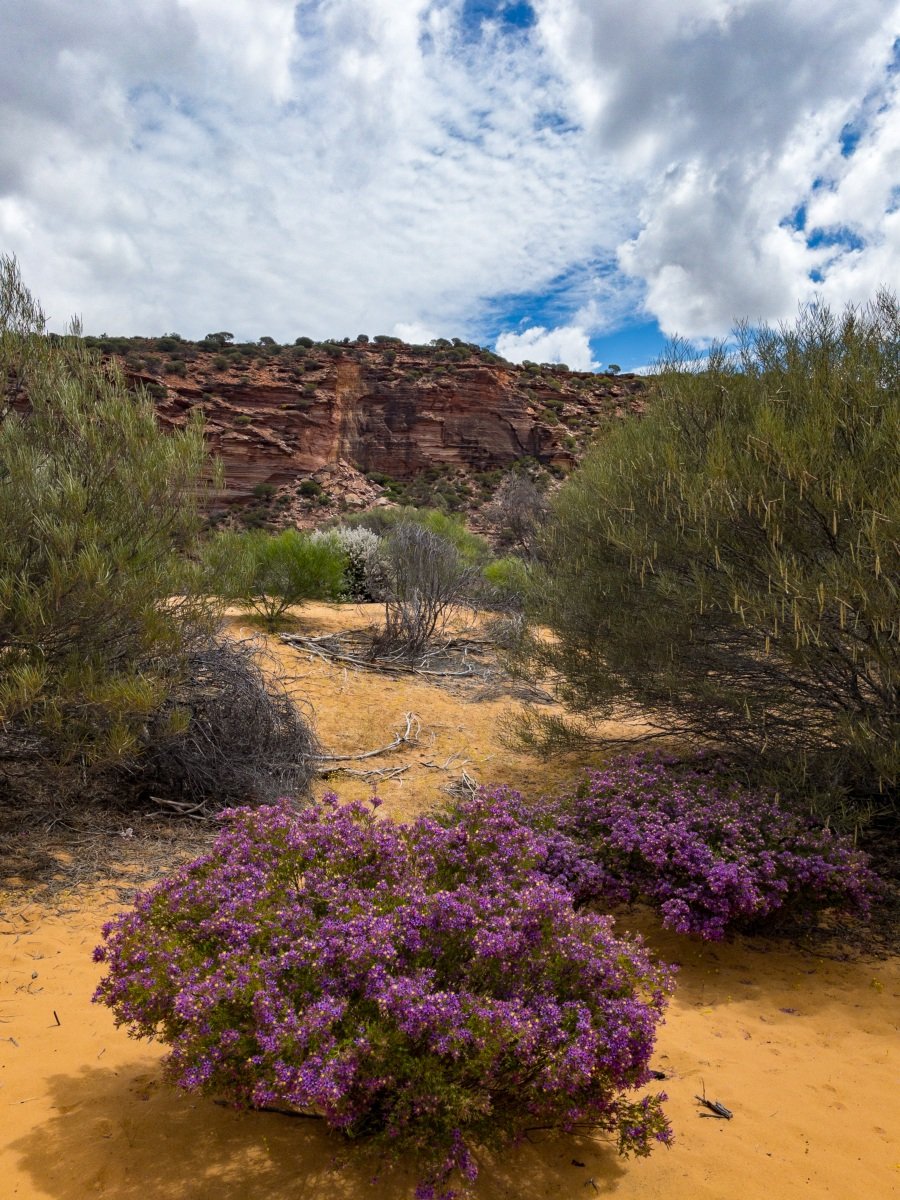
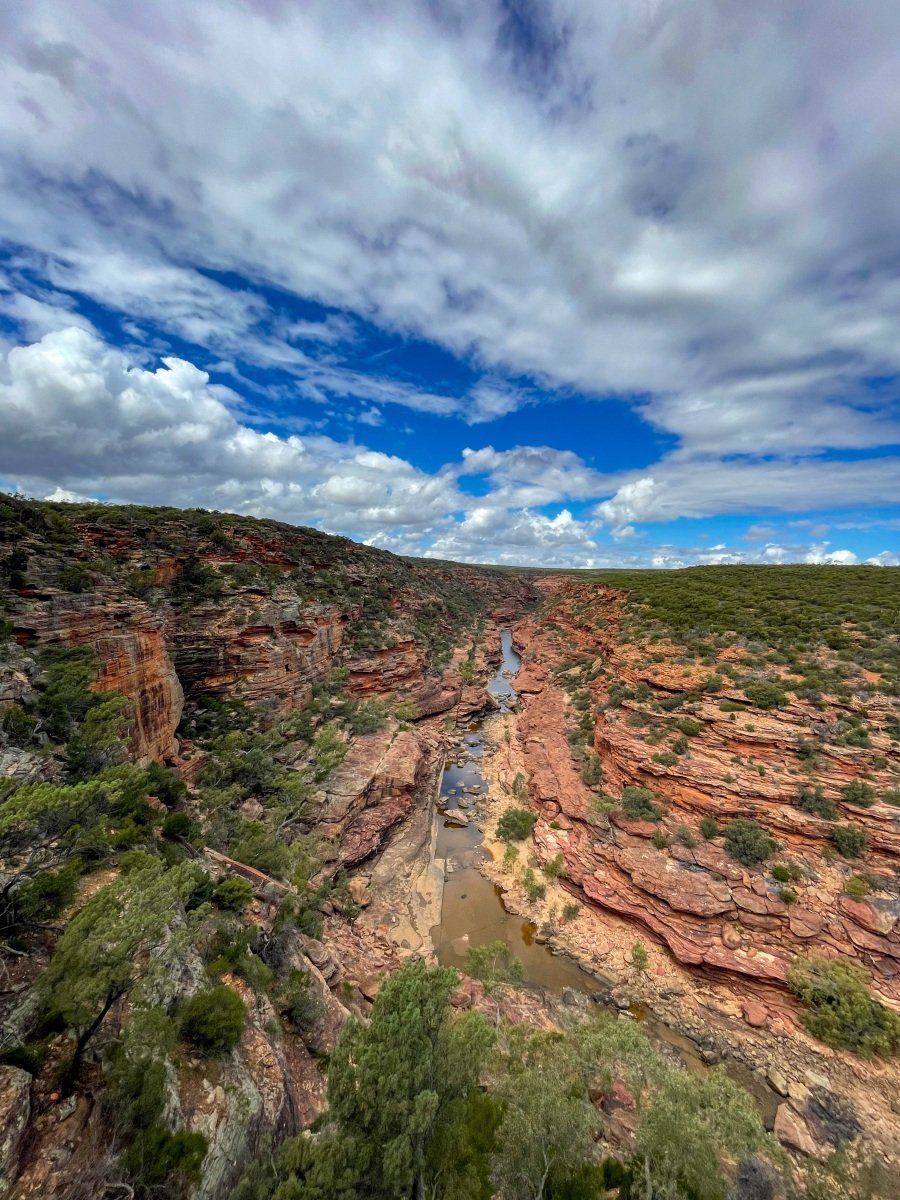
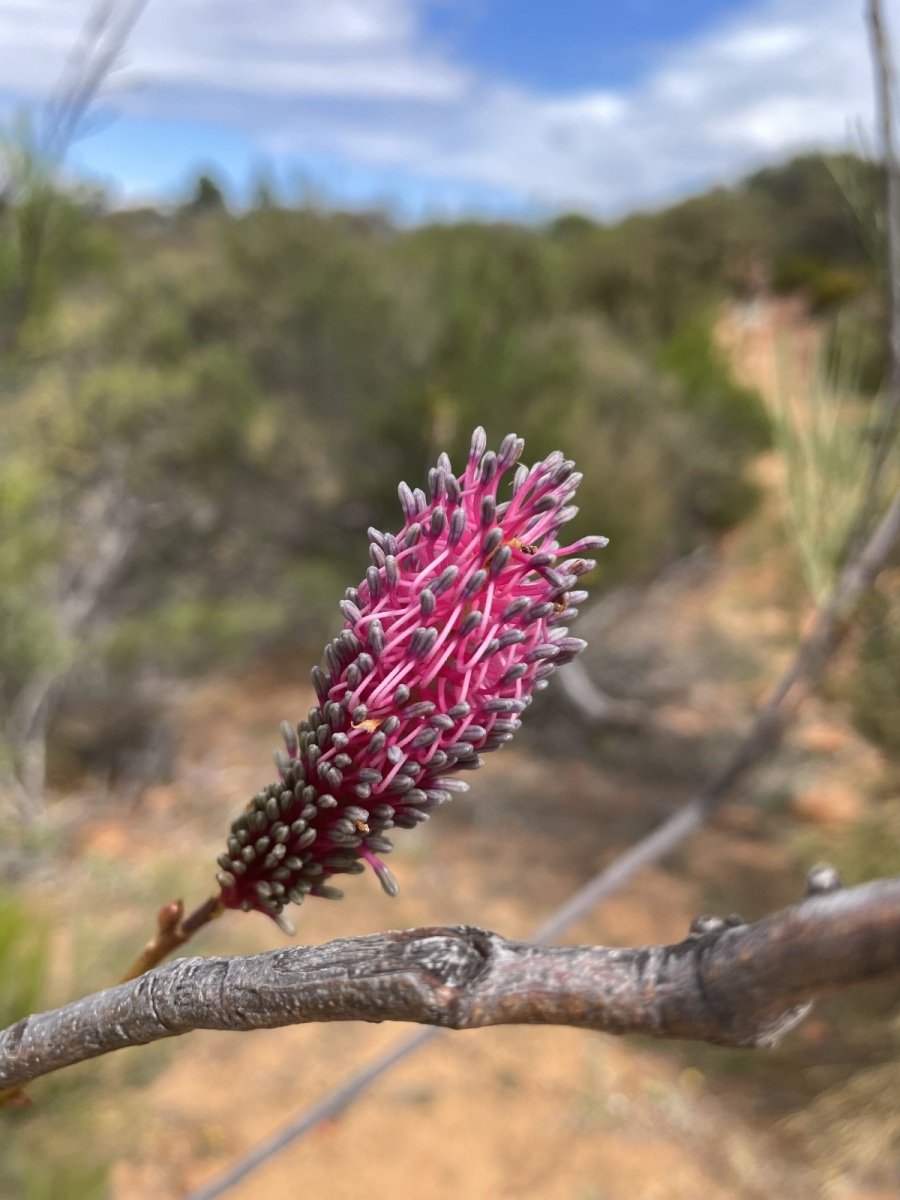
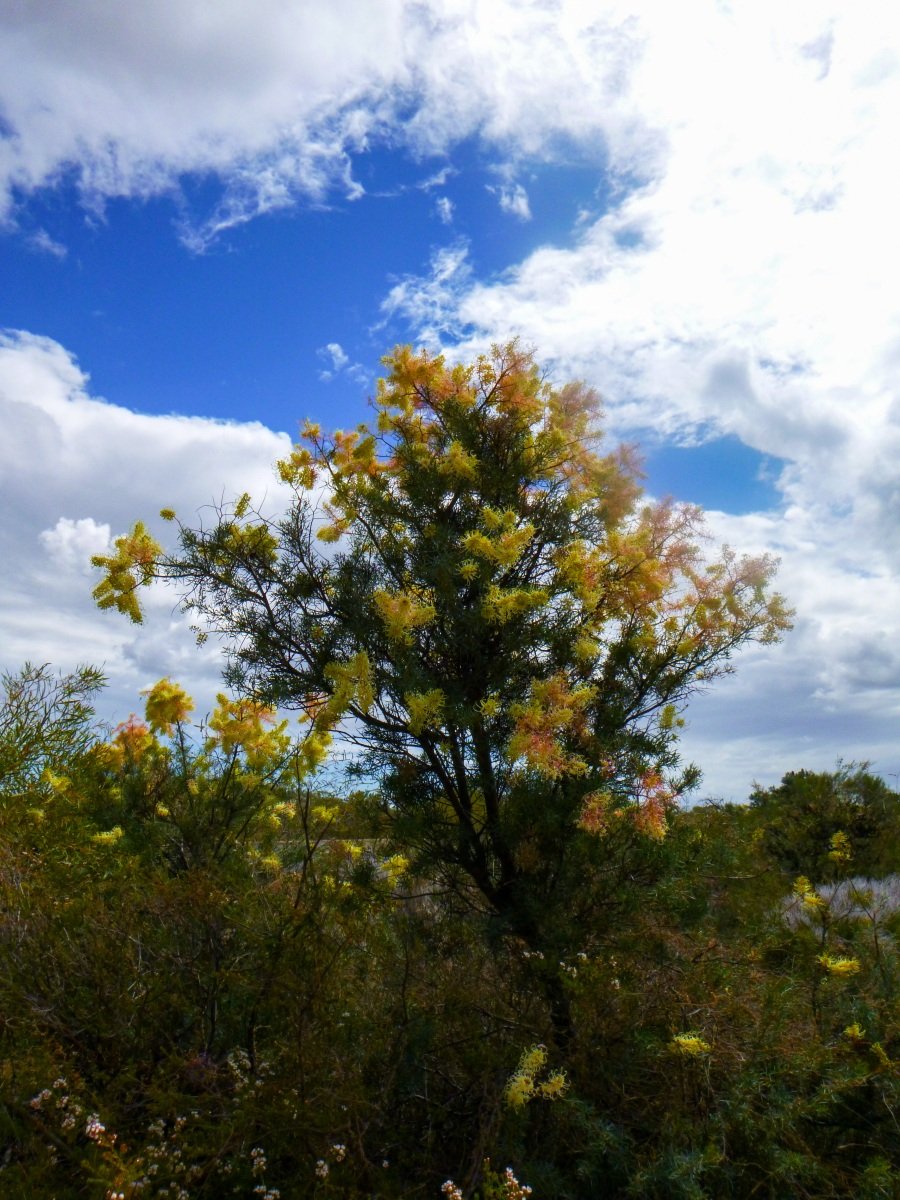
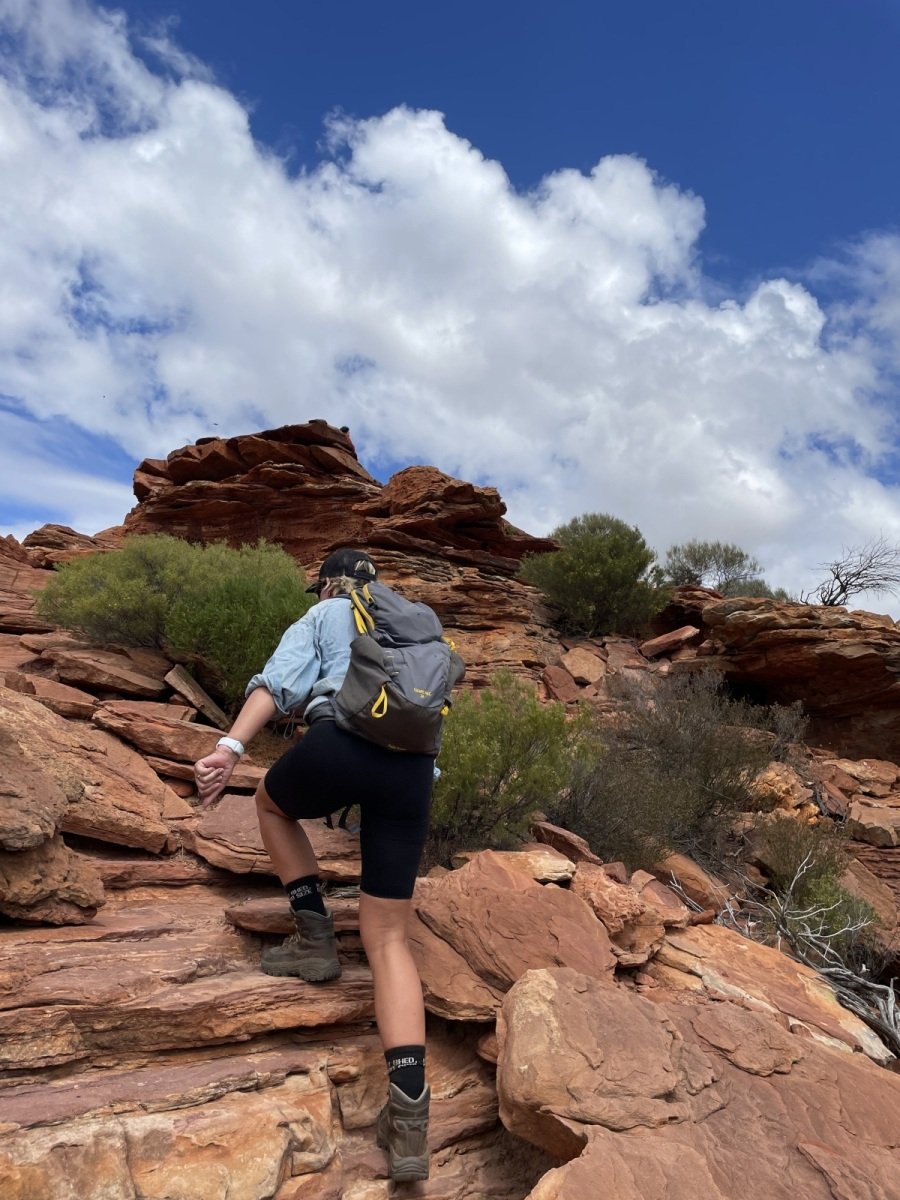
The land is hard rock is all directions, with plants clinging to every available crack. Low bushes and grass are all that can grow in the higher places, but large trees find life closer to the river. We are lucky to have timed our visit with wild flower season, so pockets of colour are all around us. Yellow, red, purple and white flowers bob in the breeze, giving us small stops along the walk.

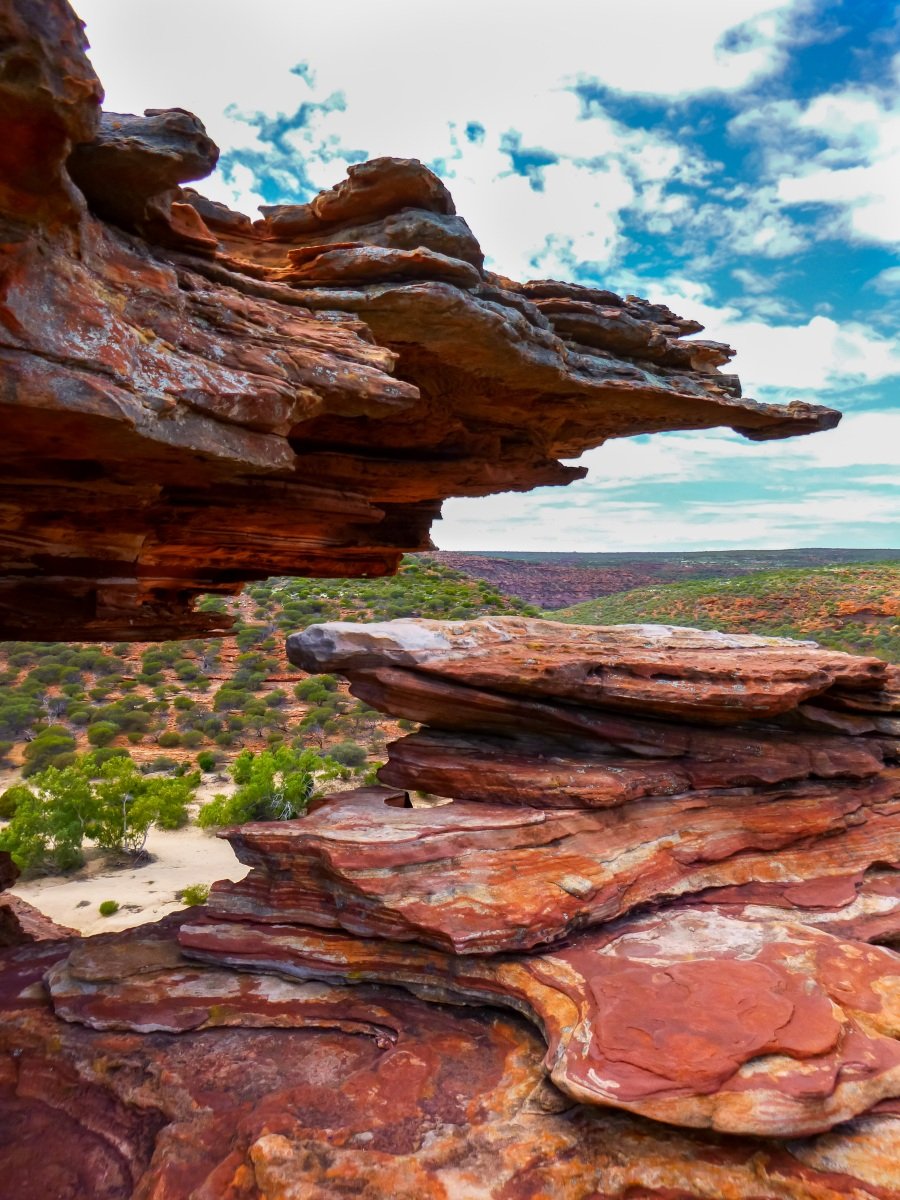
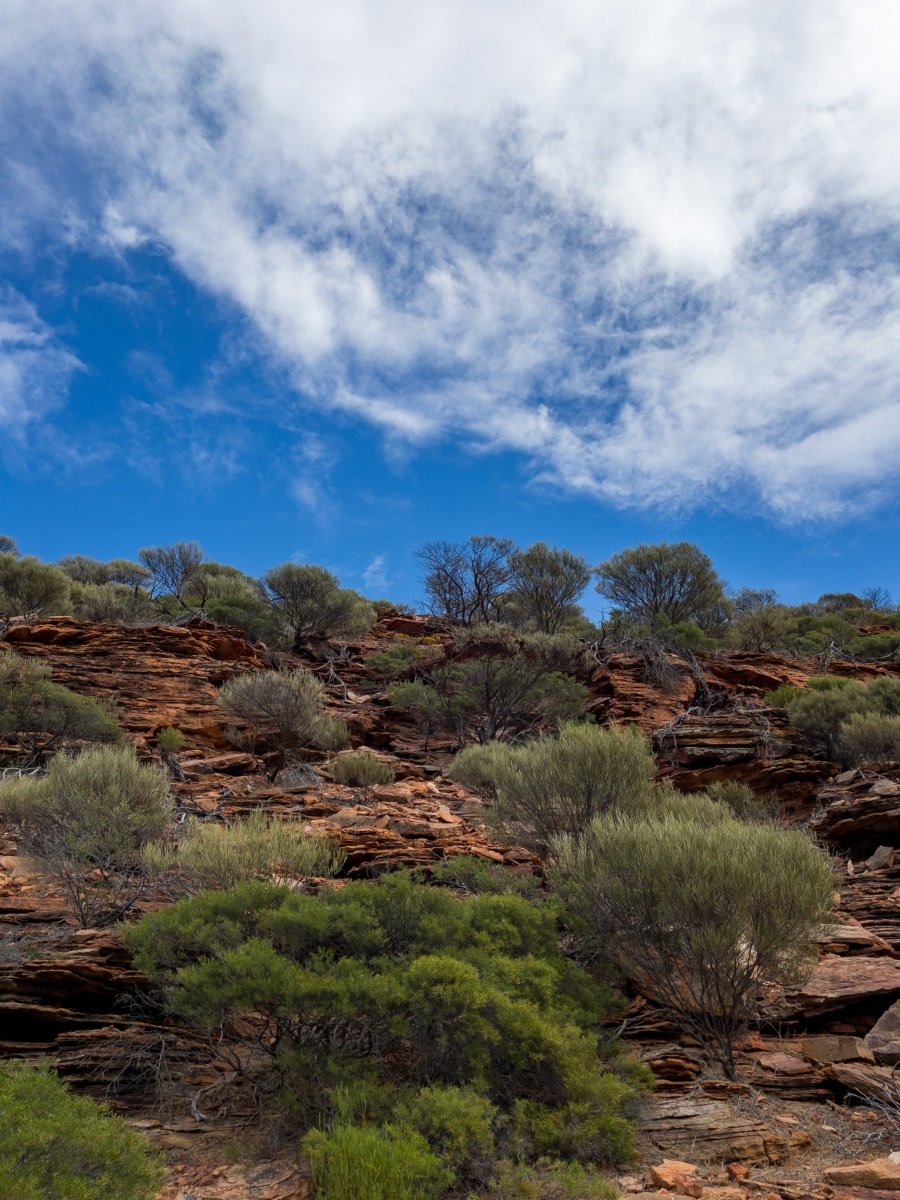
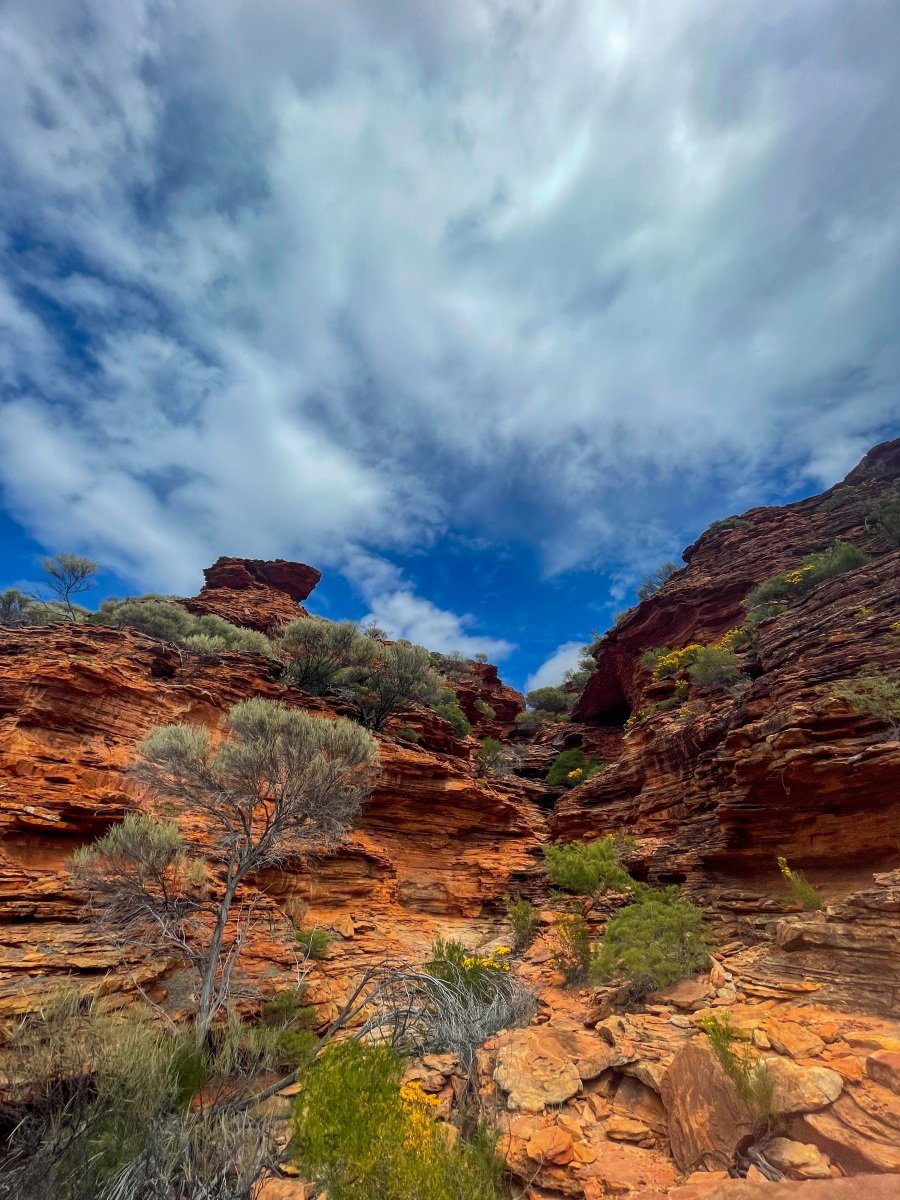
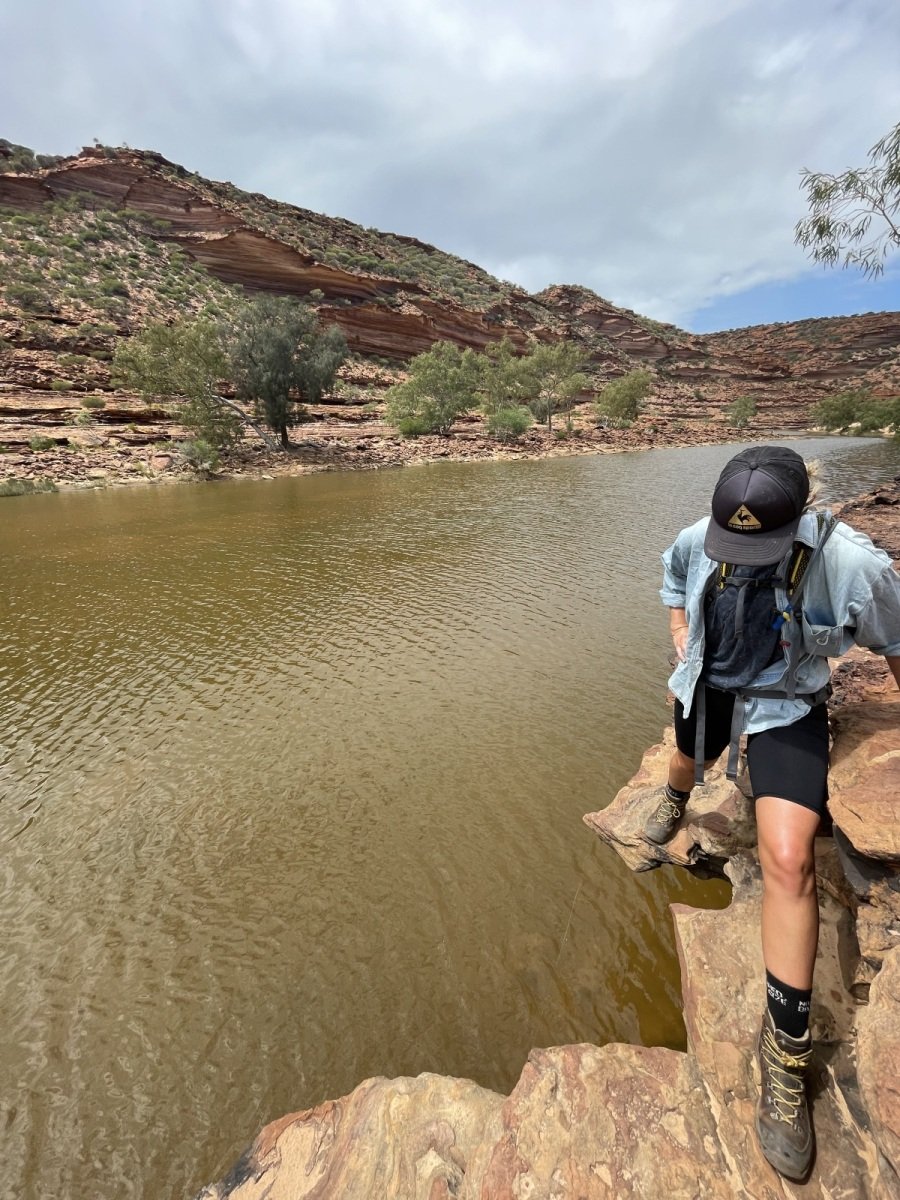
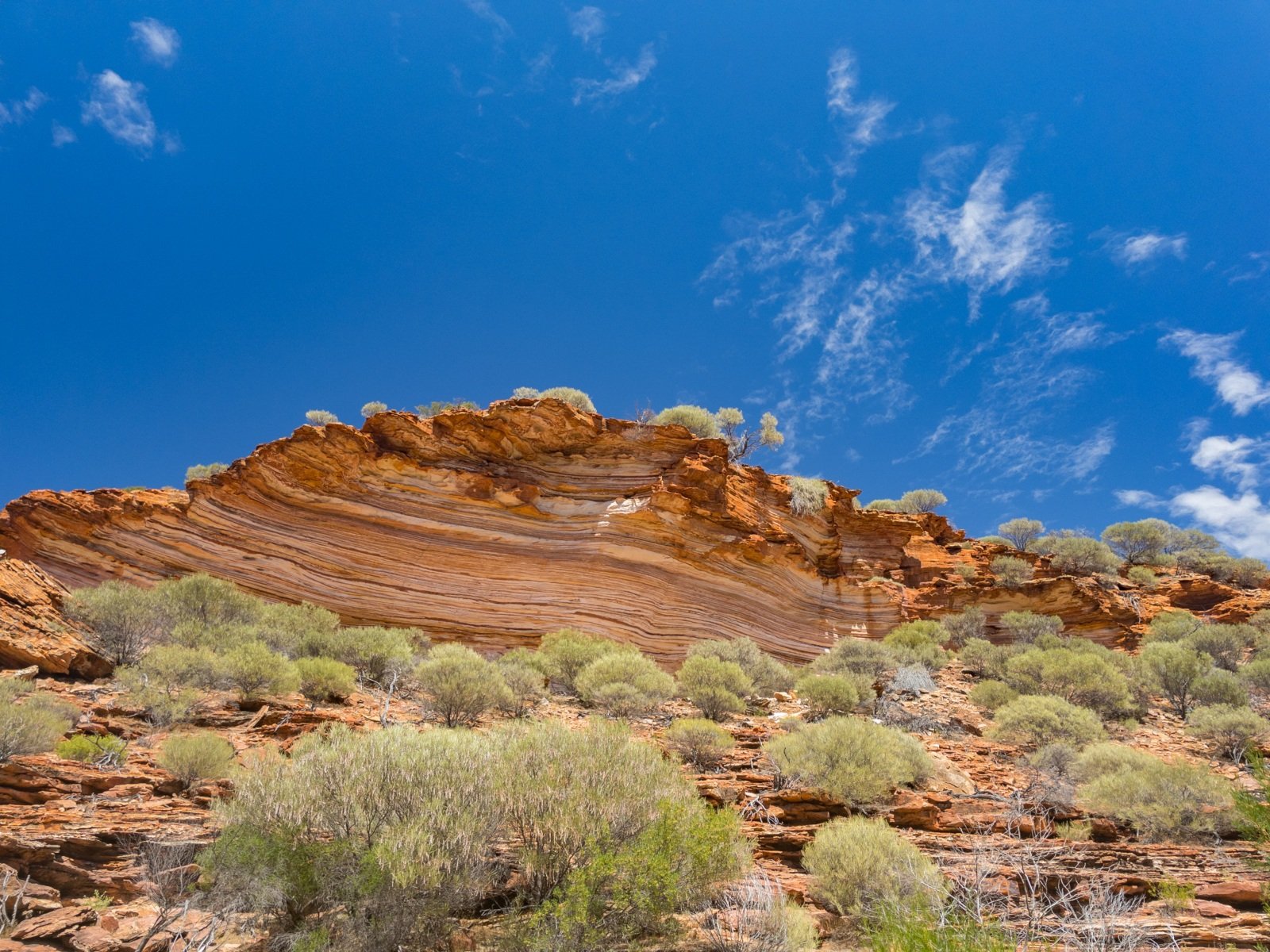
The track begins to descend below the ridge that we’ve been walking along, the river to our right and the ridge line gaining height on our left. Plates of rock jut out from the walls. Looking above us, the red rock stands proud against the blue-grey sky.

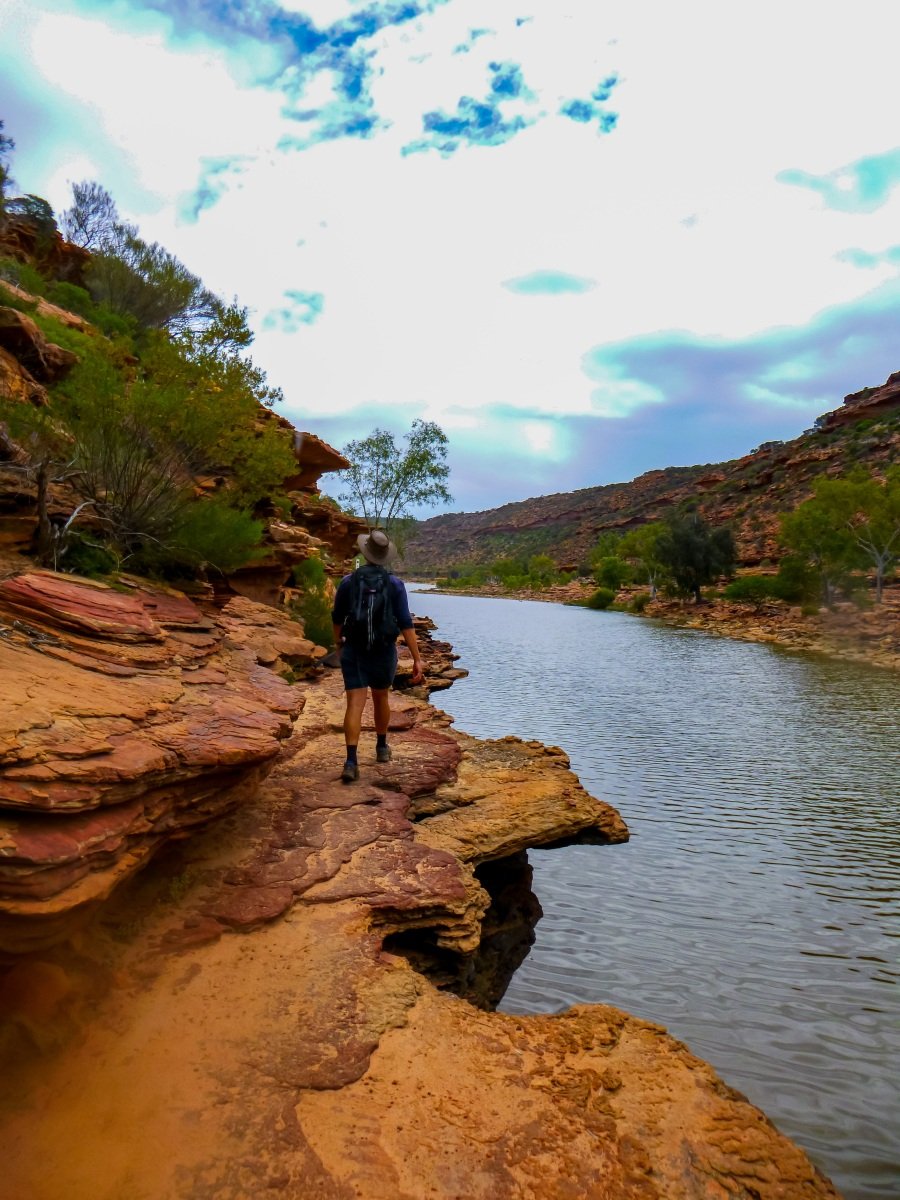
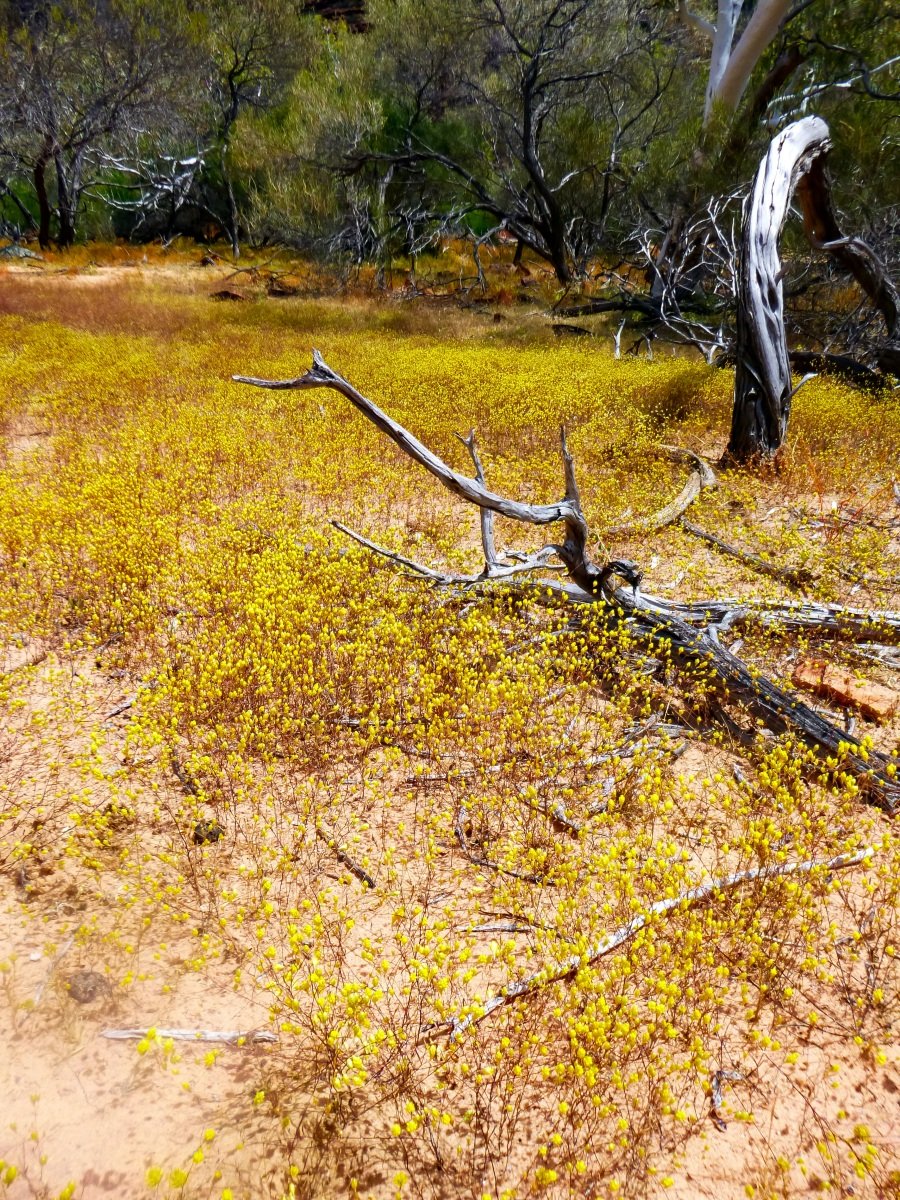
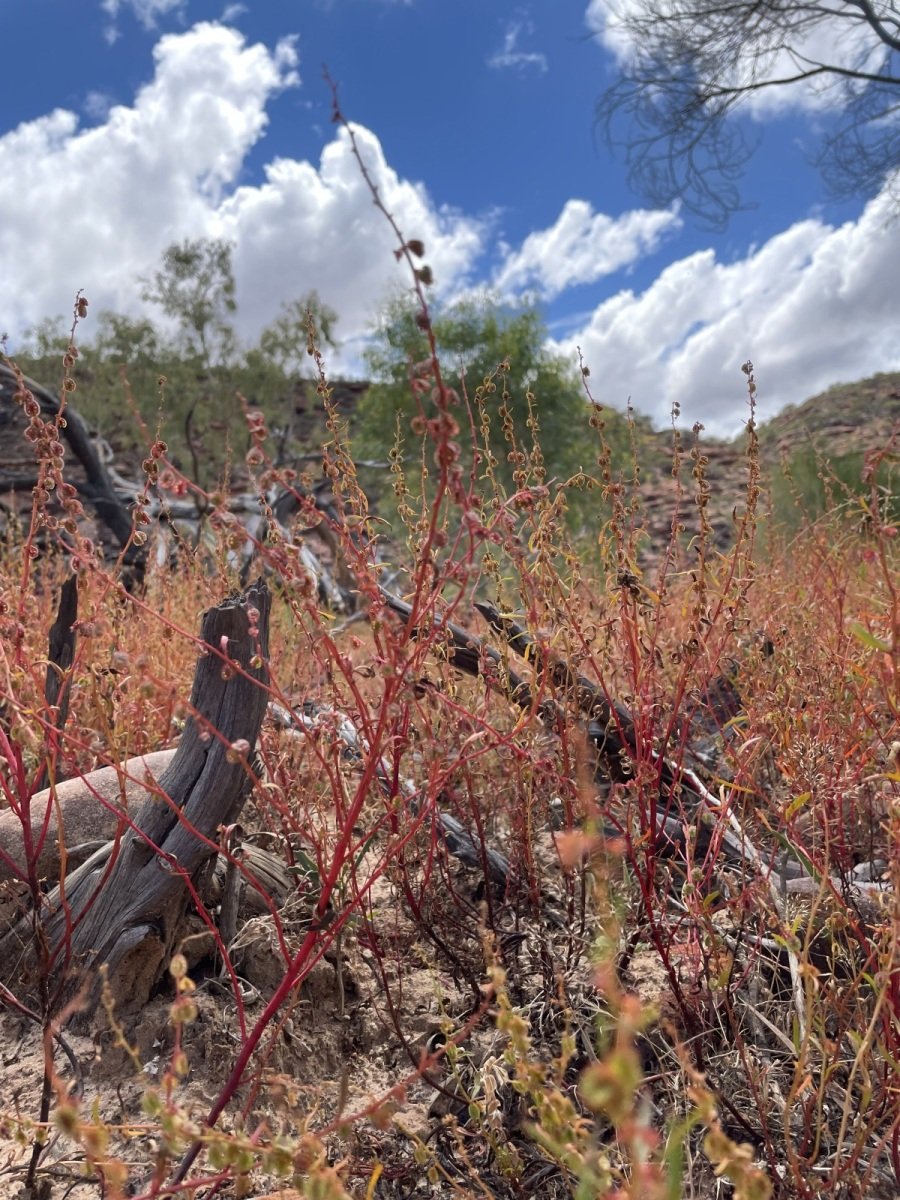
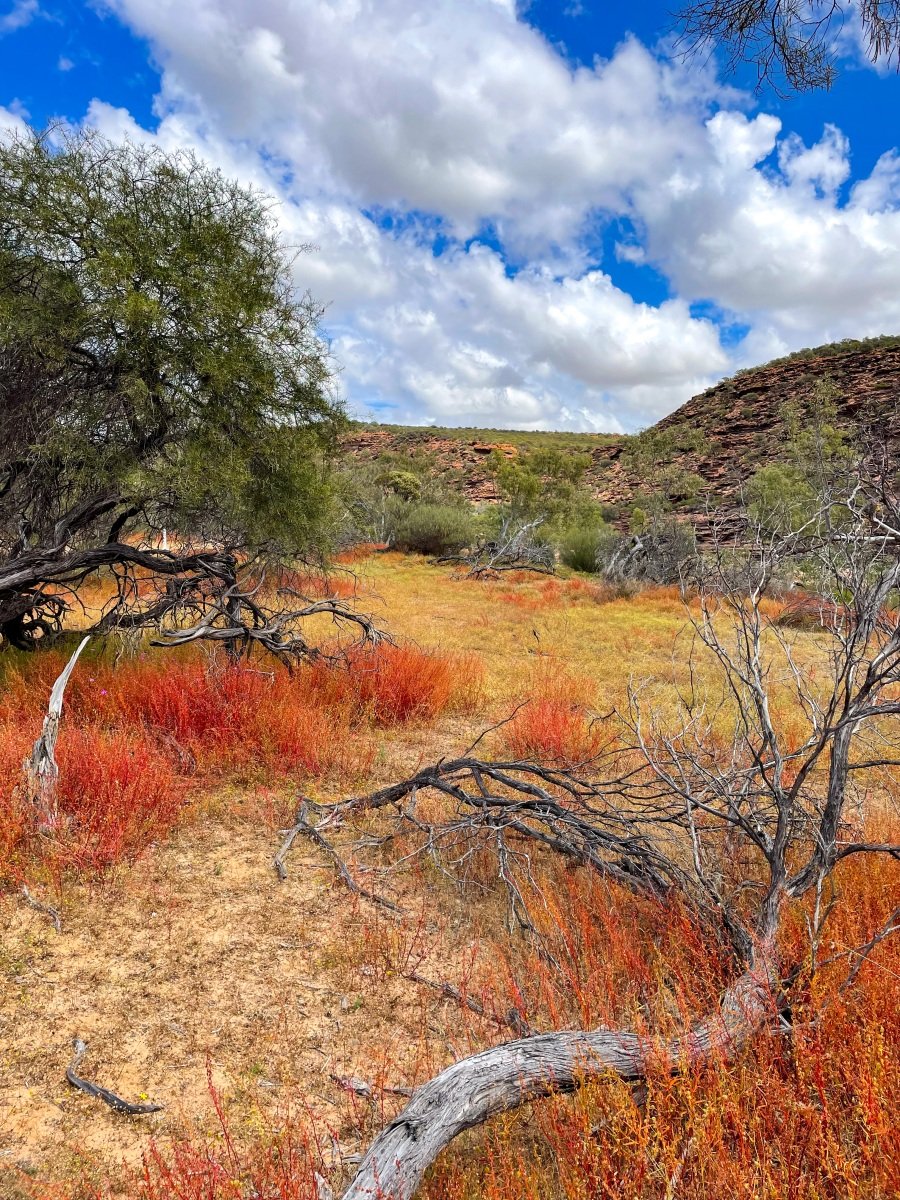
The plates of rock are our path as we round blind corners, sometimes stepping over gaps in the rock with the water gently coursing below. Now the rock shelf opens up wide and nearly level with the water. Black swans float in the centre of the river. As we walk on the rock shelf becomes sand, and much more vegetation has taken hold. Whole fields of yellow flowers, and then whole fields of red-branched flowers fill the view.

The water cools the air down in the valley has given some respite and we take our time through the flower fields. The final kilometre of trudging through hot red sand brings back the heat in an instant, and the scramble back to Nature’s Window gets our legs really burning. We both finish our water at the Window, taking some final photos before heading to Donna for a drive to the lookout over Z Bend.

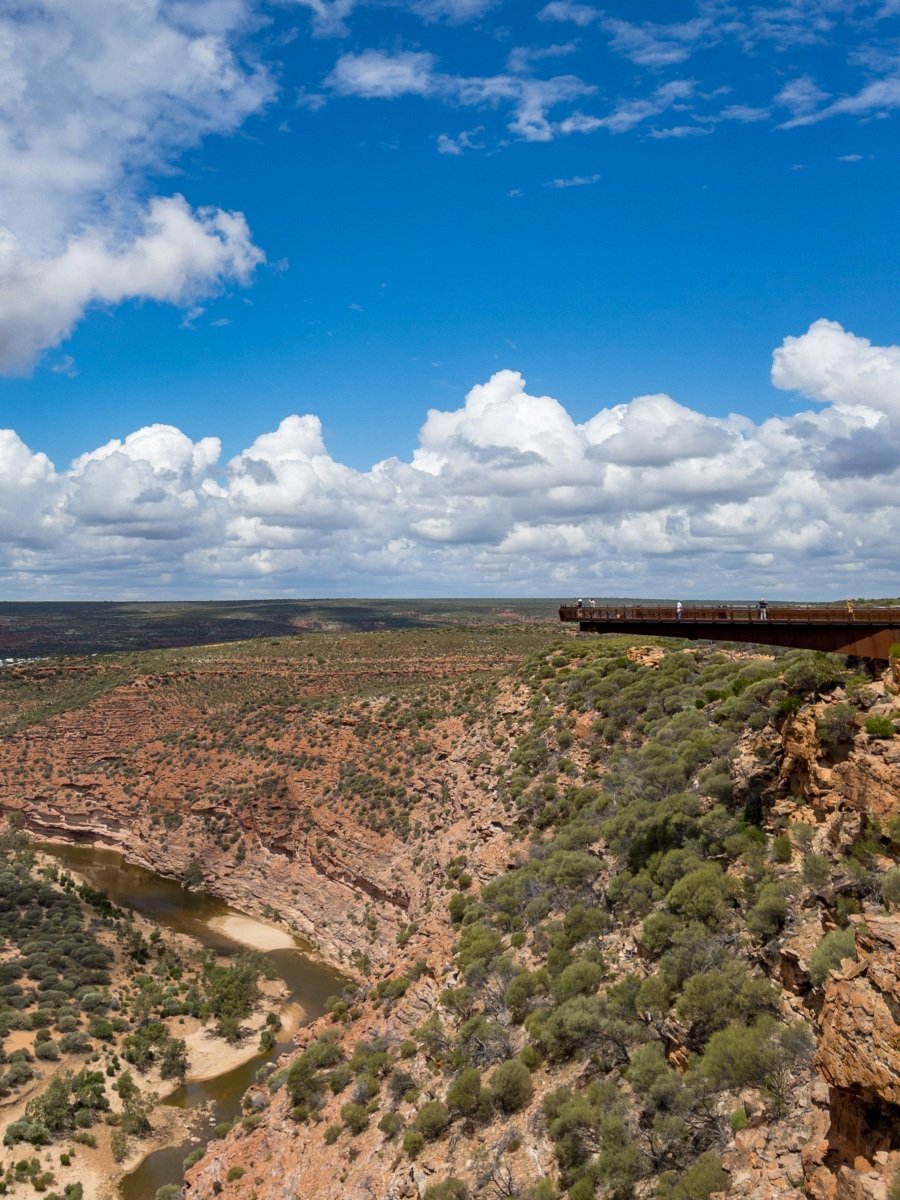
At Z Bend there’s a huge cantilevered look out spearing right into the river cutting. The steel has weathered and nearly disappears into the red of the rusty reds in the landscape. A short walk through more flowers takes us to another look out.

Francois Peron

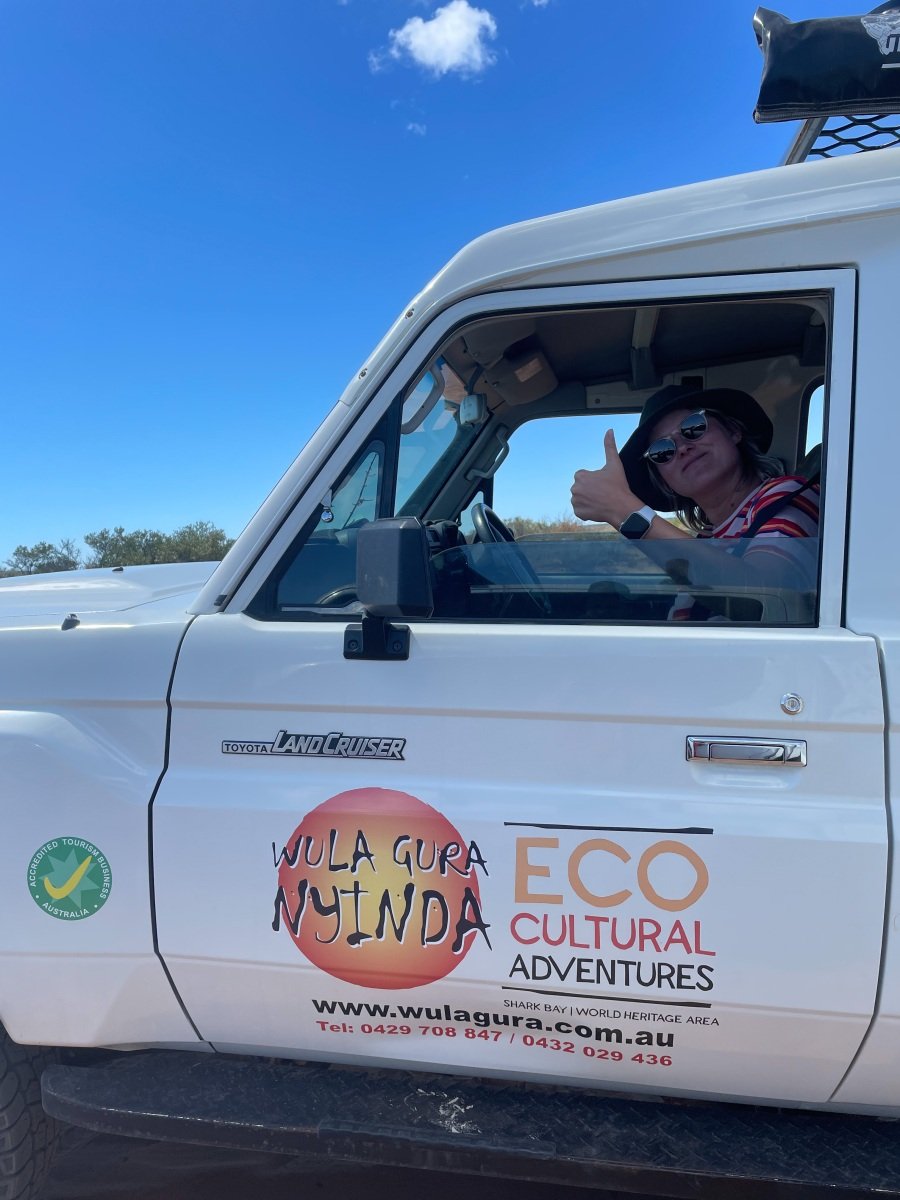
We’re going on the 4wd tour this morning, so we’re at reception early to get picked up. The tour is with Wula Gura Nyinda, a well-used troop carrier pulls into the driveway and something about the driving says we’re going to have a fun day. Our guide, Jack, jumps out and arranges us in the car, alongside another couple. We pick up one more pair (a mother and son) before heading up the cape.

The energy of the group starts fairly low, everyone is keeping to themselves, except Anna’s right up the front riding shotgun and I’m up the very back with the mother and son.

We pull over as we come to the entrance to the park. There are tyre let down stations setup and we all pick a tyre and begin letting the air out. Jack is telling us about the softness of the sand further into the park and the likelihood of us helping people out.

Jack says he grew up around here, but he’s spent a few years away and just recently moved back. As we begin to drive again, his perception becomes apparent. Even a glimpse of a particular animal’s track has him on the brakes and ushering us over to look closer to investigate. We (eventually) guess: rabbits, snakes, mice and thorny devils.

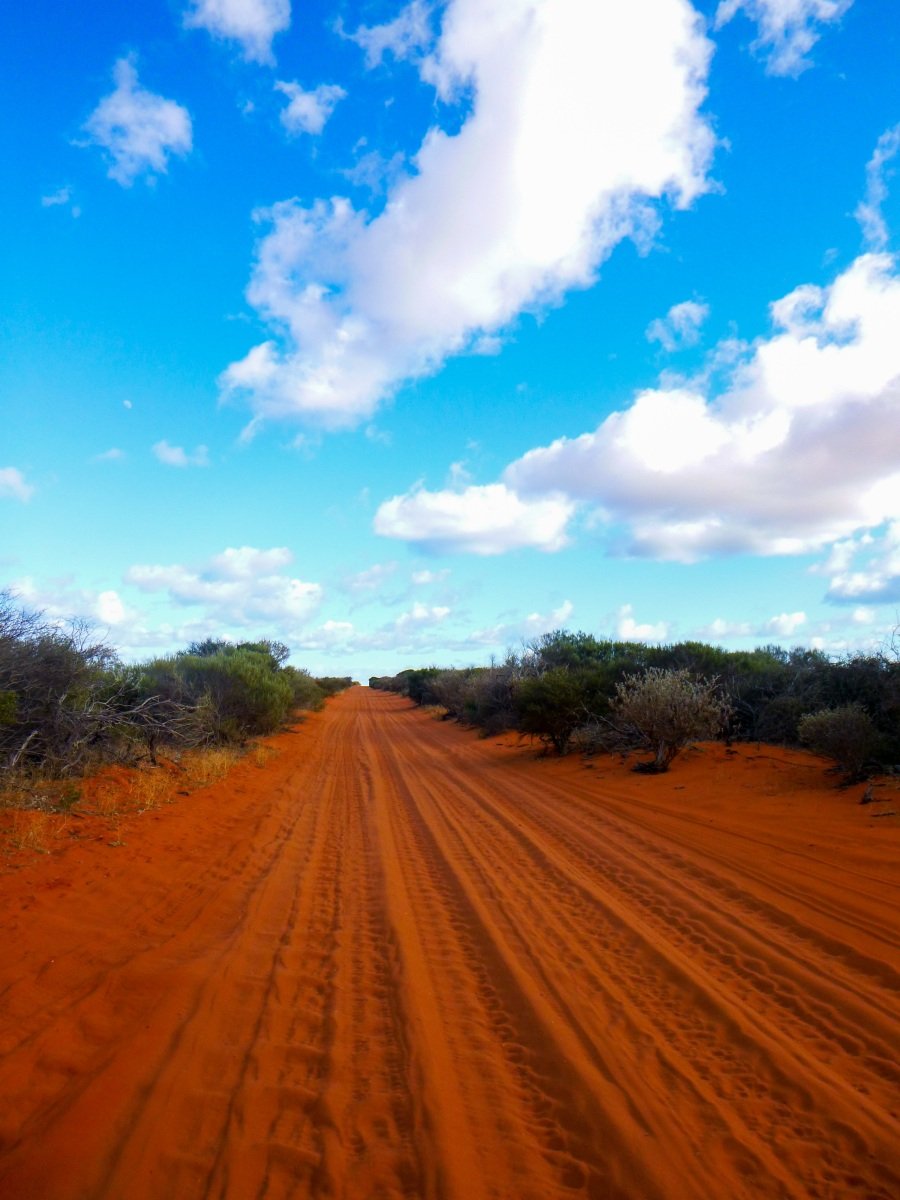
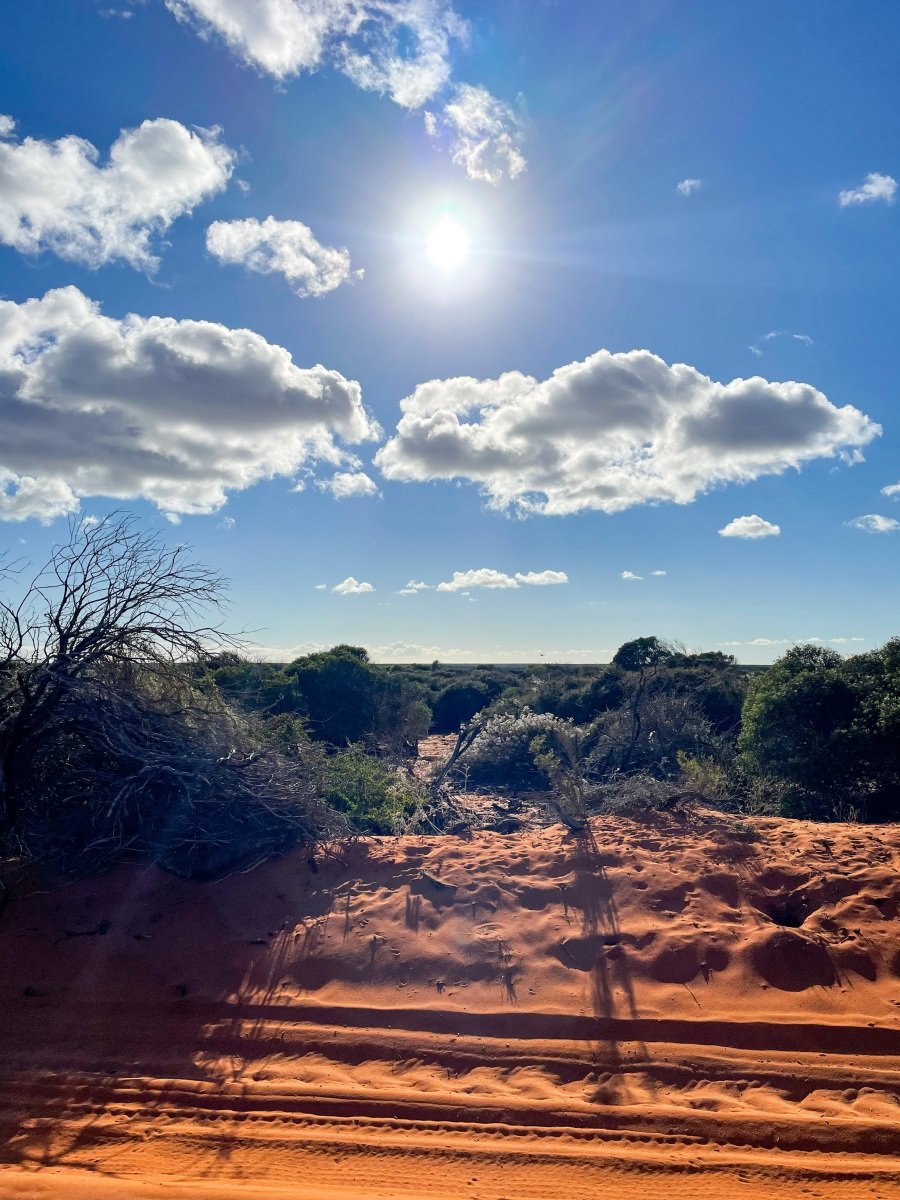
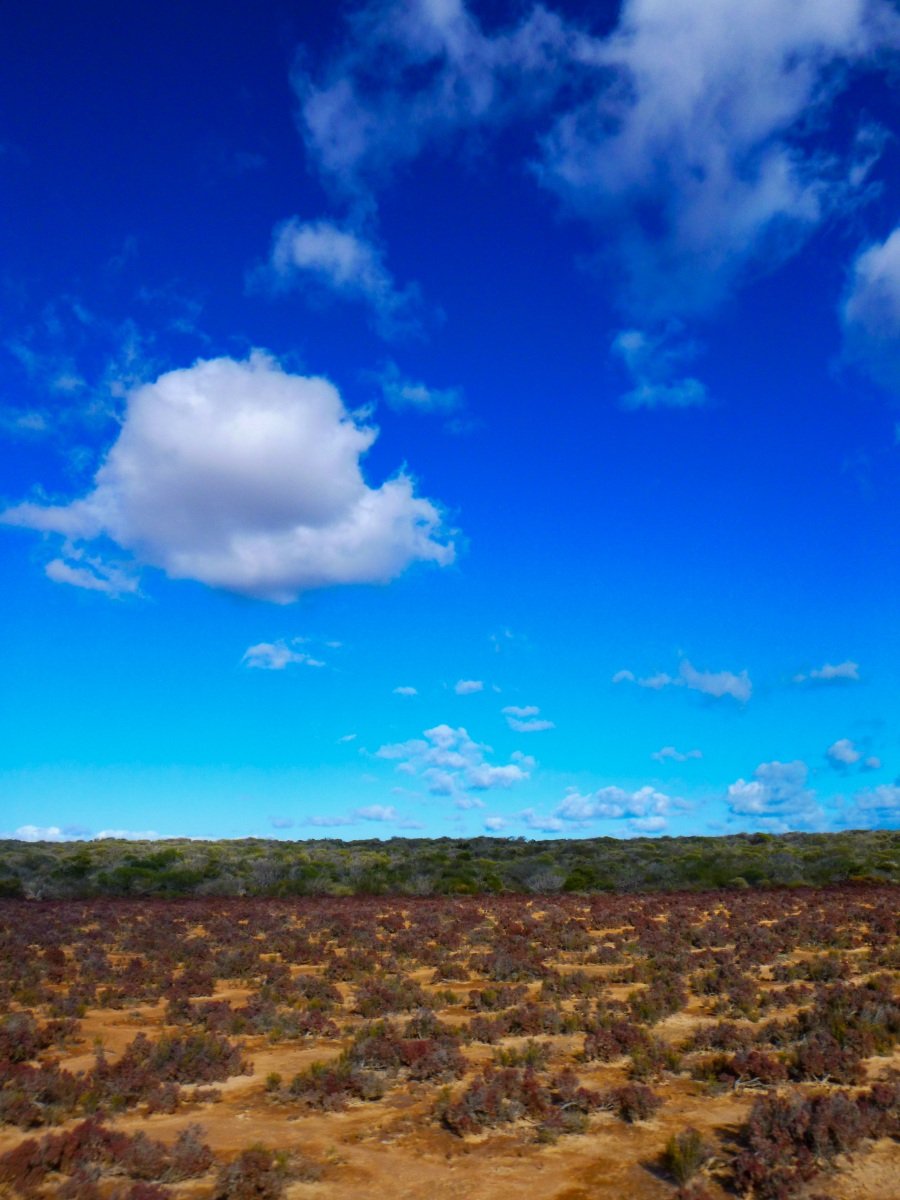
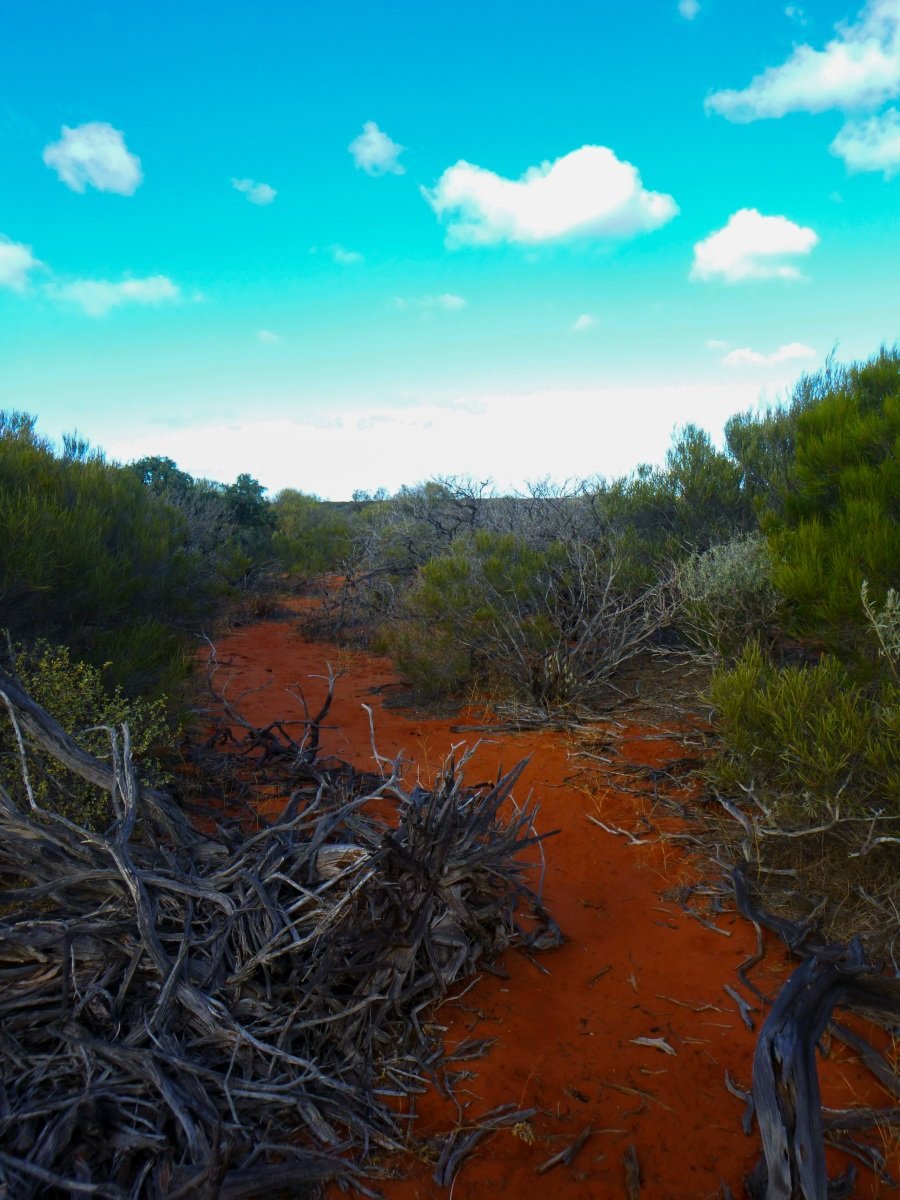
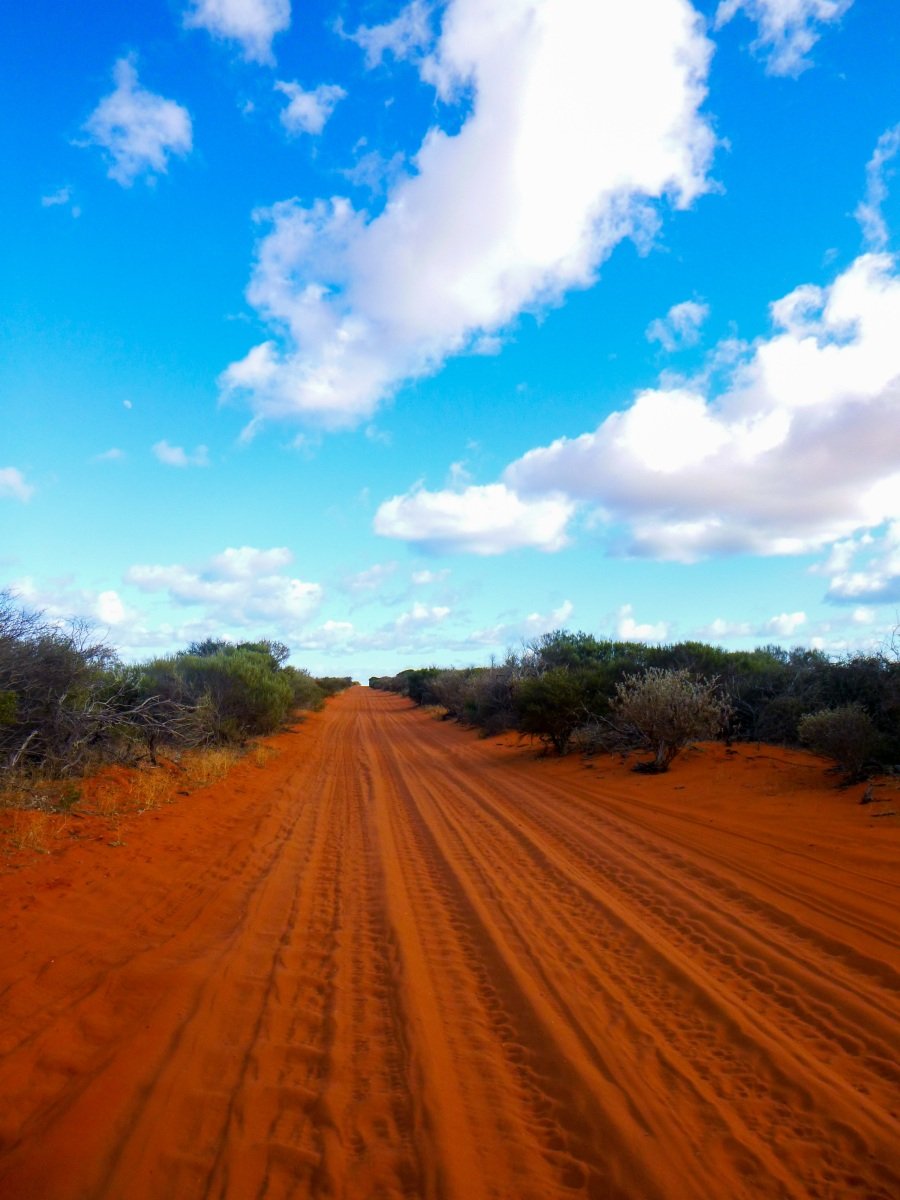
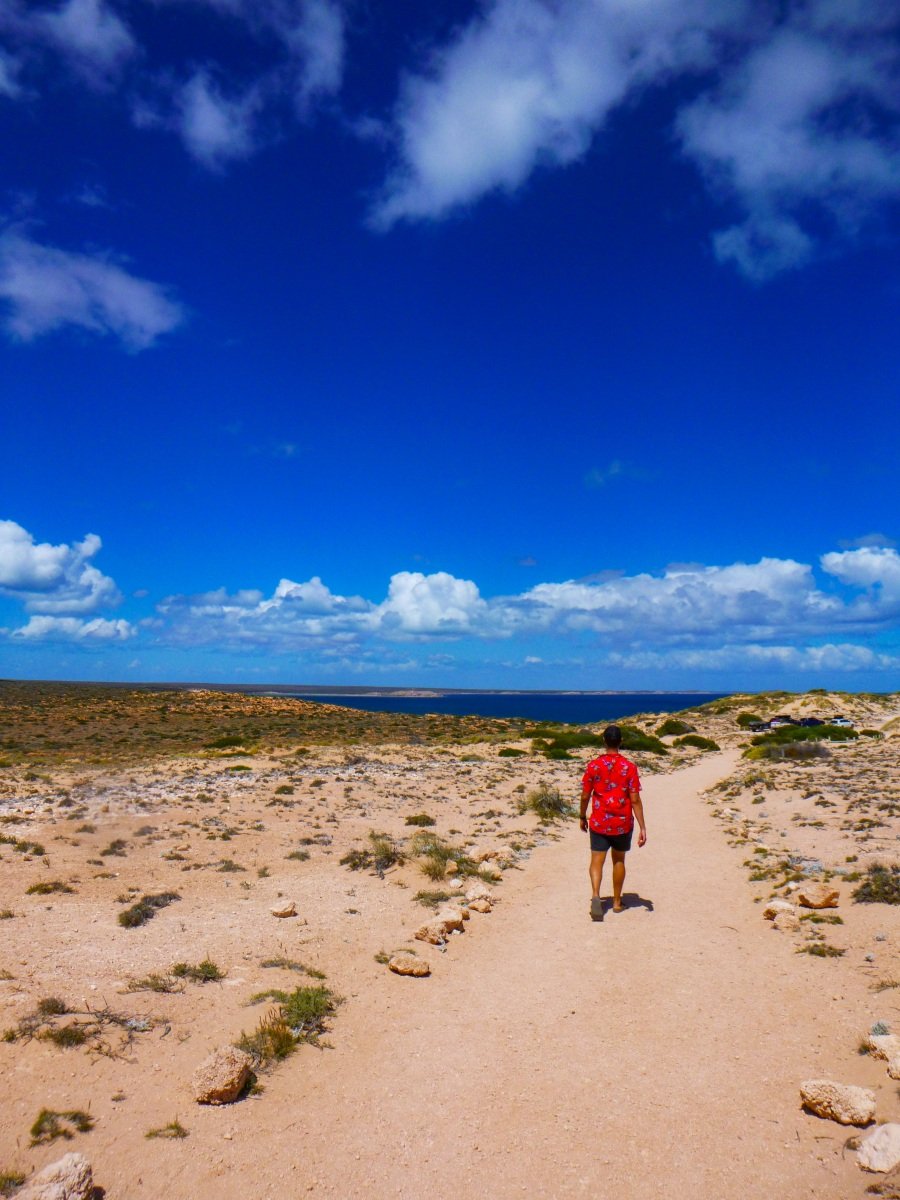
As we’re driving, I’m being struck by the beauty of the landscape. Bright golden-red sand is baked dry and reflects the warmth of the sun in colour and in heat. Hardy scrub of changing types flicks past. There is low, red salt bush, then woody green scrub, now flat plains with sparse ground cover, and then taller grey trees. The sky is huge and deep blue with silver-lined clouds frozen in place.
I get to thinking about our trip and my feelings of peacefulness and joy; and then about the vast and ancient country.

As my thinking returns to us in the car I notice the mother next to me trying to help her son see the beauty here – to not just wait for the ocean at the end of the drive. I think he’s a little embarrassed to notice how he feels, so I share some of my feelings, which kind of frees him to become aware of his own. It’s pleasing to be able to influence that.

For nearly every new tree or bush that we come across Jack explains its uses and significance. We stop and walk into the scrub a little way. There’s a tree with some branches fallen to the ground around it. Jack has us stand a little back from it and warns us that it is of particular significance, and we aren’t to remove any part of the living tree. He does, however, remove some small twigs and nuts from the fallen branch and passes some to each of us. It takes some guessing before we realise it’s sandalwood. We’ll crack the nuts later to taste them and burn the twigs in our own time.
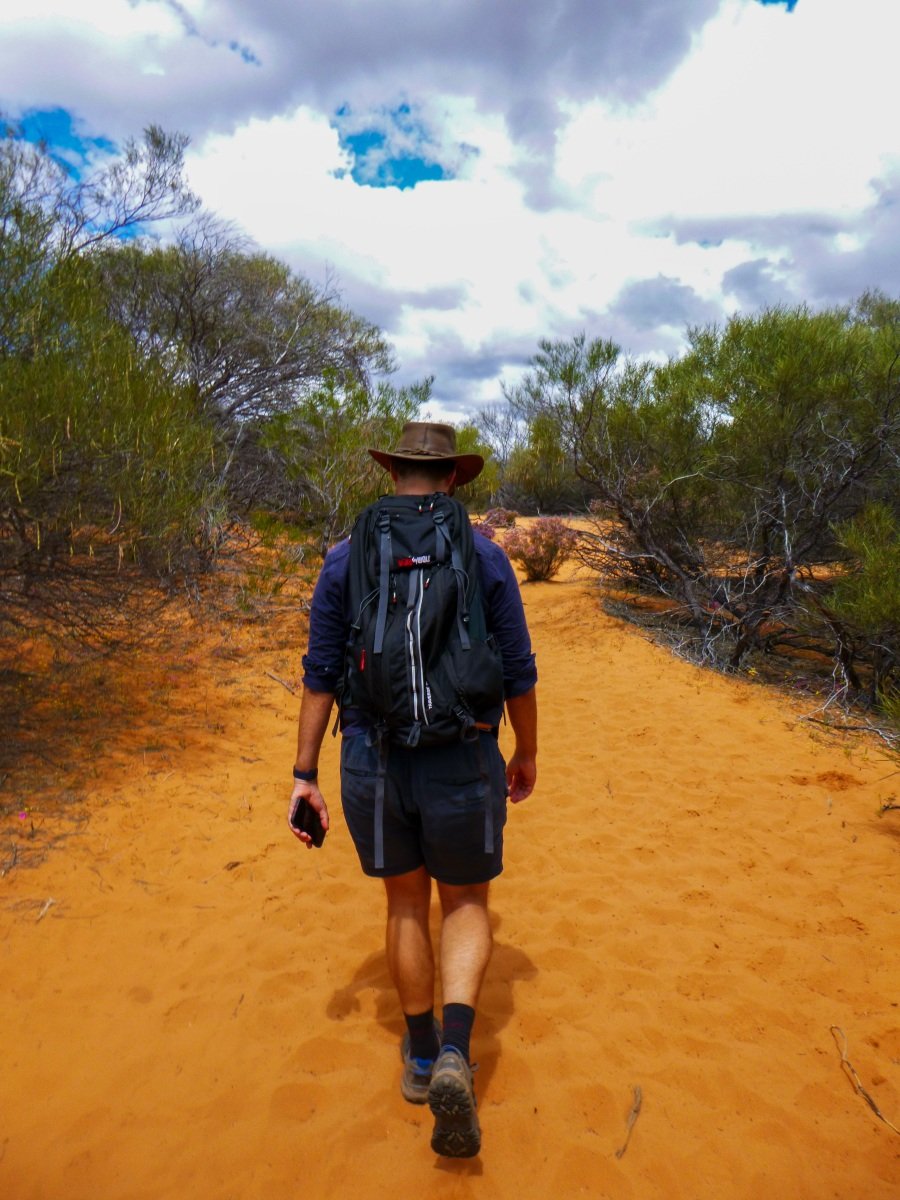
The difference between our view of the country and Jack’s becomes clear. For us there is beauty, for Jack there is abundance. He seems to be constantly looking at where to hunt or place traps or fish.

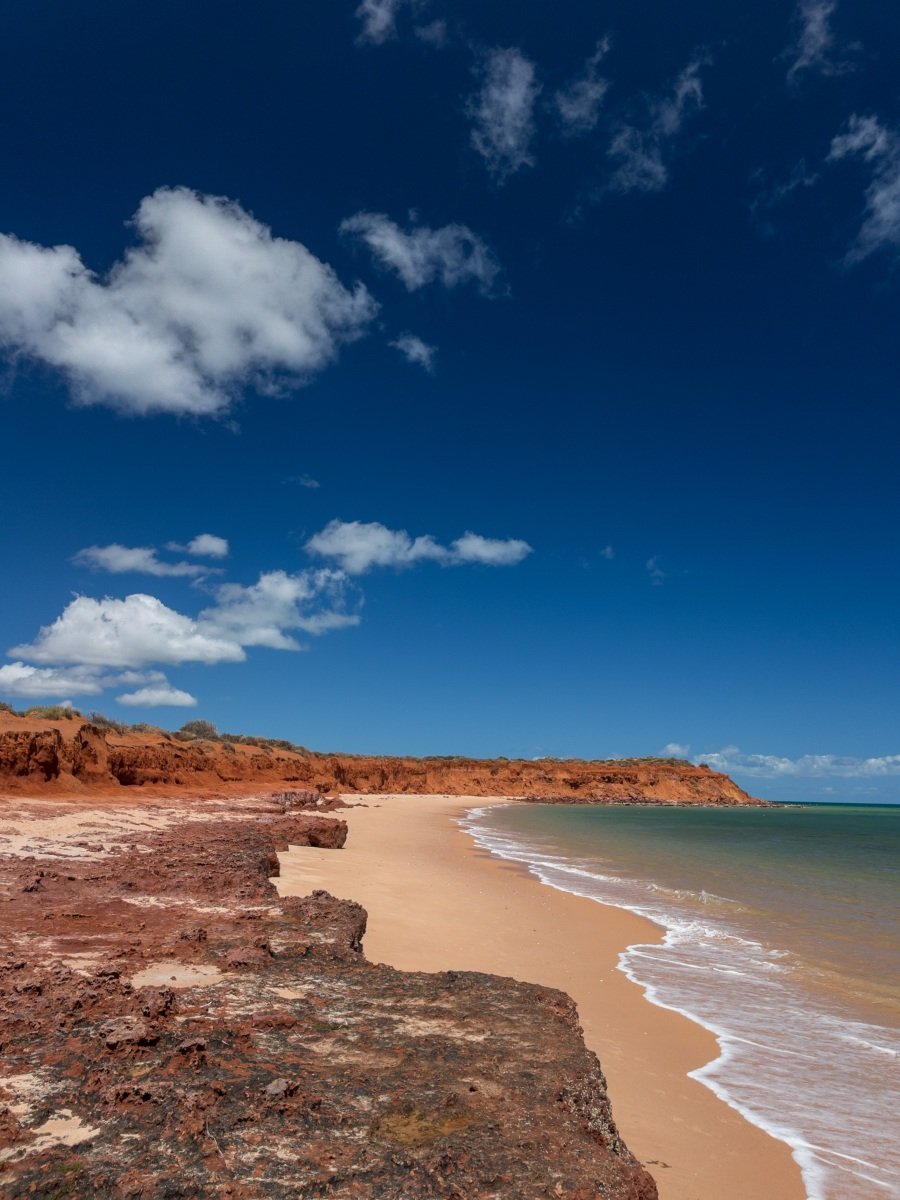
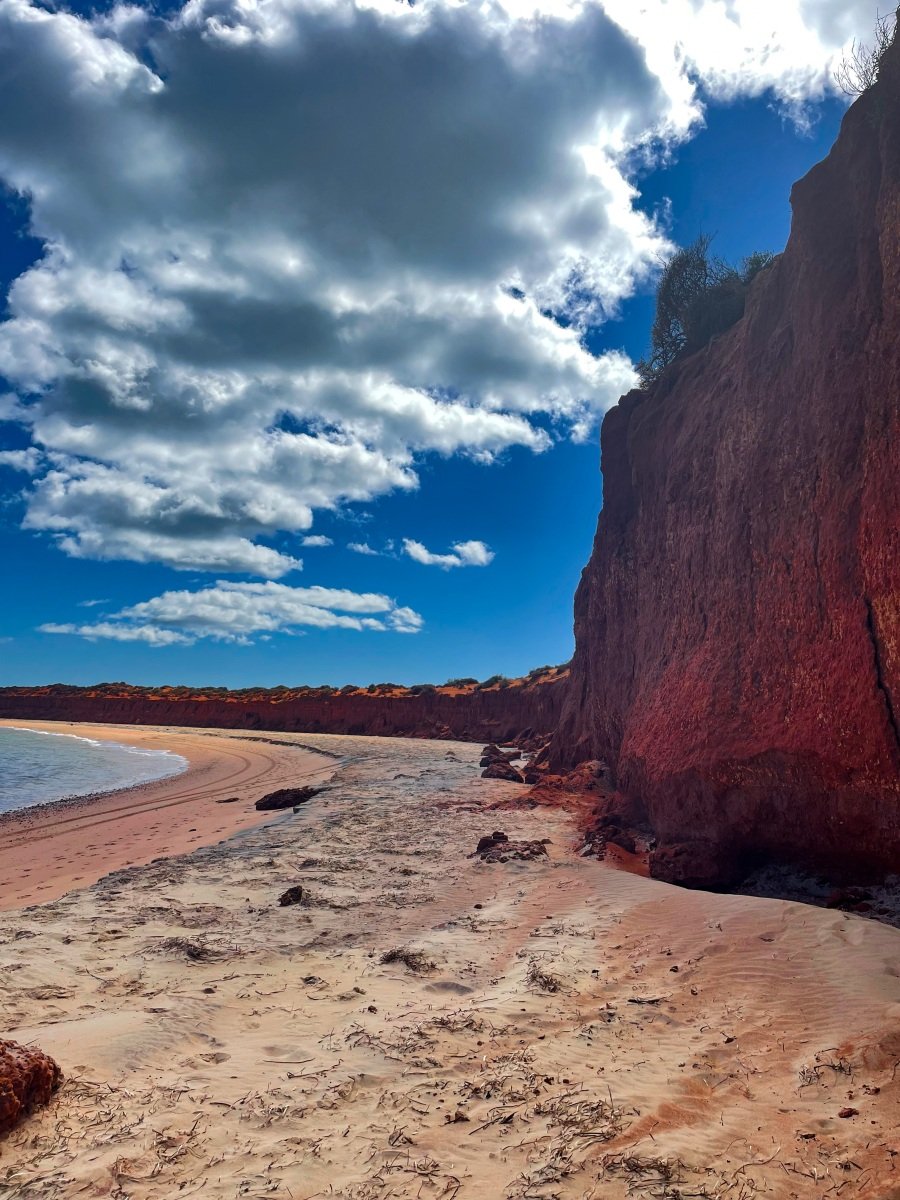
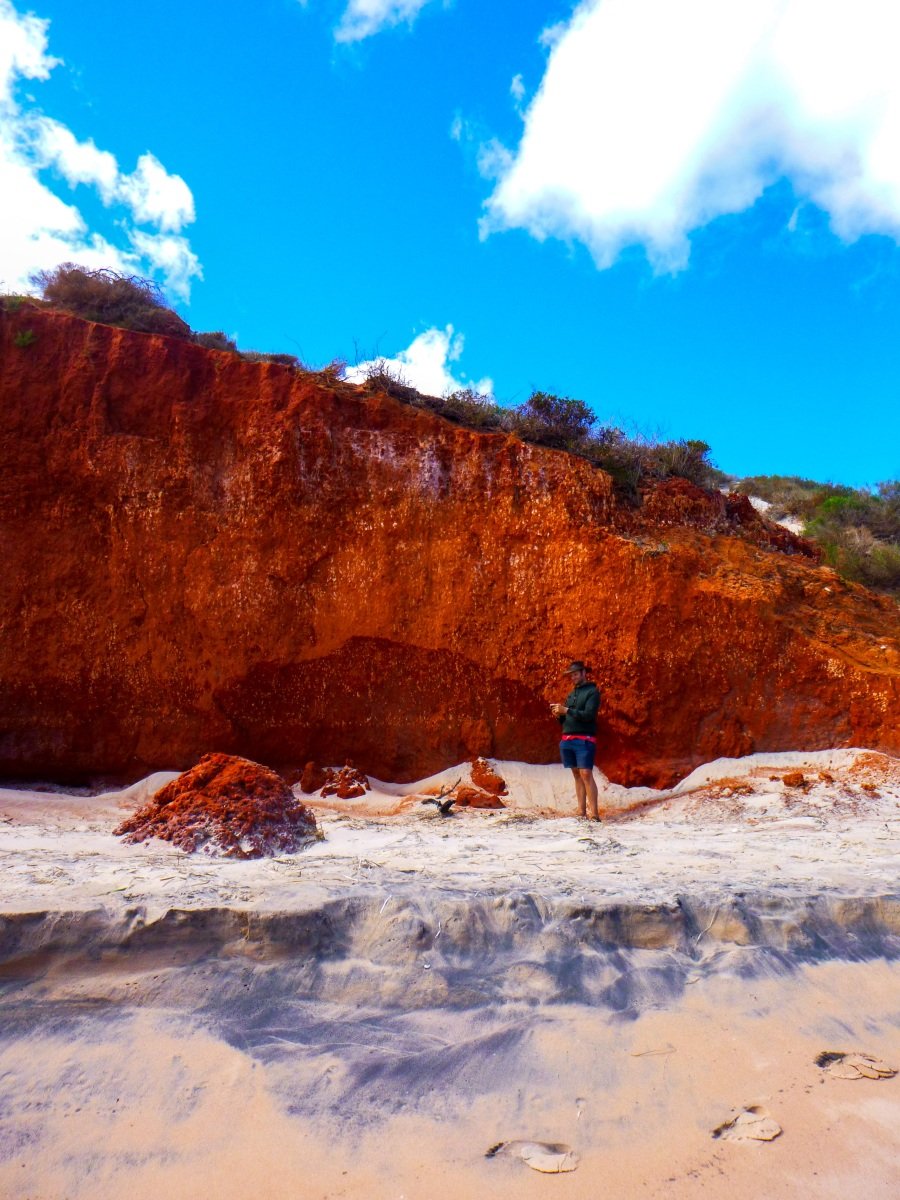
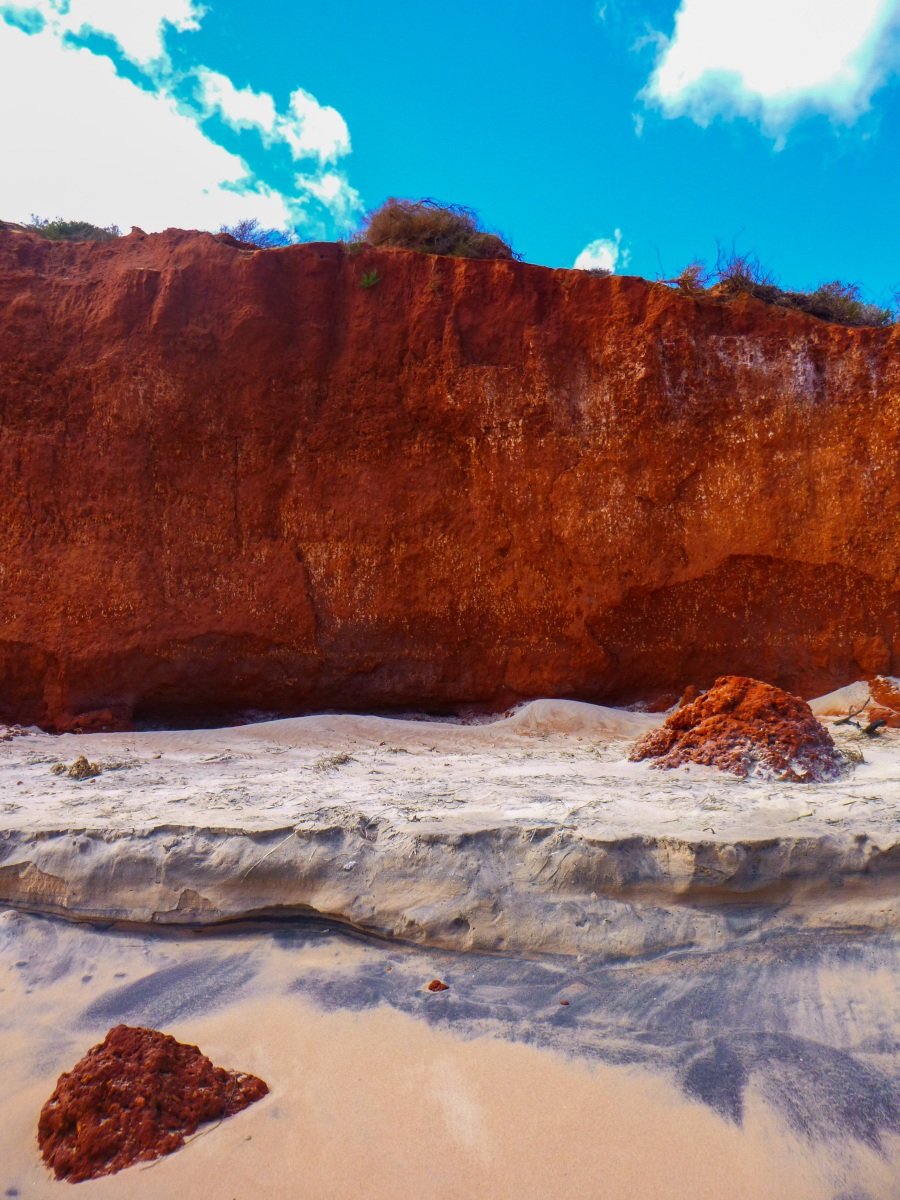
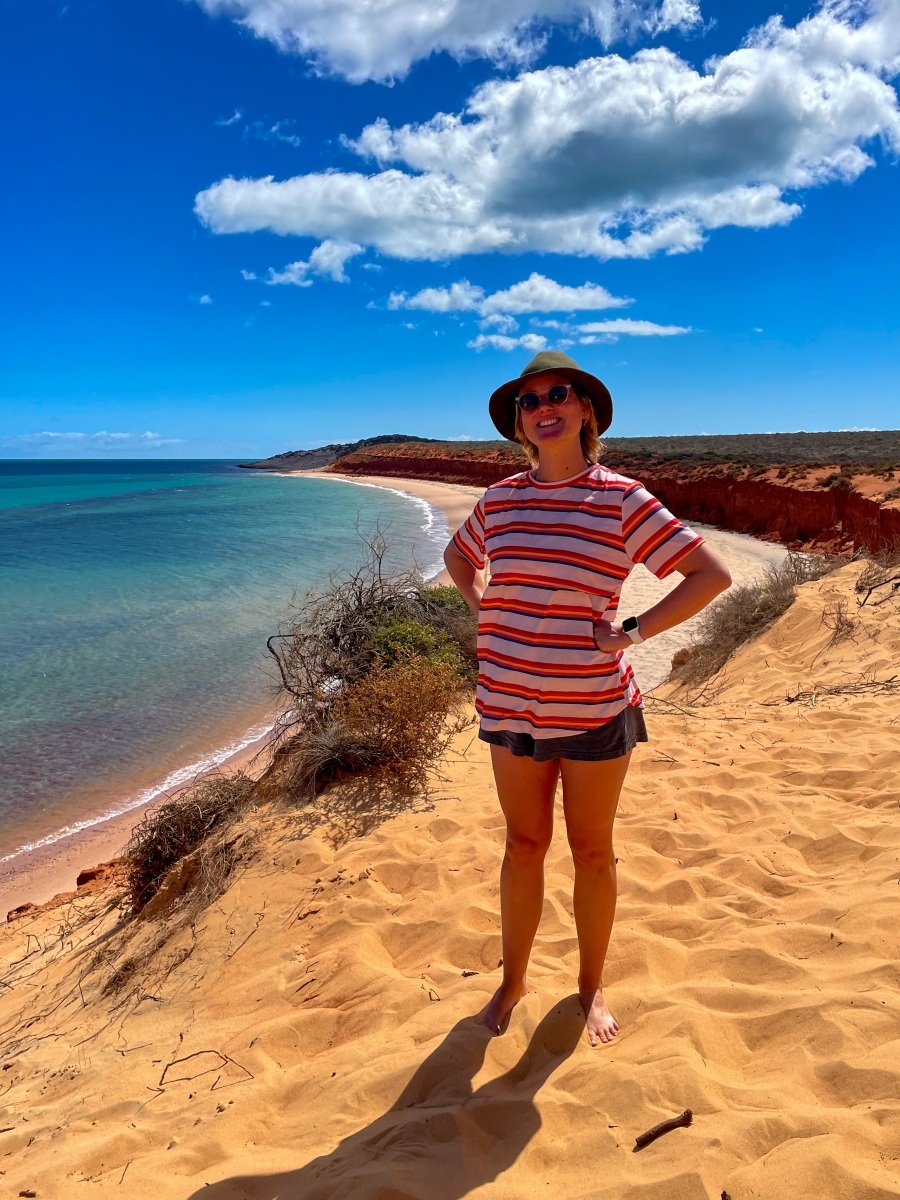
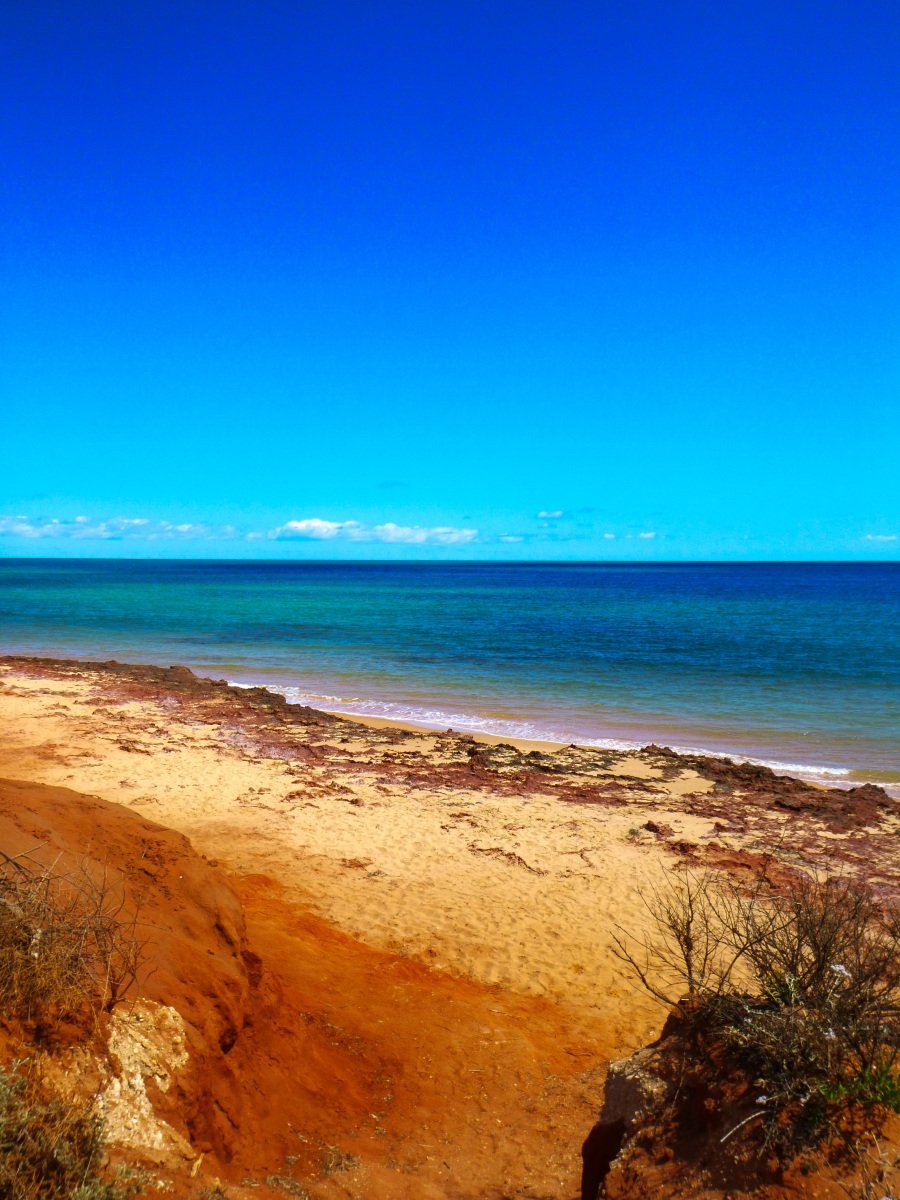
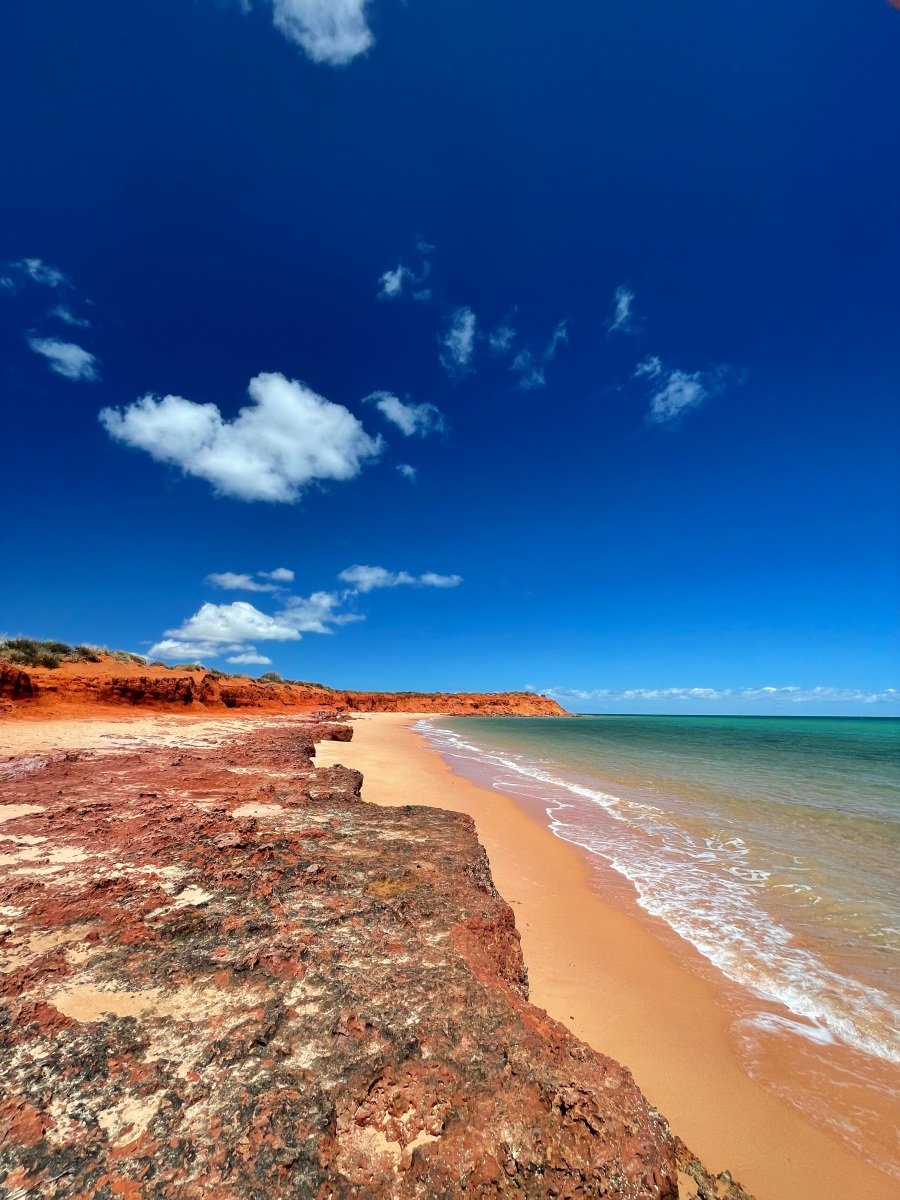
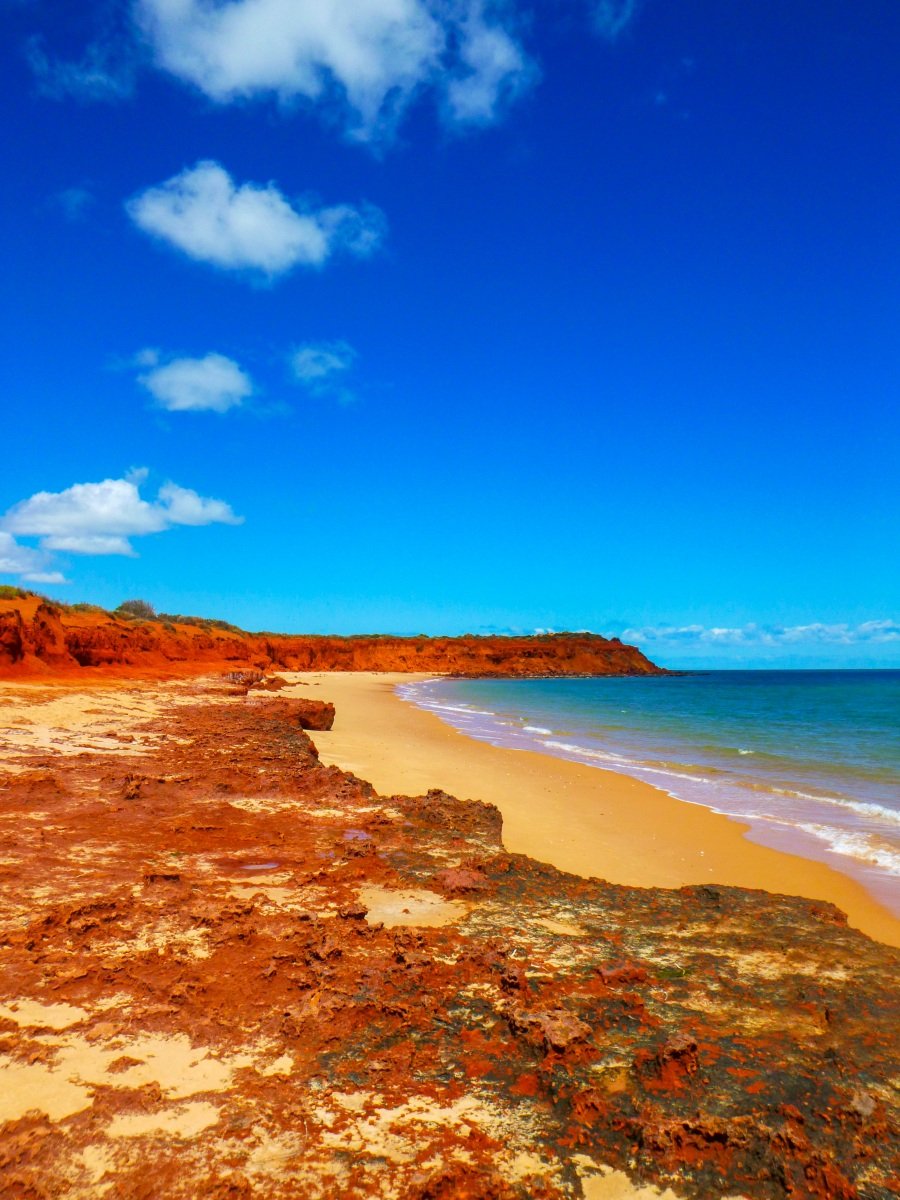
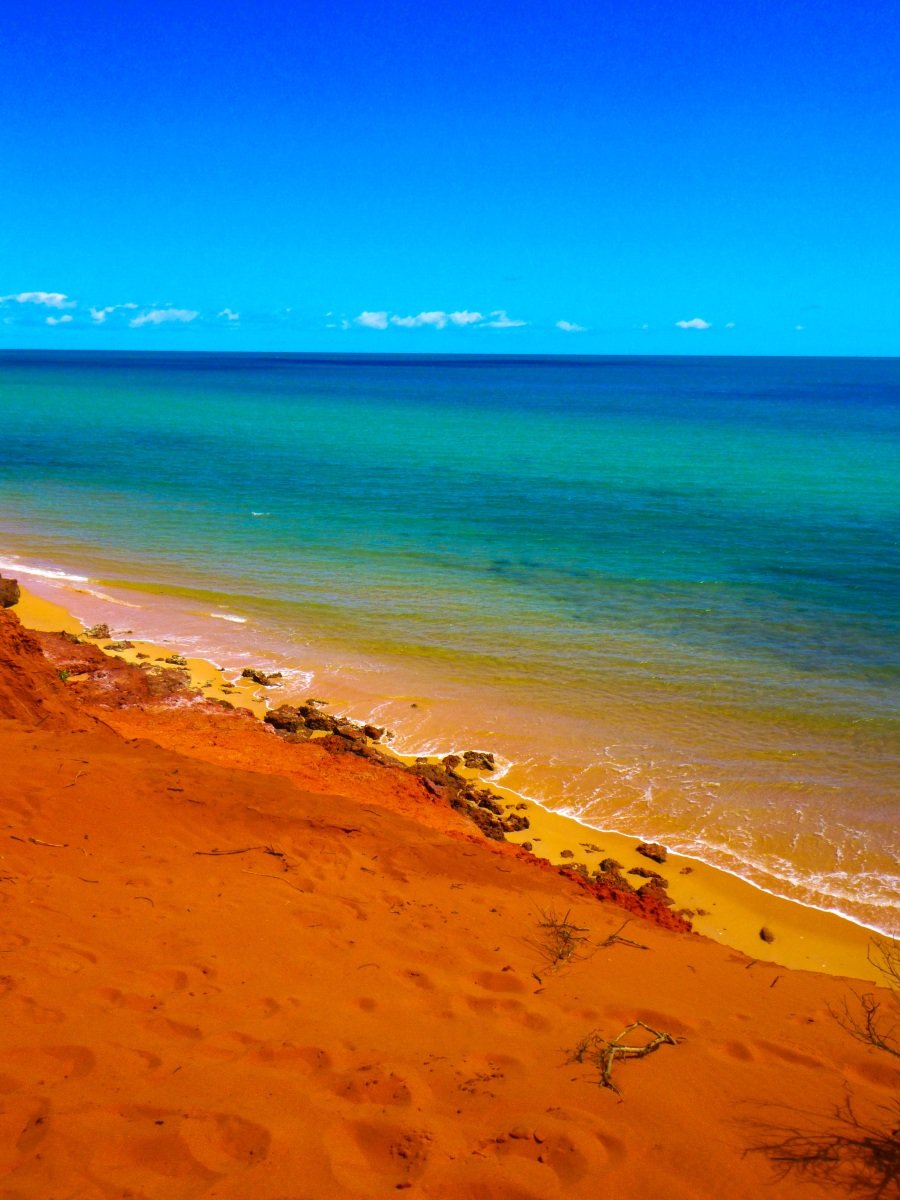
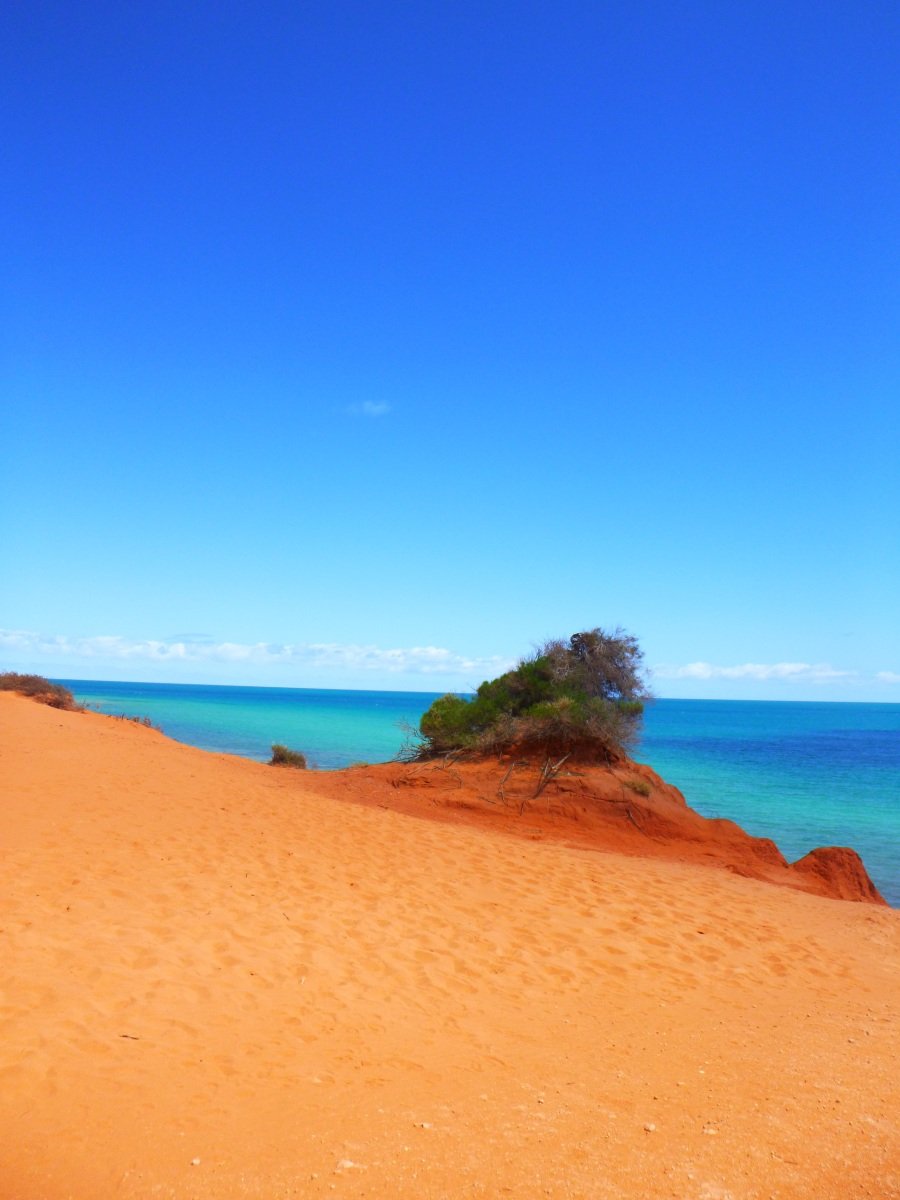
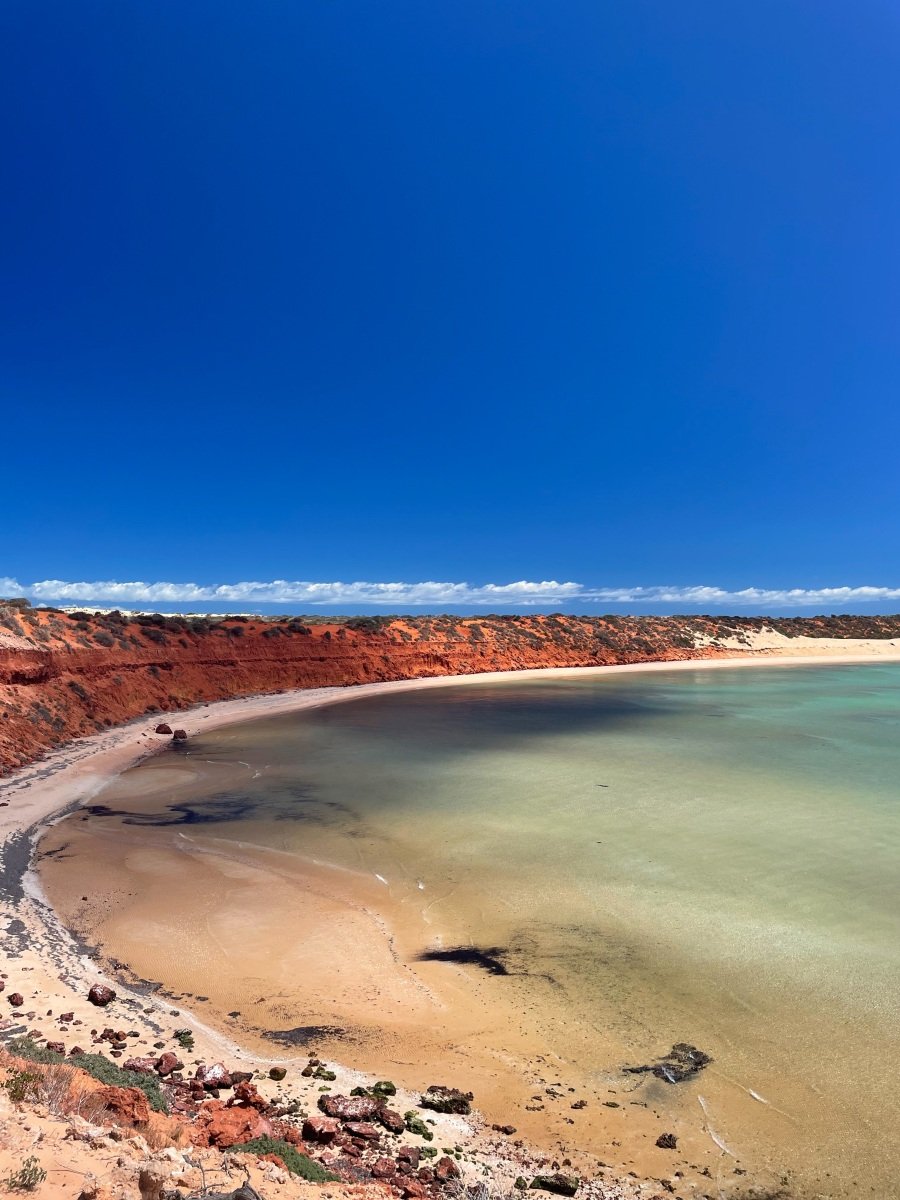
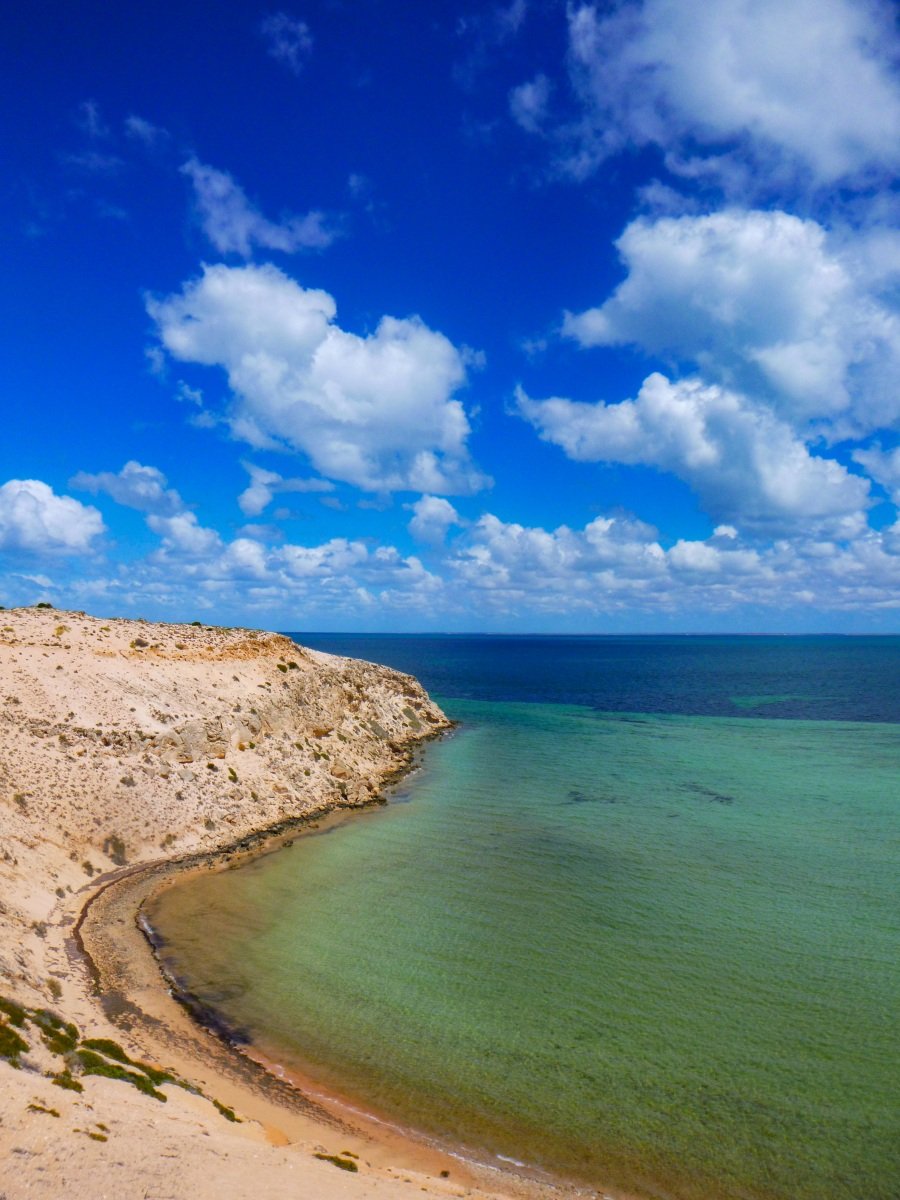
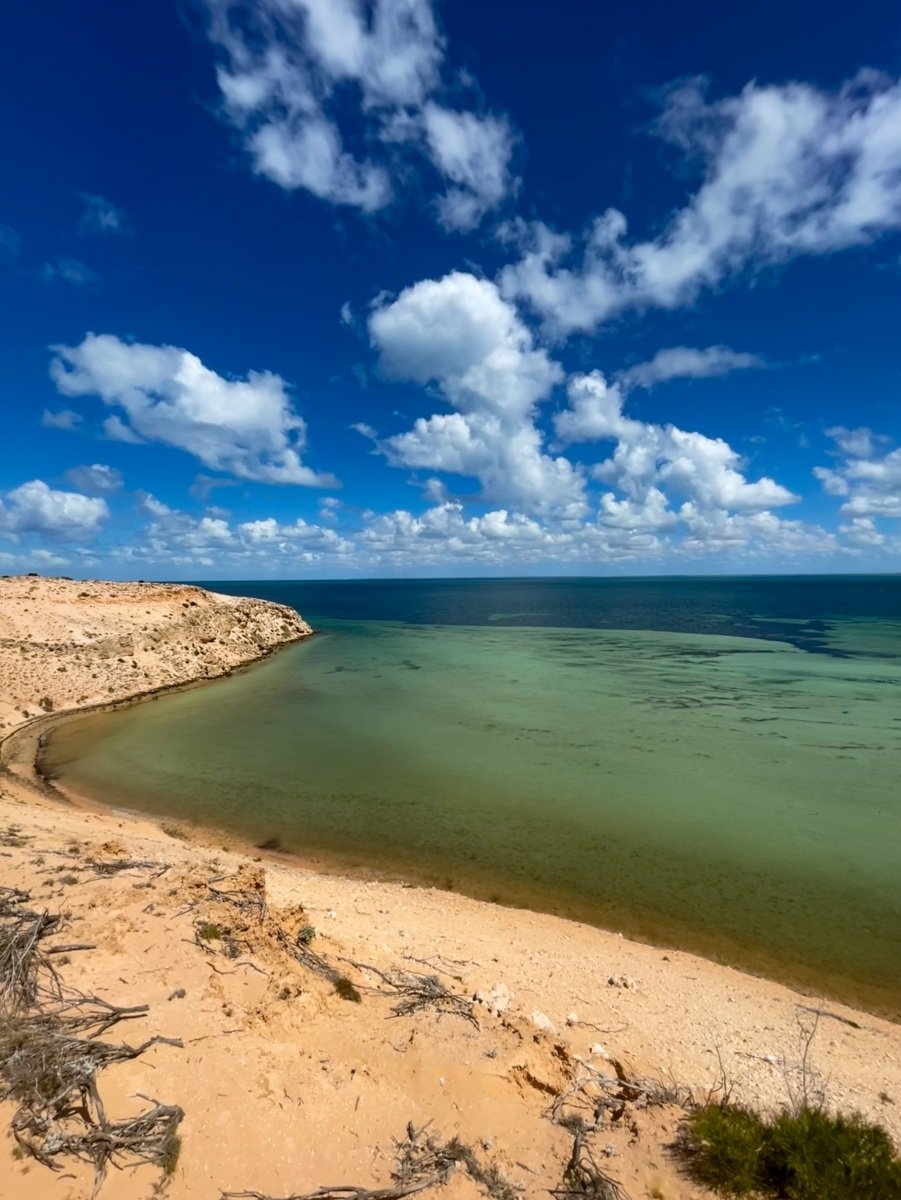
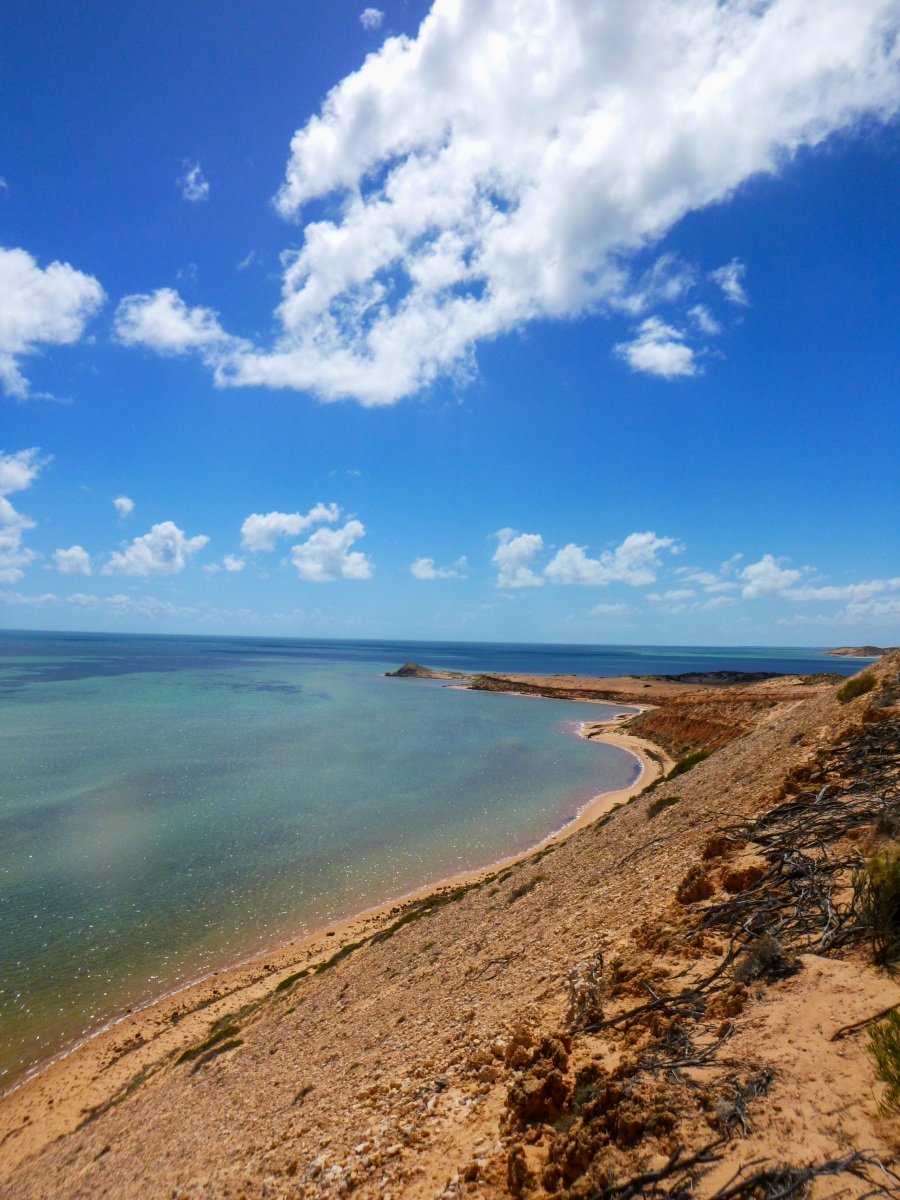
We reach the tip of the peninsula and head onto the beach. A deep red cliff rings a shallow bay. We explore the beach and the water before climbing around onto the cliff top to look down into the water below. Jack is restless to get into the water to catch some dinner, he’d do that if we weren’t there, he said. A little way around the peninsula, we stop again to head out to a rock shelf. The scene is ablaze with light, the reddest reds and bluest blues, shimmering water to infinity.

We cook lunch and the group talks about our travel plans. The other young couple are heading north and talking about where they’re stopping for fuel, which doesn’t really match where we have been. The mother and son are here because they’ve been planning a holiday from Perth for a while, but kept being waylaid by other priorities, they’re clearly enjoying the realisation of their plans!

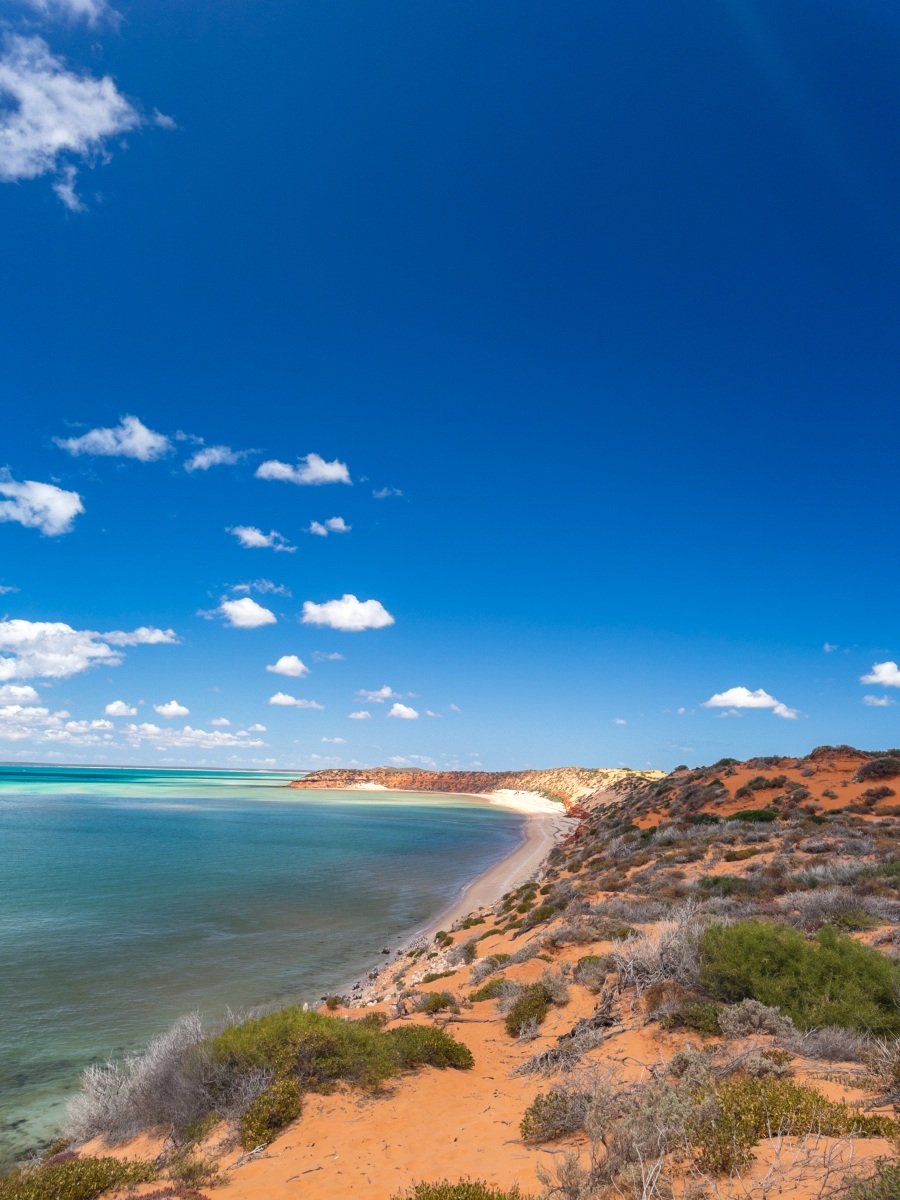
After lunch we have one more stop before heading back. There’s an observation platform which looks over a bay where dugongs come in to eat the sea grass. From the platform a sweeping bay holds crystal clear water. A lone dugong muddles its way through the bay.

Time feels slow on the drive home, taking in the changing landscape. And we return to asking the other couple what their plans are – it all falls into place we they explain that they are flying a light plane for airstrip to airstrip. That explains the strange route and the distances they are covering! I’m immediately jealous of the views that must see from a small plane. Anna would have no part of that trip though.

Upon arriving back at the camp ground I feel grateful that we’re able to travel about and see all that we’re seeing. And argumentative family holidays can’t dampen my mood!

Shark Bay

We head down into the town in the morning to speak to visitor centre and get fuel. At the visitor centre we say we’re interested in getting up into the Francois Peron National Park and they confirm that it really is 4wd only, with very soft sand and deep tyre channels. We book a tour to get up there instead and then walk down the main street in Denham. There is supposed to be a resident population of emus which walk the main road here, but we don’t chance across any…yet 

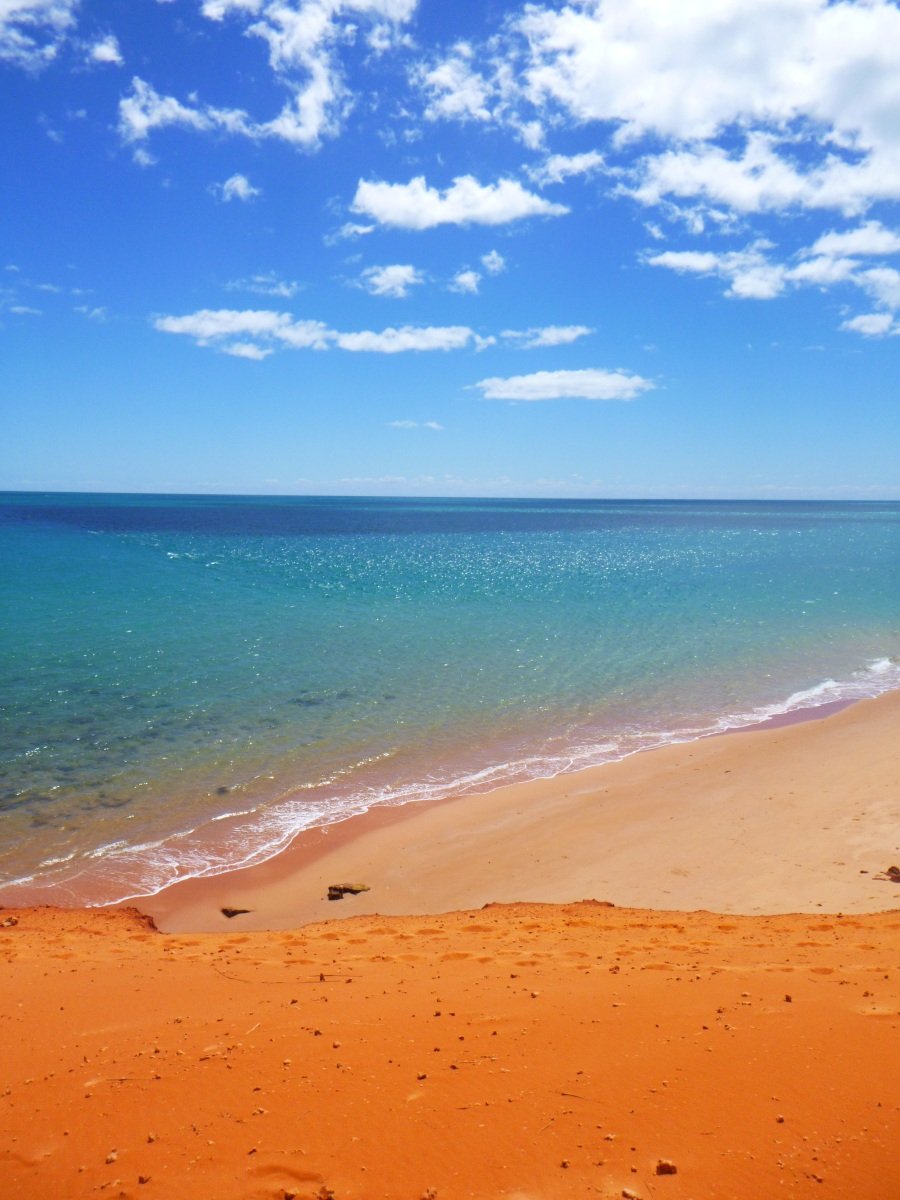
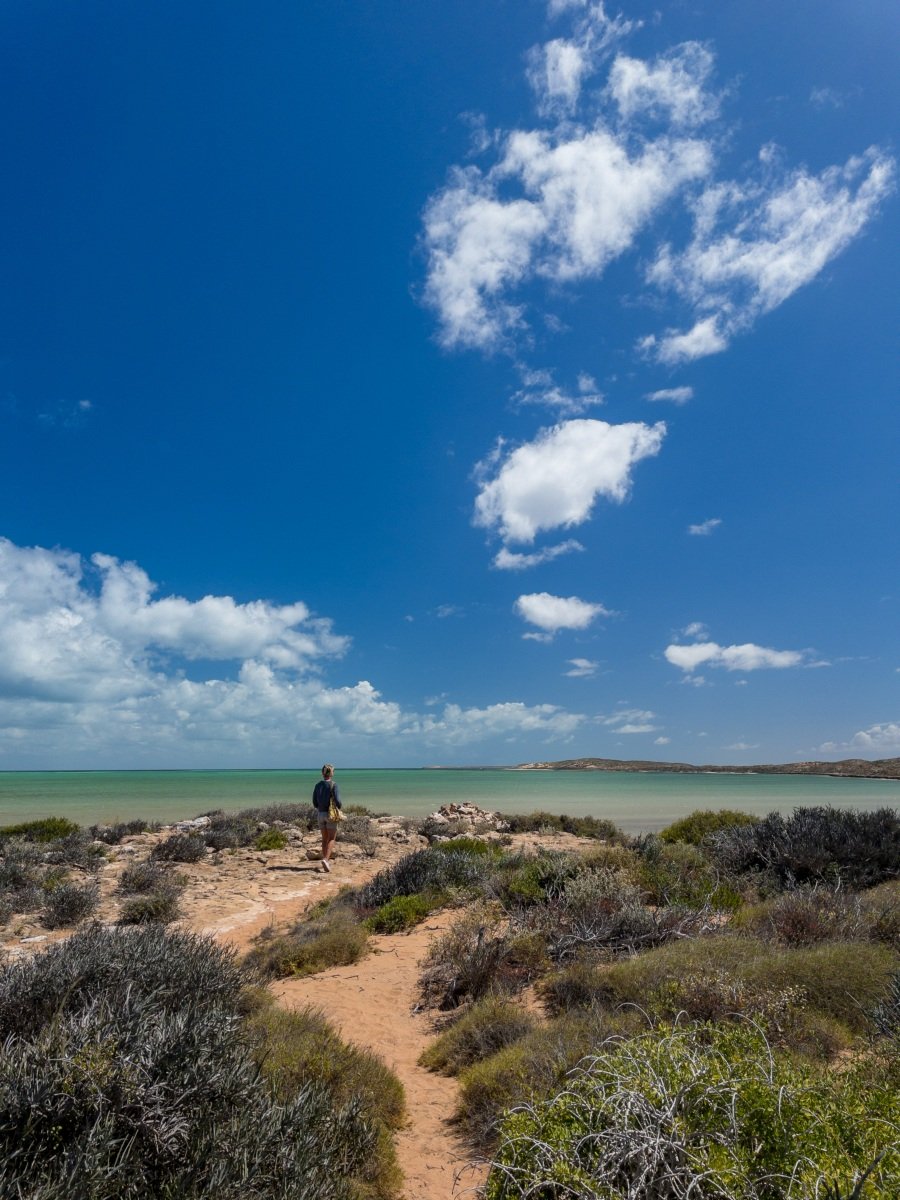
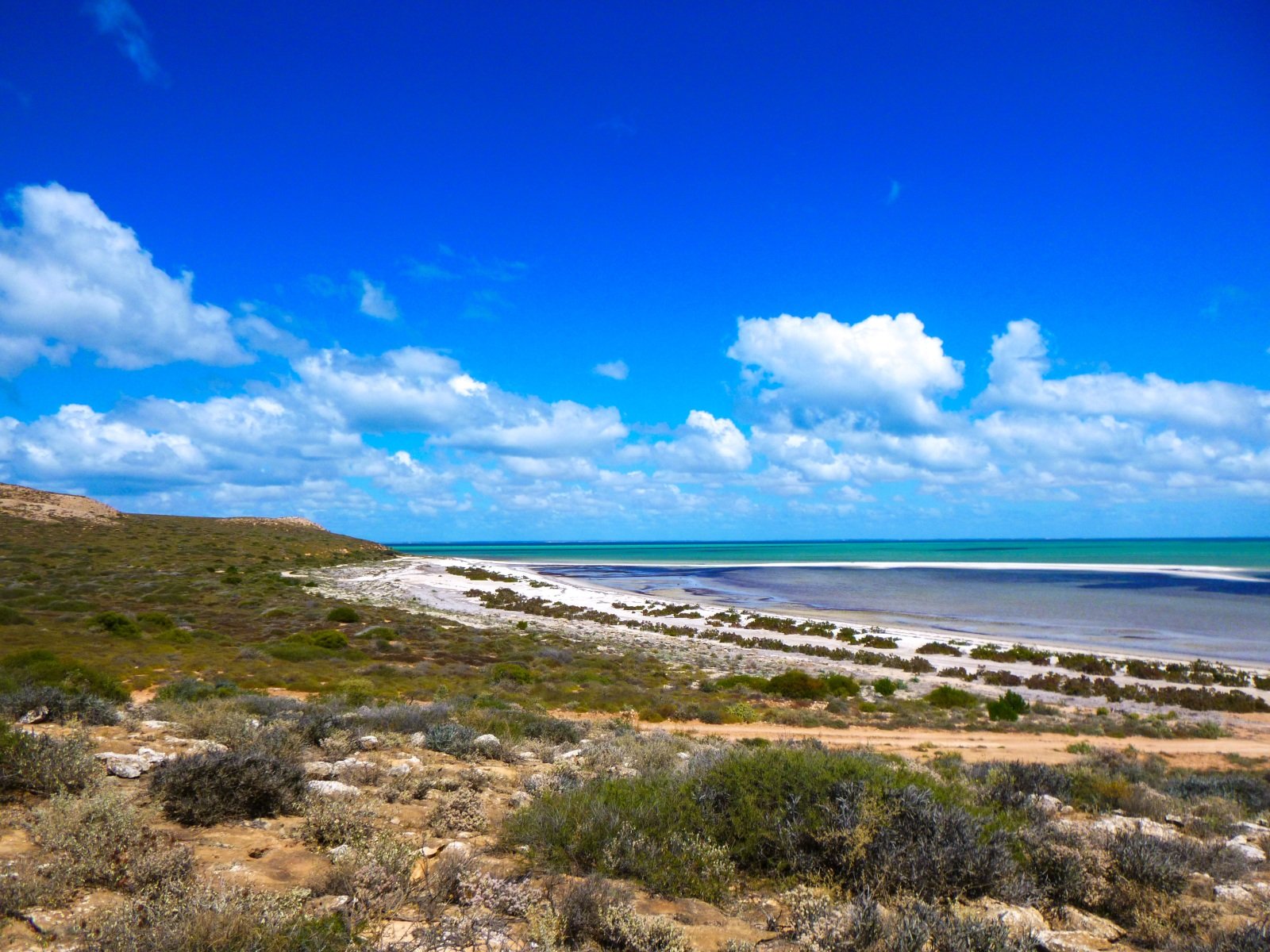
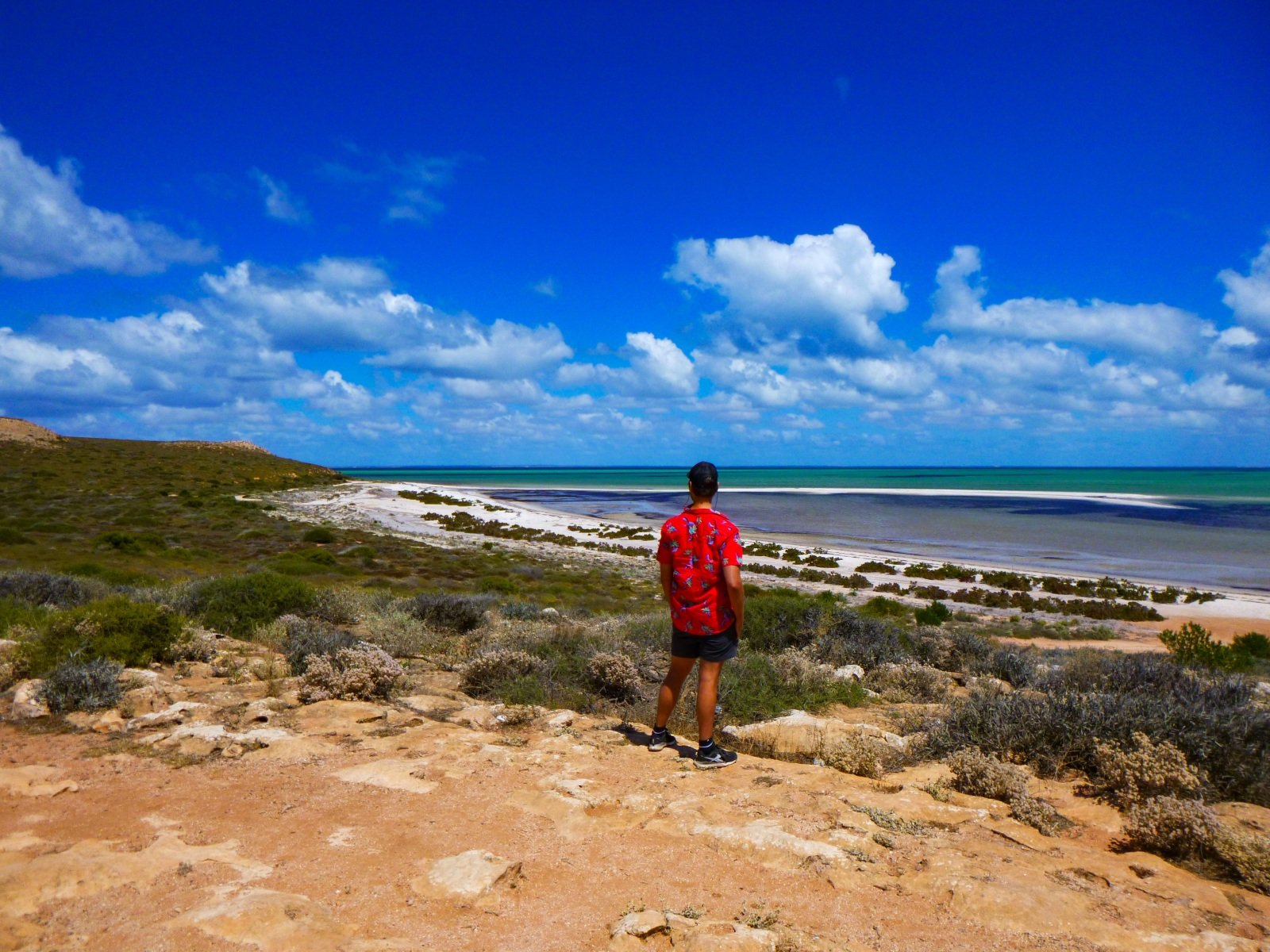
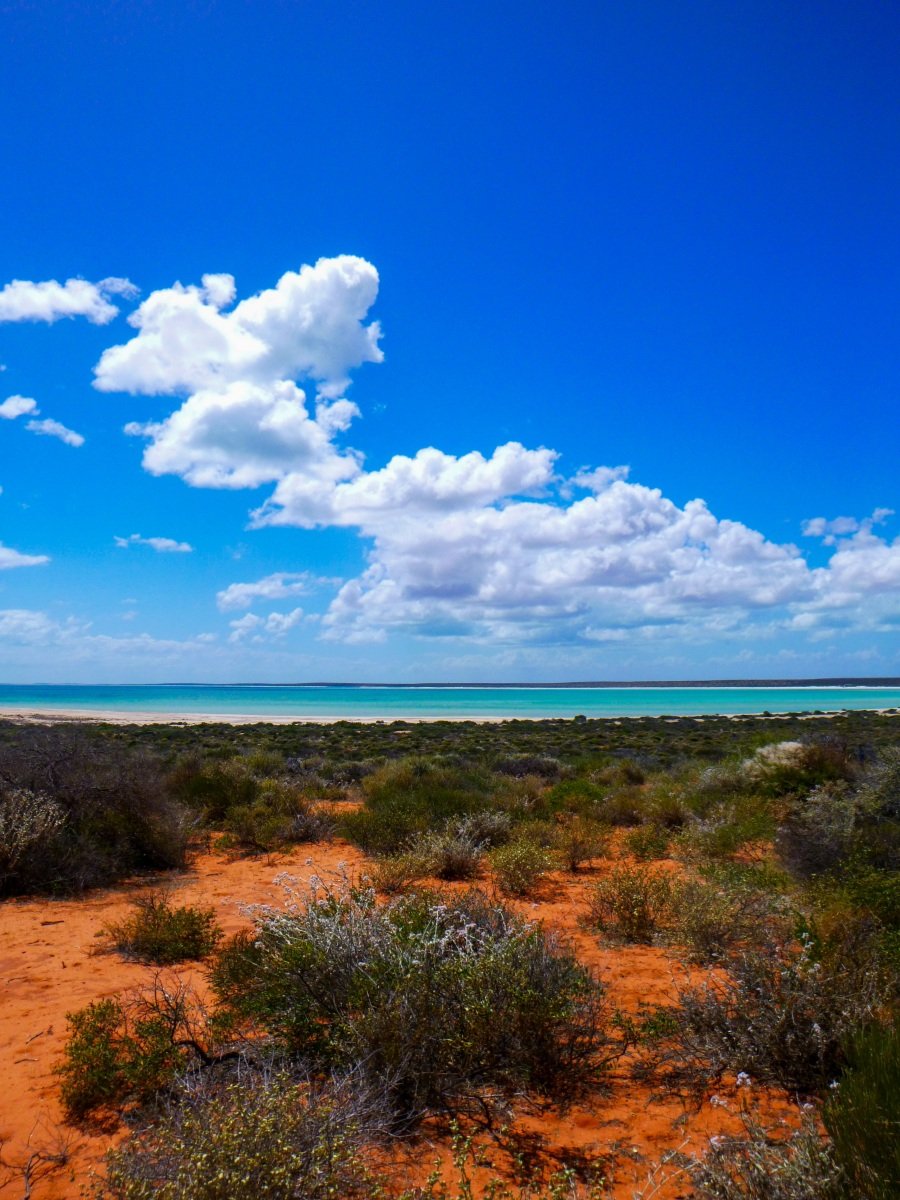
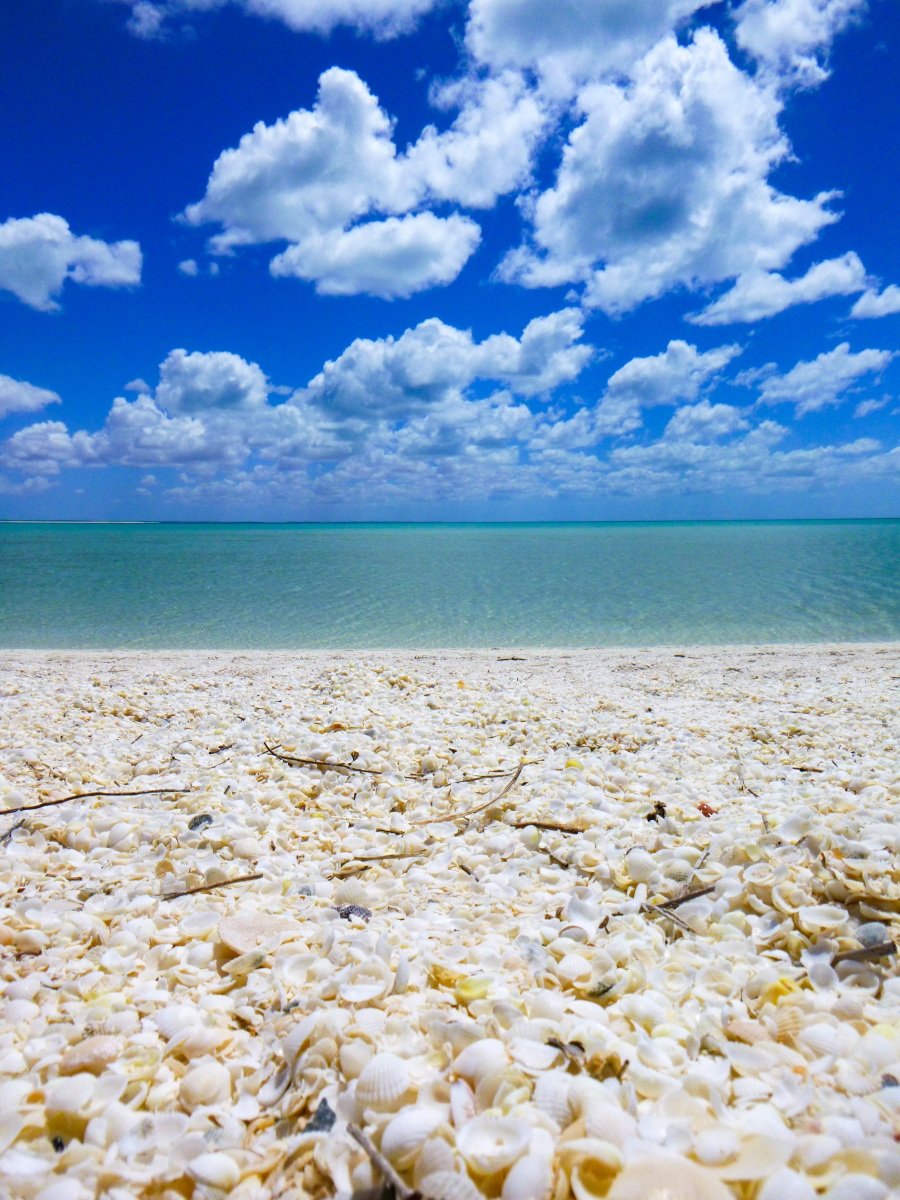
The sun beats down overhead in another glorious West Australian day. Just before we reach Shell Beach here’s a turn out which gives a view along the coast. The shimmering clear-green water runs out to the horizon, meeting a pale blue sky. Looking further up, a band of puffy clouds interrupts the pale blue until the sky directly above us deep blue and perfect. The sun is generously warm and the ground absorbs its heat, now hard and dry. 

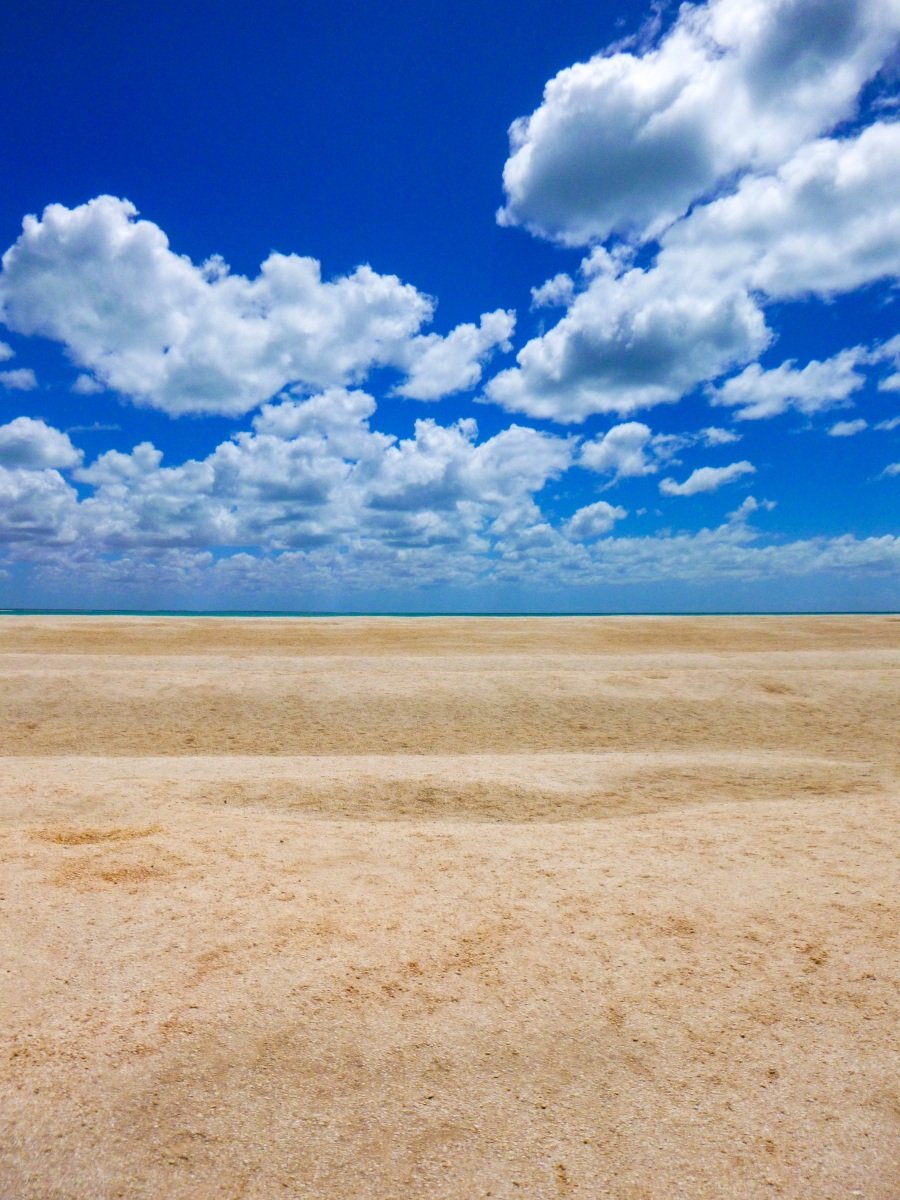
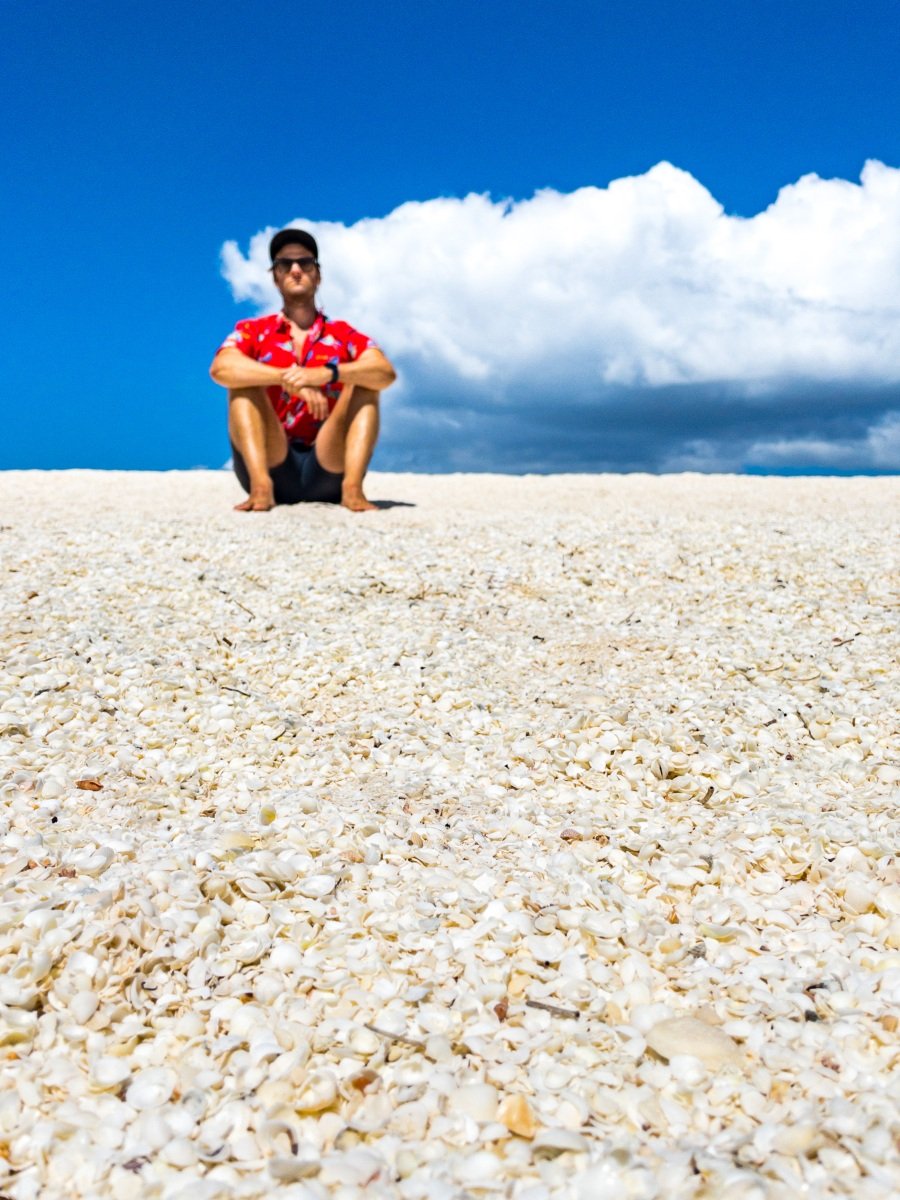
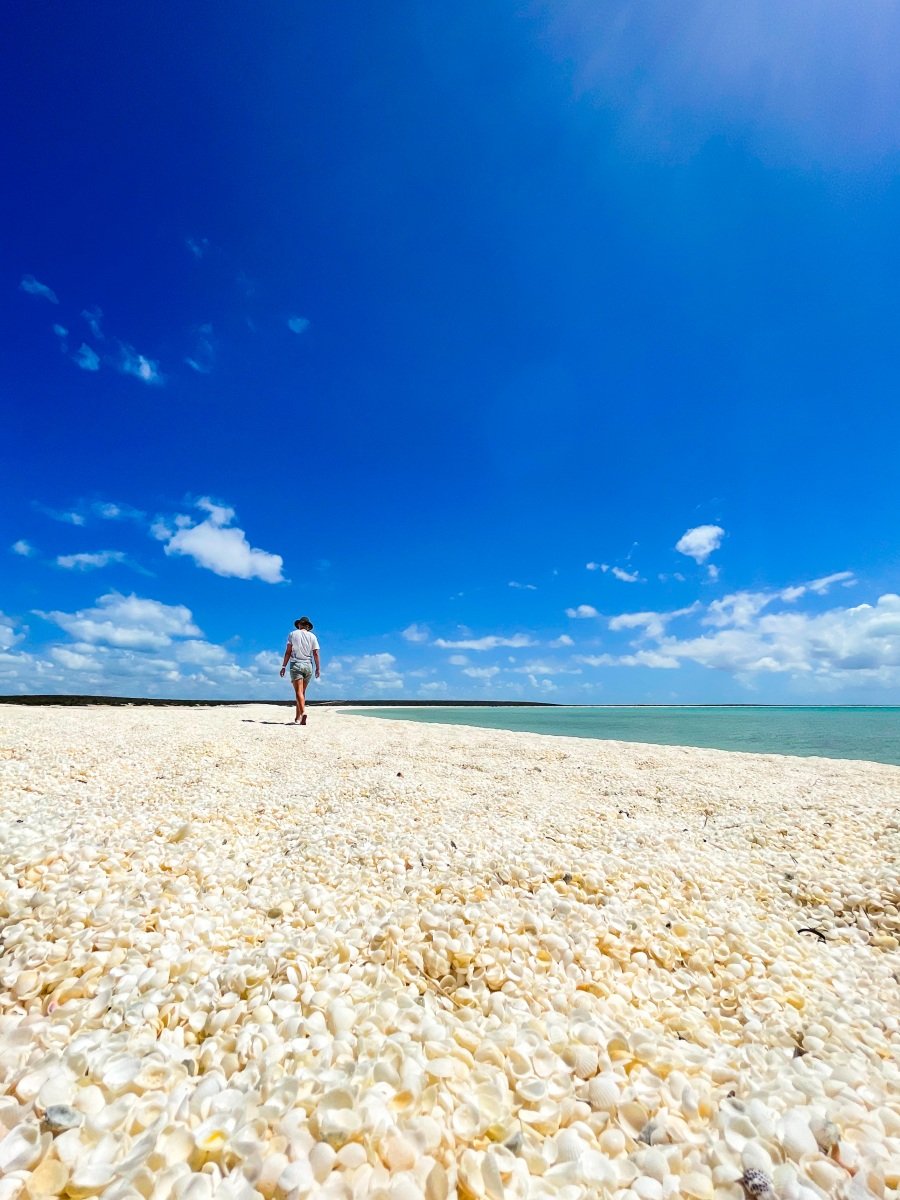
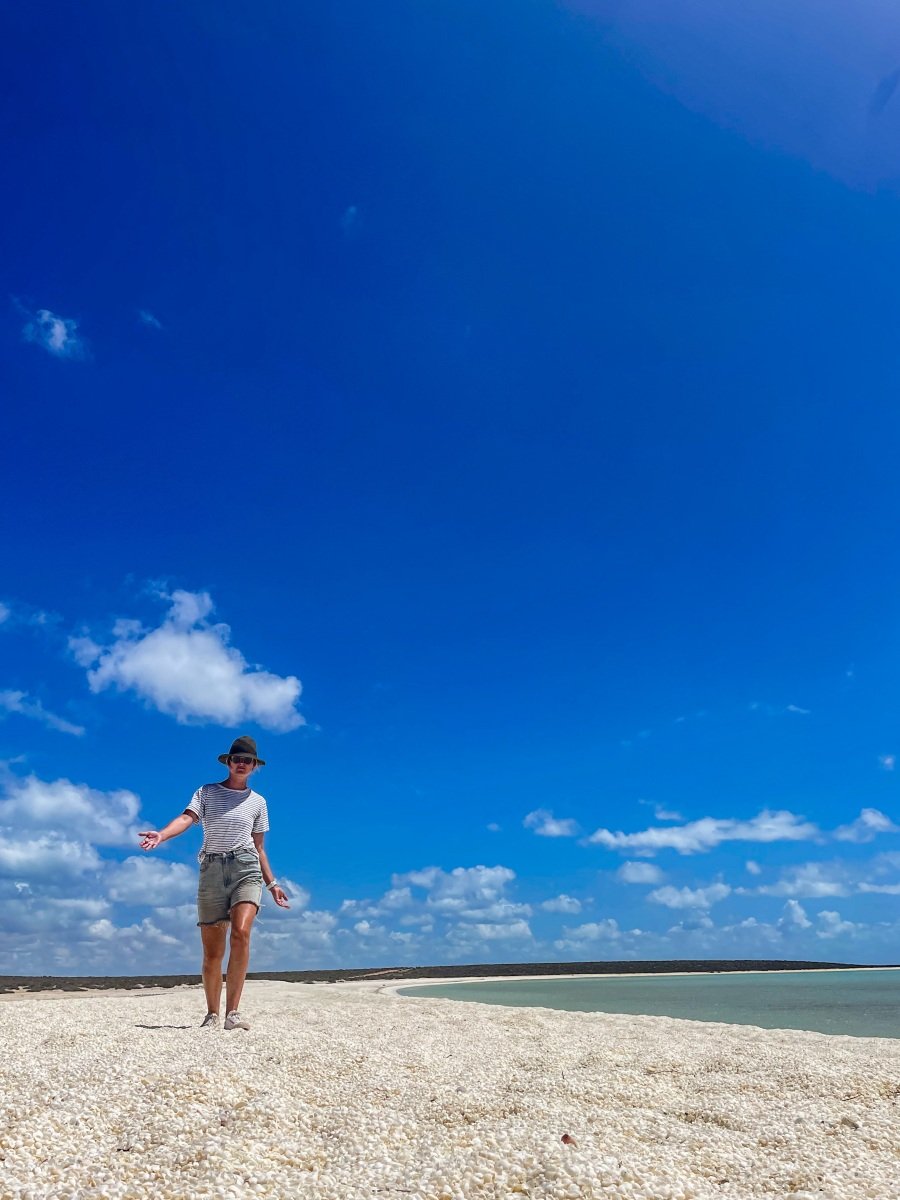
Down on the beach millions and millions of tiny shells stretch as far as I can see. There’s some condition (salt content?) which makes for excellent shell living conditions, and we walk on the evidence of that. Few people venture far along the beach, so we take a walk a little way. In the quiet of a gentle breeze, we bask in the sun and take lunch. 

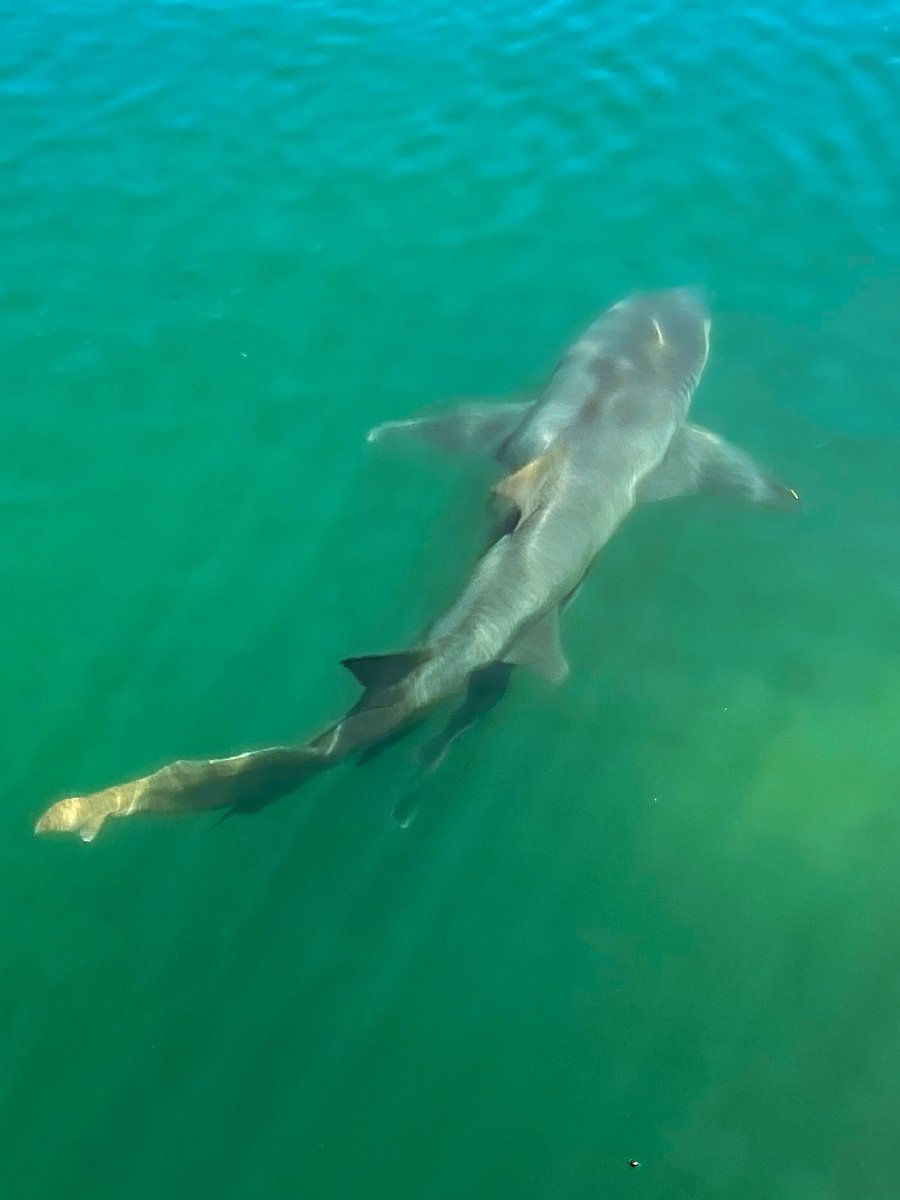
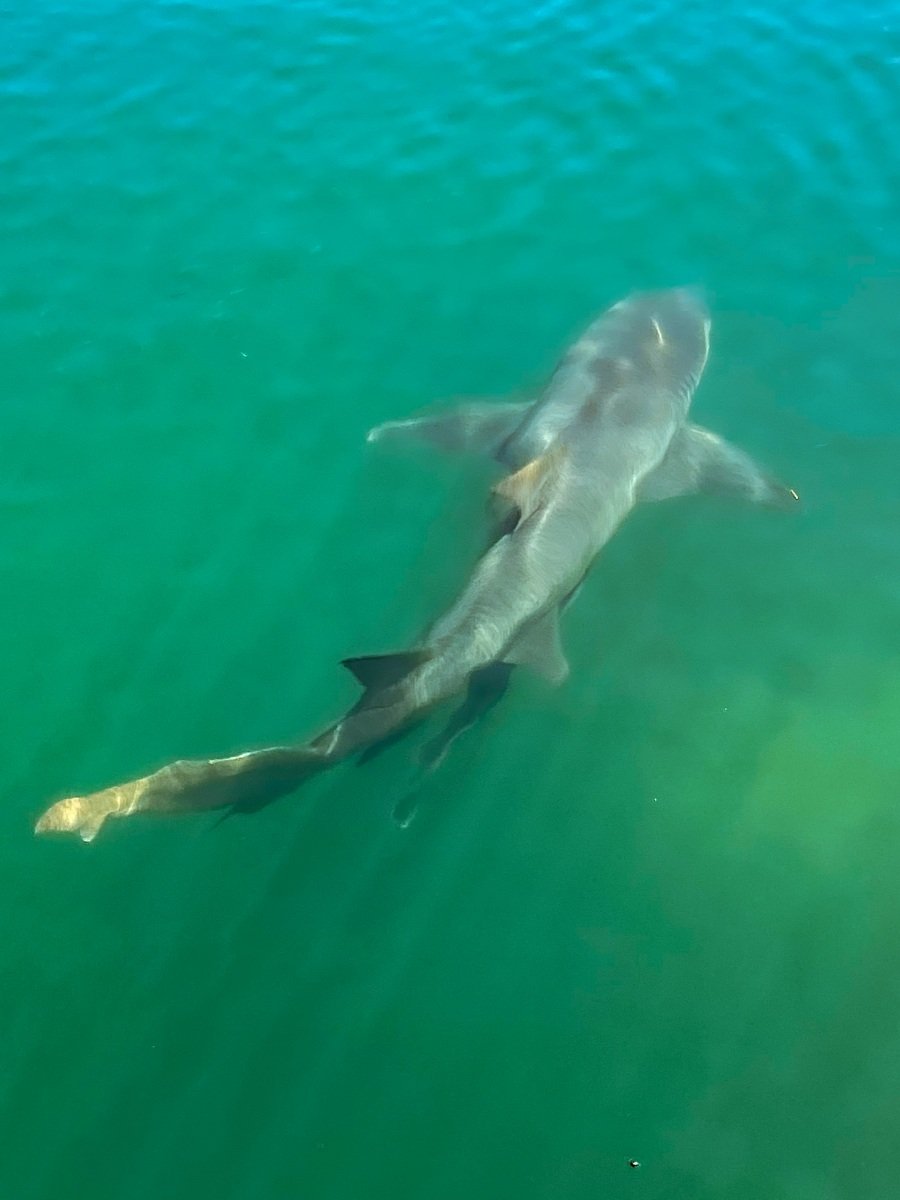
Retracing our drive to Eagle Bluff, we walk along the boardwalk. The elevation over the sea creates a vantage point for looking for marine life in the clear water. The signs list animals we might see, but today we don’t spot anything (except a pretty good likeness of Anna – the Nervous Shark). 

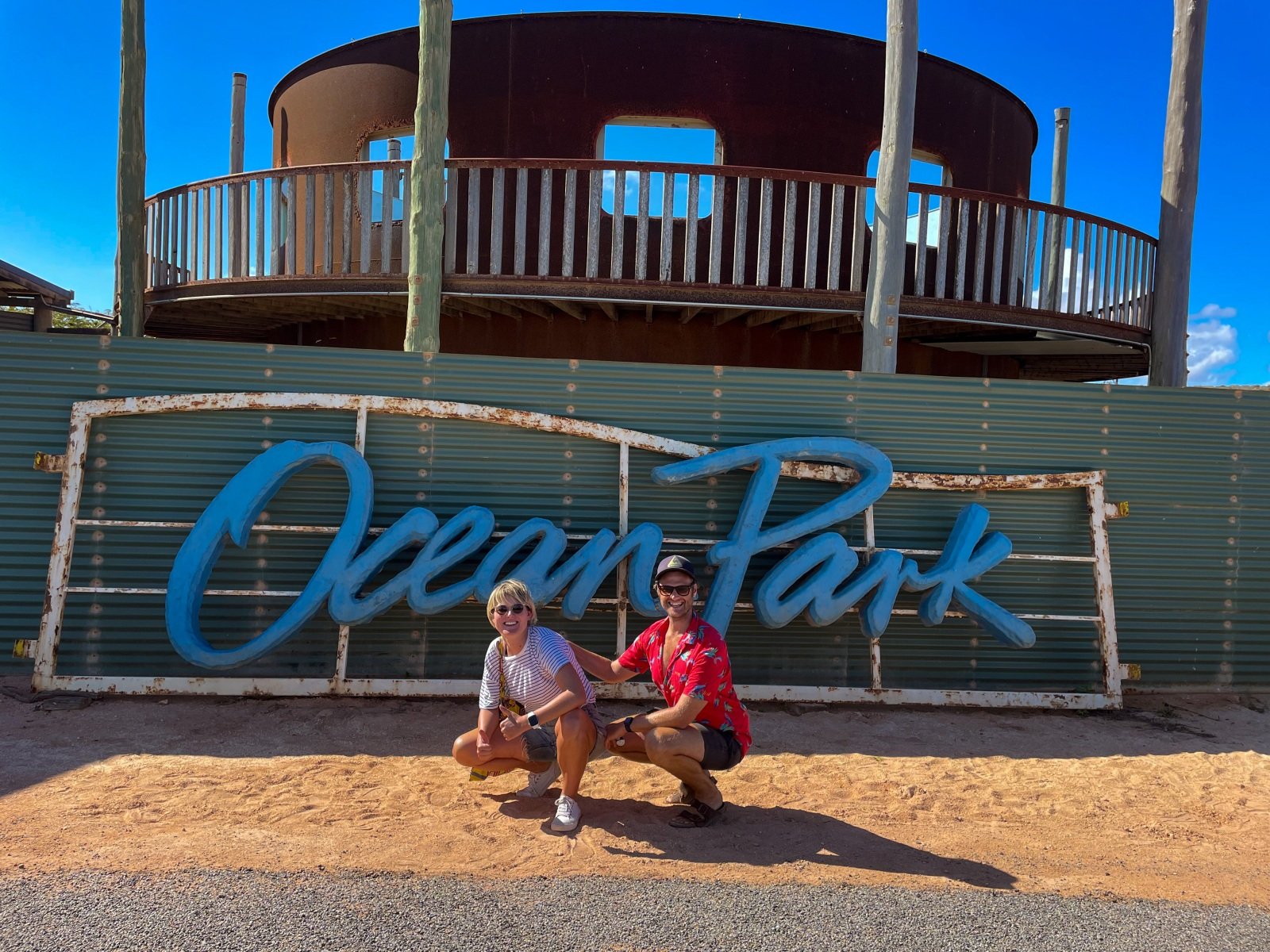
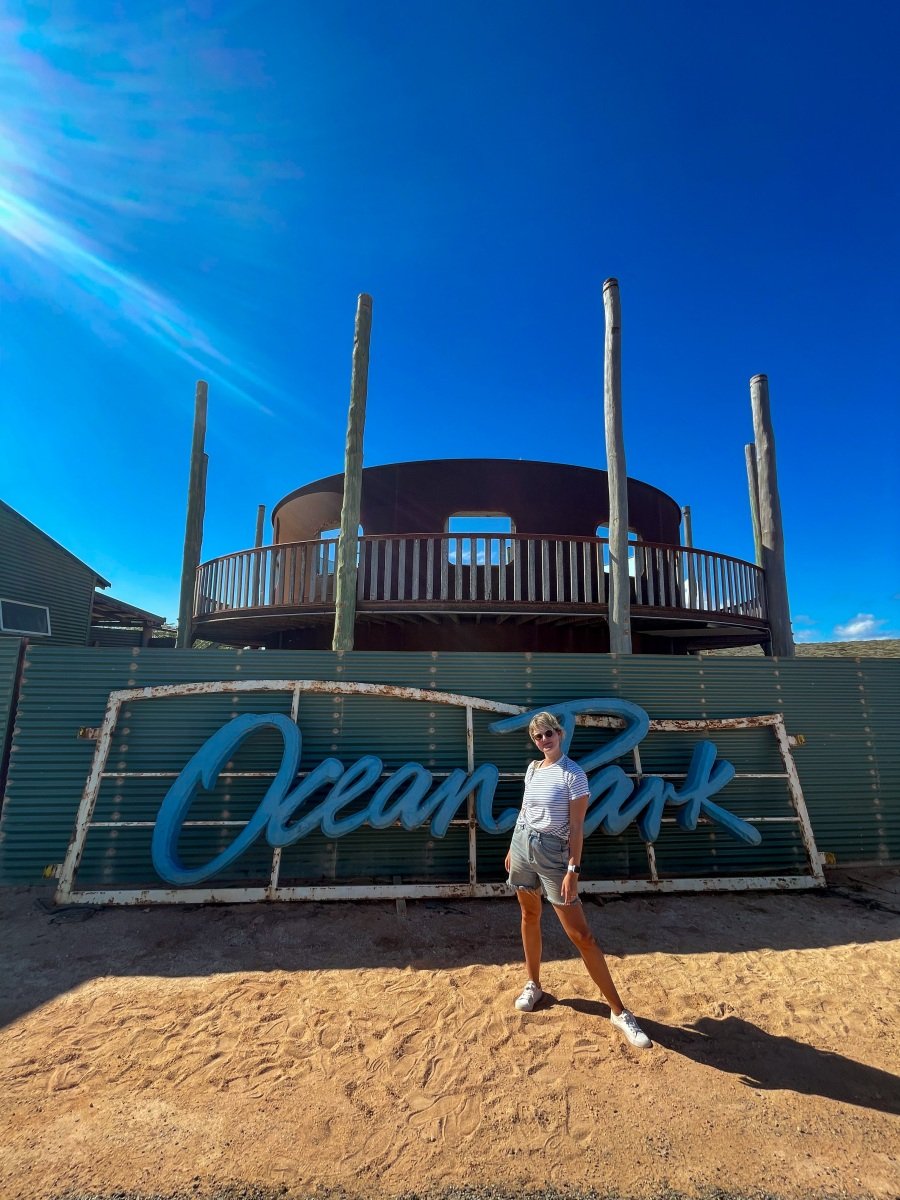
To have a closer look at some animals, our next stop is the Ocean Park Aquarium. 

Initially the aquarium operated to rebuild the population of pink snapper which had been almost fished to exhaustion. As other opportunities to grow or protect other fish, they setup tanks and equipment. We tour the aquarium, looking at stonefish, eels, snakes and rays at indoor tanks – then larger animals in the outdoor tanks. The sharks were impressive to watch winding their way through the water. At the end I enjoyed laughing at some people pulling faces at a fish who liked to squirt water at them. 

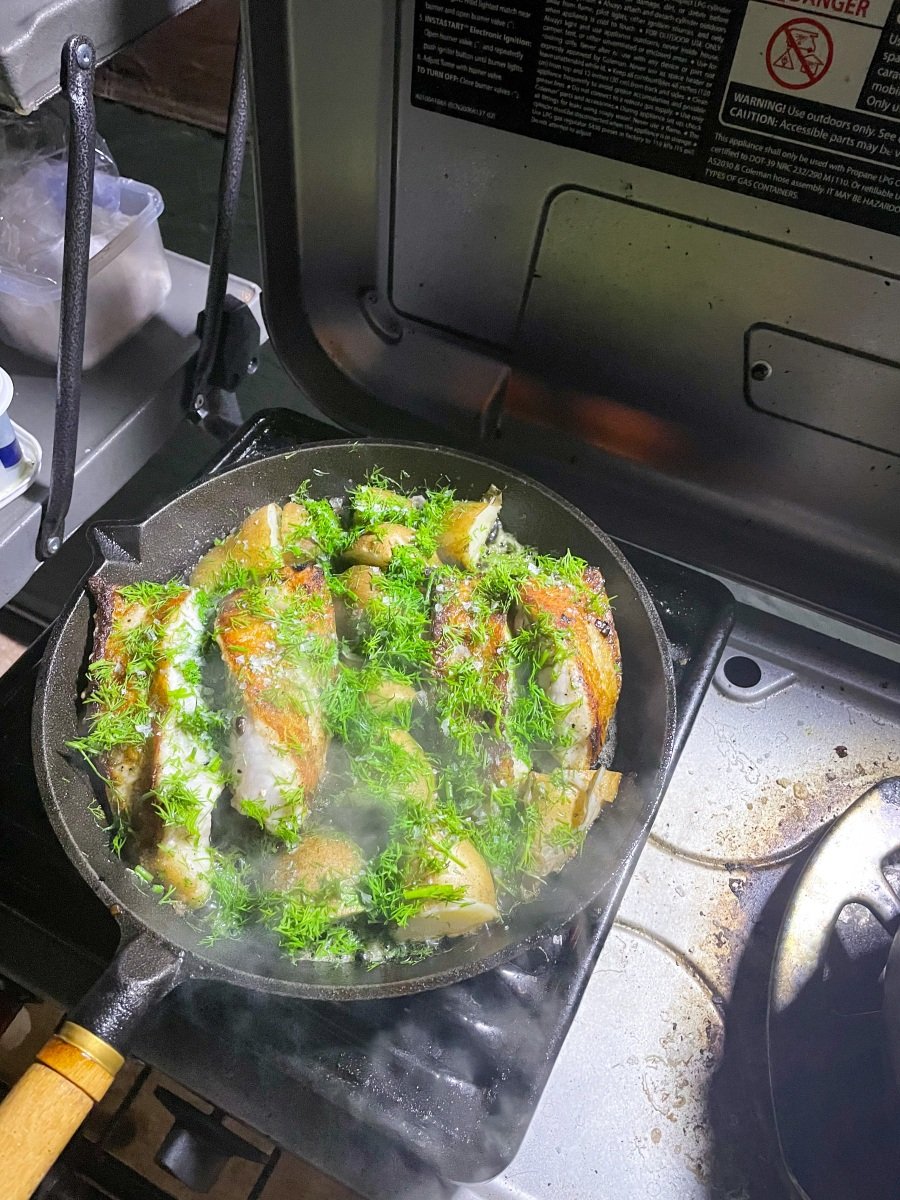
Back at the caravan park the school holiday chaos is well underway. Kids are running about playing and getting in trouble. I almost feel guilty to happily cook dinner with a wine and watch the drama unfold. 

One site over there’s a family who arrived yesterday. They were in a panic, looking for a nurse because the dad had hurt himself and the mum was furiously saying that the holiday was already ruined, one day in! (Having heard today about the pain and abundance of stonefish, we decided that he must have stood on one). Now tonight the kids are being constantly yelled at by the mum while the dad sulks by the BBQ with a beer. It grows more aggressive as she starts really trying for a fight with anyone who will acknowledge her – the family has clearly dealt with this before. Pretty sure the kids will refer to the ‘2021 Shark Bay Holiday’ to their therapists in a few years! 

Much later in the evening we fall asleep guiltily smiling and listening to the continuation of this tension next door. 

Carnarvon to Shark Bay

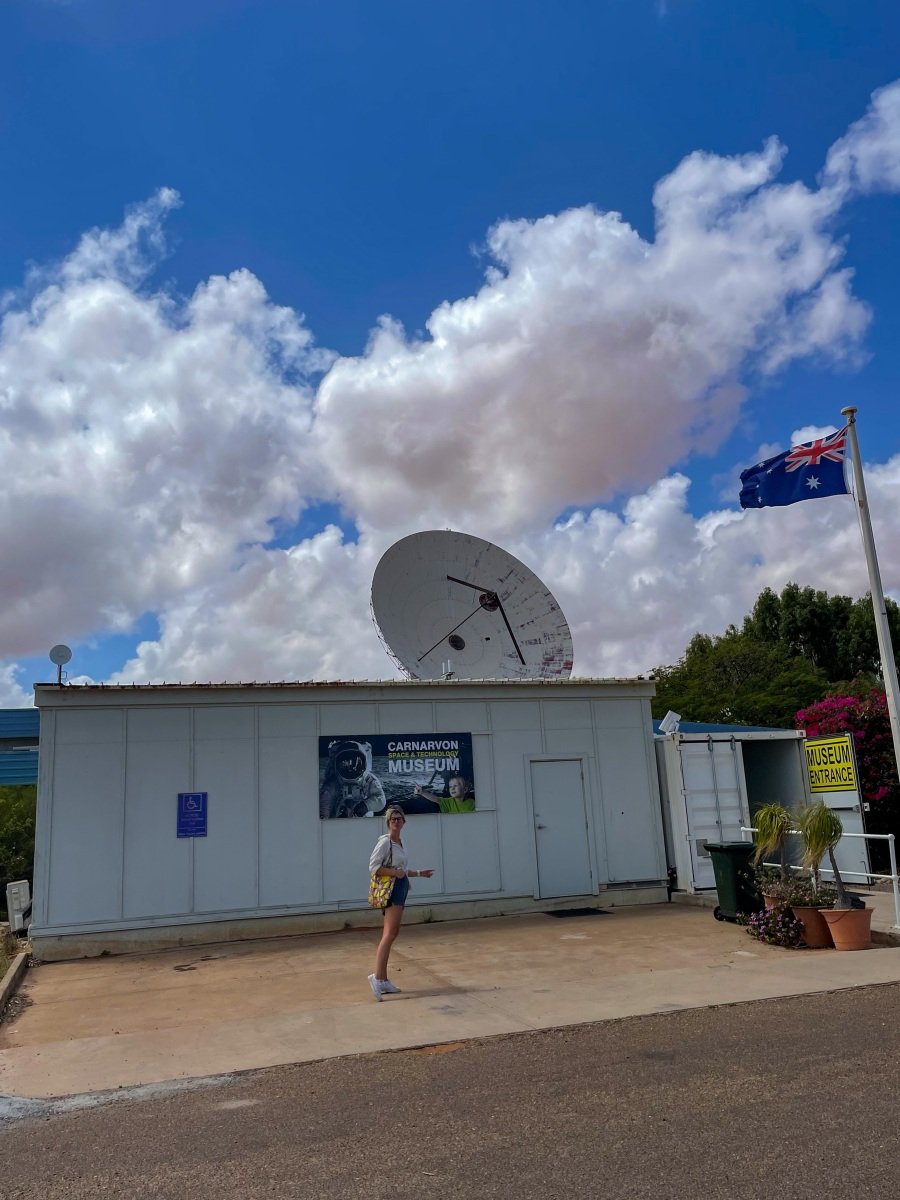
Around Carnarvon we started our day at the Gascoyne Growers’ Market, include picking up our next coffee (Ningaloo Roast). Our last, and most important, stop before heading to Shark Bay is the Space Museum. 

The dish here was designed for relaying communications, including the first live broadcast from the UK to Australia, and the Apollo 11 moon landing! For the moon landing they tracked all kinds of data, including recording Neil Armstrong’s heart rate on a paper monitor. 

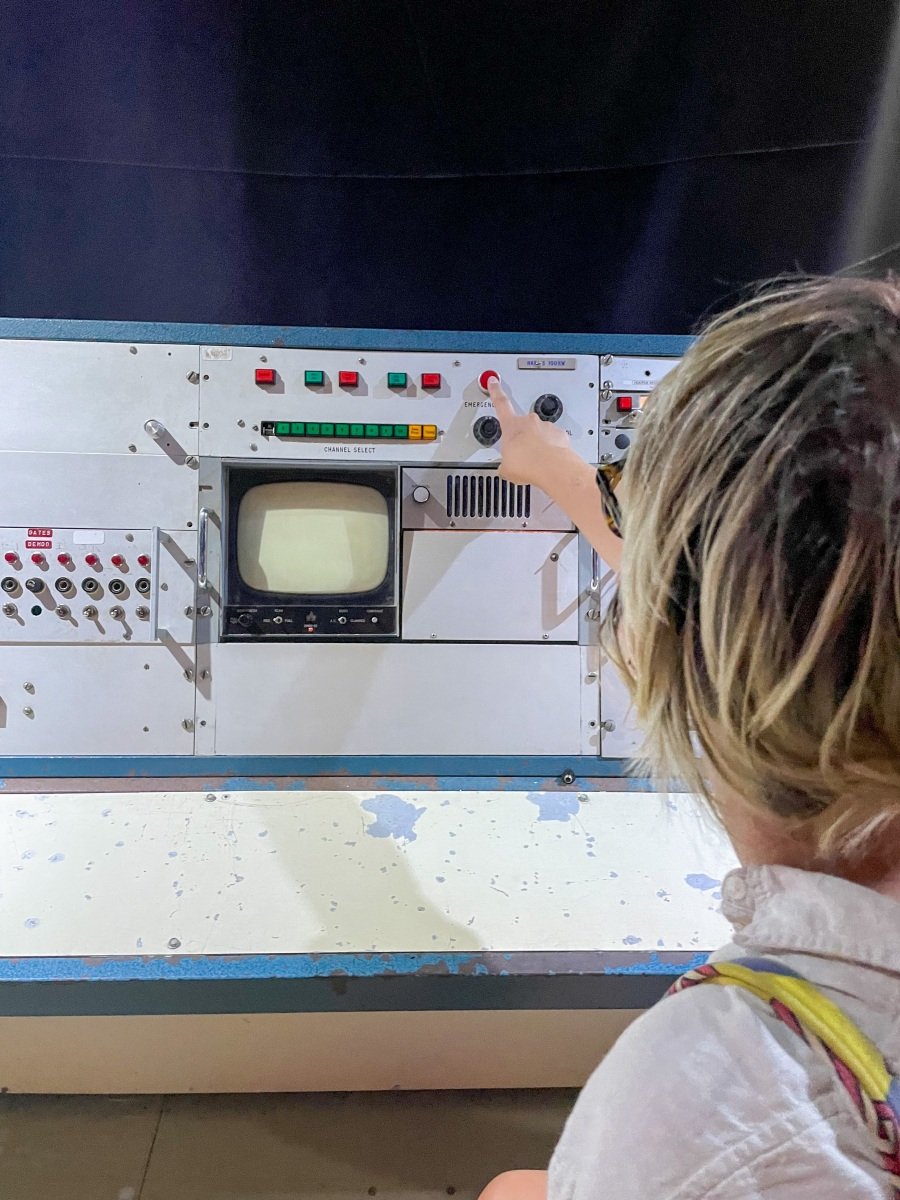
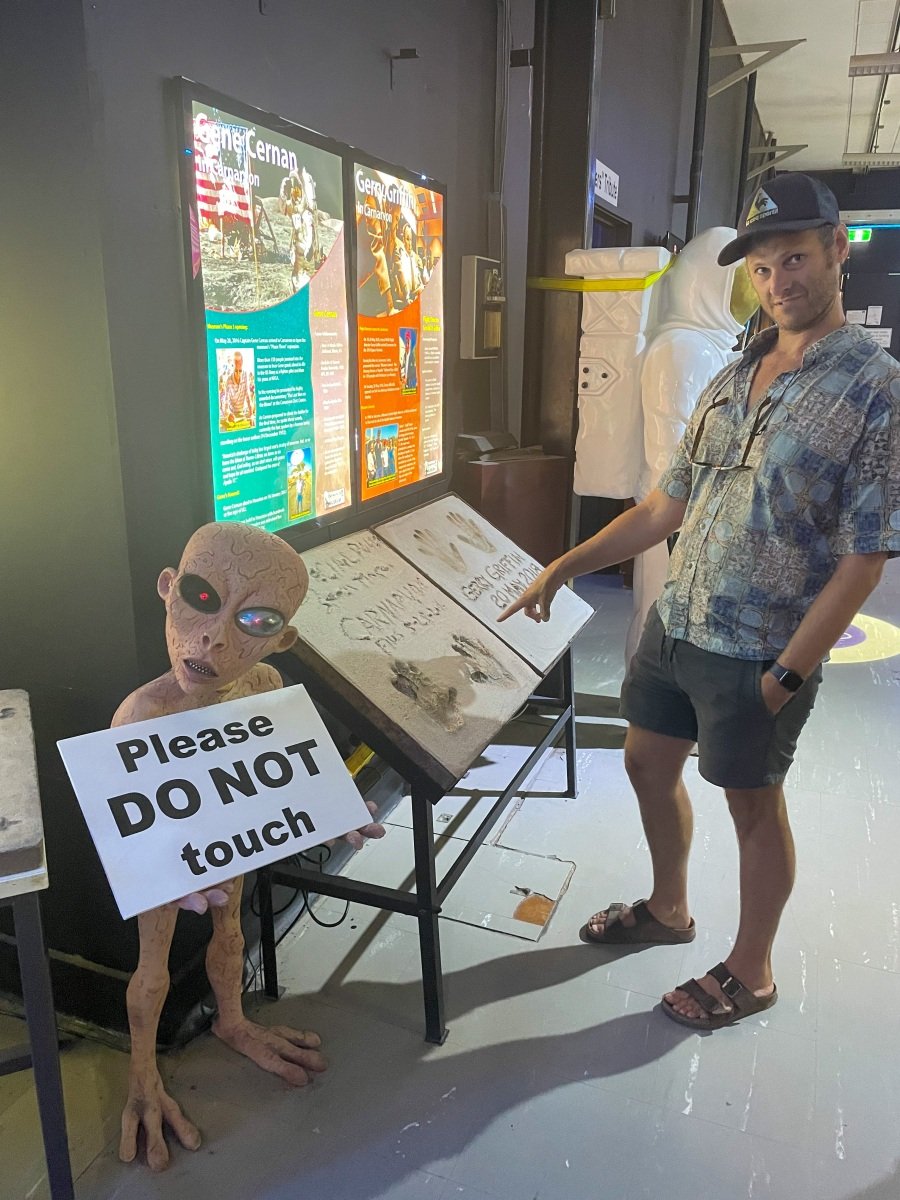
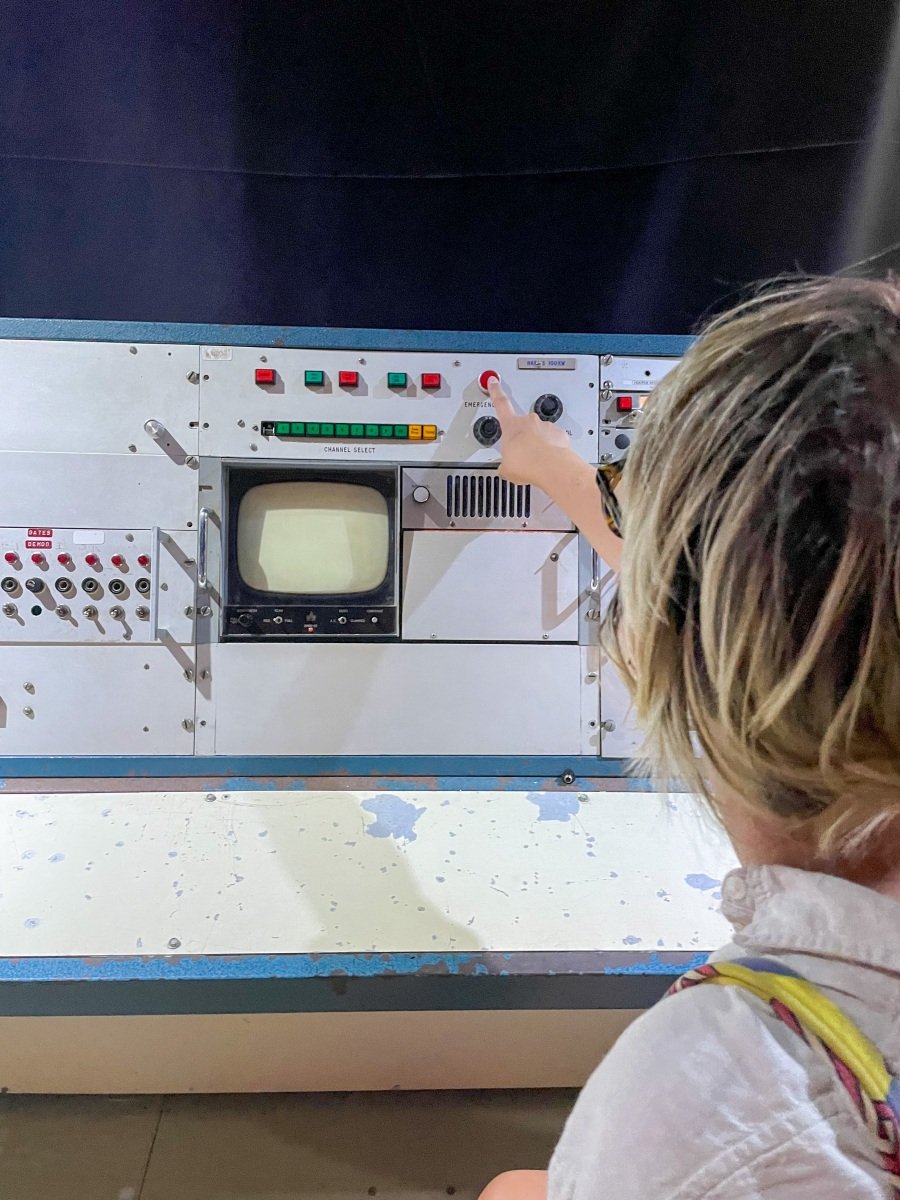
It has been decommissioned since 1987 and now serves as a museum to all things space. The resident cat introduces himself on entry and we explore the analogue hardware terminals (some returned to the museum as families discover them in grandpa’s shed, taken while the station was disused). 

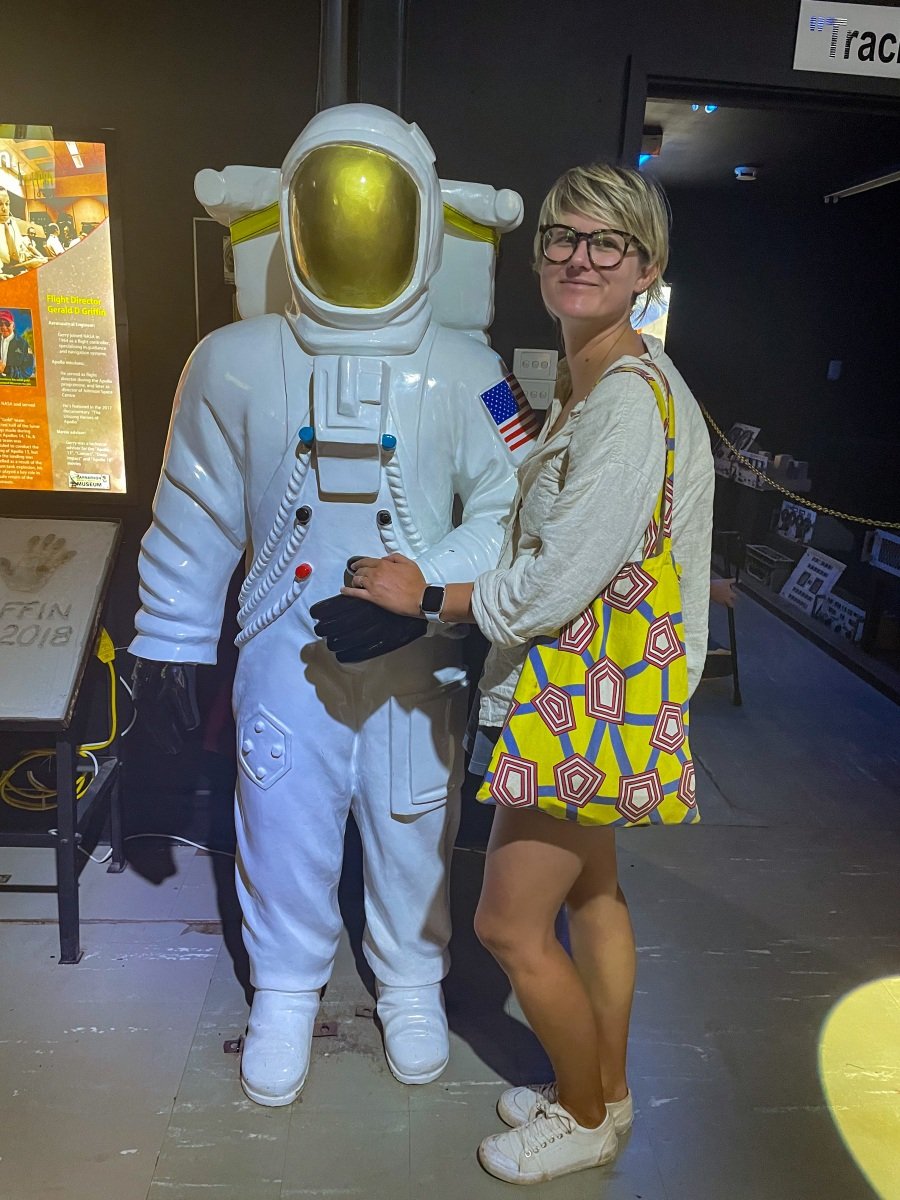
It has a quirky, community-run vibe; but also, an impressive life-sized replica of the lunar lander. 

On the drive out of Carnarvon we begin to meet our first real road traffic of the trip. It’s the start of school holidays in WA and everyone seems to get their boat or caravan and head north. I start sensing other cars are having that family road trip turned pressure-pot experience, and people are starting to make some bad driving decisions (see this little dashcam below of a car-caravan getting back into his lane only a second before we pass!). Our relaxed time frame puts us on a different planet to these fellow holiday-ers, and it’s great!! 

We arrive in Shark Bay in the mid-afternoon and have dinner going by sunset.

Too close for comfort