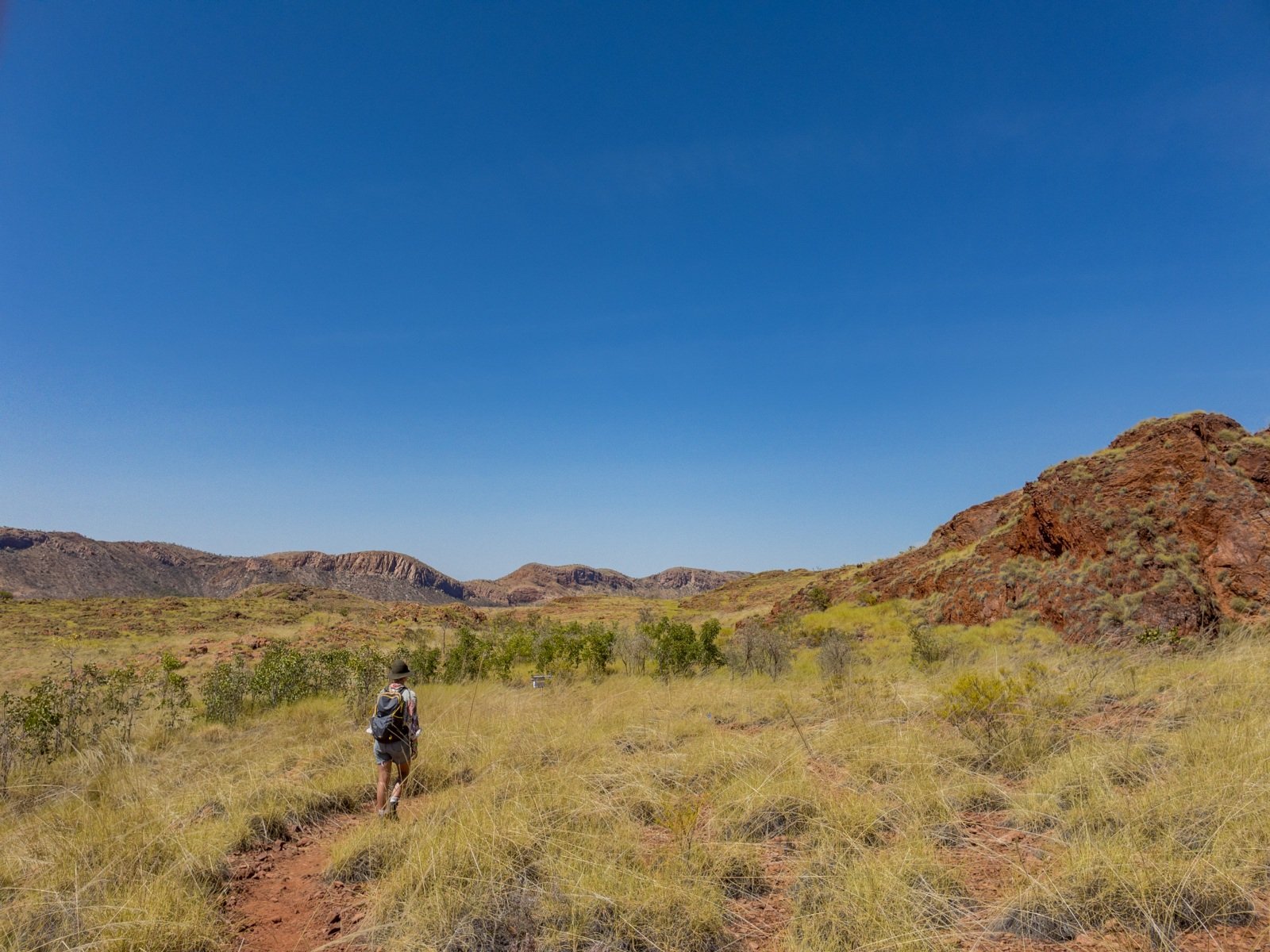
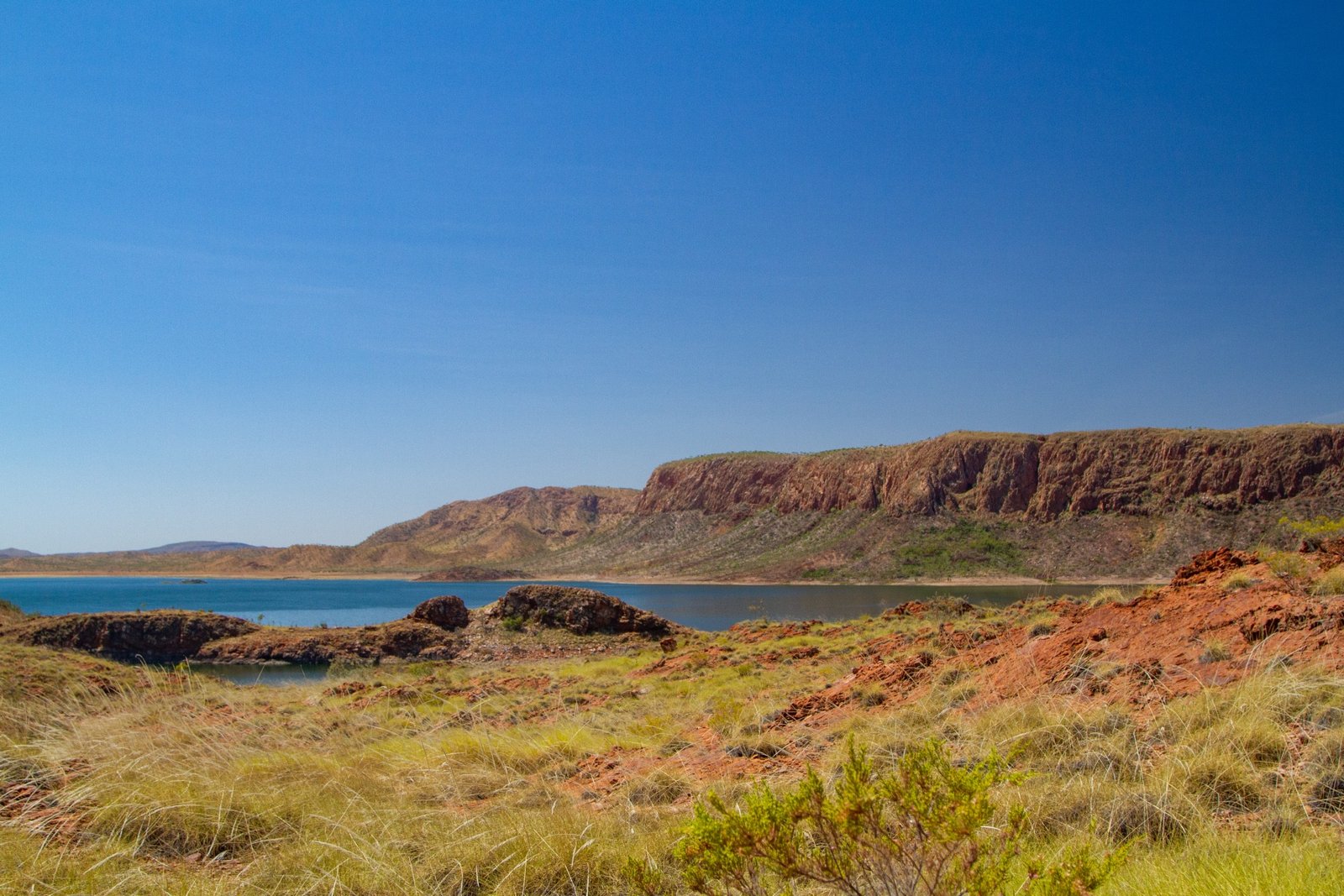
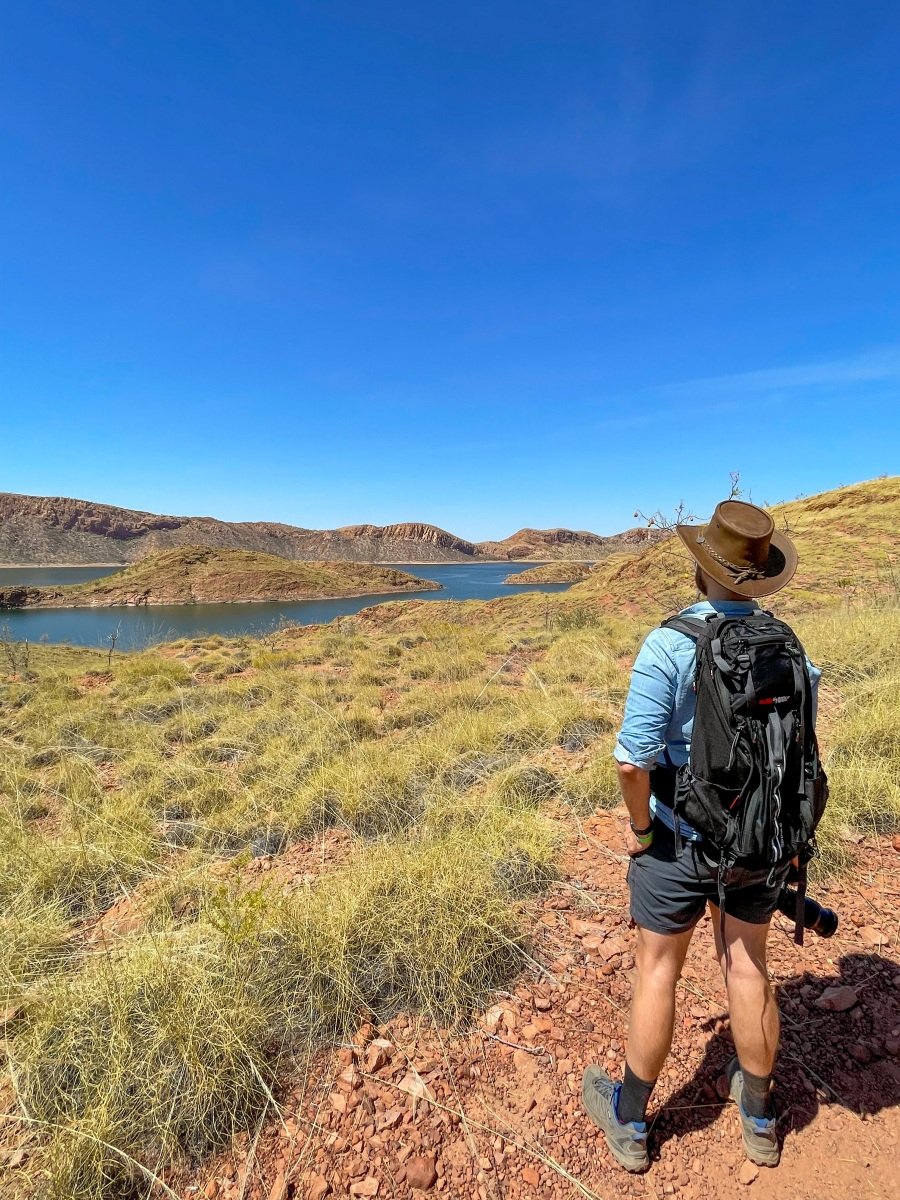
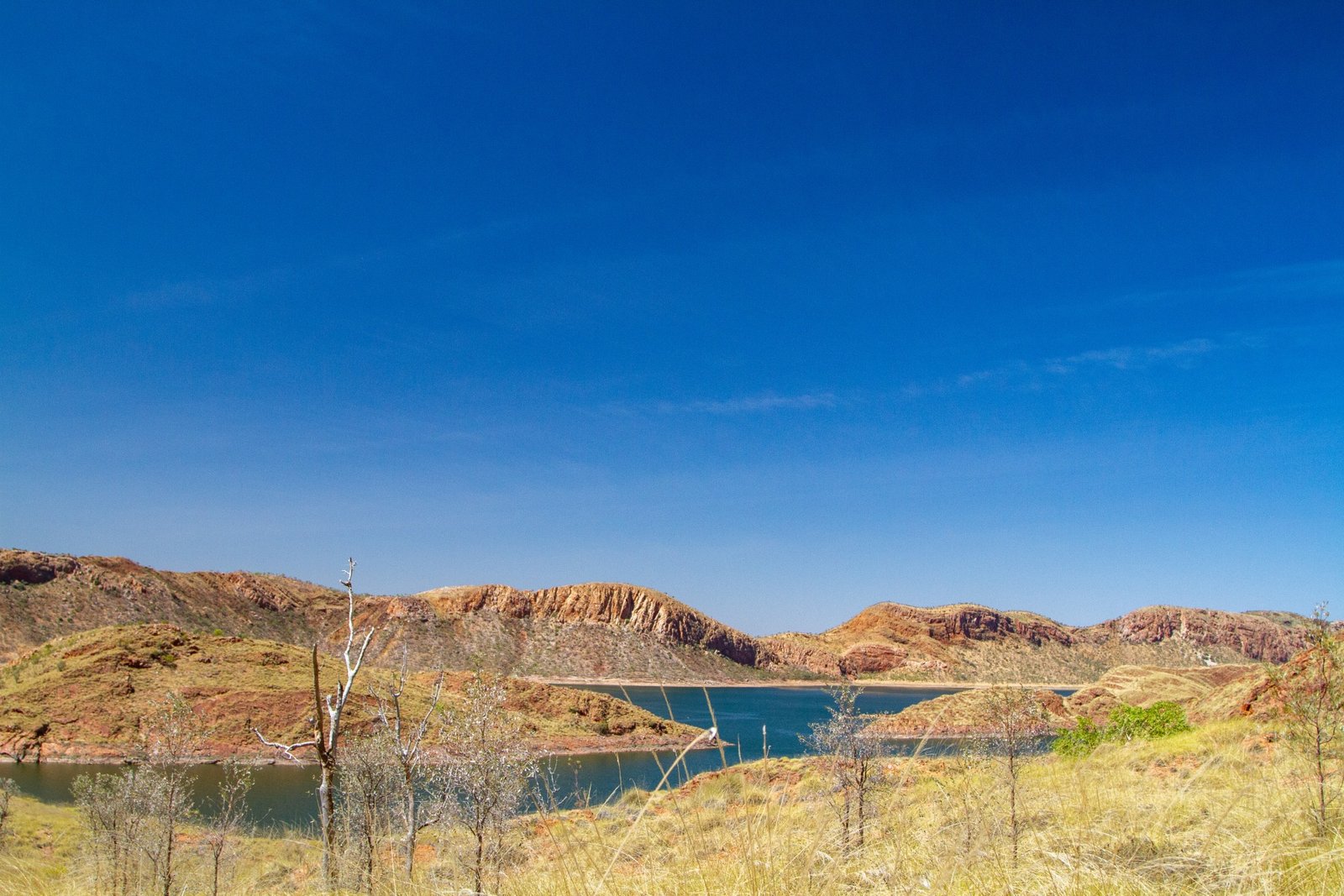
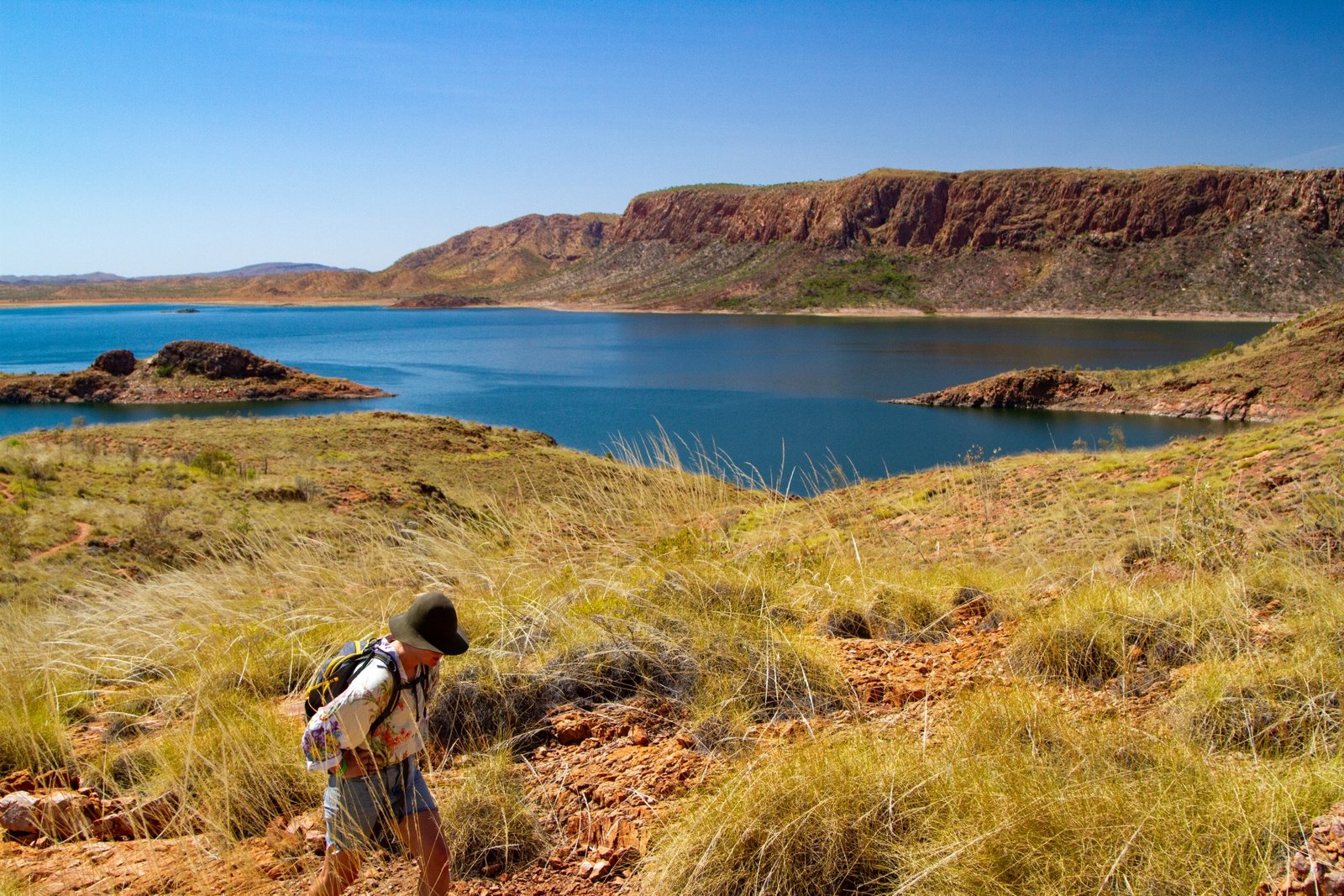
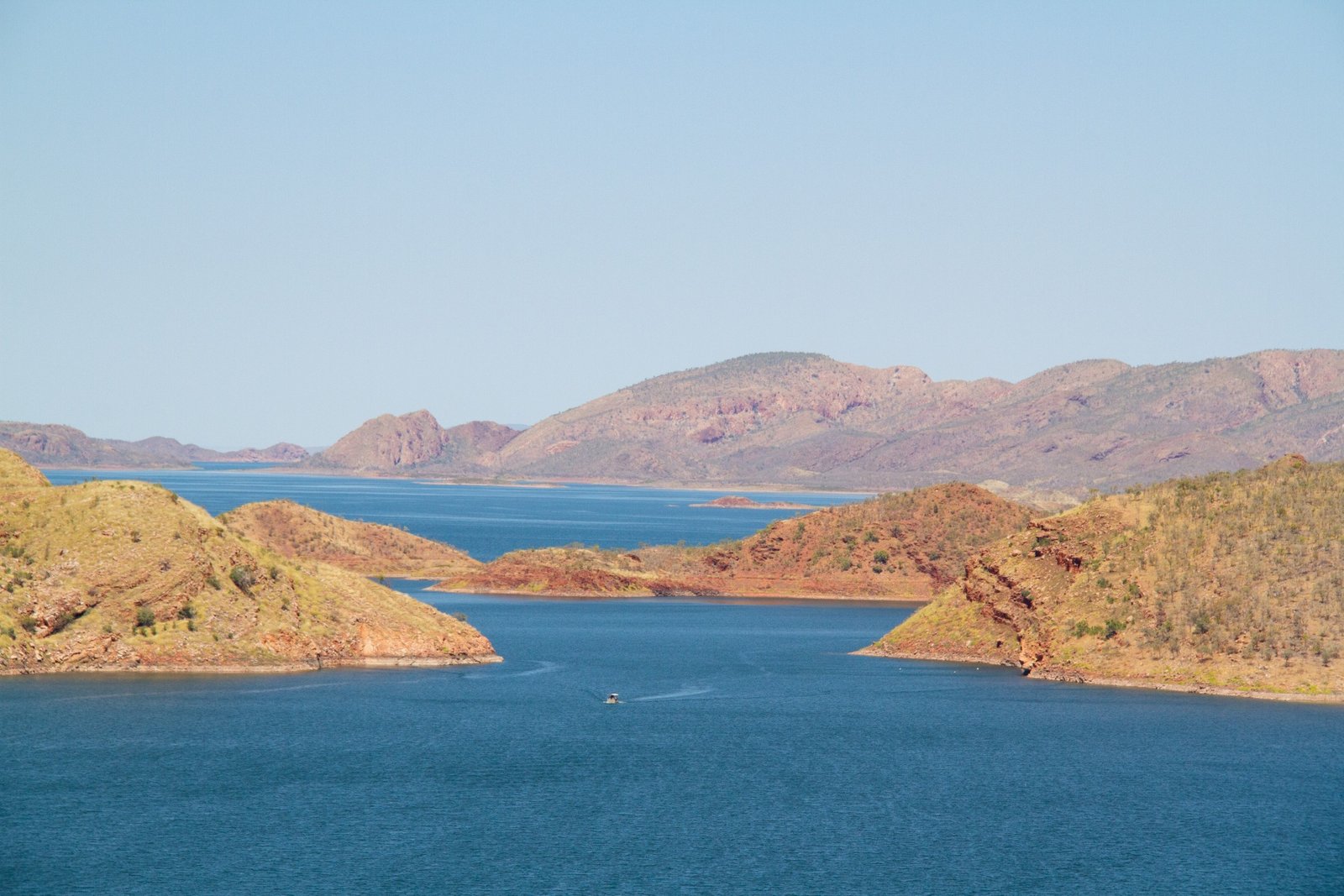
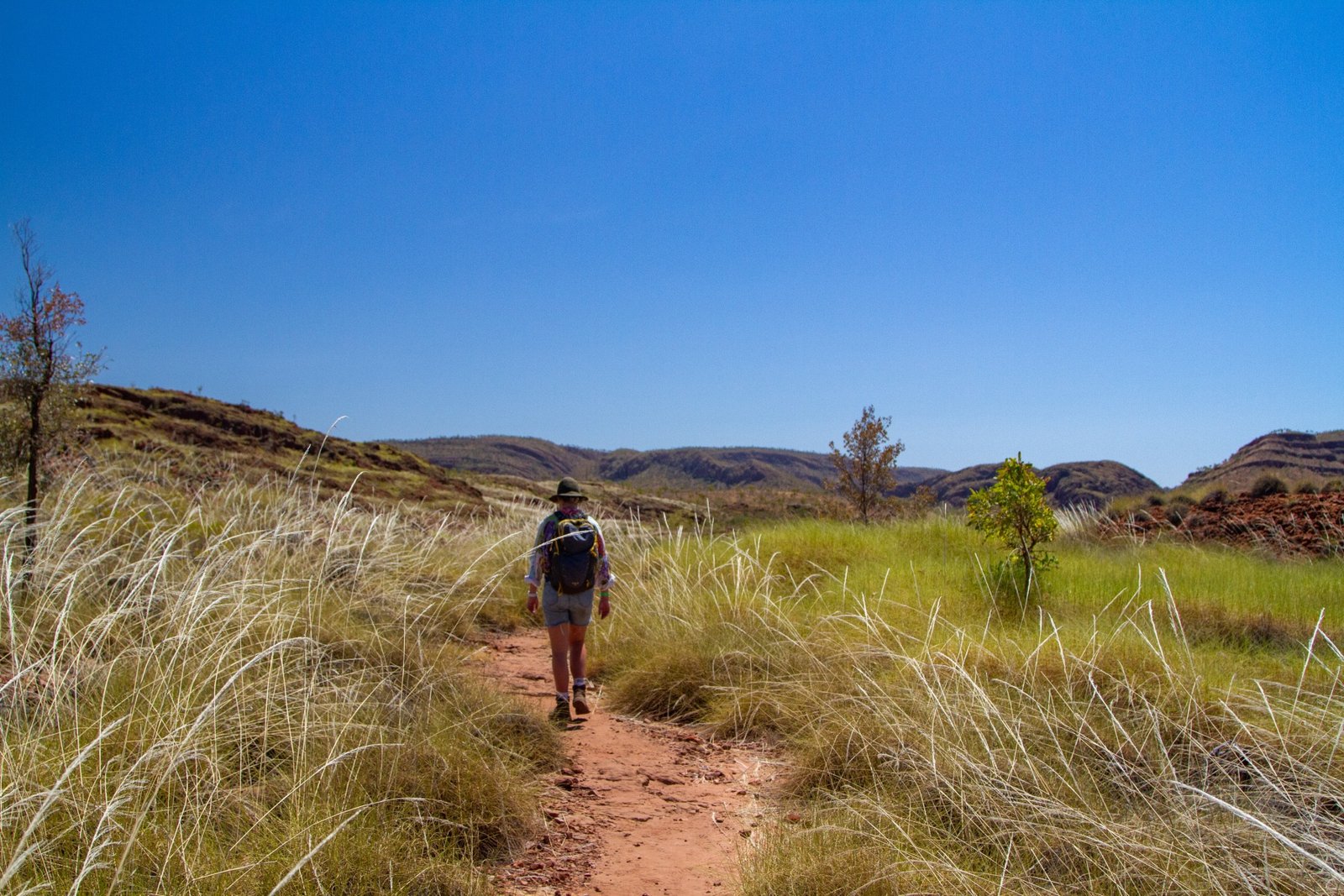
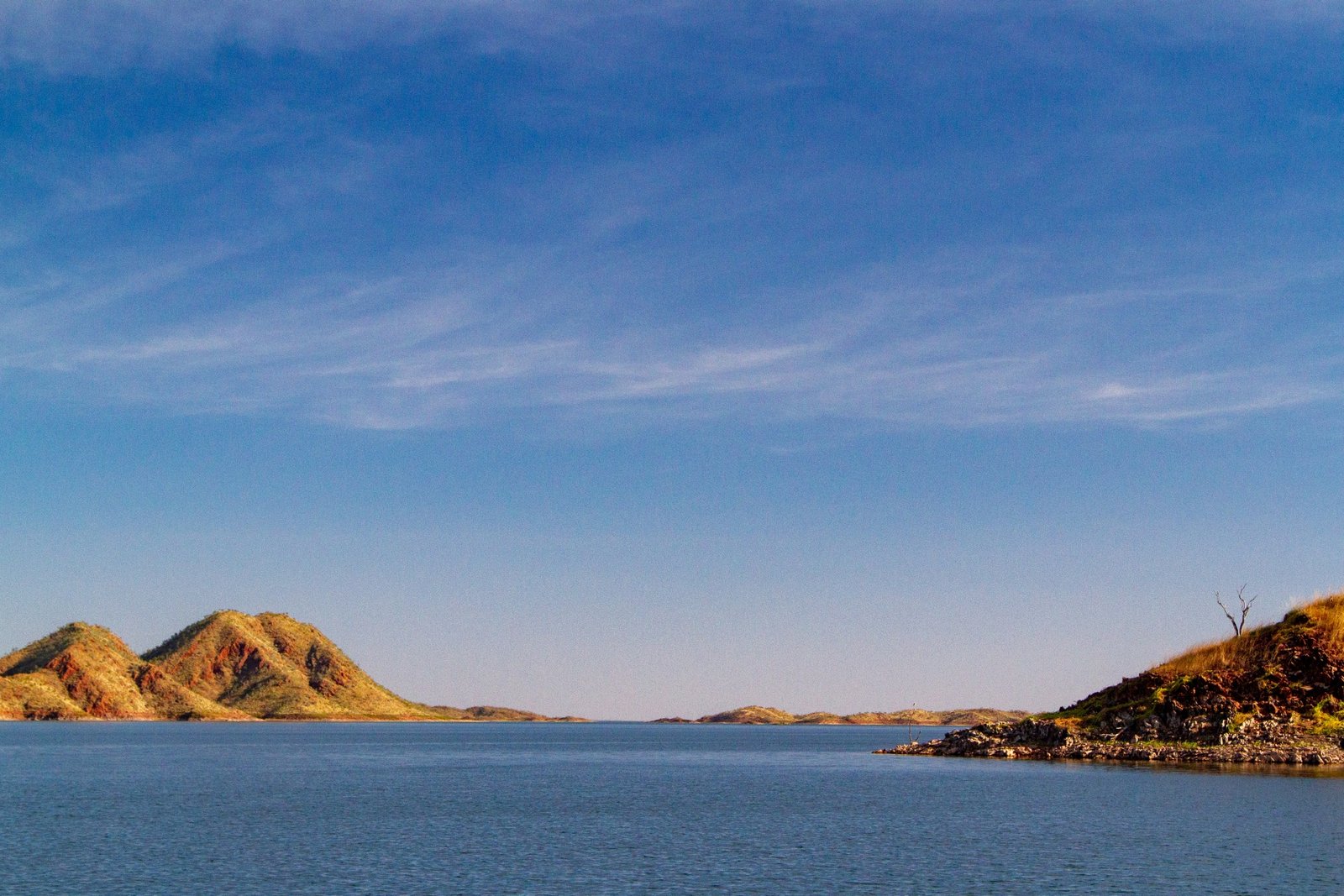
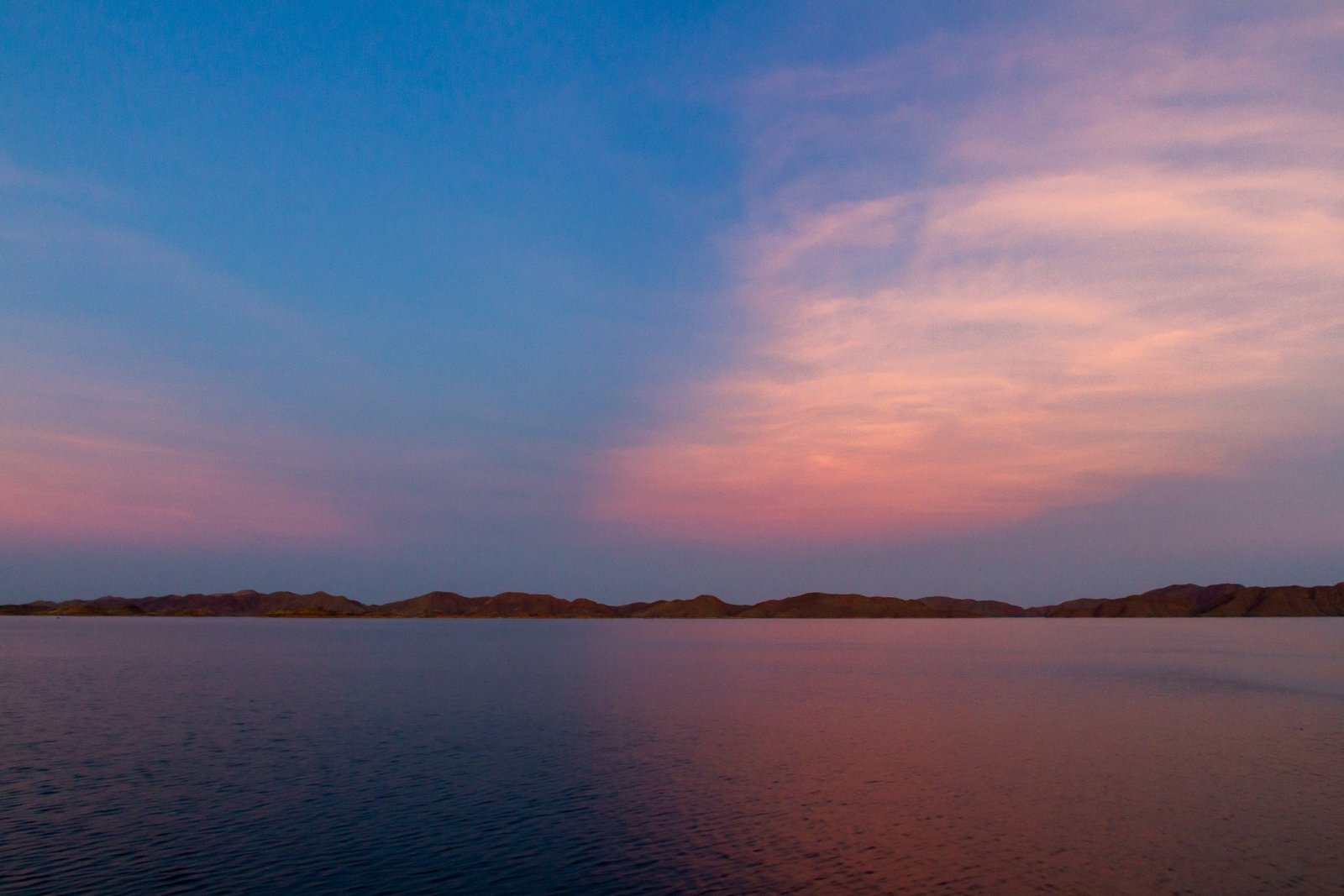
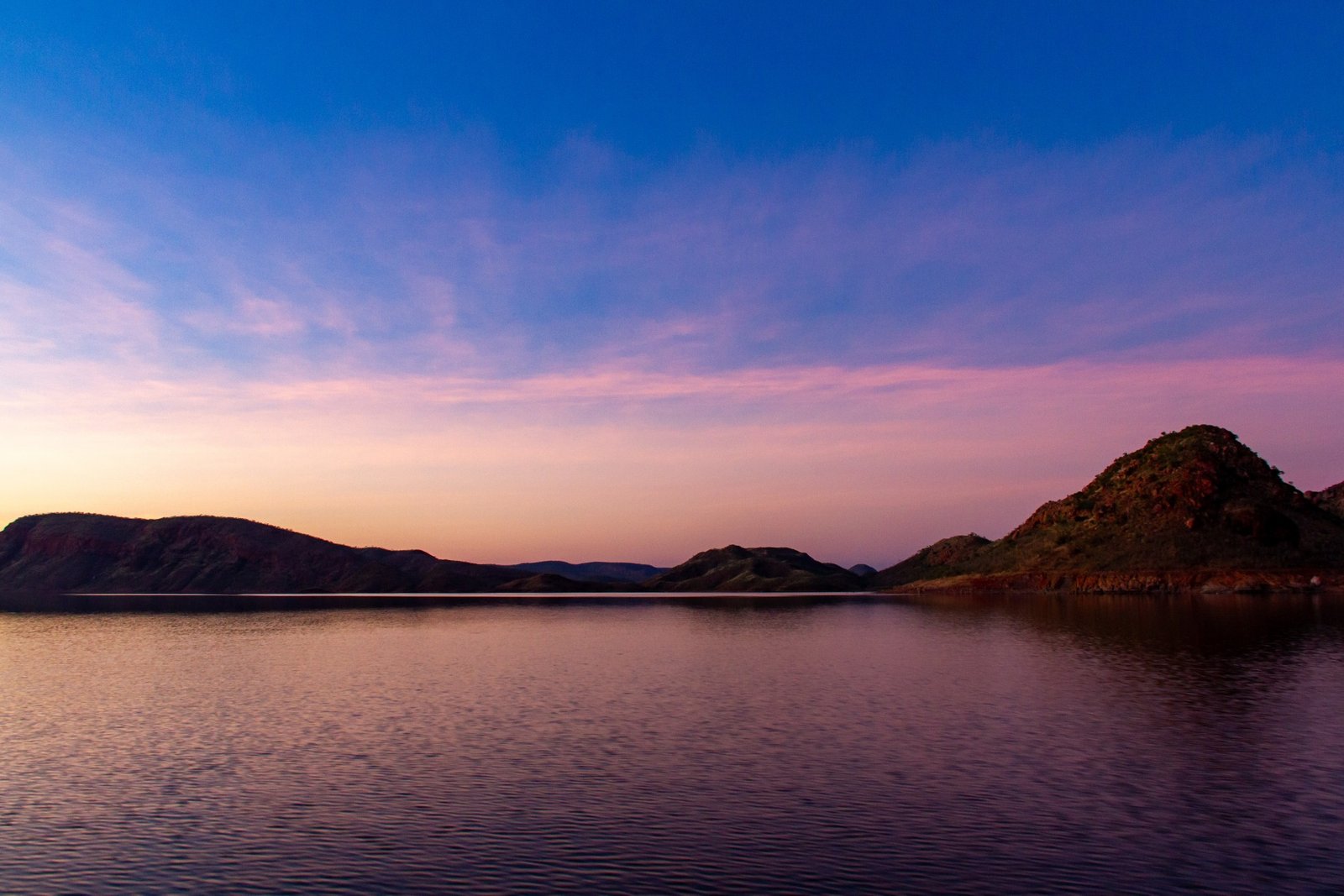
After relaxing a little in the morning we head off on a short walk to the bluff opposite the caravan park. The first kilometre is a slowly changing view of the lake from a low path between hills. As we climb up and over the next rise a row of mountains appears, locking water into bays of the lake that we hadn’t yet seen.
The water is deep blue against the dry red ground and low grassy scrub around us.
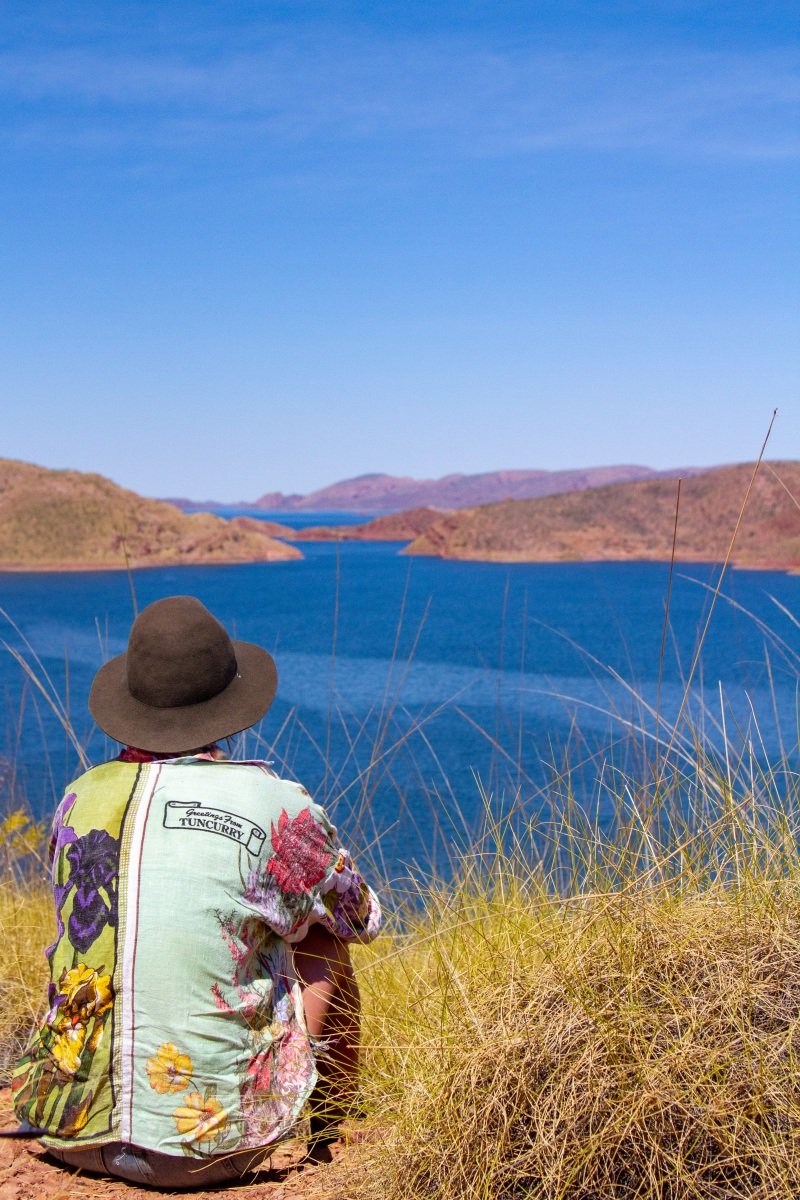
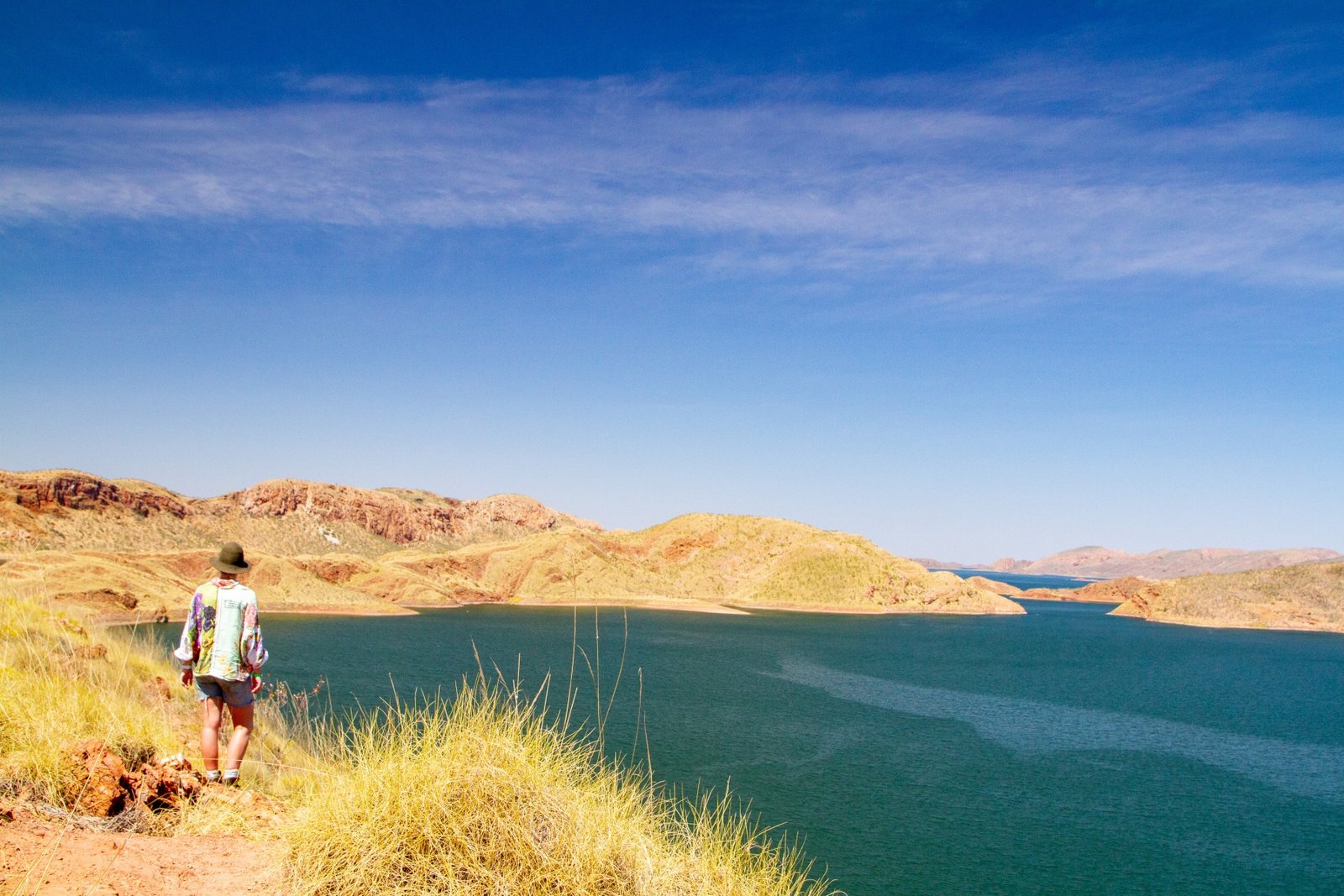
Progressing further along the bluff we climb up higher so that an expanse opens up, similar to the pool view, but from this angle we can see right through the heads of the lake and further out still.
We have a lake cruise in the afternoon which will take us to sunset, so we head back to get ready.
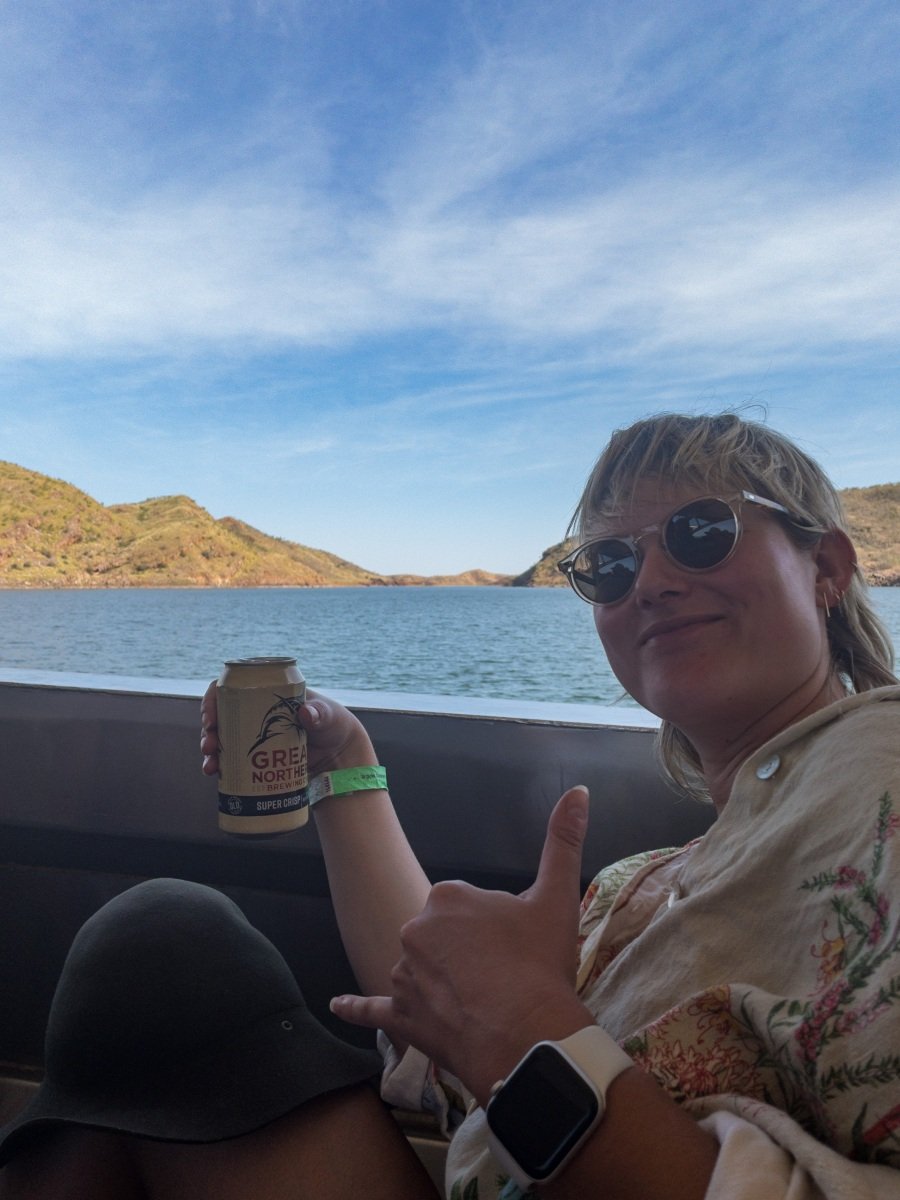
On the boat Anna gets a trivia question right (‘How many Sydney-harbours are there in Lake Argyle right now?’: 16). She knew the answer to this because she overheard it at the pool yesterday. Despite this unfair advantage she is rewarded with a beer. That kind of sets the tone of the sunset cruise.
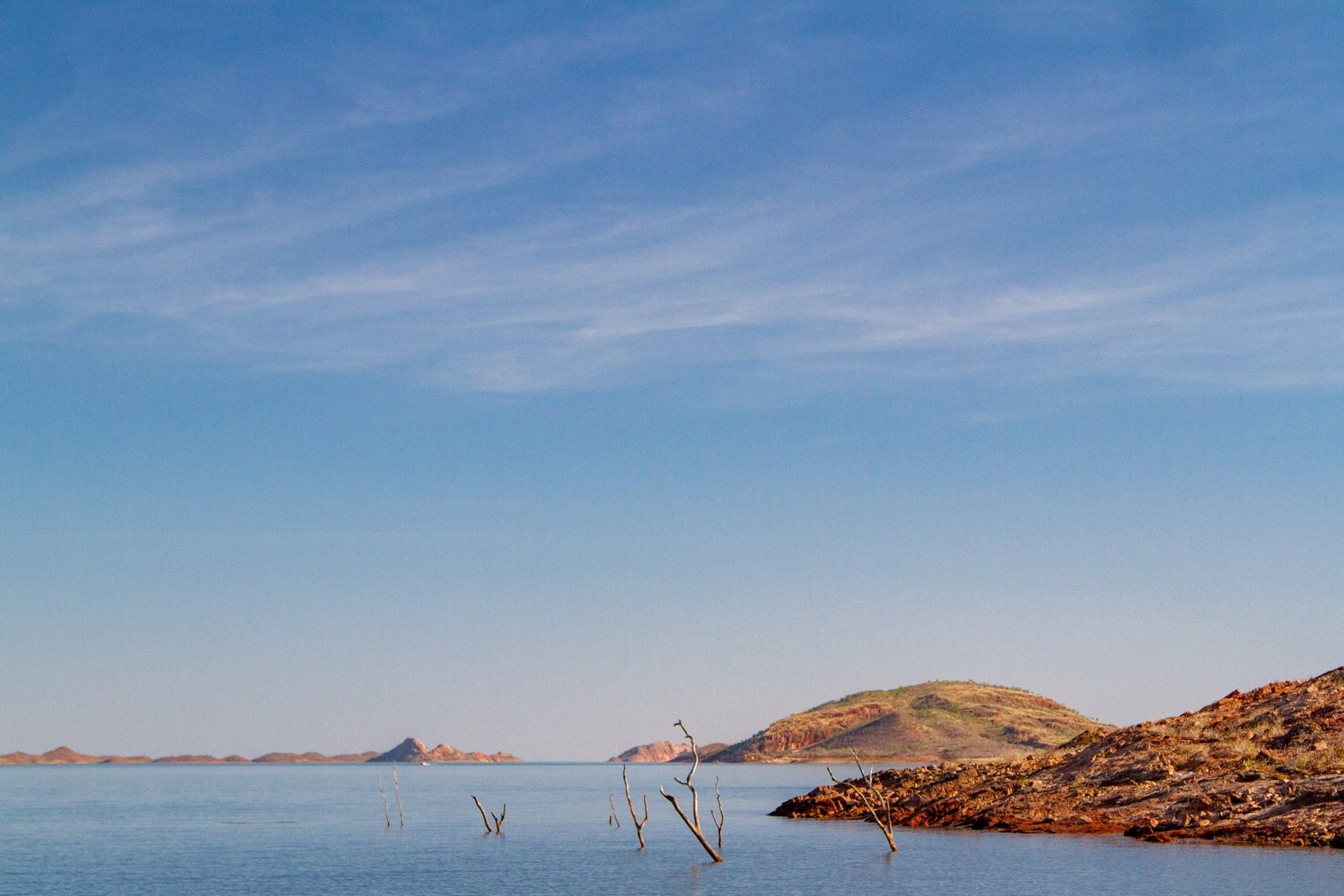
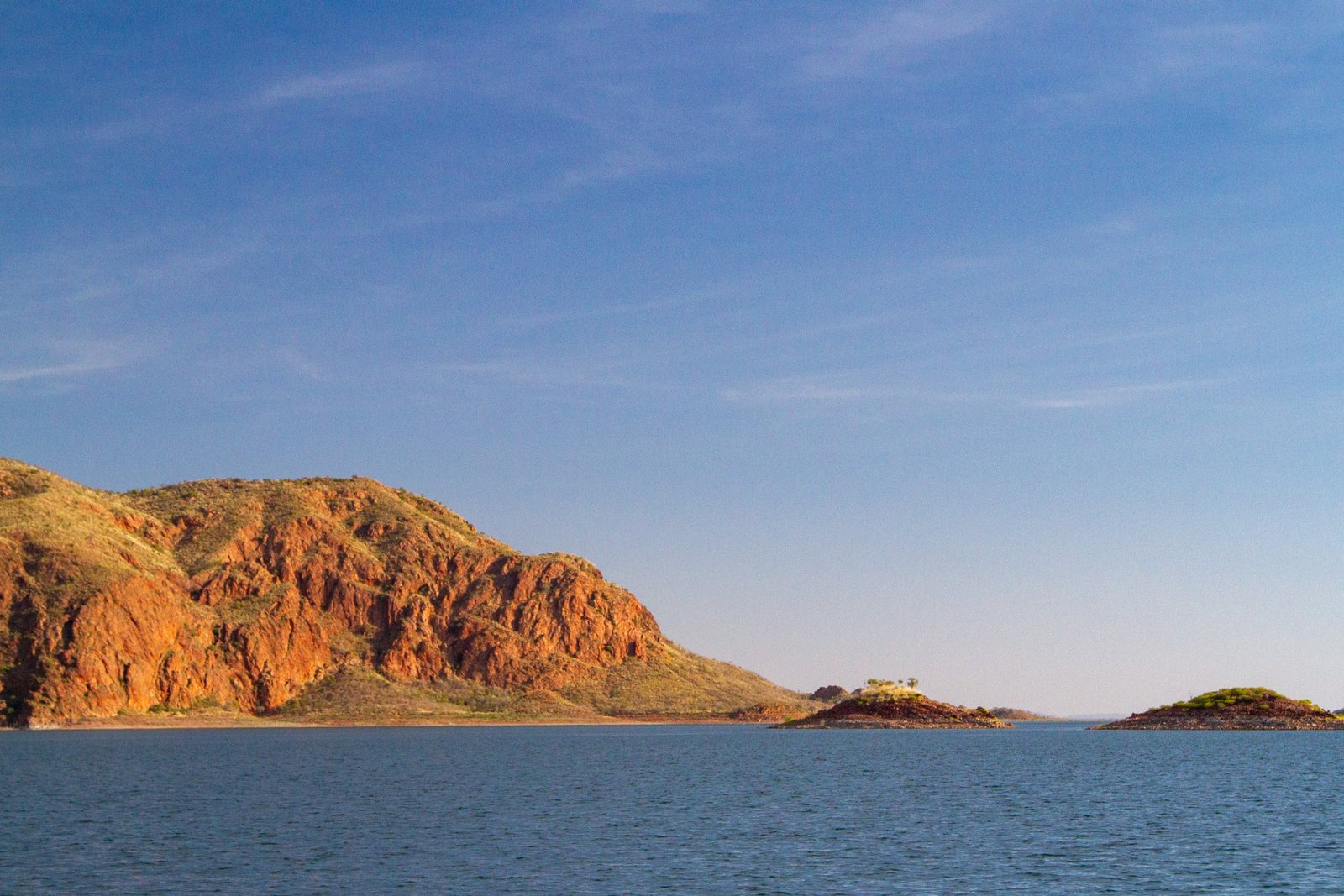
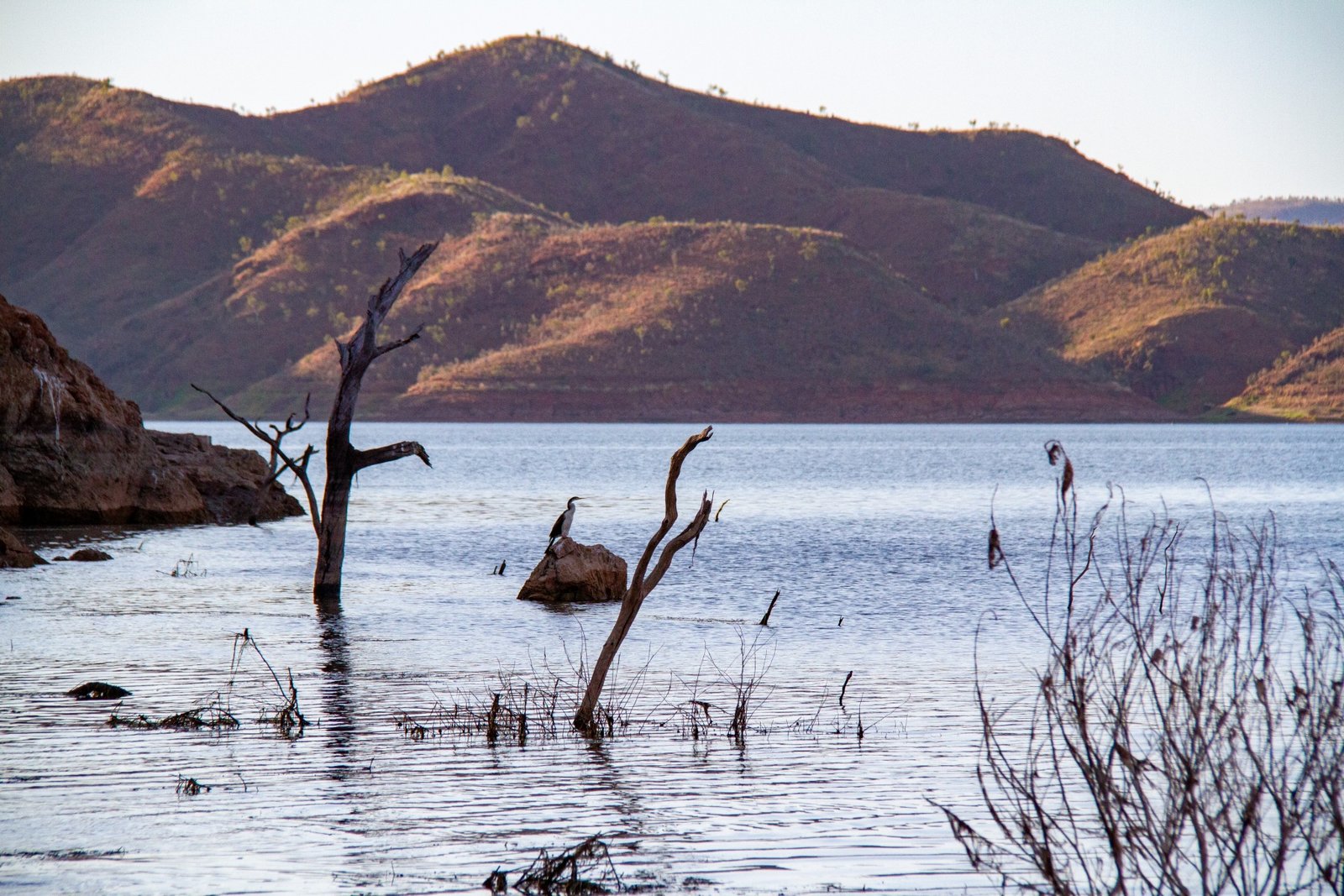
We motor out through the heads that we’d seen this morning. The lake begins to reveal it’s vastness, 16 Sydney-harbours is a lot of water. We pull into coves to watch birds, or to find fish, and the guide tells us facts about the lake.
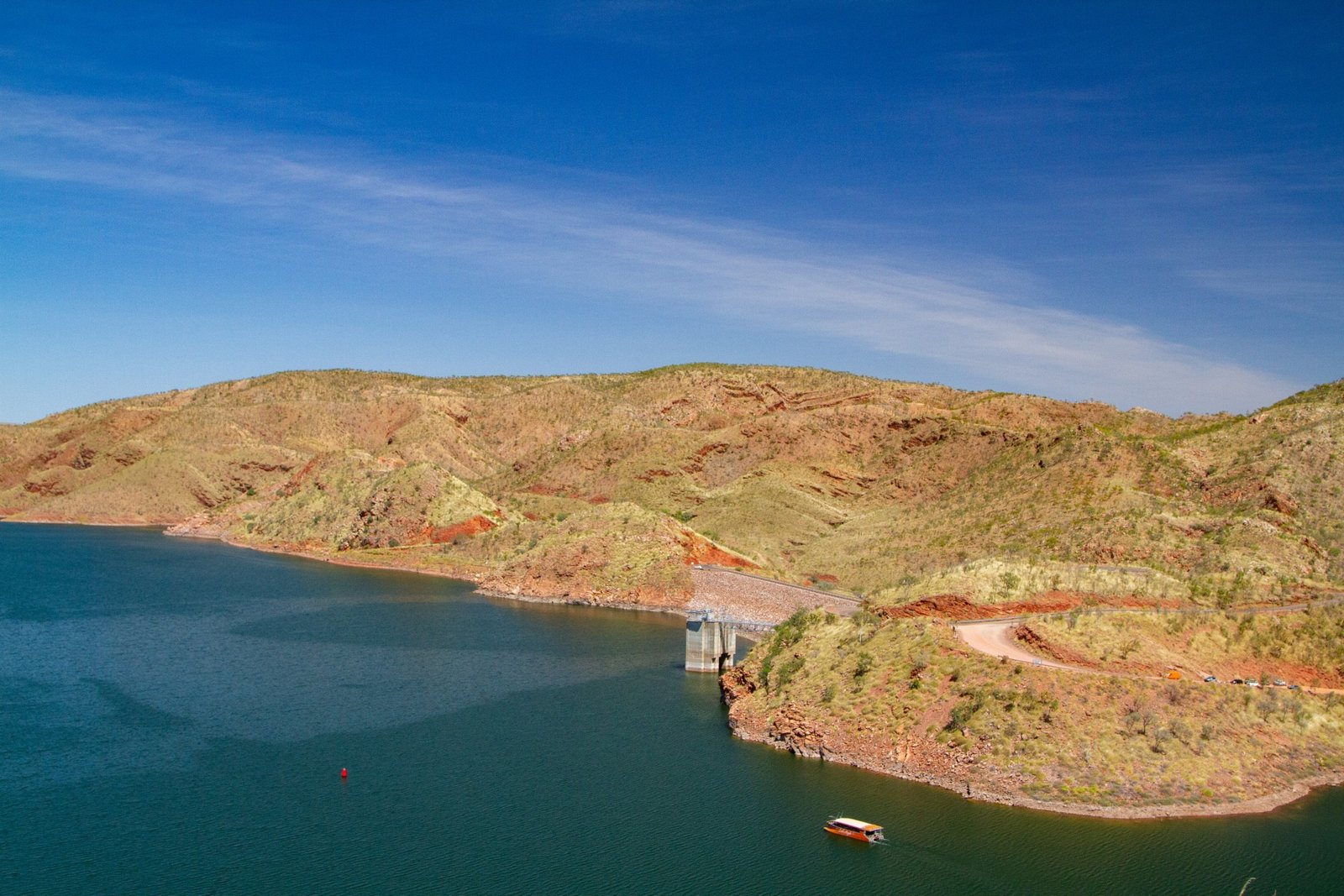
The river was dammed to provide a supply of water to grow crops. The task was pretty simple: divert a river through a rock tunnel, lay a clay inner wall, blow up part of a mountain, and cover the clay with the ex-mountain. (Kind of reminiscent of Nobbys break wall). It took three dry seasons to complete and only two wet seasons to fill to capacity (19 Sydney-harbours).
The first crop was rice, for export to China, but magpie geese ate the shoots faster than they could be planted. There have been a succession of middling results and the project holds the title for the lowest ratio of dam capacity to productive output.
Adding to the seeming failure to utilise the lake is that the indigenous people were not informed or consulted before it was constructed, so I’m sure the ‘second largest non-nuclear blast in the Southern Hemisphere’ was a welcome event.
Even all the barramundi they put into the lake aren’t popular. Turns out that freshwater barras don’t taste very good. At least all this water makes a pretty good view though.
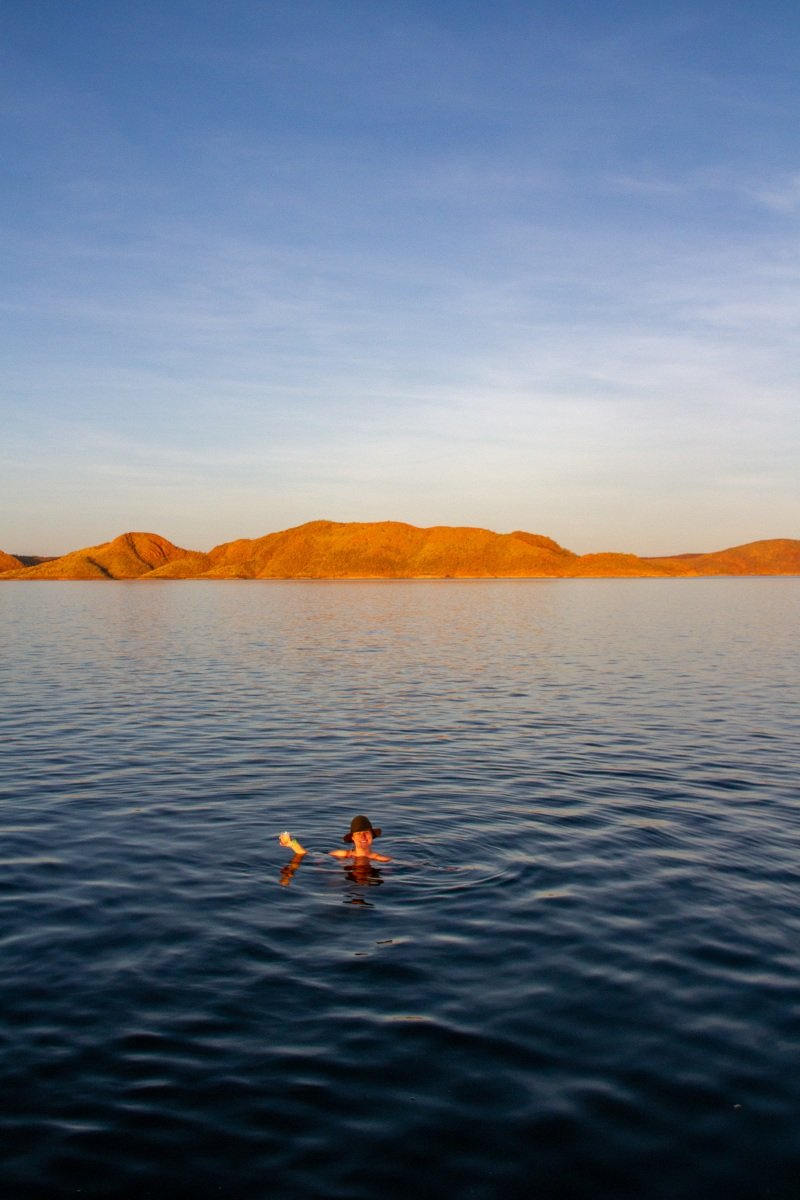
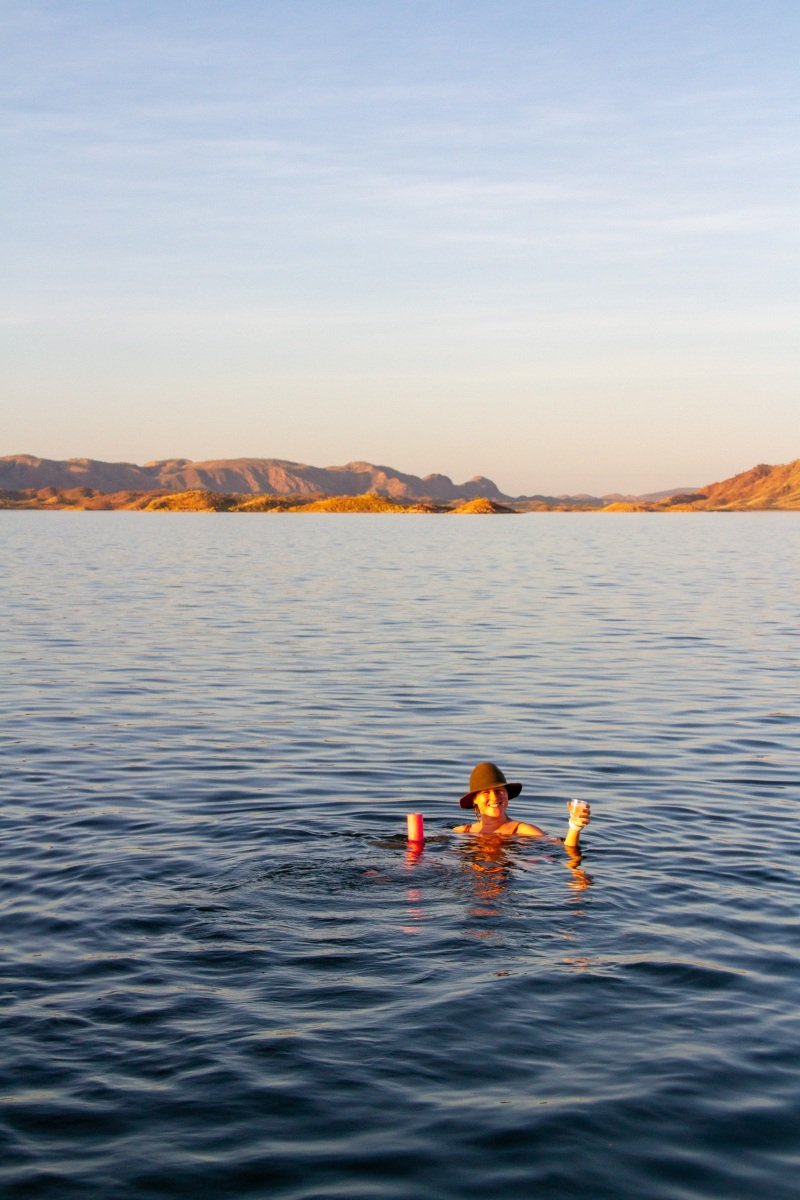
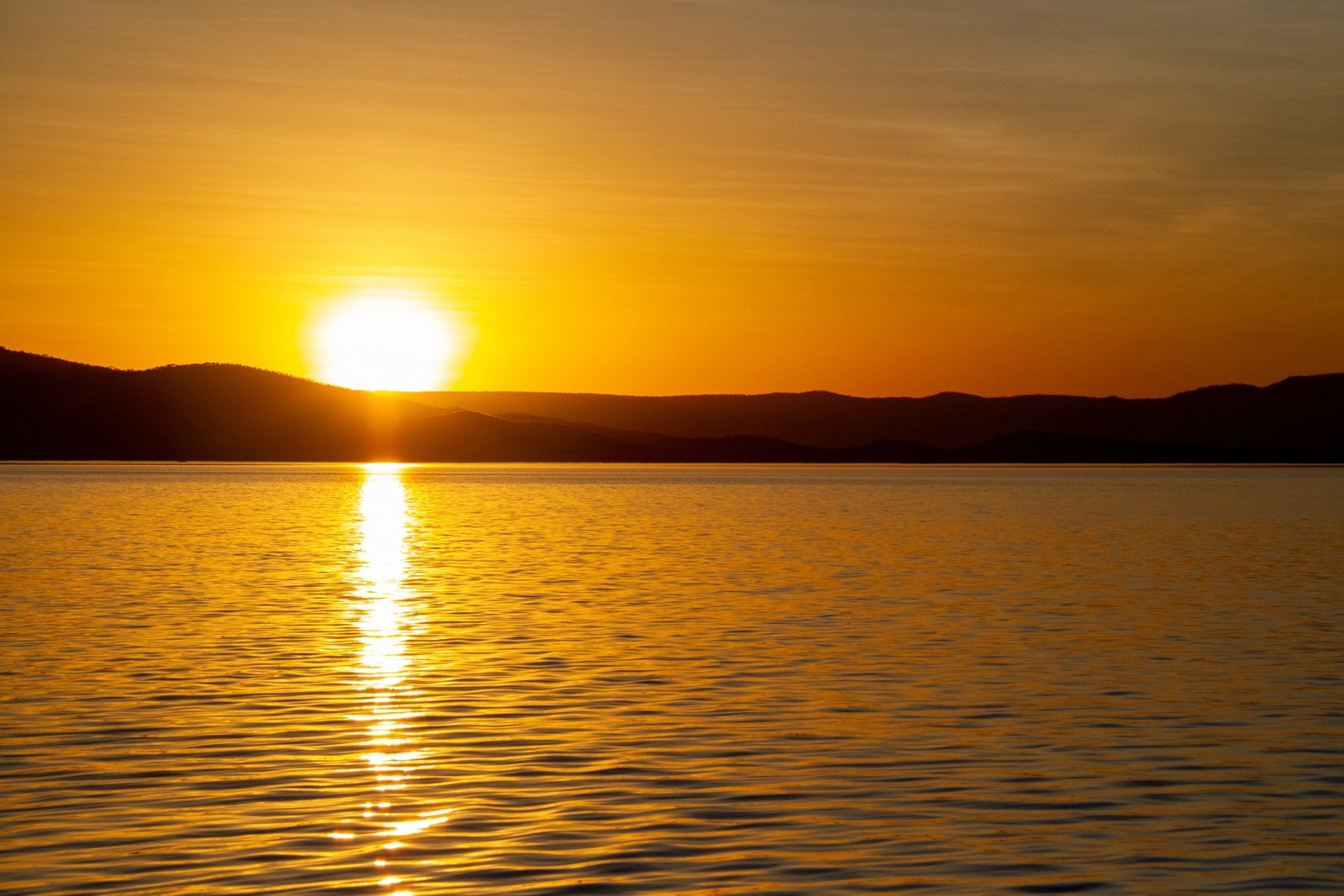
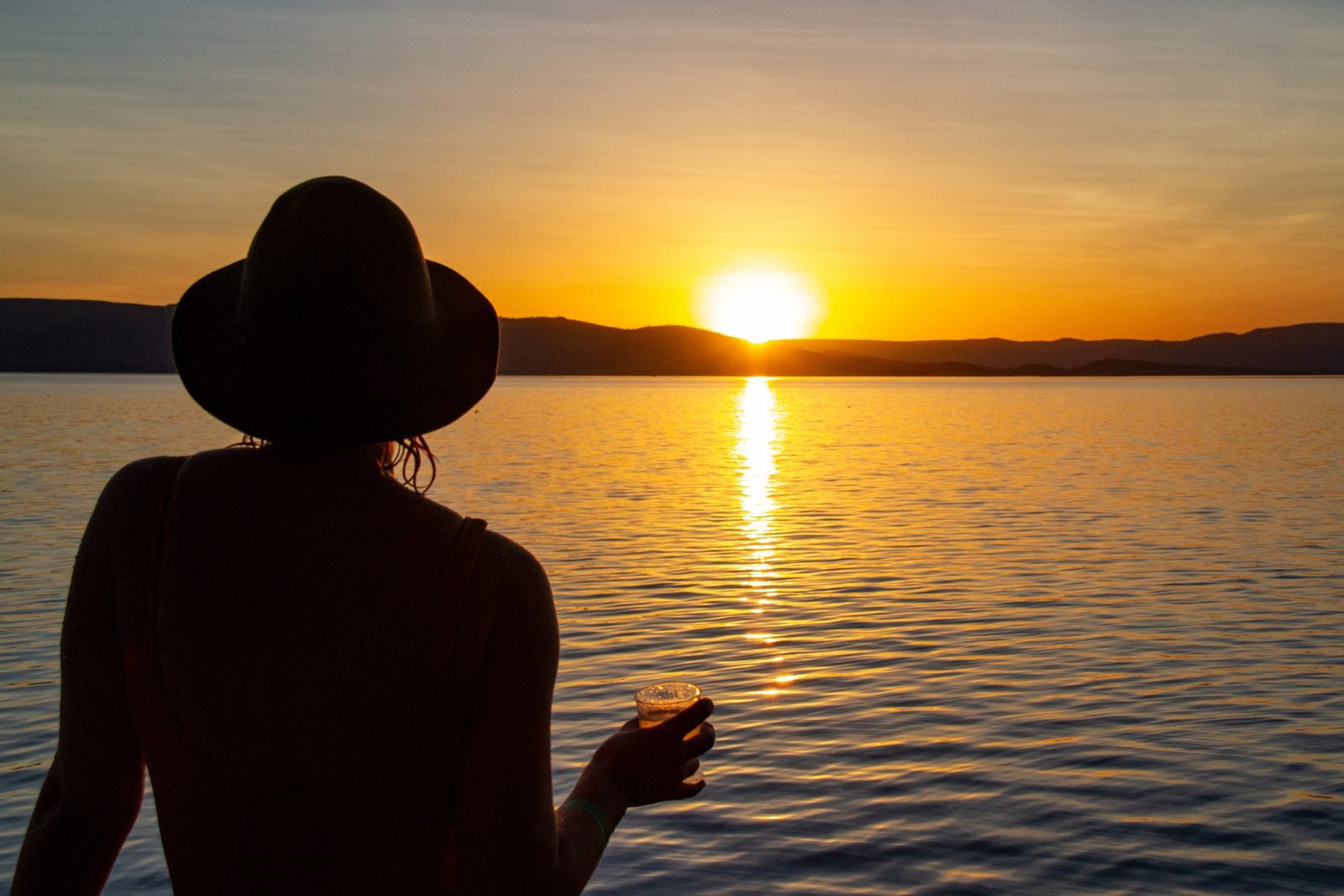
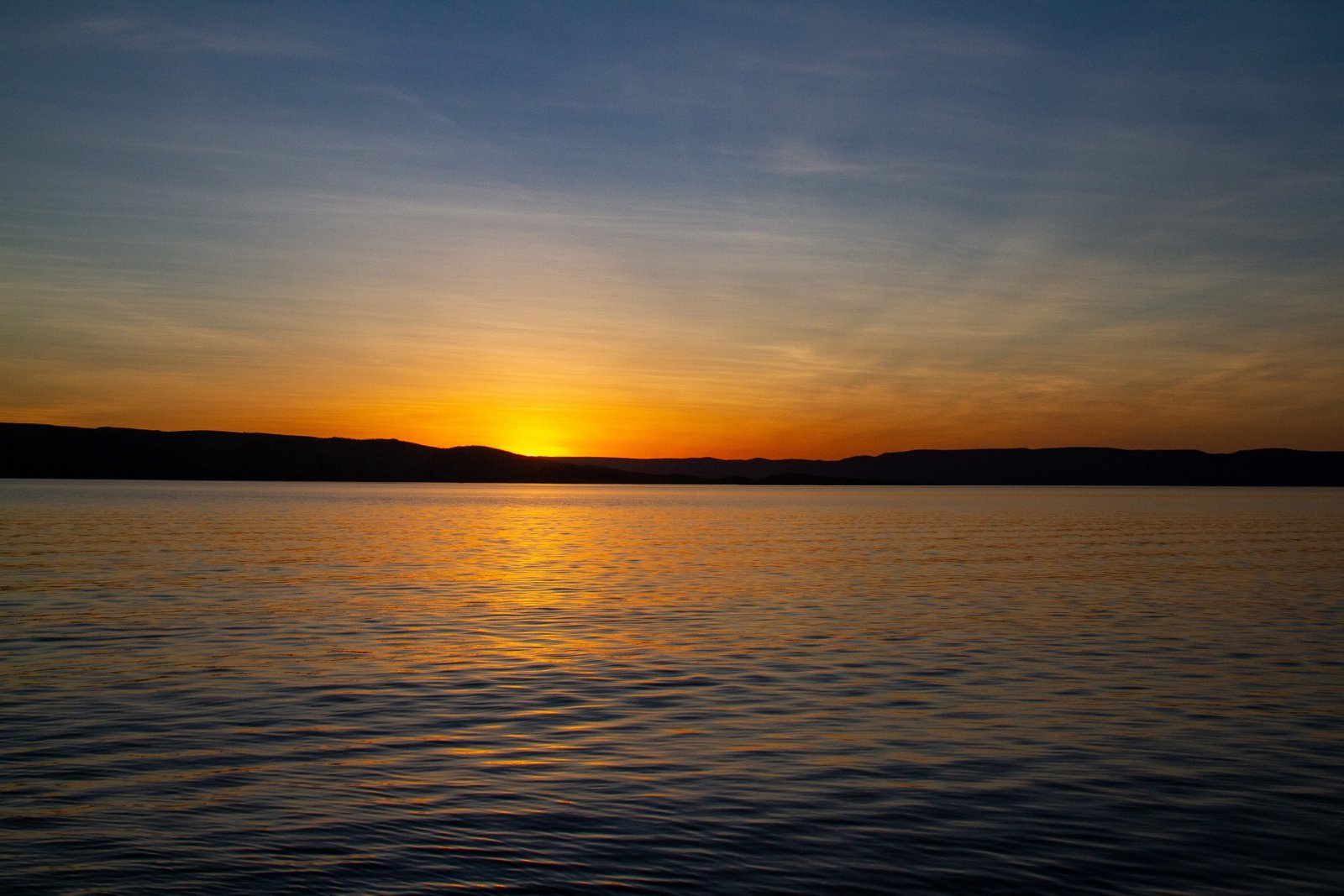
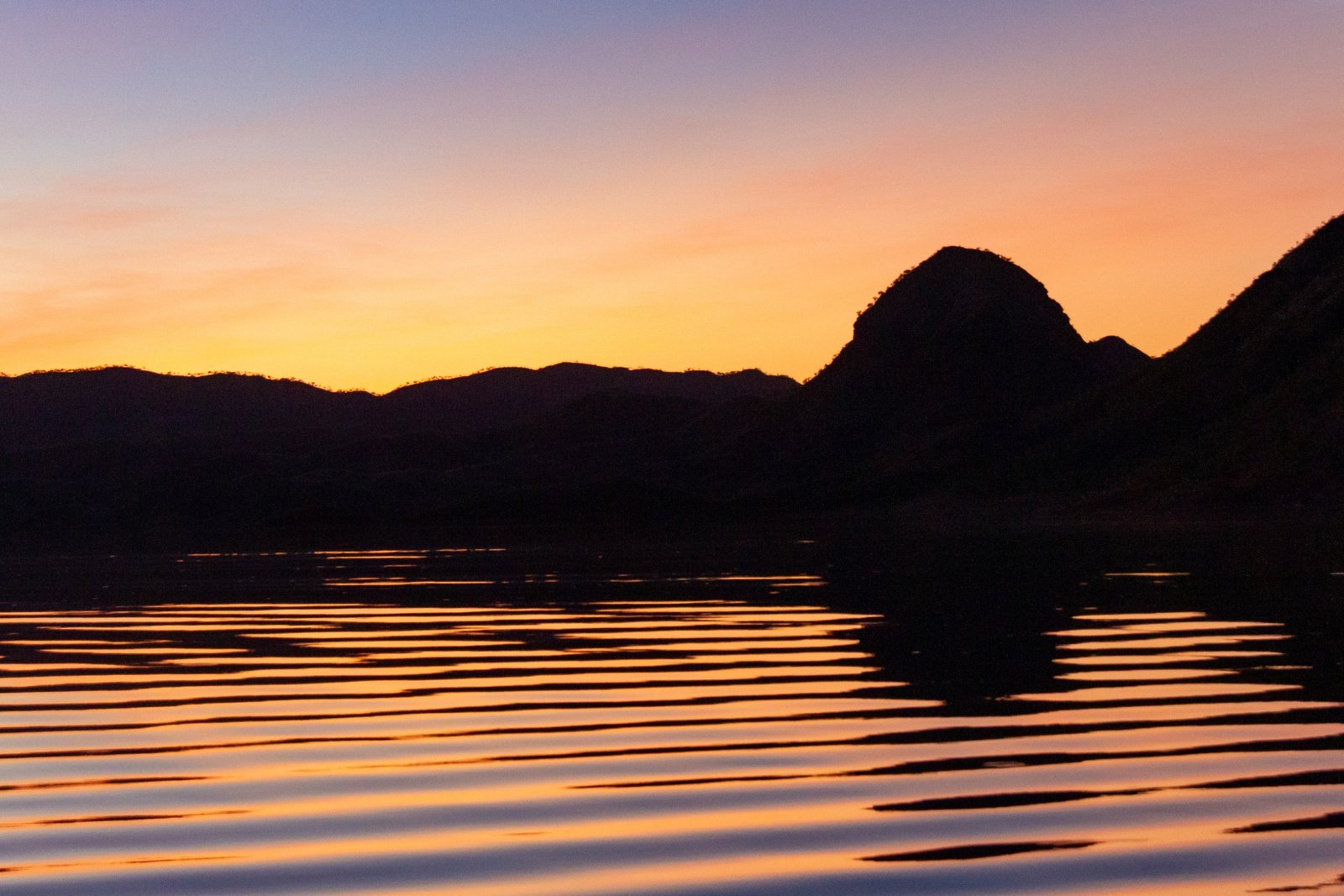
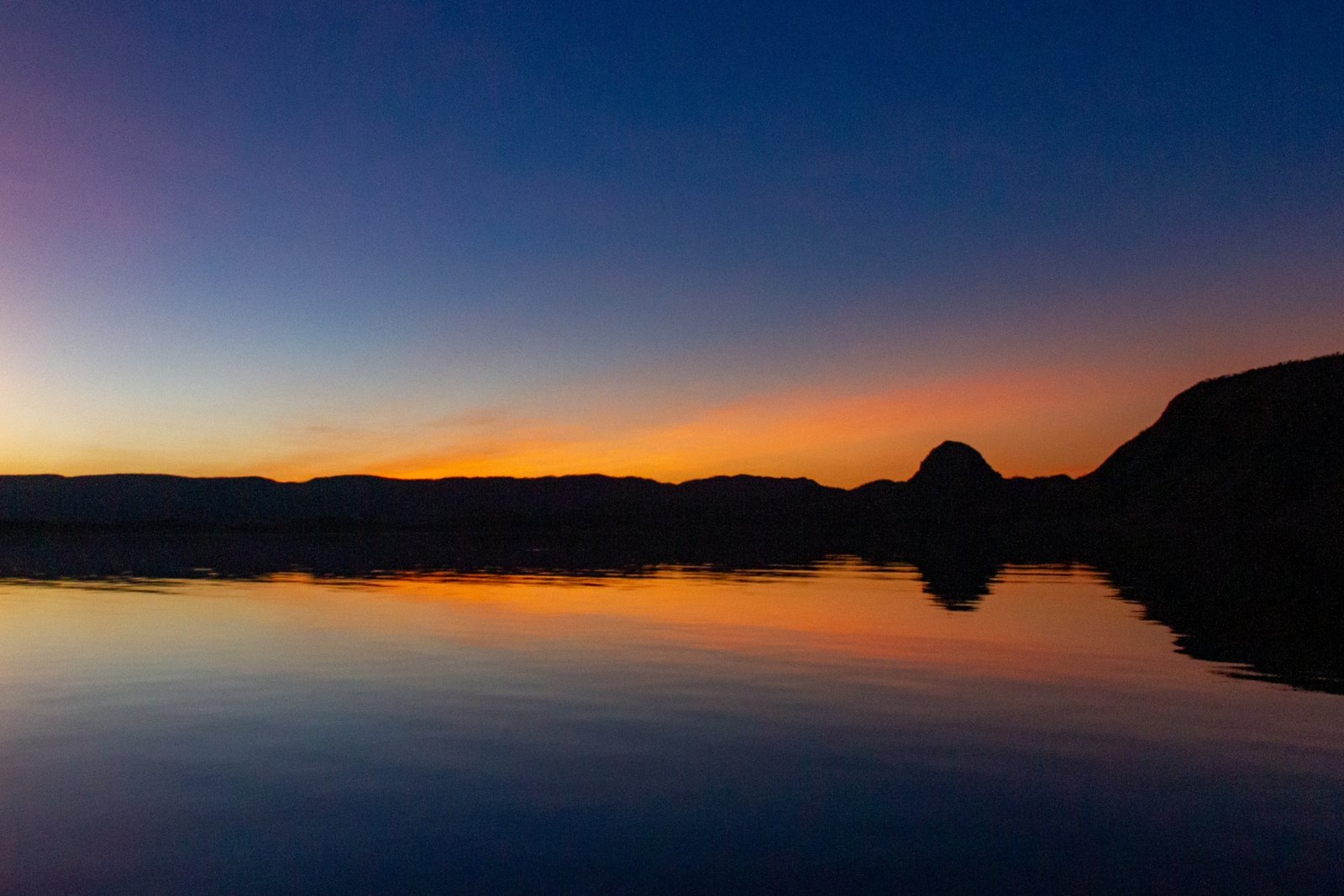
And so we cruise around a section of the lake for a couple of hours. It is beautiful, and it has created an environment for lots of water birds. Nearing sunset we anchor and jump into the middle of the lake.
Beers are very freely thrown out to us and the group becomes more social. Looking east, the shadow of mountains behind us are creep upwards on the mountains we face. We climb aboard our boat and set off home.
[Click on a photo to open a full-screen slide show]