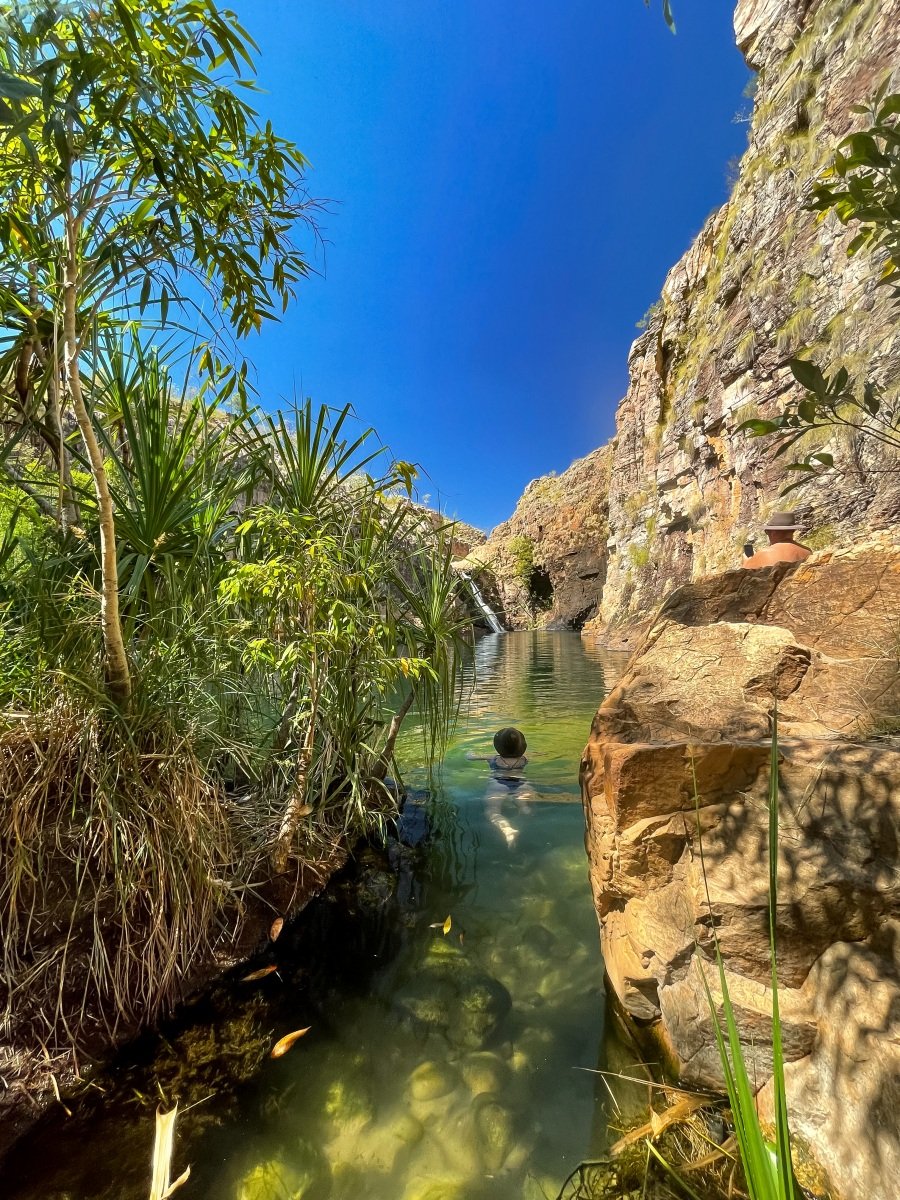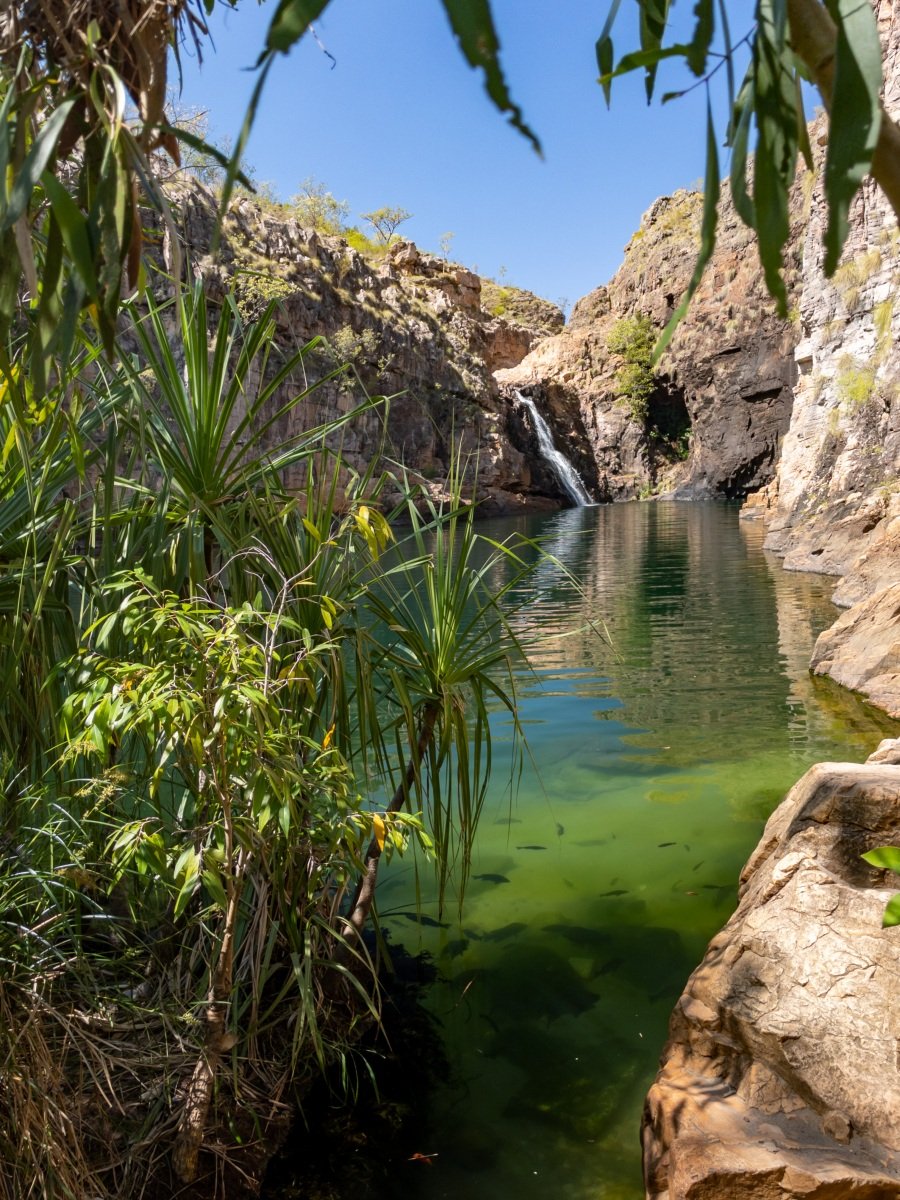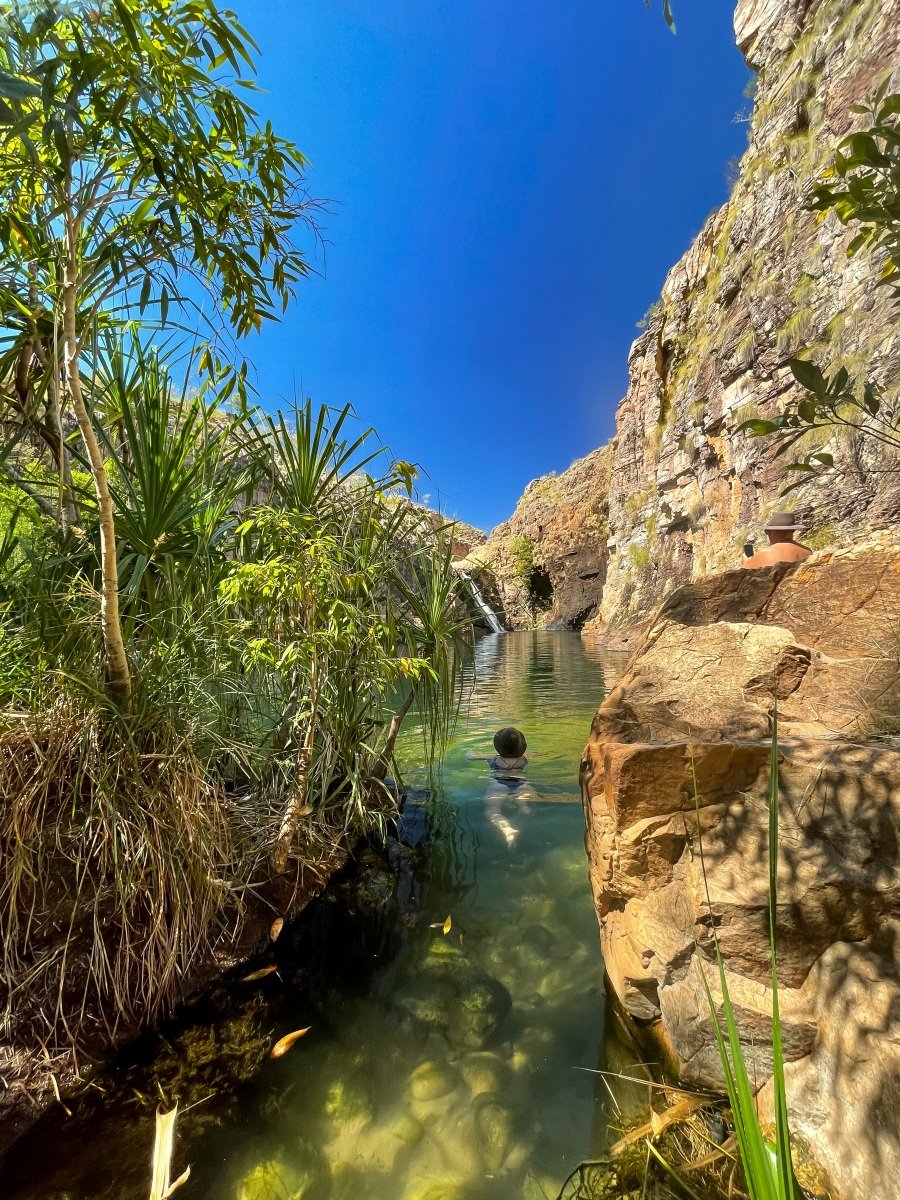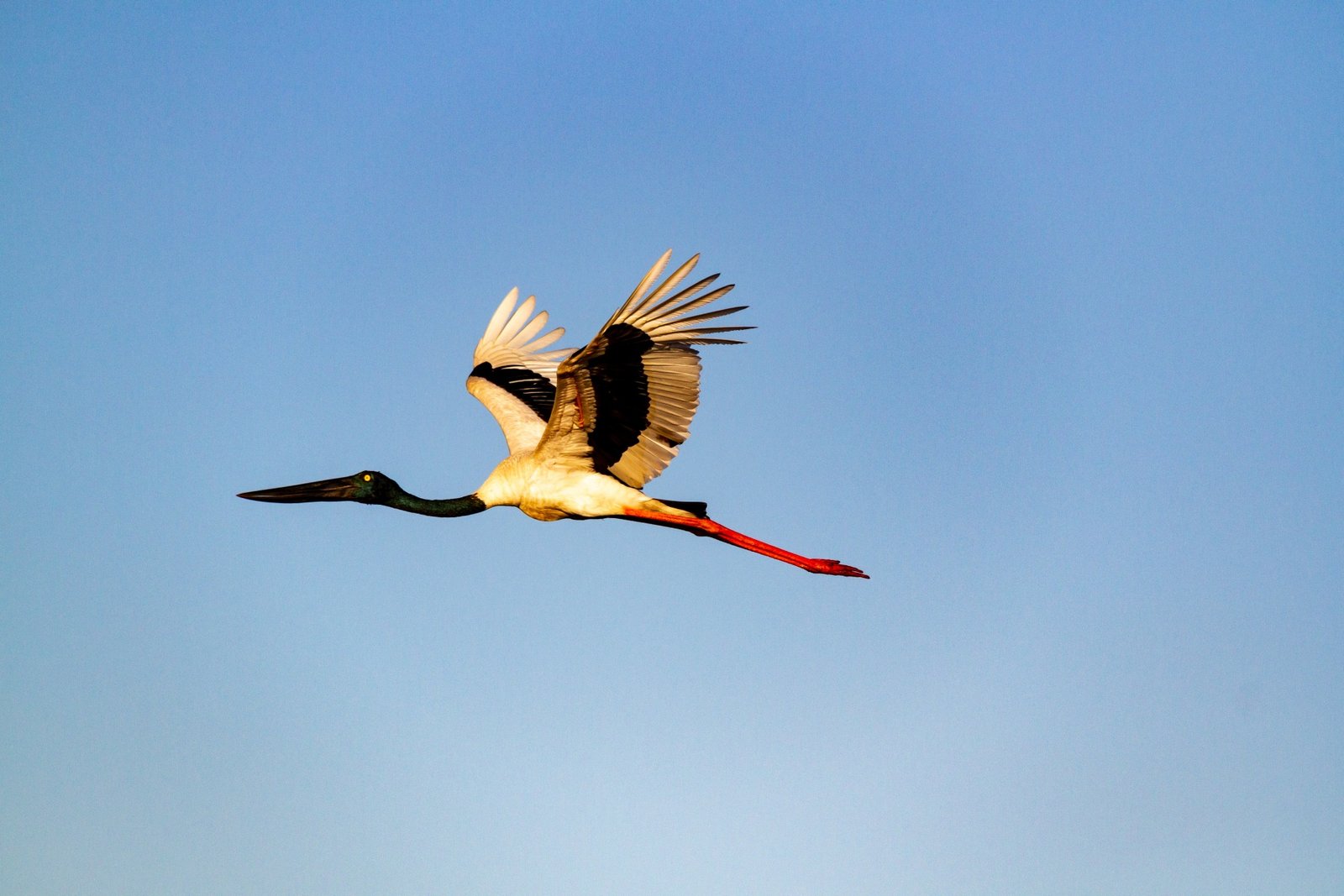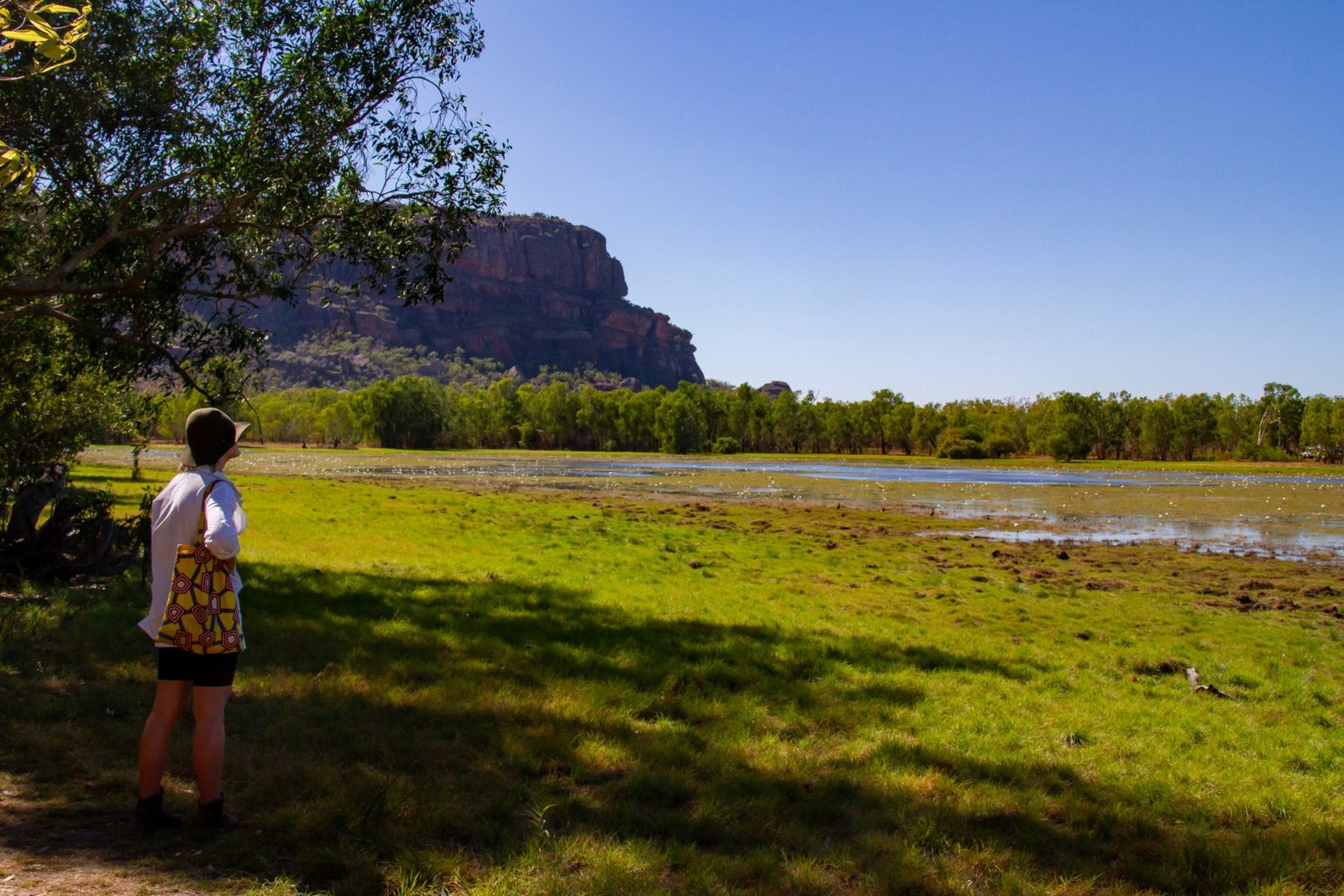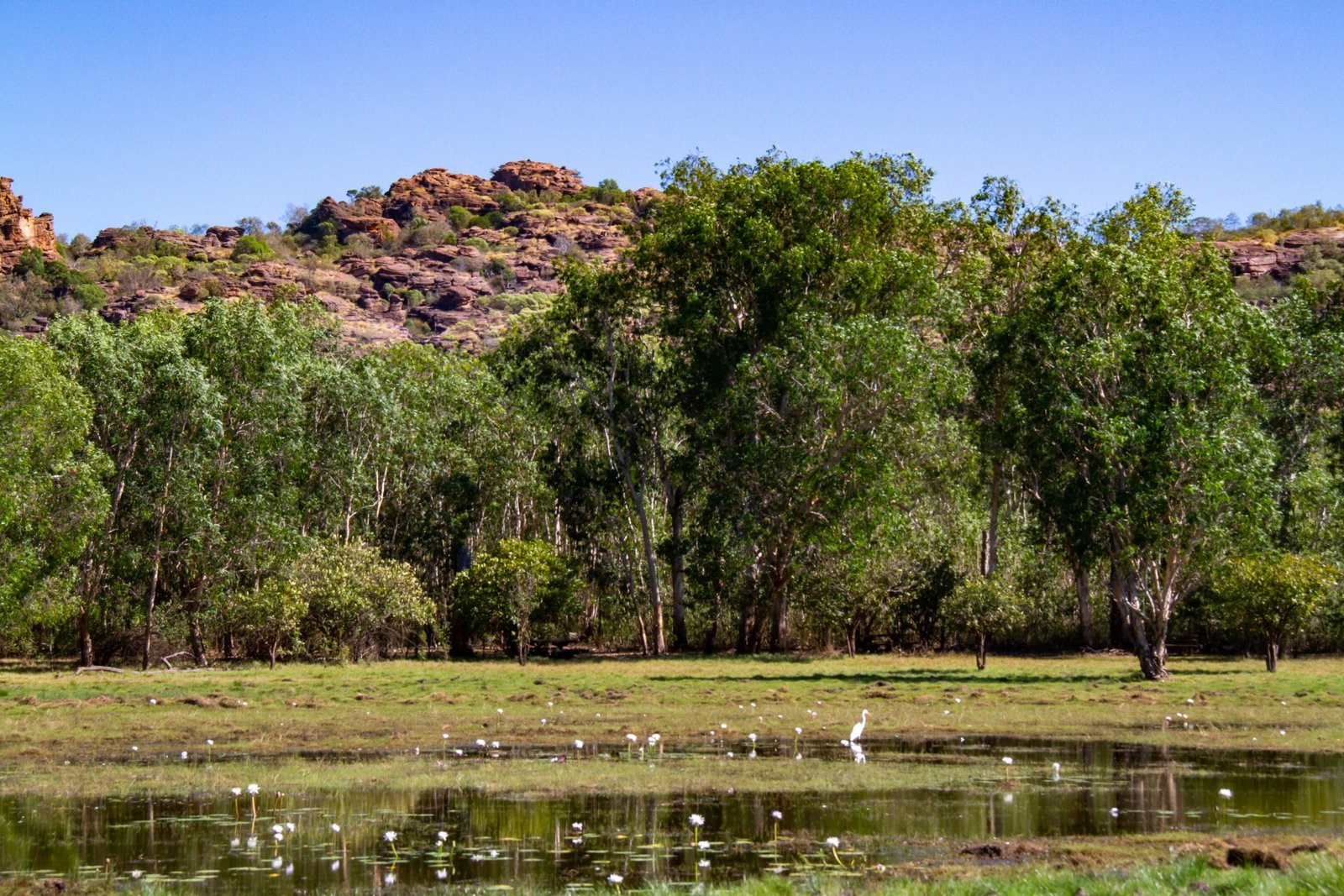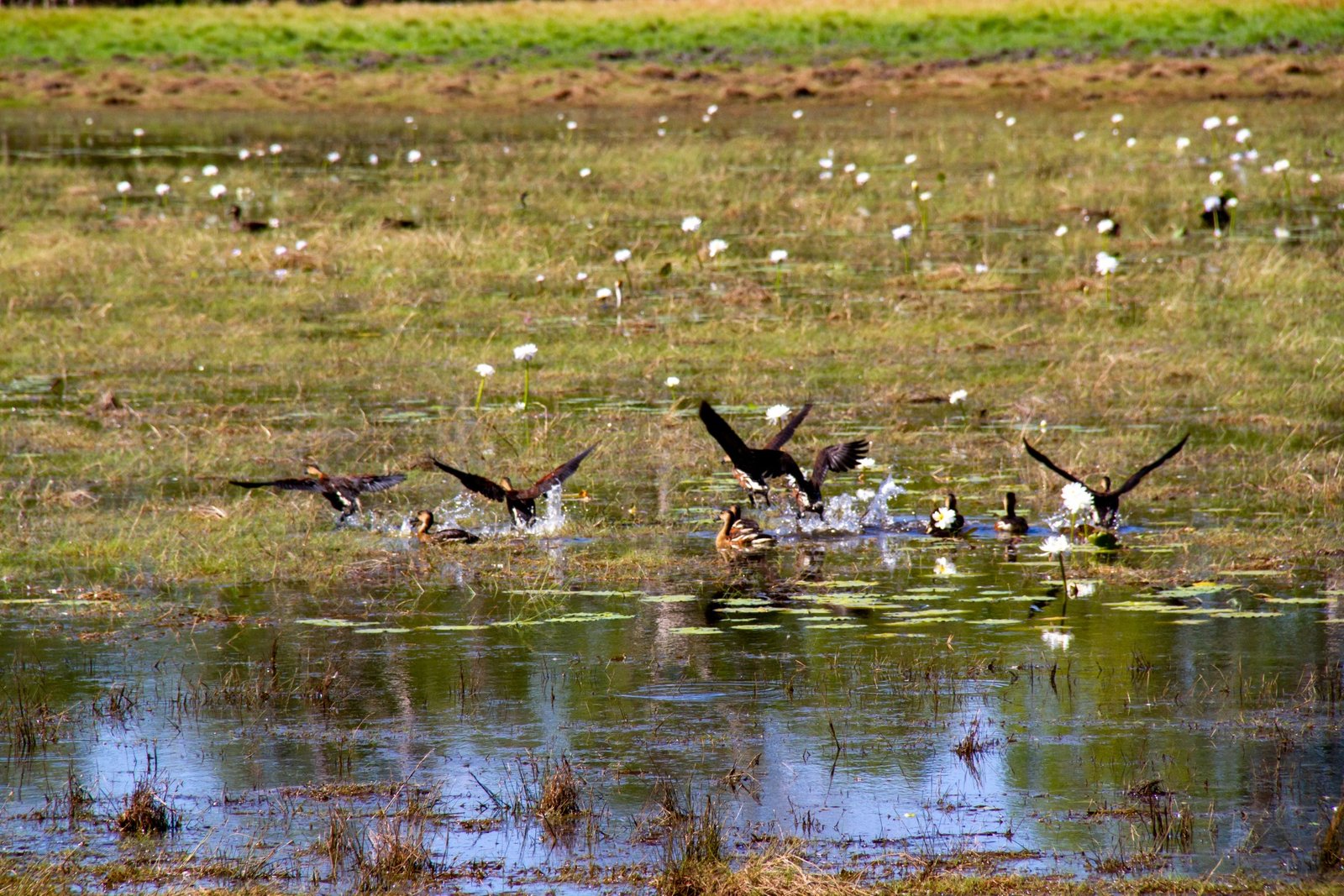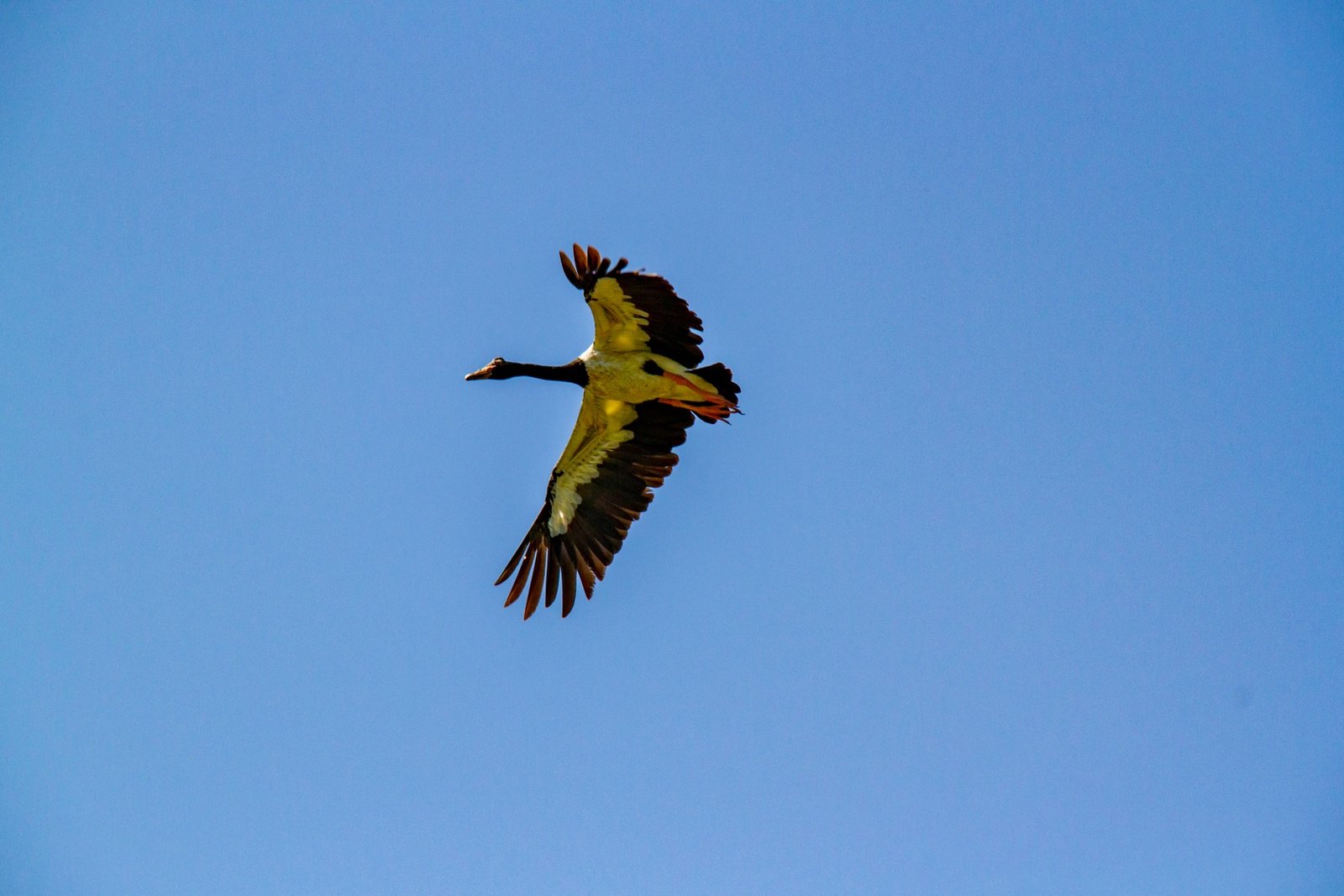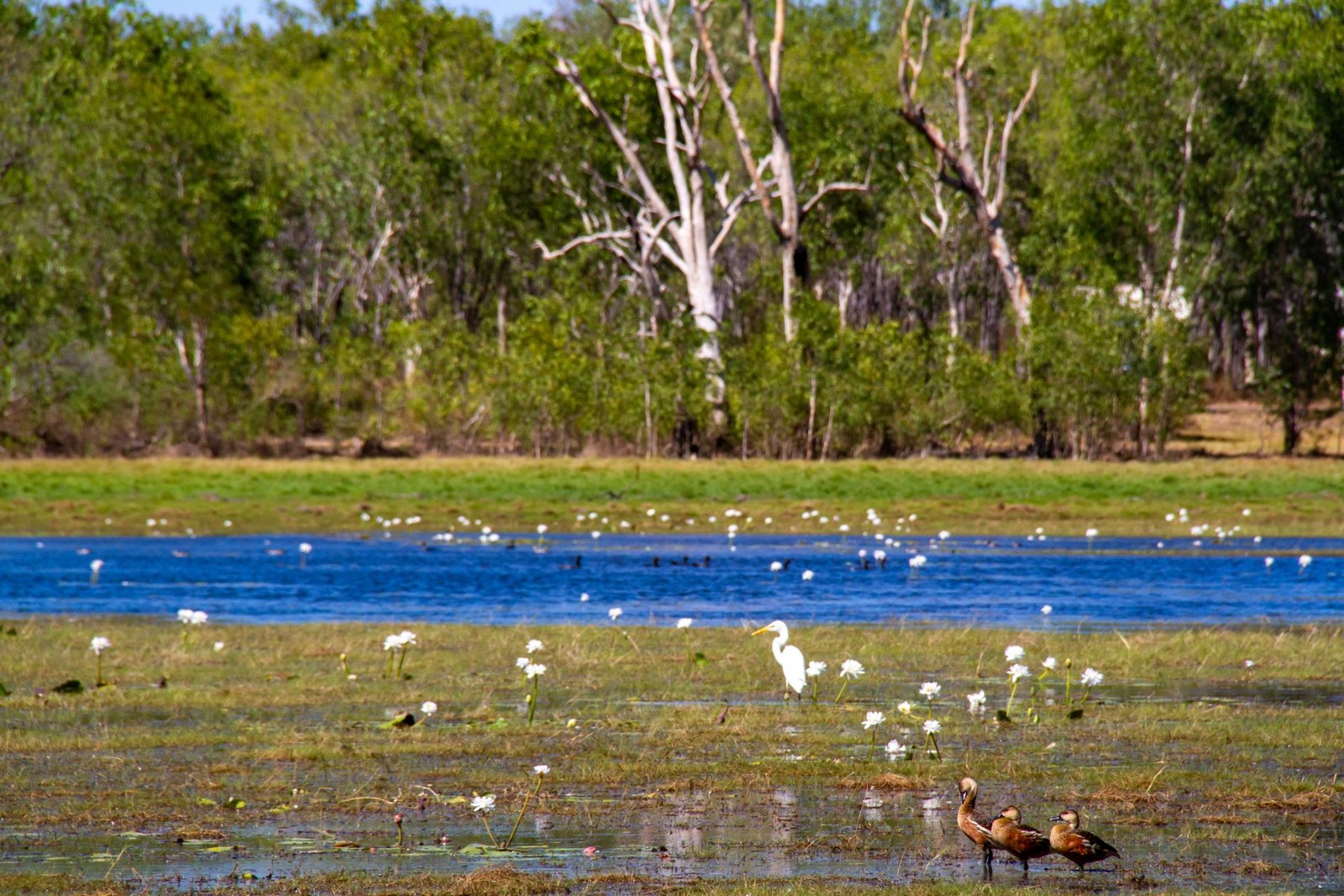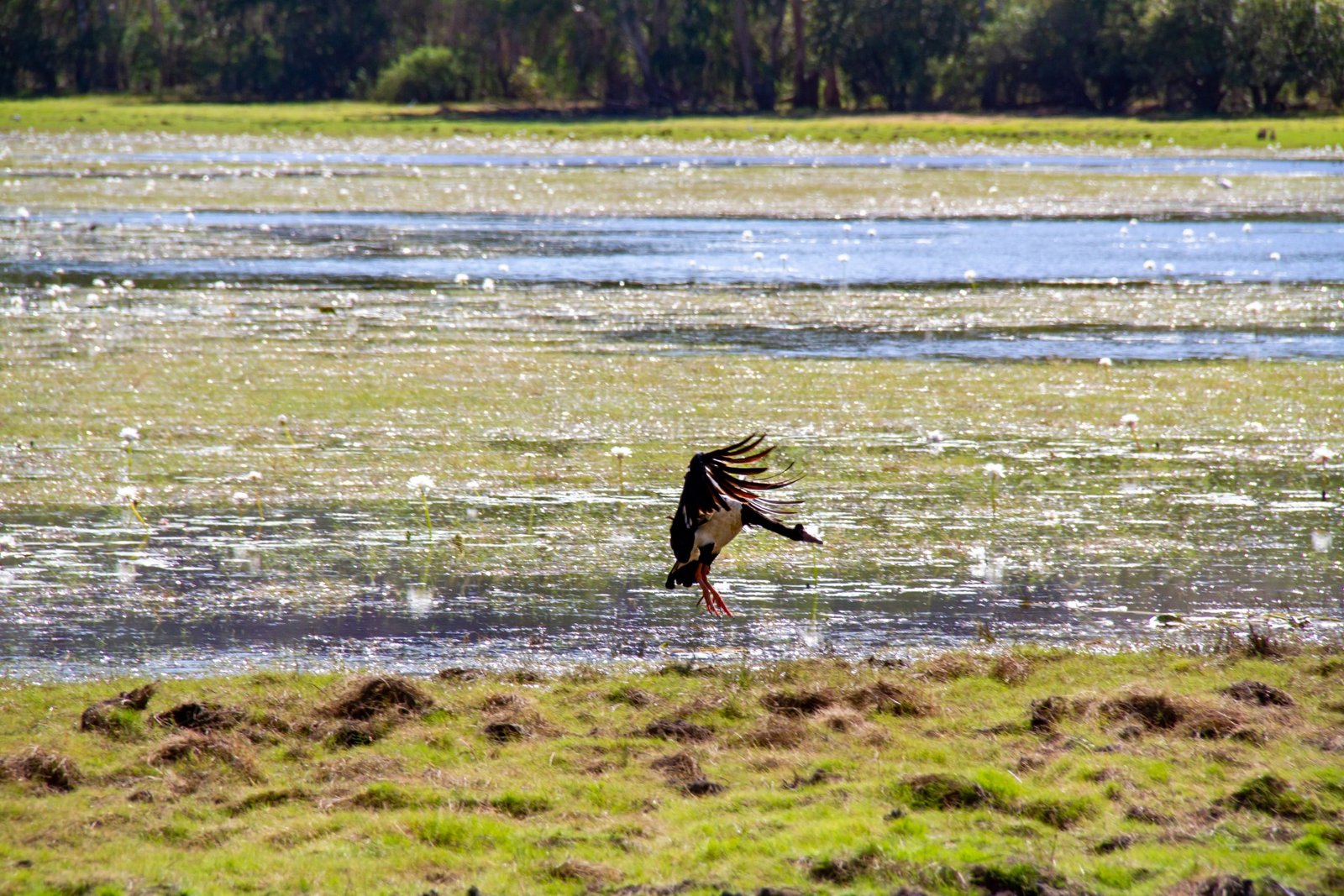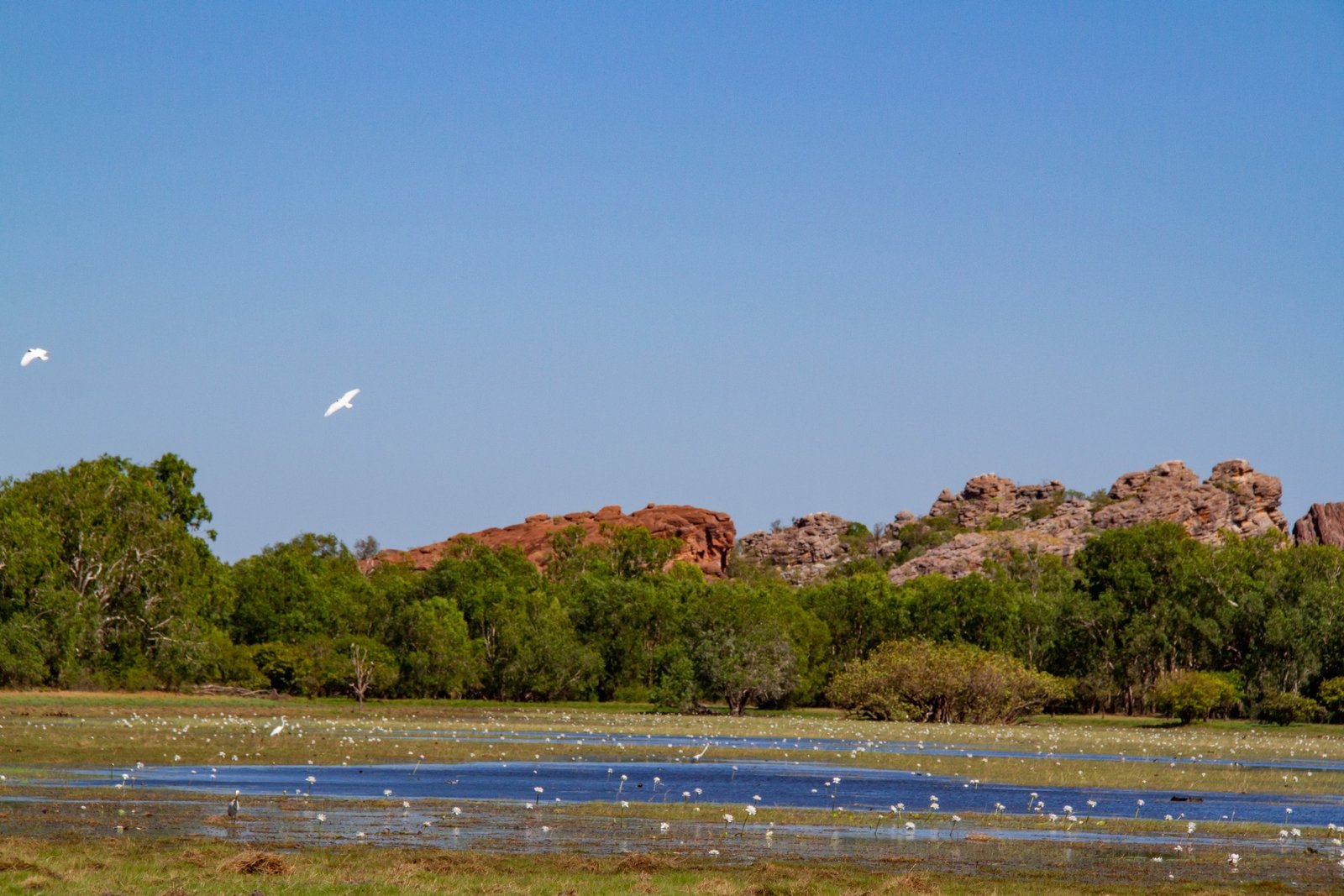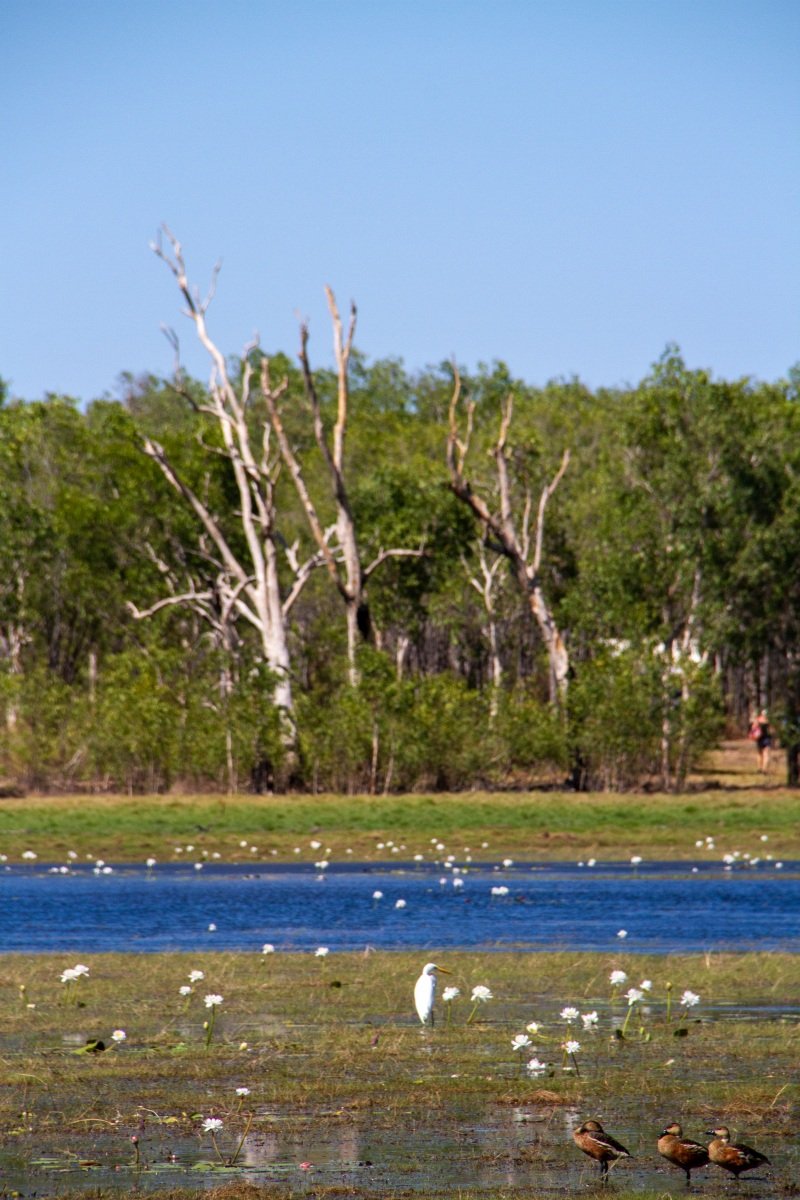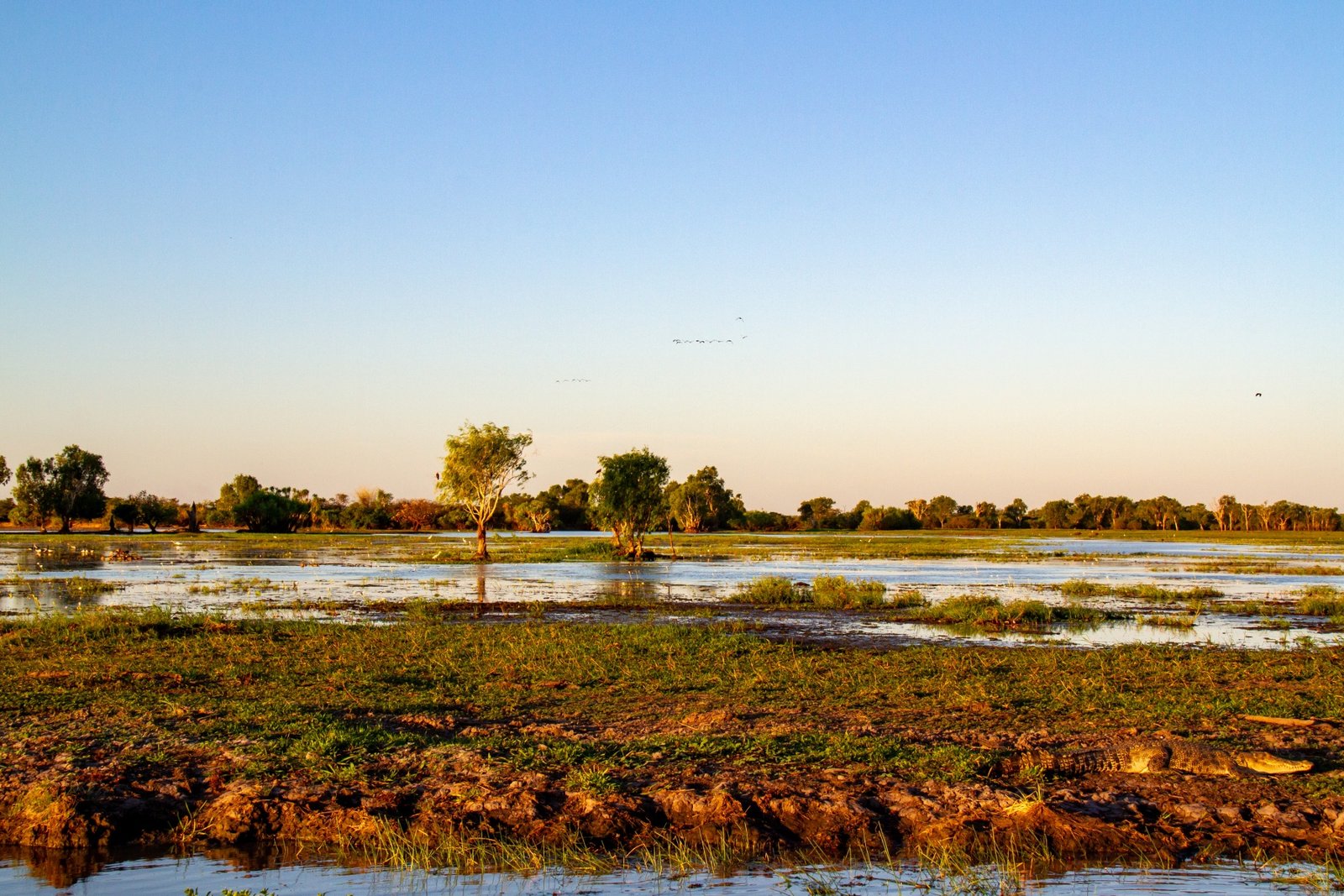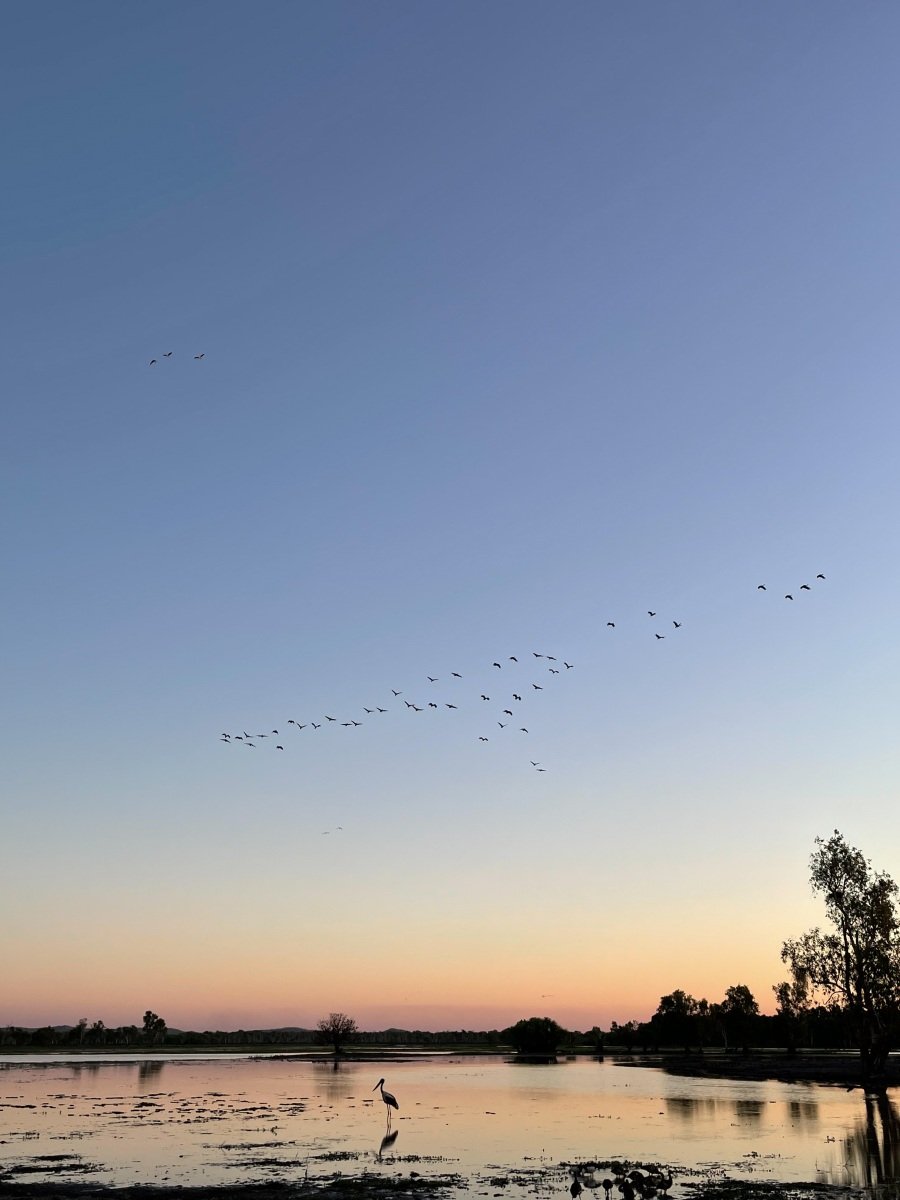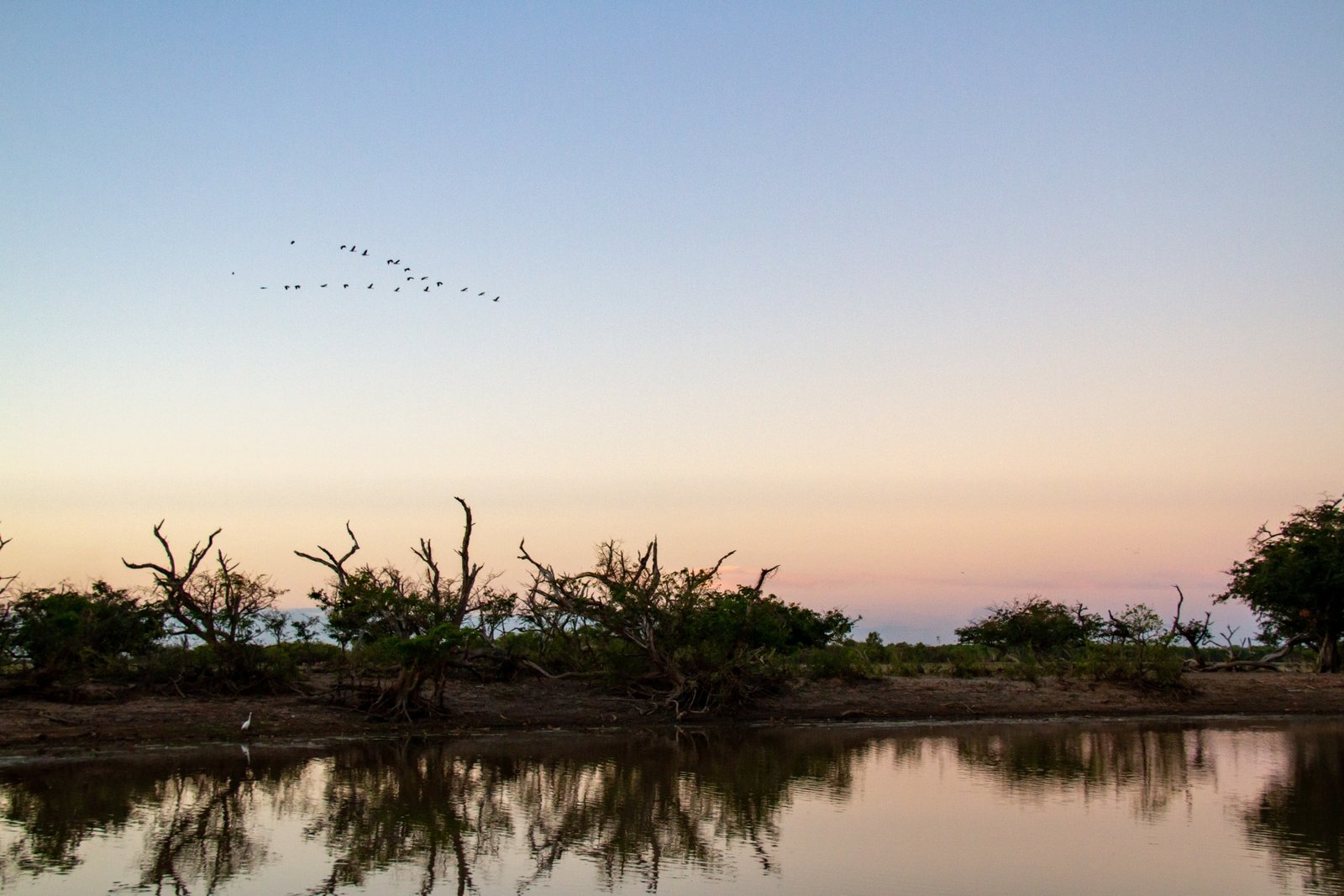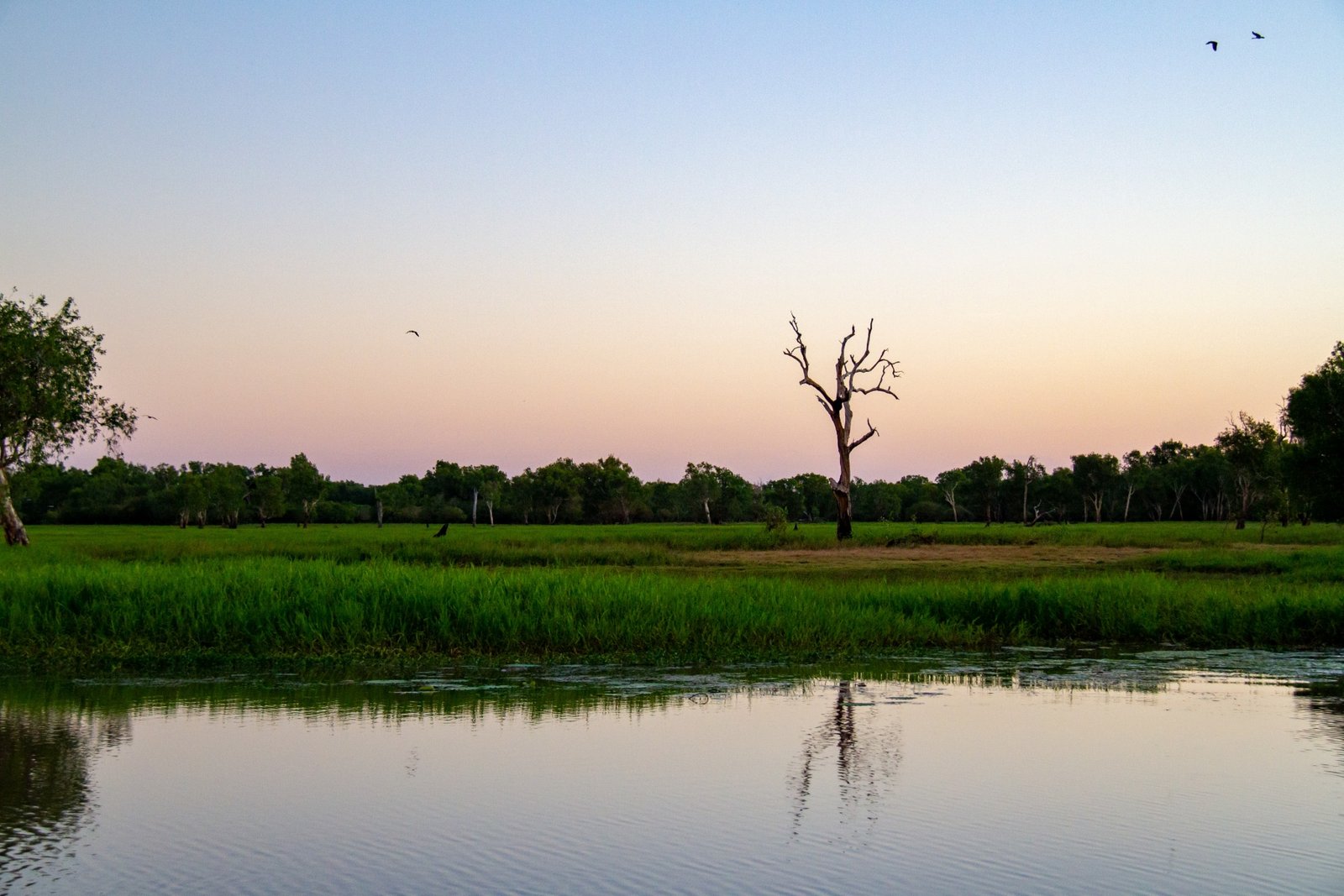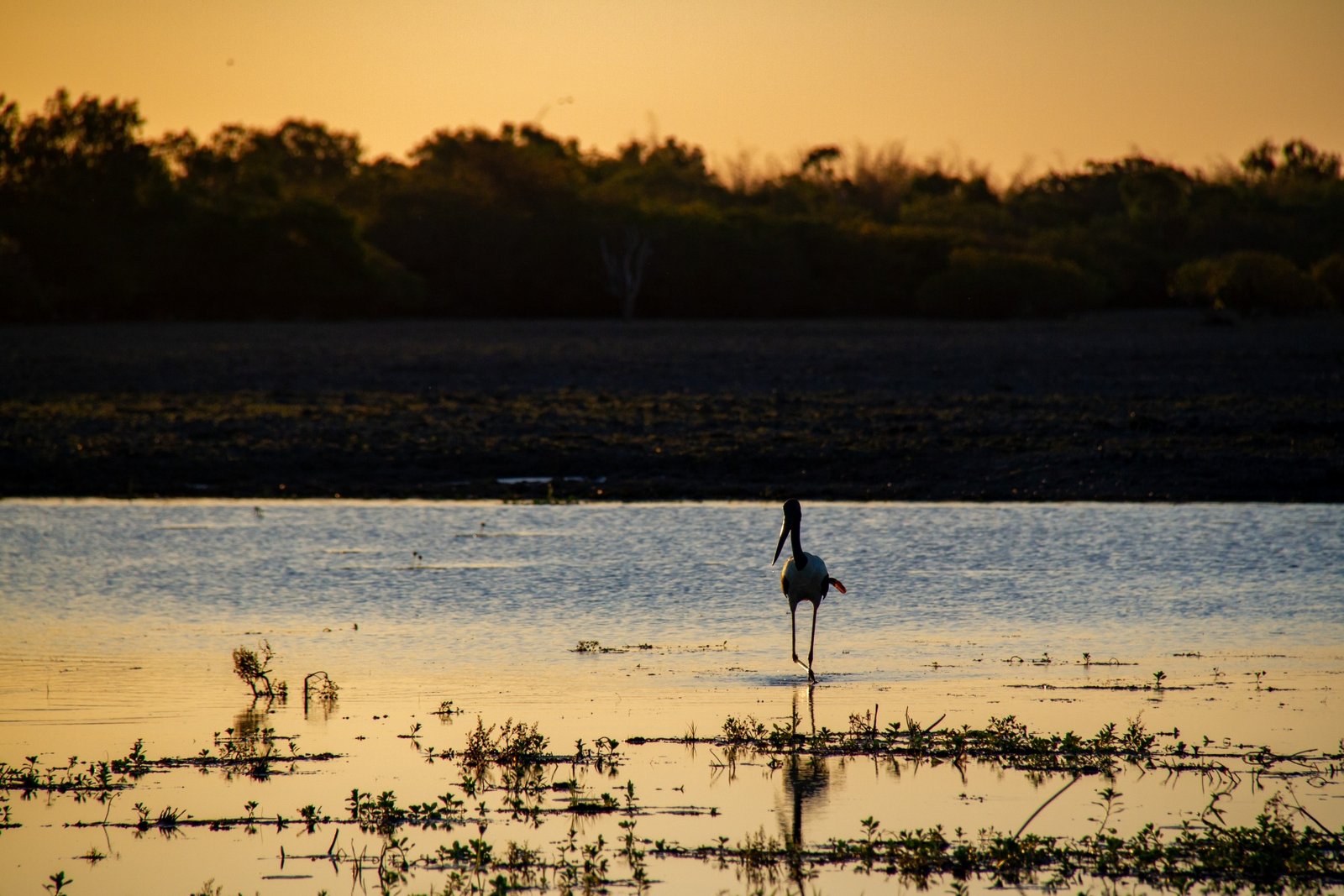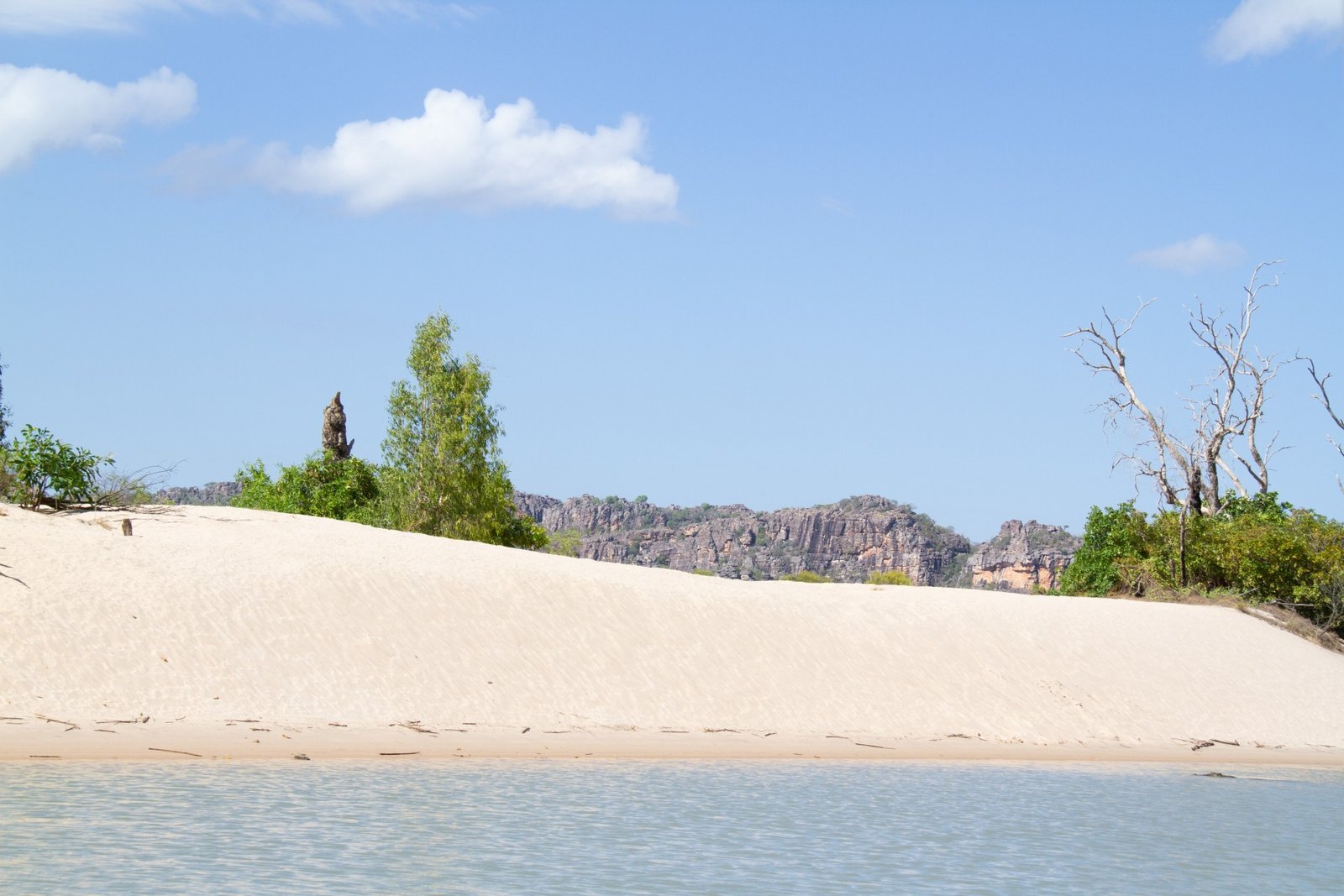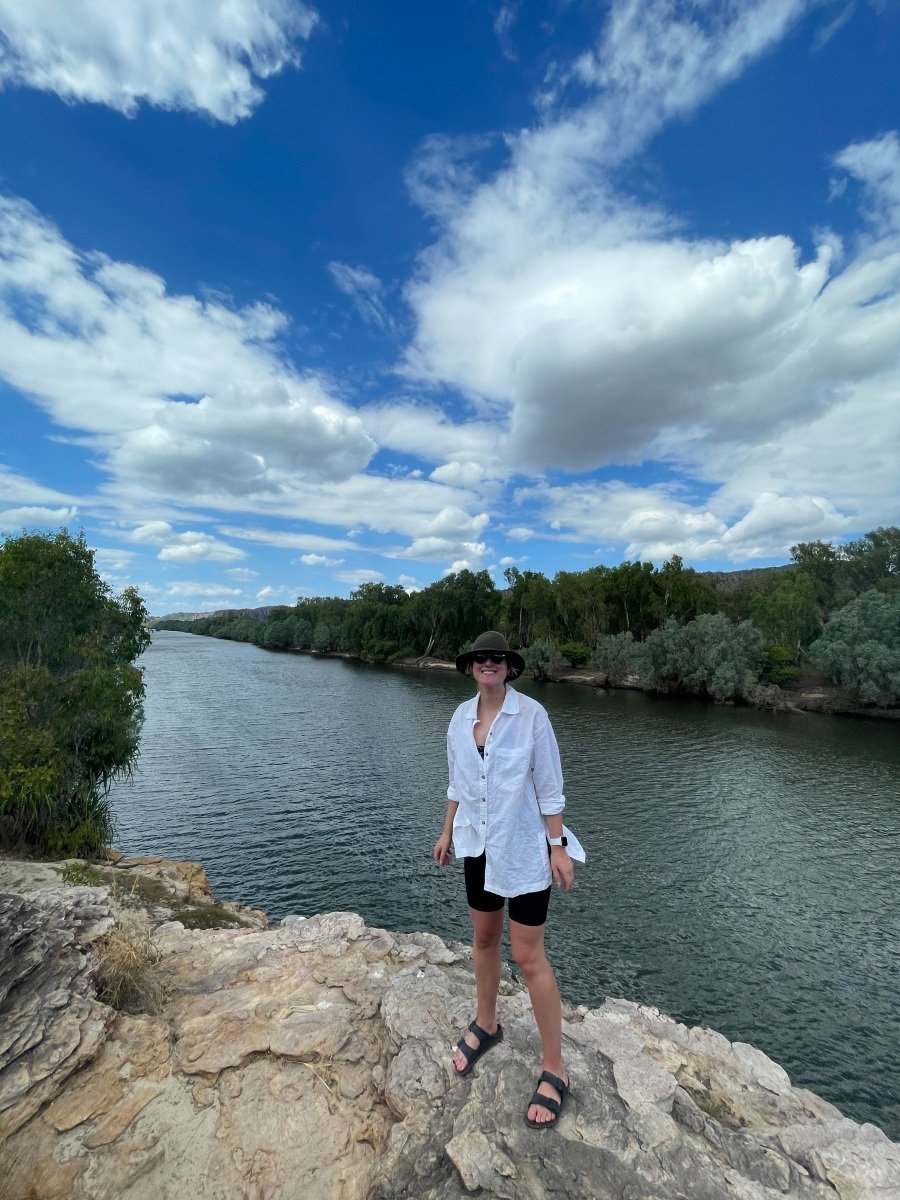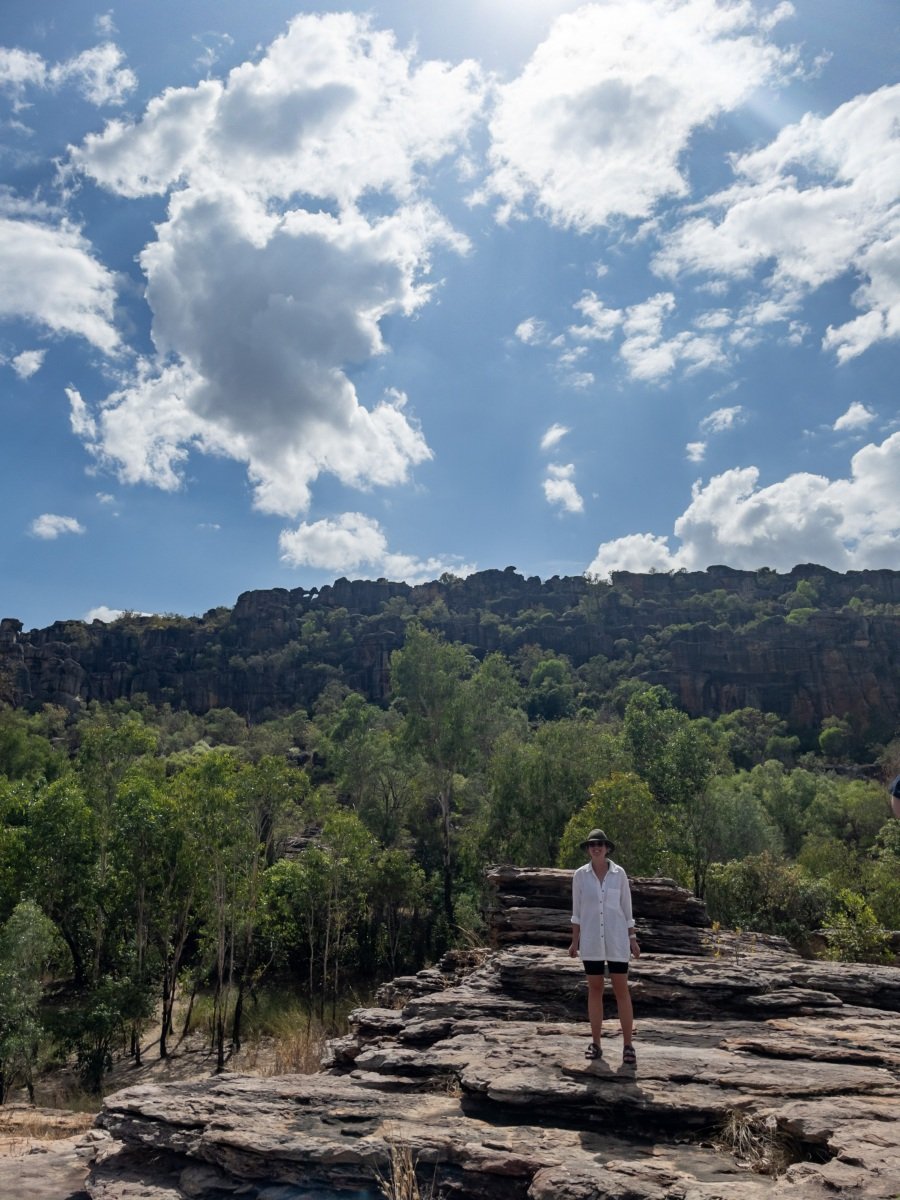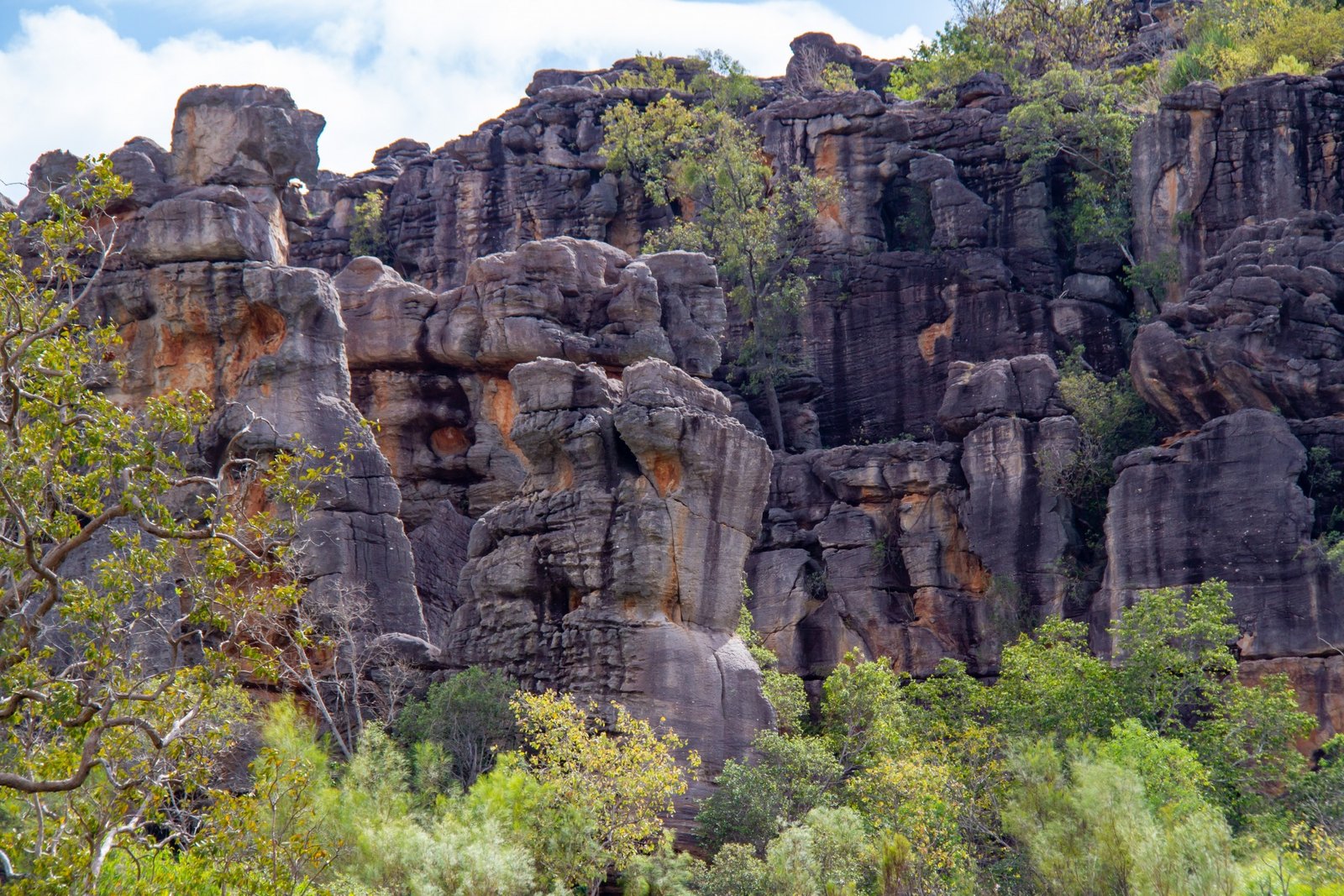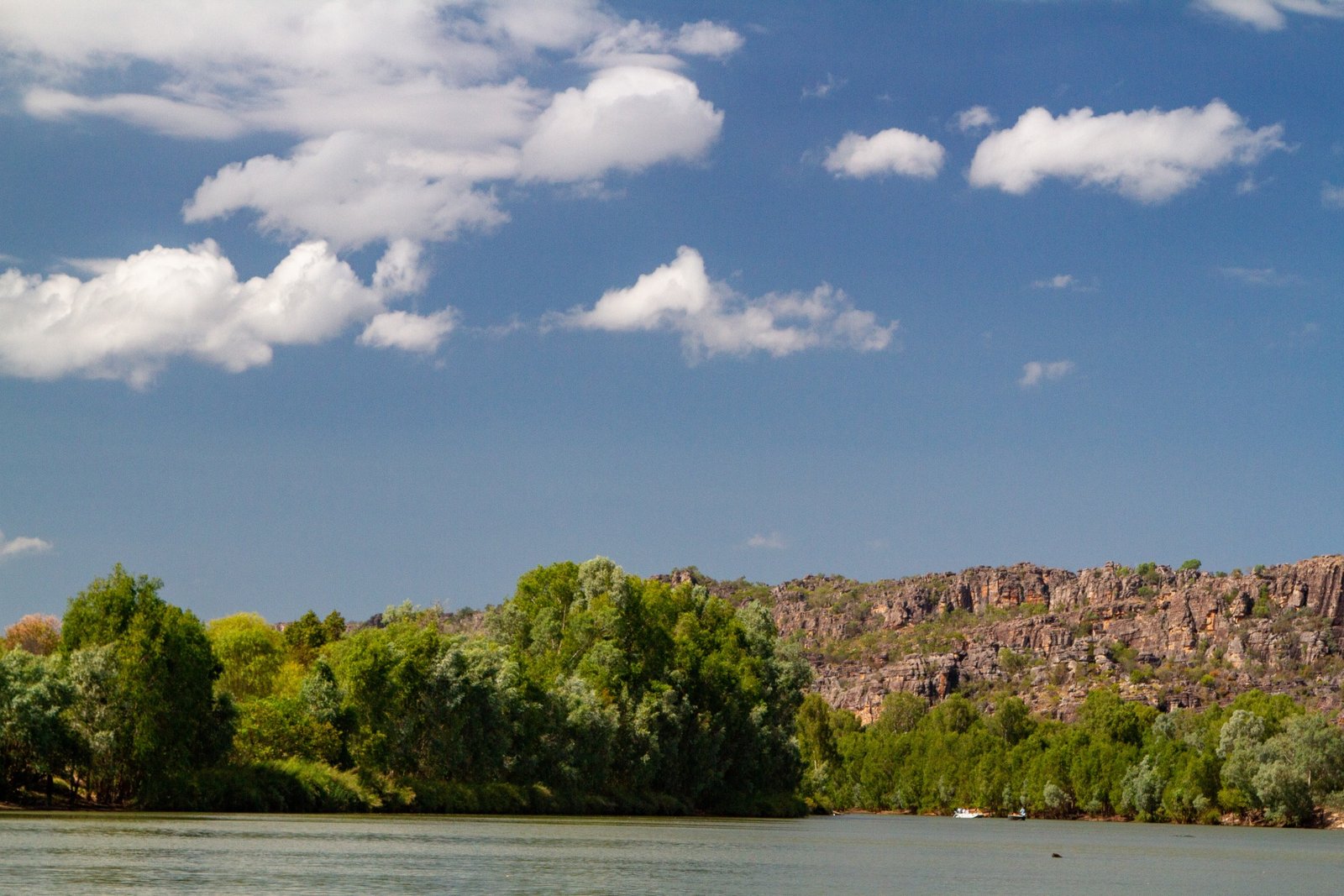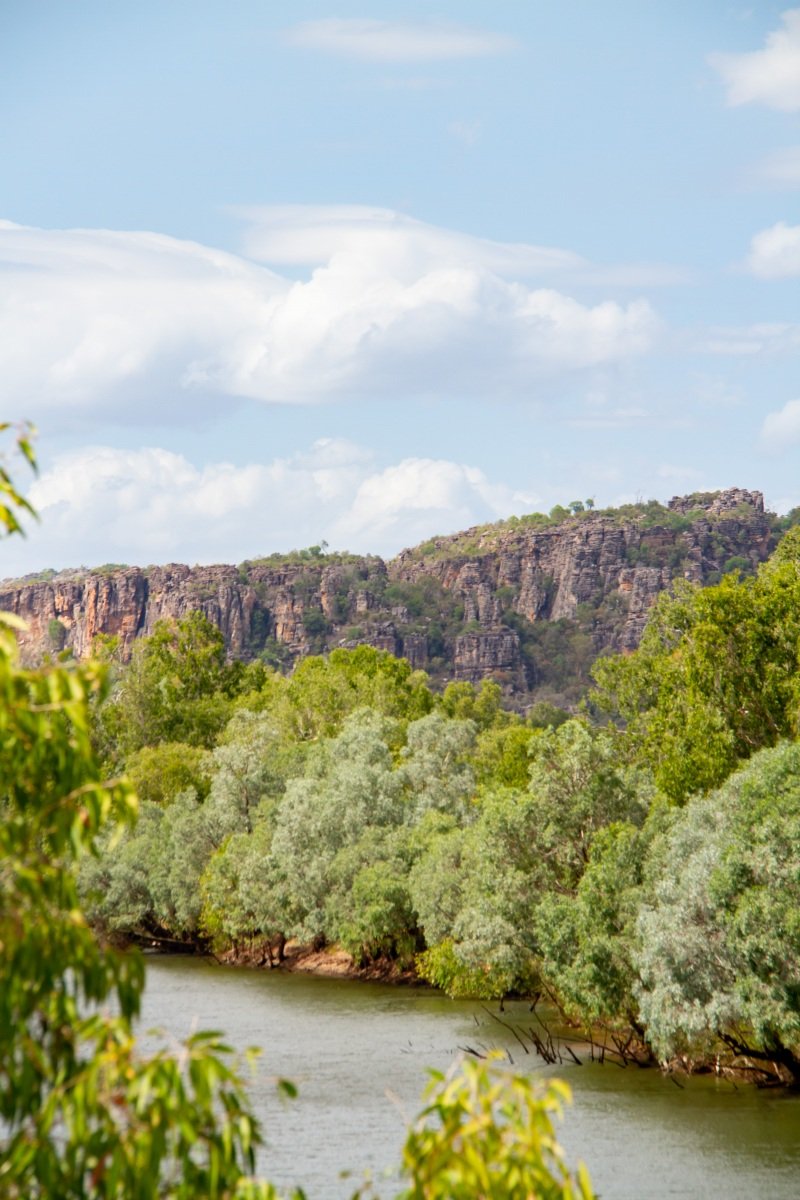
We leave Edith Falls and drive up to Jabiru in Kakadu. We’ve heard that some people complain that Kakadu is just scrubby bush and therefore uninspiring [Anna: Spoiler alert, some people are wrong, but I concede Kakadu is a difficult park to plan/navigate]. The main road through is fairly long (it’s 2 hours from Pine Creek to Jabiru) and the bush is scrubby, so I can see where they impression comes from, but there are big rivers and huge rocky formations along the way – all hinting that there’s plenty to find in the park.
The extremely helpful visitor centre helps us plan what to do (given some of the tracks are 4wd only) and we make camp.
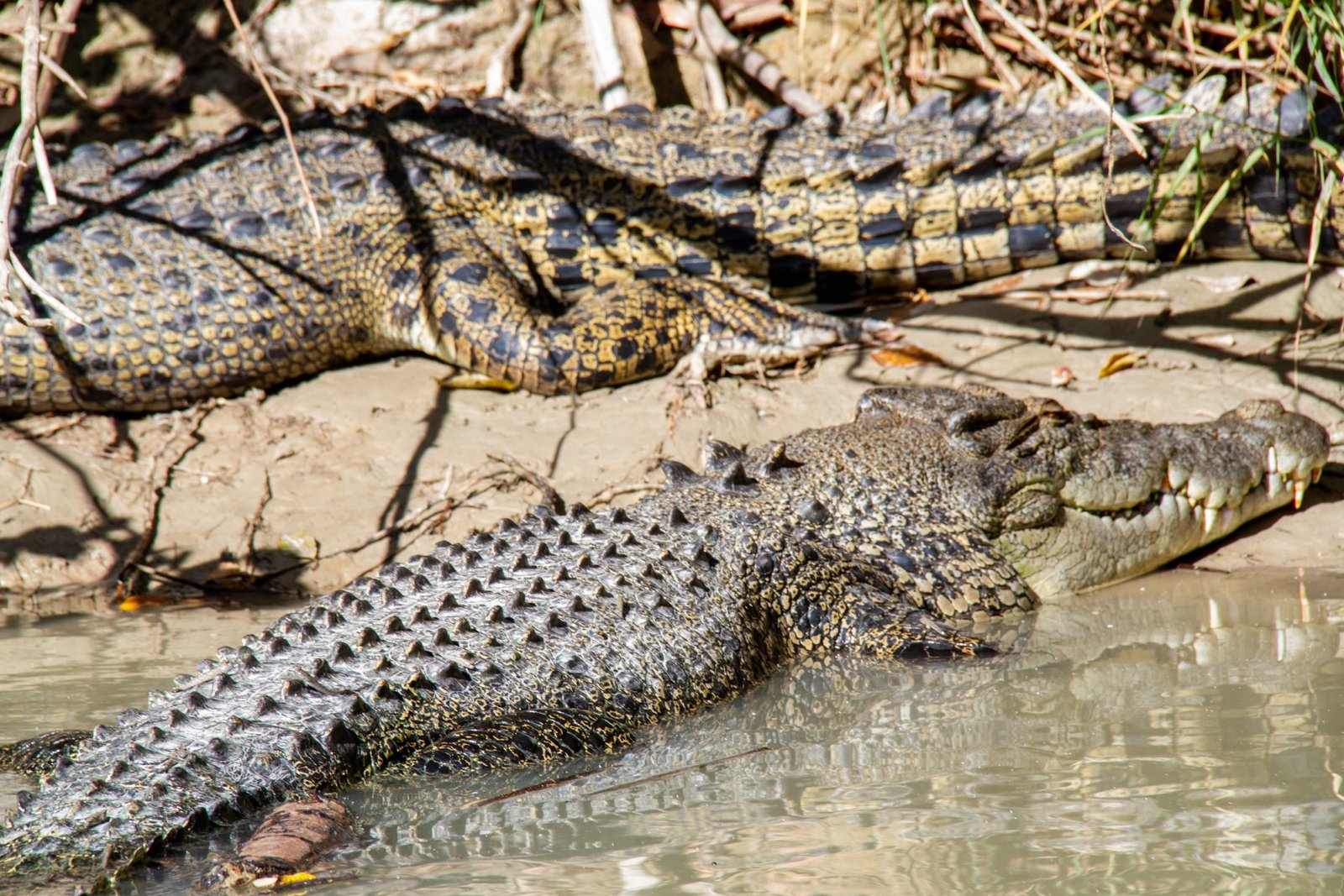
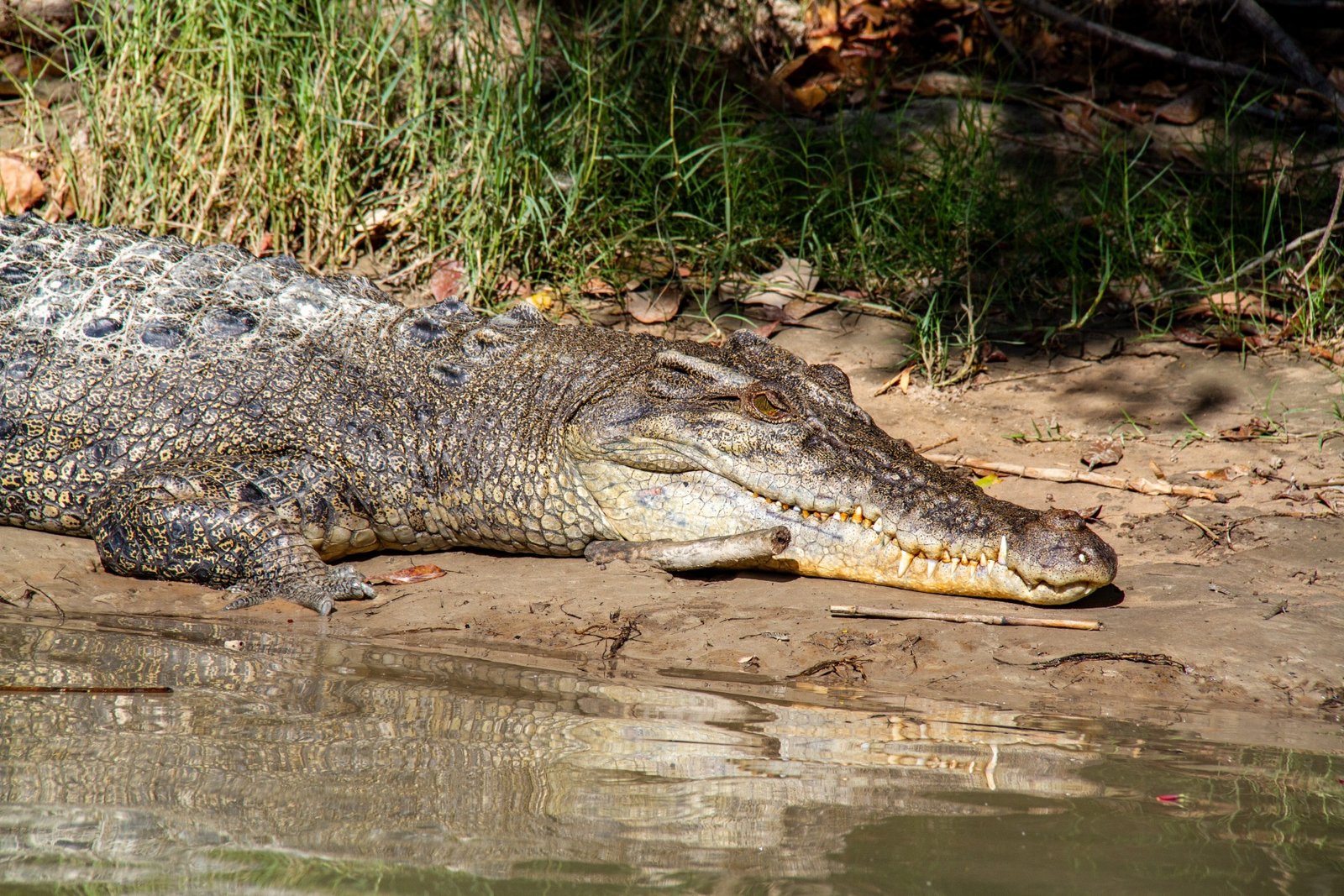
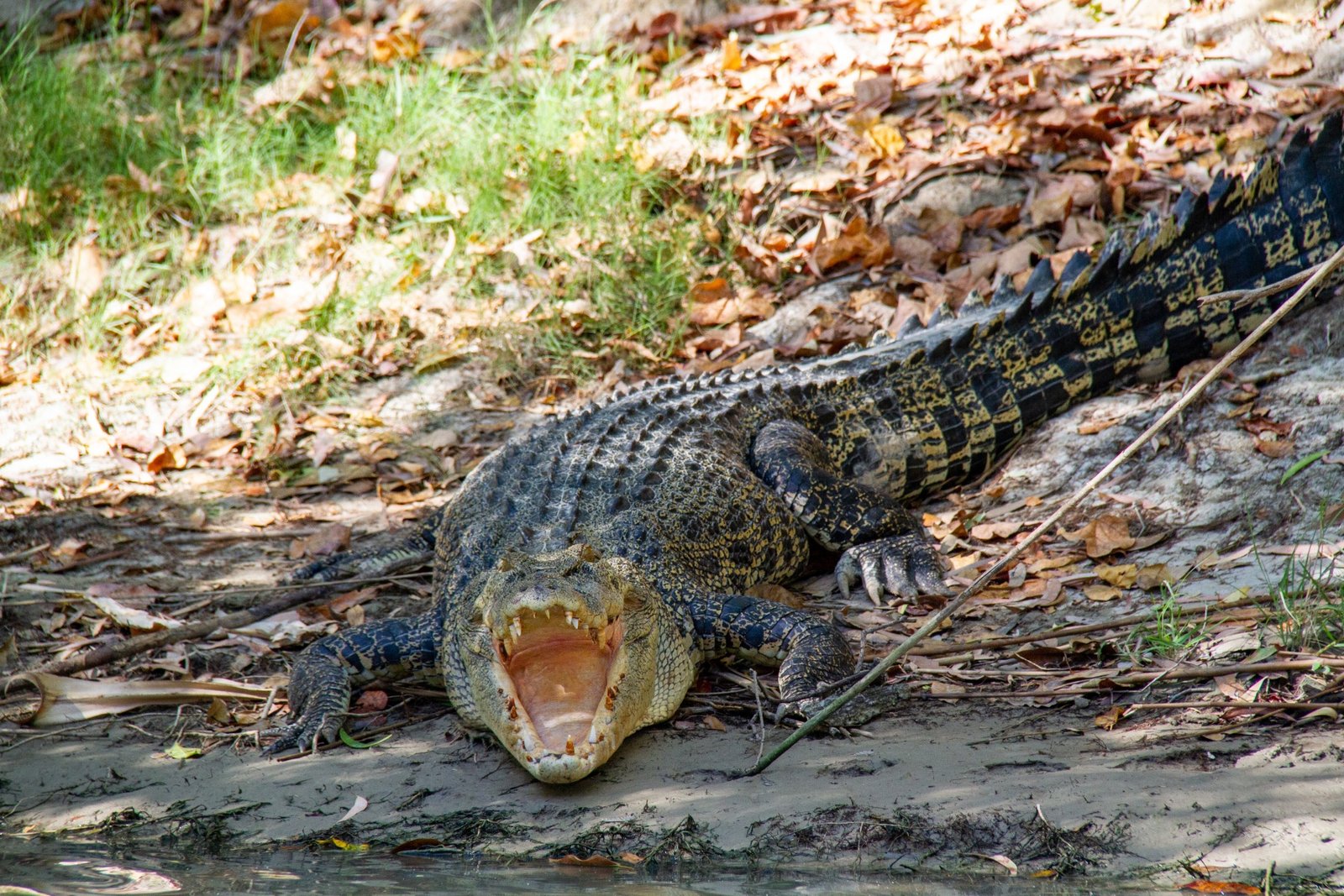
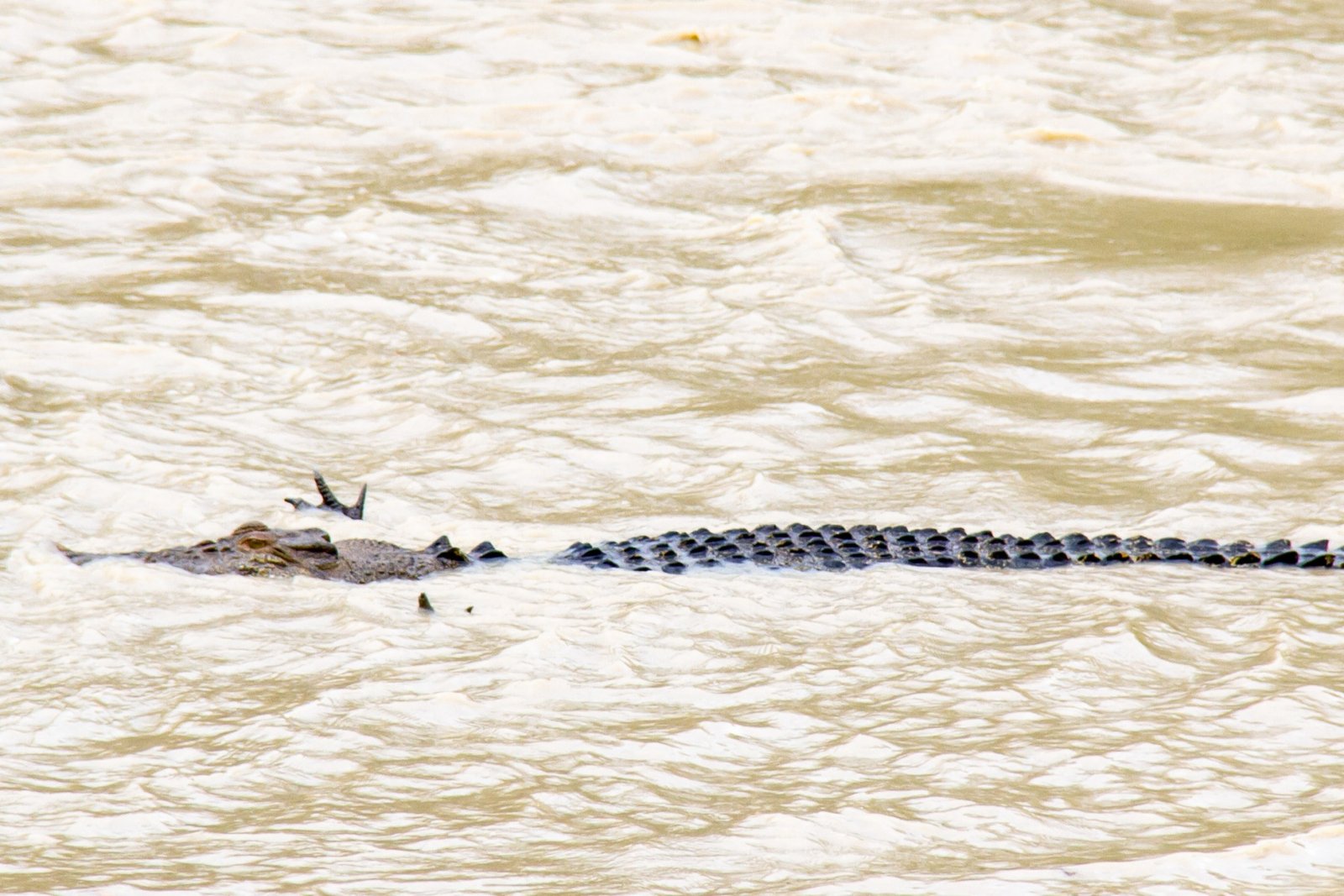
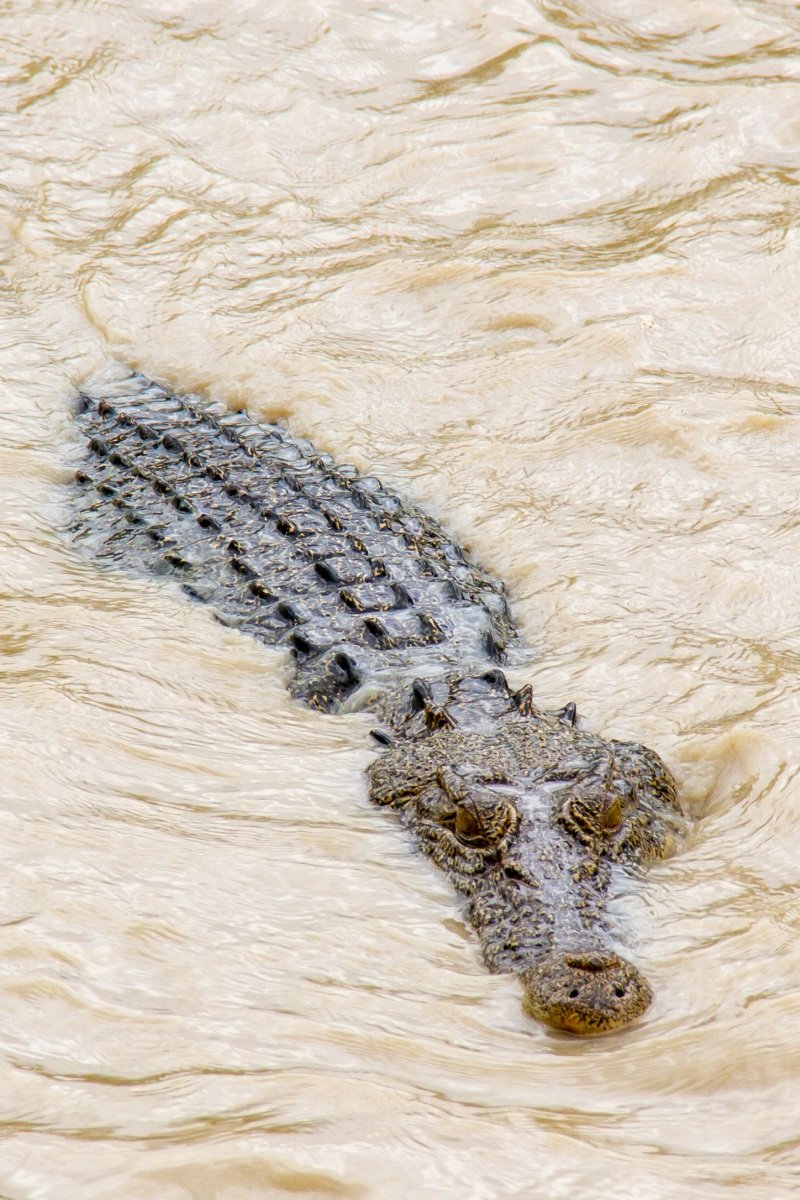
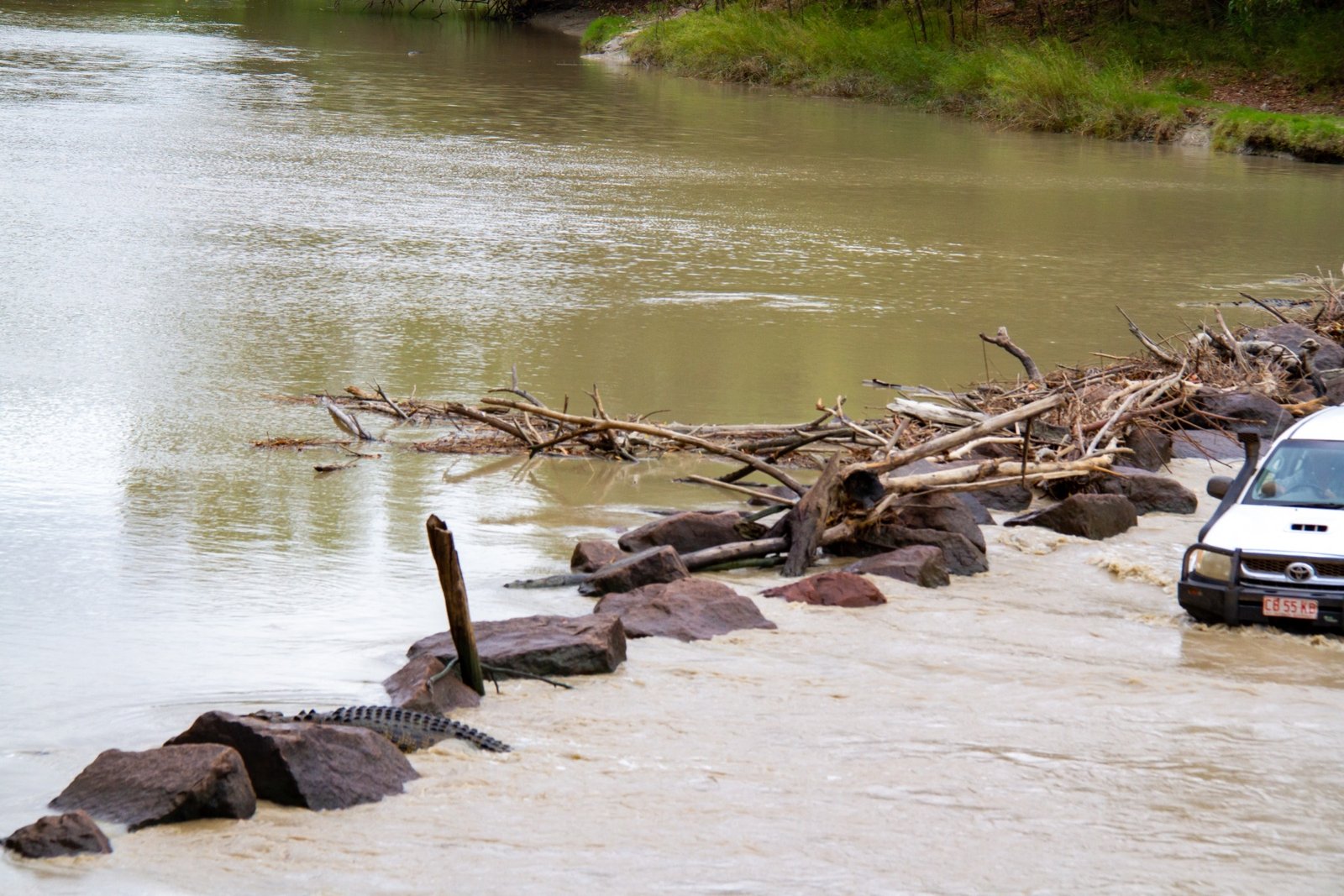
There is a crossing over the East Alligator River which attracts crocodiles at high tide. They wait to catch fish as they swim across the ford. Once we’re settled at the camp we head to Cahills Crossing.
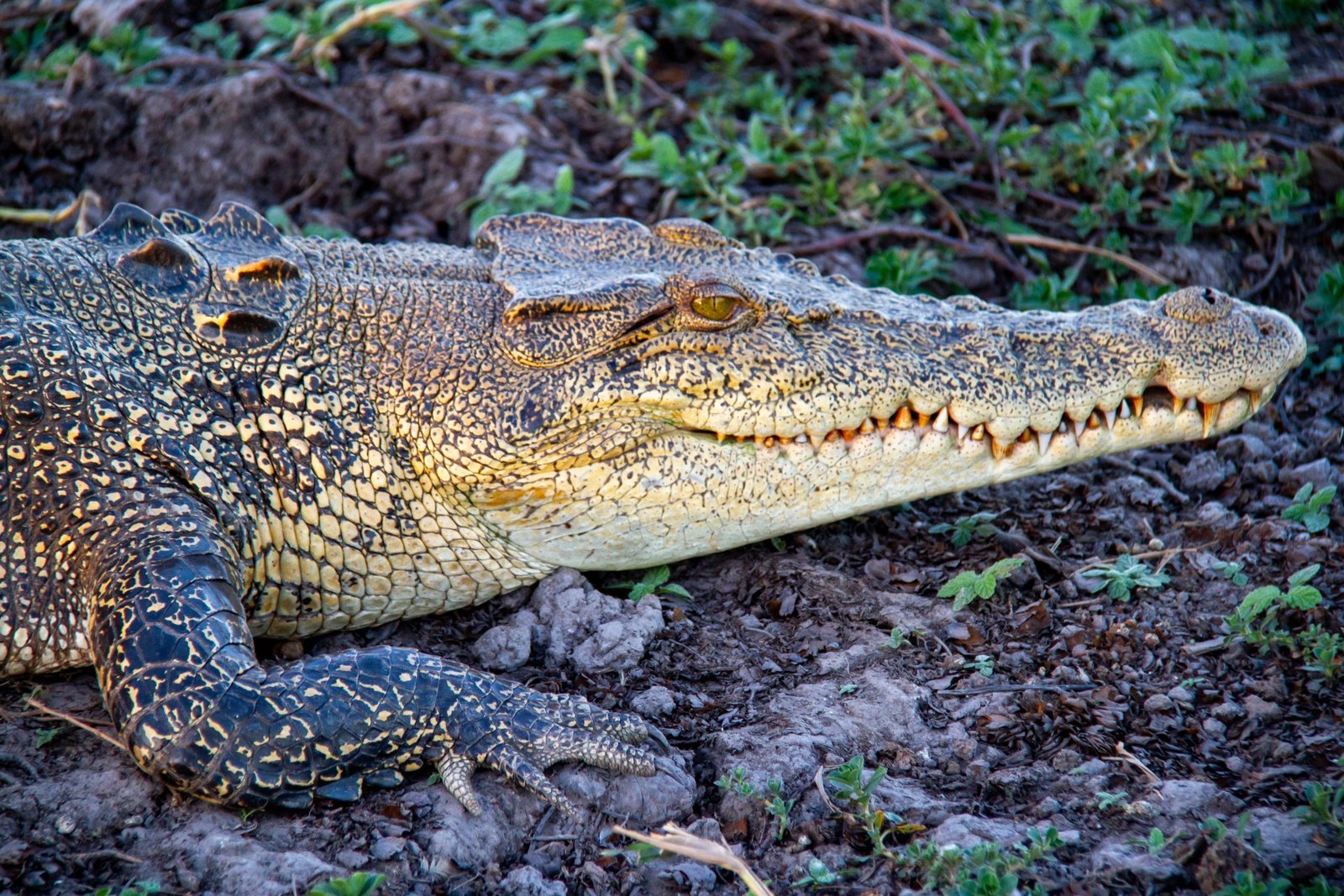
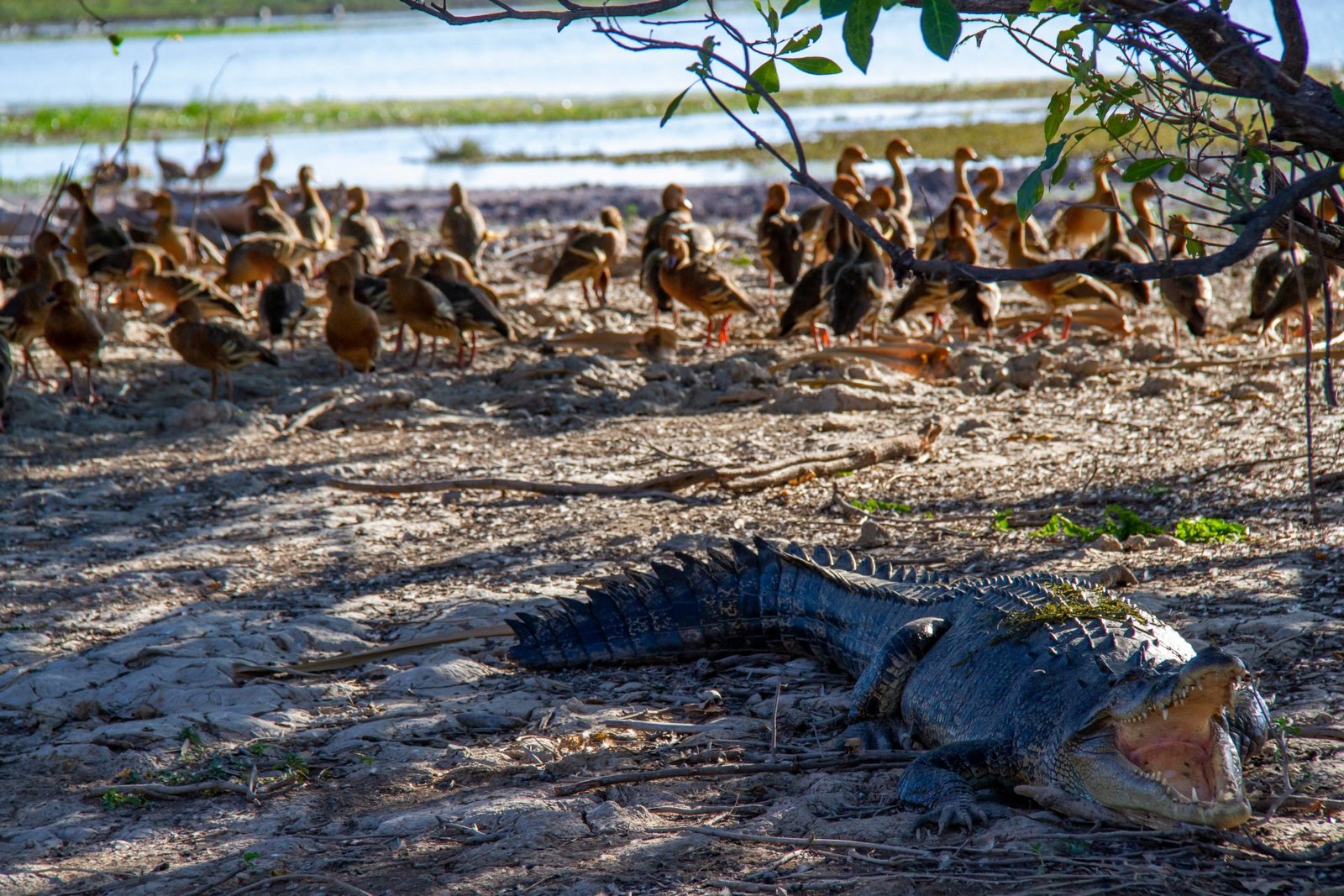
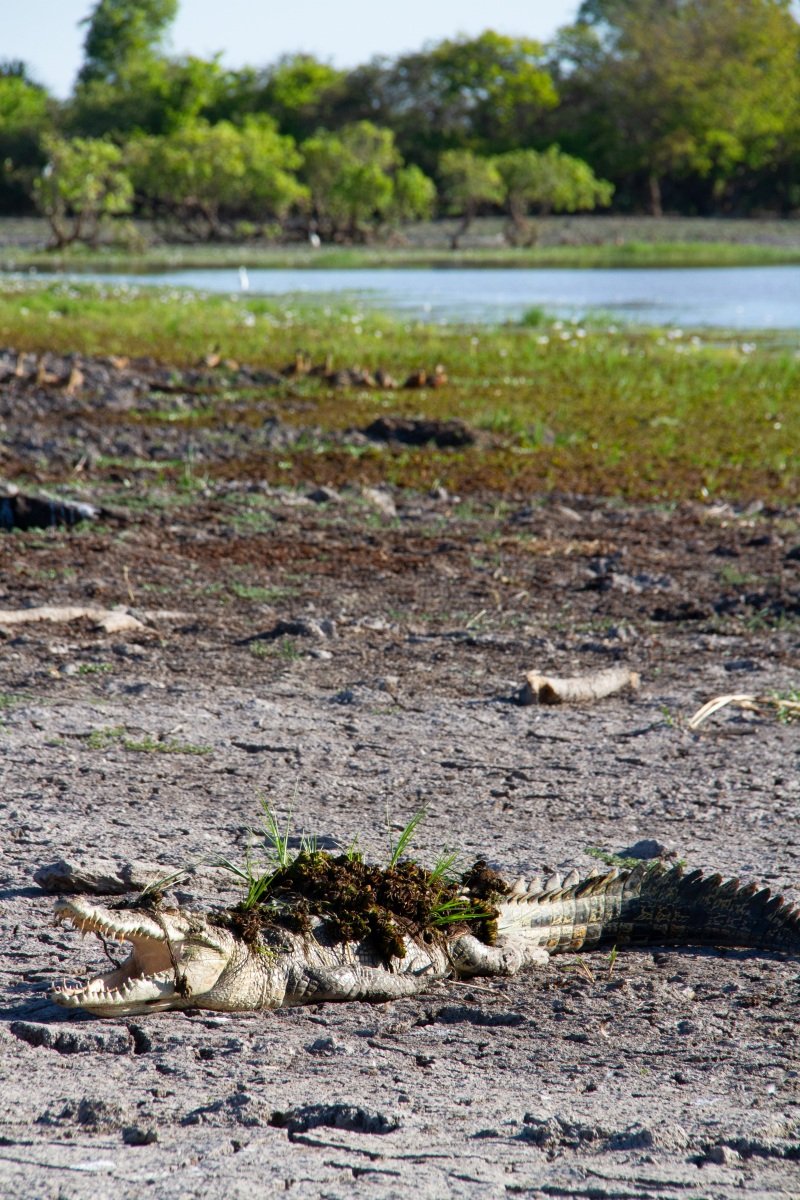
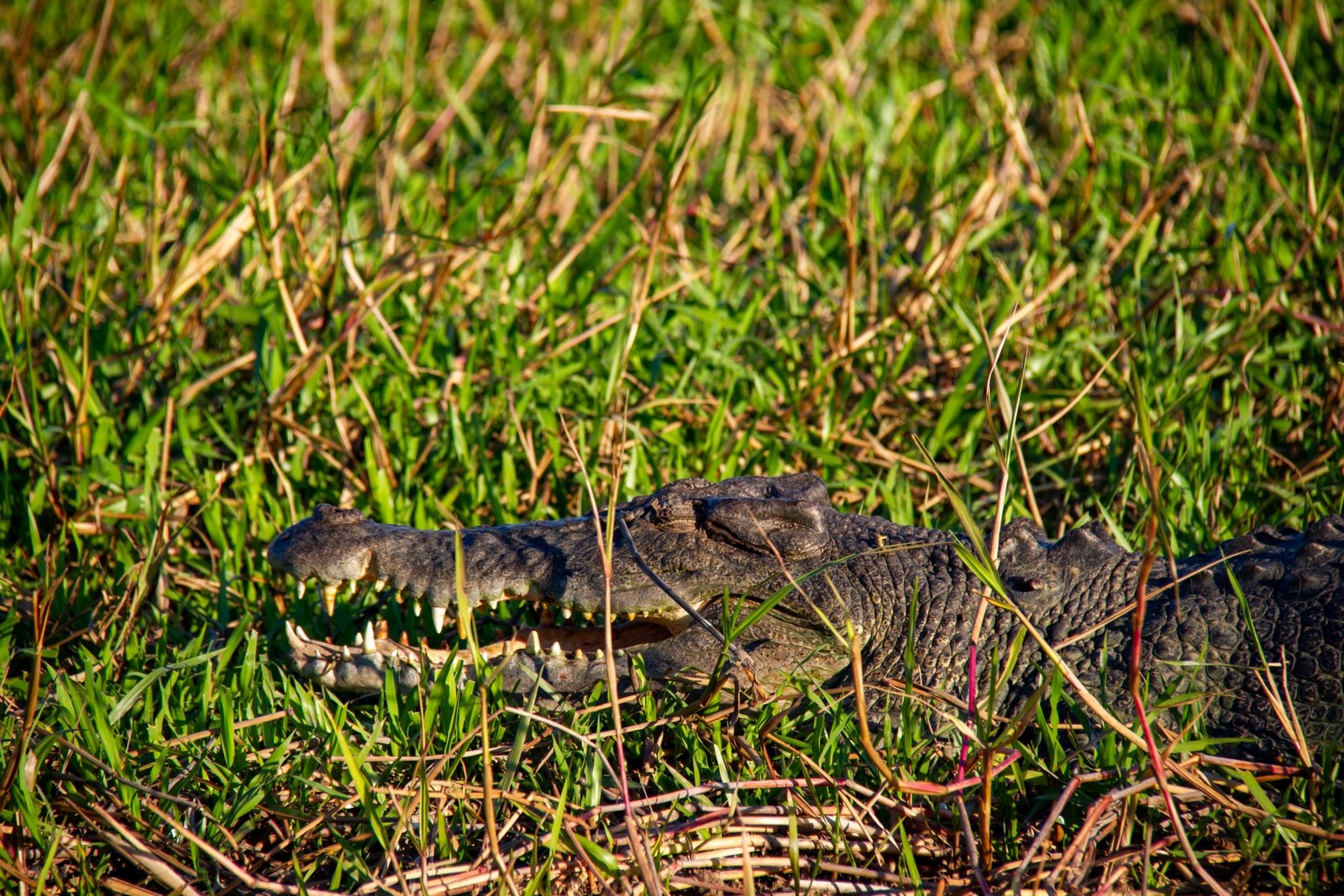
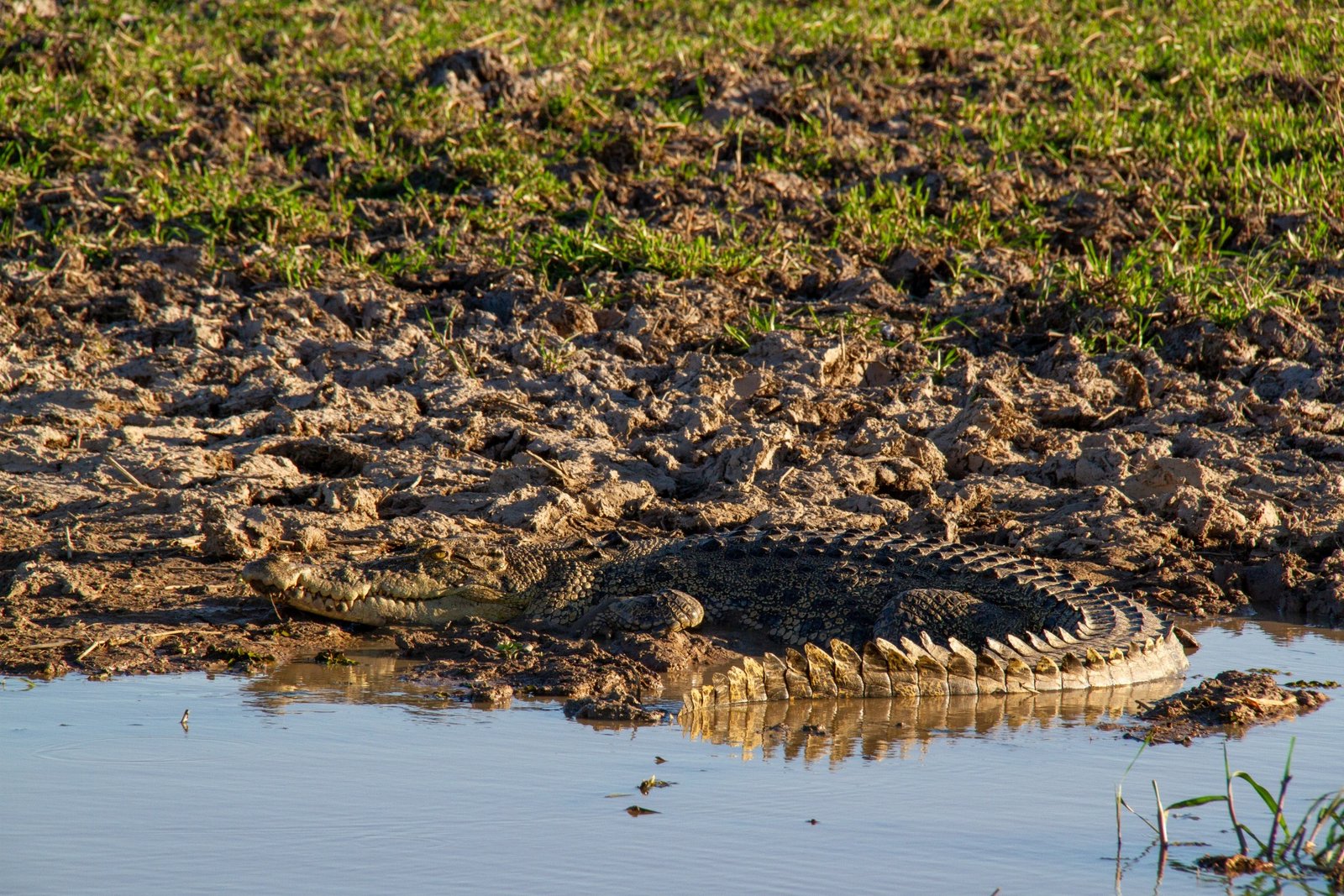
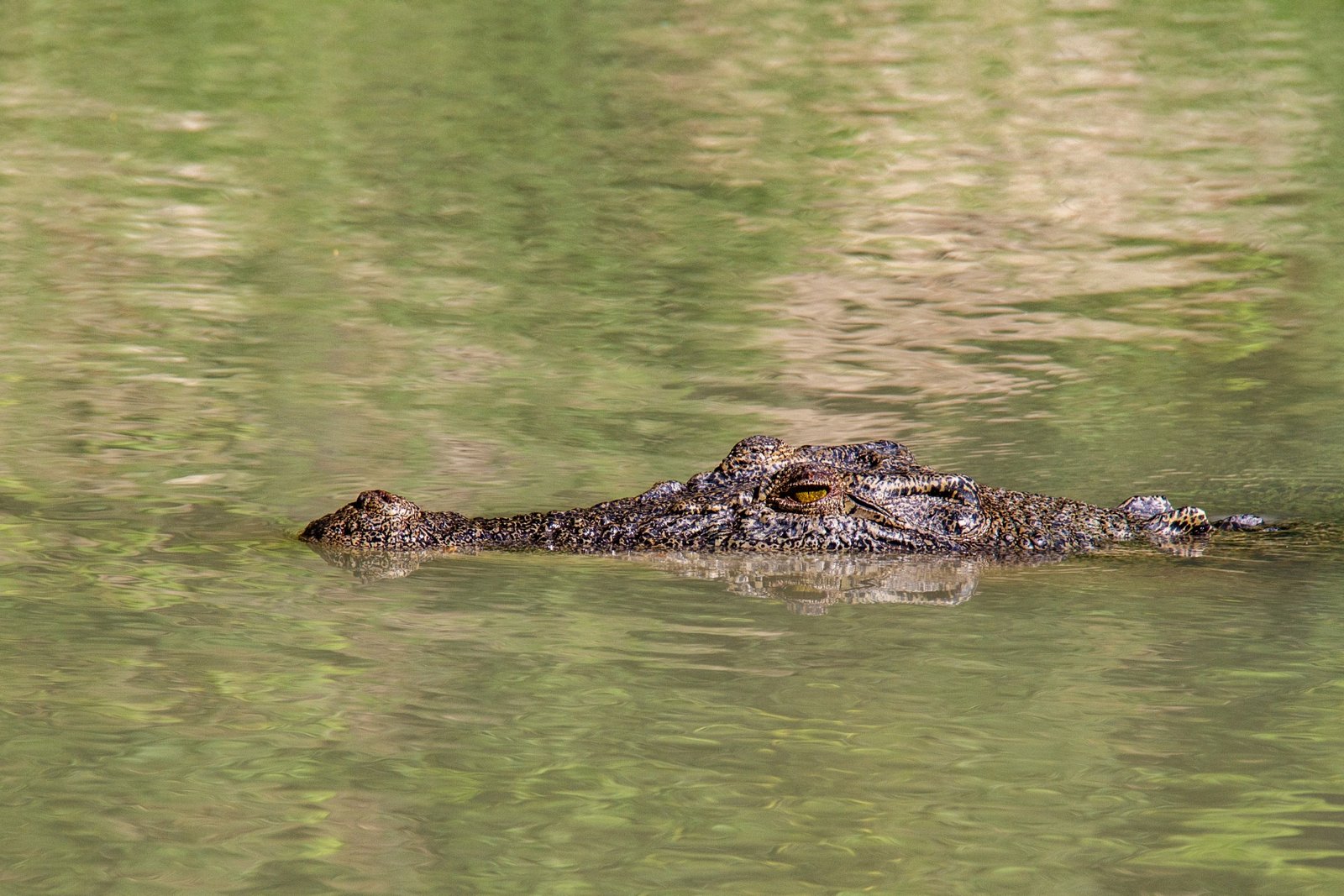
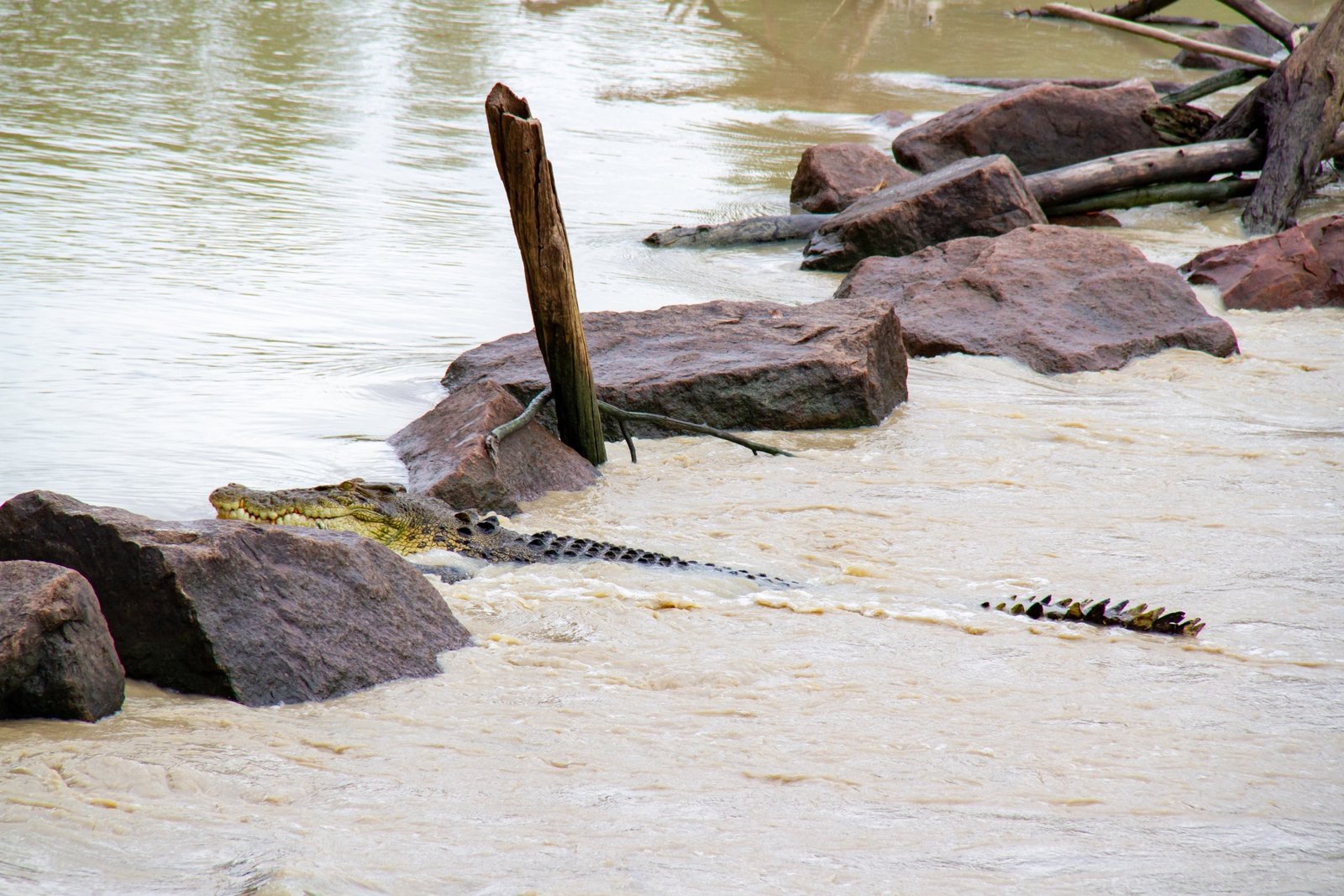
A viewing platform overlooks the crossing and we join some others to watch. Something like ten or twelve crocs lie in wait [Anna: and a couple more below the surface for every visible croc]. They hold their arms up to stay in place, they’re hands look like black stars pointing out of the water. Sometimes one will surface out of the murky water, but really watching them disappear is more unnerving because of how quickly and how completely they’re hidden [Anna: In a particularly terrifying moment, a big croc from the middle of the river disappeared completely only to reappear underneath the viewing platform, clearly sizing us up].
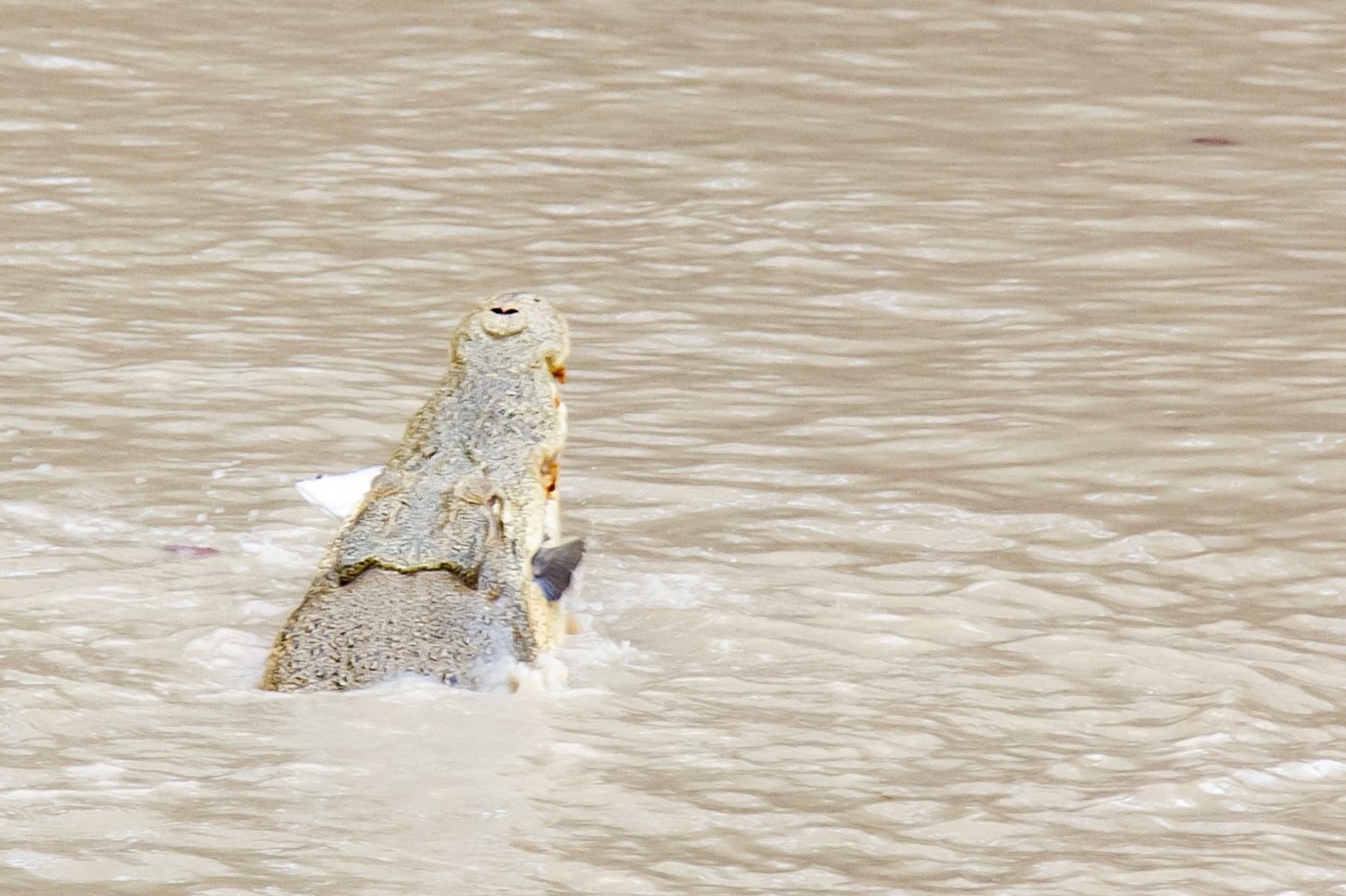
Mostly they float in absolute stillness. Then in a sudden splash one will grab a fish from the water, tossing it back into its mouth.
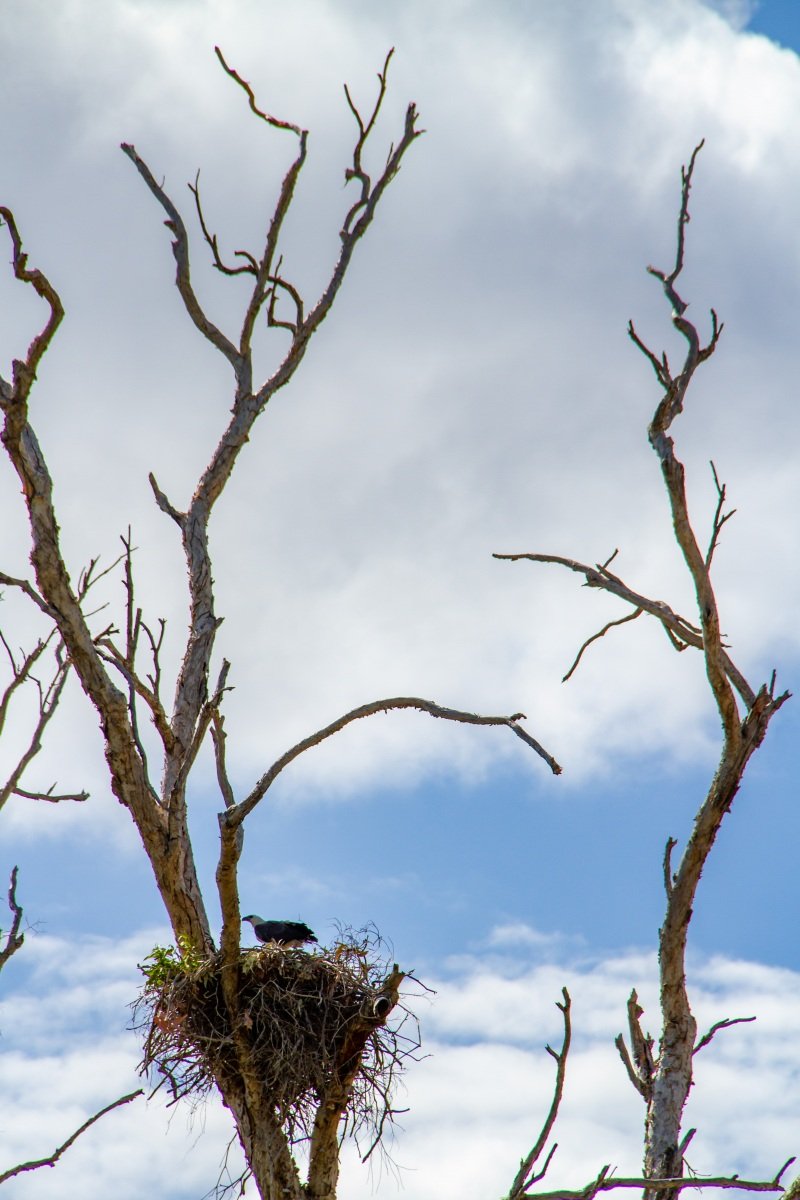
When a bird flies too close, a croc launches into the air, narrowly missing the bird (met by excited gasps from onlookers).
Now and again a 4wd will drive over the crossing, crocodiles reluctantly giving way. The local drivers know the path to avoid two big holes, but the visitors reliably drop into both, sending waves over the nearby crocodiles. Two times Commodores make the crossing, really drawing the onlooker’s attention. It looks incredibly sketchy.
Our fear of the resident reptiles stoked, we head to a sunset spot.
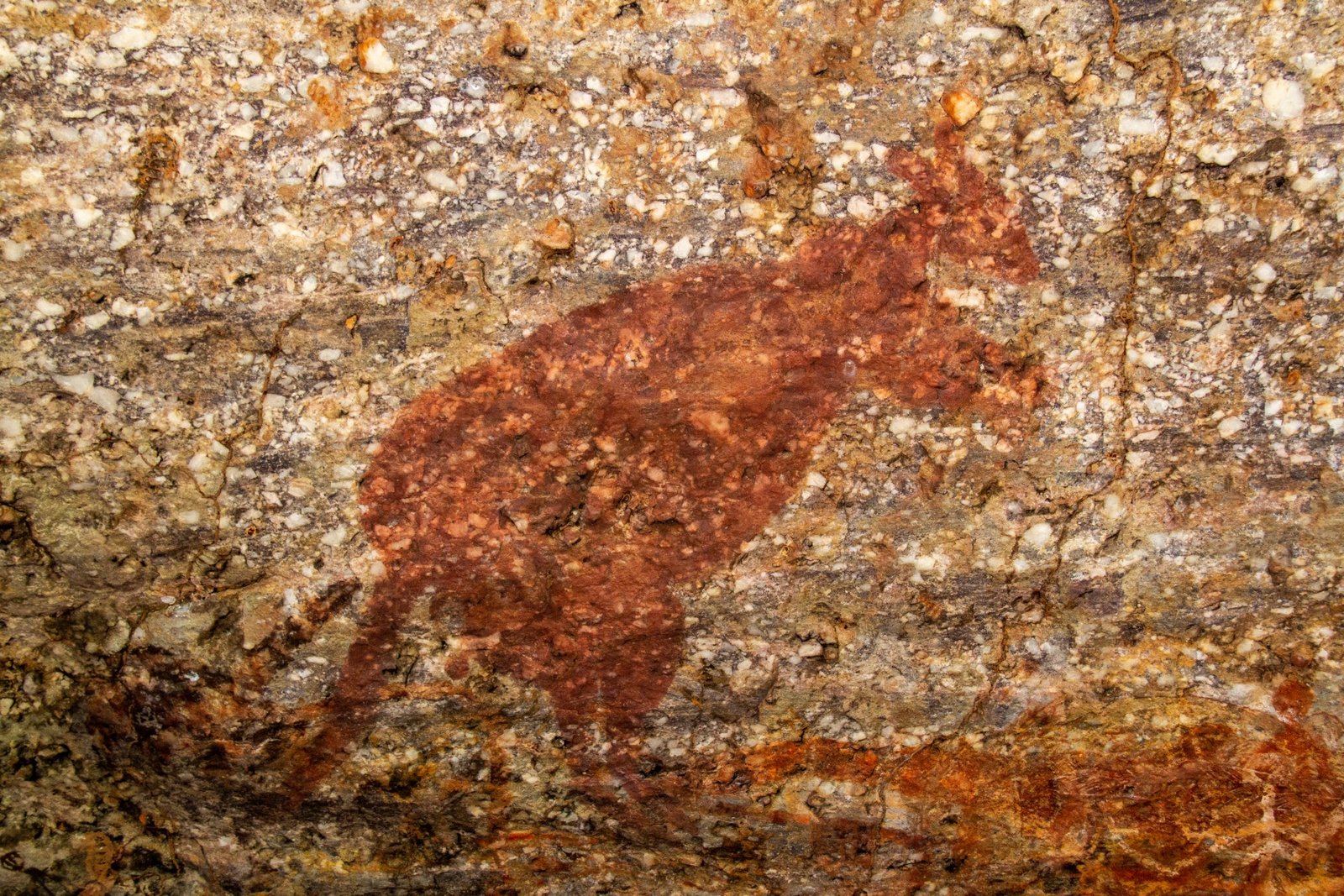
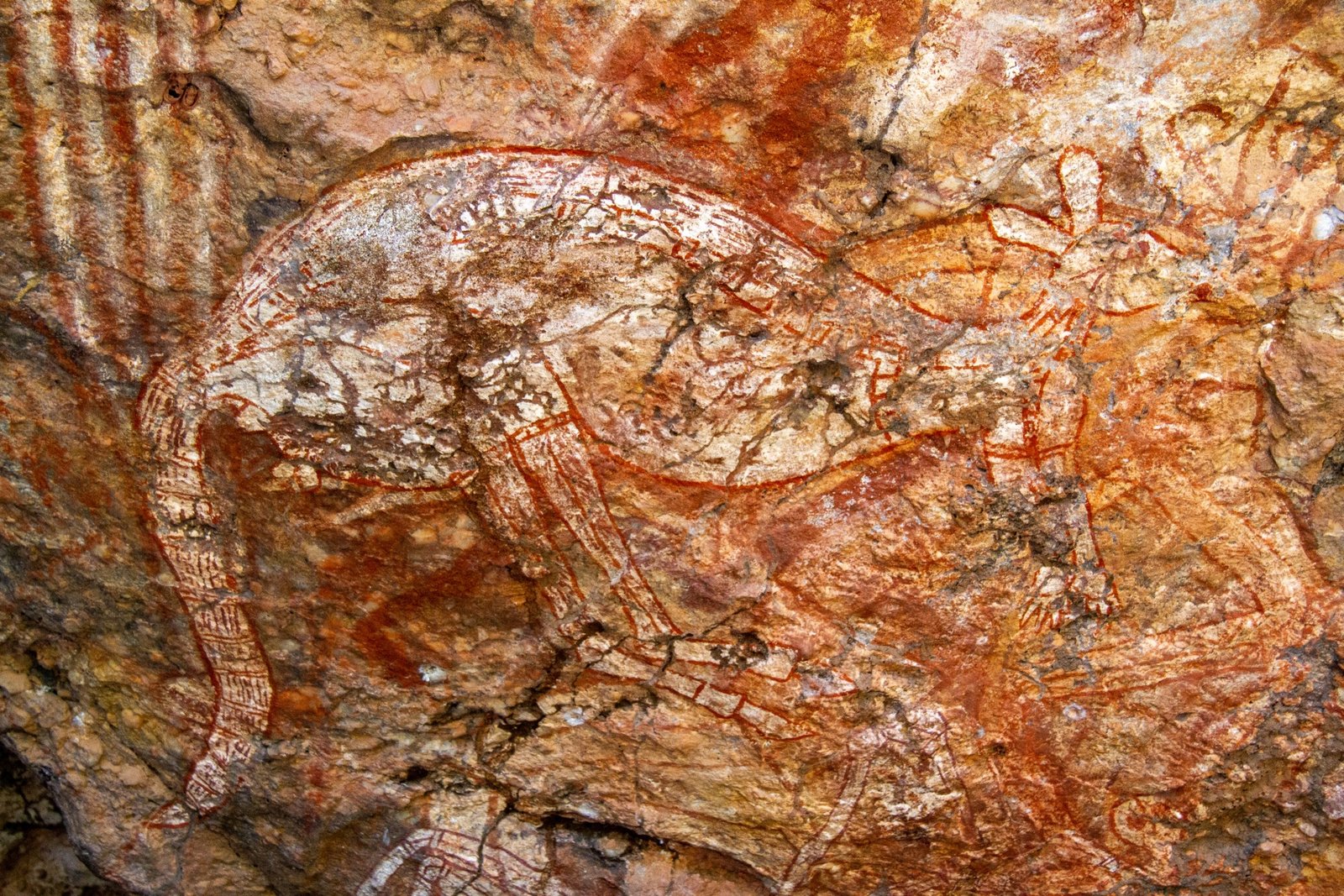
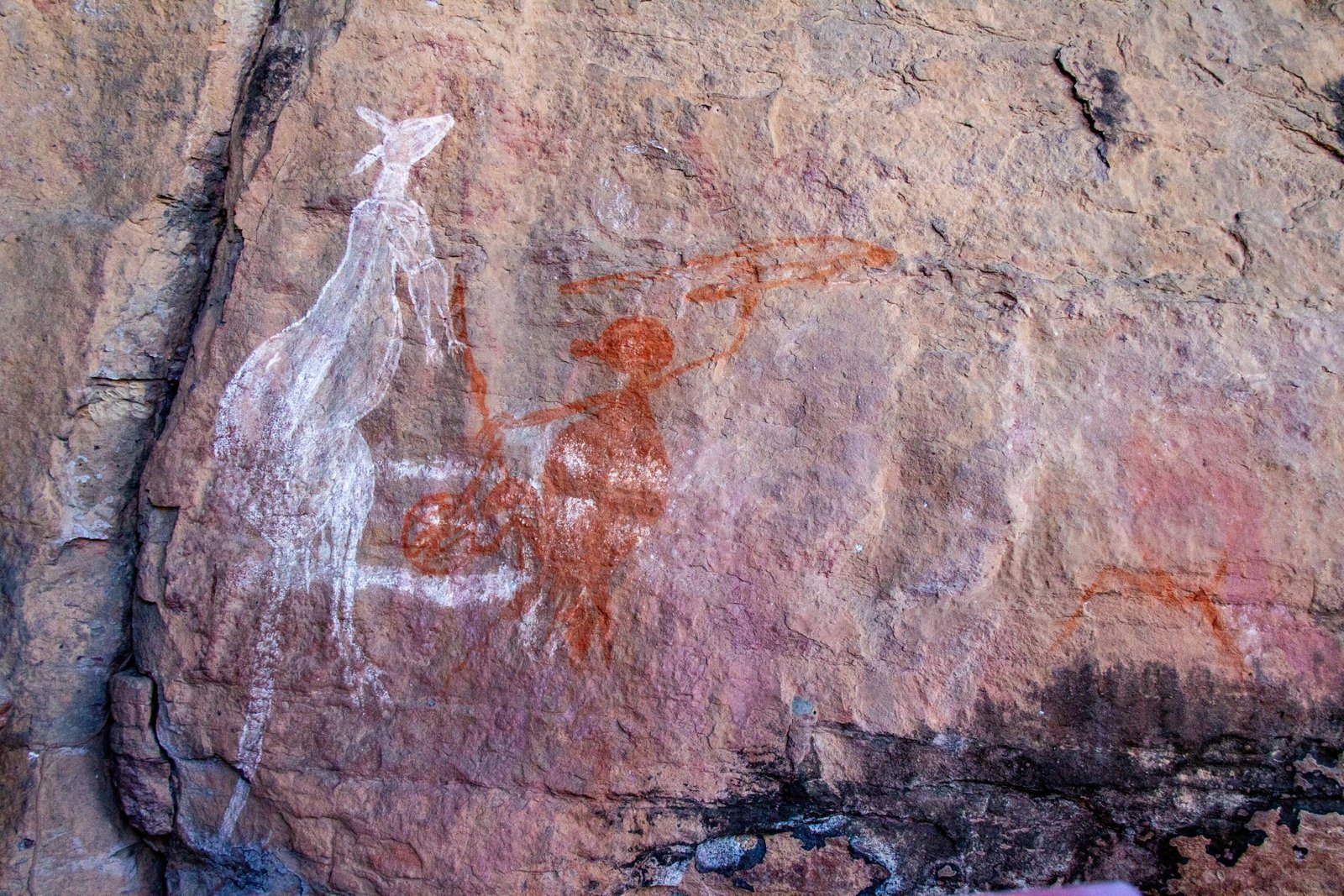
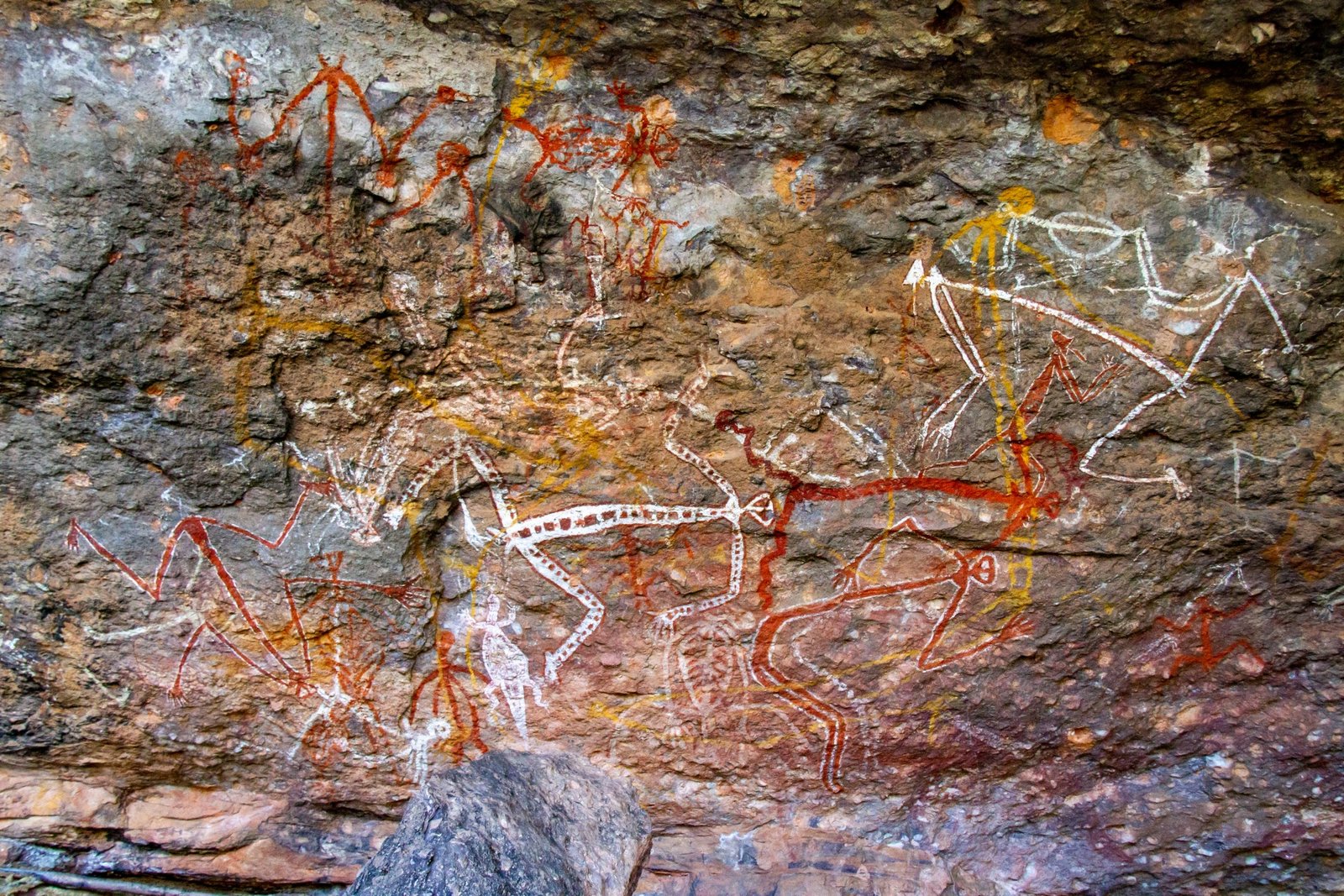
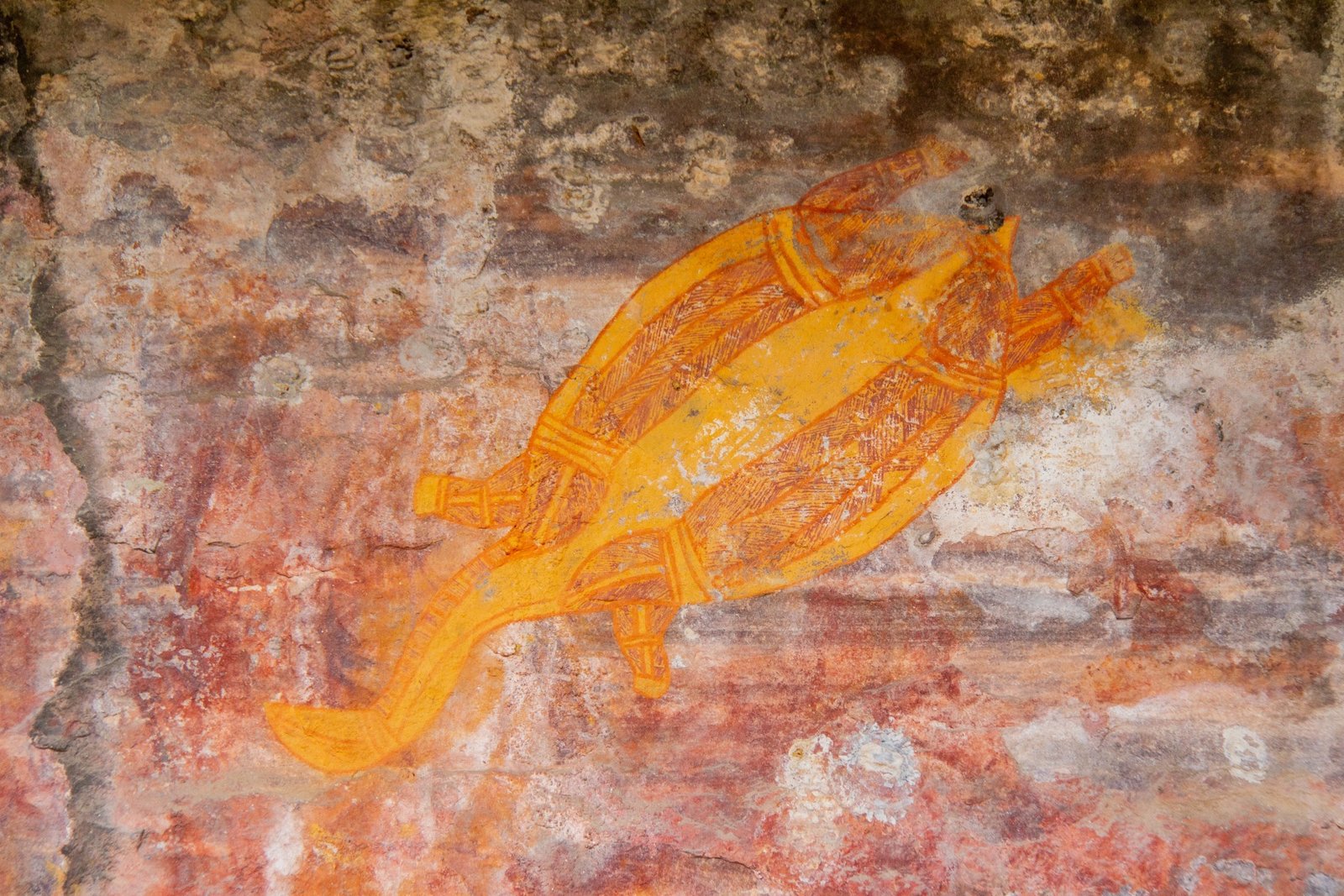
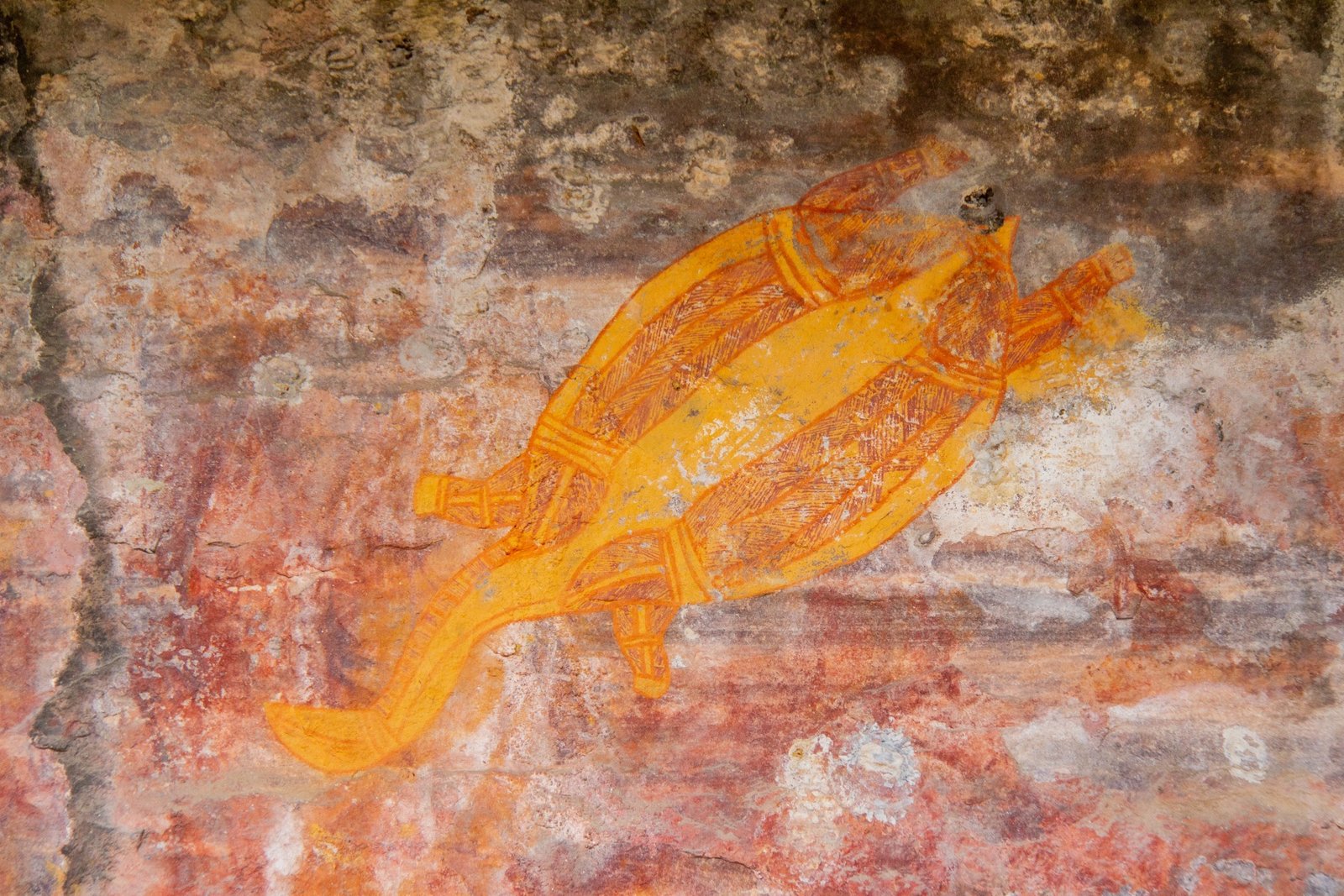
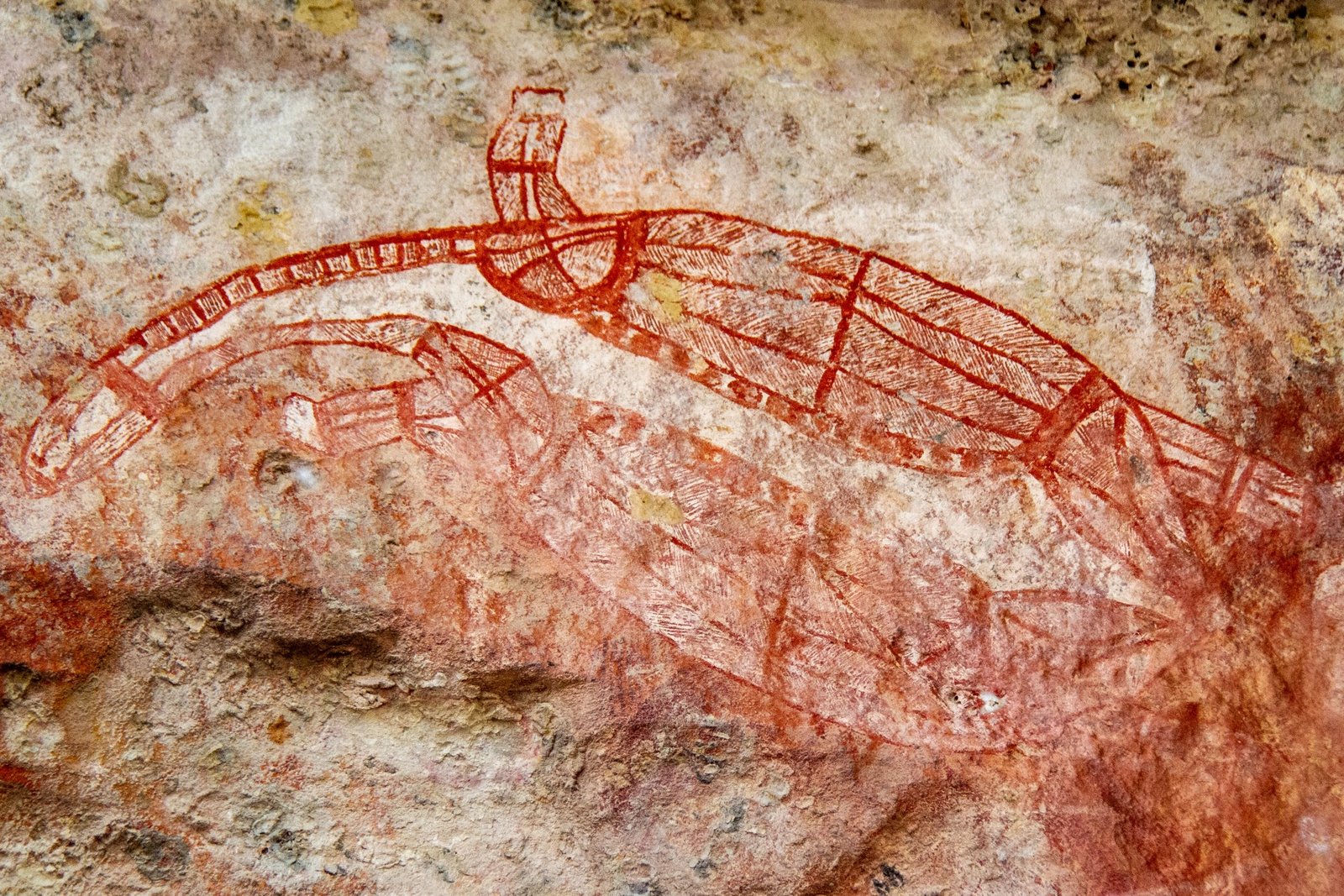
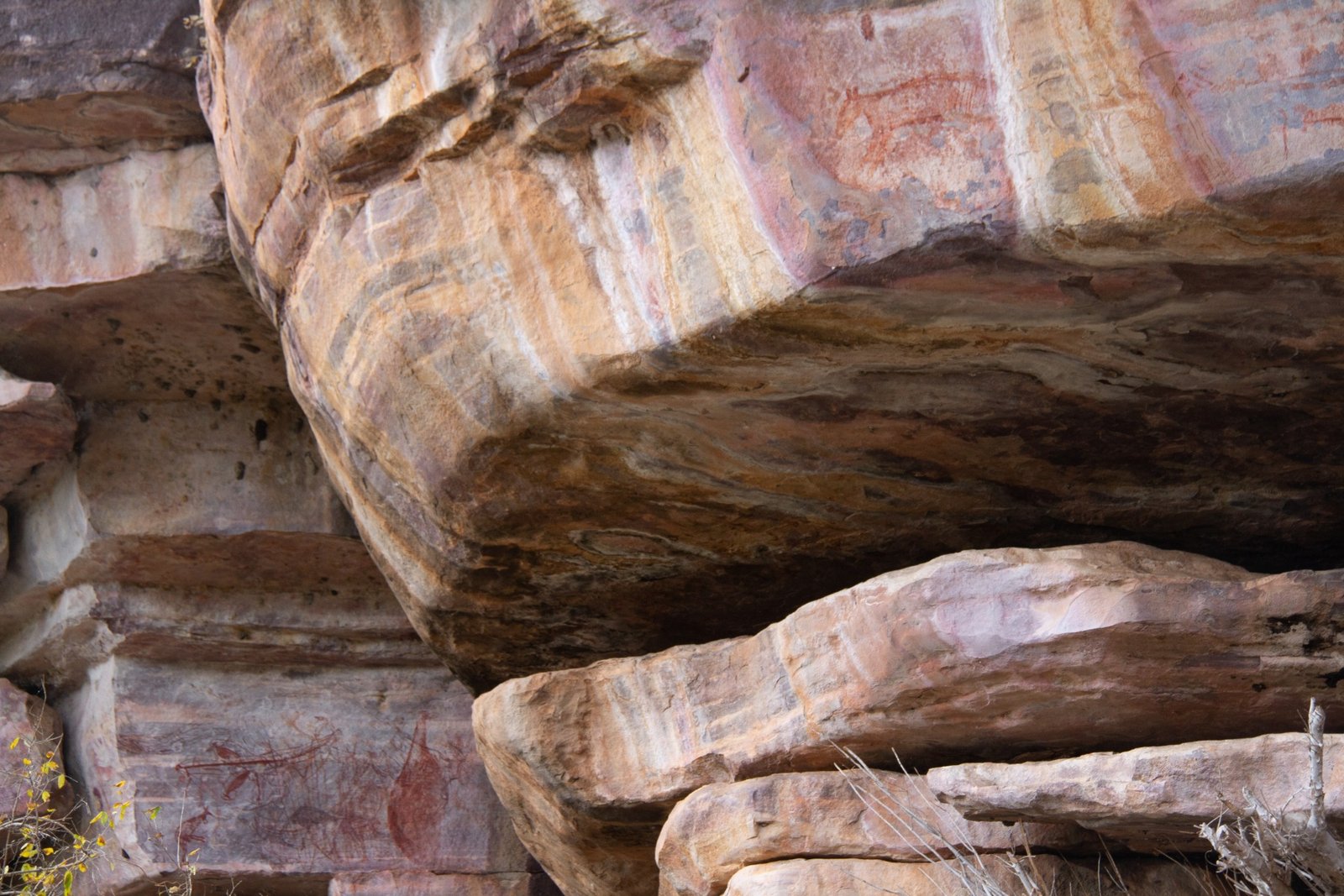
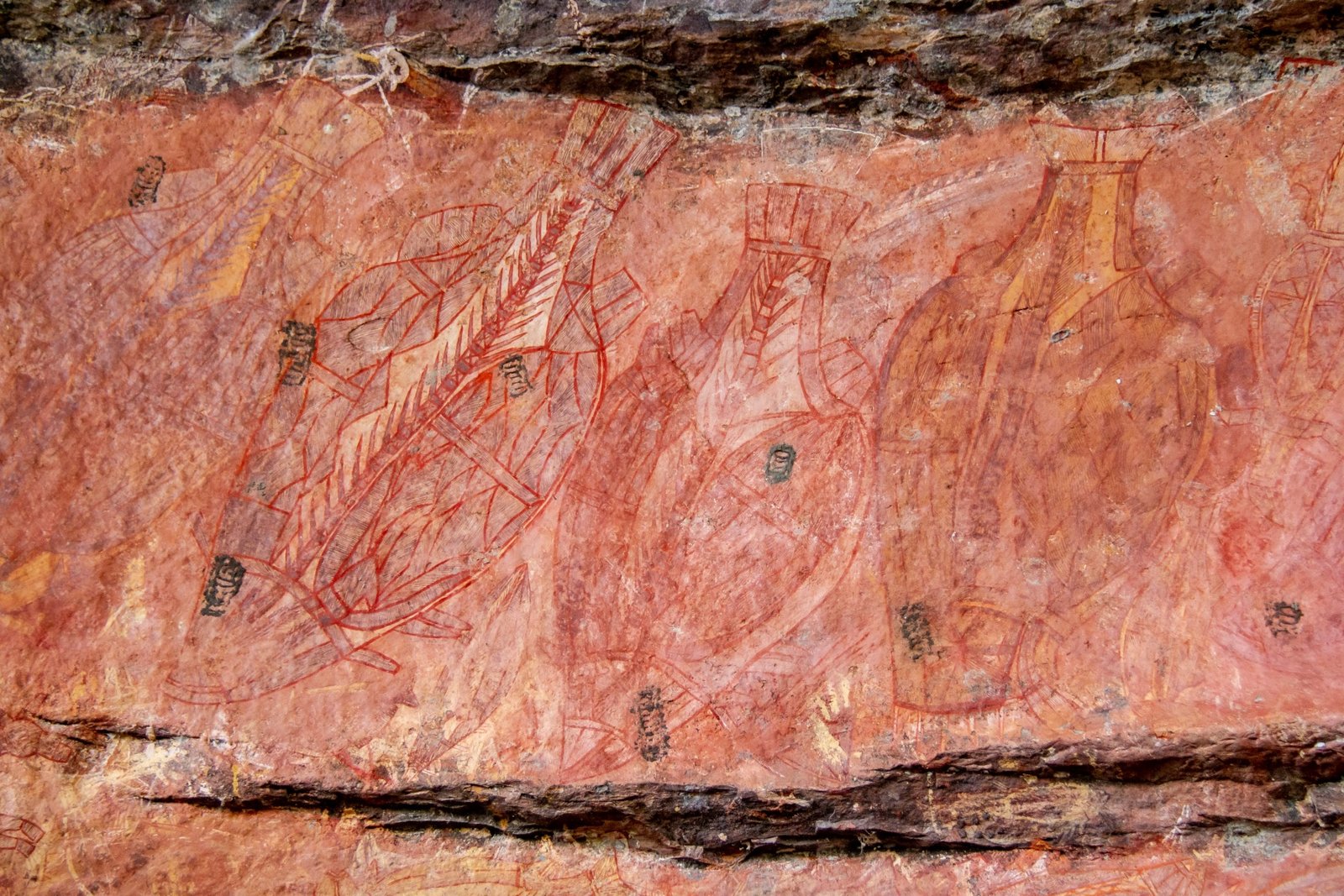
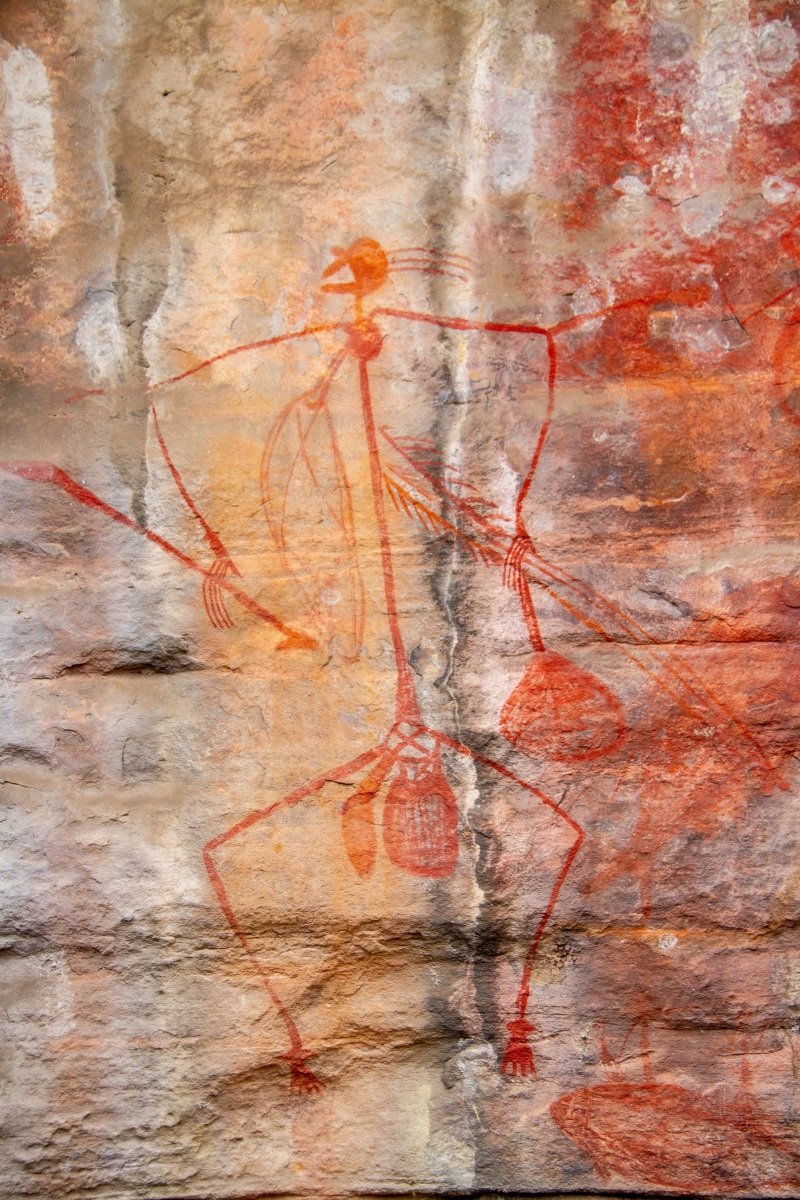
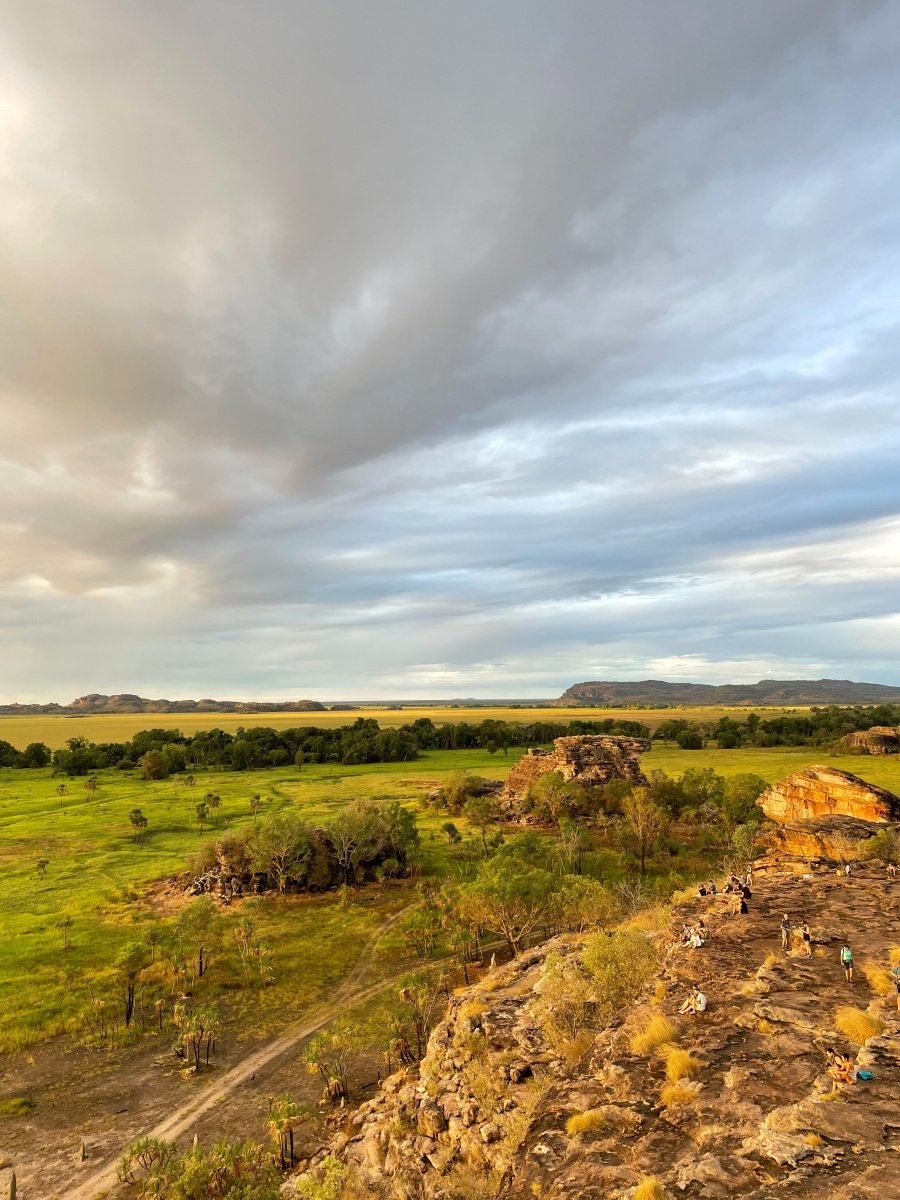
Ubirr is a formation of rocks overlooking the Nadab floodplain in Arnhem Land, which are great to watch the sunset from. There is also some amazing rock art, lots of paintings of the local food from the past few thousand years, one is almost like a menu [Anna: There was also an awesome painting of a Thylacine, which a lady who doesn’t understand the concept of geological time, continental drift/sea level change or human-induced extinction believed was fake because “Tasmanian Tigers only lived in Tasmania”].
On the walk to the top we stop into the different art sites, some are hard to see with the low sun directly on them – we’ll come back tomorrow to get a better look. But even this half look is incredible, the X-ray style used often here is so detailed! It’s quite stunning.
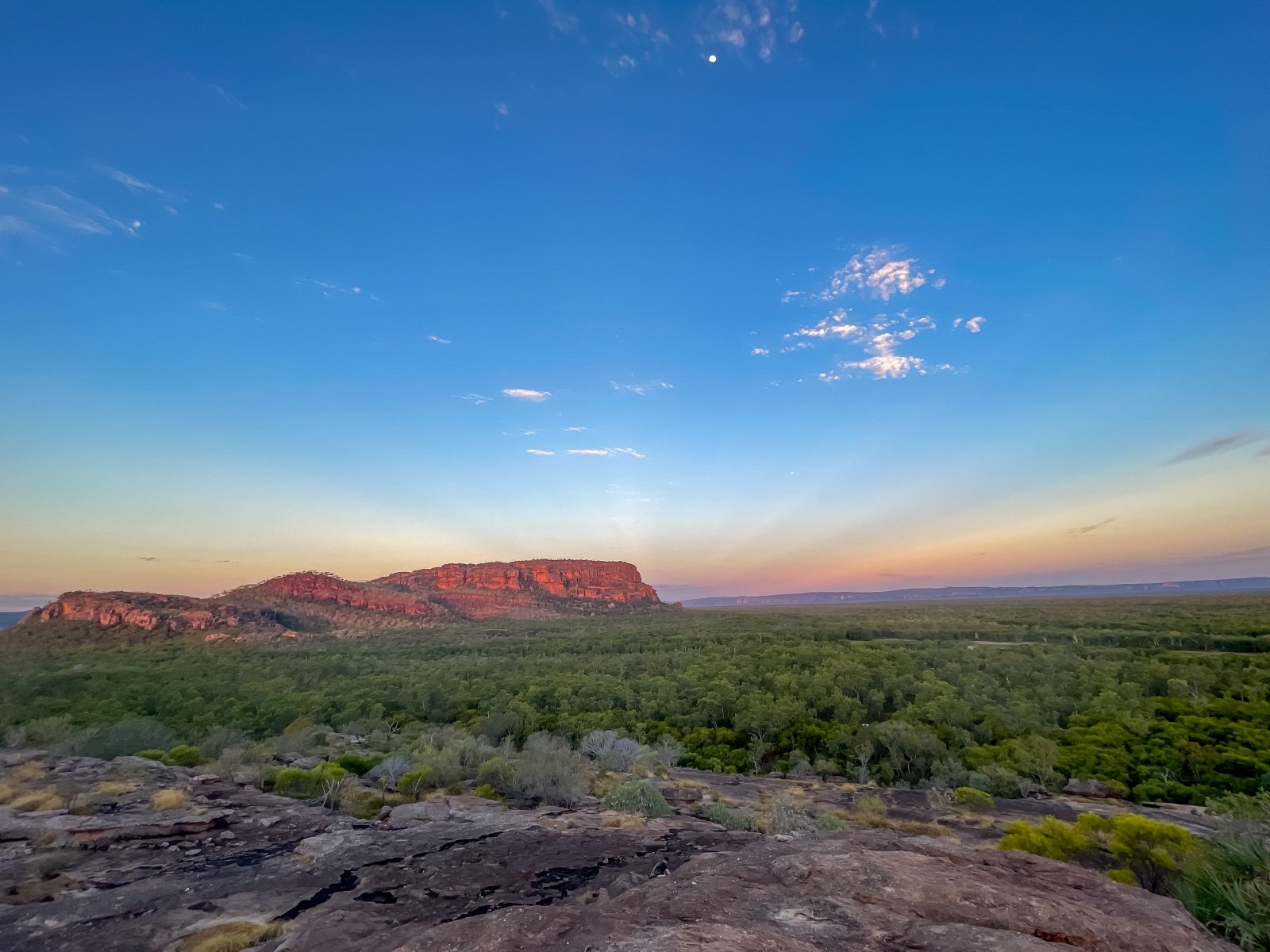
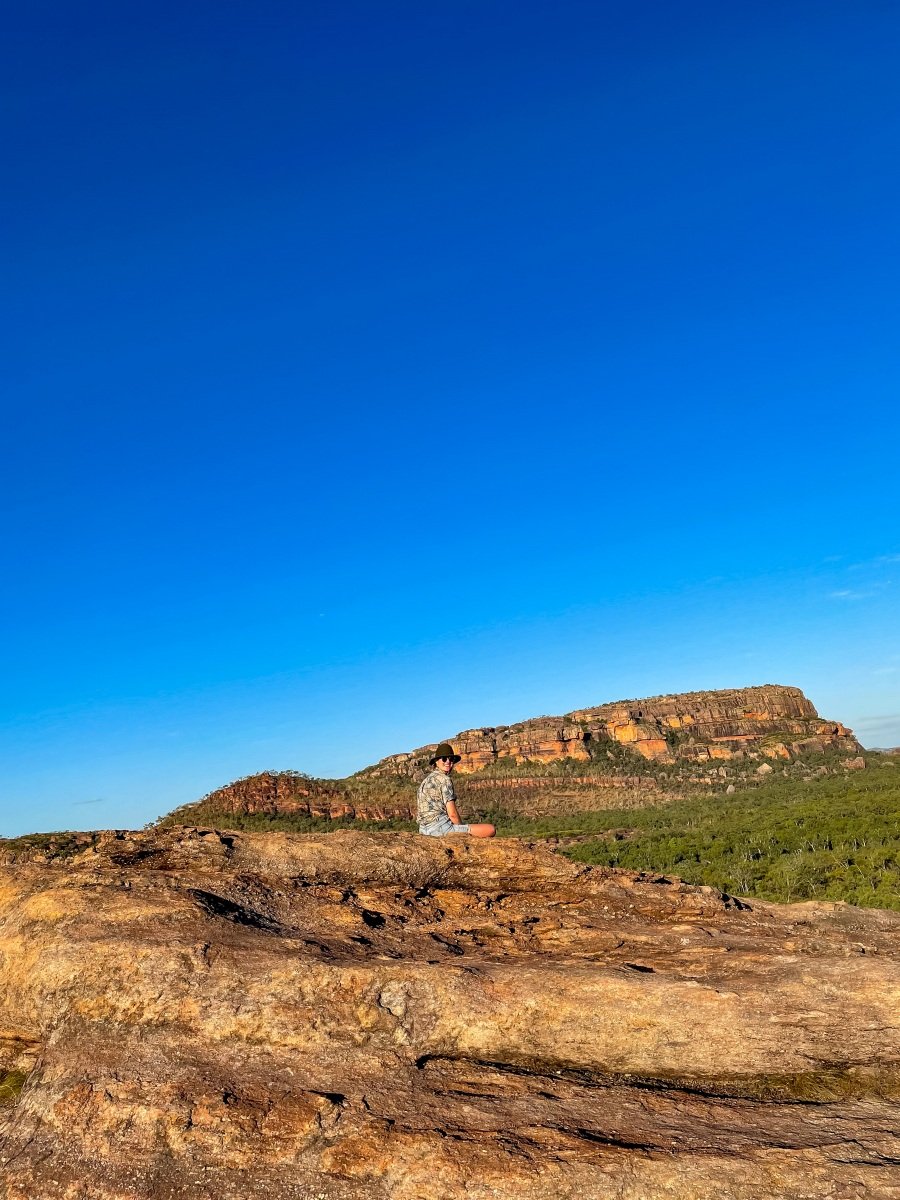
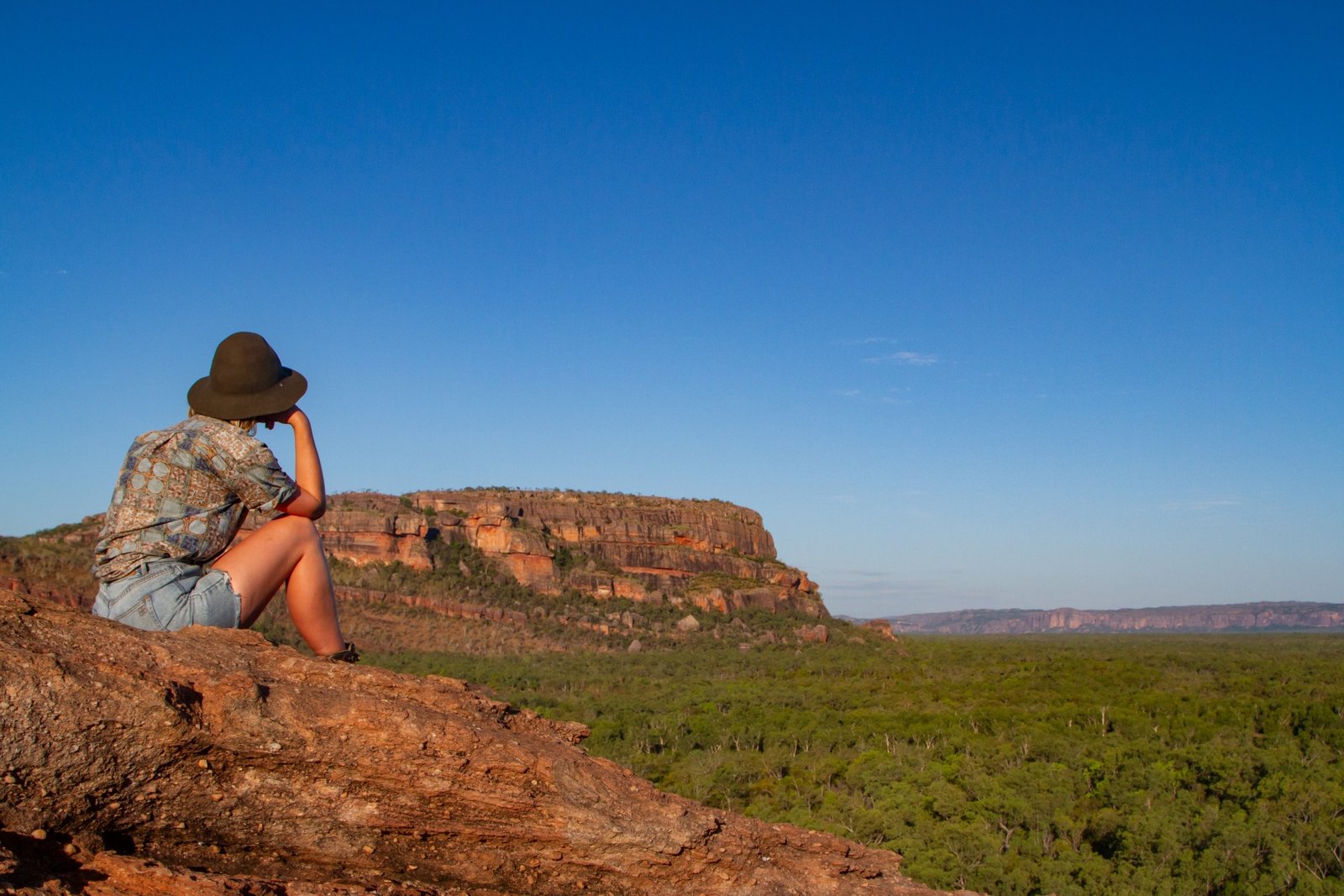
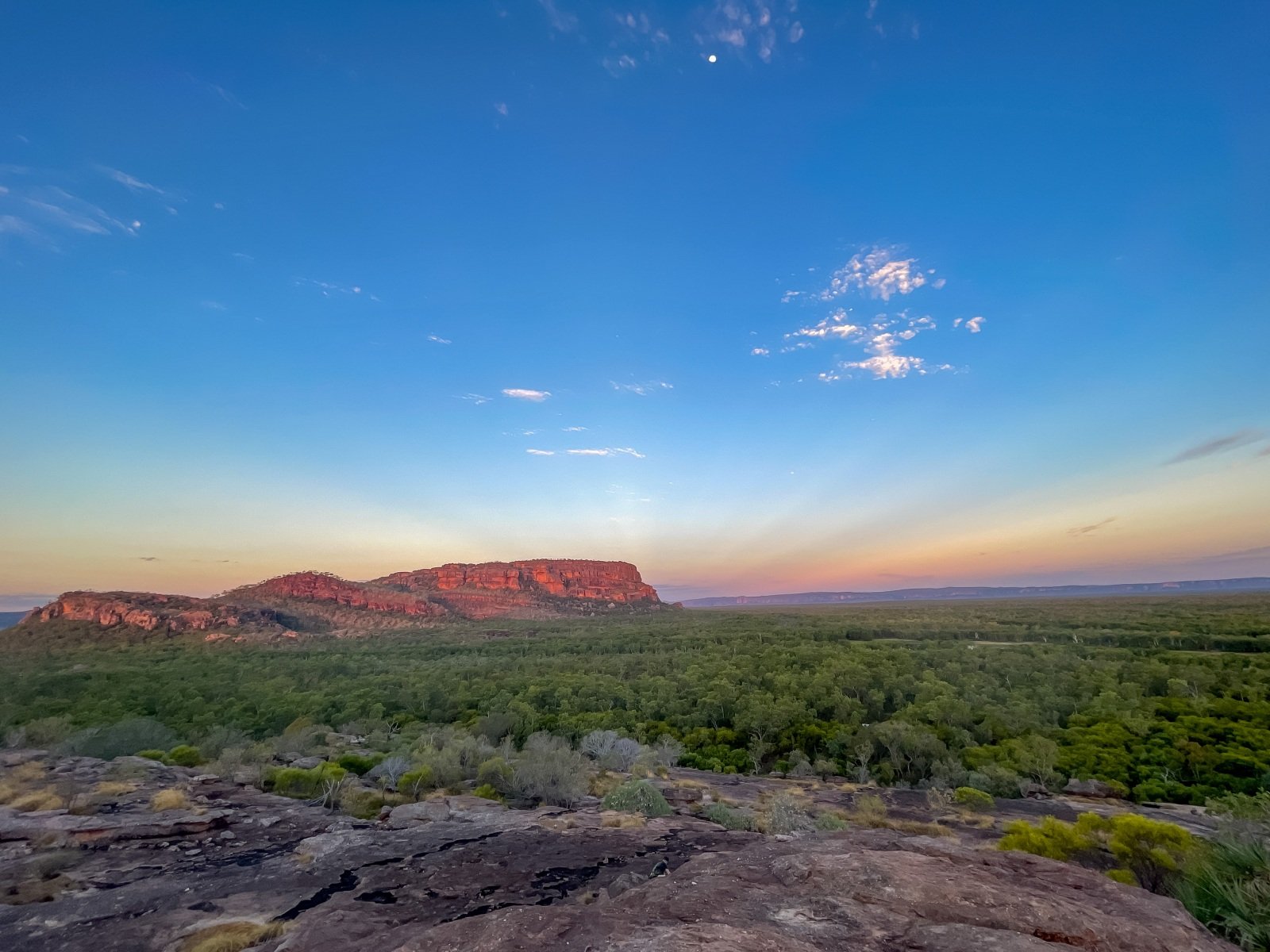
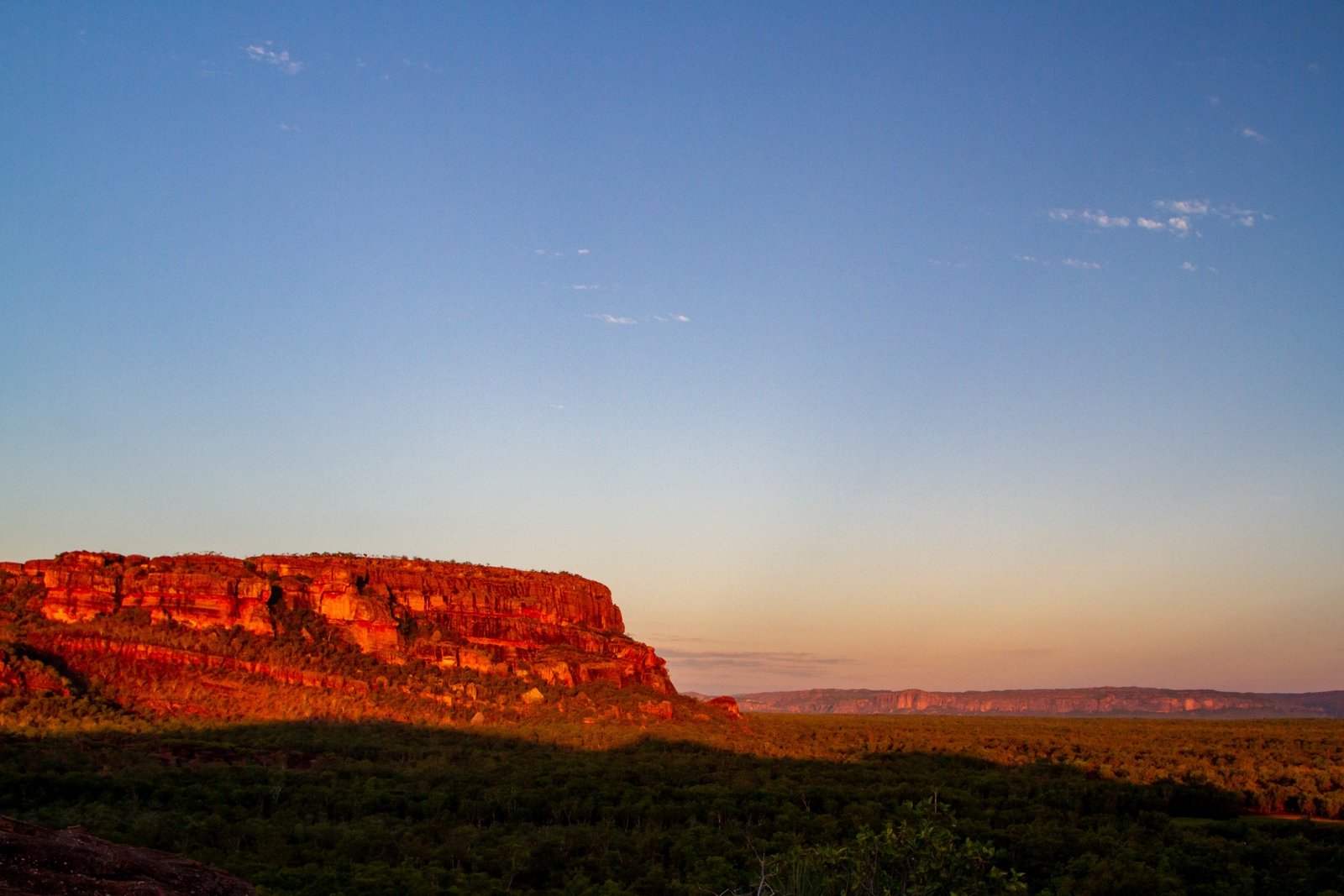
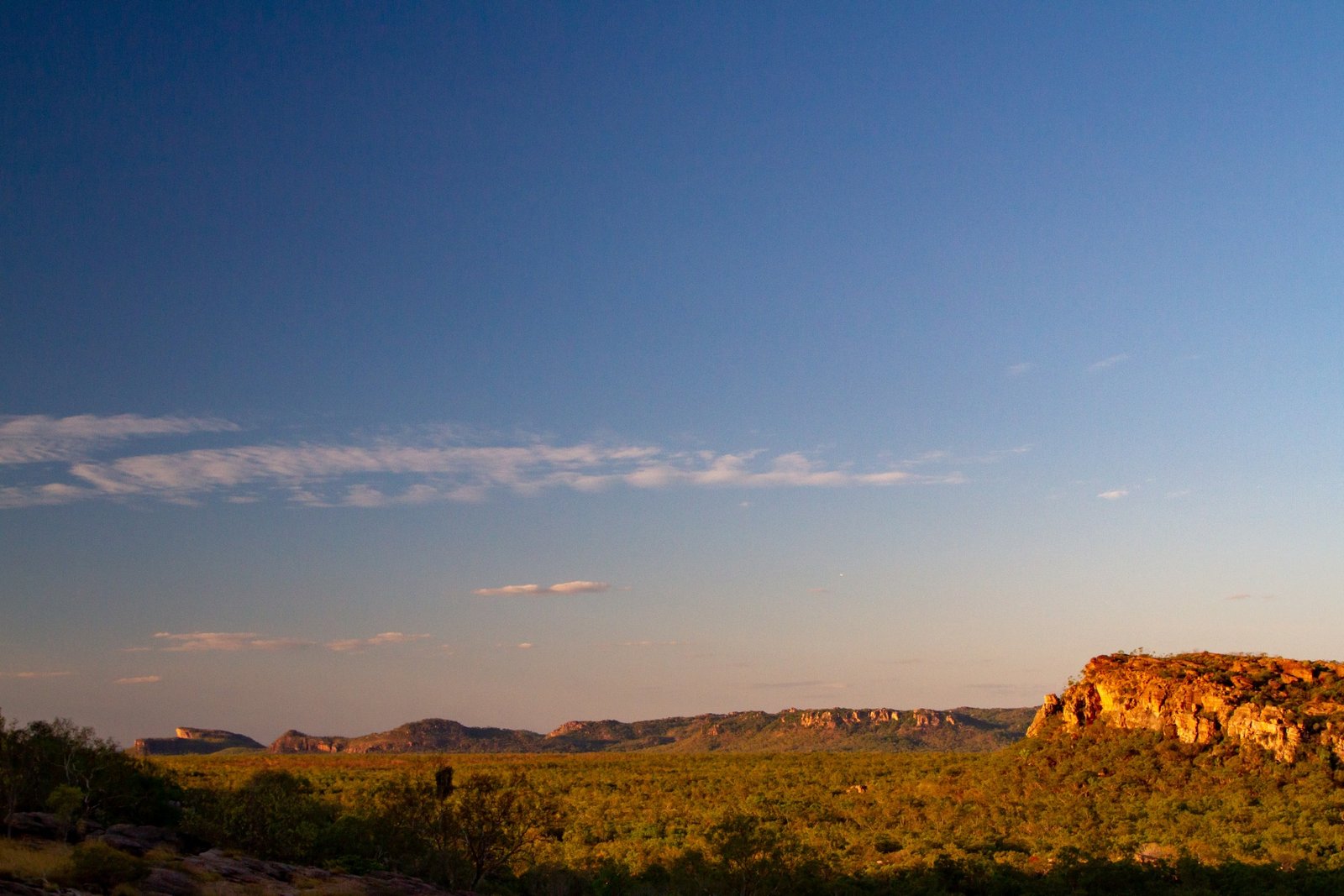
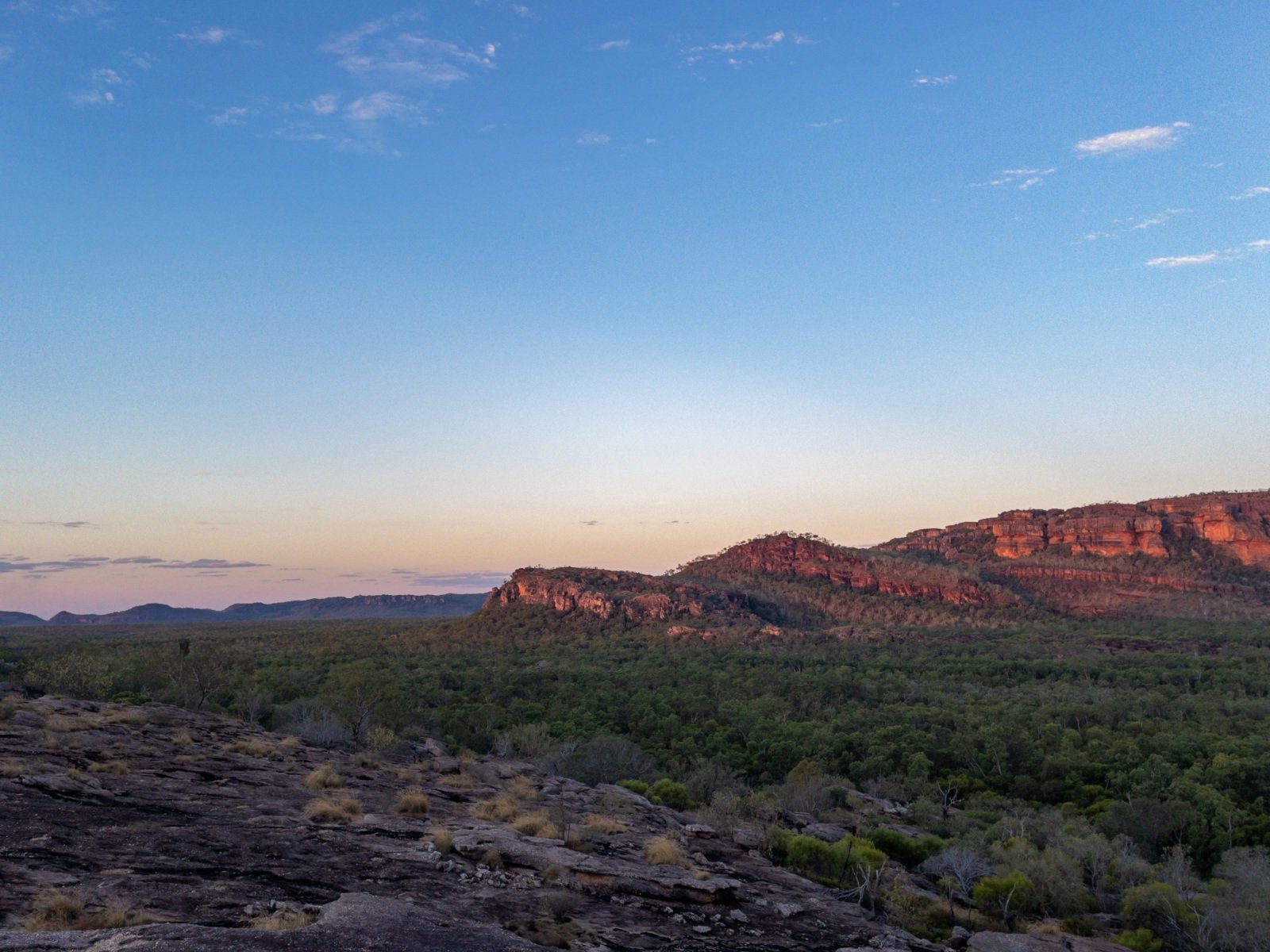
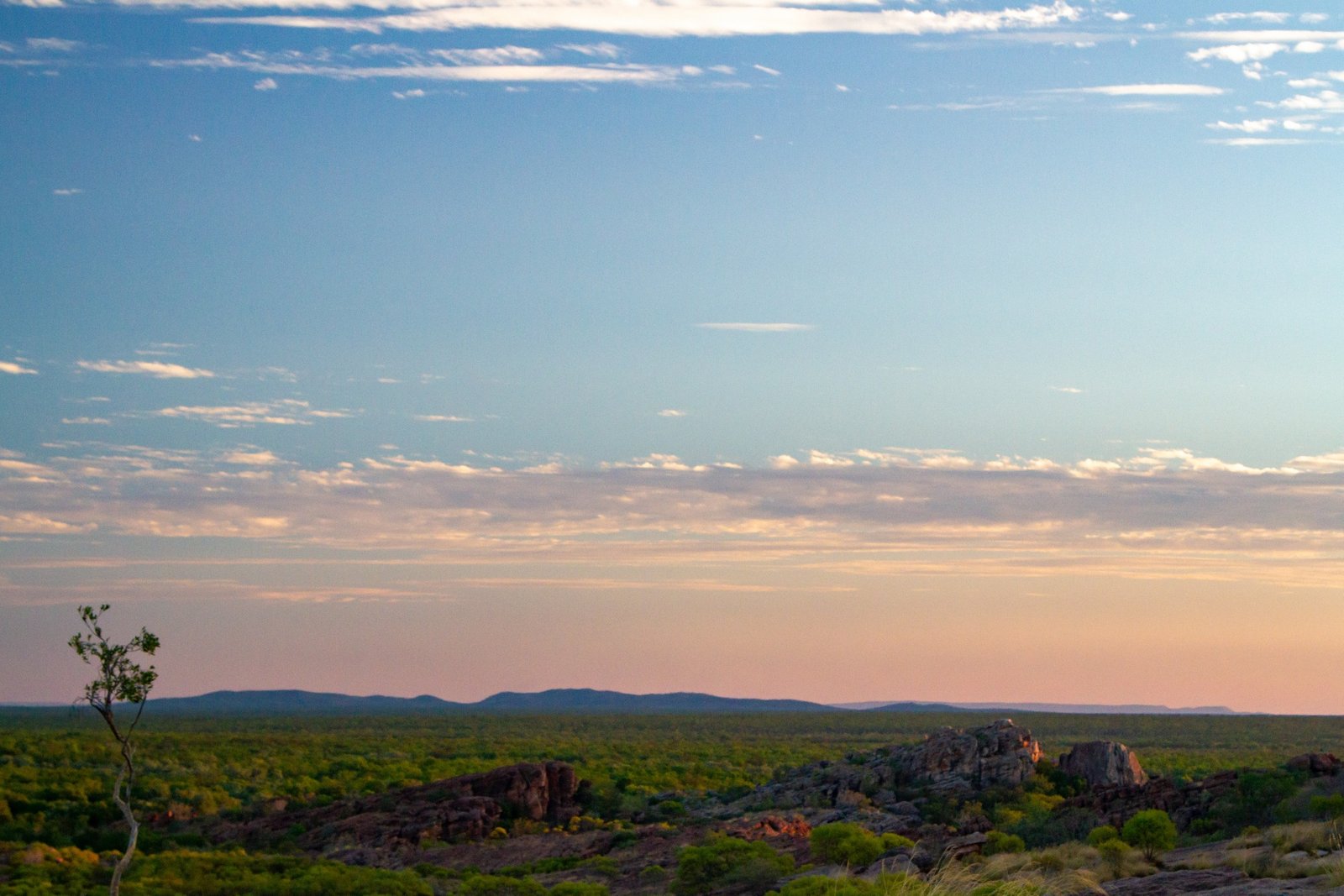
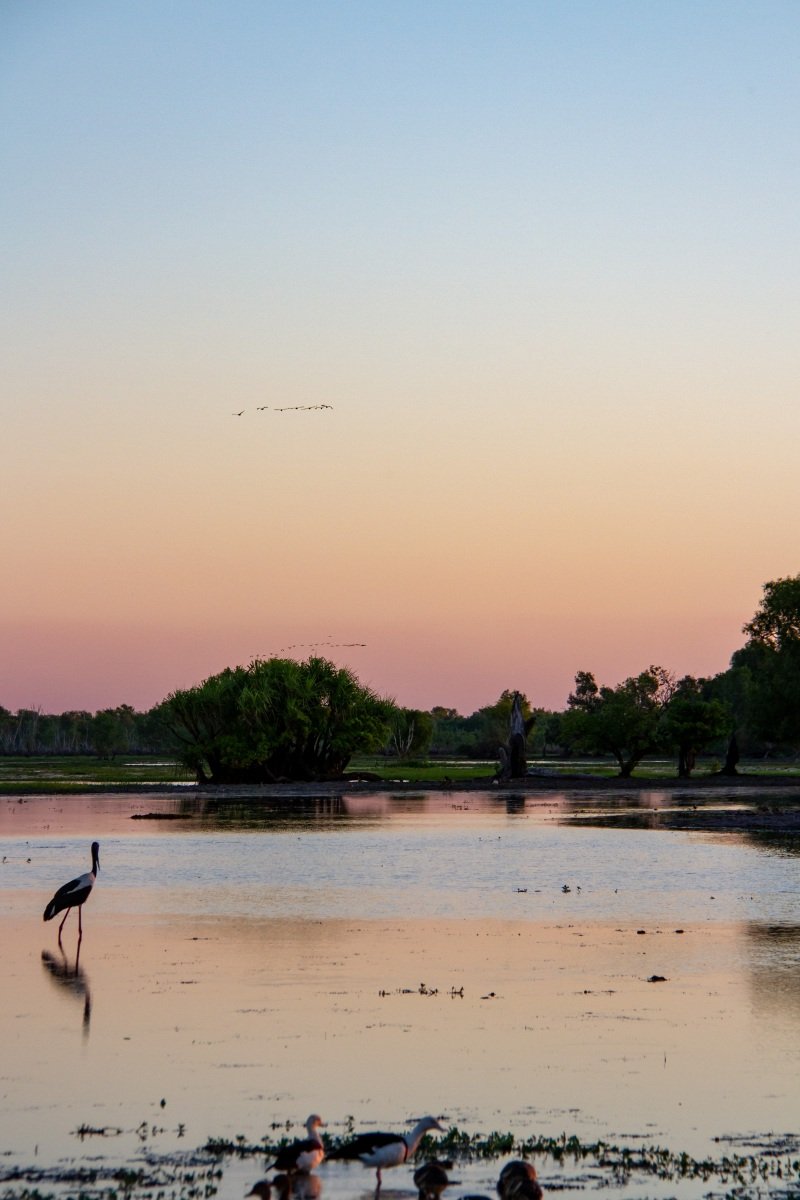
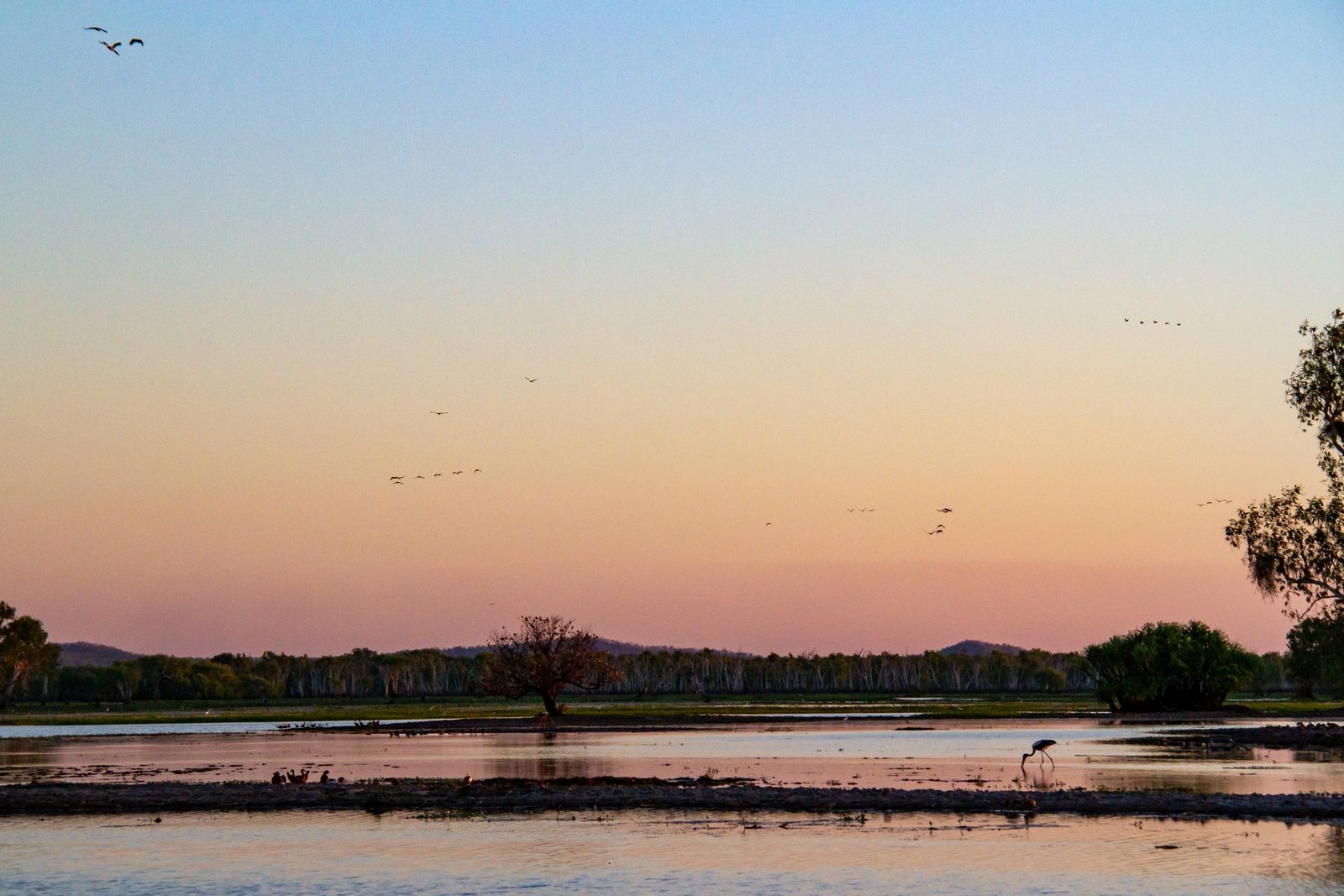
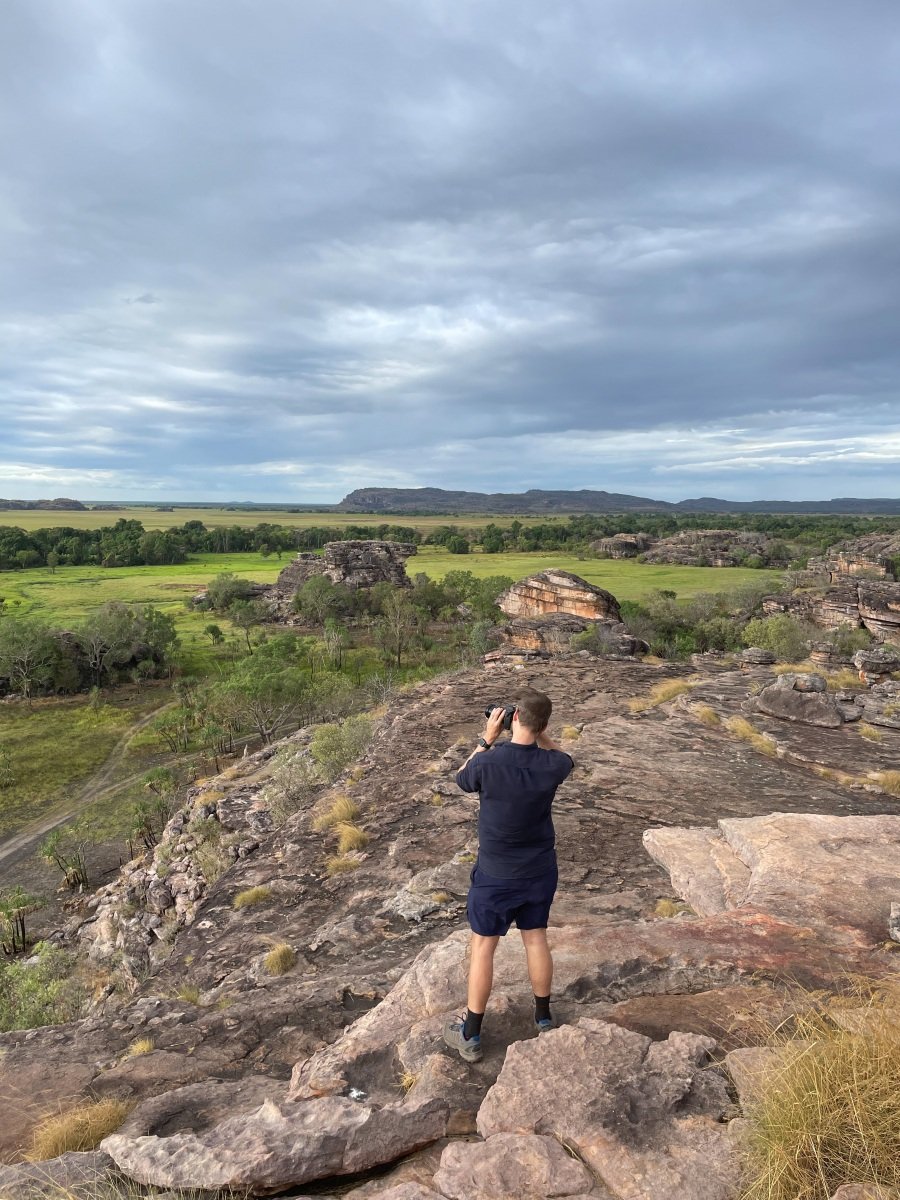
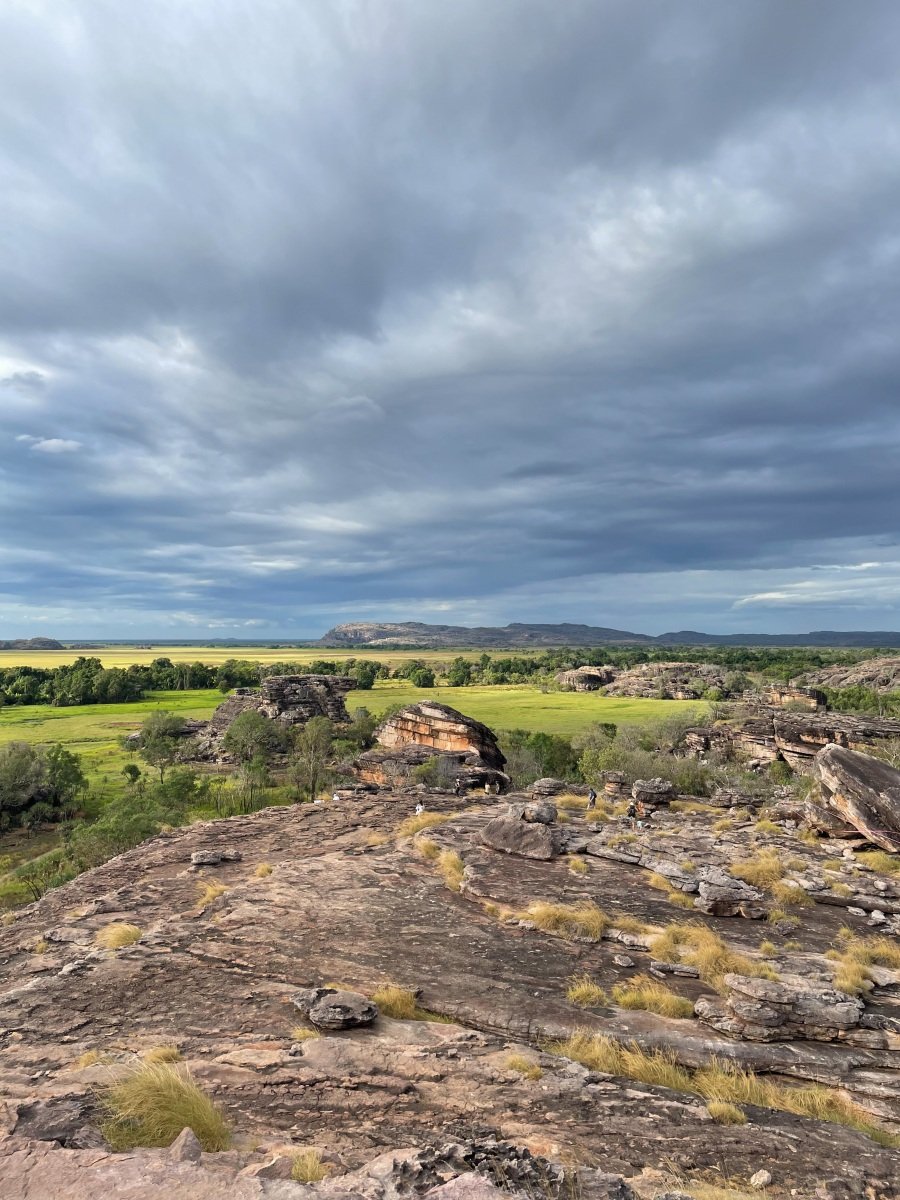
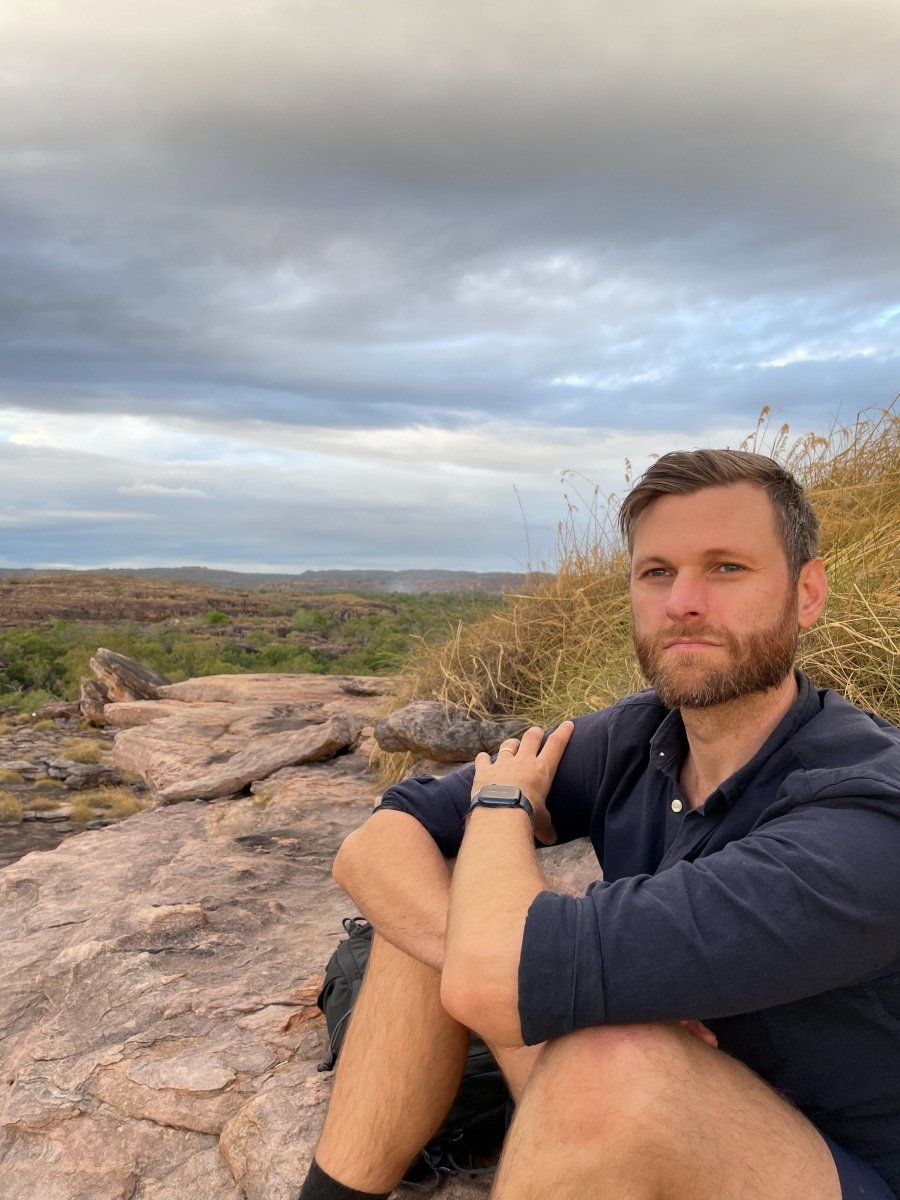
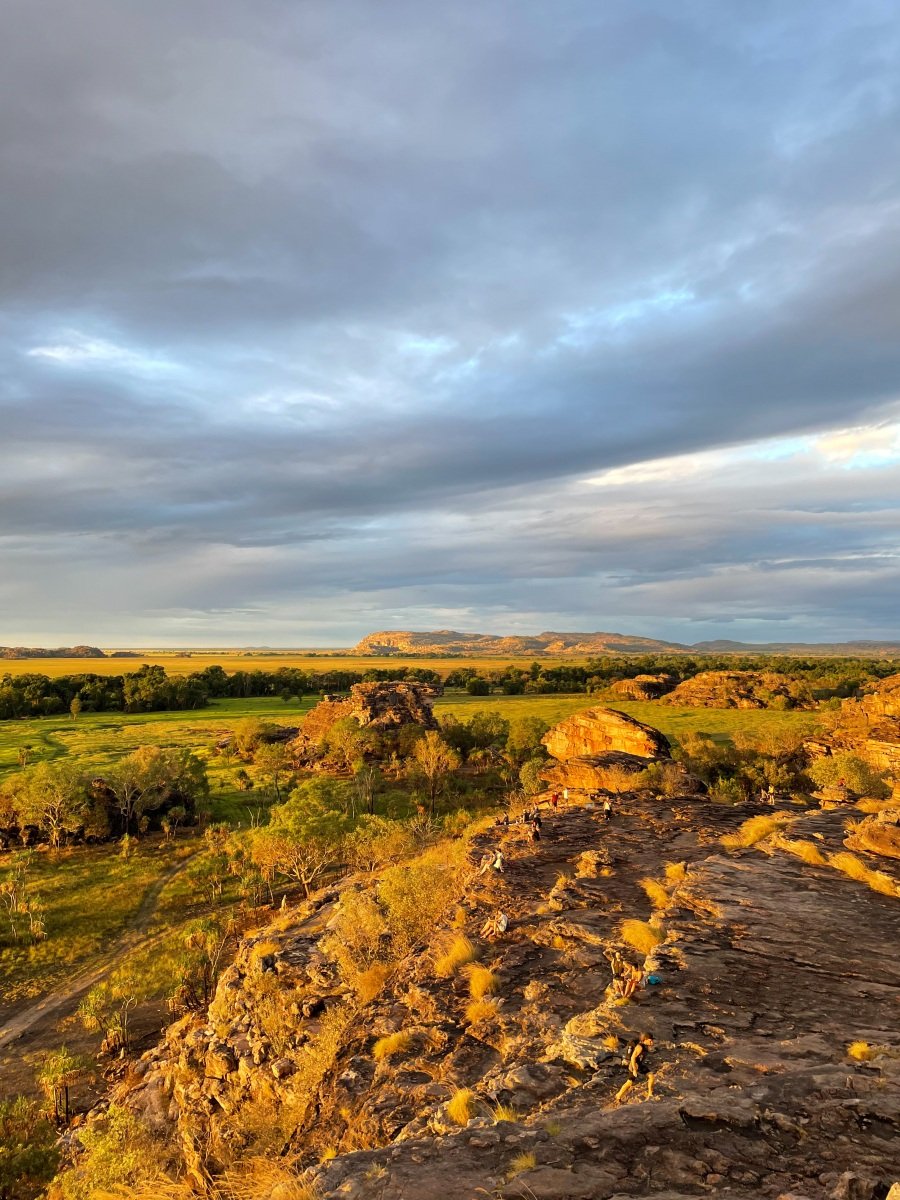
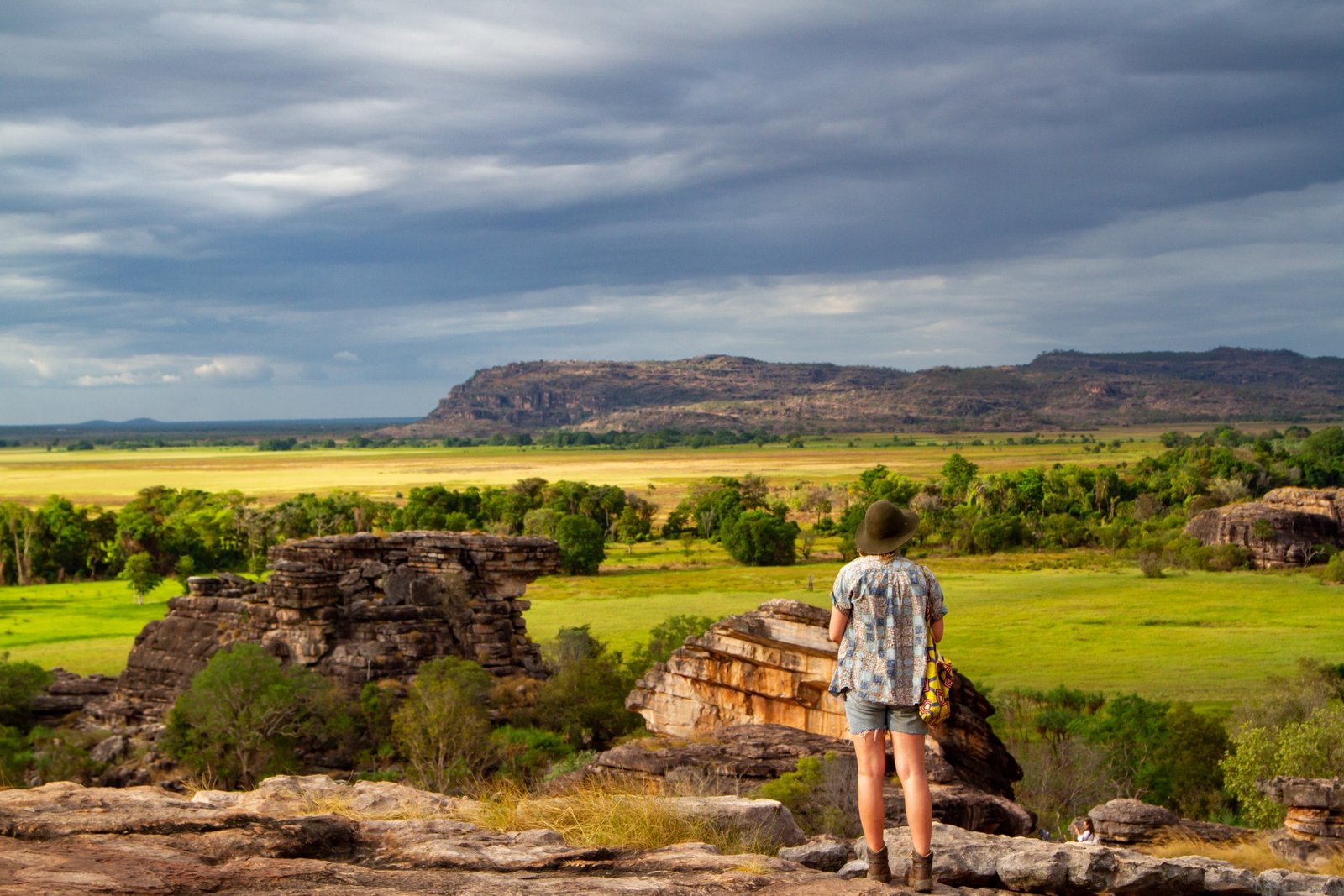
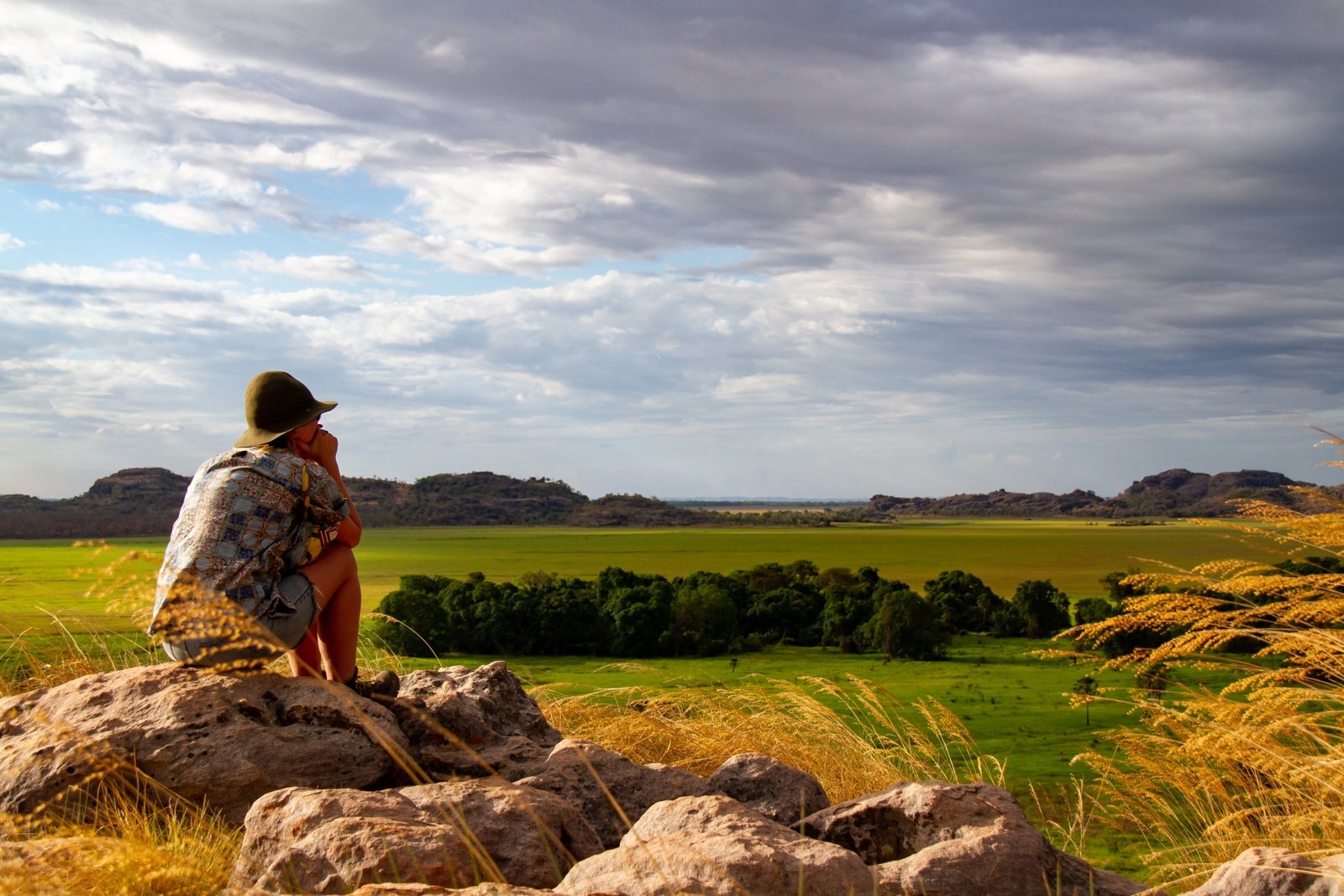
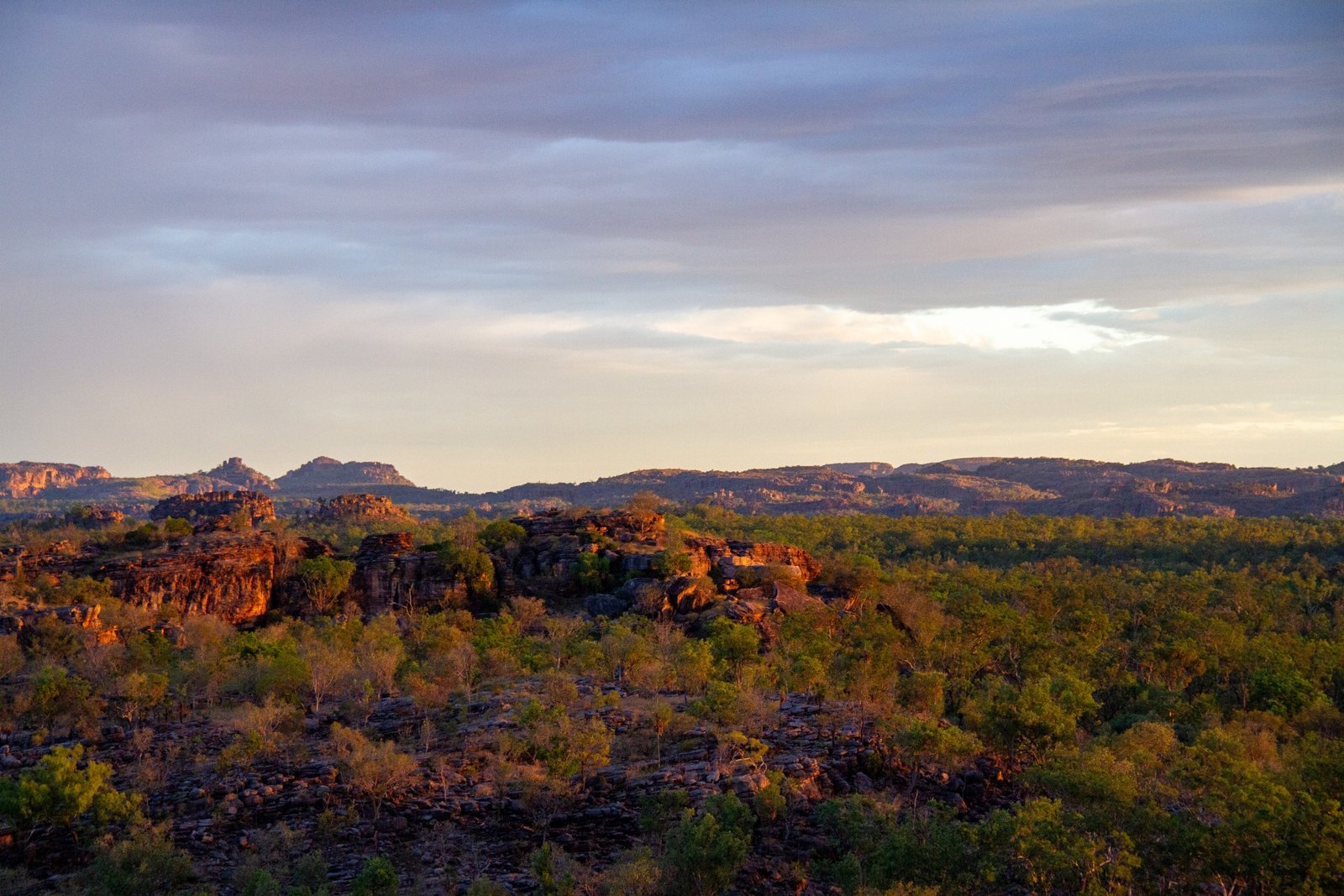
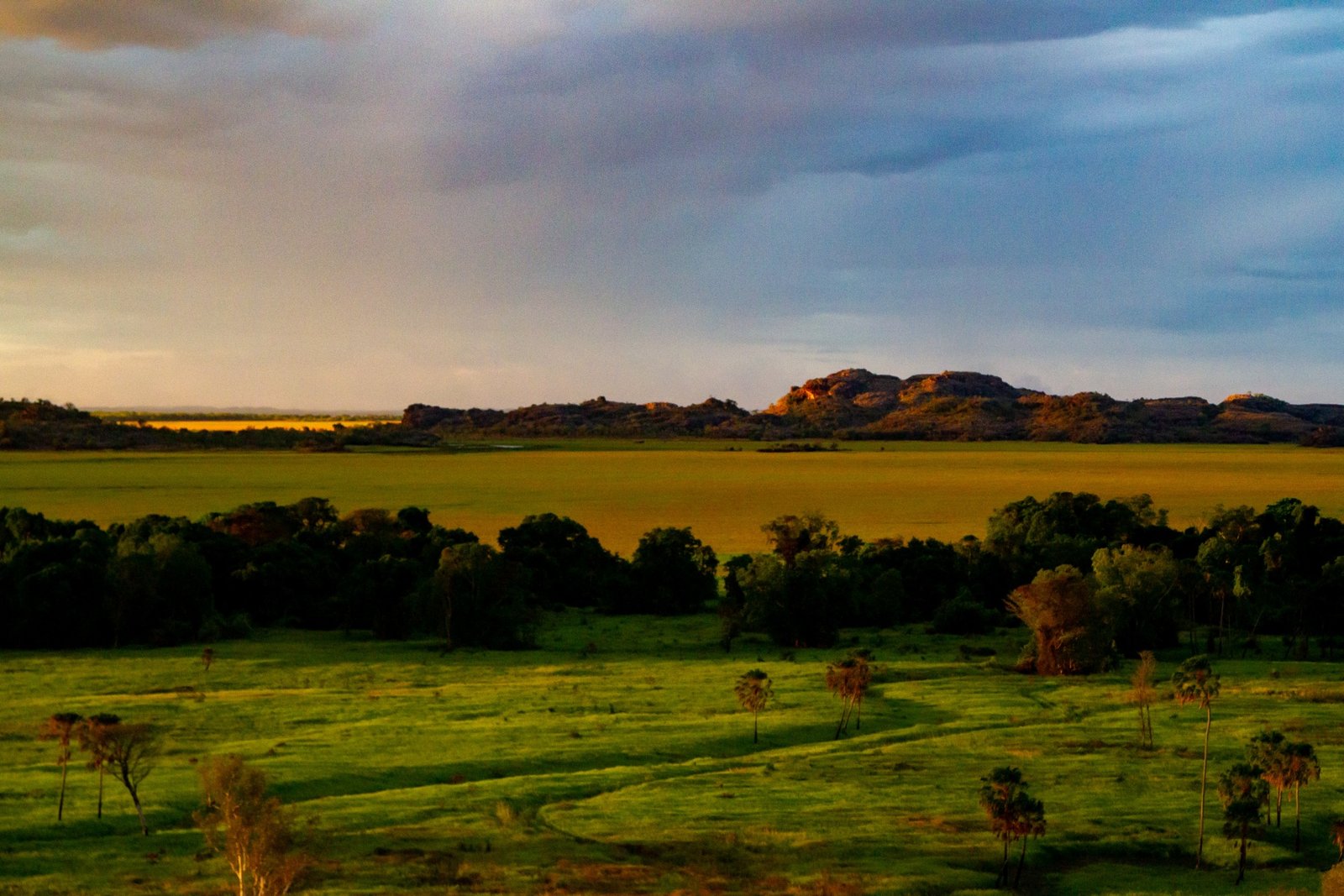
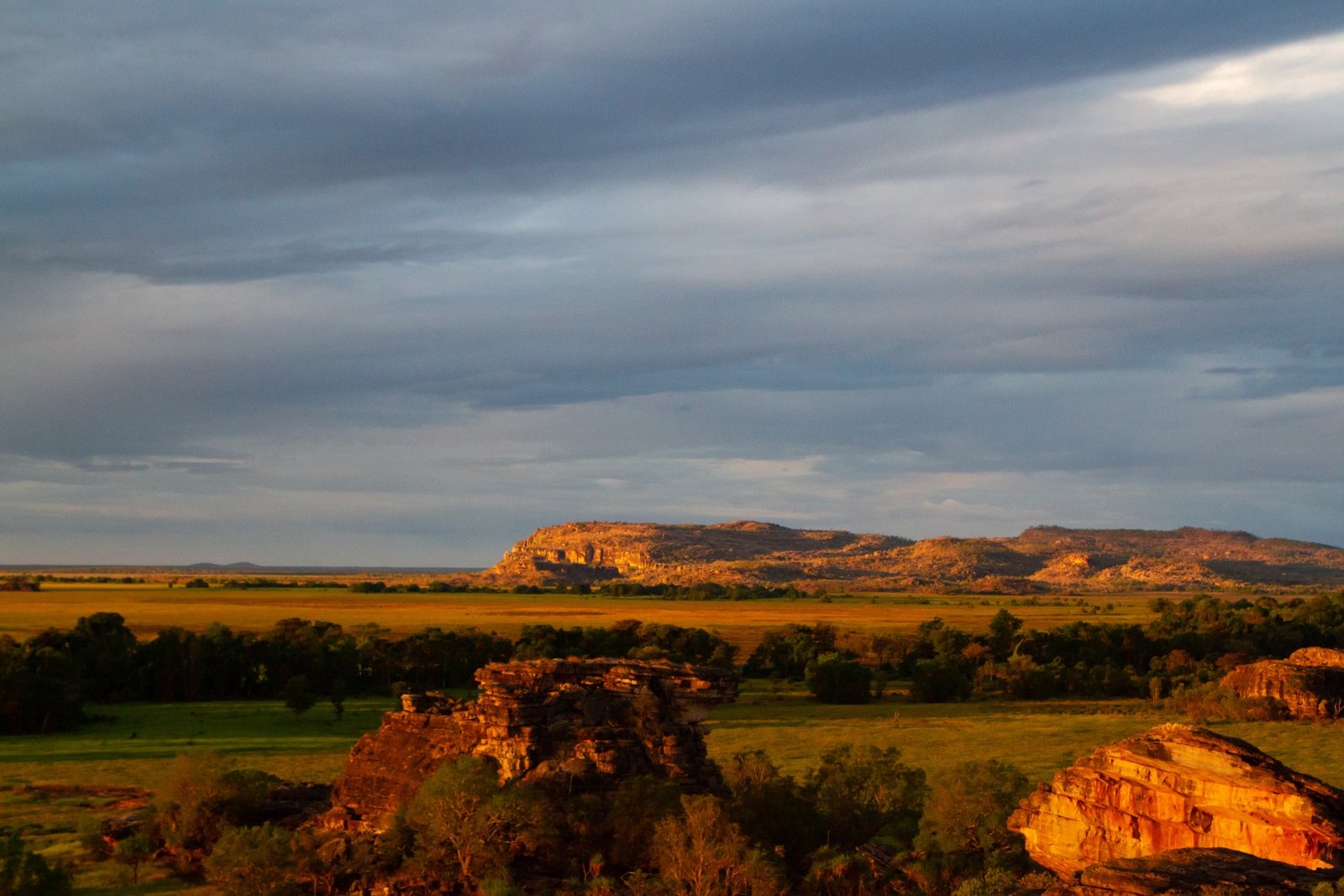
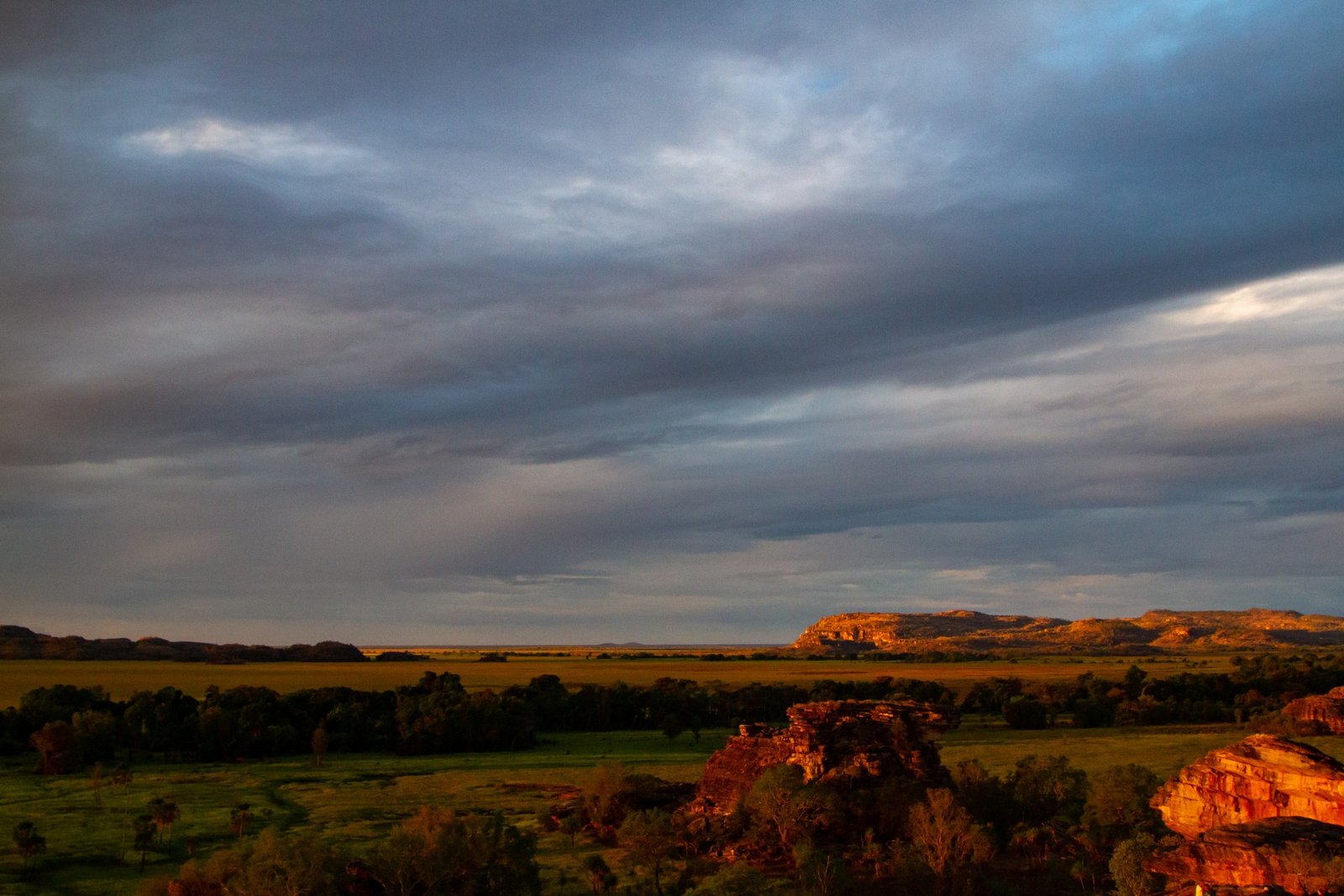
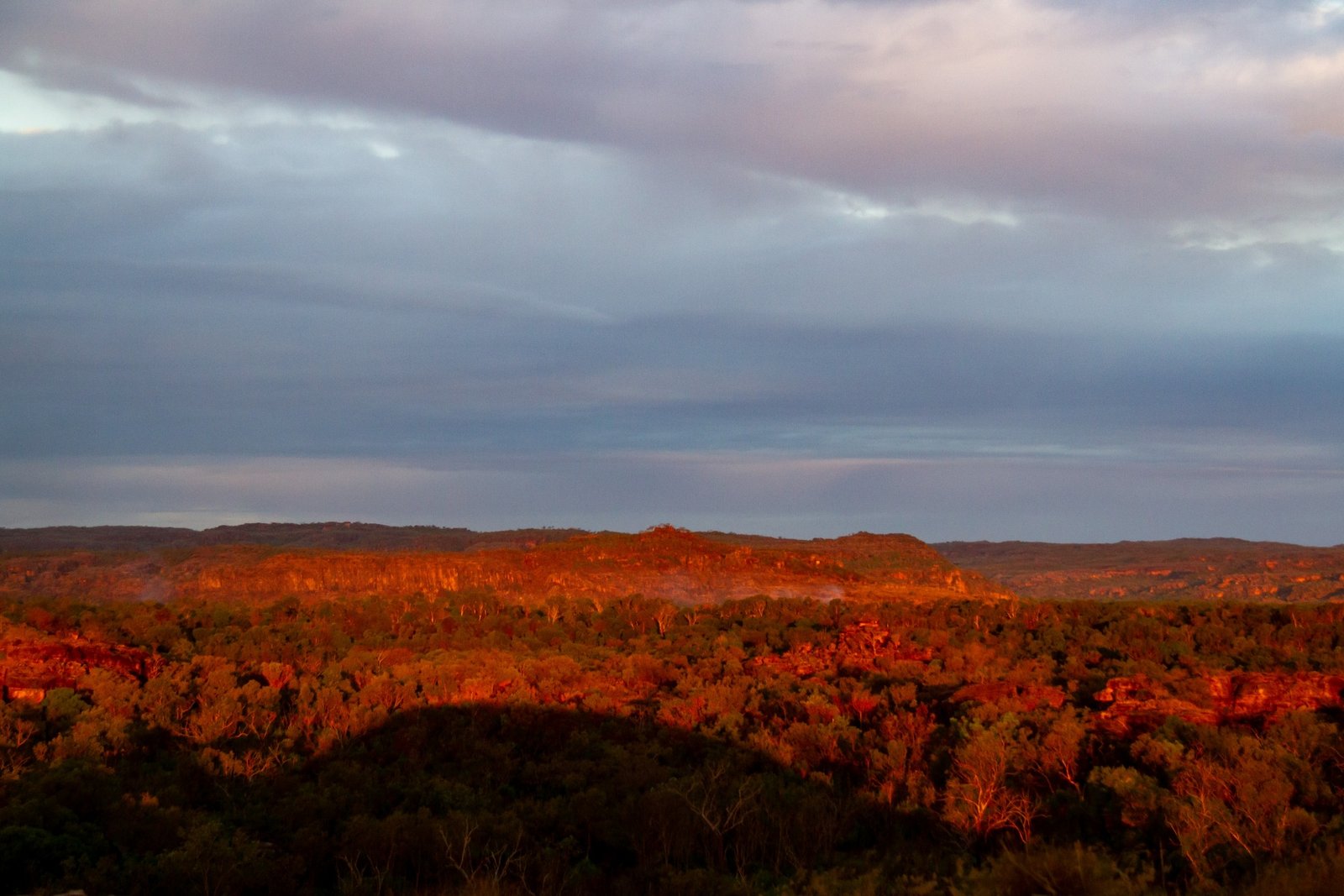
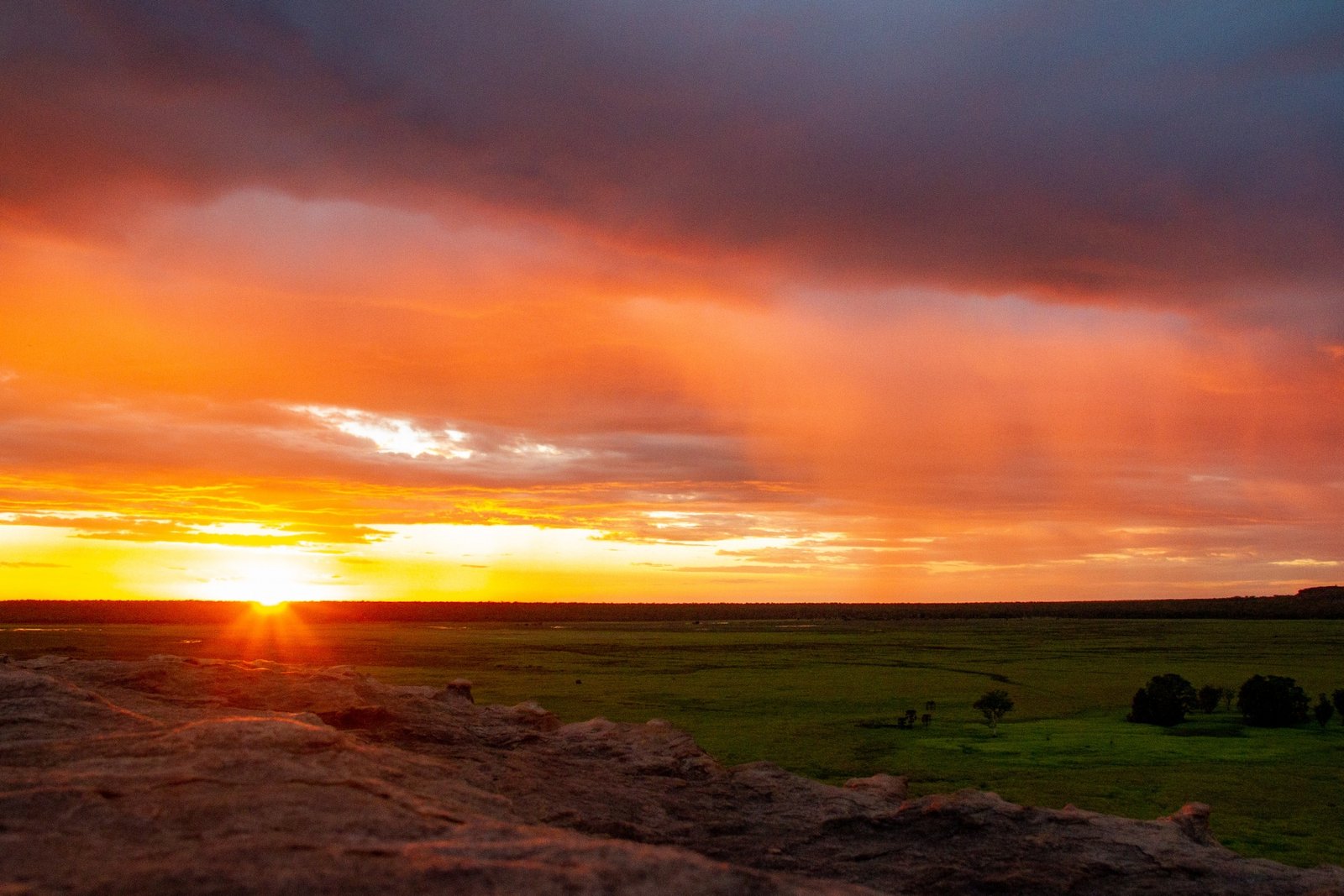
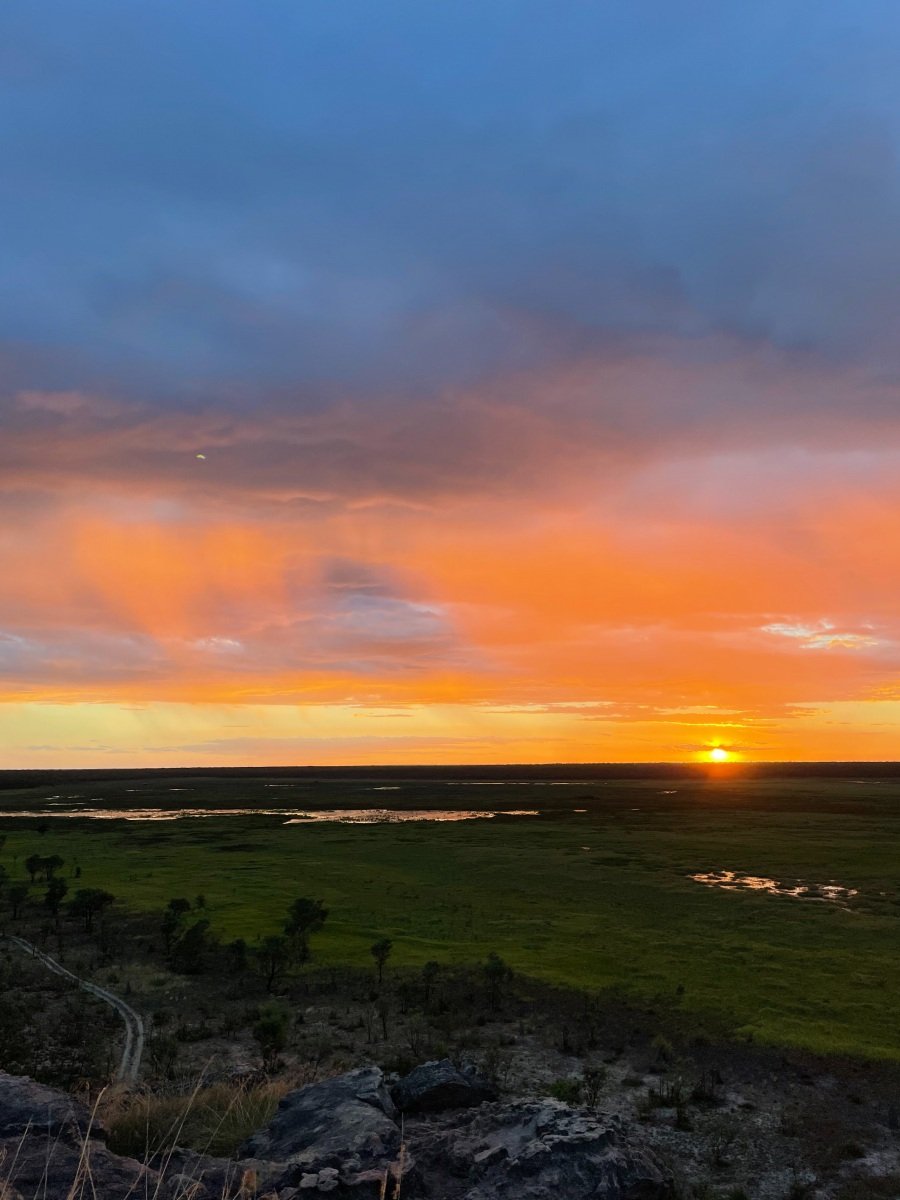
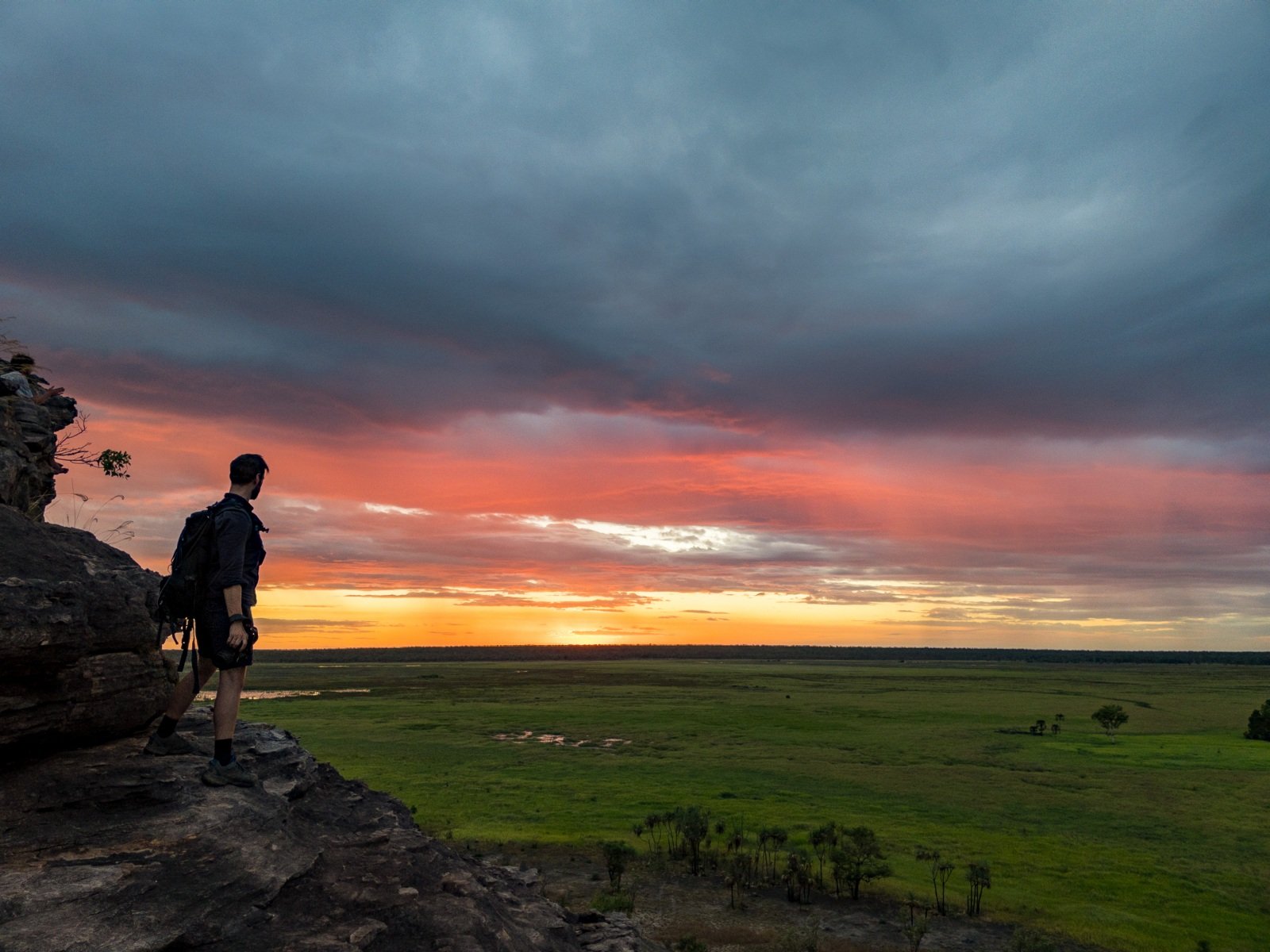
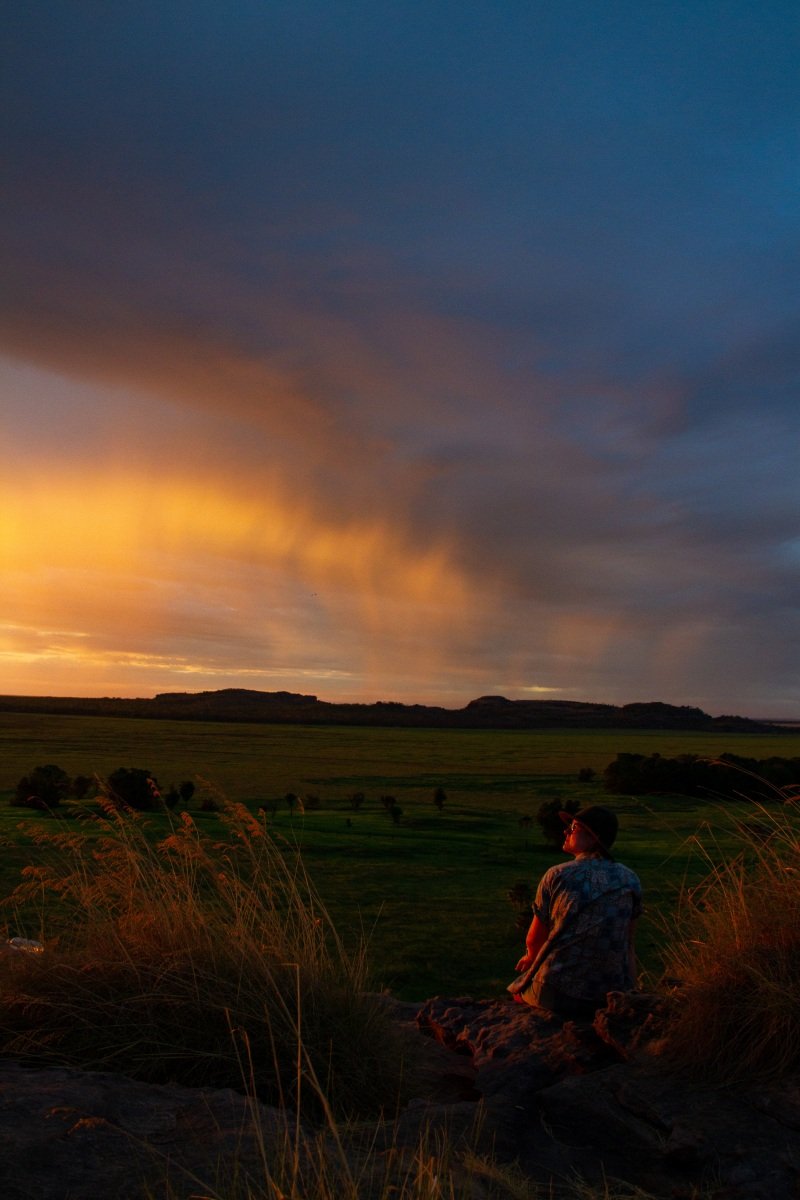
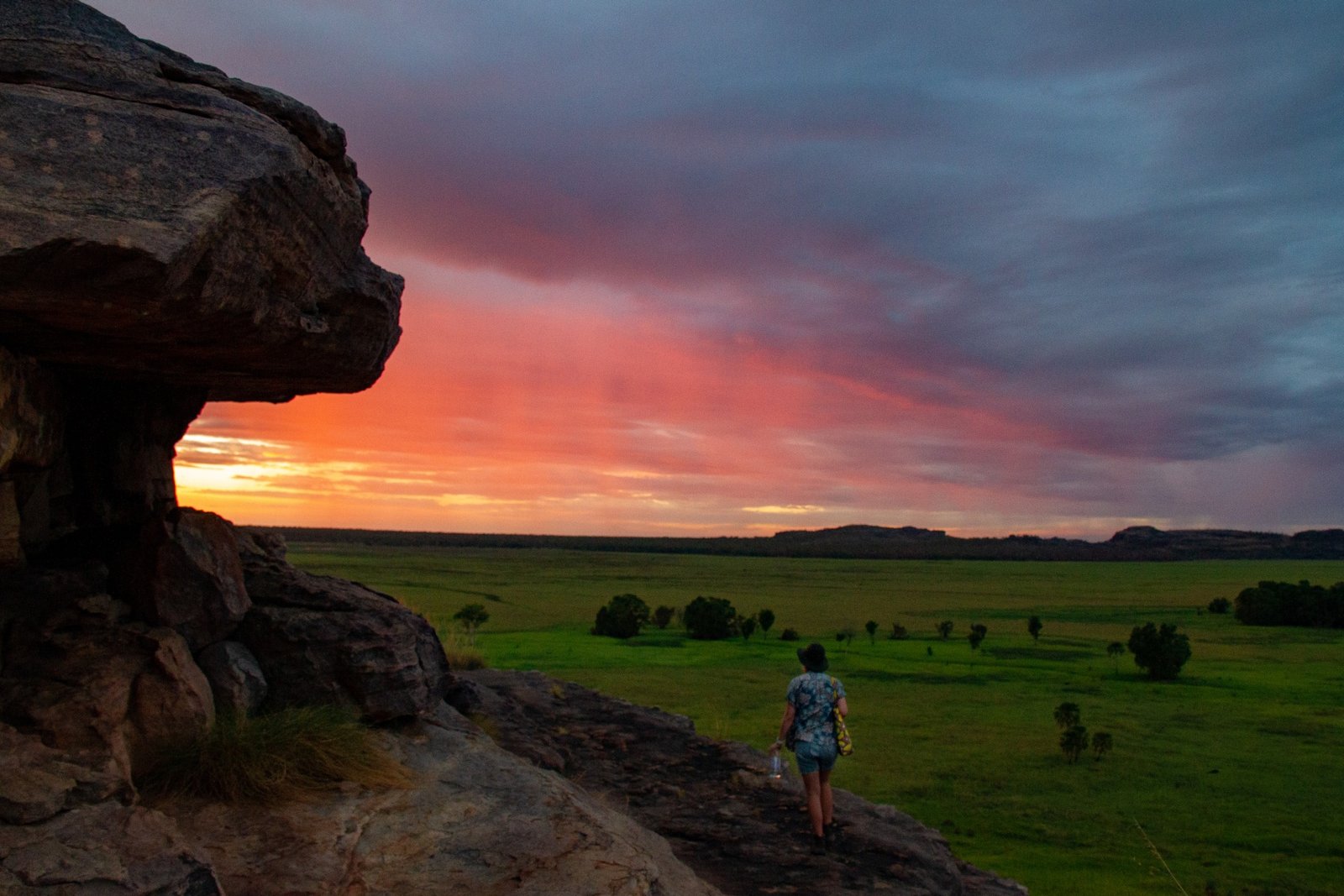
Higher up on the rocks we start to get a view of the surrounding countryside. In front of us a big floodplain made patchy with shadows by the clouds overhead. Around to our left there are green tree-covered hill and rocky outcrops with taller mountains in the distance behind. On our right is the lower parts of Ubirr and two great rock faces in the distance, separated by Nadab’s green plain. Finally, behind us is a long wide section of low green bushland stretching into the distance, from which small fires trail pale smoke into the evening air.
The spinifex around us starts to catch rays of golden light, as does the Ubirr rock face.
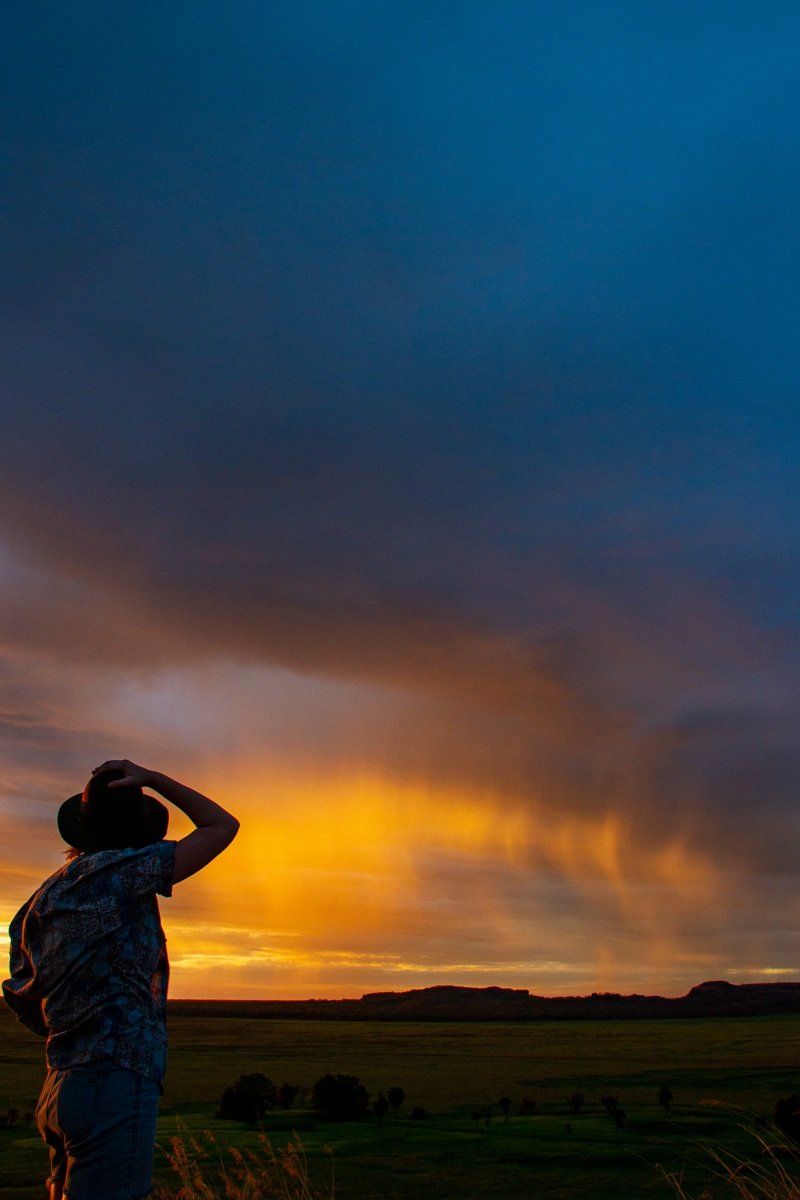
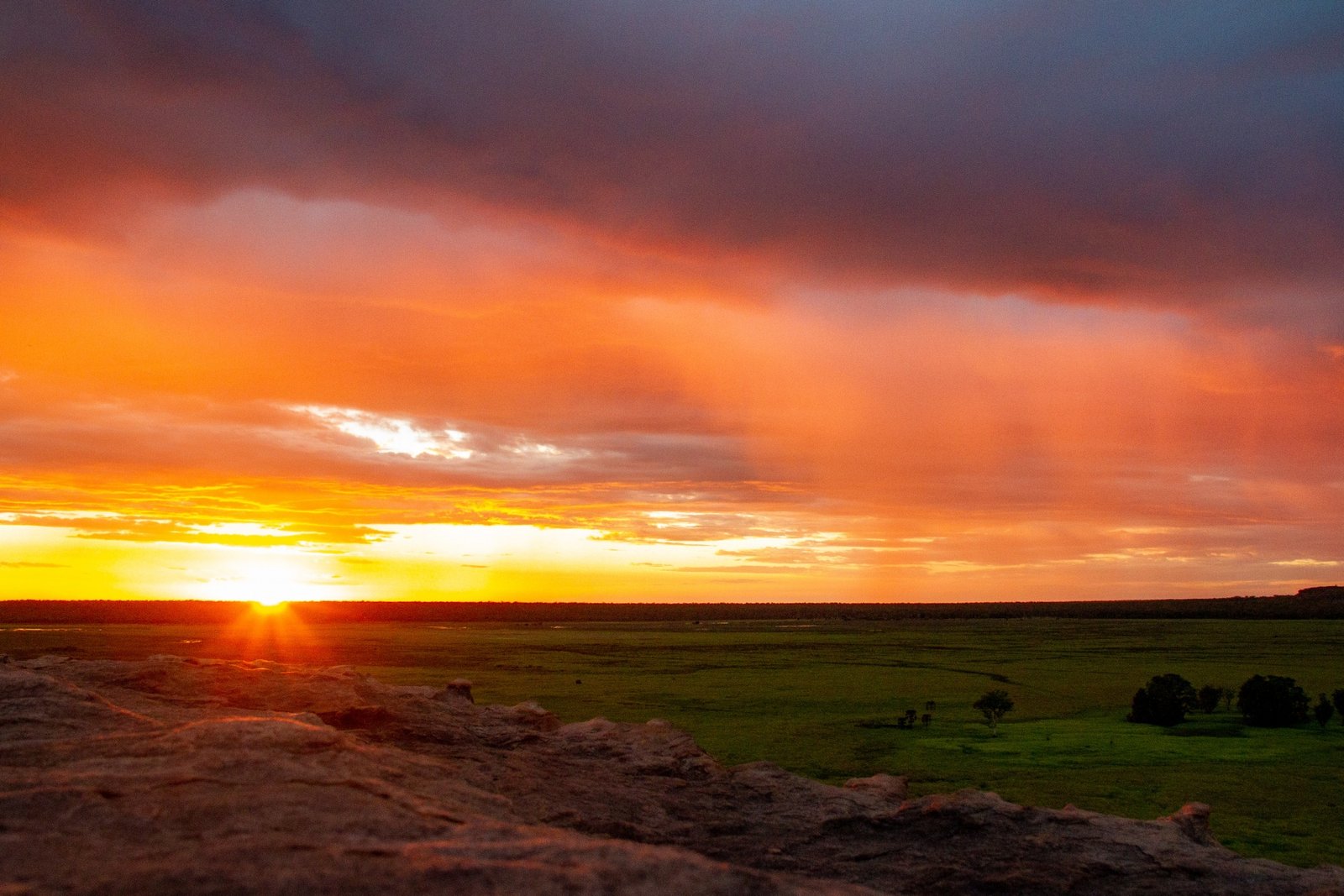
As the sun approaches the horizon the clouds overhead begin to colour, and a tiny rain shower drops over us. In the distance the rain sparkles yellow and orange [Anna: Note that rains this early are not normal and an indication of climate change… but thank you to climate change for our wonderful sunset!].
Behind us the last remaining rays pick up the rocks in the distance and even the green trees succumb to the orange light.
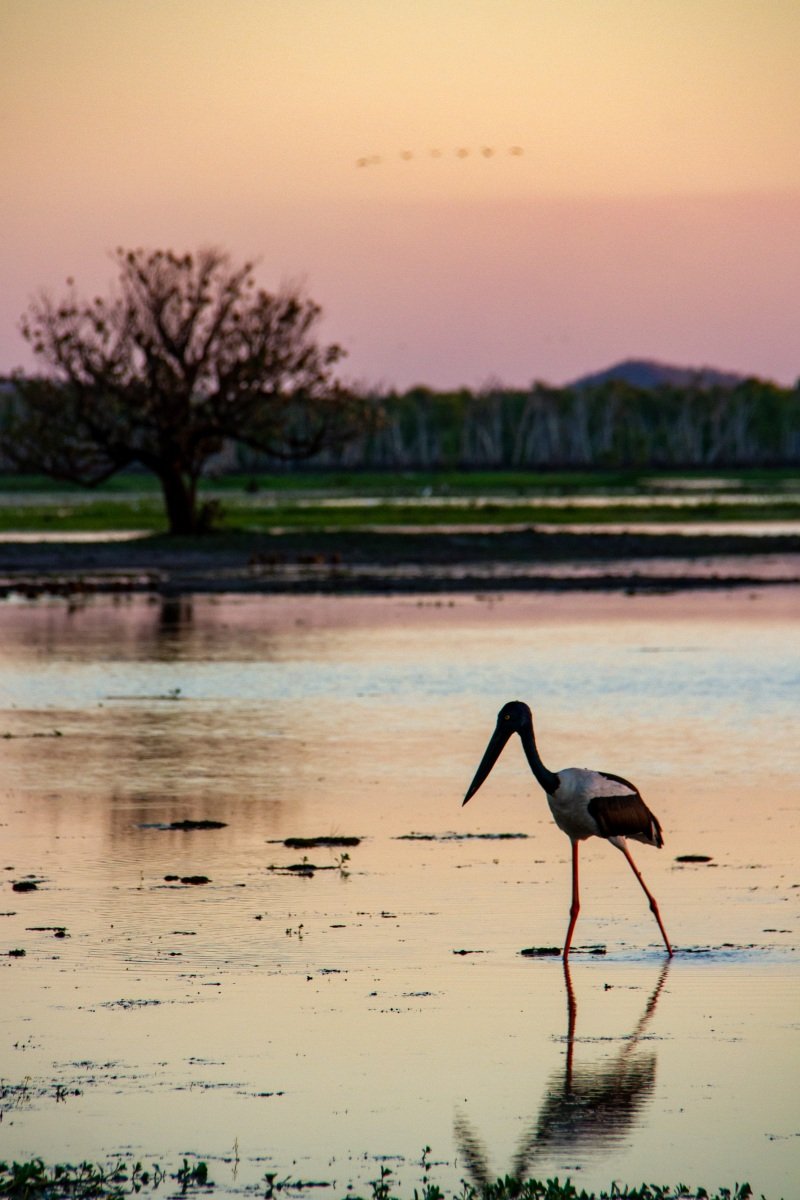
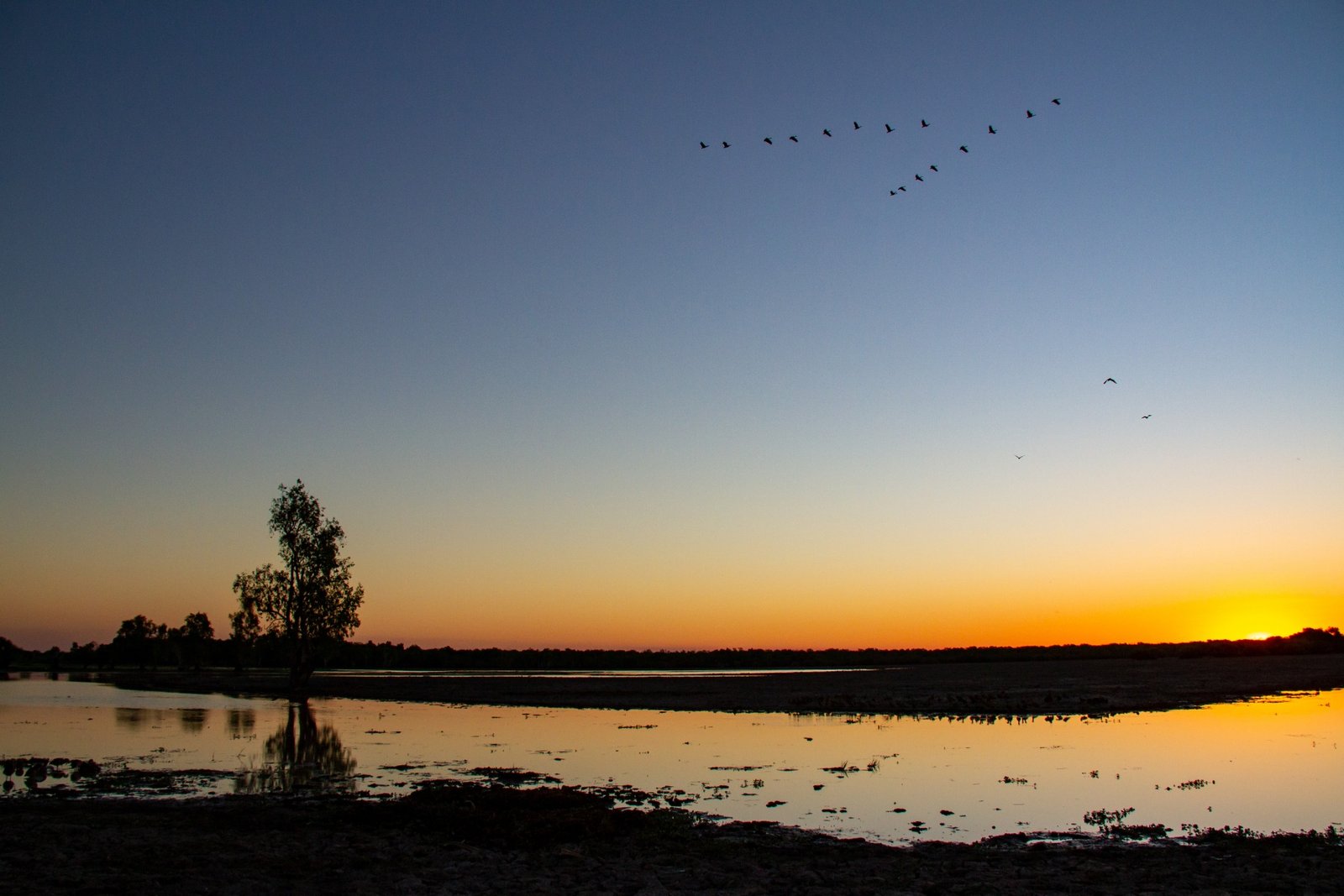
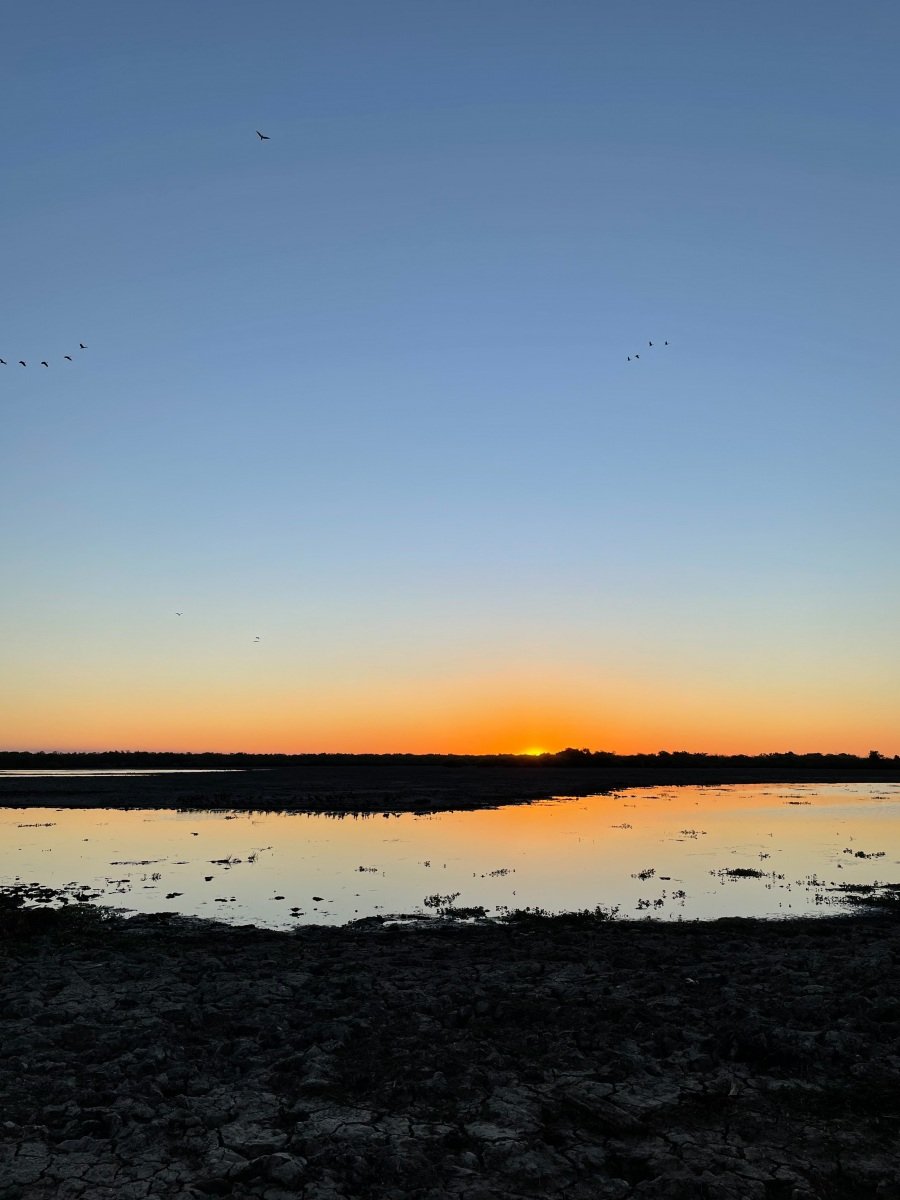
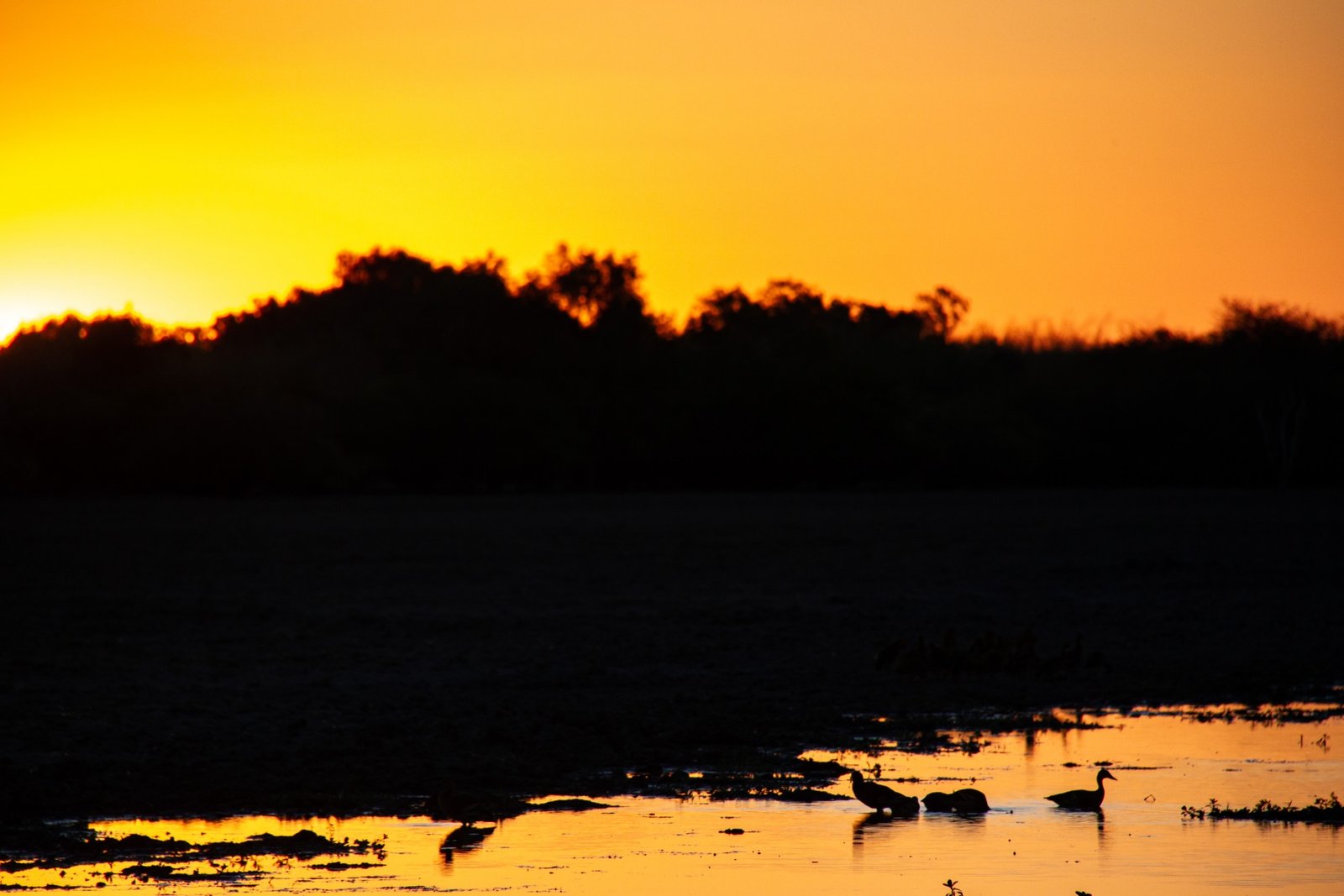
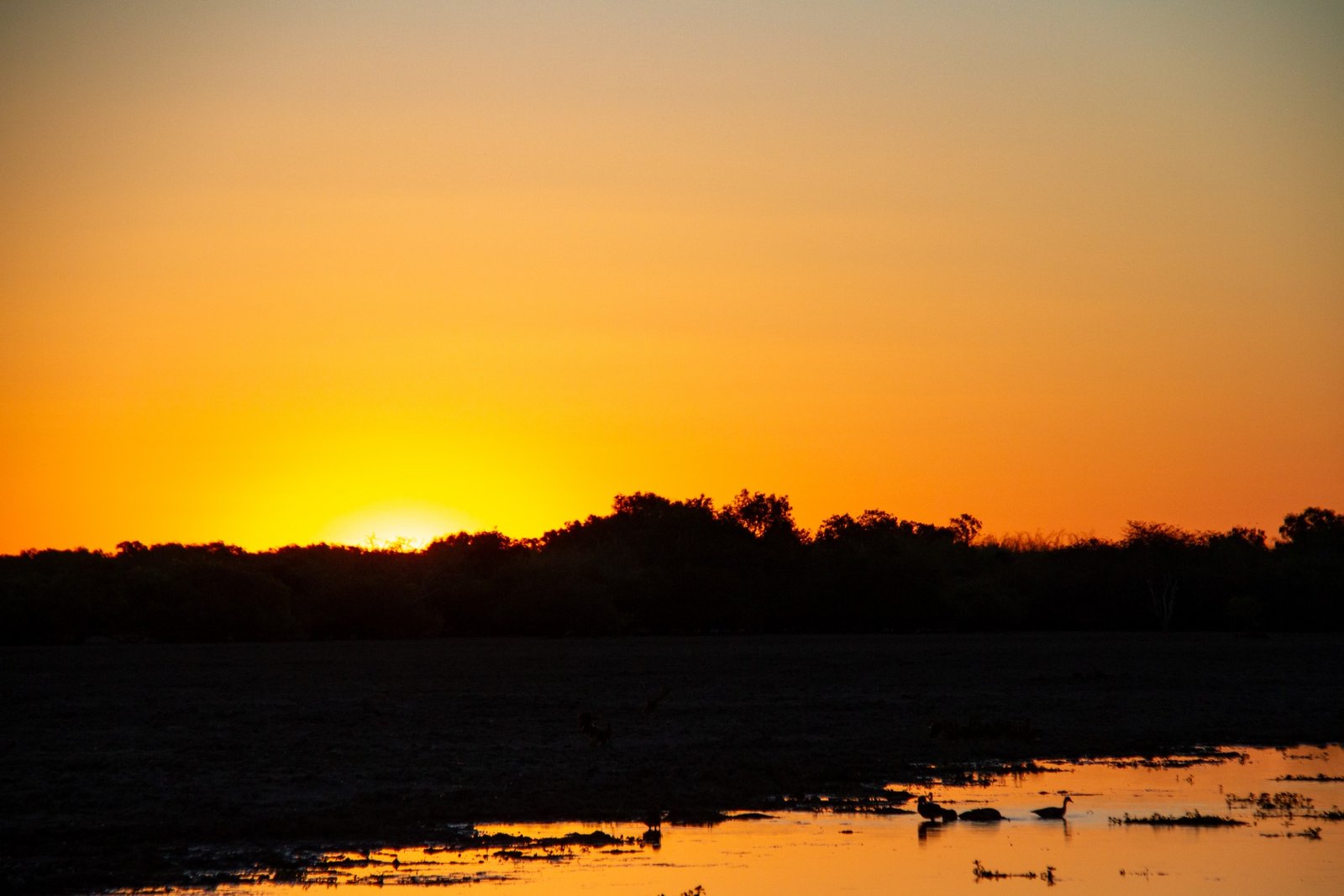
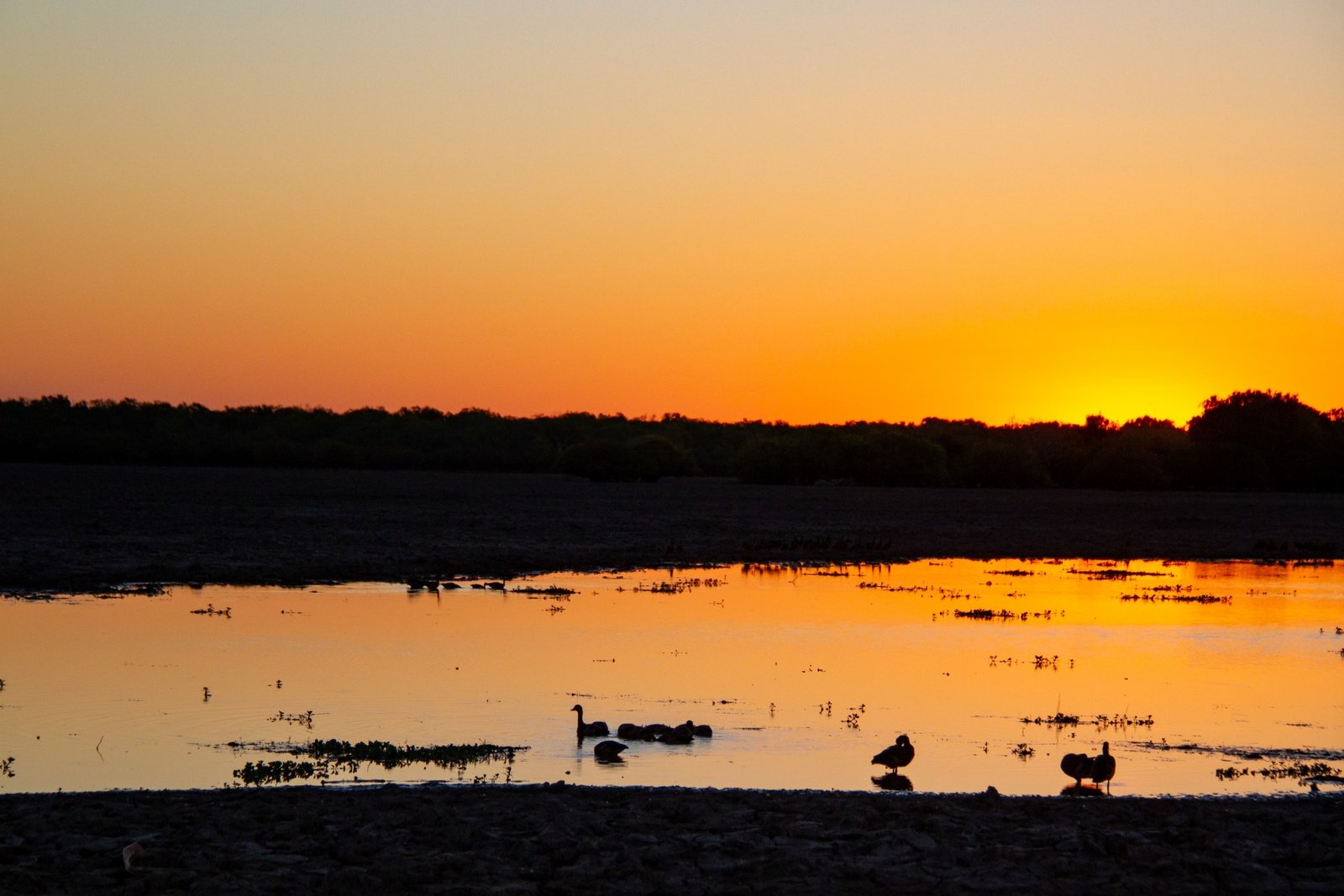
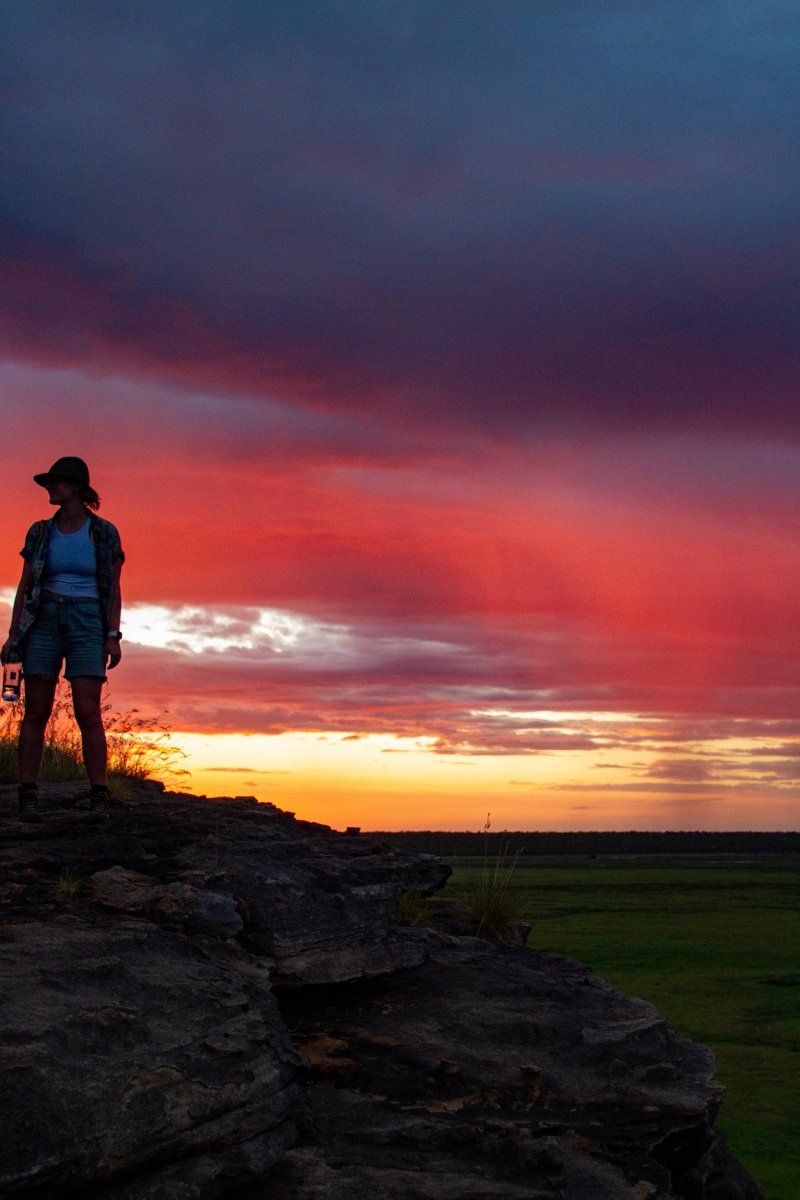
When the sun at last disappears the whole sky lights up bright pink and burnt orange. Magnificent.
[Click on a photo to open a full-screen slide show]