Coral bay

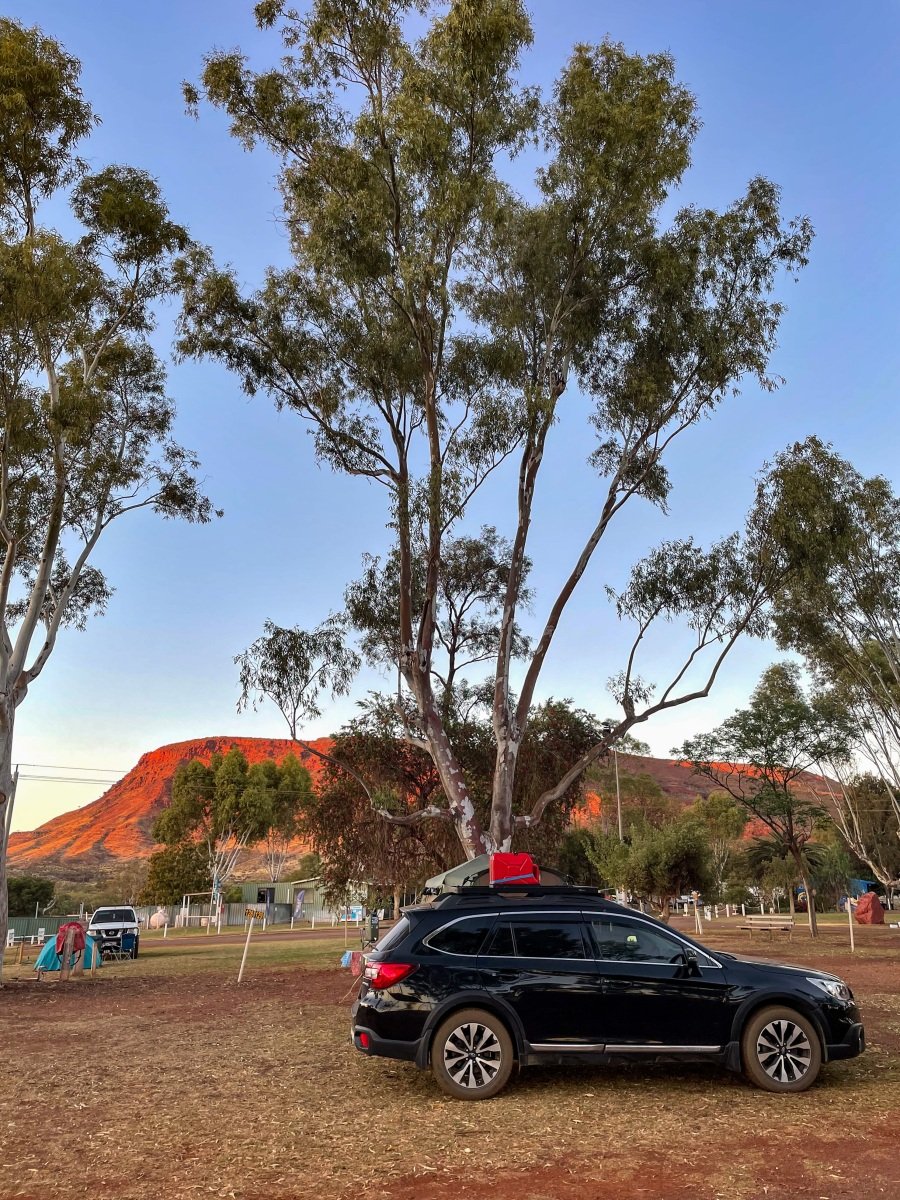
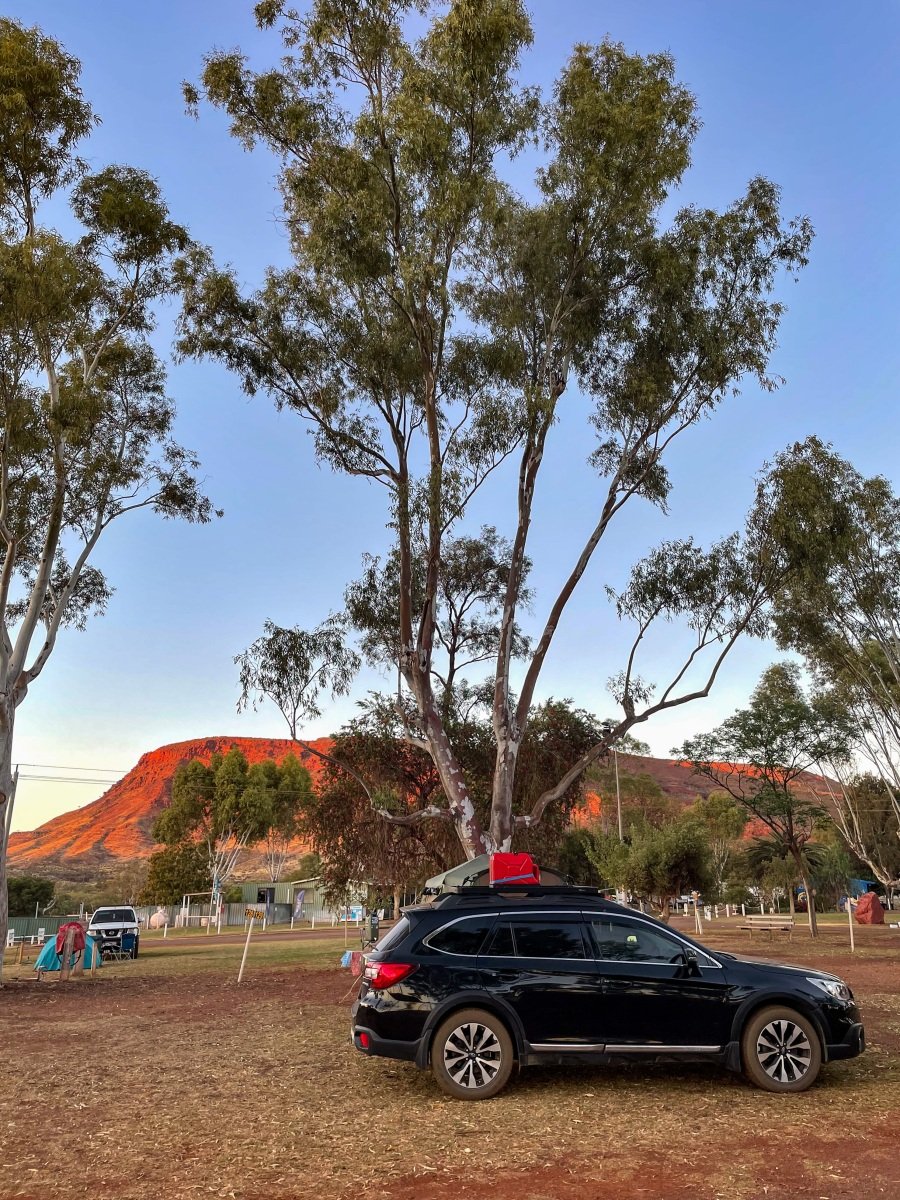
From Karijini we head back to the coast, to Coral Bay. It’s a six hour drive, and reasonably uninteresting, though I’m sure if we were going slower there’d be plenty to see along the way. We arrive in time to setup camp in the sandy ground and head to the visitors centre before it closes.

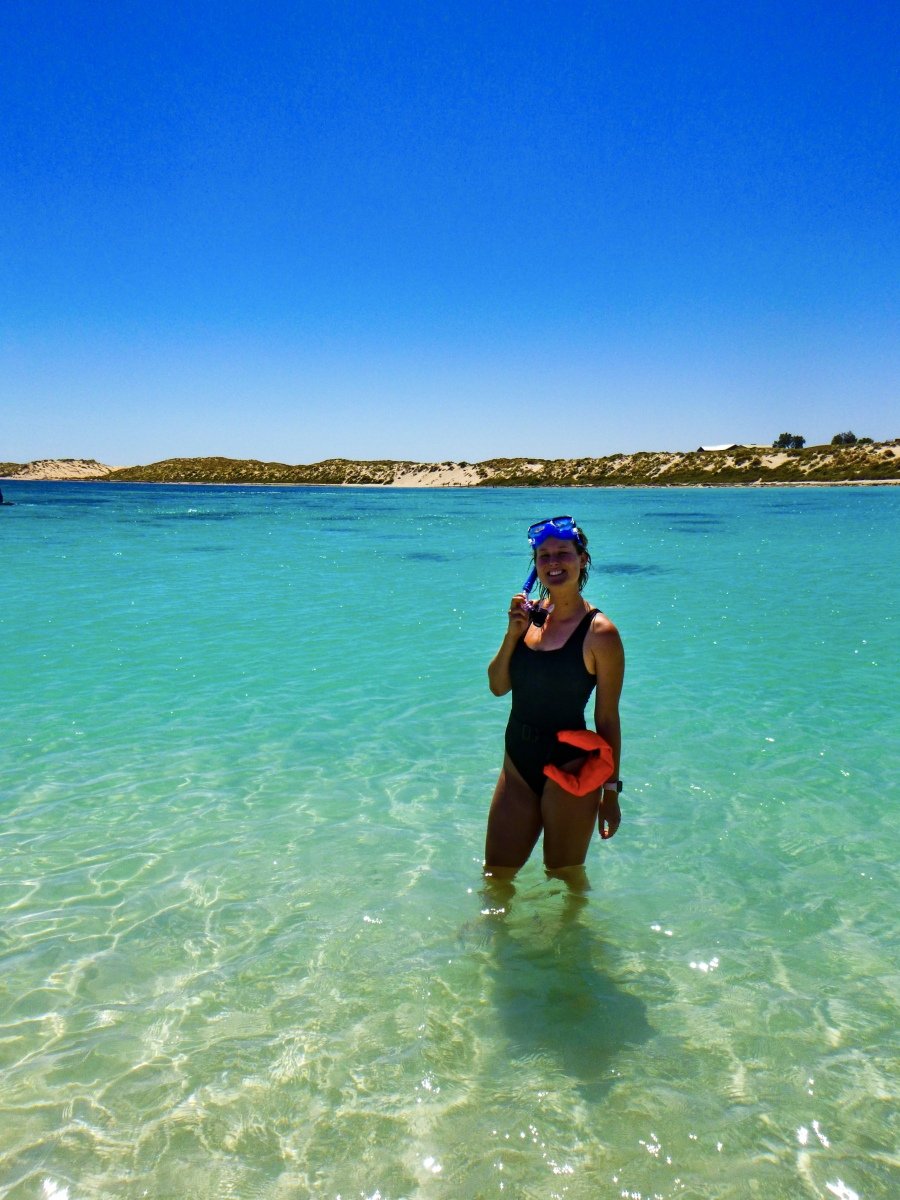
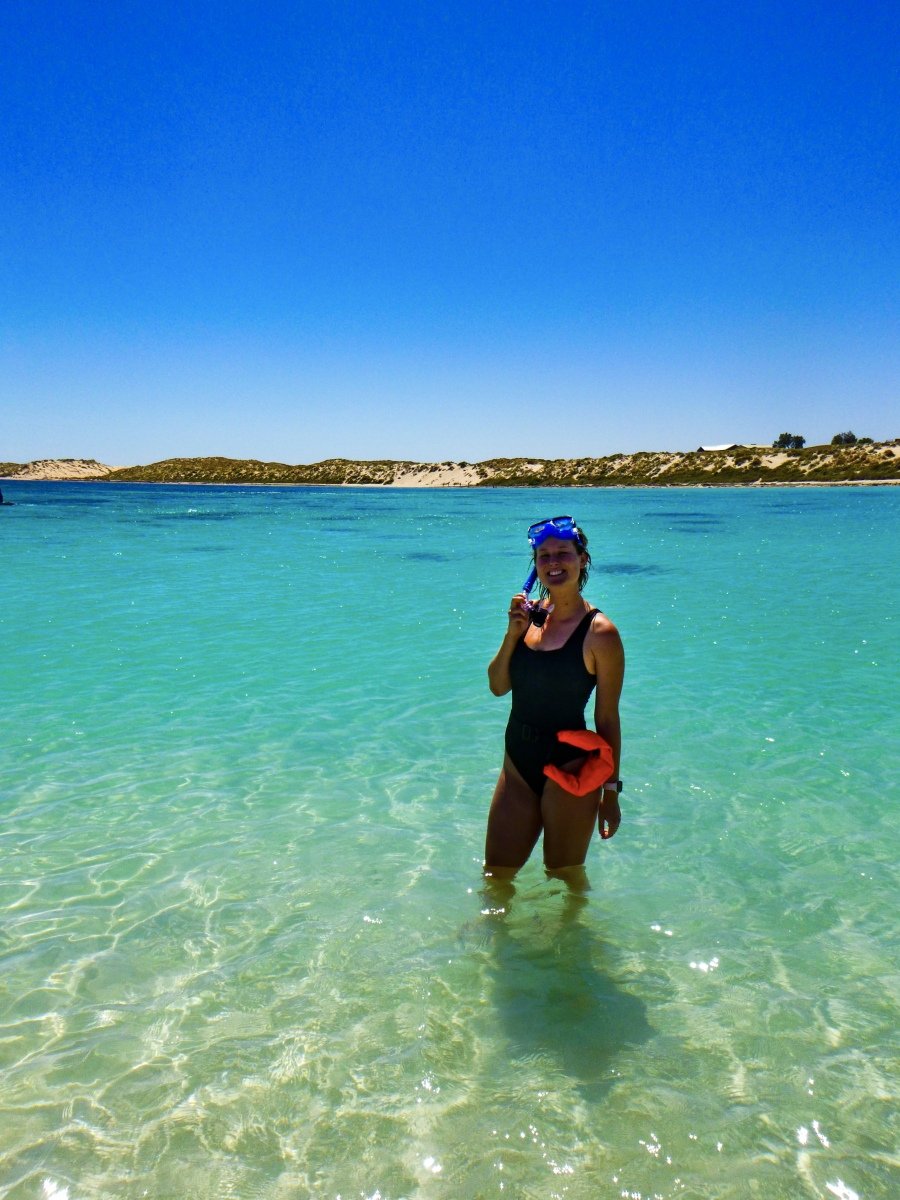
I was surprised when the visitor centre guy said we could just snorkel off the beach, I suppose I expected to need a boat to reach the reef.

Earlier in Broome, in preparation for this part of the trip, we bought snorkels and an underwater camera. I wasn’t sure how much we’d use them, but figured it would be worth it if we ended up needing them.

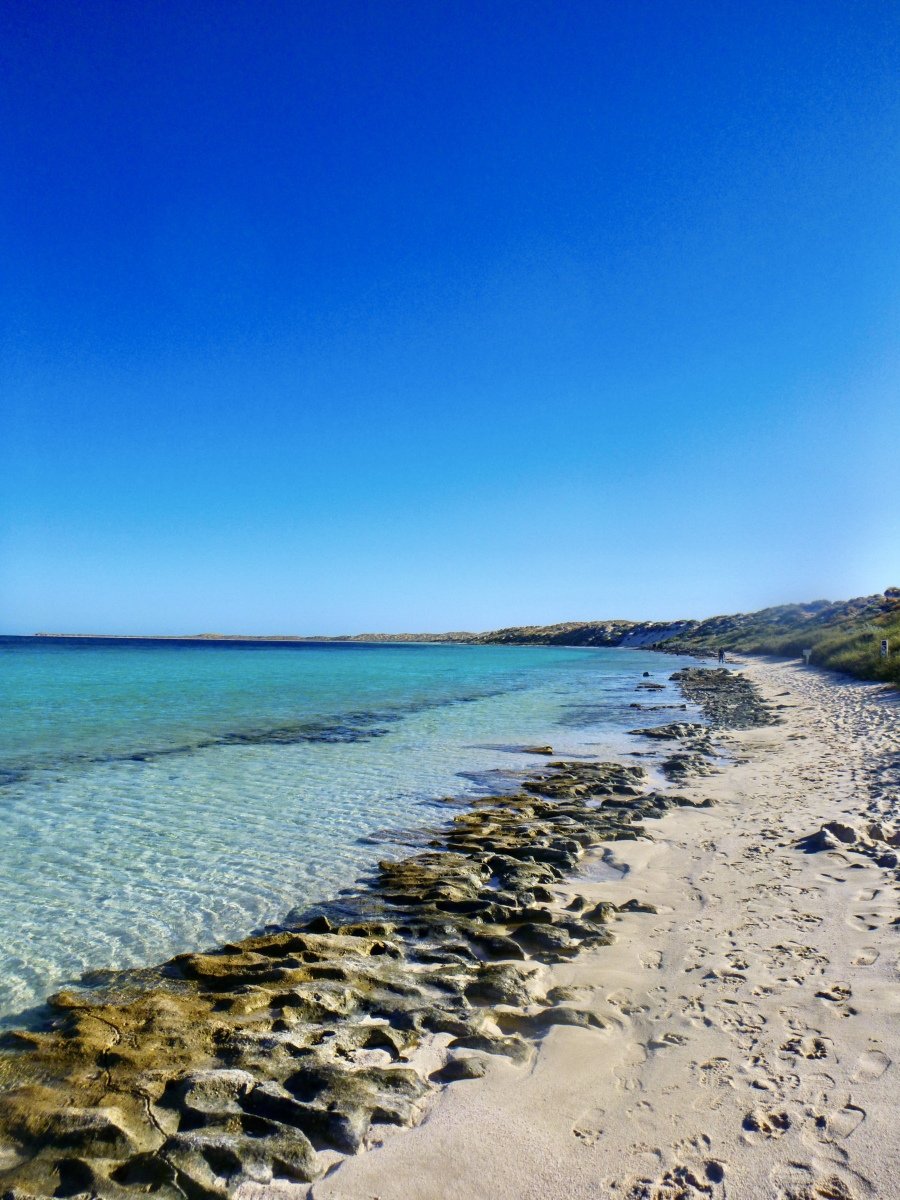
After the visitor centre we walked up a sand dune which overlooks the bay. Looking from there, the water in the bay is luminescent blue, dark patches with rippling waves indicating the reef below. Children are playing around the edge of the bay, where sunlight cuts through the water to the bright white sand.

We get dinner at a pub and an early night to give us plenty of water time tomorrow.

I tried to get a good seal on the snorkel with my holiday beard, but alas I cannot. And so off it comes, what a shame! (Turns out vasso would have helped here, but I didn’t think about it…)

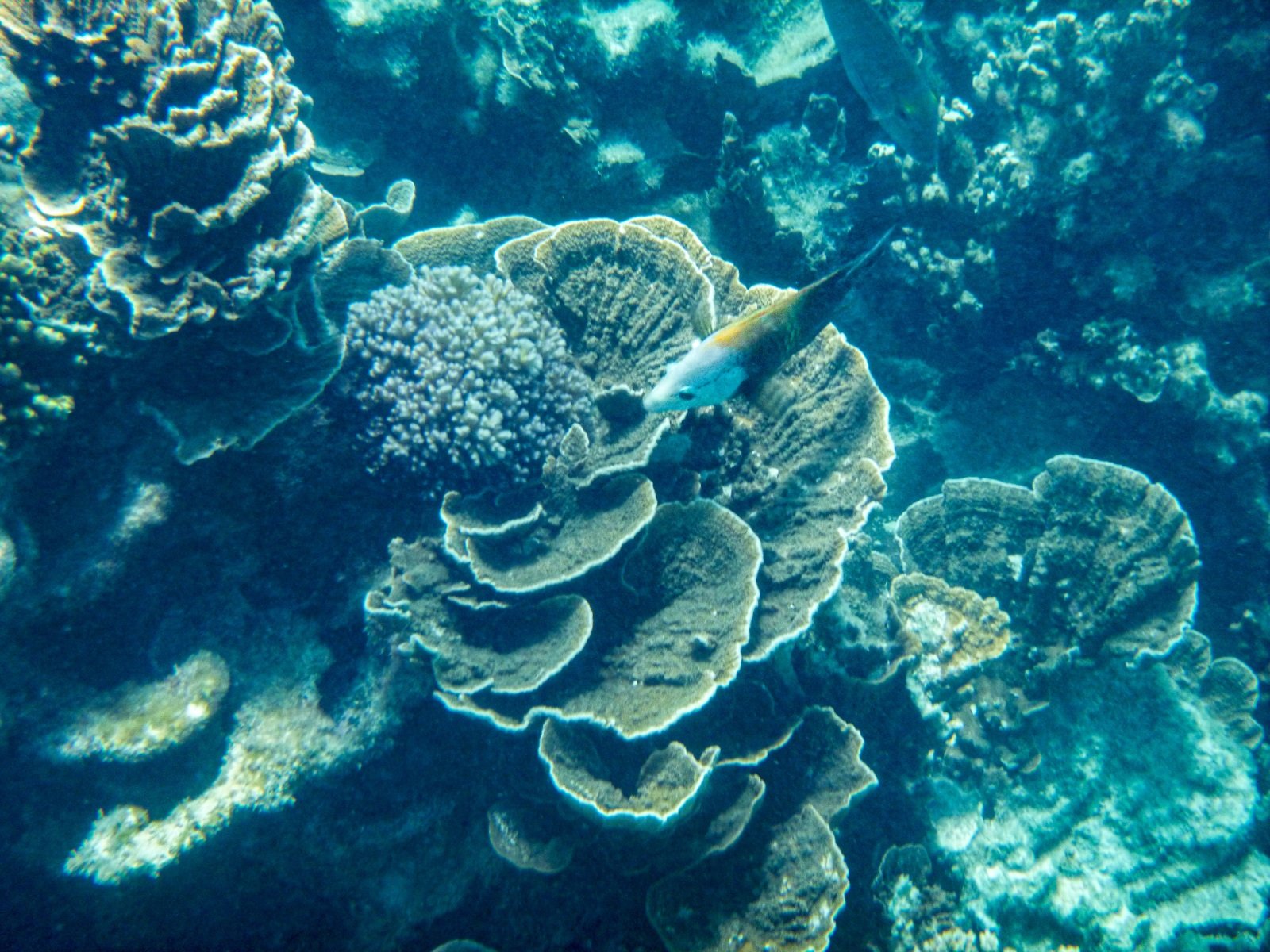
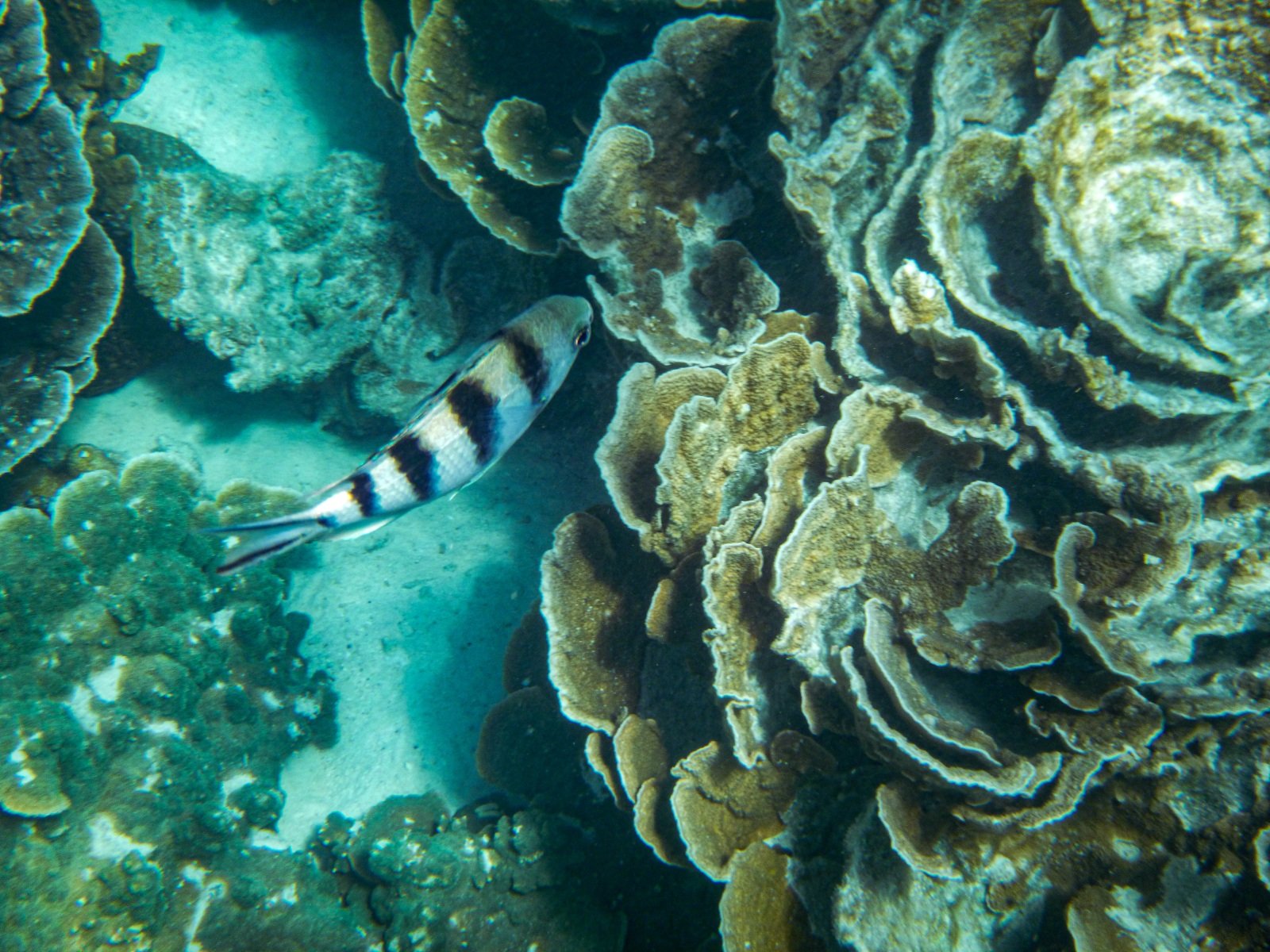
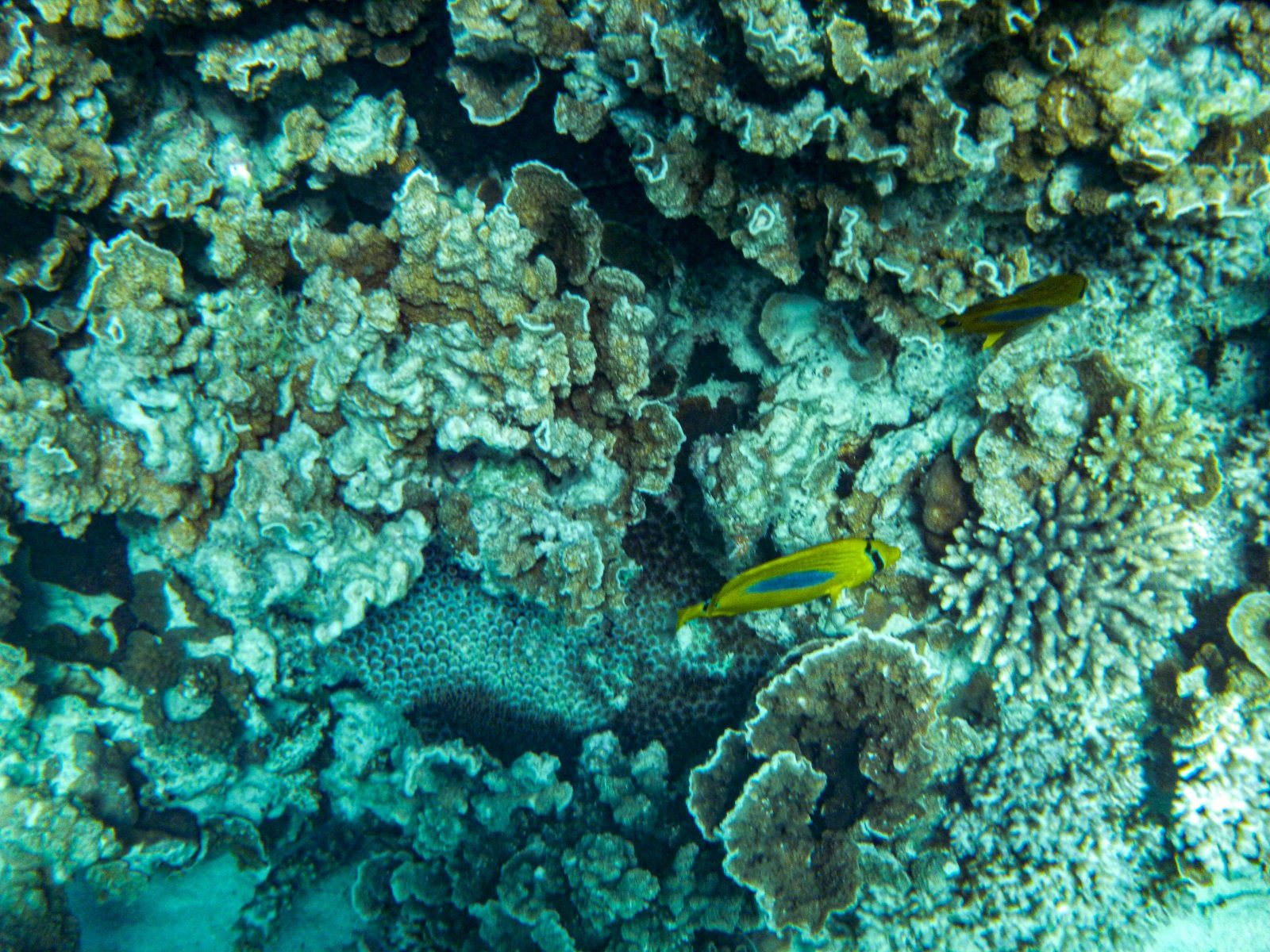
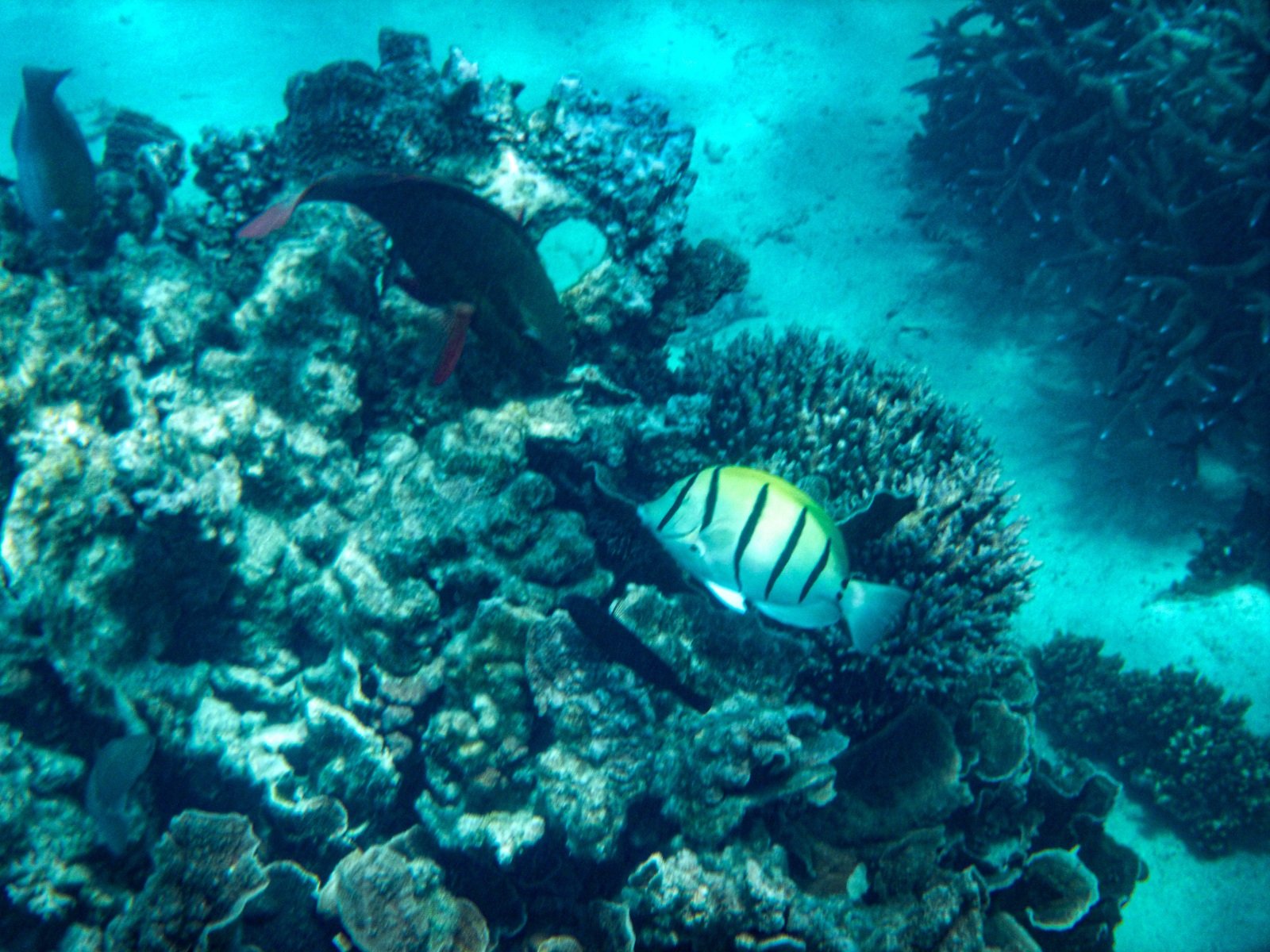
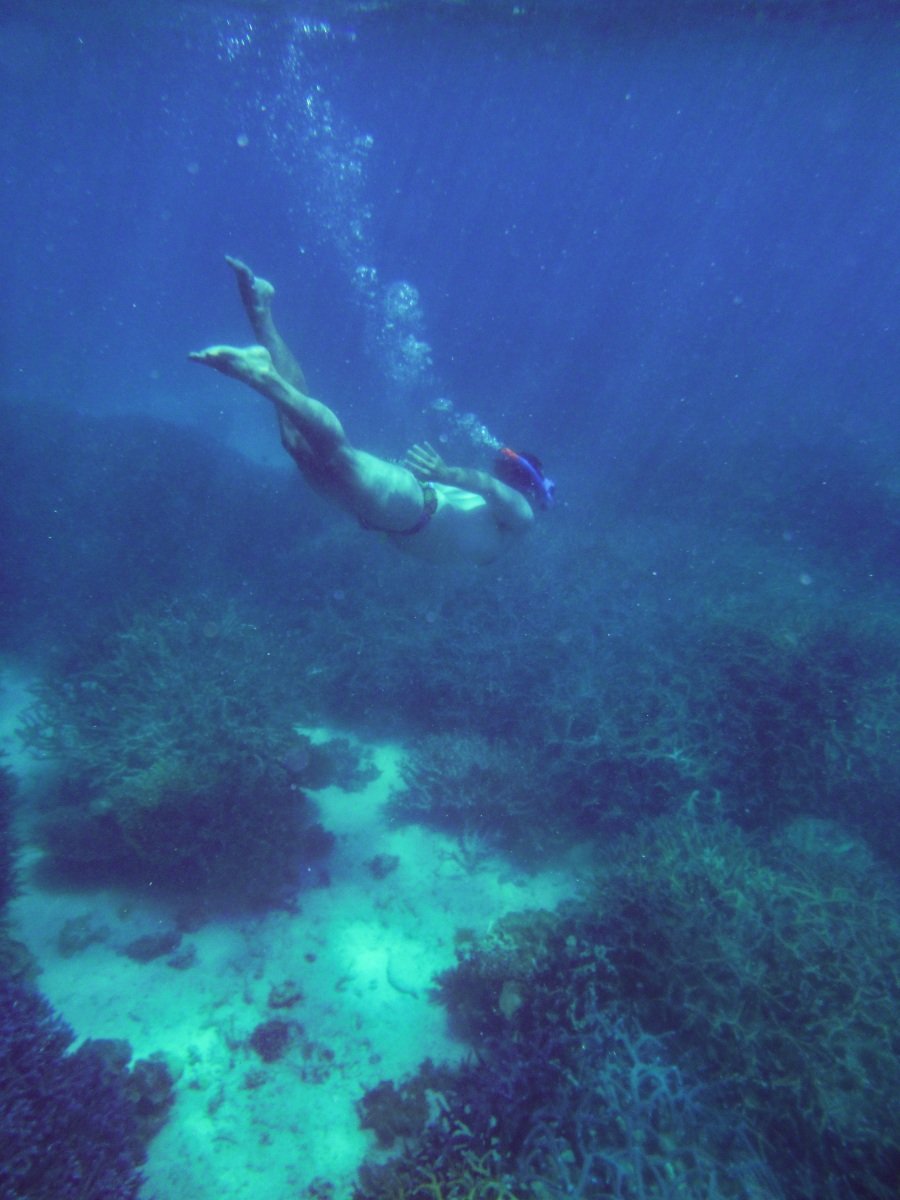
Once we’re in the water we take a few moments to get used to the gear before heading deeper. About 10 meters from shore we encounter our first coral formations. The chirping of fish pecking at the coral grows louder.

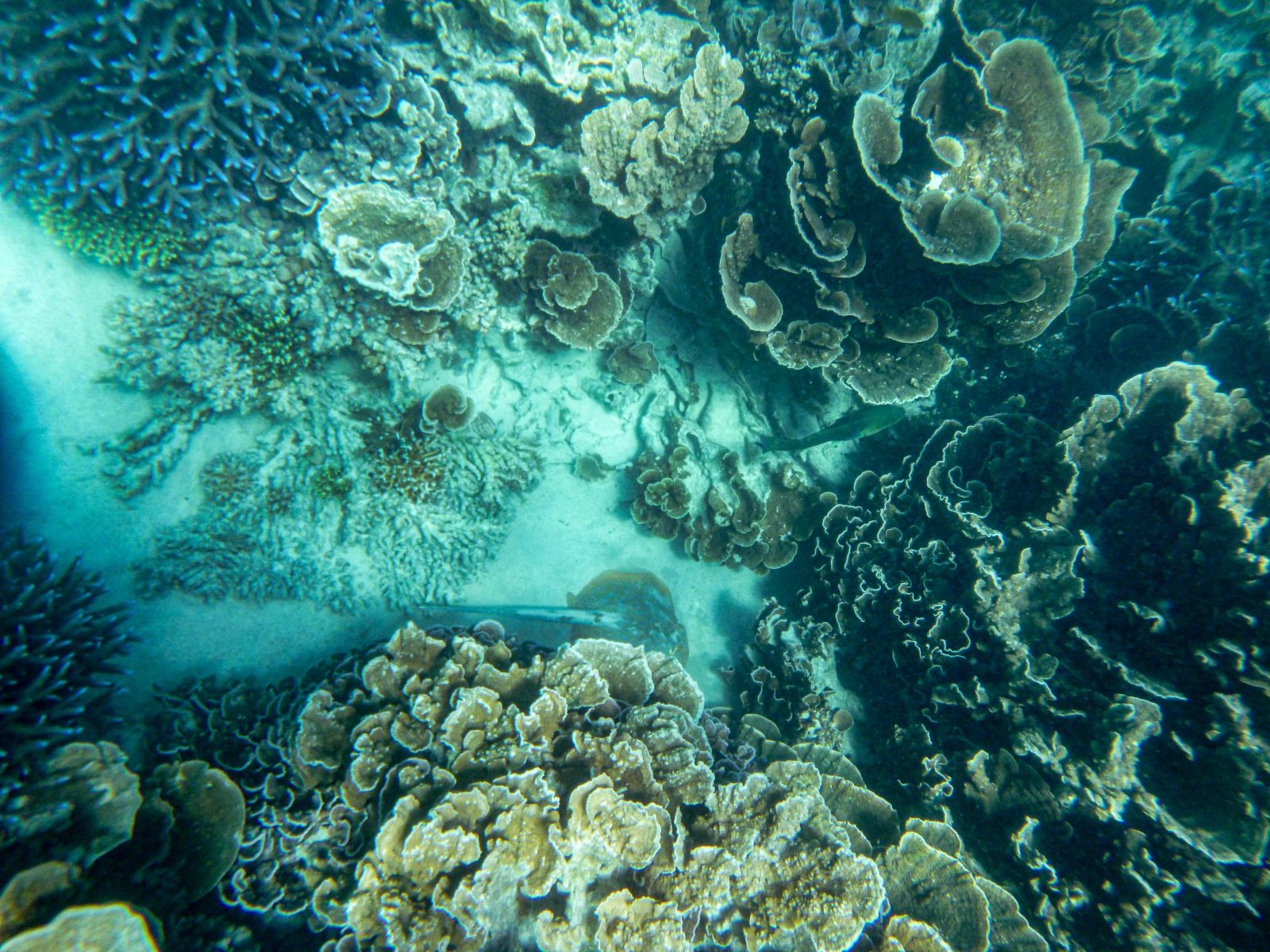
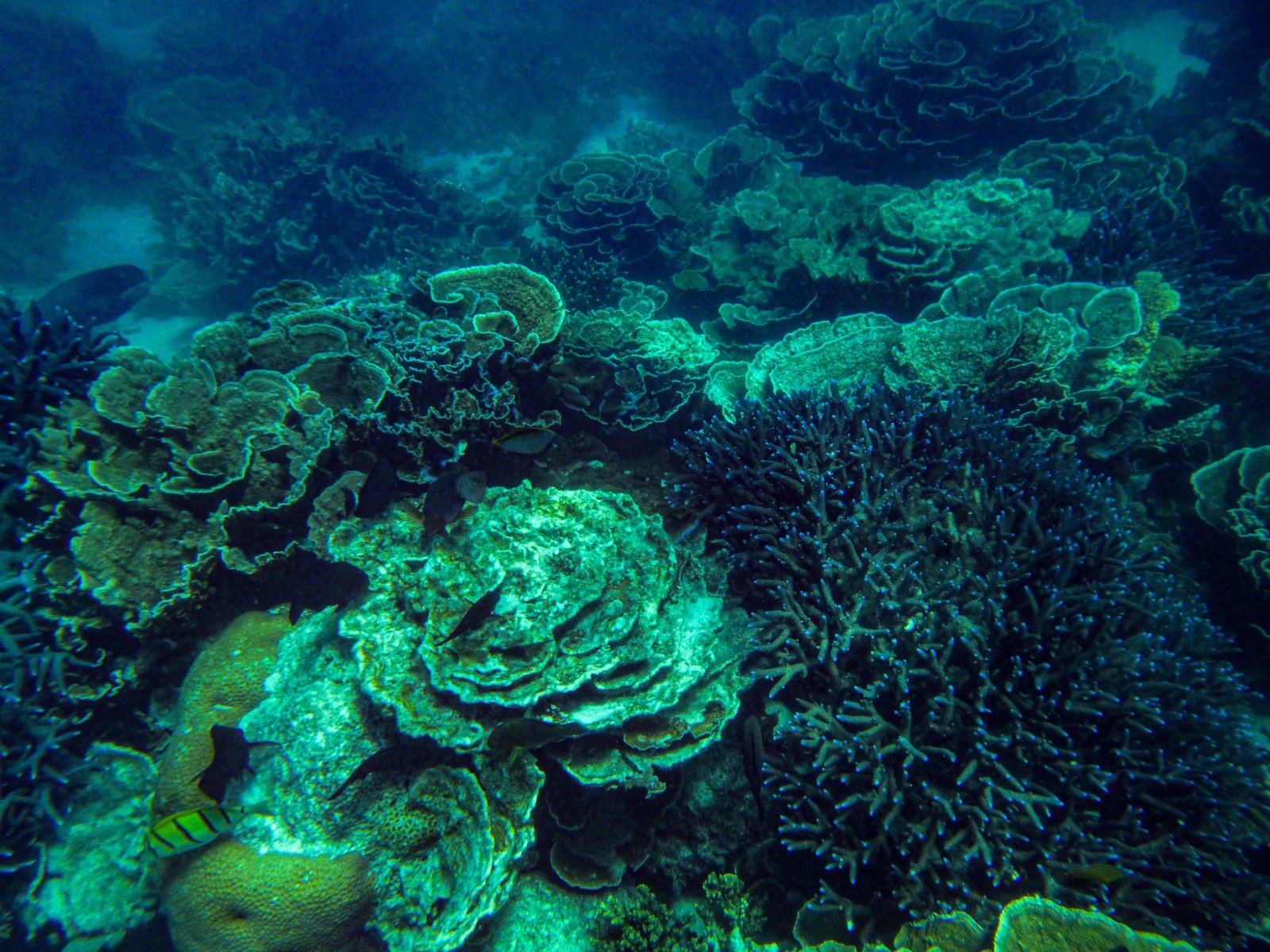
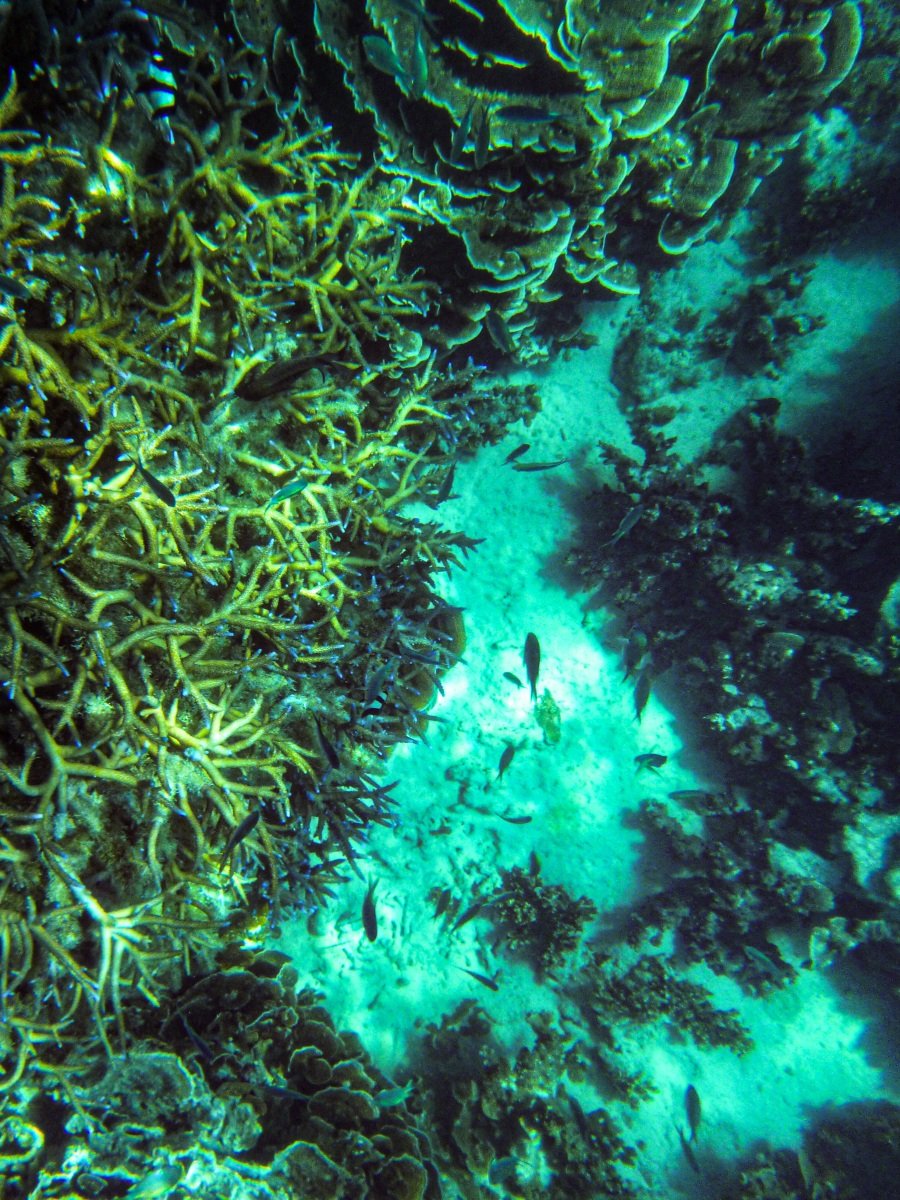
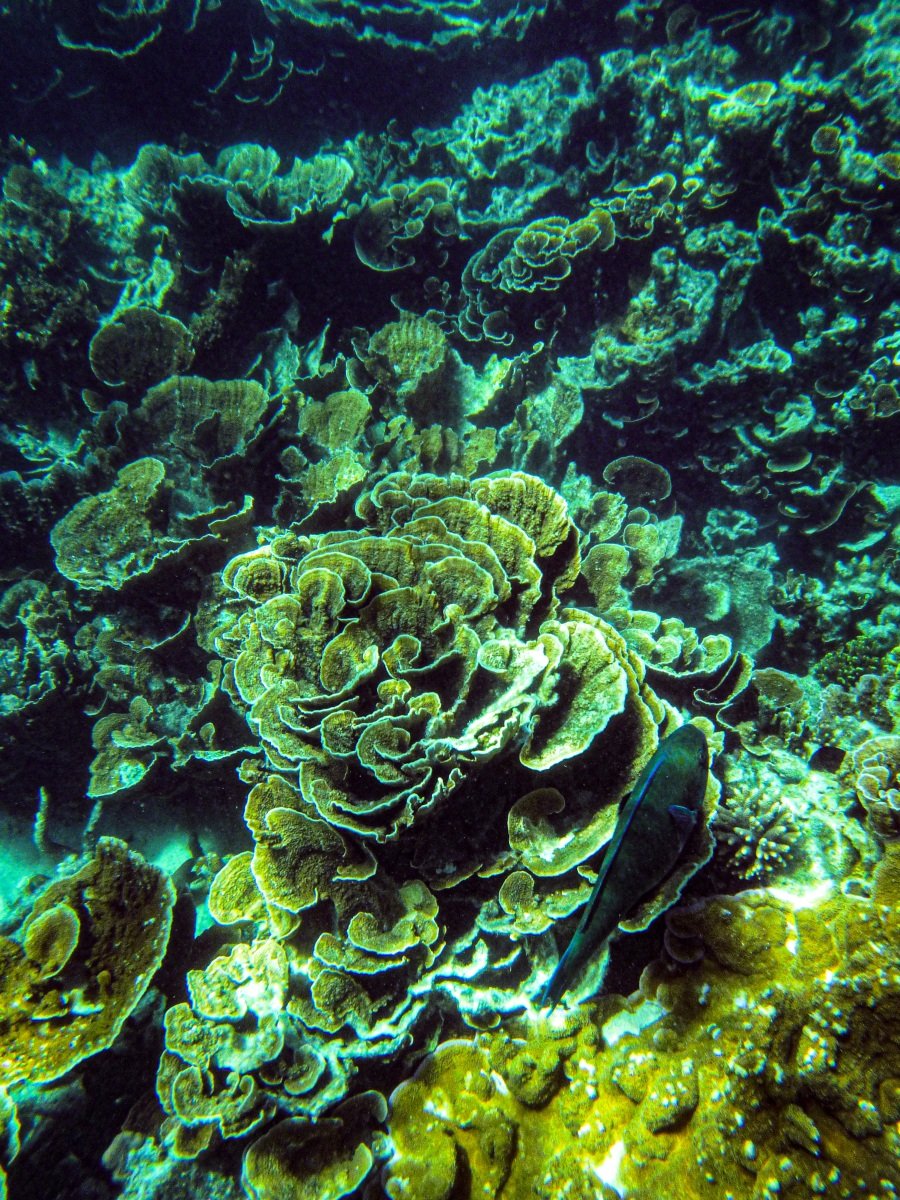
As the current gently draws us north into the bay, I begin to feel a deep peace come over me. The reef is an otherworldly city full of activity and a kind of ordered chaos with intersecting layers of fish-highways.

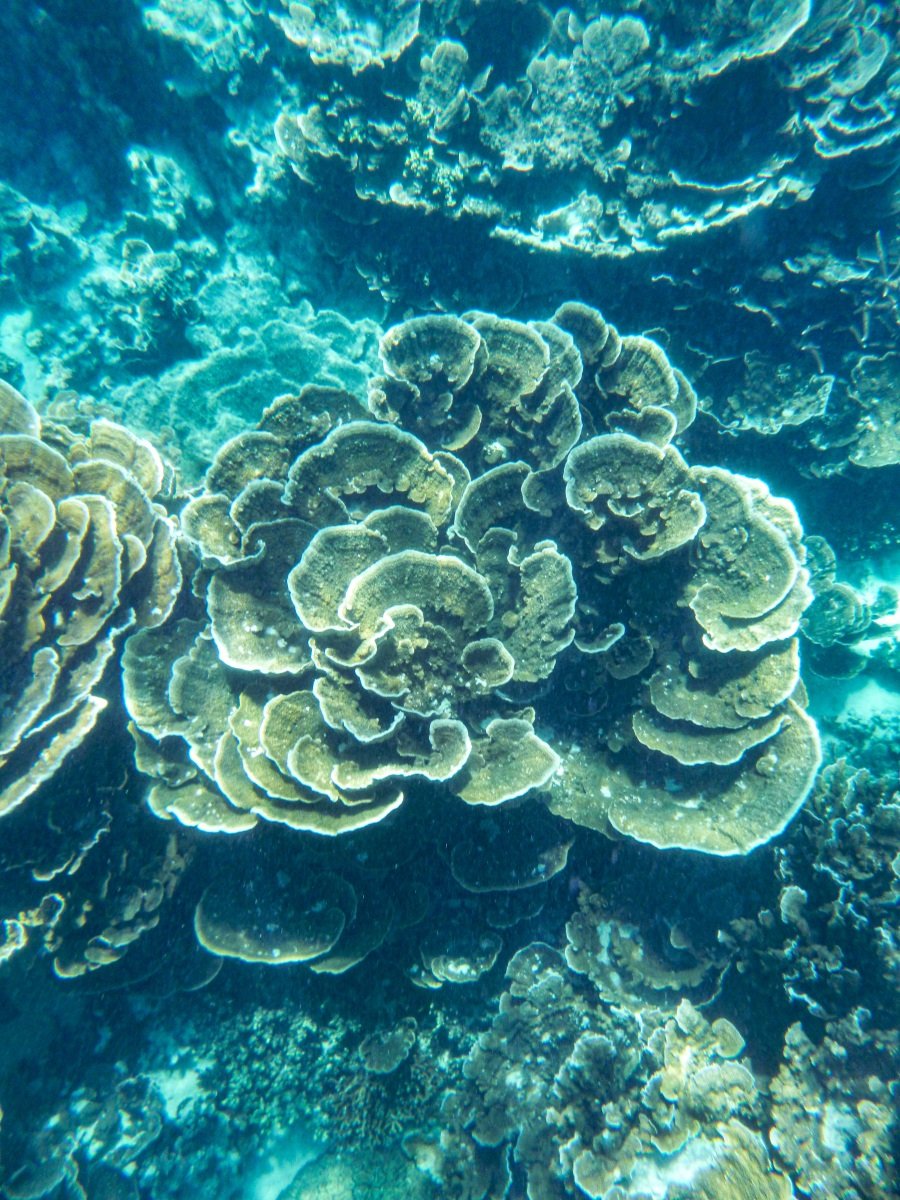
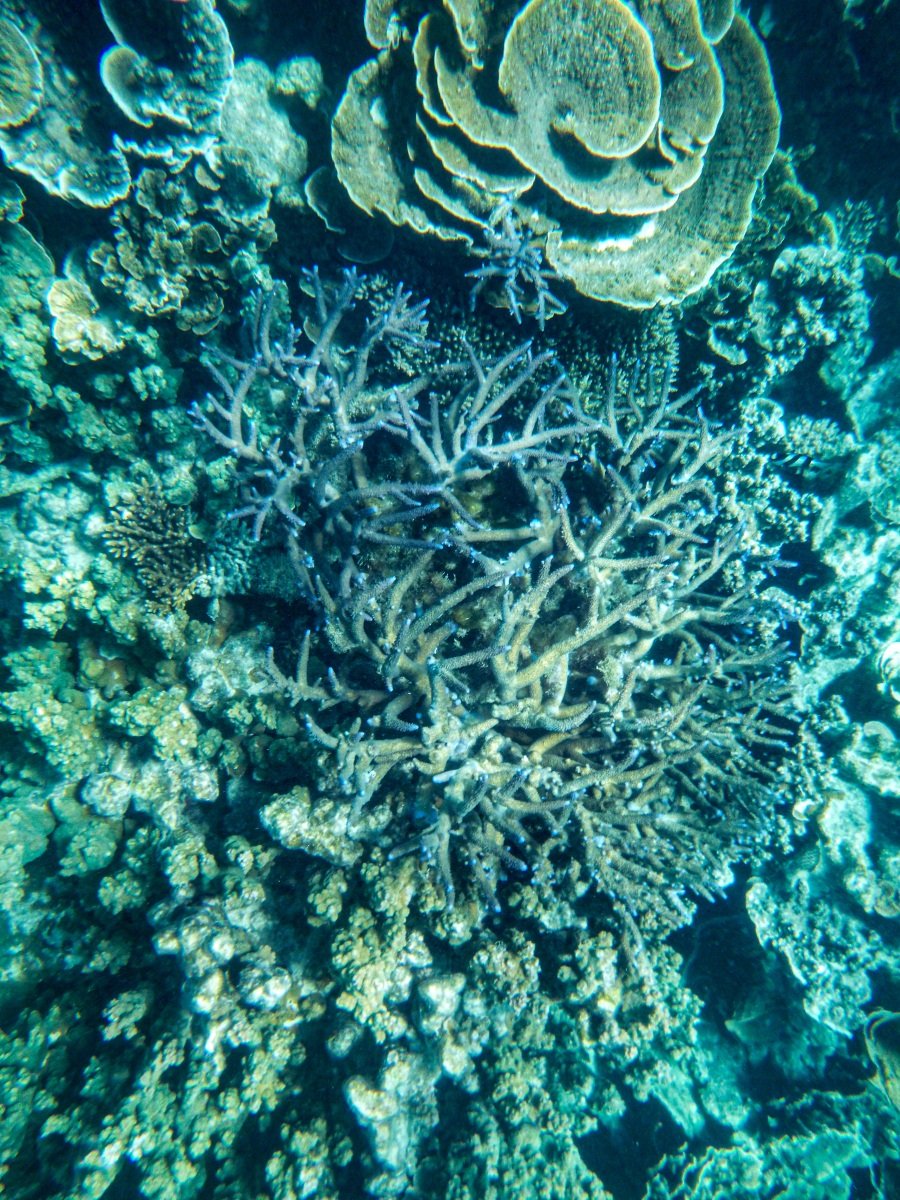
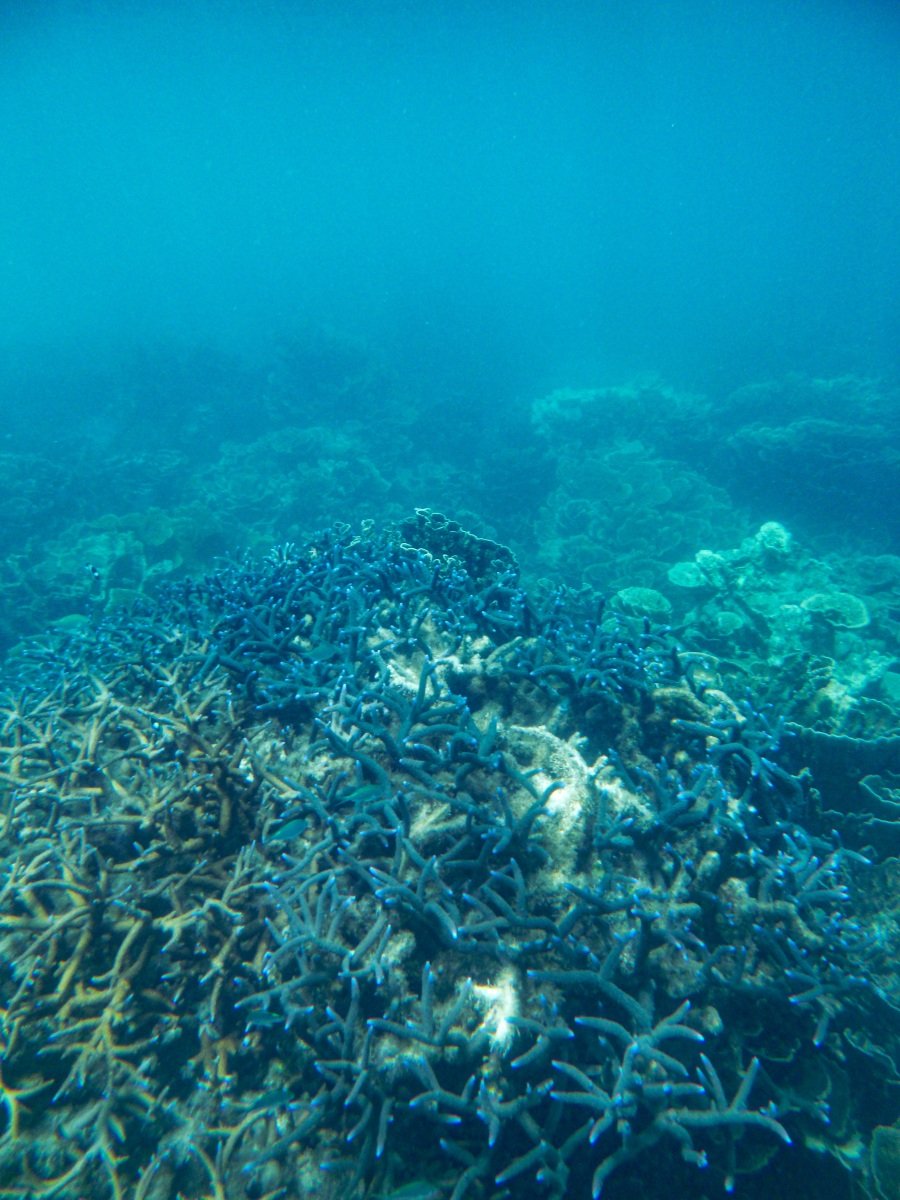
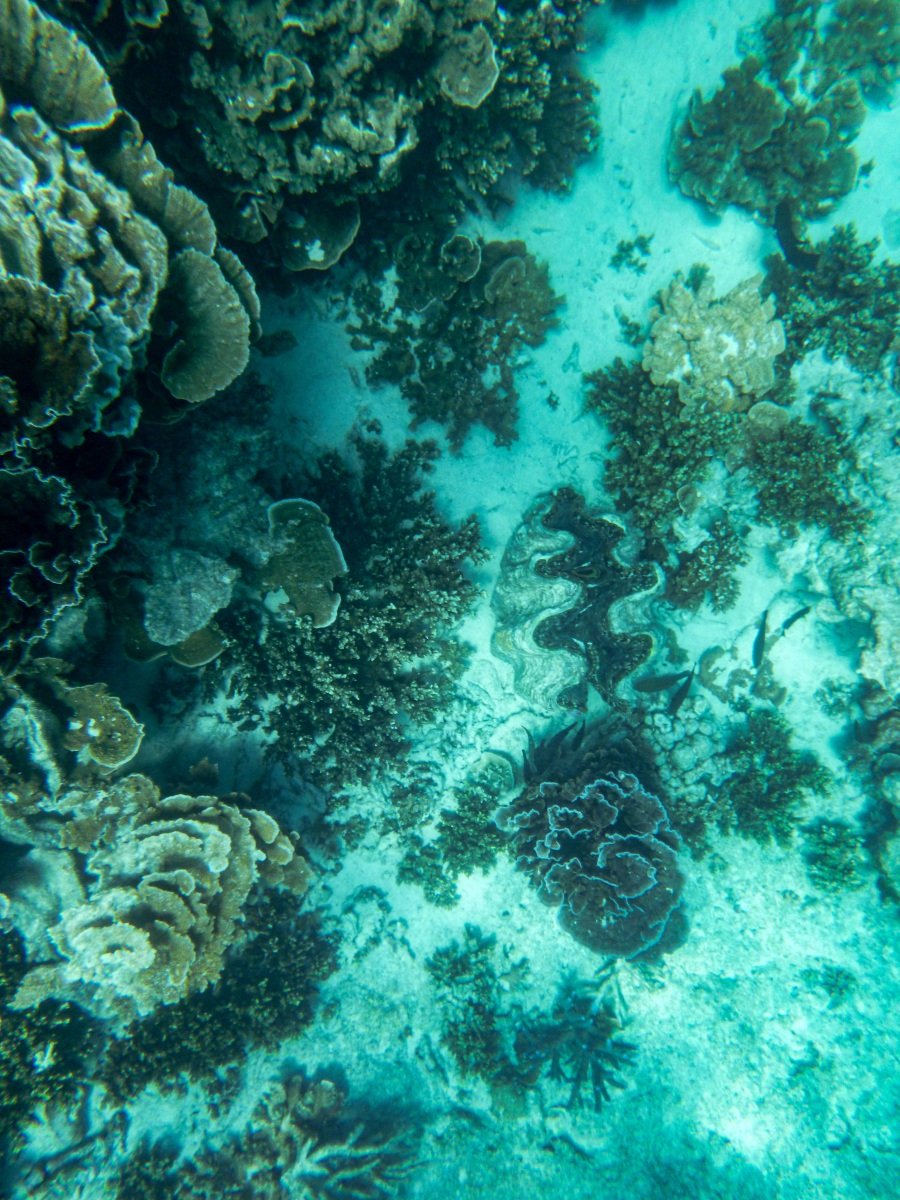
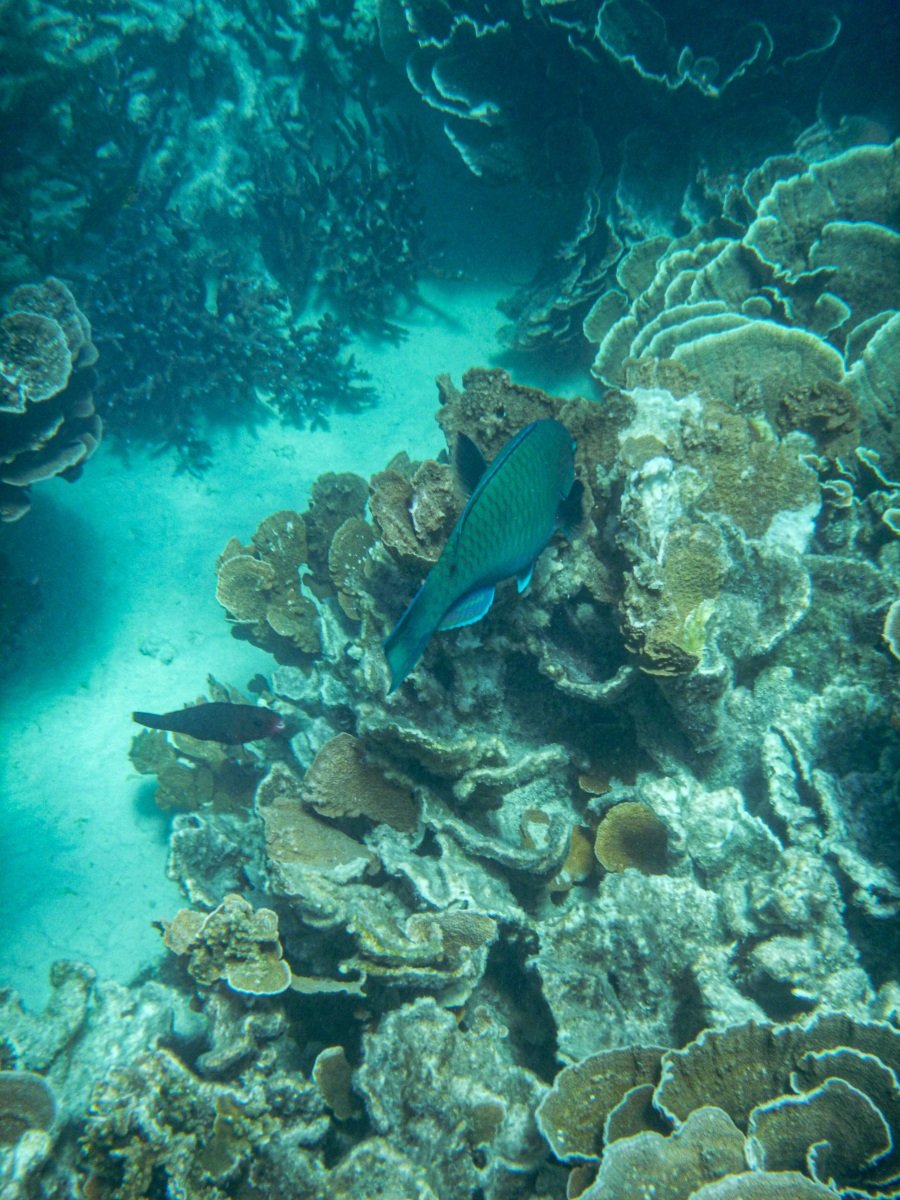
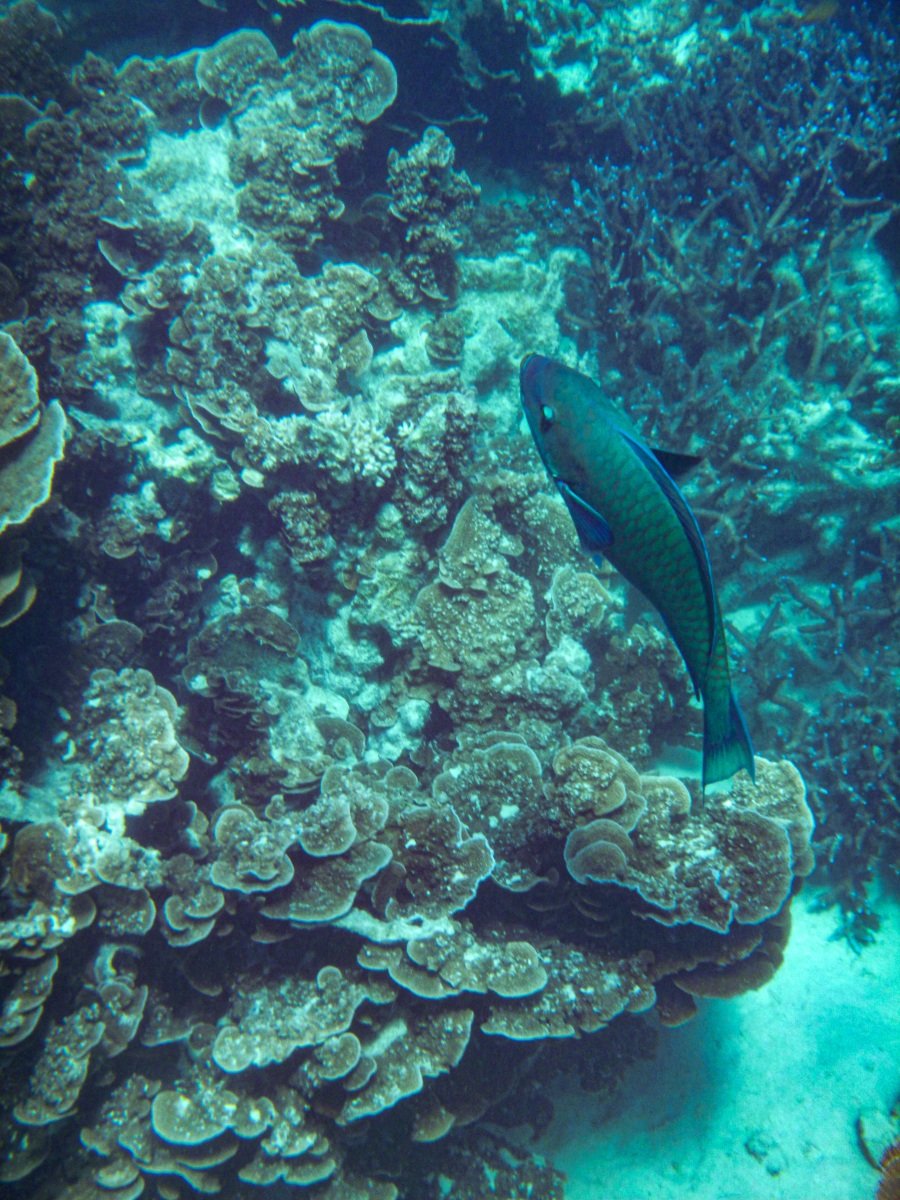
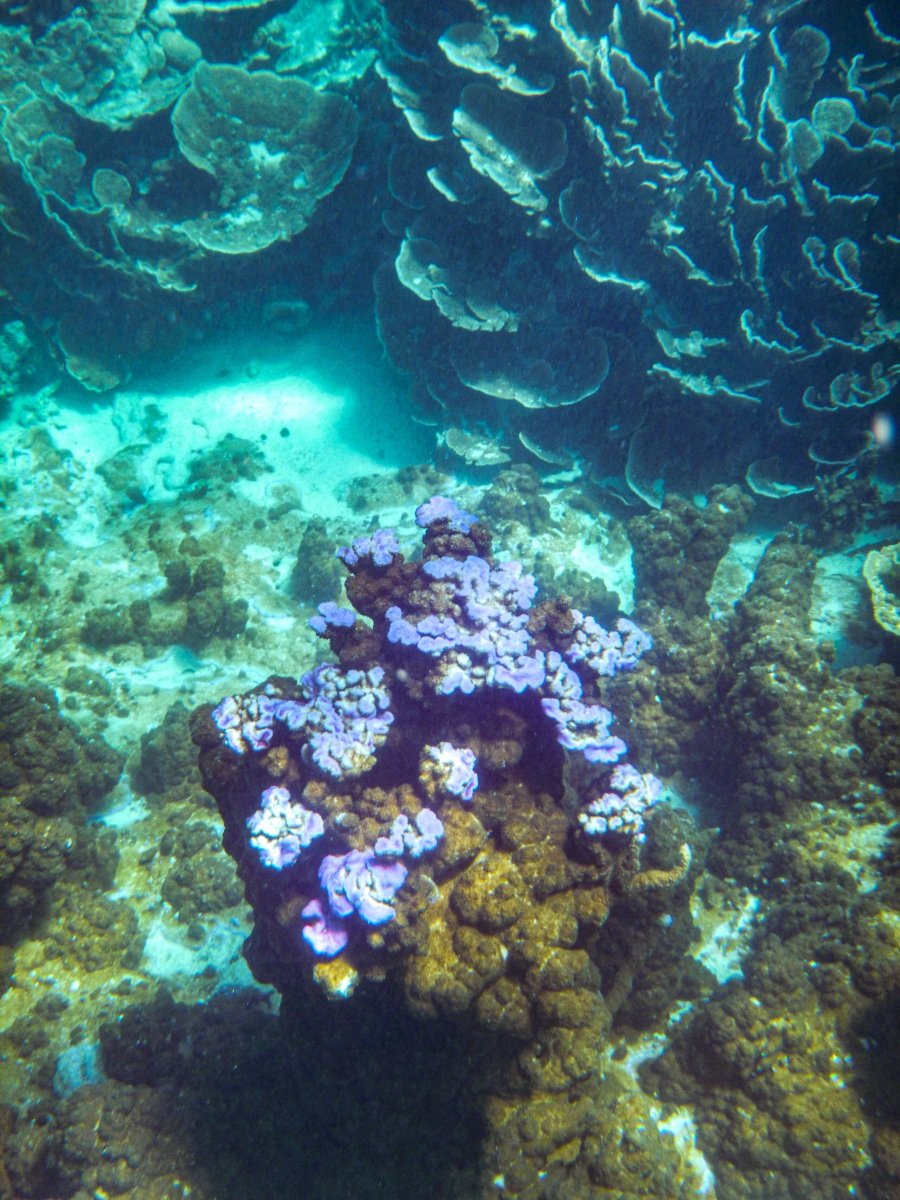
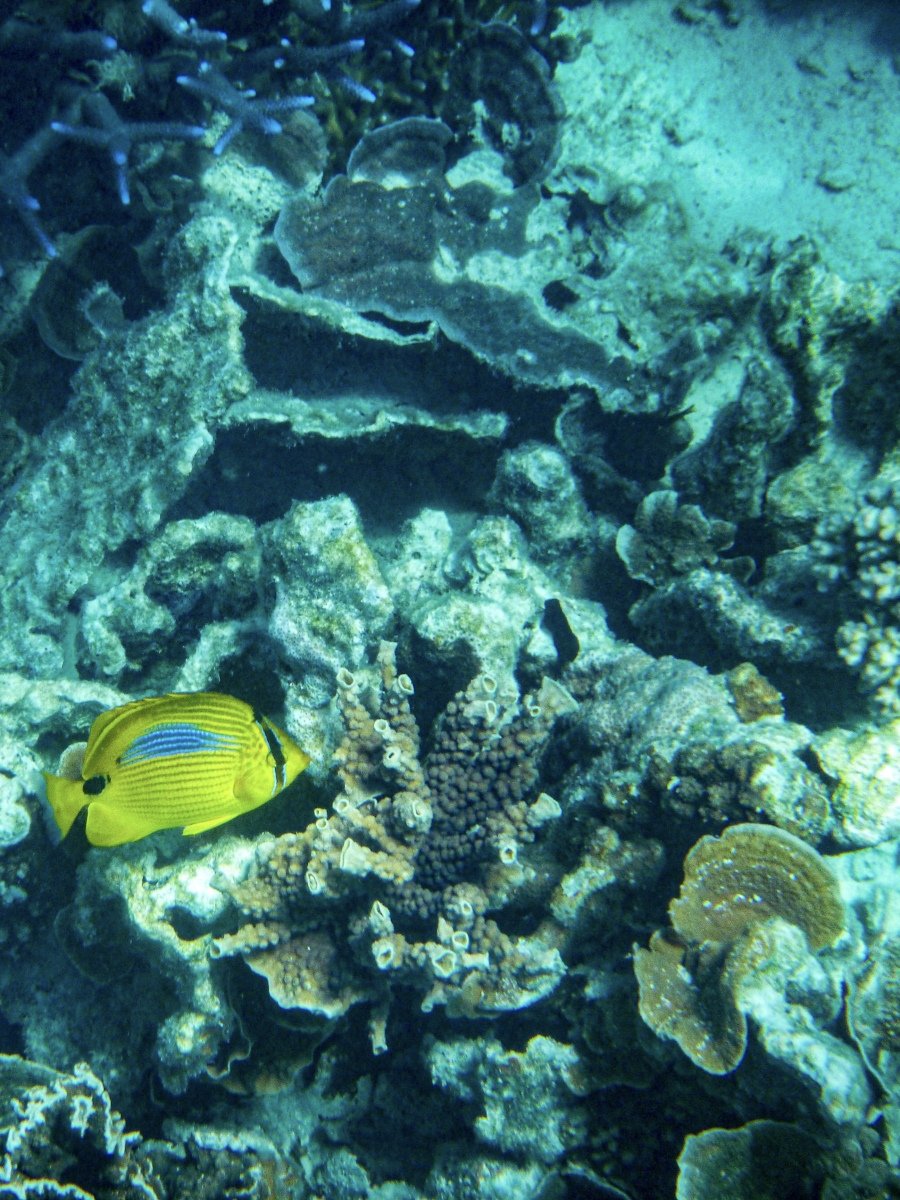
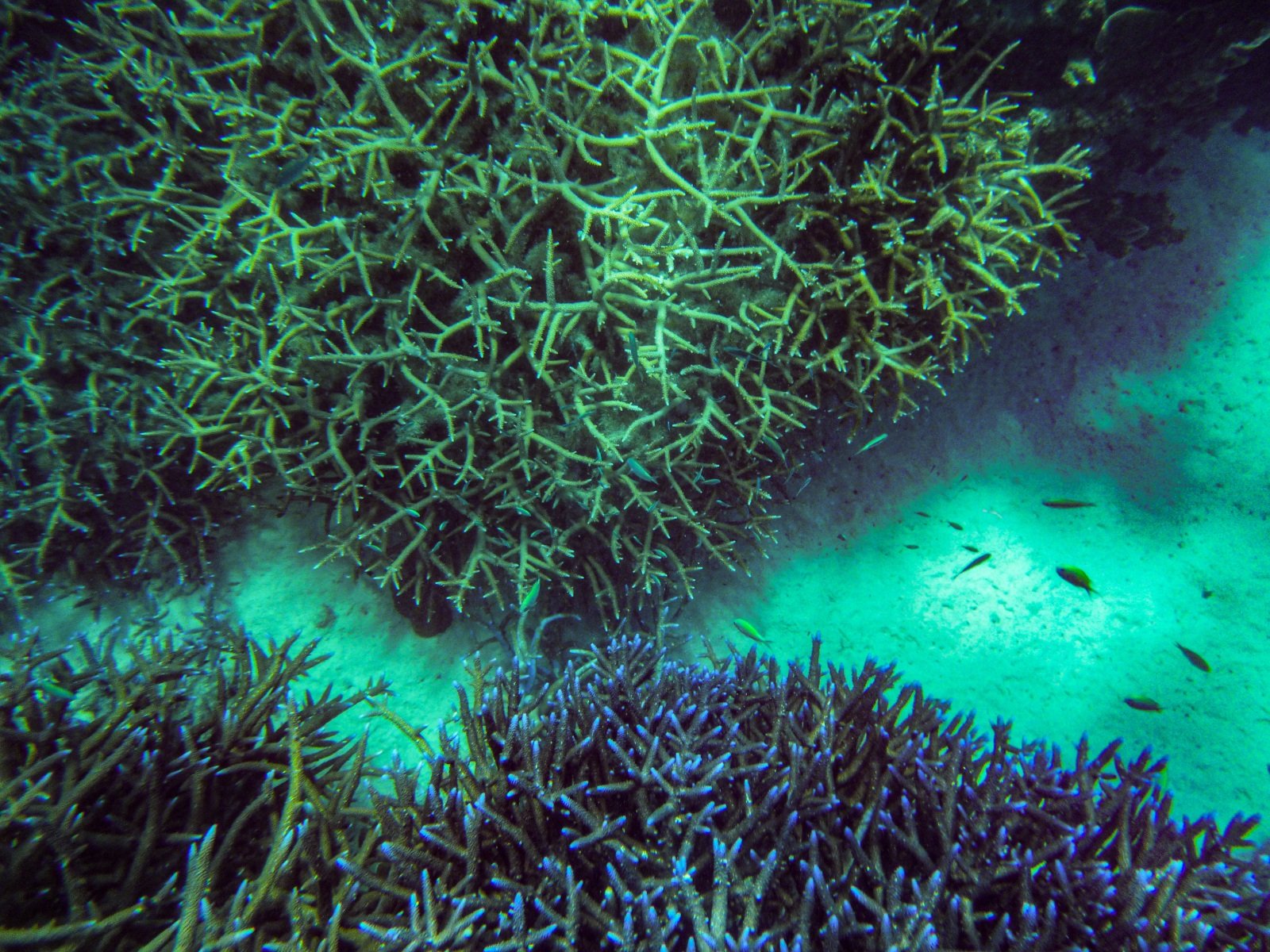
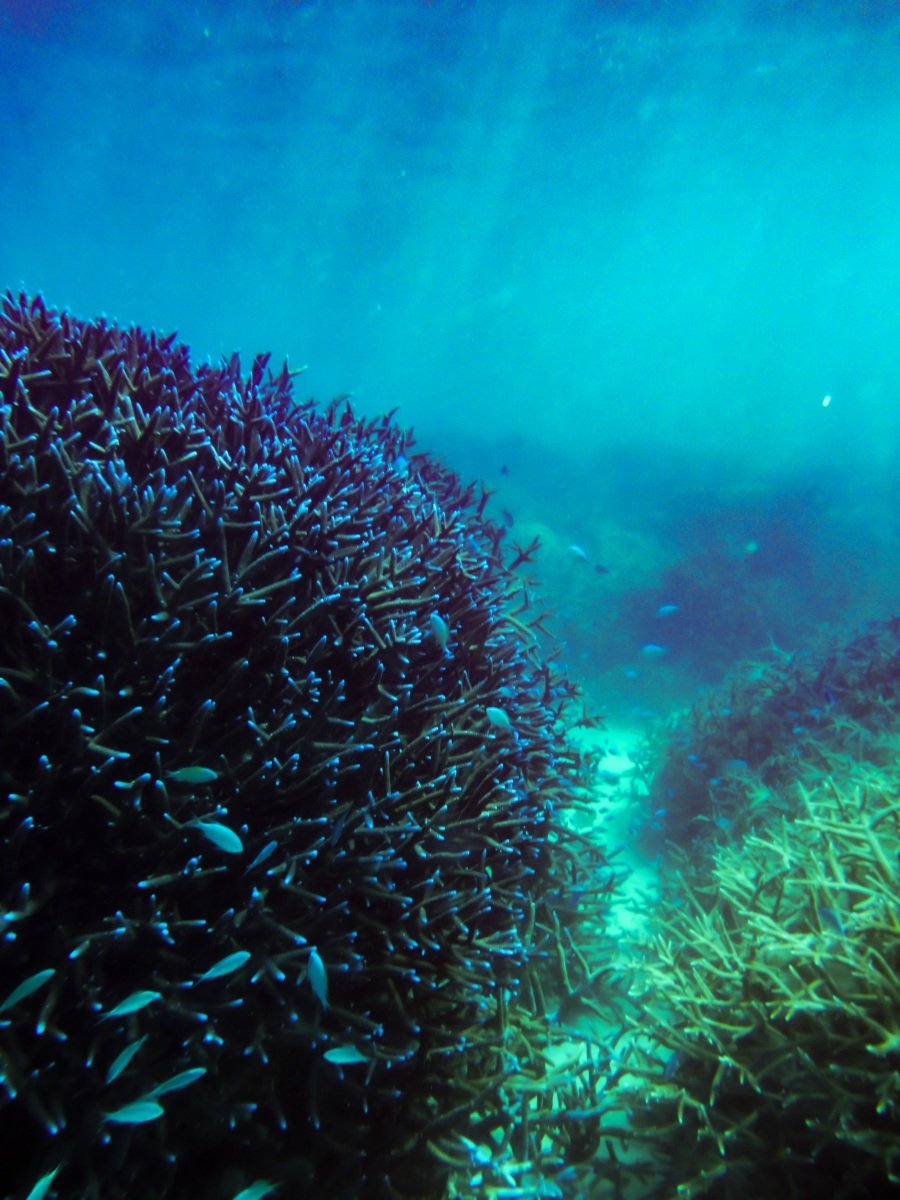
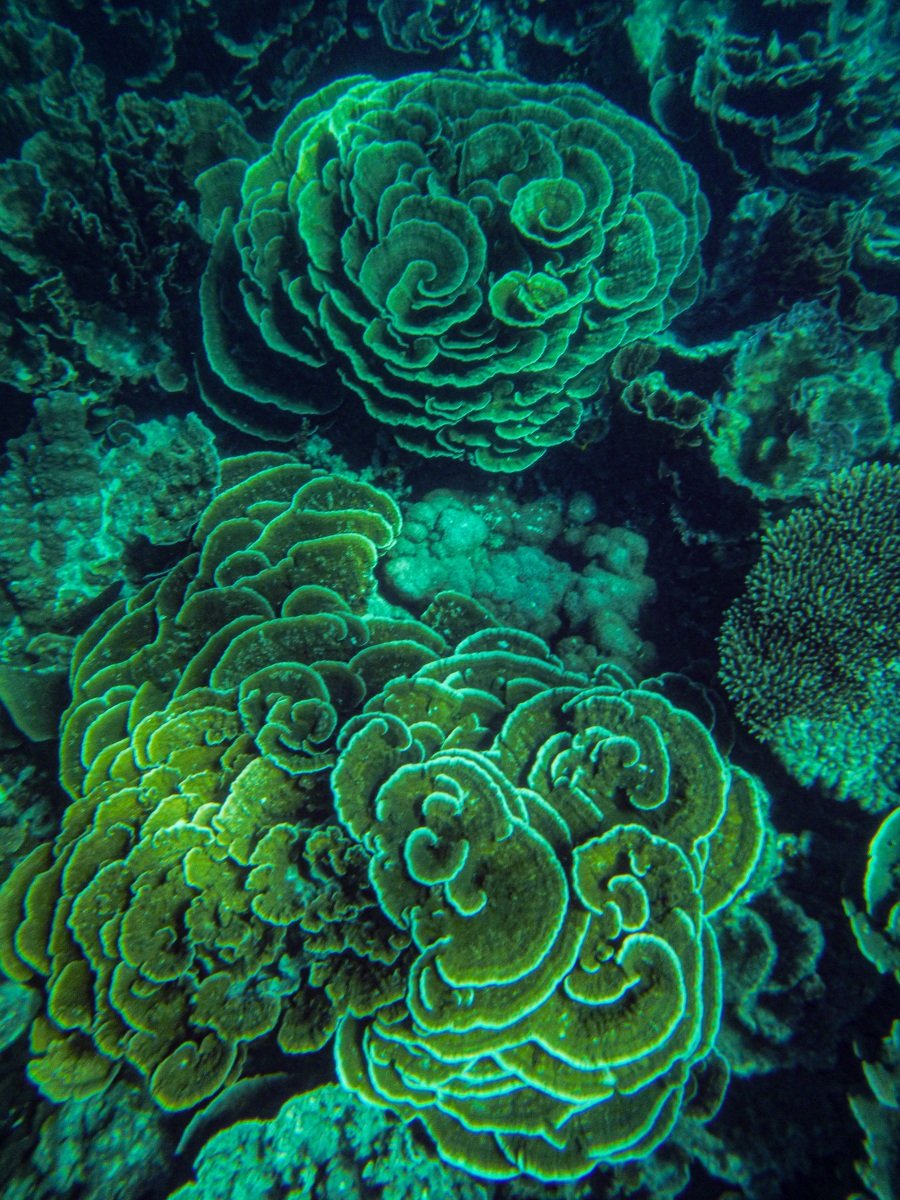
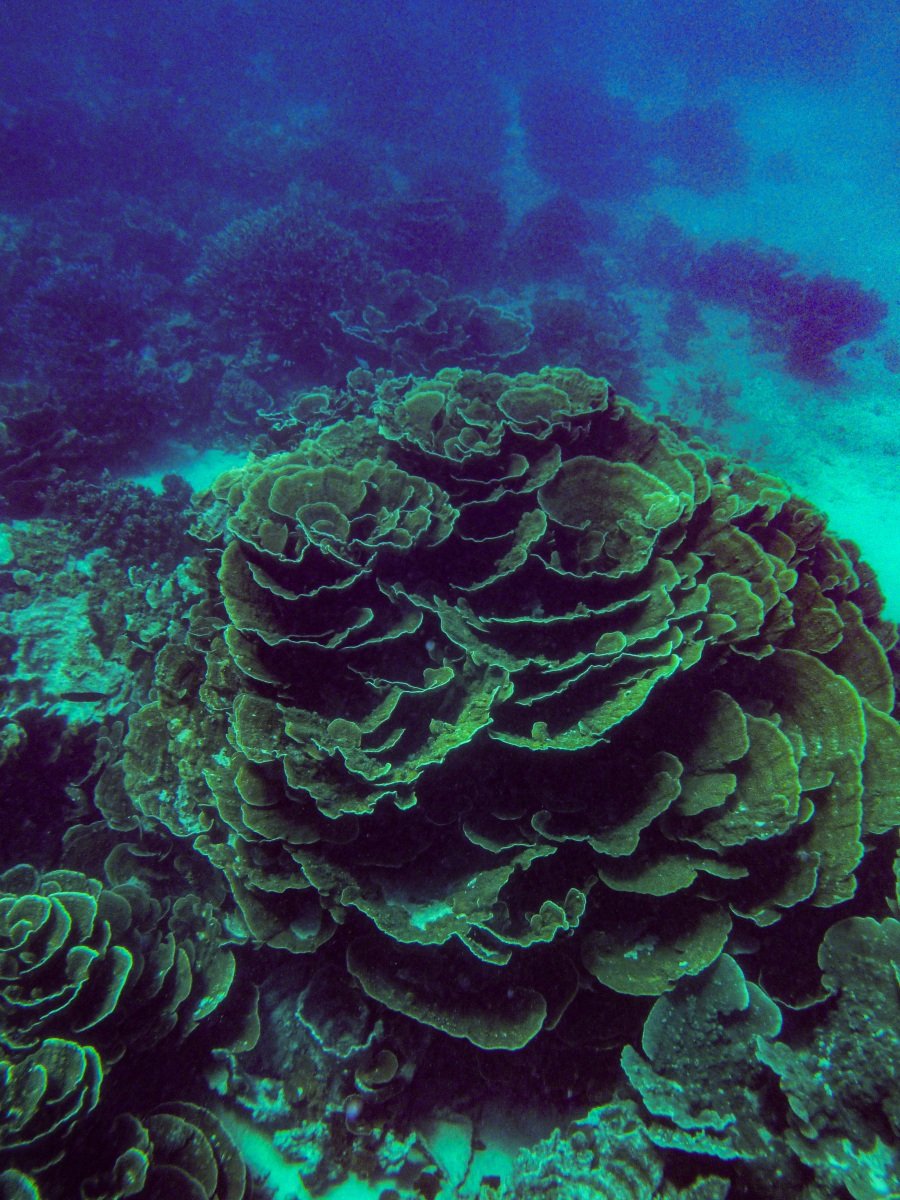
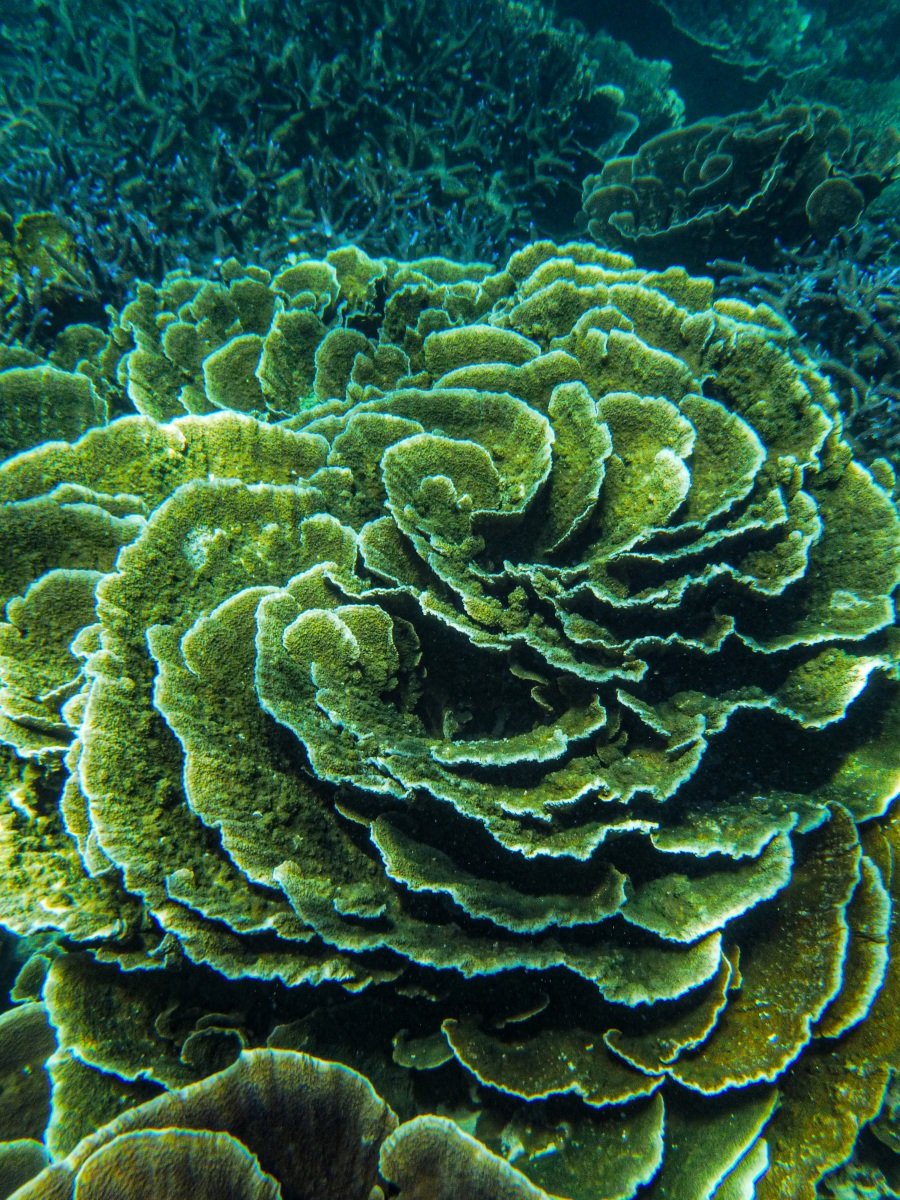
The coral is in shapes new to me. There is coral like giant cabbage with overlapping green leaves, yellow coral like fronds of fungi, coral shaped like a cross between a brain and a golf ball (with round wrinkles, not long wrinkles), coral like outstretched tentacles with blue tips, there’s a field of purple coral like flowers on dead tree branches.

Tiny fish dart and hide deep in the coral as we drift over them, larger fish ignore us and continue on.

When we eventually exit the water an hour later I realise how cold I had become, but I hadn’t noticed while I was snorkelling. The hot sun rapidly brings heat back to my skin.


We repeat the loop three more times, walking back along the beach and snorkelling into the bay. Each time there are new things to explore, though each time the cold returns faster.

The combination of the scrambling, playful exploring of Karijini and the alien underwater peace of Coral Bay has really peaked my joyful holiday feeling.

Karijini – day 2

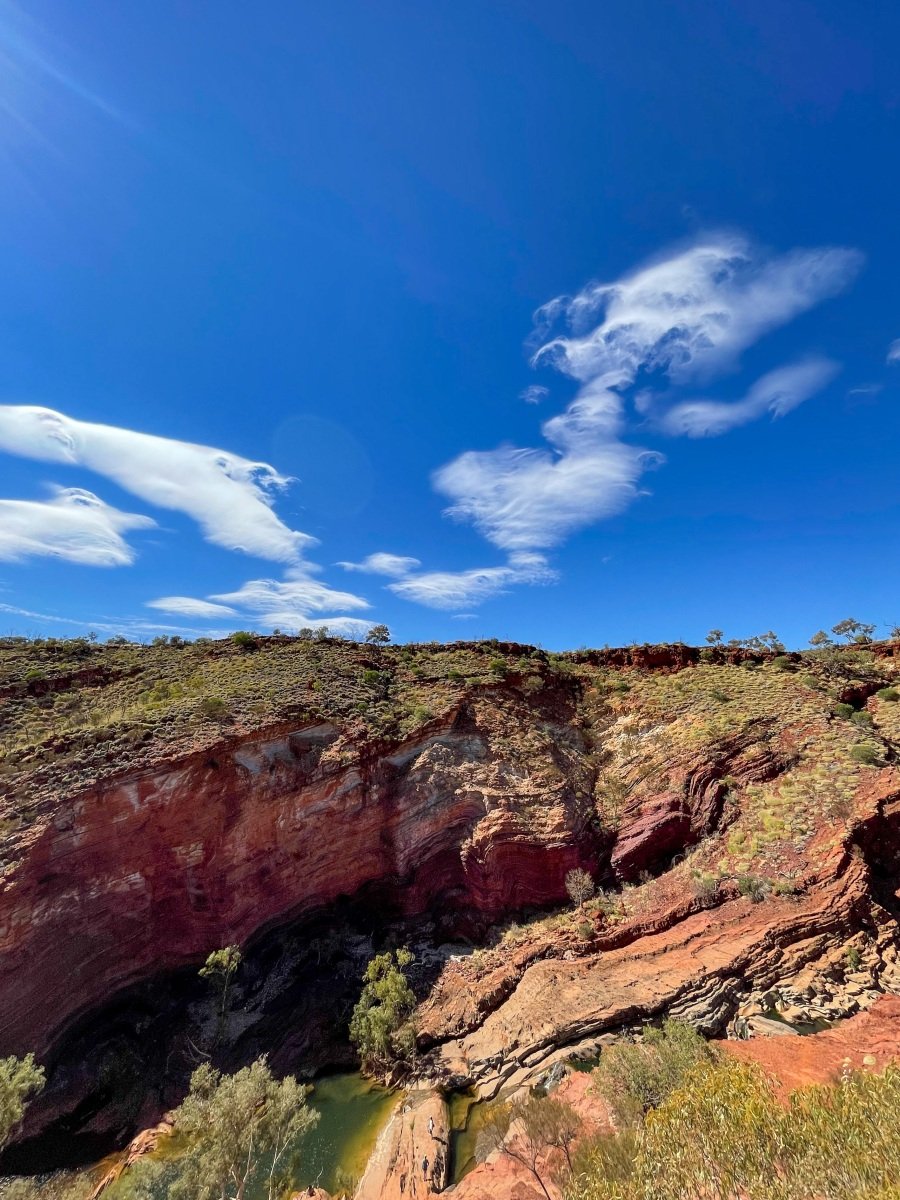
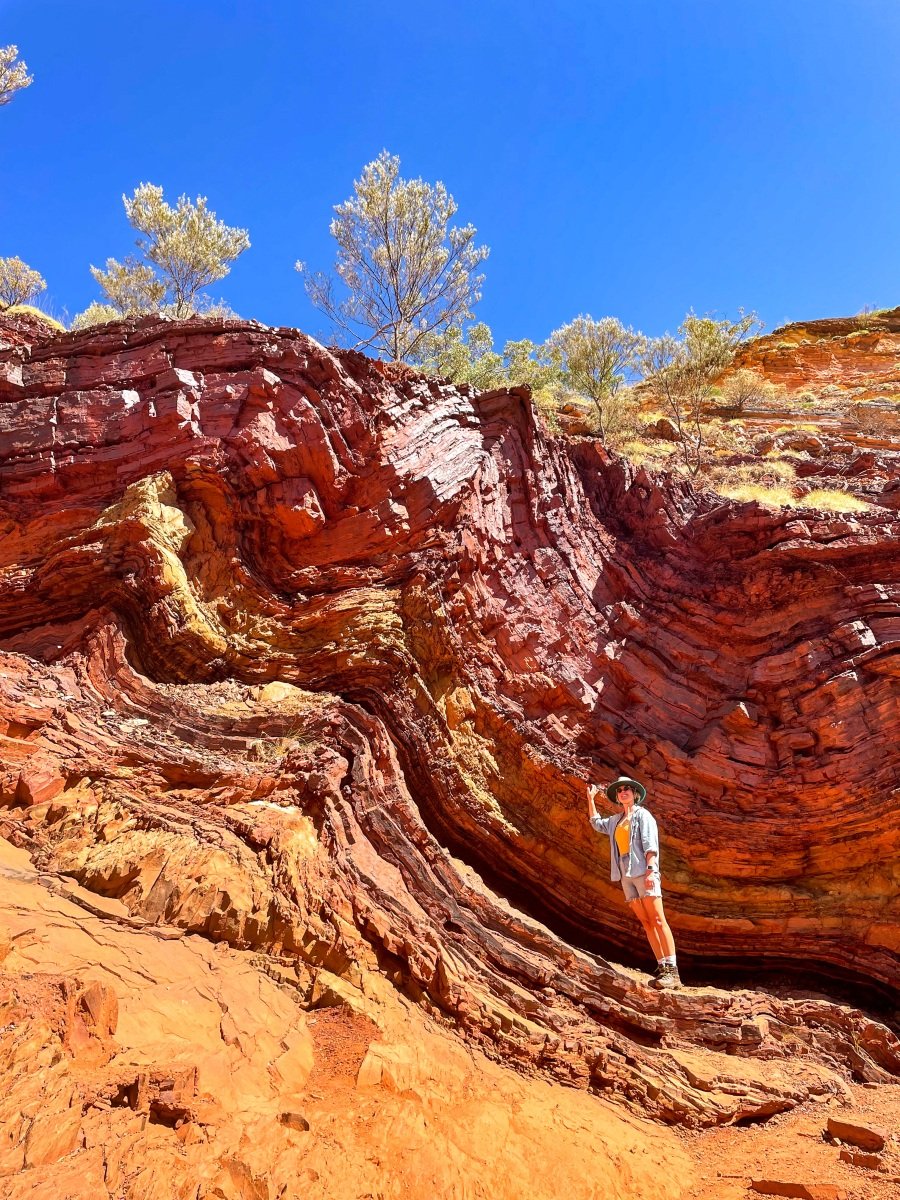
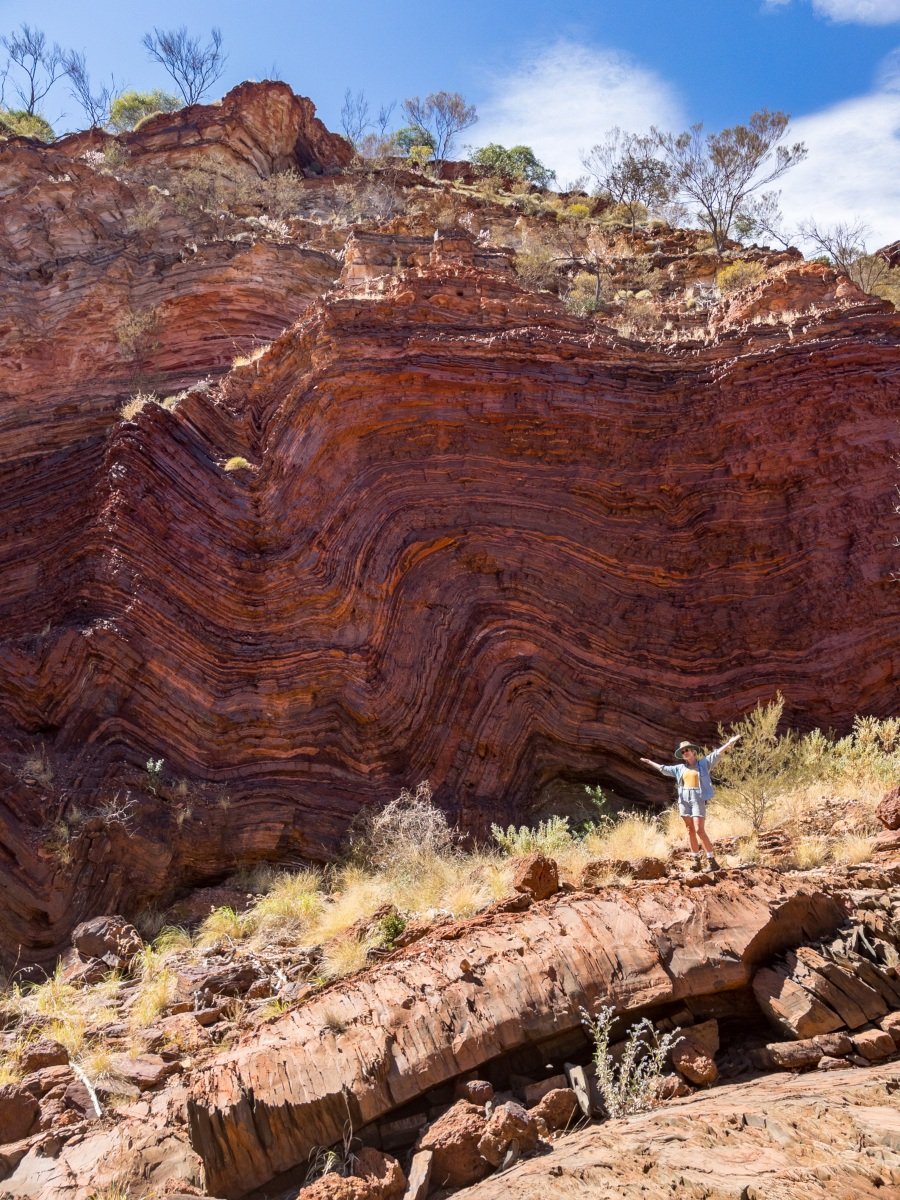
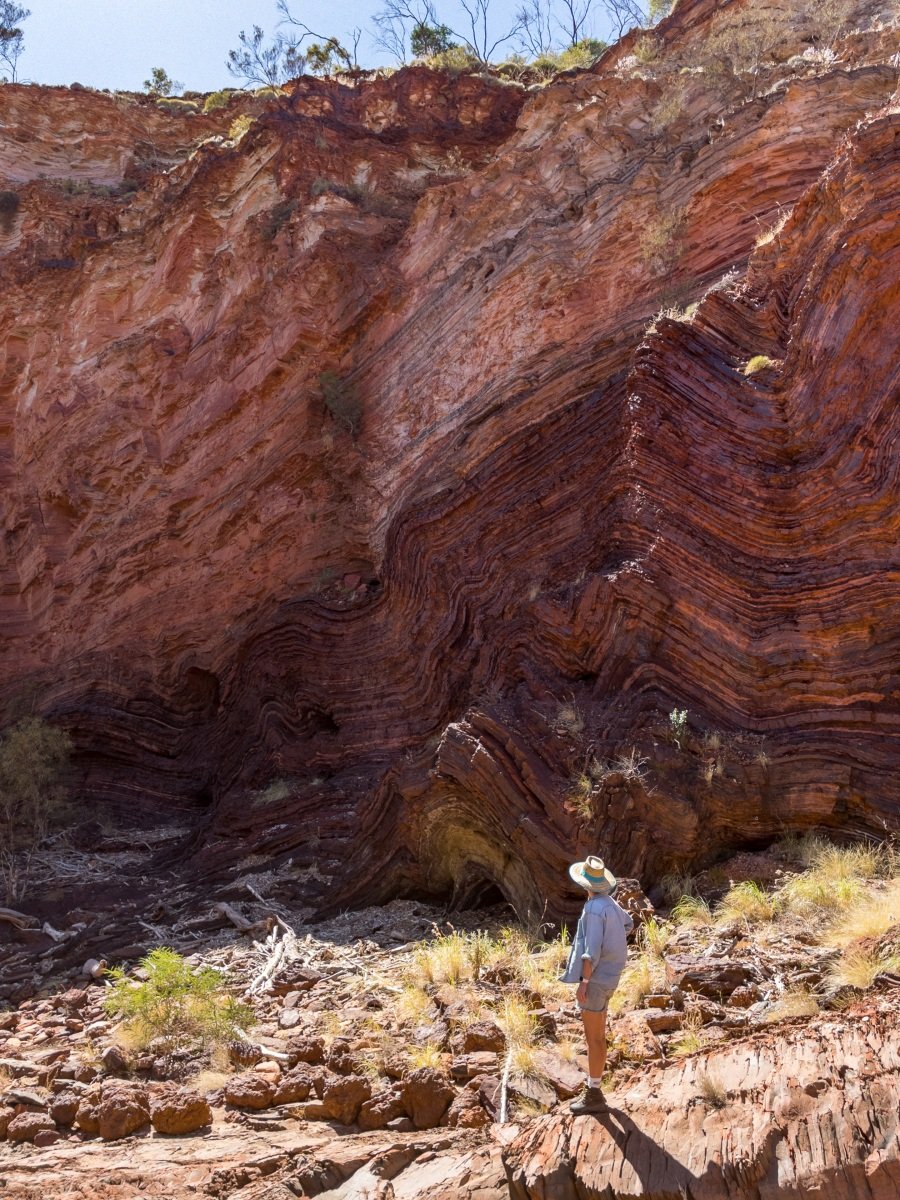
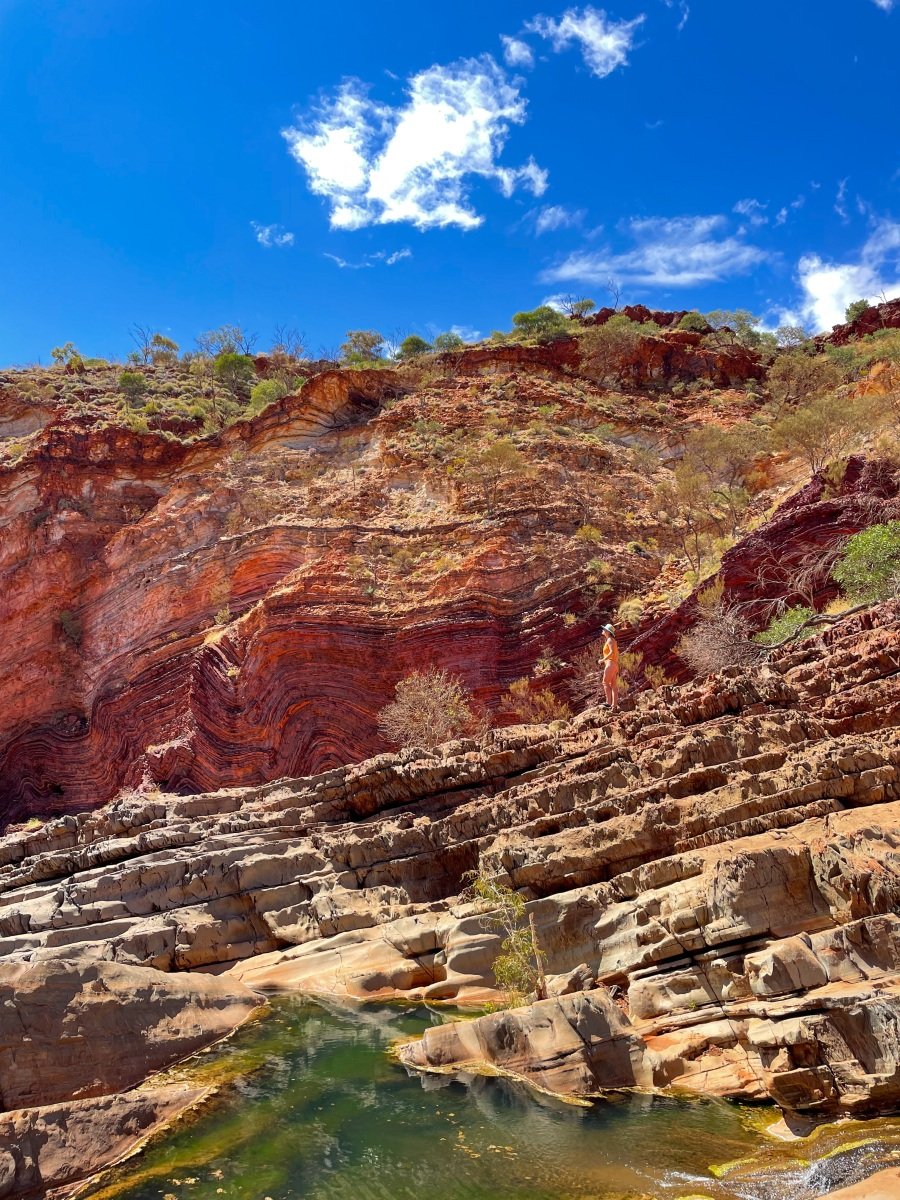
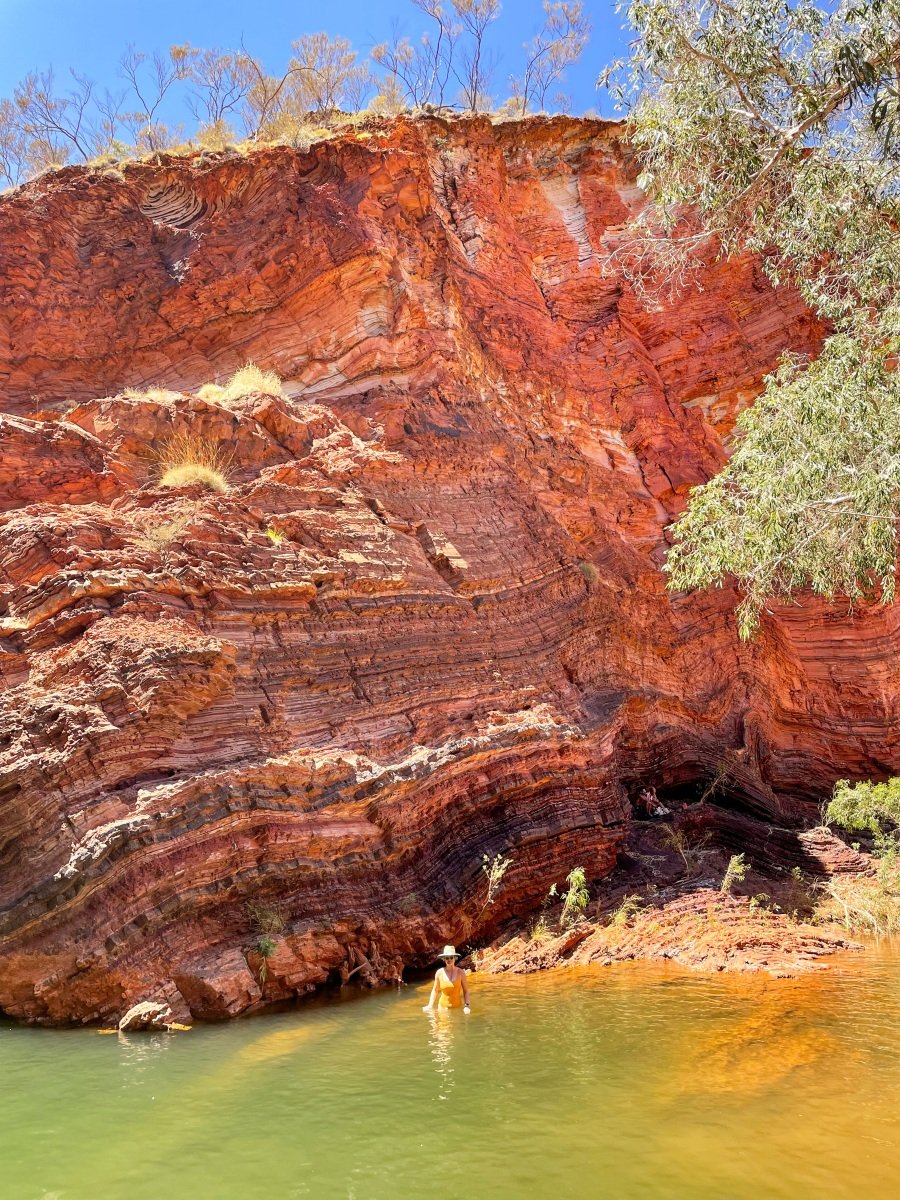
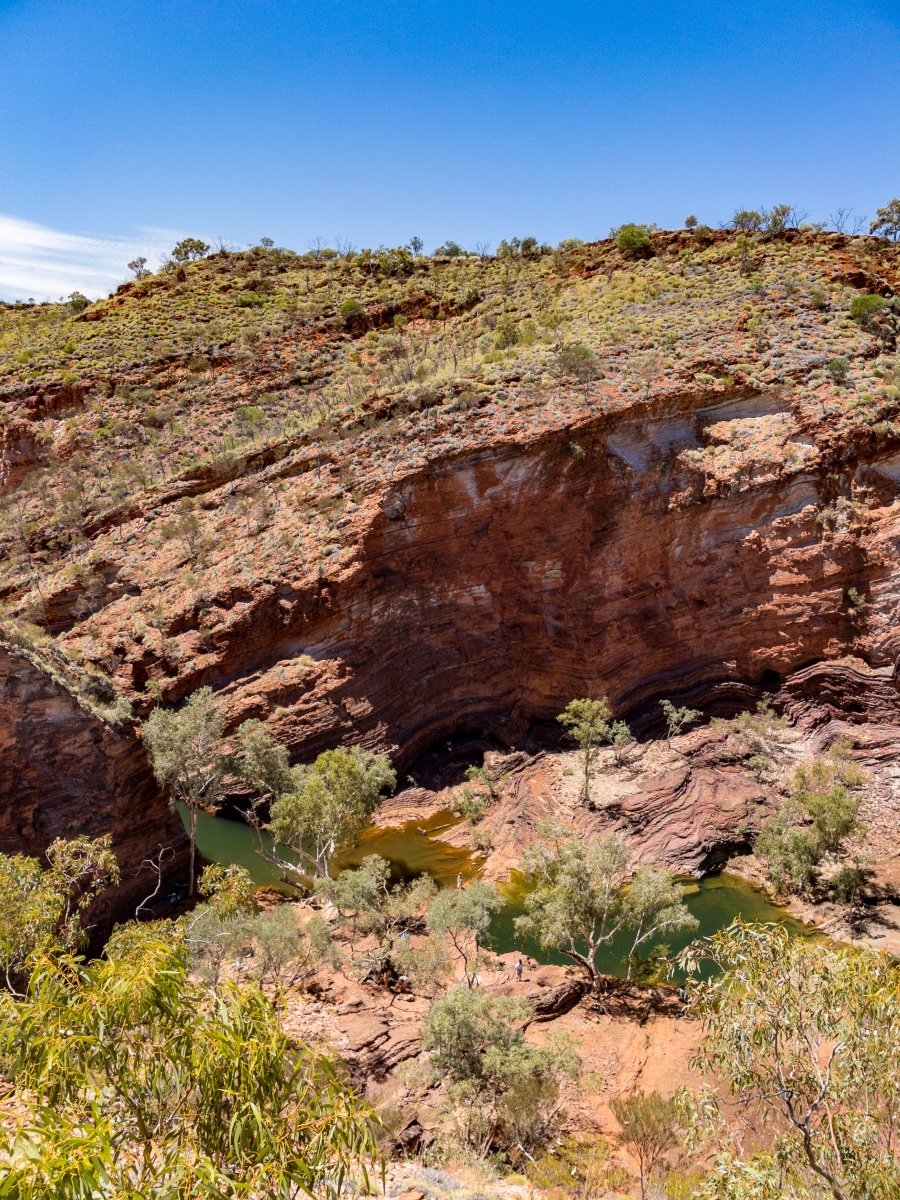
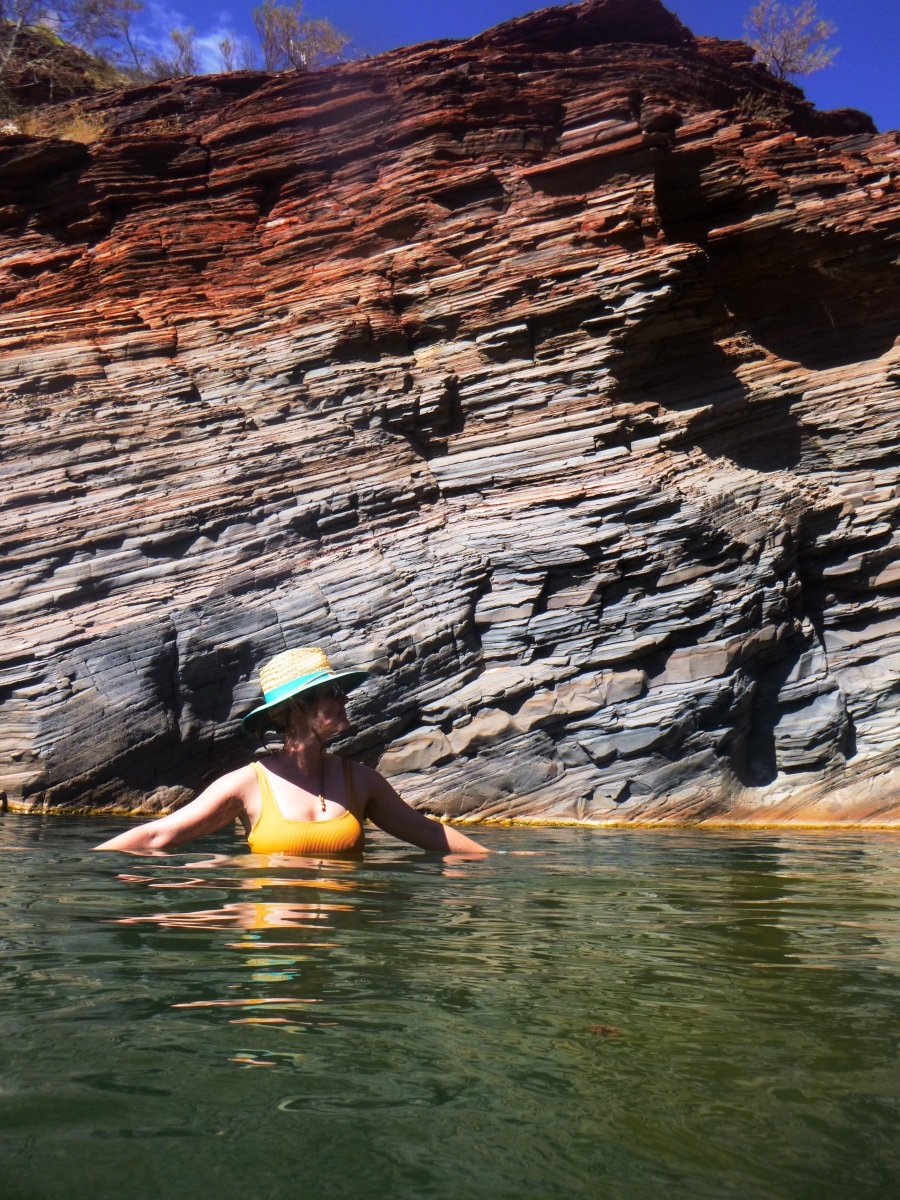
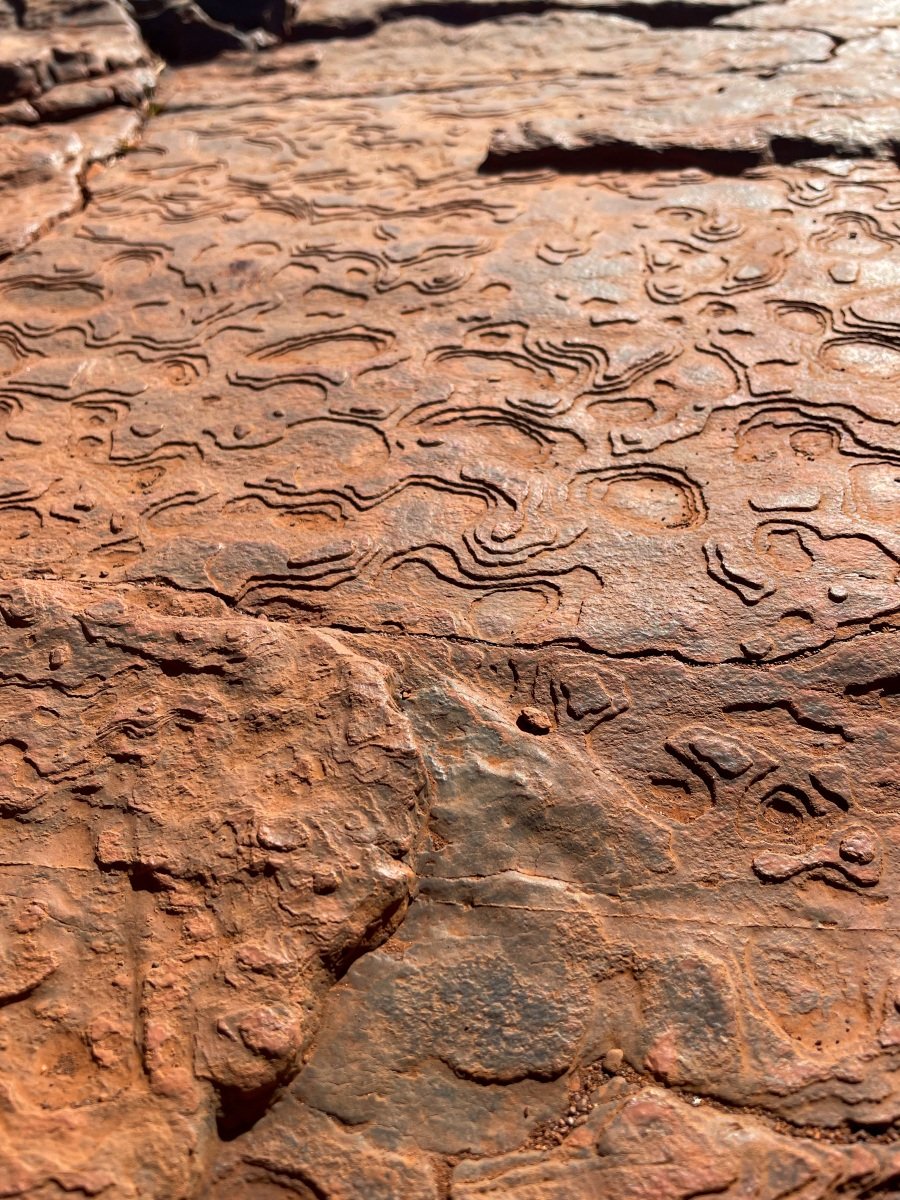
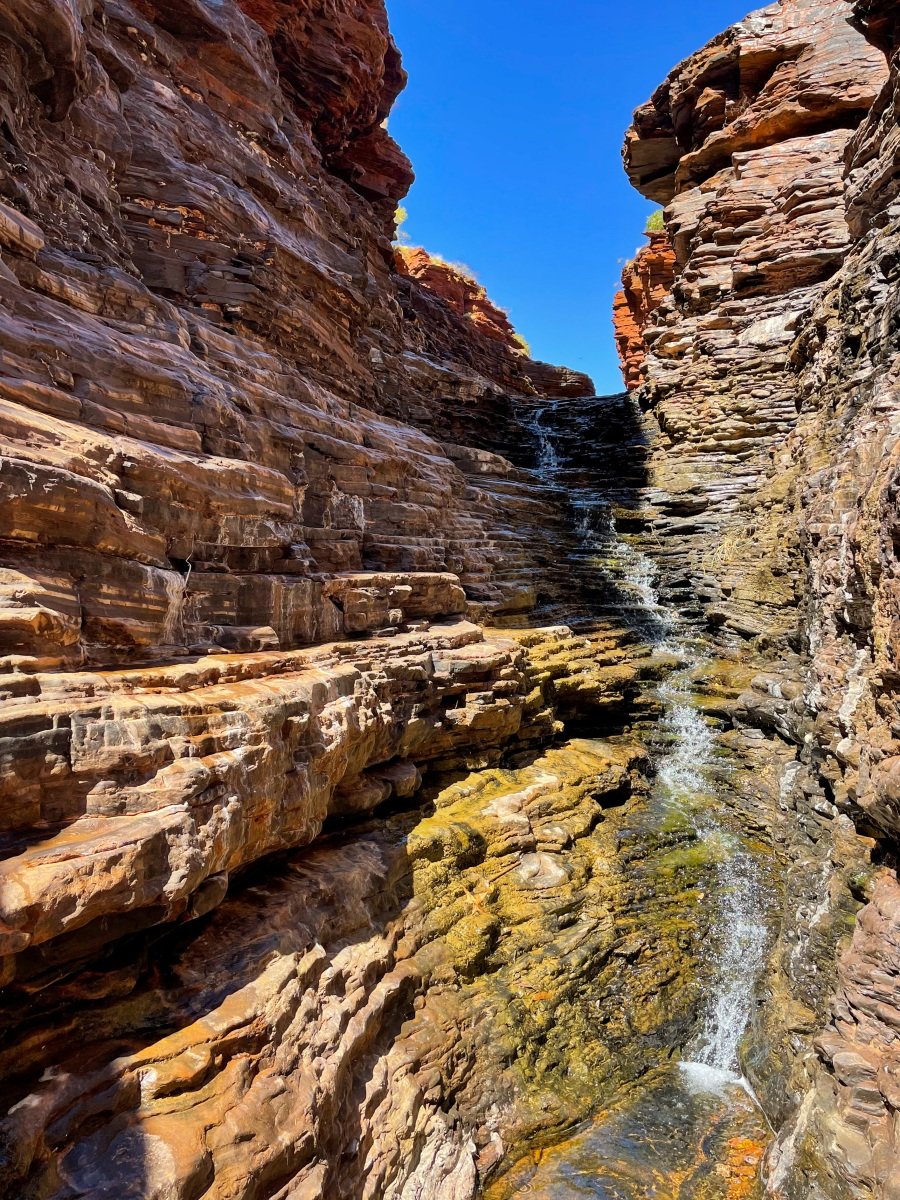
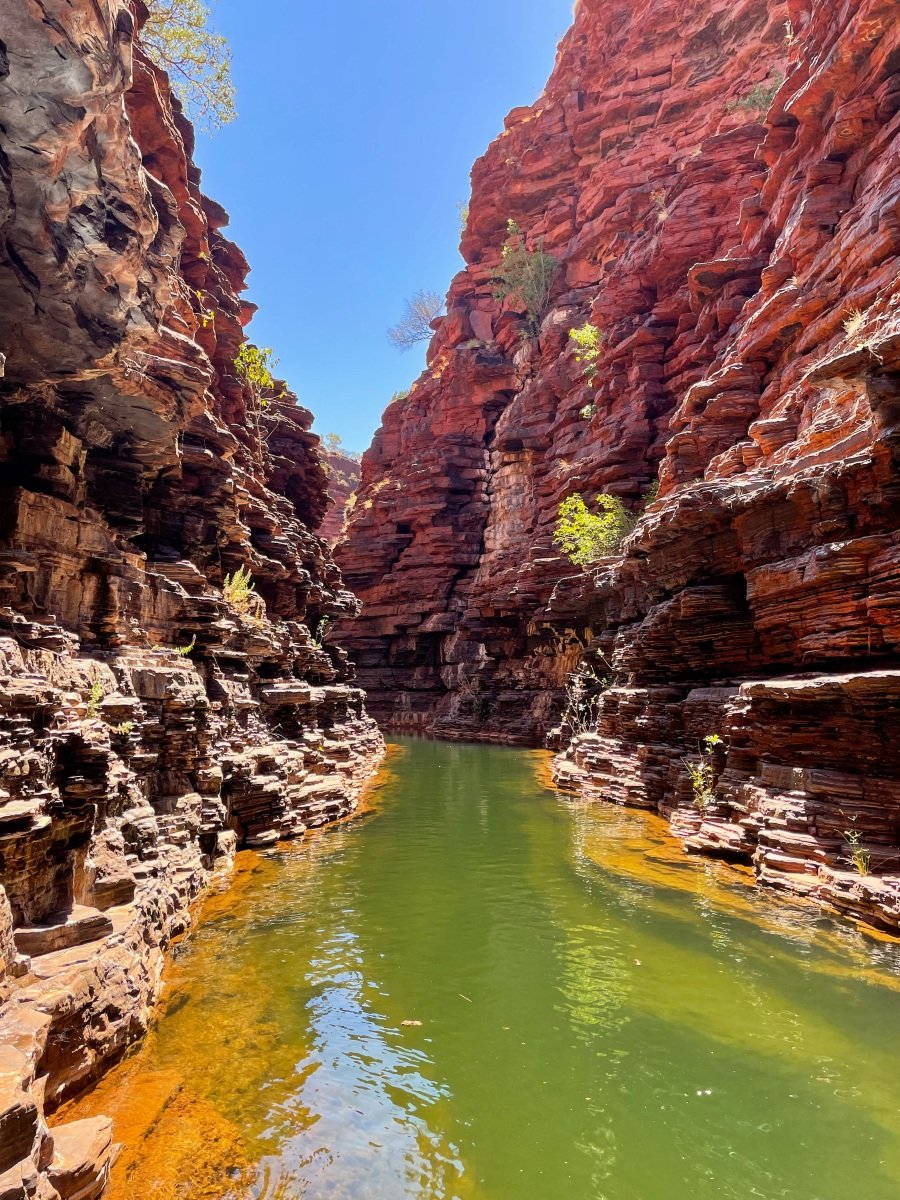
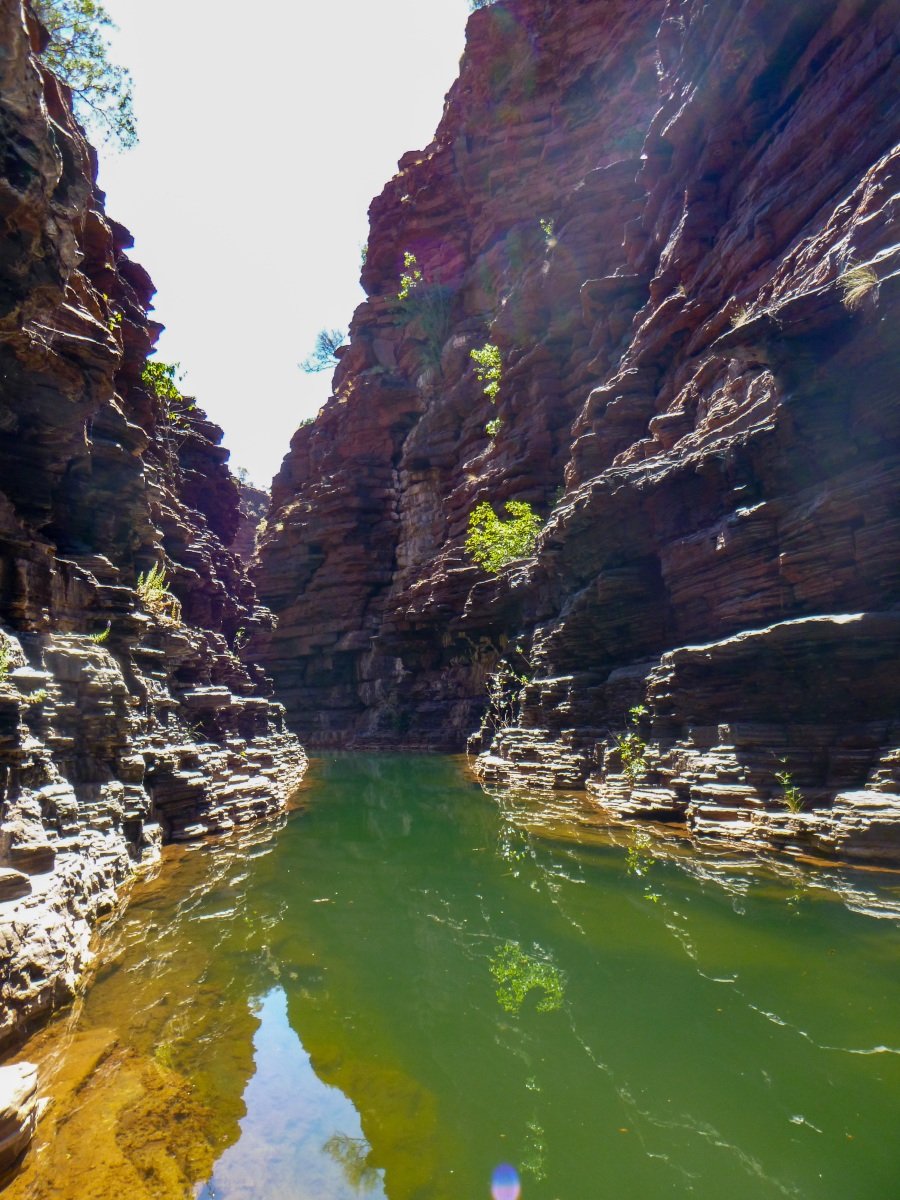
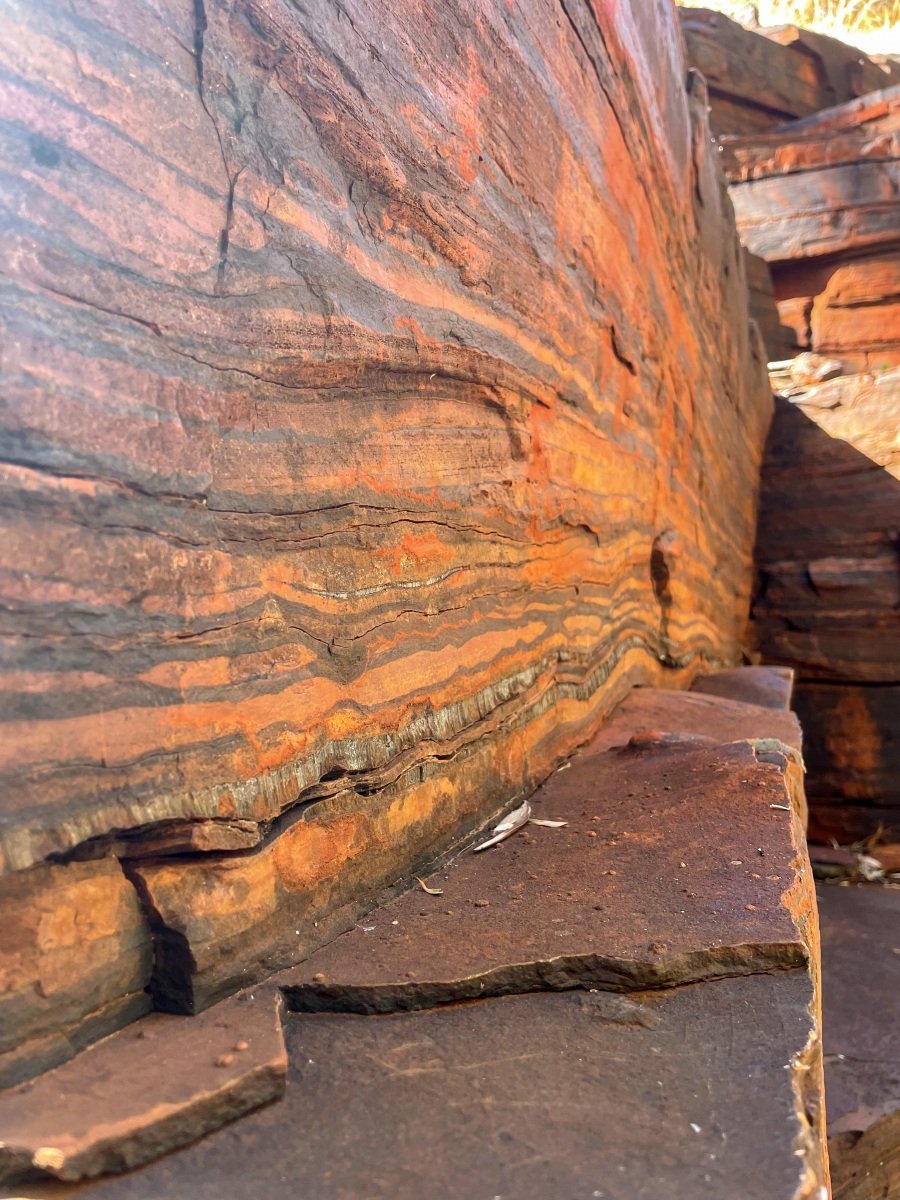
If yesterday’s horizontal strata needed an antidote, then Hammersley Gorge is it! Here the strata is immediately visible but utterly warped, folded and wrenched into incredible shapes. The drama of the events which created these shapes is quite unimaginable.

It’s another long drive to get to the gorge today, this time on about 50km of dirt road. The first 47km or so is on a Rio Tinto access road, and it’s one of the best dirt roads of the trip. But the final 3km is maintained by the government and it’s the worst dirt road of the trip! And so we crawled the last way, winding down to the carpark.

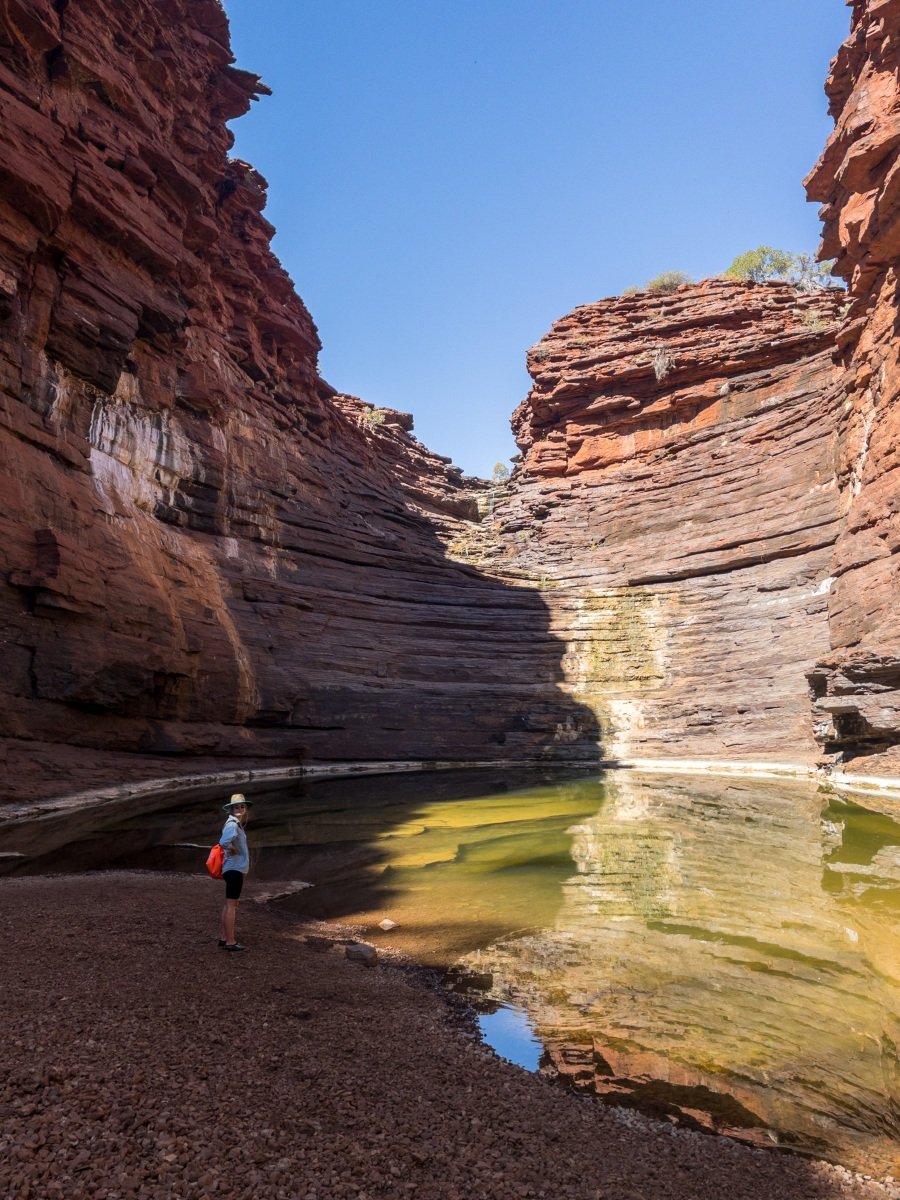
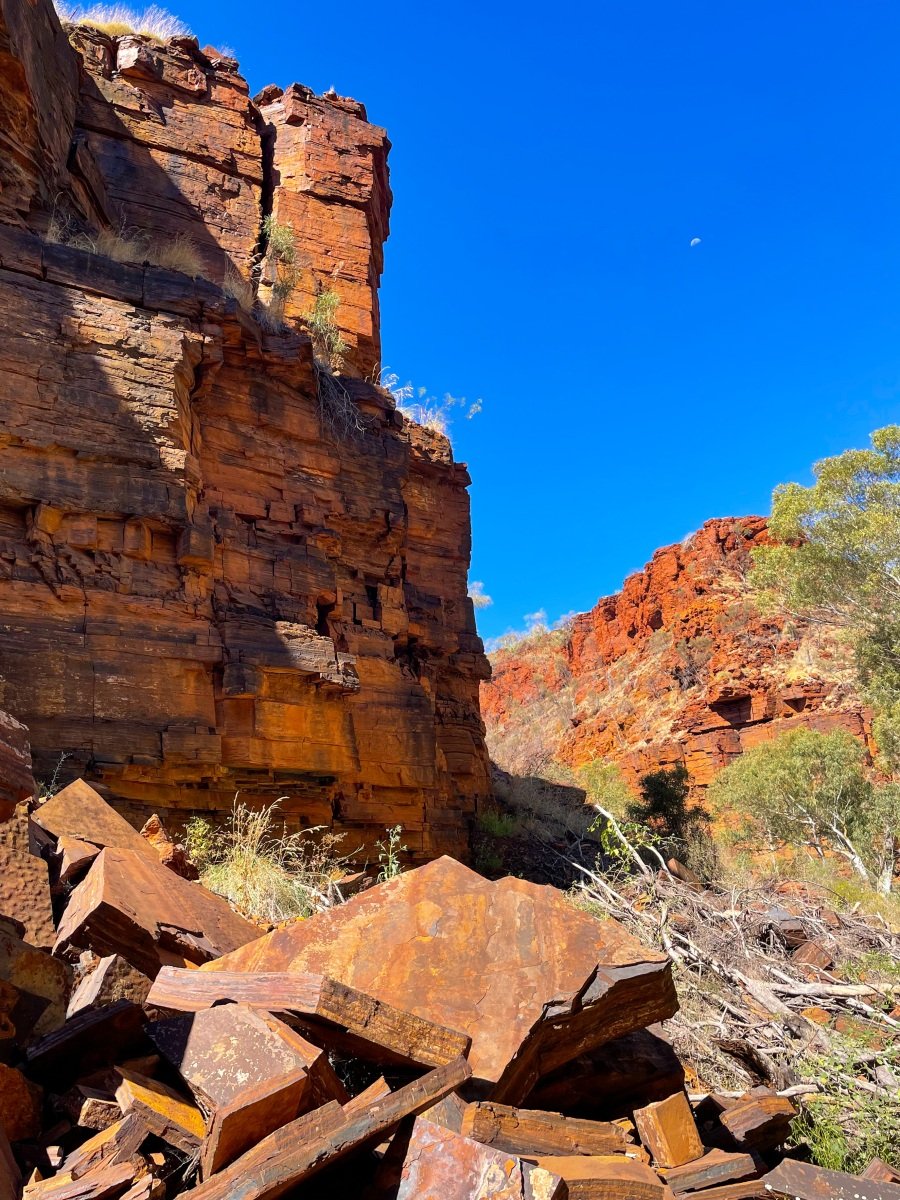
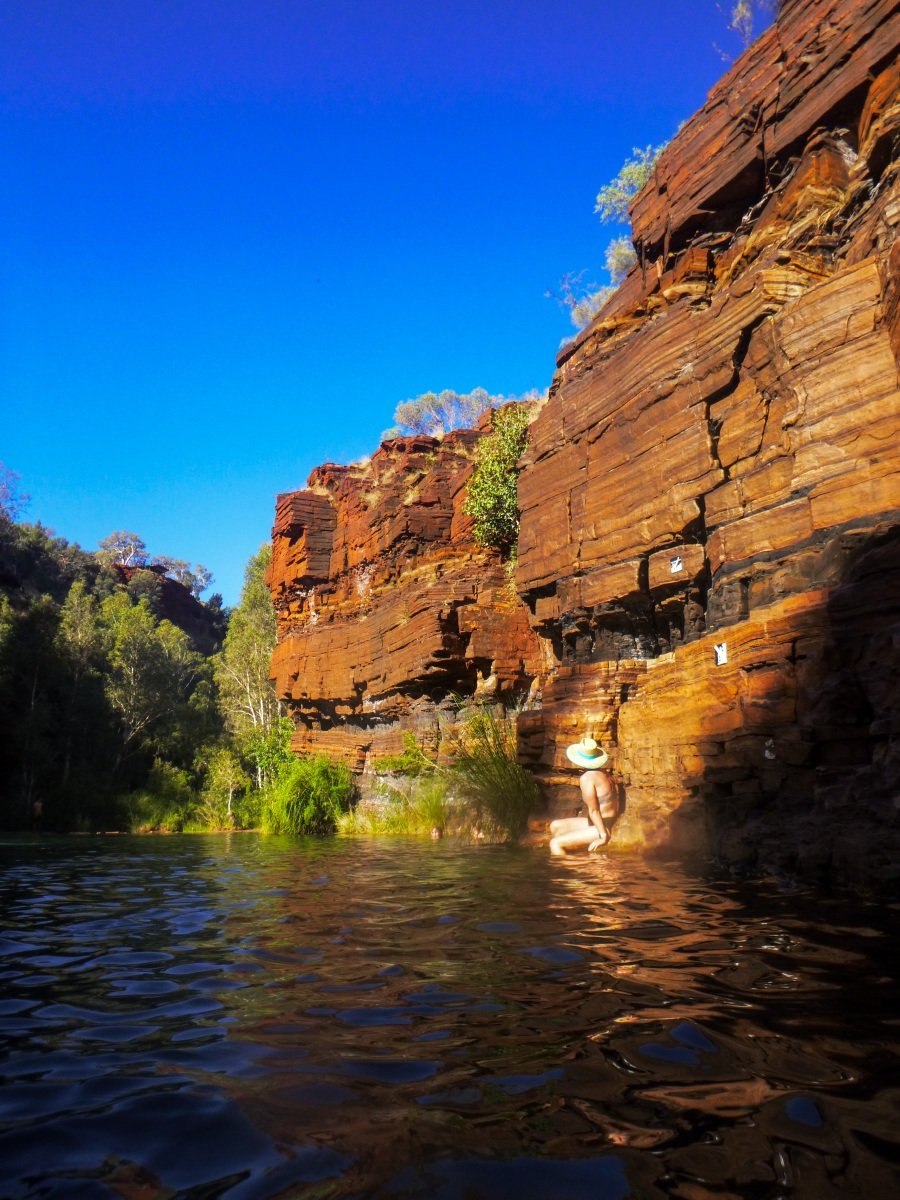
I am immediately struck by the colours. The rock is somehow even more red here, and the sky is bright deep blue with crisp curling white clouds. Then folds in the rock come into focus, crazy mind bending lines set into this iron-hard rock.

The walls are like a work of art and I sit to take them in. The form and story of these billion-year-old rocks brings me great wonder. I think of long hours spent in art galleries, and the works which force me to stop and then demand my time and attention before they release me from their spell. These walls arrest me in the same way.

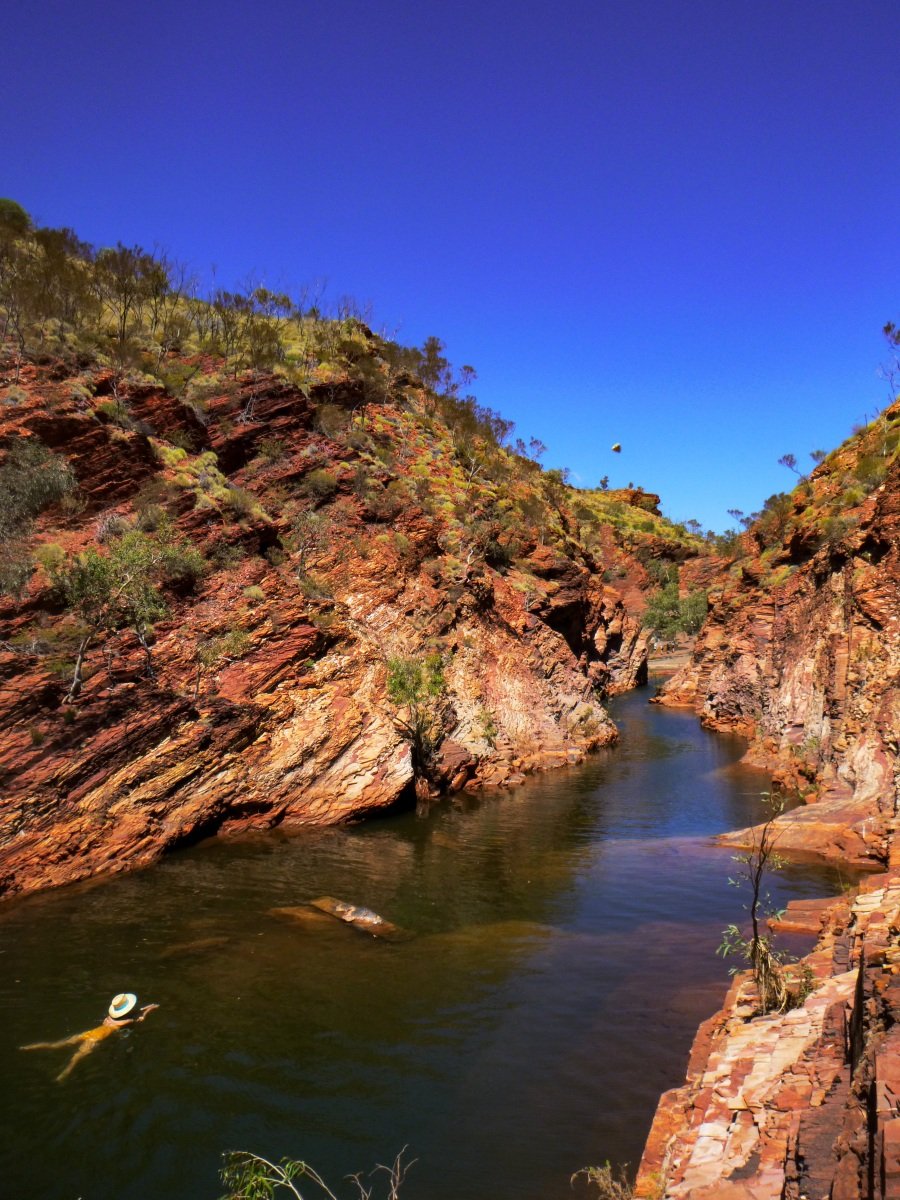
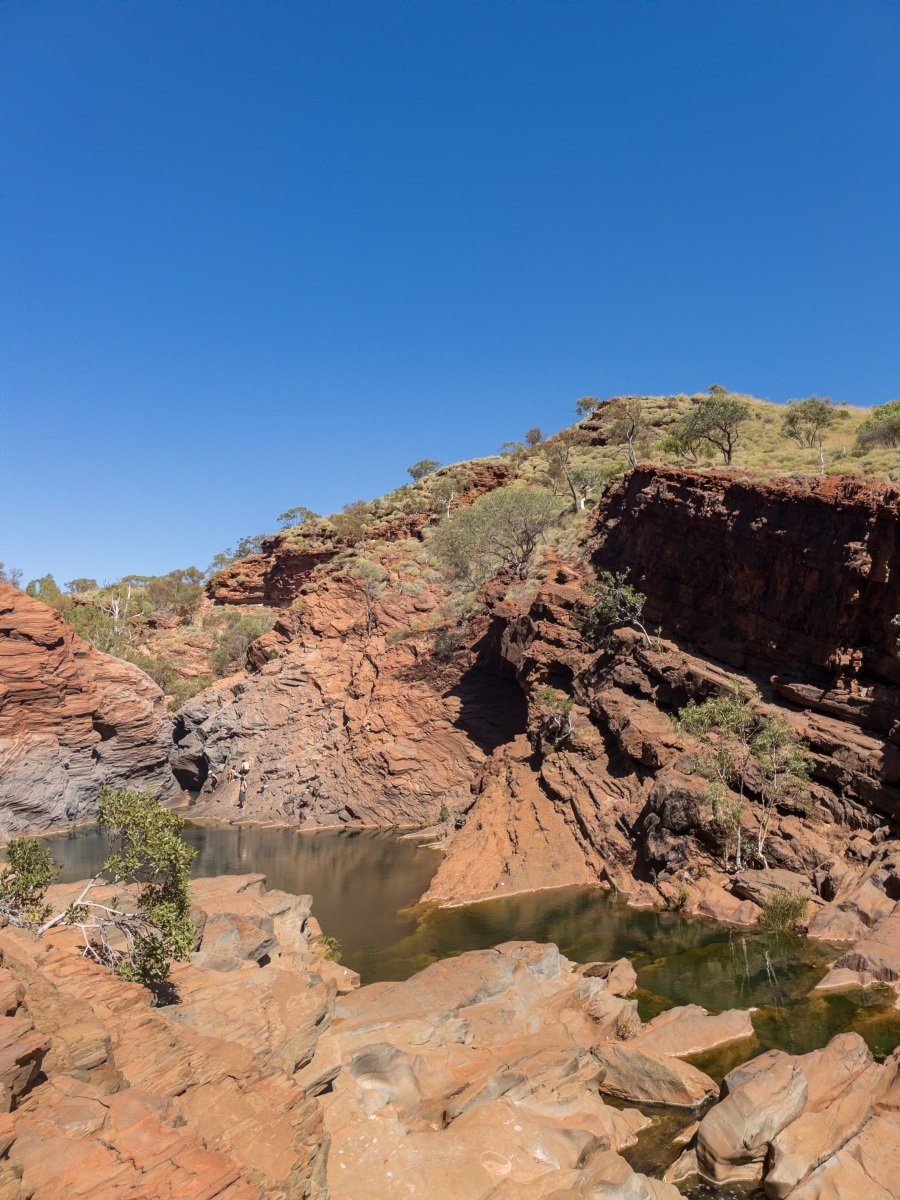
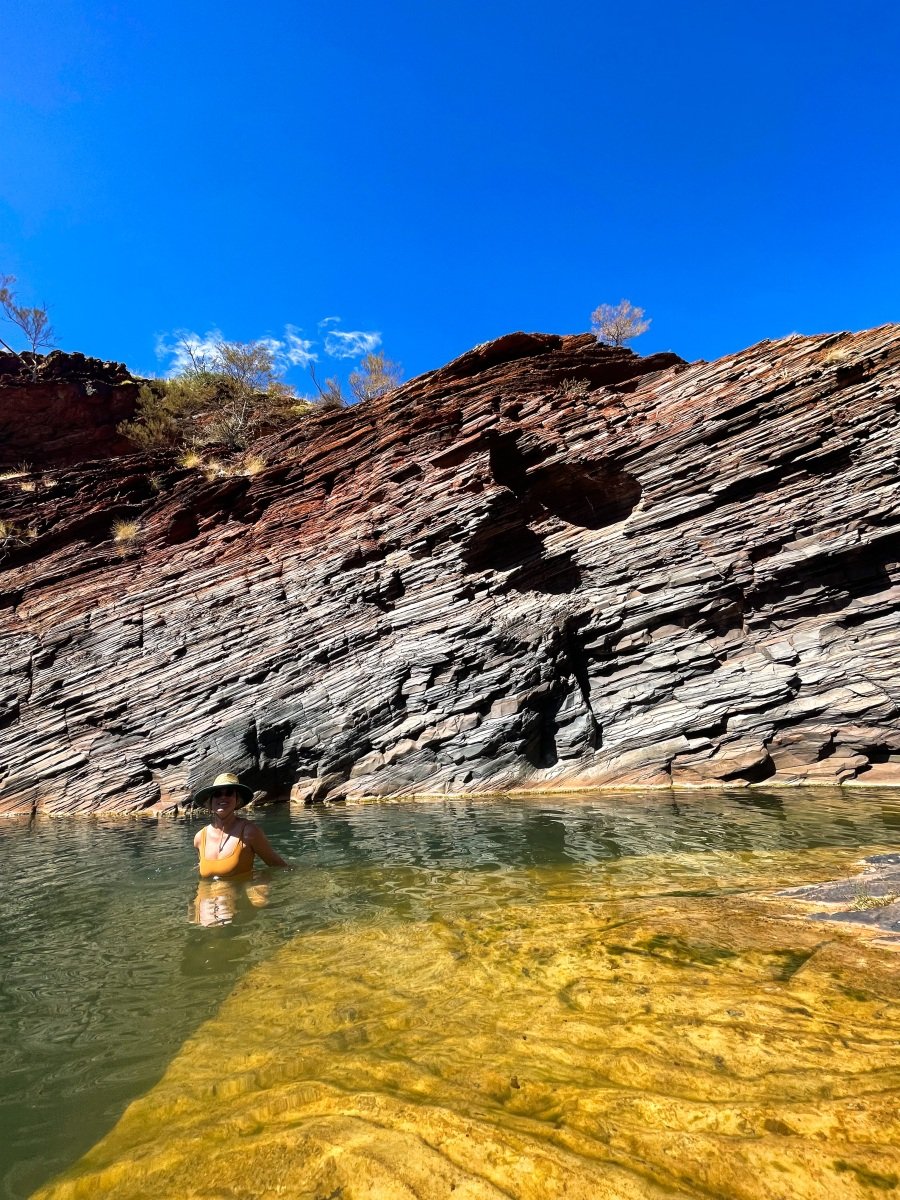
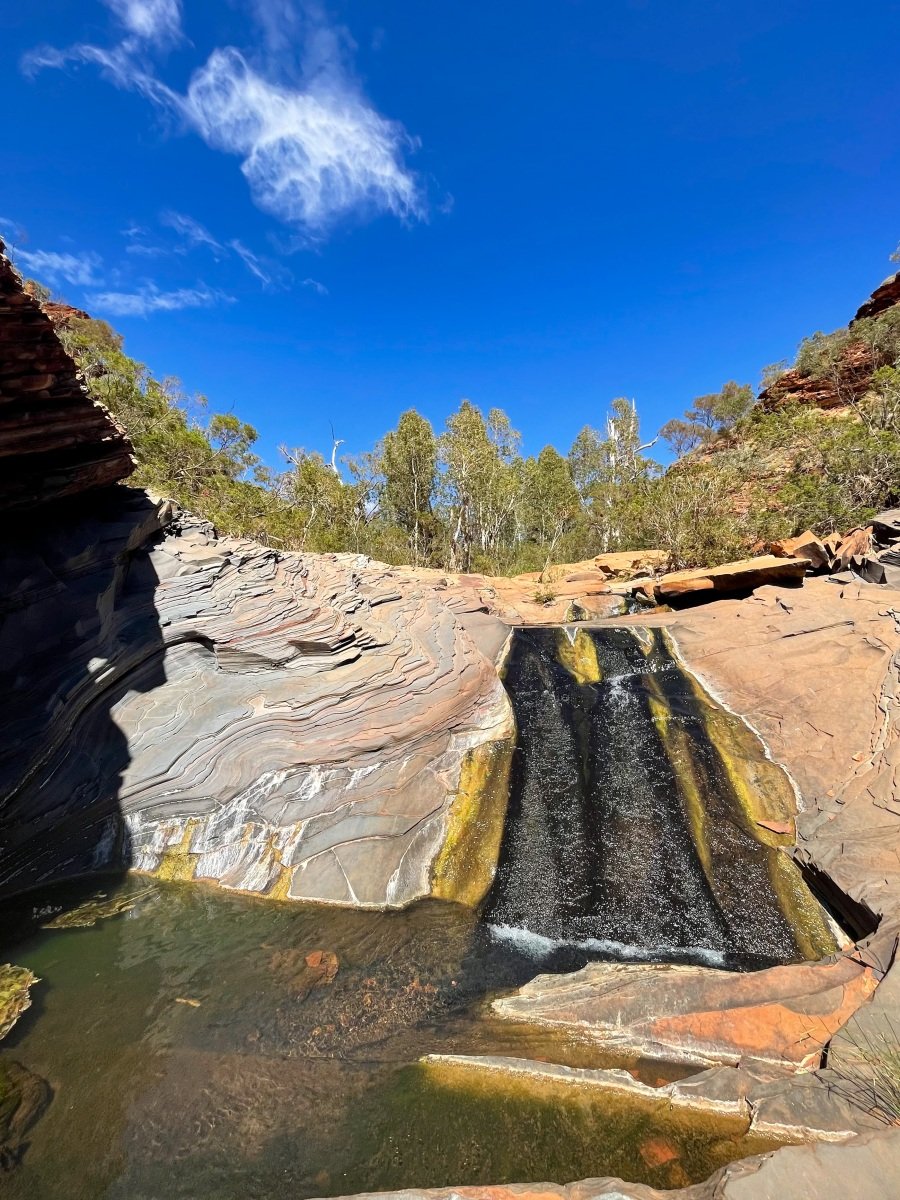
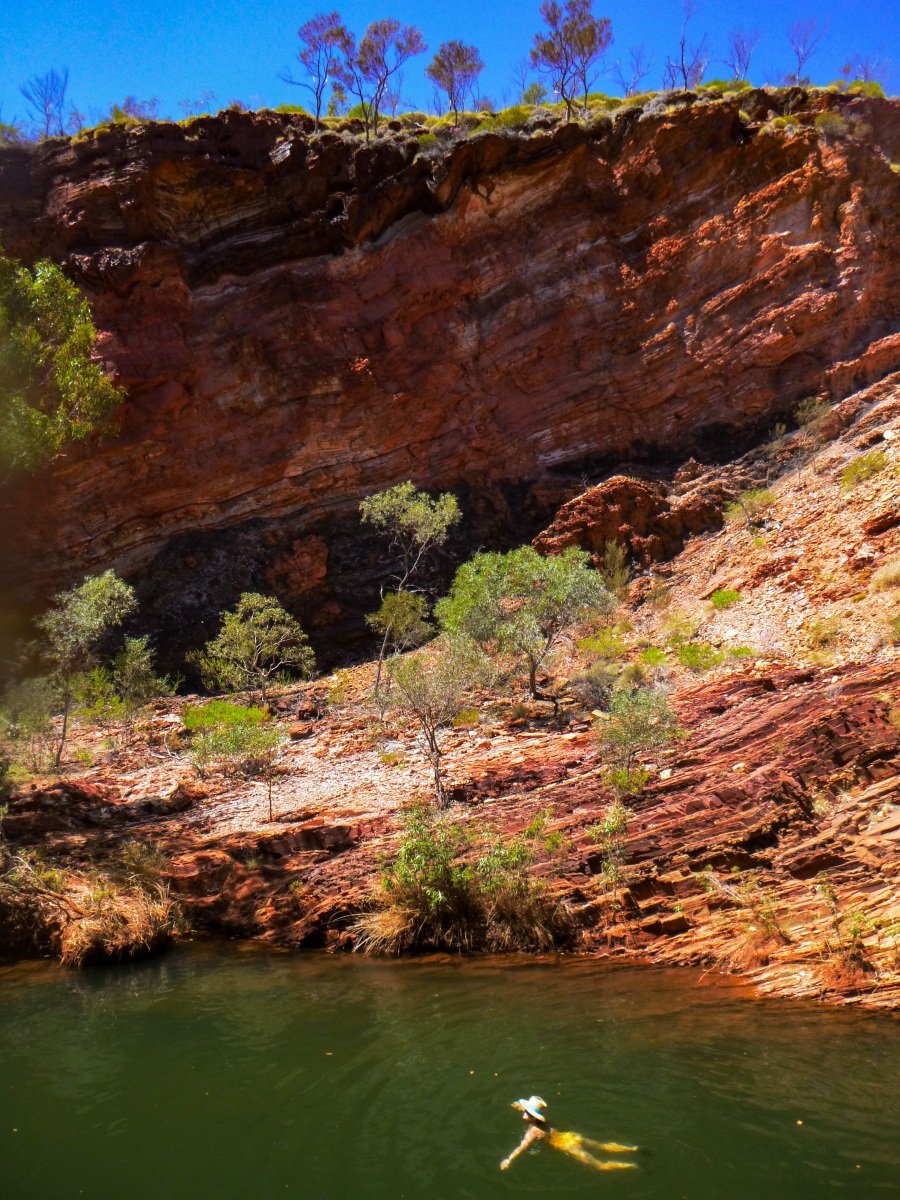
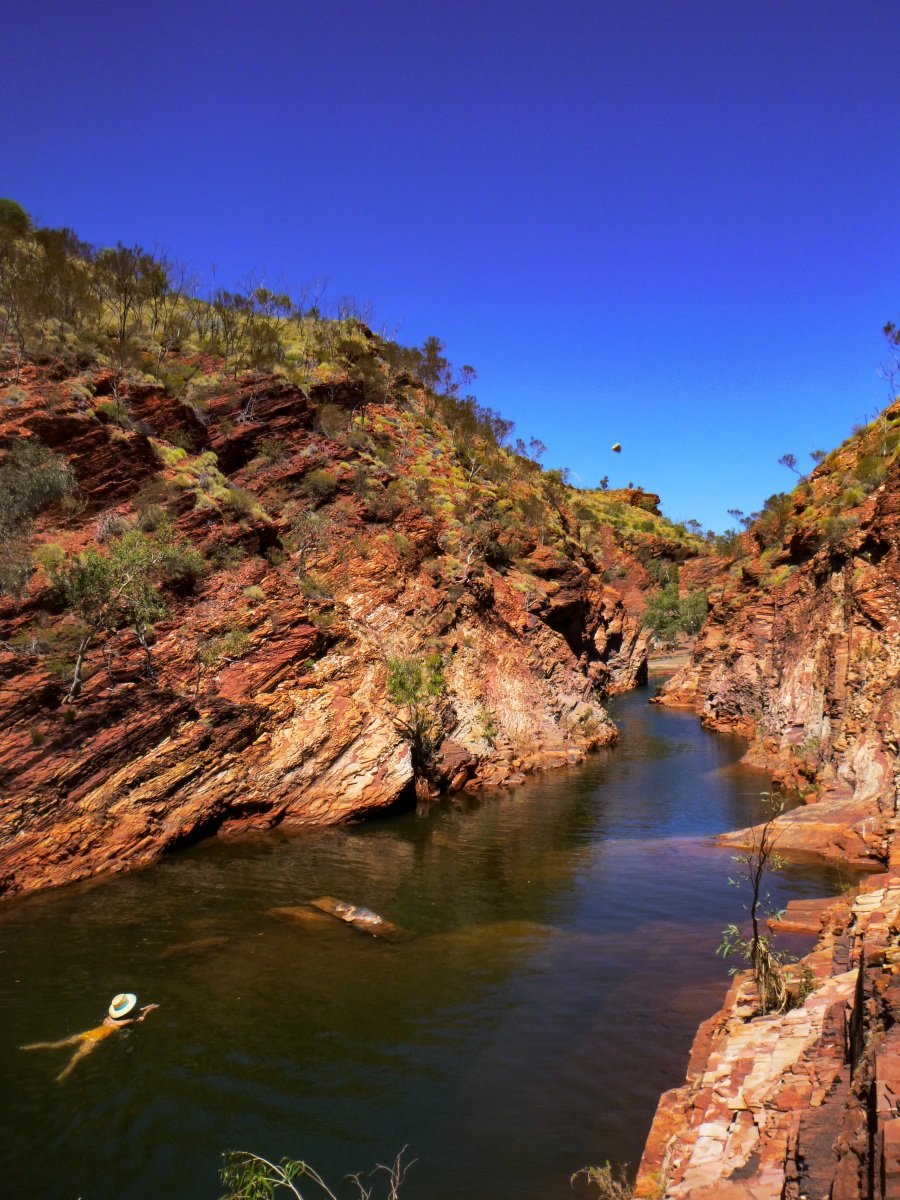
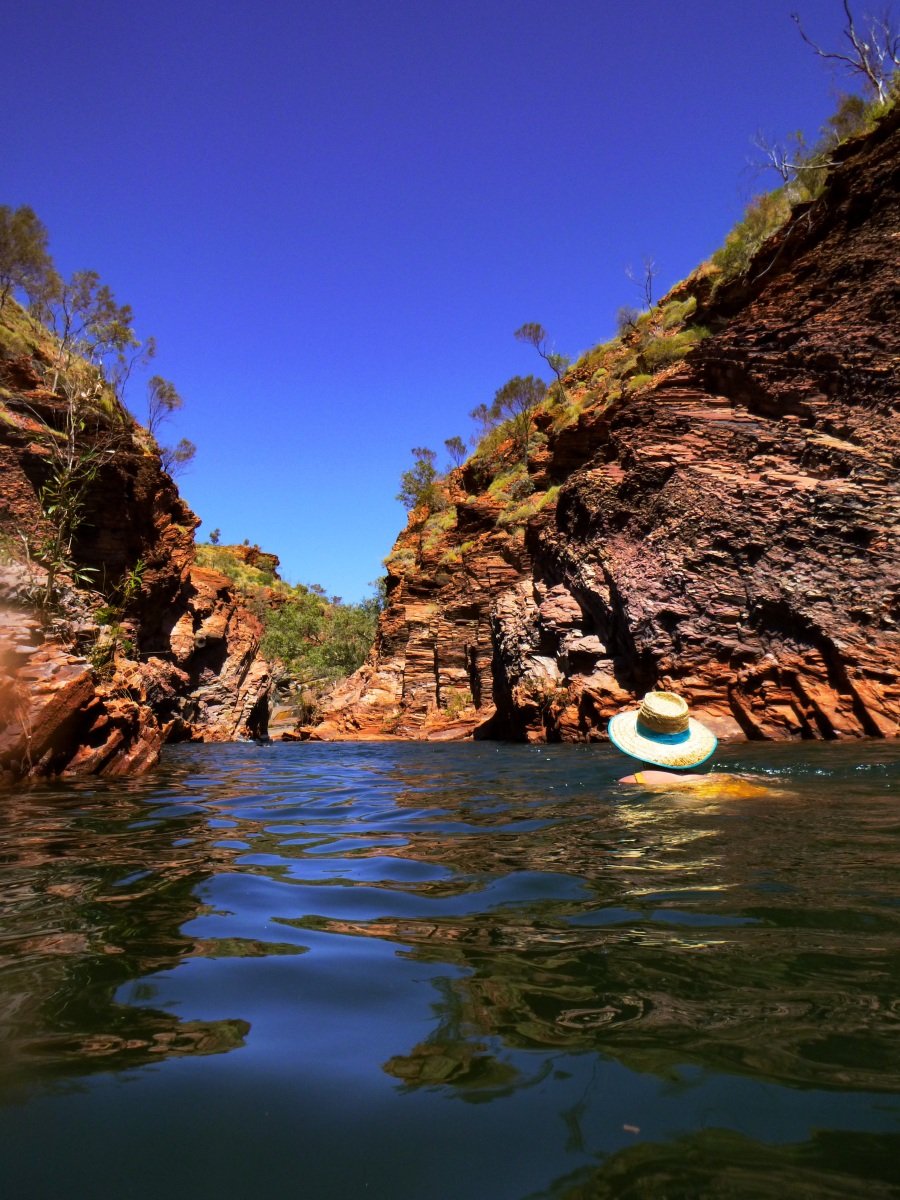
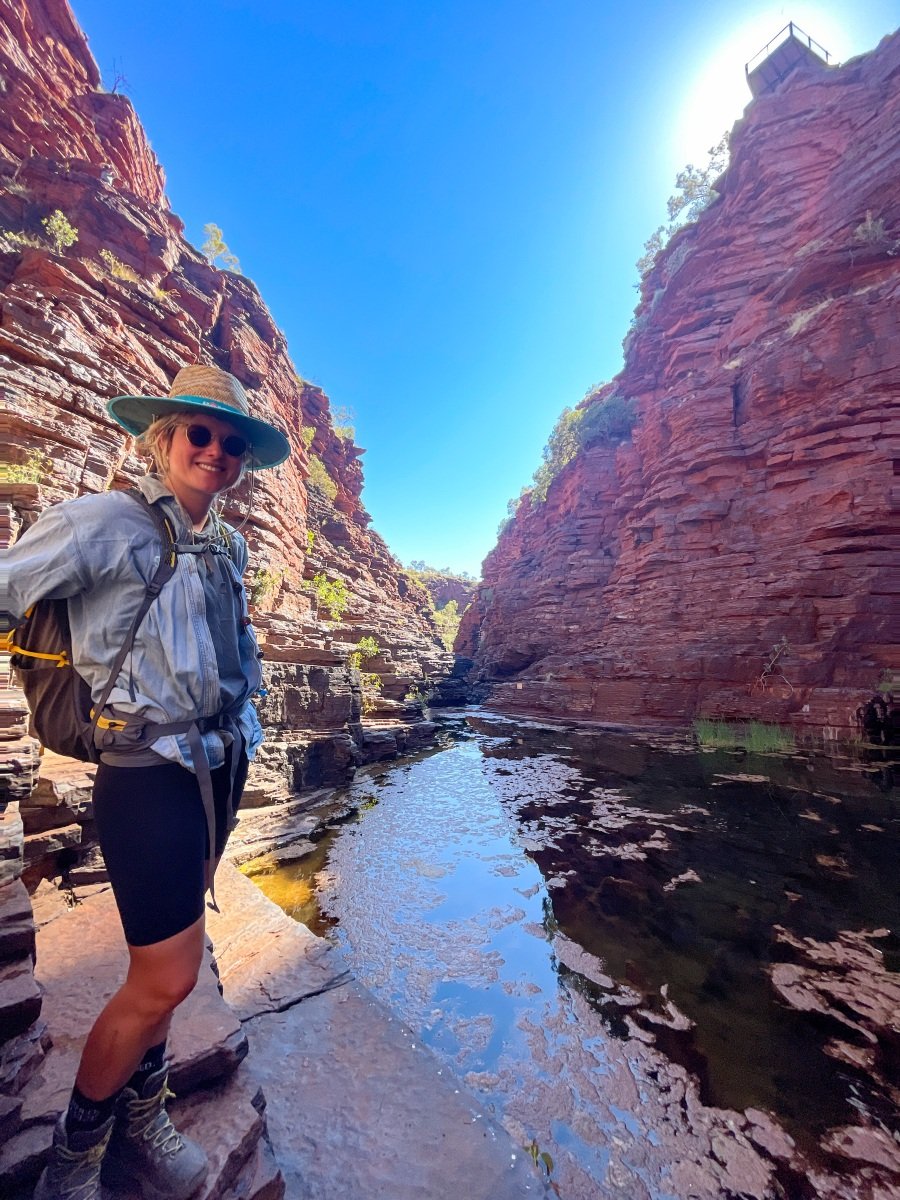
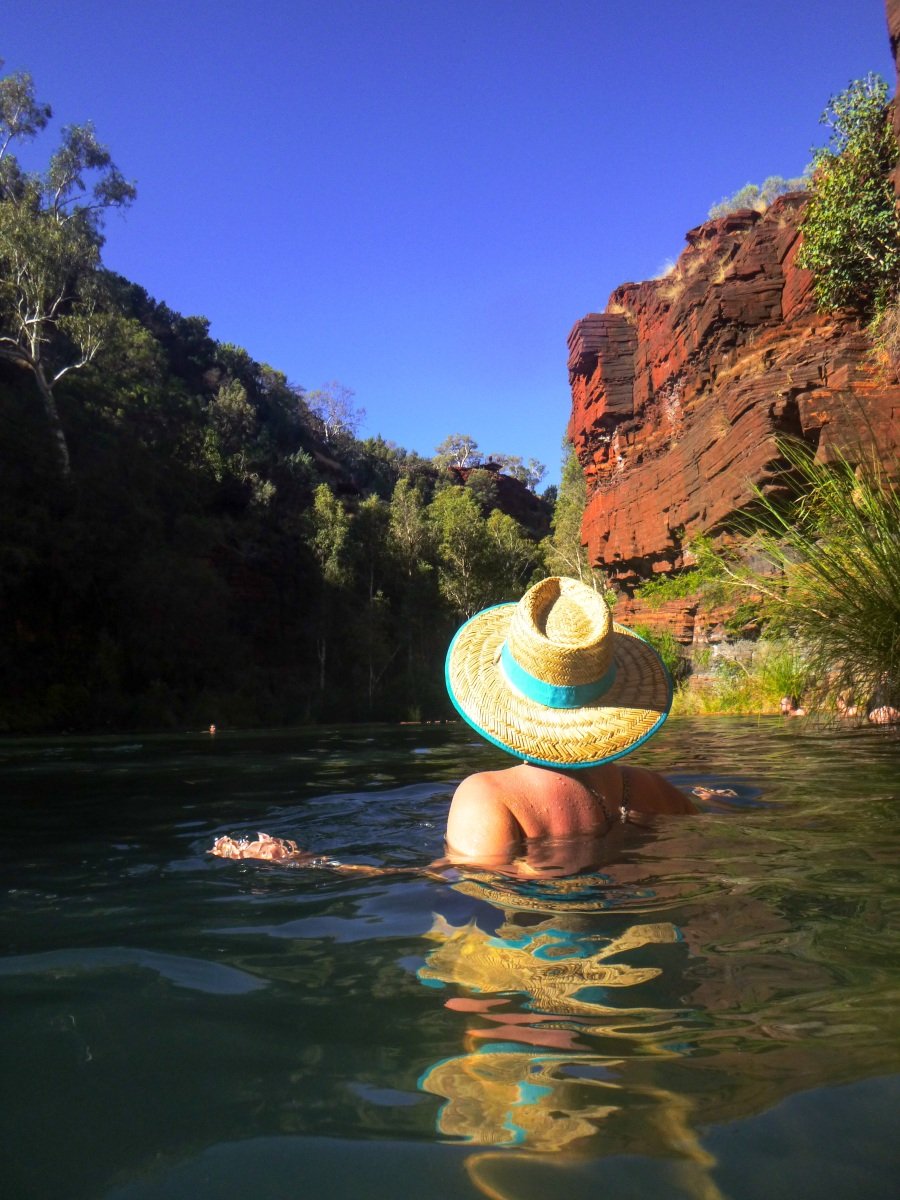
When the spell has waned we head upstream. The water runs through fins that jut into the stream from either side. We hop between fins until the steepness becomes difficult. There’s a pool up this end which is really cool, but we now have a choice: climb up and down the fins (sharp and slippery), or swim in the water up to the pool. We strip to our swimmers and jump in. It’s not as cold as yesterday, and much much easier to get up stream.

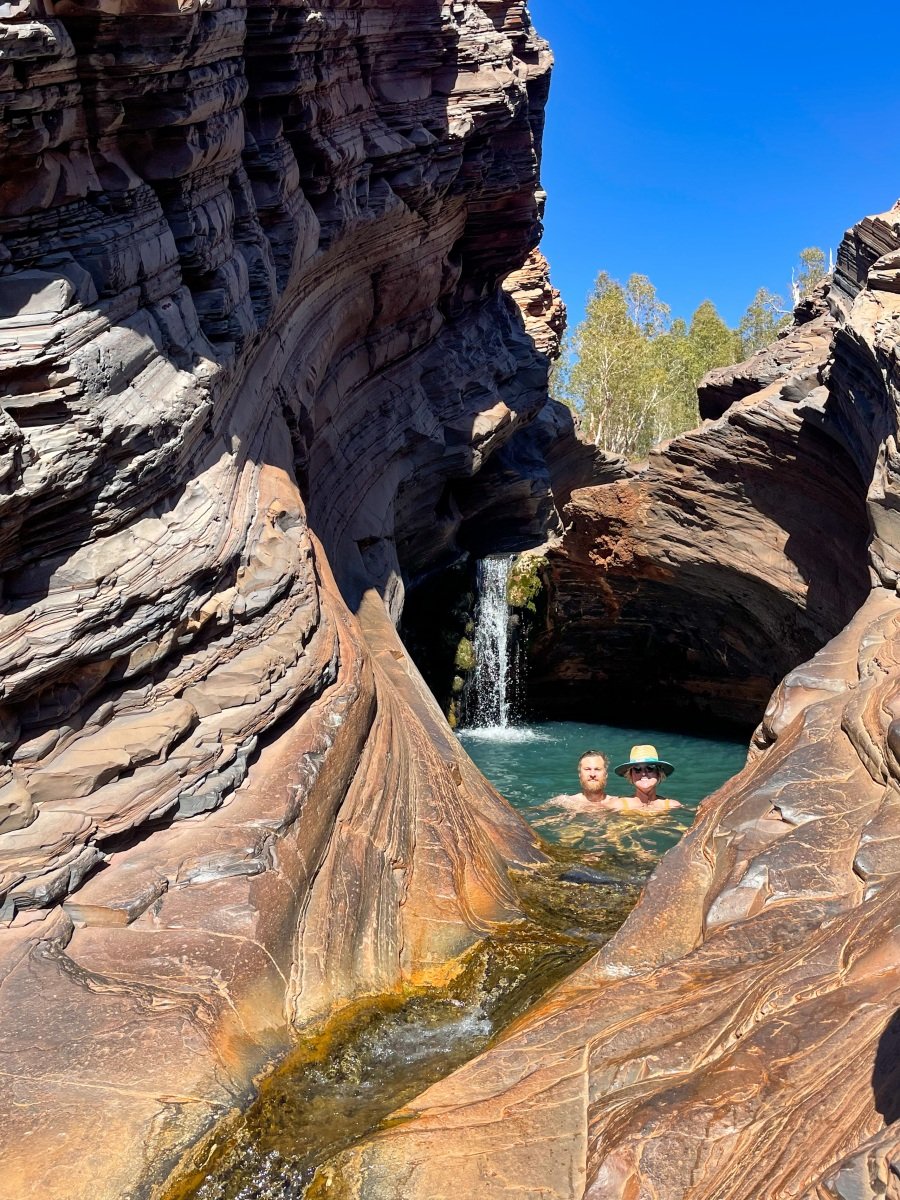
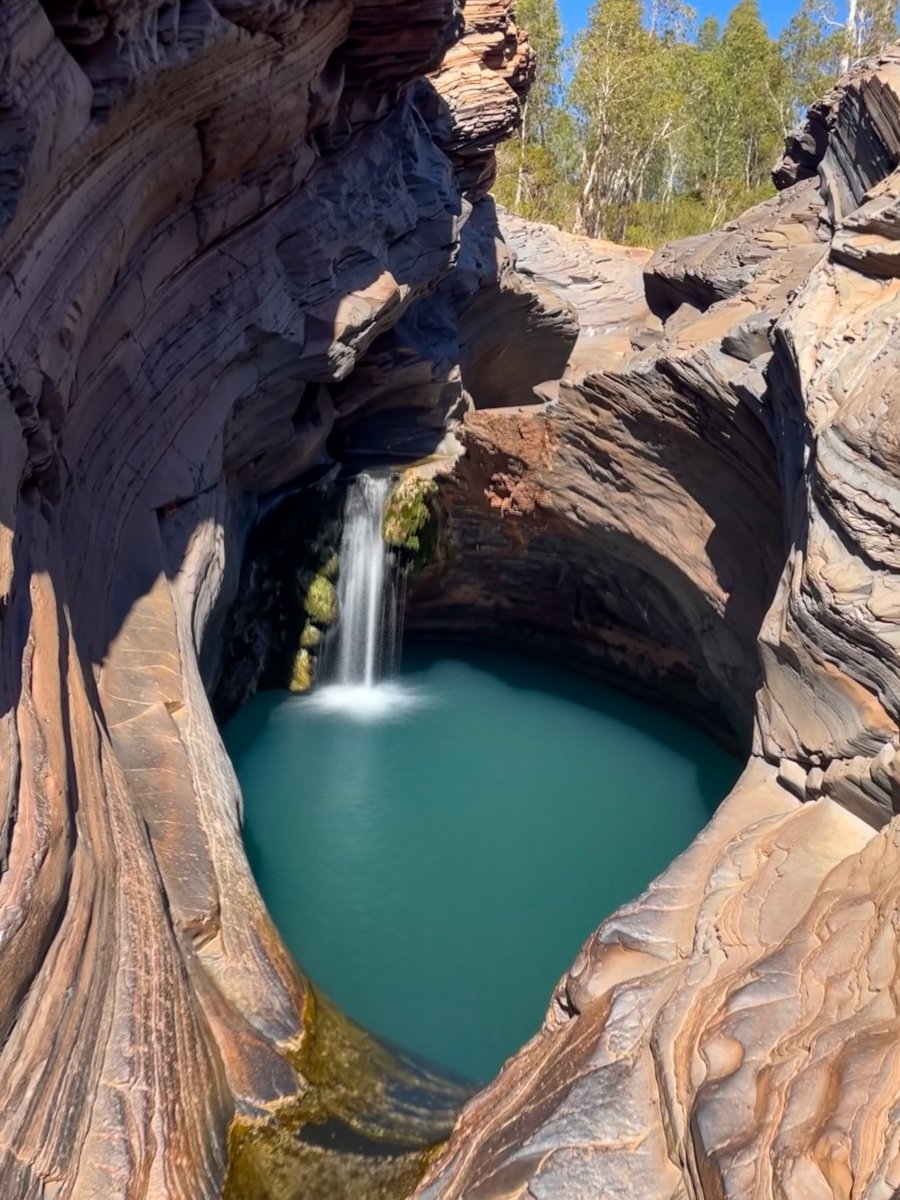
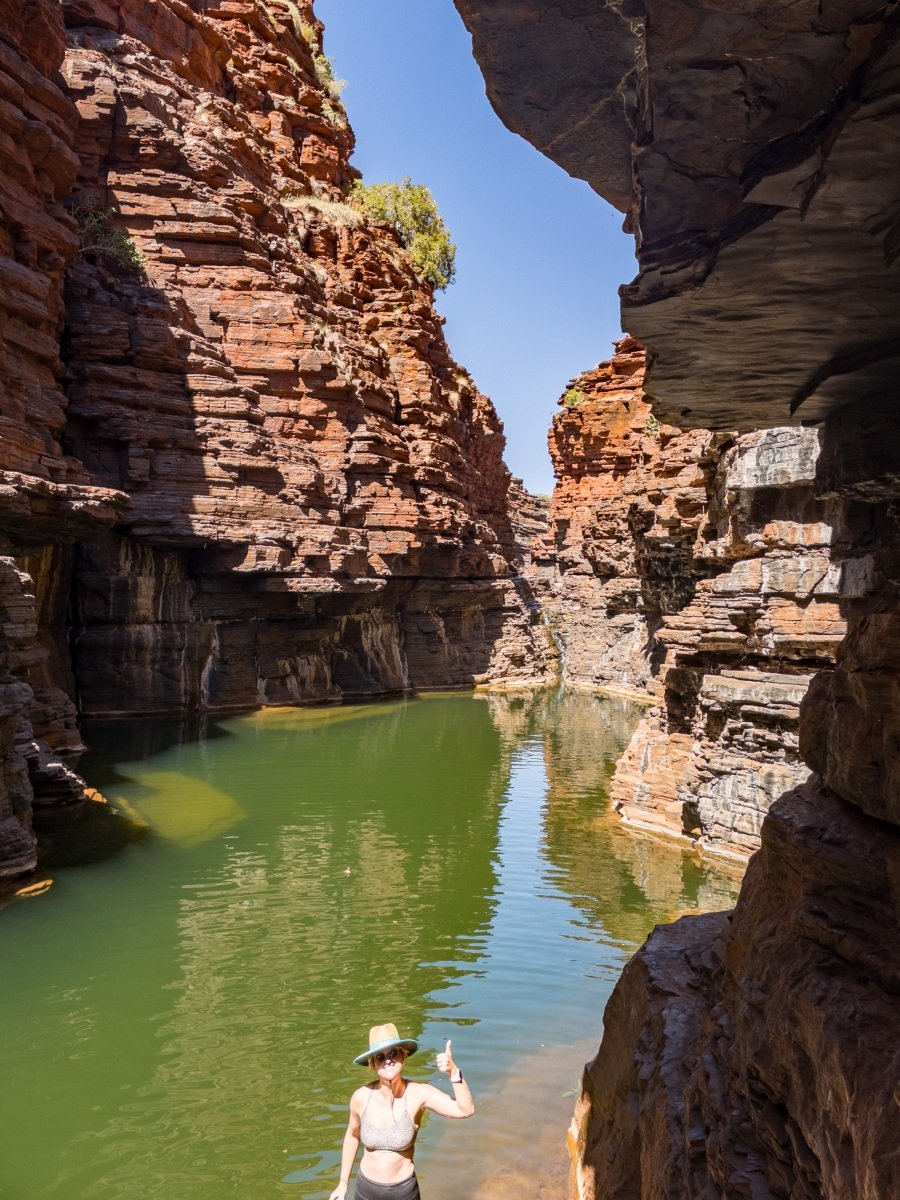
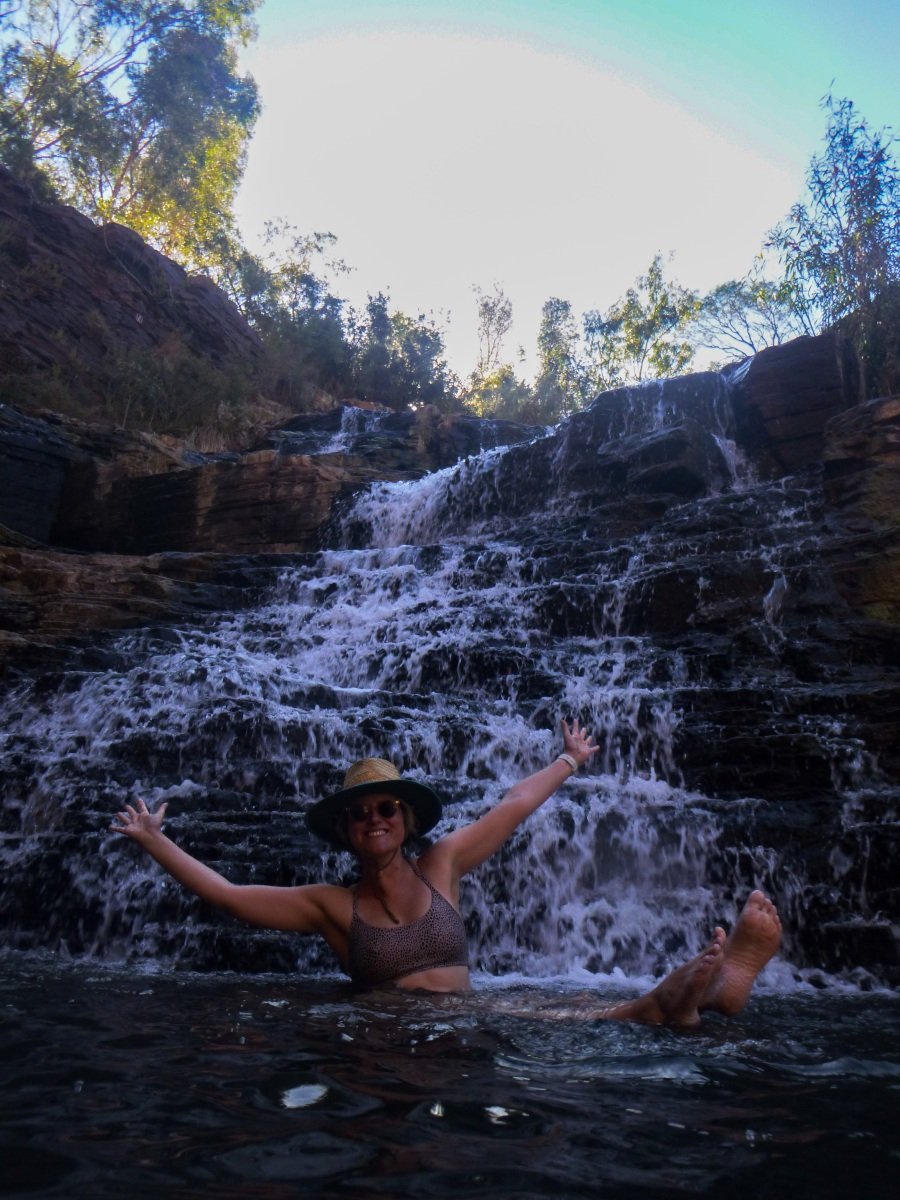
At the pool we slowly, gently ease ourselves out of the water. The edge is very slippery and the rock is hard. The pool is known as Spa Pool, and though I’ve seen photos of it, it’s far more amazing in person. It’s more like a movie set than an natural pool. At the back is a waterfall, a vertical steam of white; the body of the pool is bright bright green, lit by the sun, with rays cutting through the water to the bottom; the sides of the pool bellow out and encapsulate the water, they also rise up high over the pool, creating a snug sheltered isolated calm. The rock walls draw the eye around the pool to the waterfall and then down into the cool water and back again – once clockwise, now anticlockwise.

We spend a little time in the pool and then climb further up its walls to look at the reverse angle. From here we can see the gorge running long away into a narrow stream caught between very high walls.

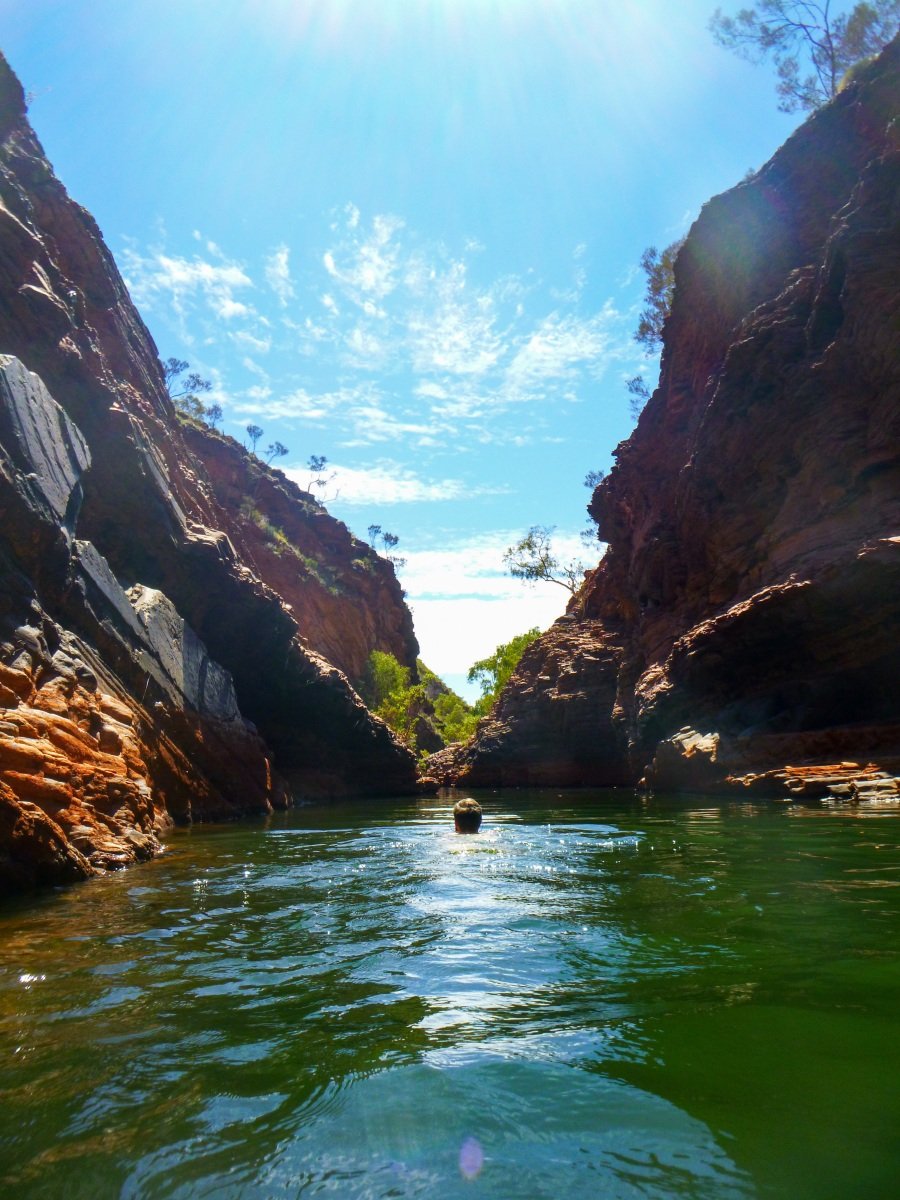
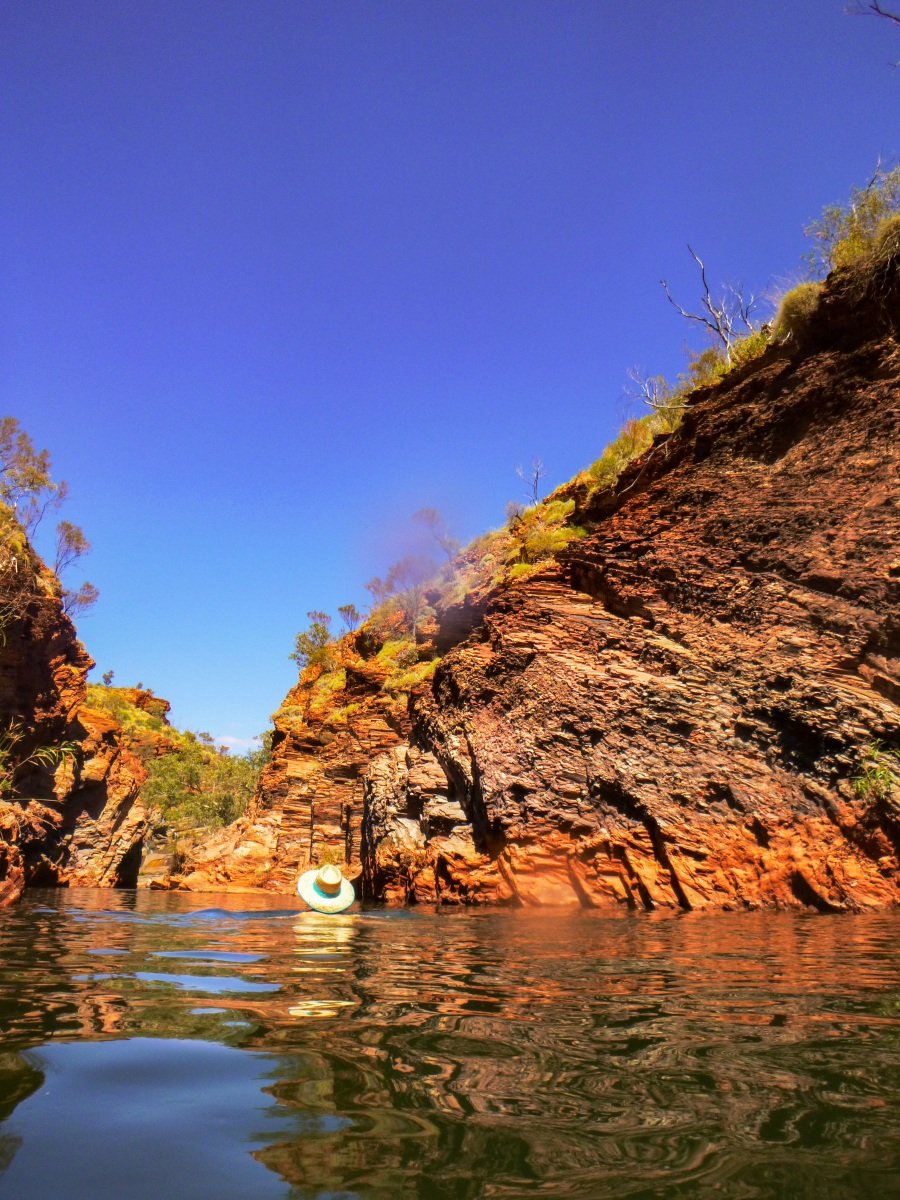
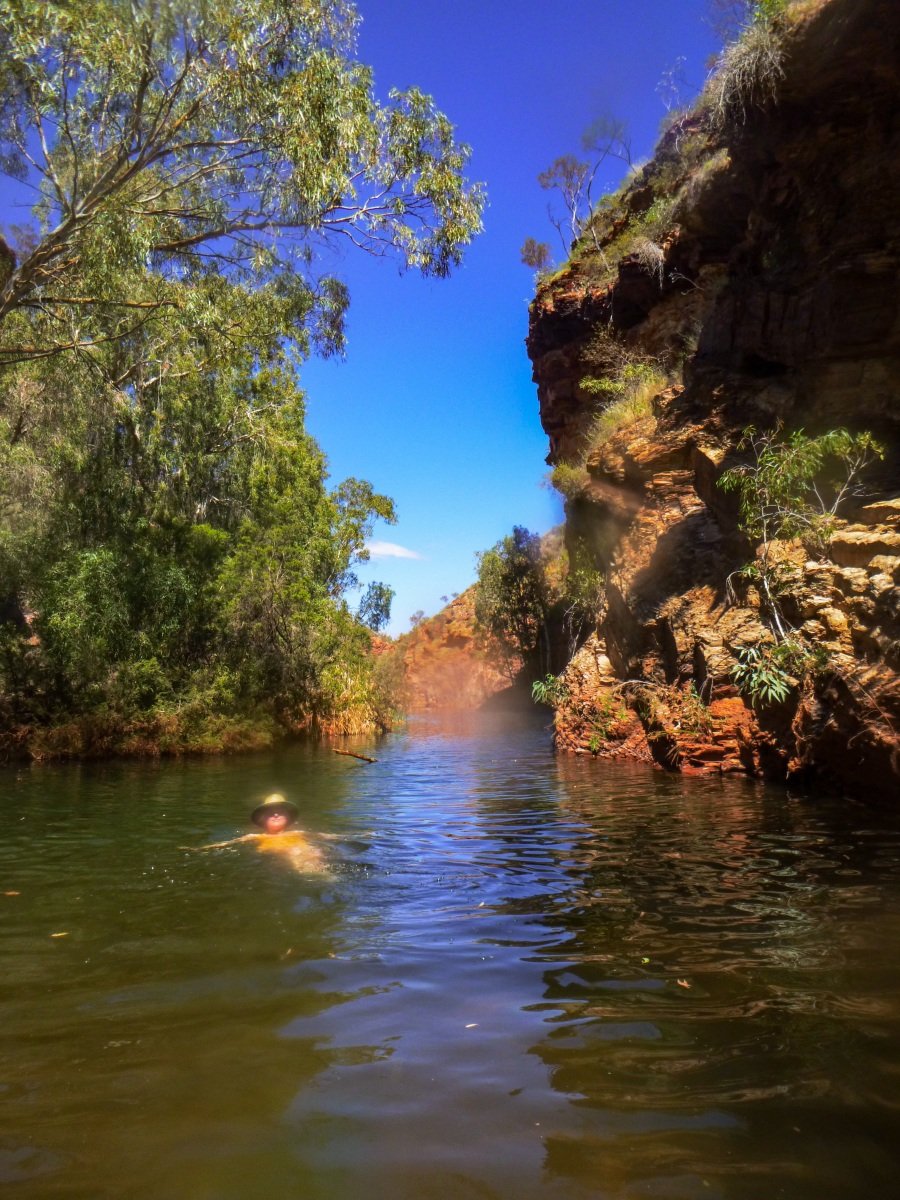
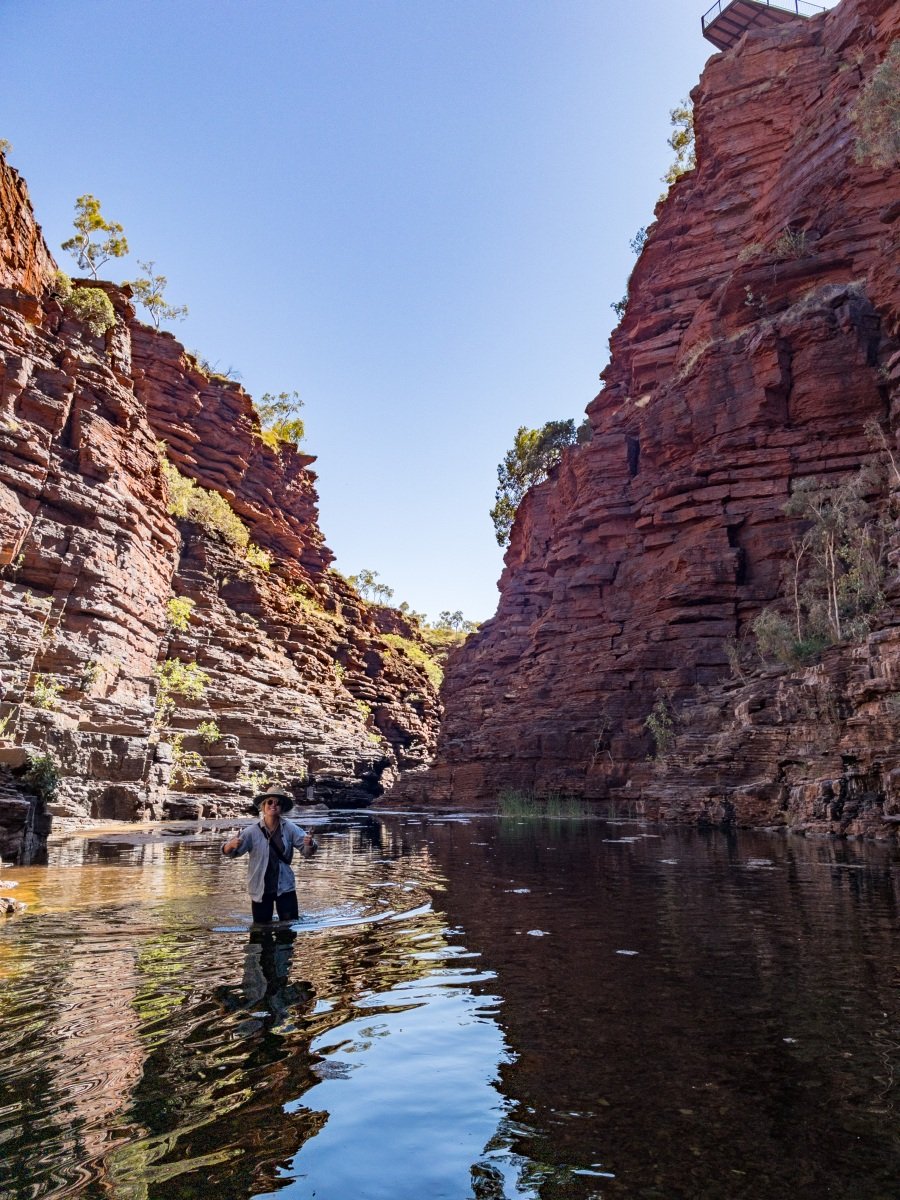
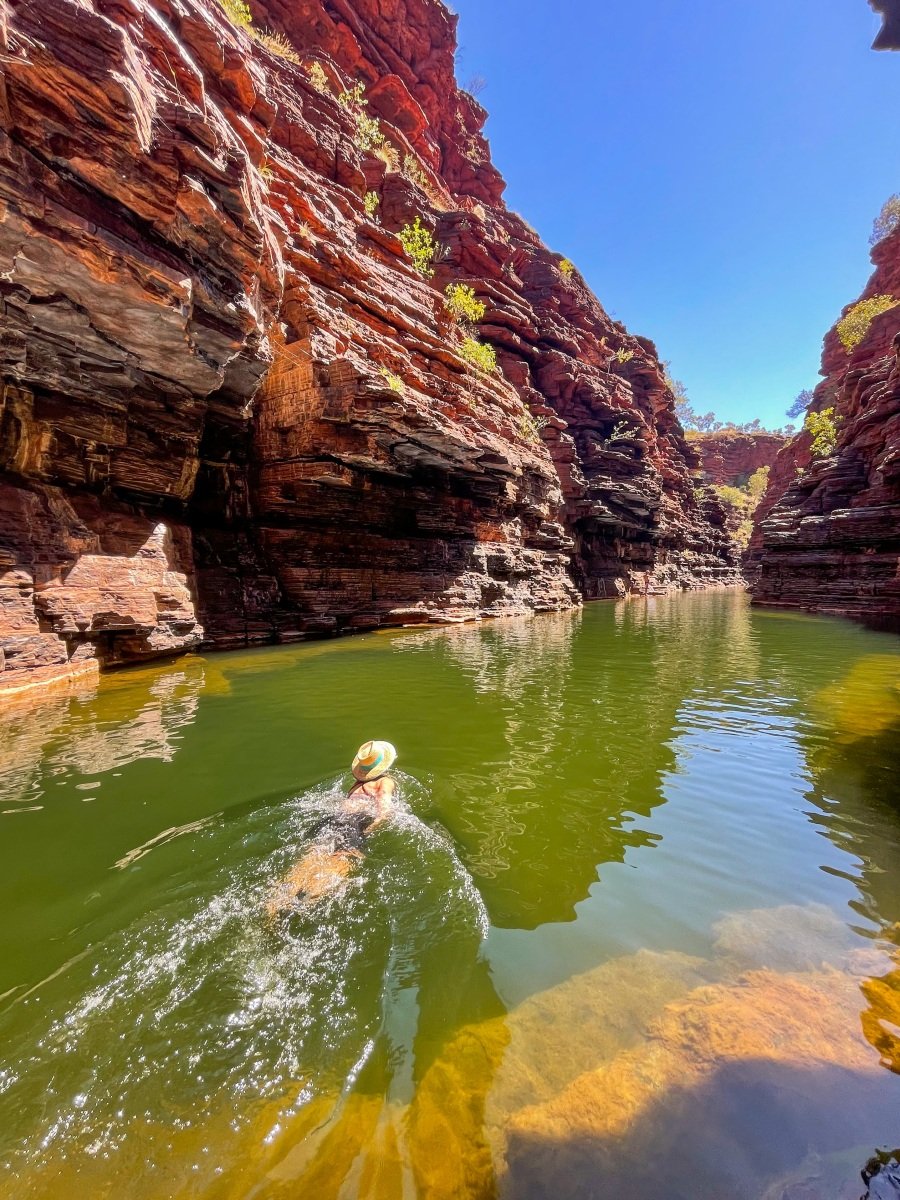
We swim back down to the centre of the gorge, where we came in, and then walk around some rock ledges before swimming further down into the narrow stream.

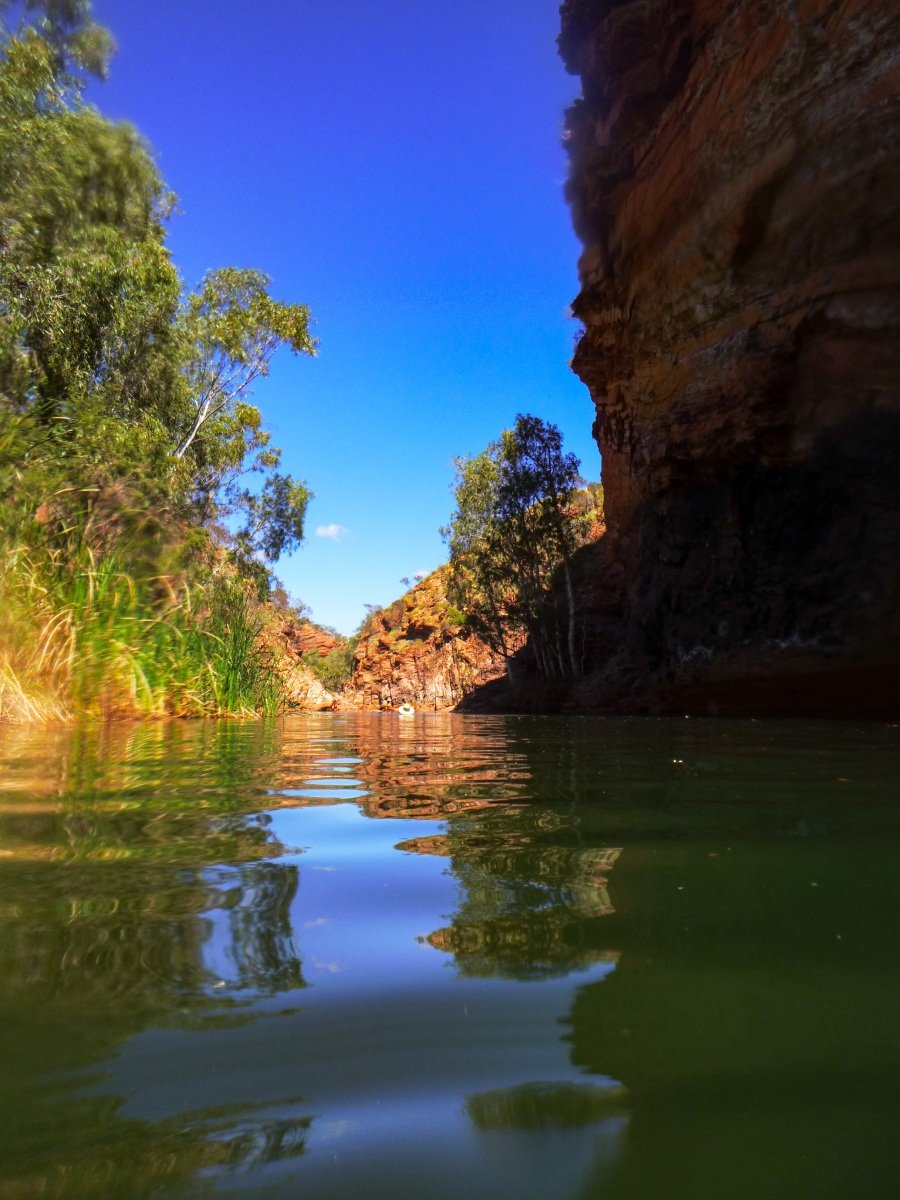
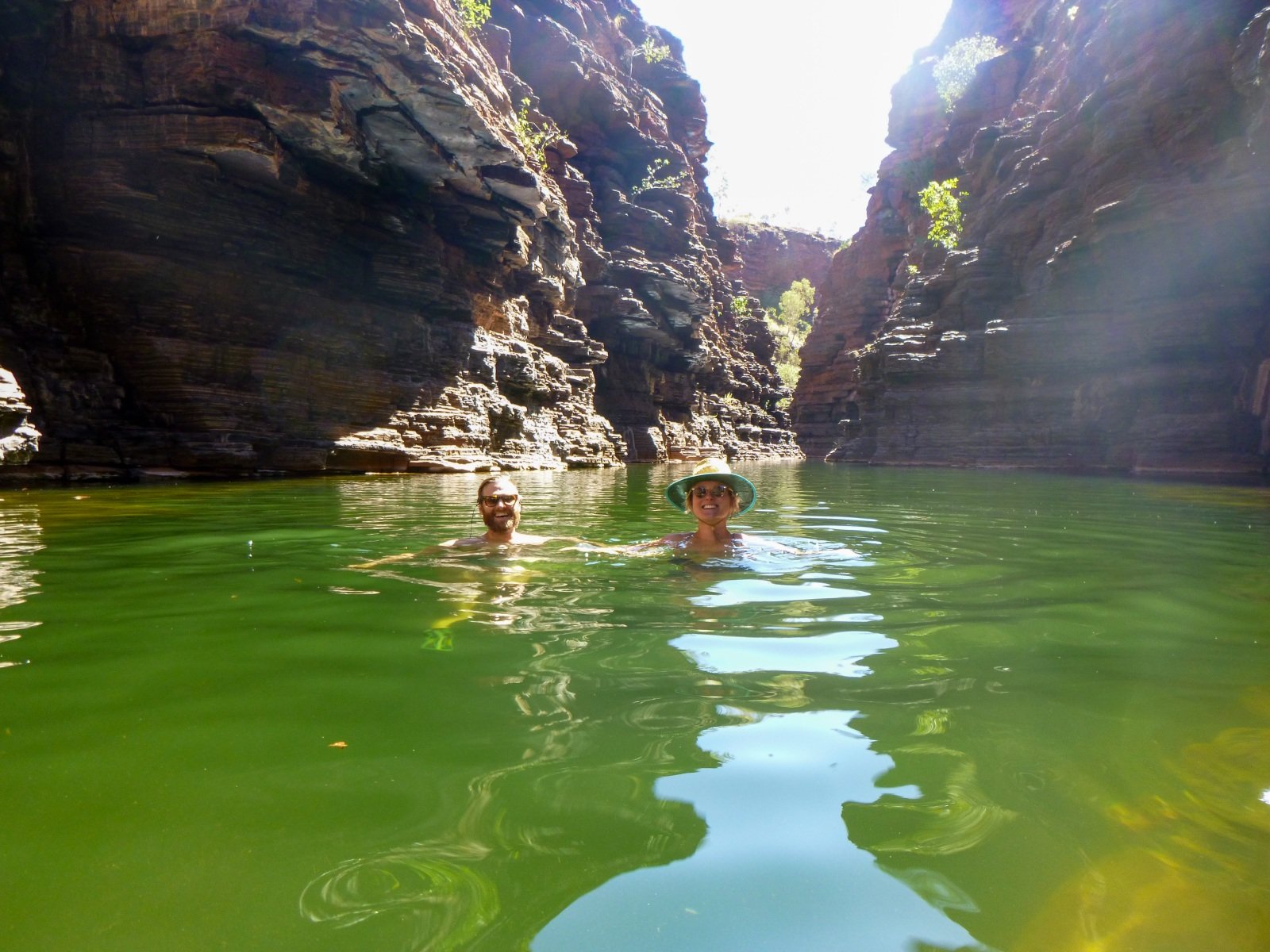
Here the sounds echo far up above us as we swim. The water is cool, but the sun above beats down and keeps us warm. The narrow passage lock us in for a few hundred metres, before it opens out a little to hills rising either side. Now one side becomes sheer again while the other is forested and green. The shadowy cover of trees is cooling. The stream becomes shallower and more rocky, and then disappears into many small streams between thick trees. We rest here for a while before starting to get cold.

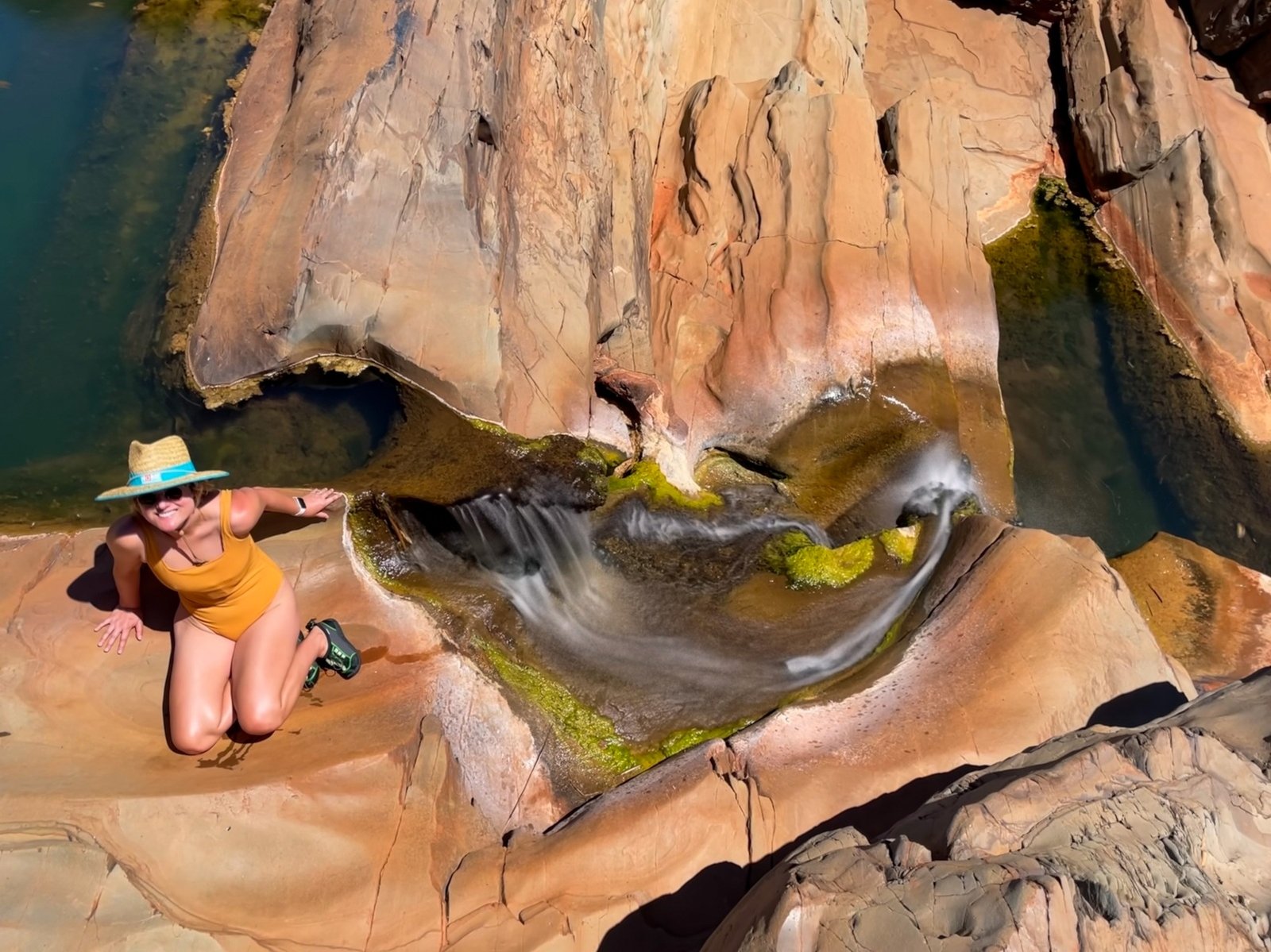
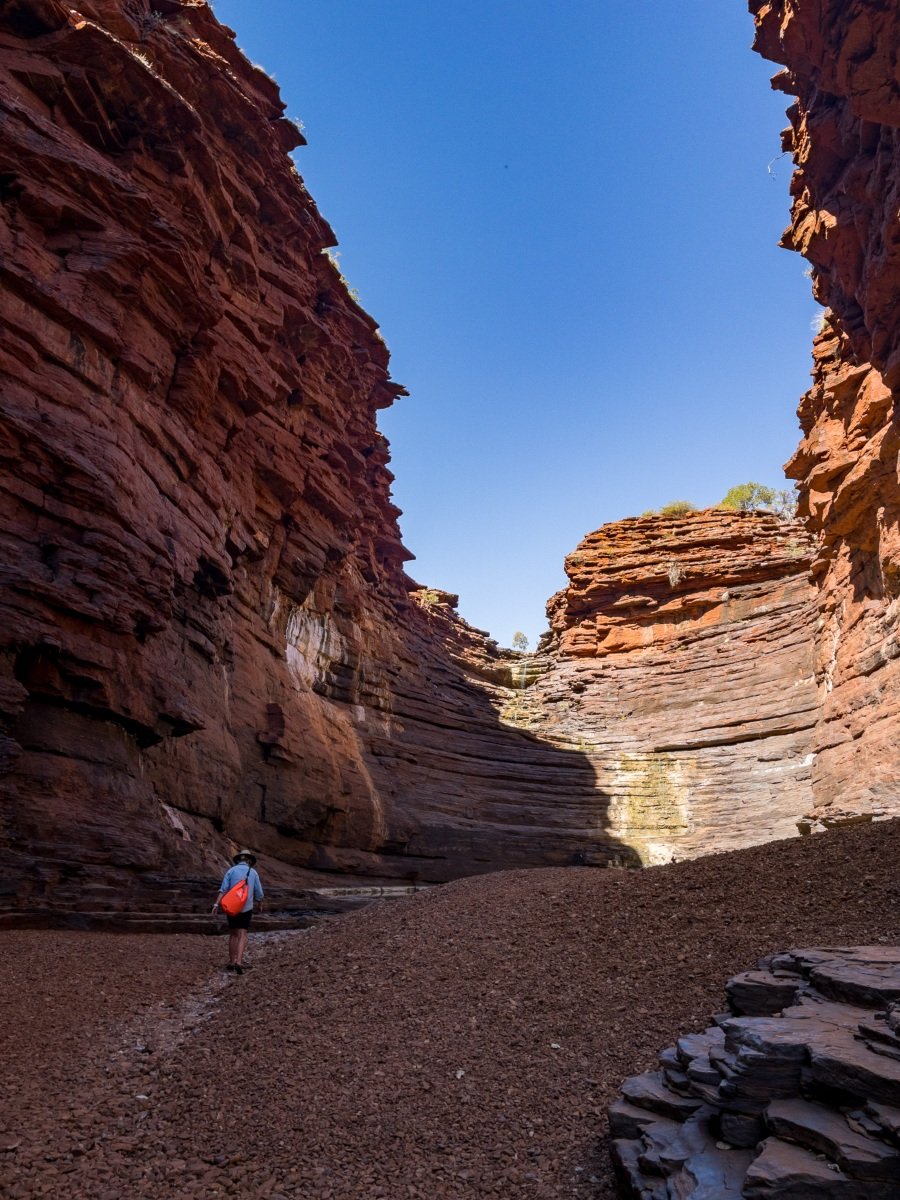
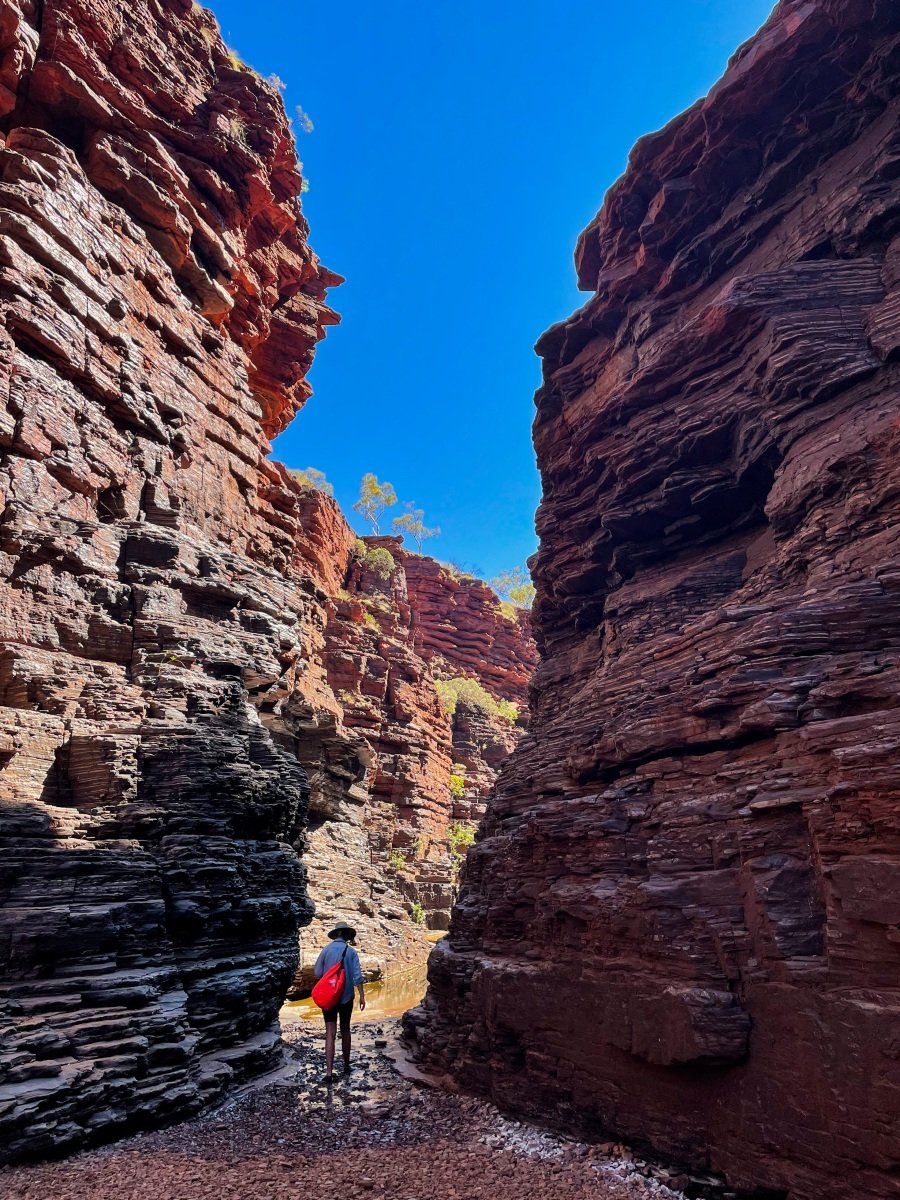
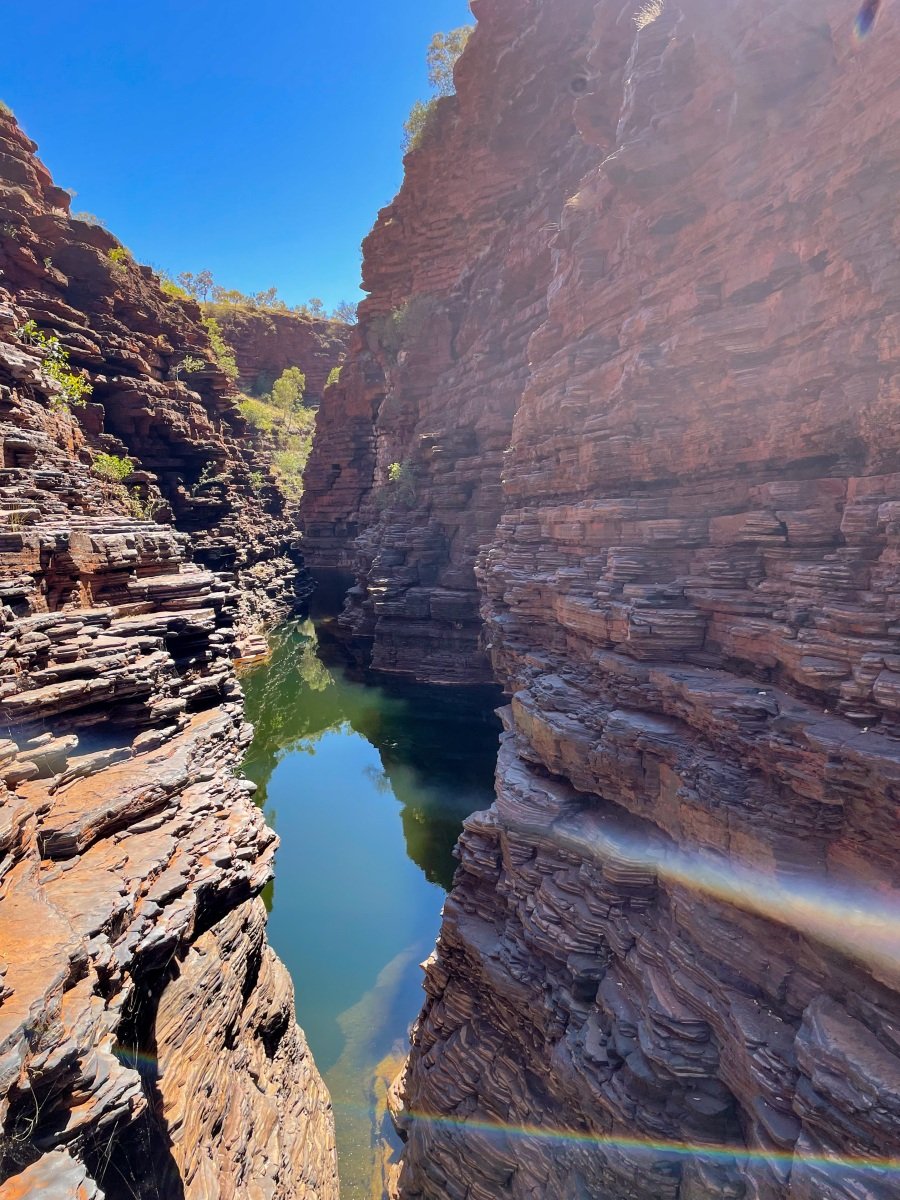
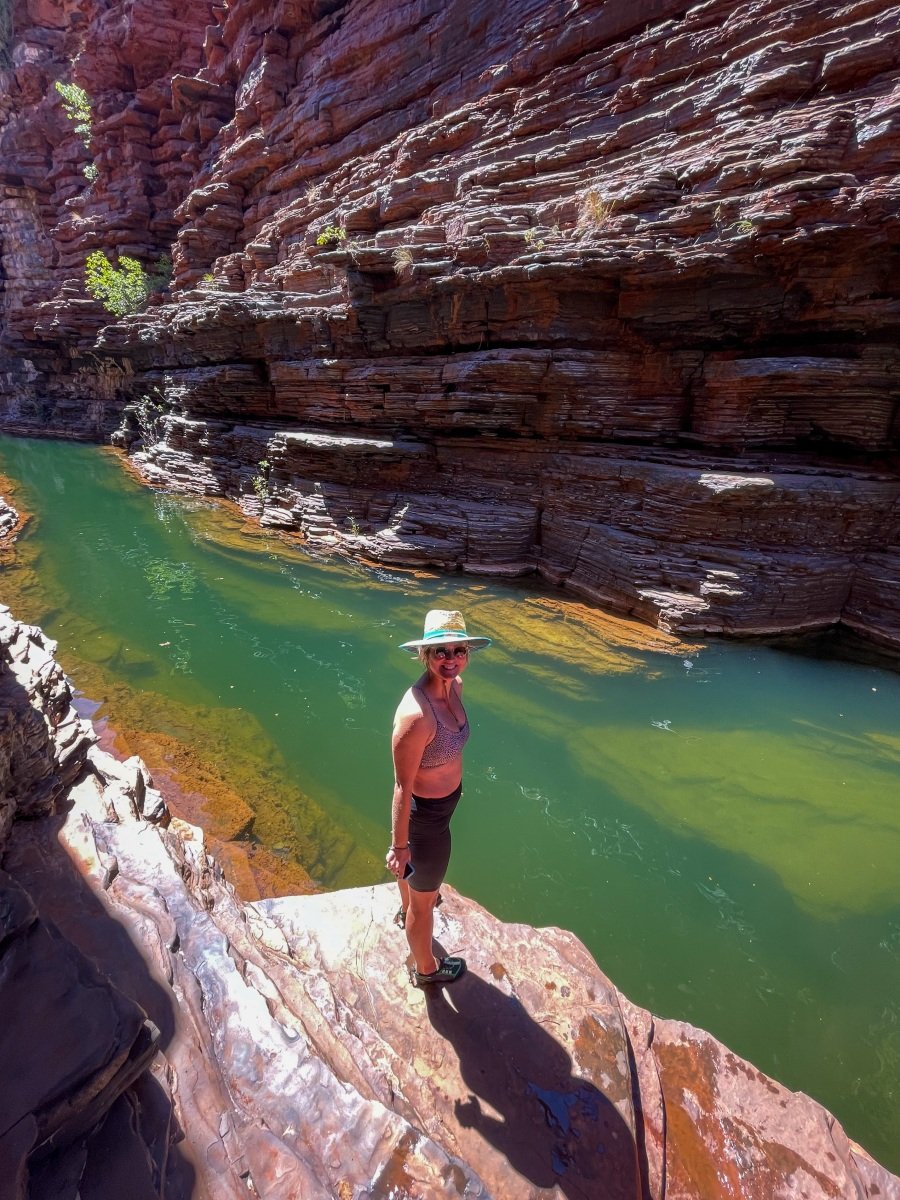
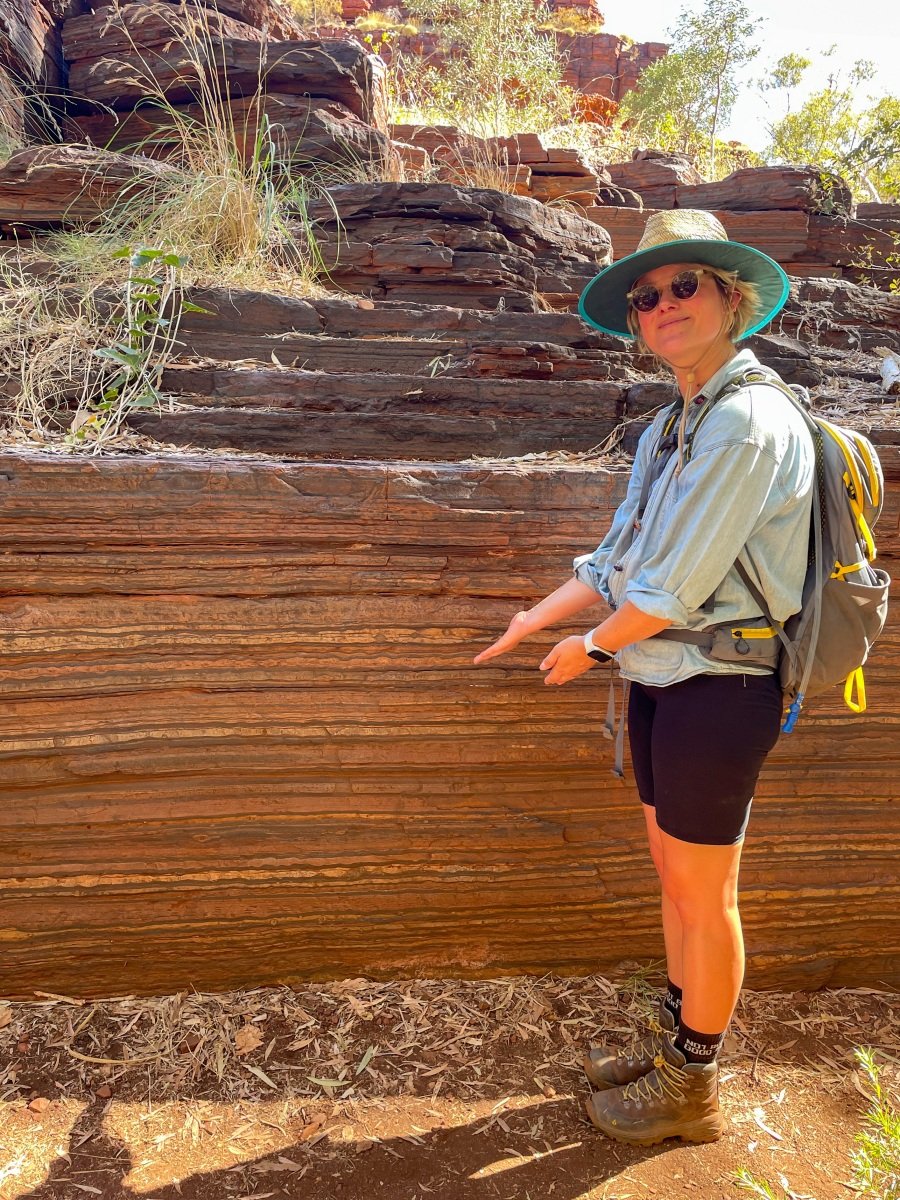
One our way back I clamber up on side to take some photos right along the narrow passage (Anna for scale).

Once again, the ancient rock, incredible colours, adventure and joy of exploration has made today very special.

 [Click on a photo to open a full-screen slide show]

Karijini — day 1

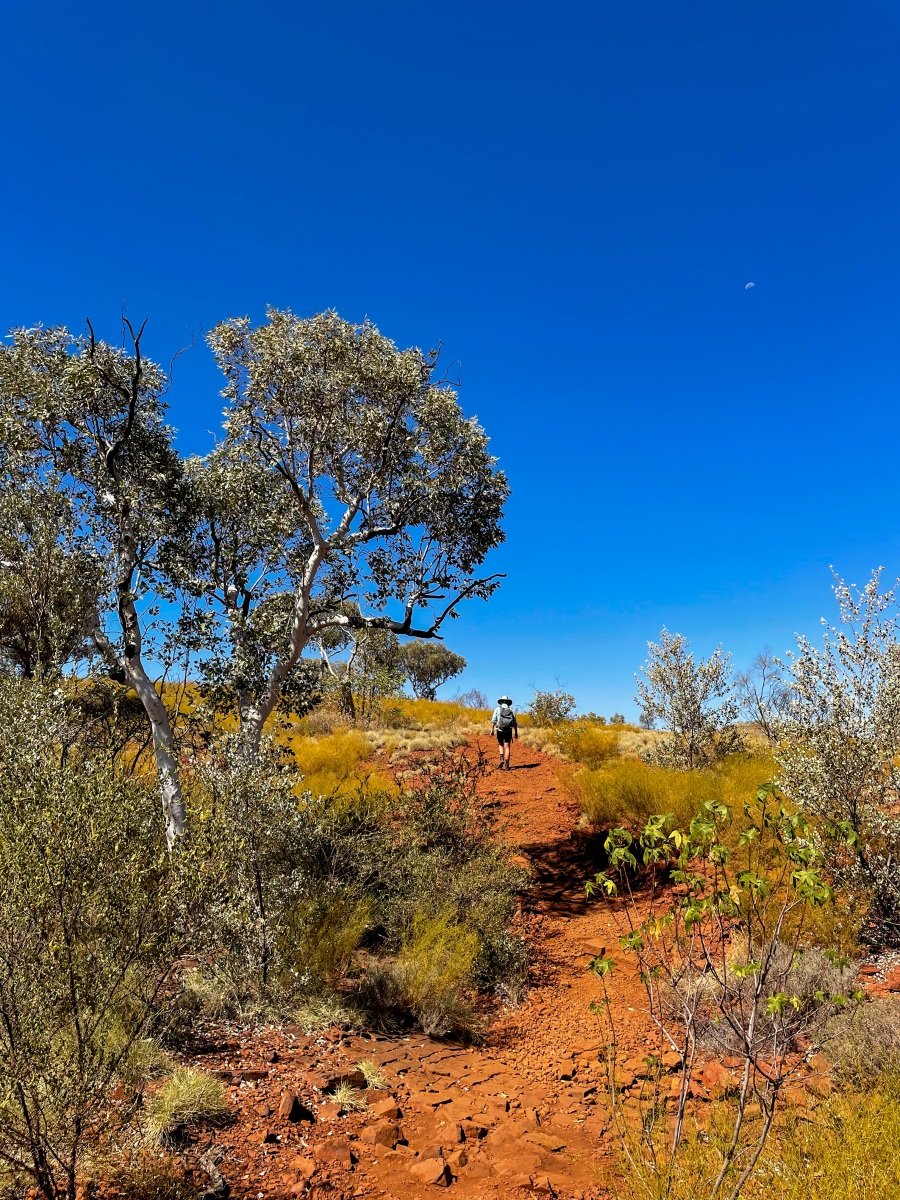
There are a few gorges to check out today, so we start pretty early. We’re spending today near the Dales Campground, tomorrow we’re driving a little further to get to the north of the park. Even though these are close to Tom Price, the drive is still about 1.5 hours each way.

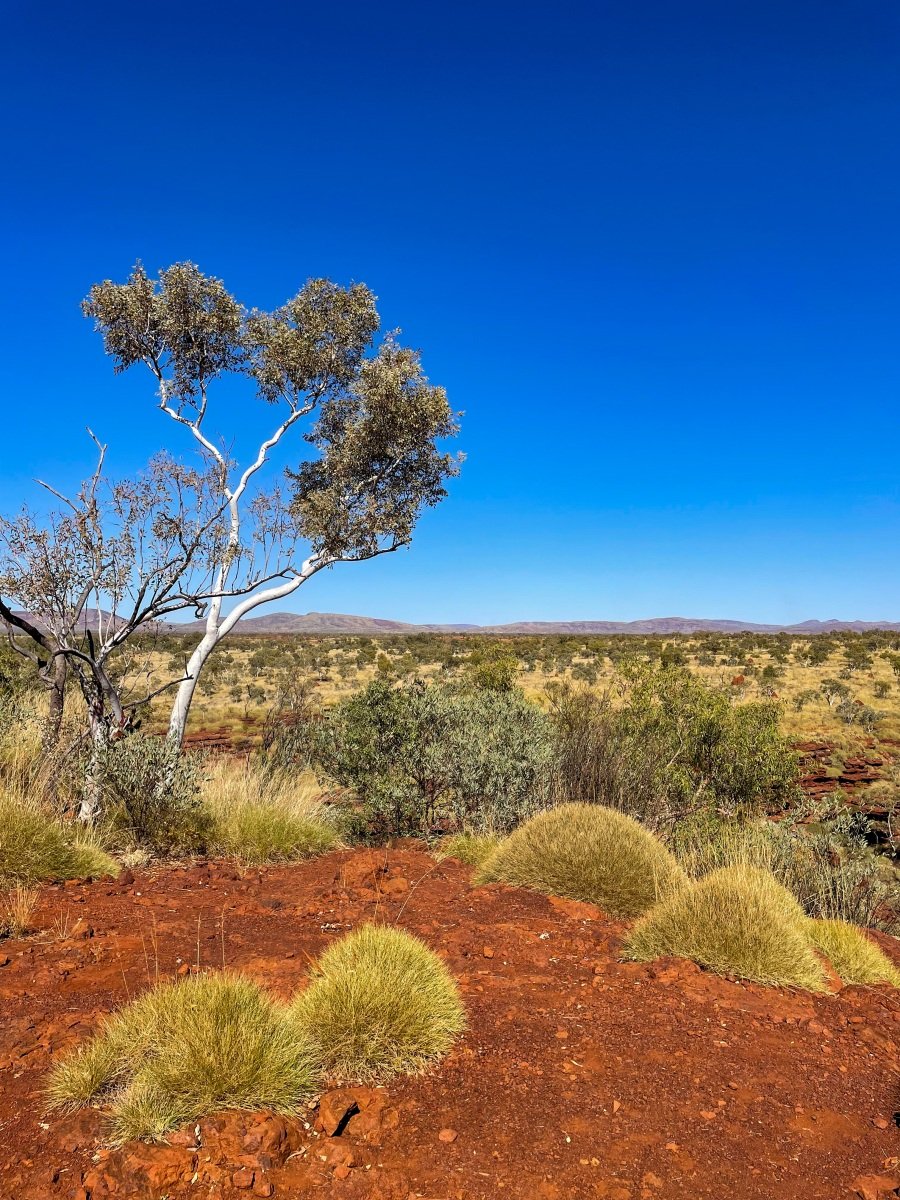
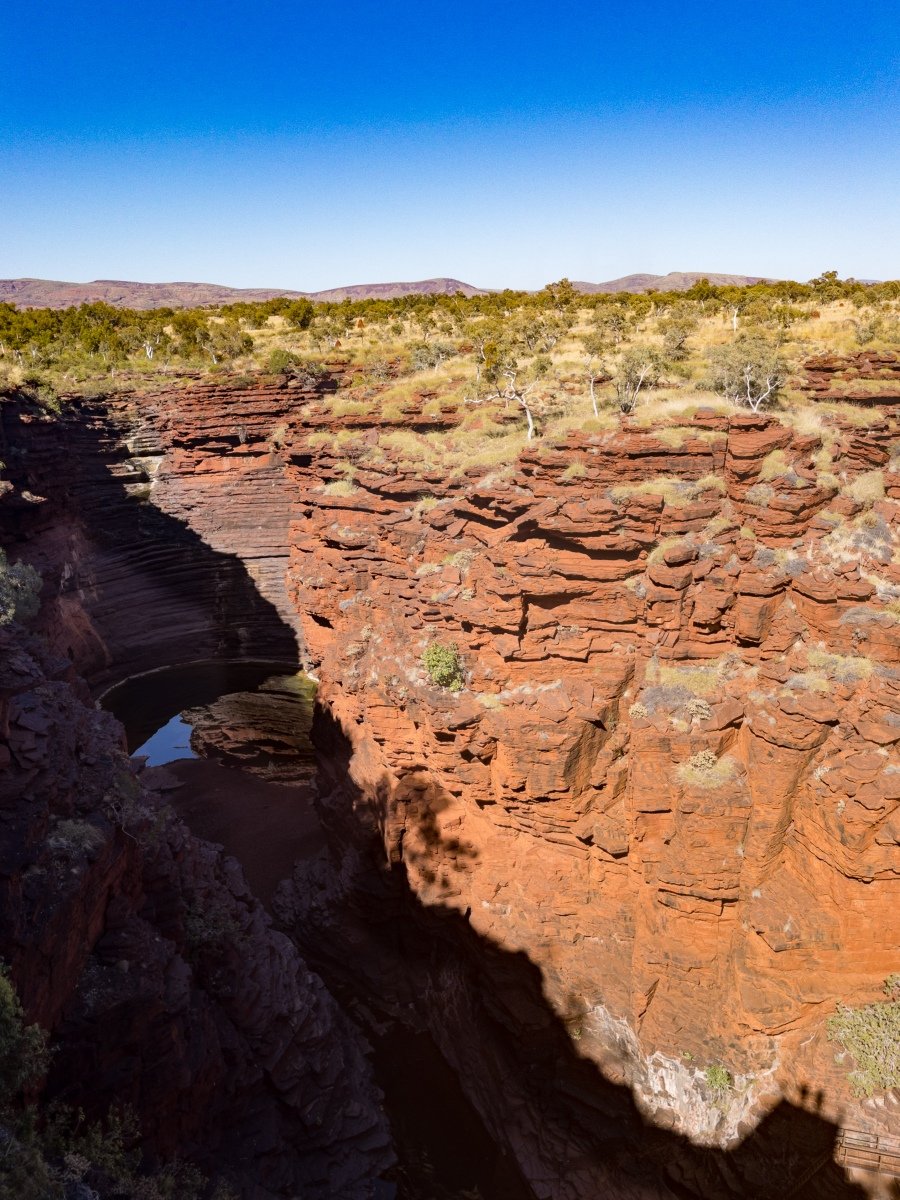
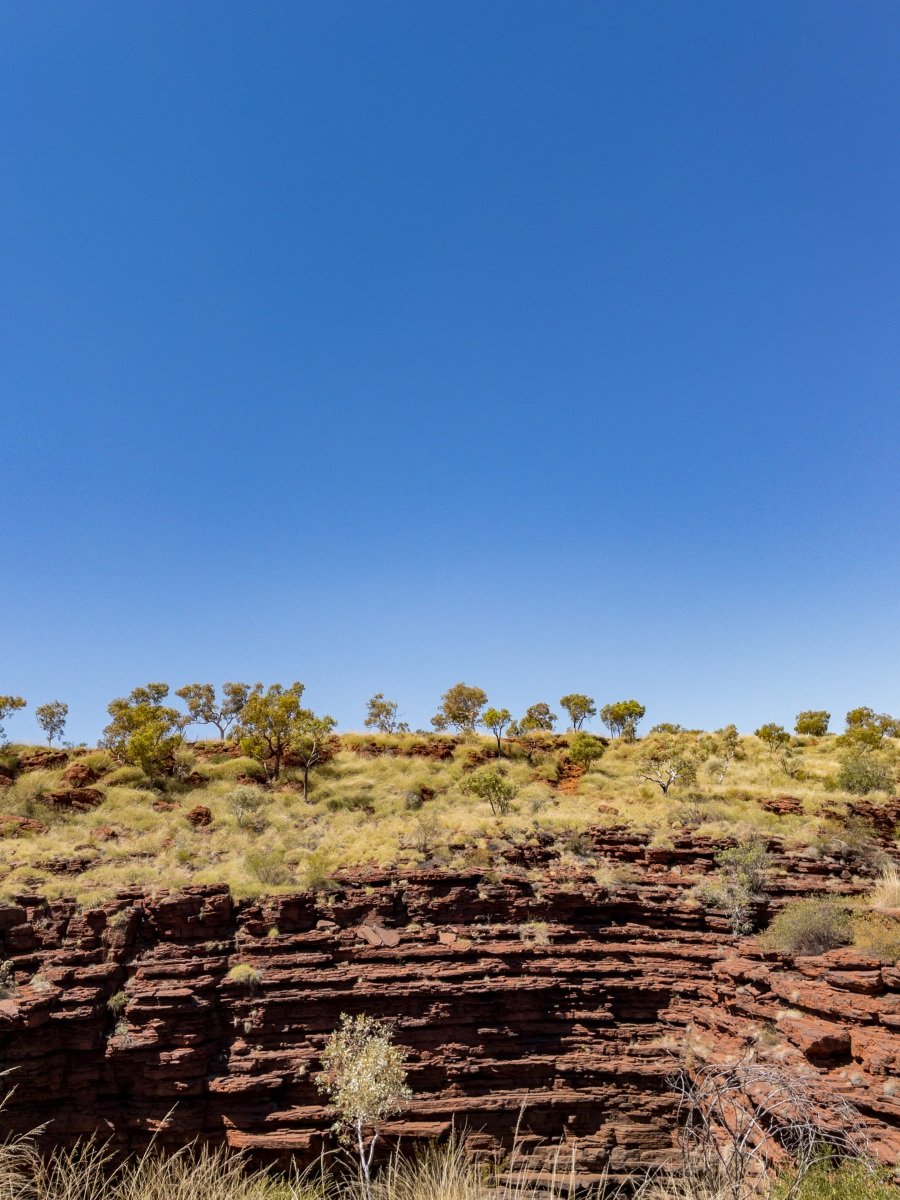
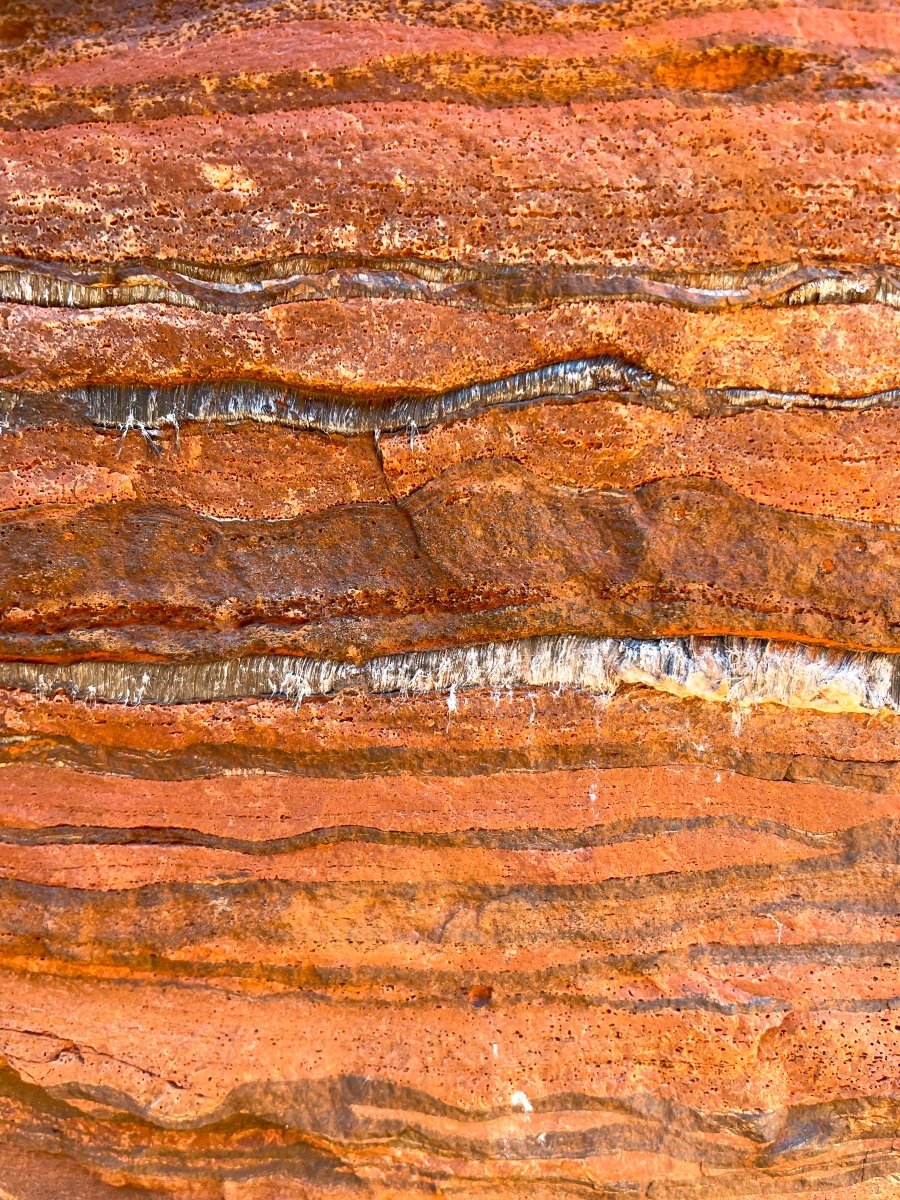
The rocks in Karijini are about 2.2-2.8 billion years old, about half the age of the earth. Much of the strata still lies in the horizontal planes as it was originally deposited (notable exception on tomorrow’s hike!). This areas supplies 40% of the worlds demand for iron ore – it’s very red here.

Our first walk is to Joffre Falls. We set off around the rim, looking down into the amphitheatre below. White gums dot the red landscape, casting long shadows in the morning light. Recently stairs have been installed for the climb into the gorge, I can see the fun of having to clamber down one big boulder at a time. The edges of the rock are cut straight and hard, creating a path like giant boxes piled into the corner of a room. The stairs/ladders make the climb more reliable, particularly as they’ll get wetter with more people heading back up again during the day.

At the bottom there is a pool of water which is nipped off at both ends where the gorge walls come closer together. We head right at first to look into the the amphitheatre we saw from the top. A shallow pool and the hard rock walls make for a fun echo chamber. But the real fun is back the other way.

There is just one other couple exploring. They tell us that they saw people further down the gorge when they stopped here briefly yesterday. We carefully wade through the first pool over to the next chamber. The water is about waist-deep and the bottom very slippery, so we’re sliding/skating our feet as we go. I climb up one side of the wall to see what the next chamber looks like while the other couple make their way to the other wall to look from that angle.

It’s clear that my side isn’t the right way down – there’s a single sheer drop down into the water – but it’s about a 5 metre drop. But from here I can direct the other couple with hand and foot hold to carefully clamber down by the waterfall and along a wall, down to the water below. I stay to give Anna the same encouragement and then set over there myself. Moving slowly over the slippery rock and along the wall to the dry parts, the climb down is pretty simple. There’s a small channel of flowing water which opens into a bowl and then a river. There’s no graceful way to get into the bowl but to slide/jump into the water.

It’s pretty cold! And in turn all four of us exclaim as we jump into the water, scrambling for the warmth of a warm rock shelf to recover our breath.

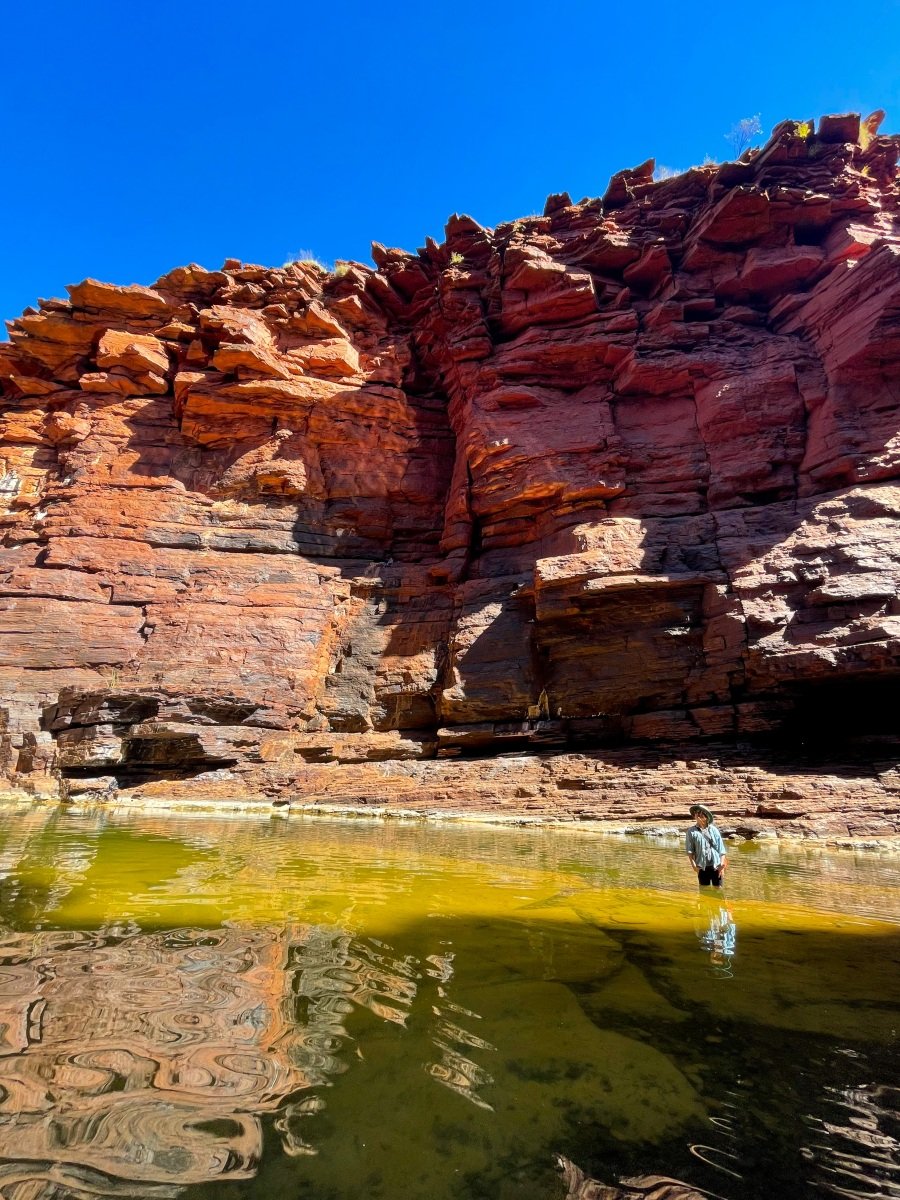
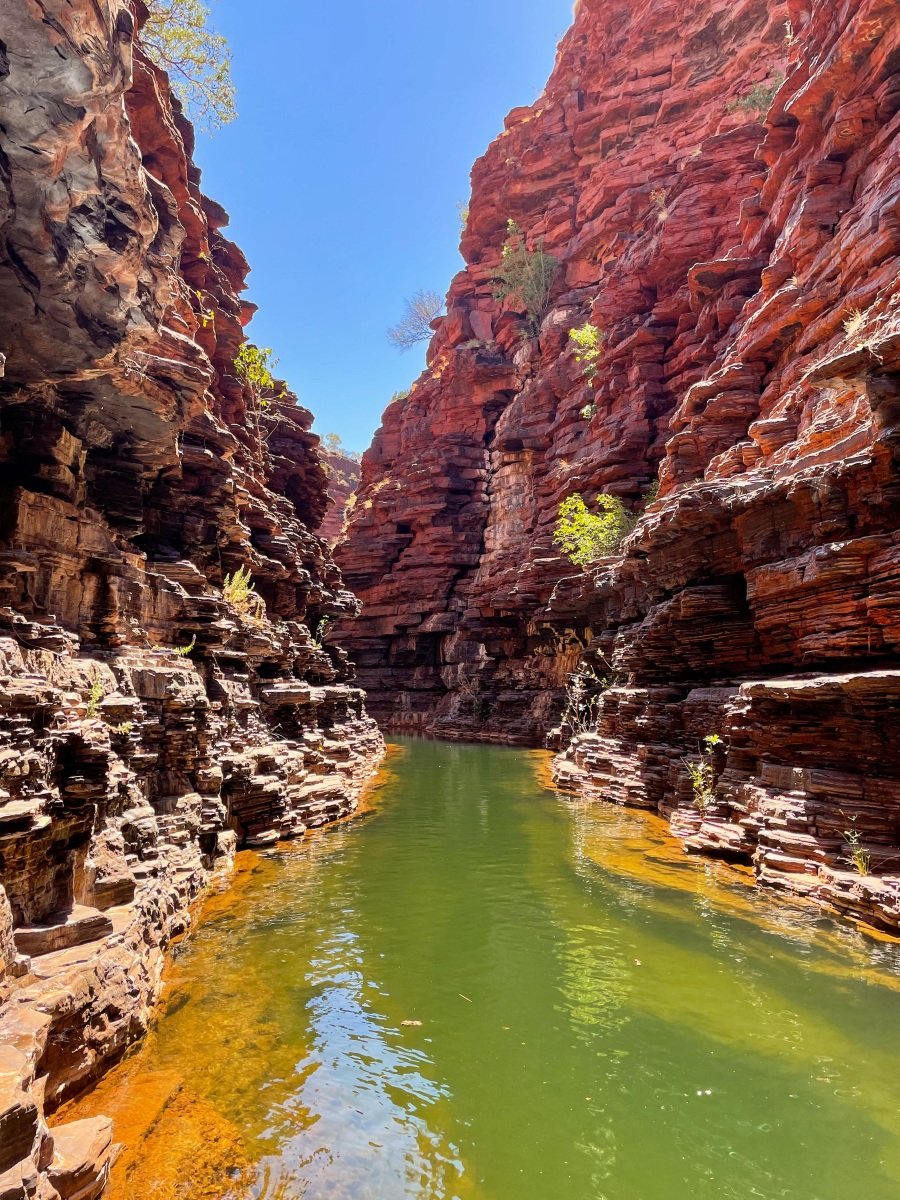
There water is clear and brightly green against the rusty-red-grey rock of the gorge walls. Each strata is worn and knobbly, creating shelves for trees to take hold, and for us to climb onto as we explore this level of water. As we’re playing here we get talking to the other couple. And wouldn’t you know it, they’re from Warners Bay! We compare notes on who we know and places we’ve been – consistently finding things in common. In the end we spend nearly an hour just hanging out down there.

As we’re ready to leave some other people begin figuring out how to get down. We give them a hand before heading back up for a quick snack. Our new found friends give us their business-come-holiday-card to ring them when we’re back and then depart.

 [Click on a photo to open a full-screen slide show]

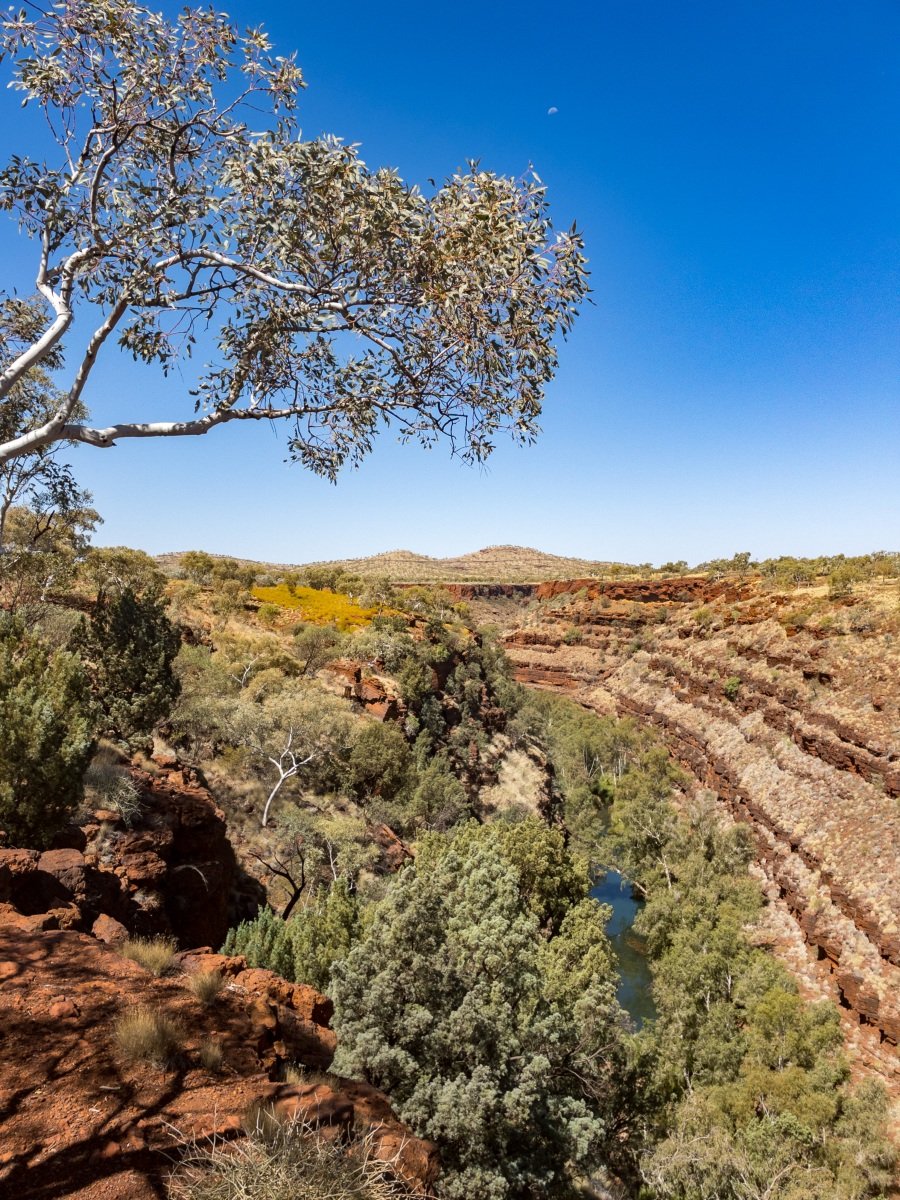
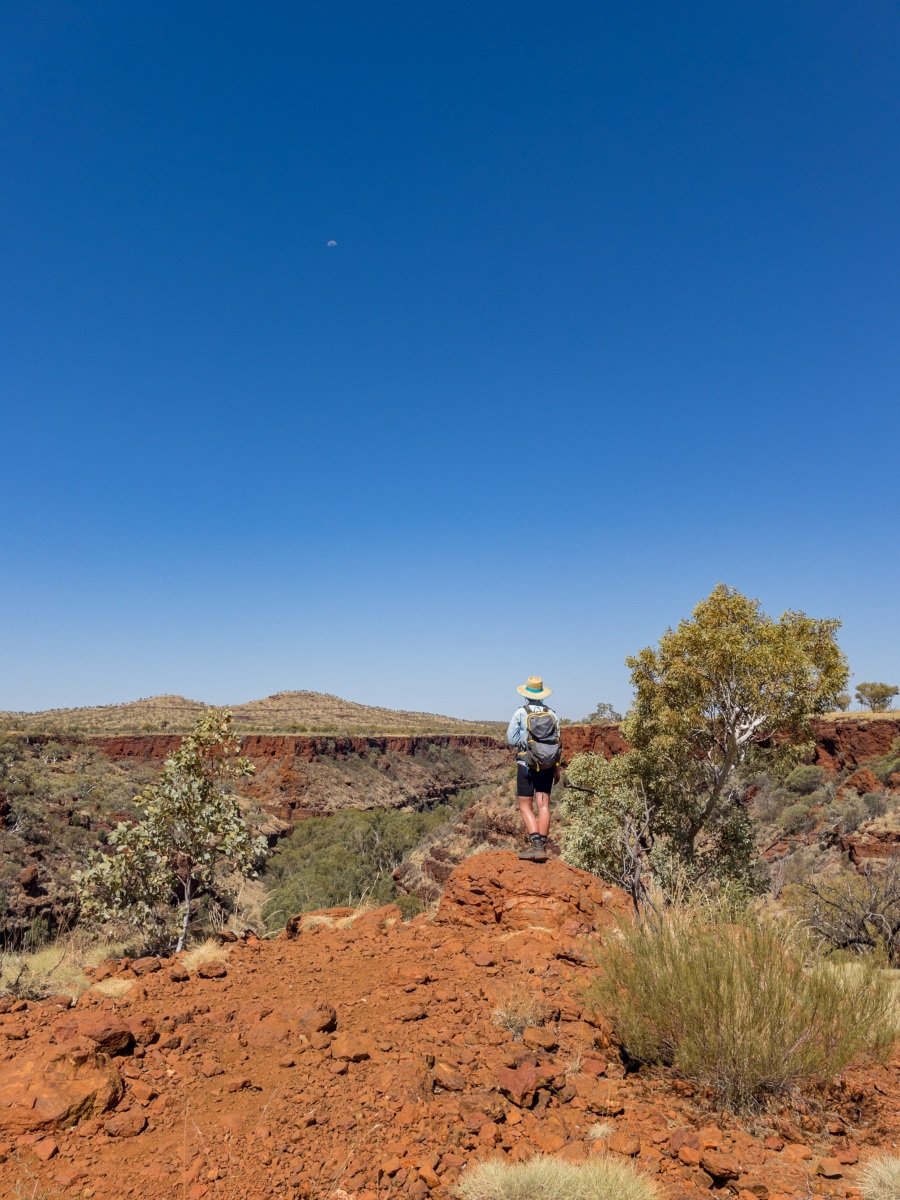
Mid-morning we head over to Dales Gorge. This is a much larger gorge than Joffre, wider, higher and longer. The same white gums line the top rim of the gorge and the very defined rock strata is also present. One of the new features here is asbestos. Naturally occurring blue asbestos is present in some areas of this gorge and I’m really curious to see it.

We walk a few kilometres along the top of the gorge before descending on rock stairs. There has been a major rock fall over one of the popular spots (Circular Pool) and the track is closed in that direction. I understand that the rock presents a crush risk, but also that lots of asbestos was disturbed and they have to make that safe too. So we head around to our right at the bottom.

Keeping our eyes open as we walk, Anna is the first to spot some asbestos layers in the rock. It’s fibrous and grey-blue, quite pretty against the other rust-red layers (though the camera doesn’t really do it justice). Once we’ve seen it once we begin so see it everywhere. In more obvious places it’s clear that people have scraped at it, we are not so bold (i.e. stupid).

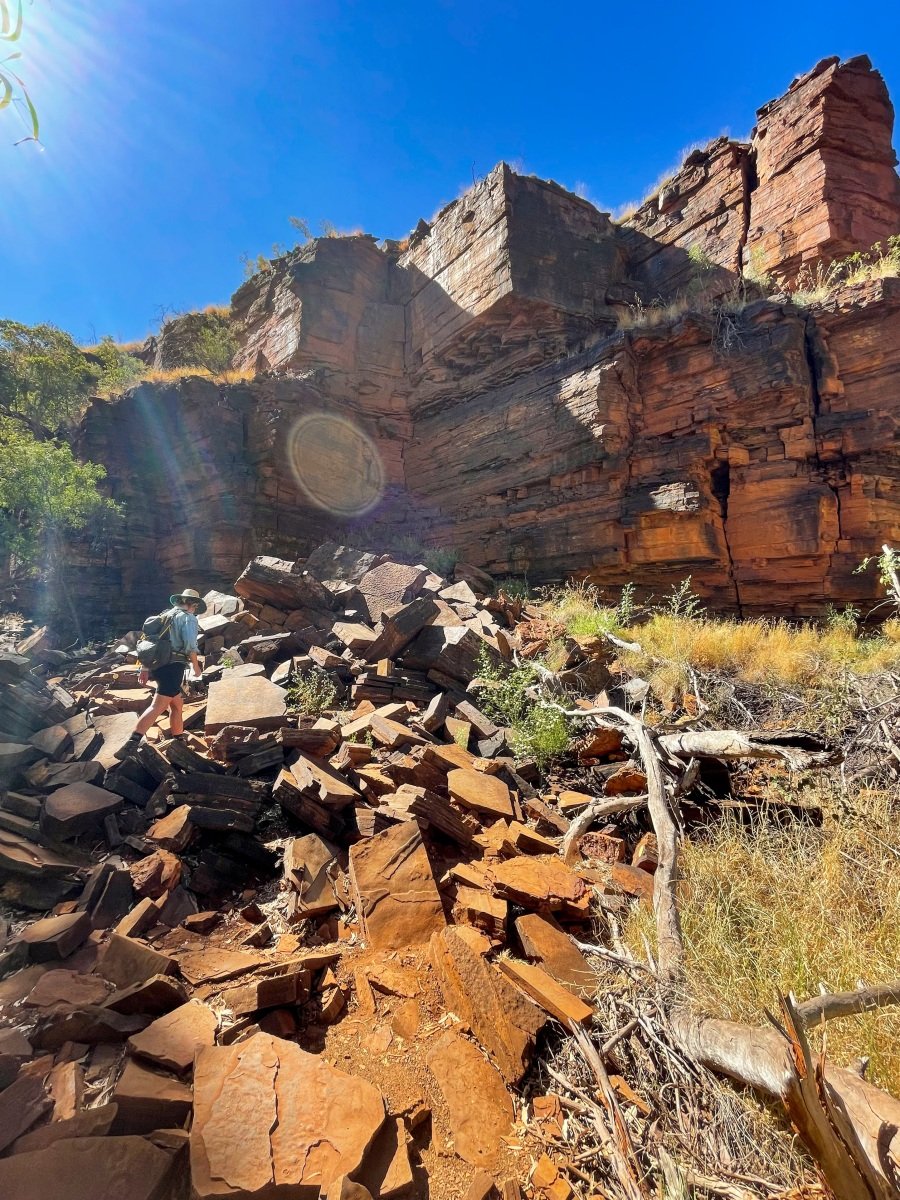
A few bends later and we have to clamber over a rock fall. The rocks have broken into perfect slabs, full of right-angles and straight lines. It’s quite unnatural looking, almost already taking on the human-made forms that the iron ore is made into.

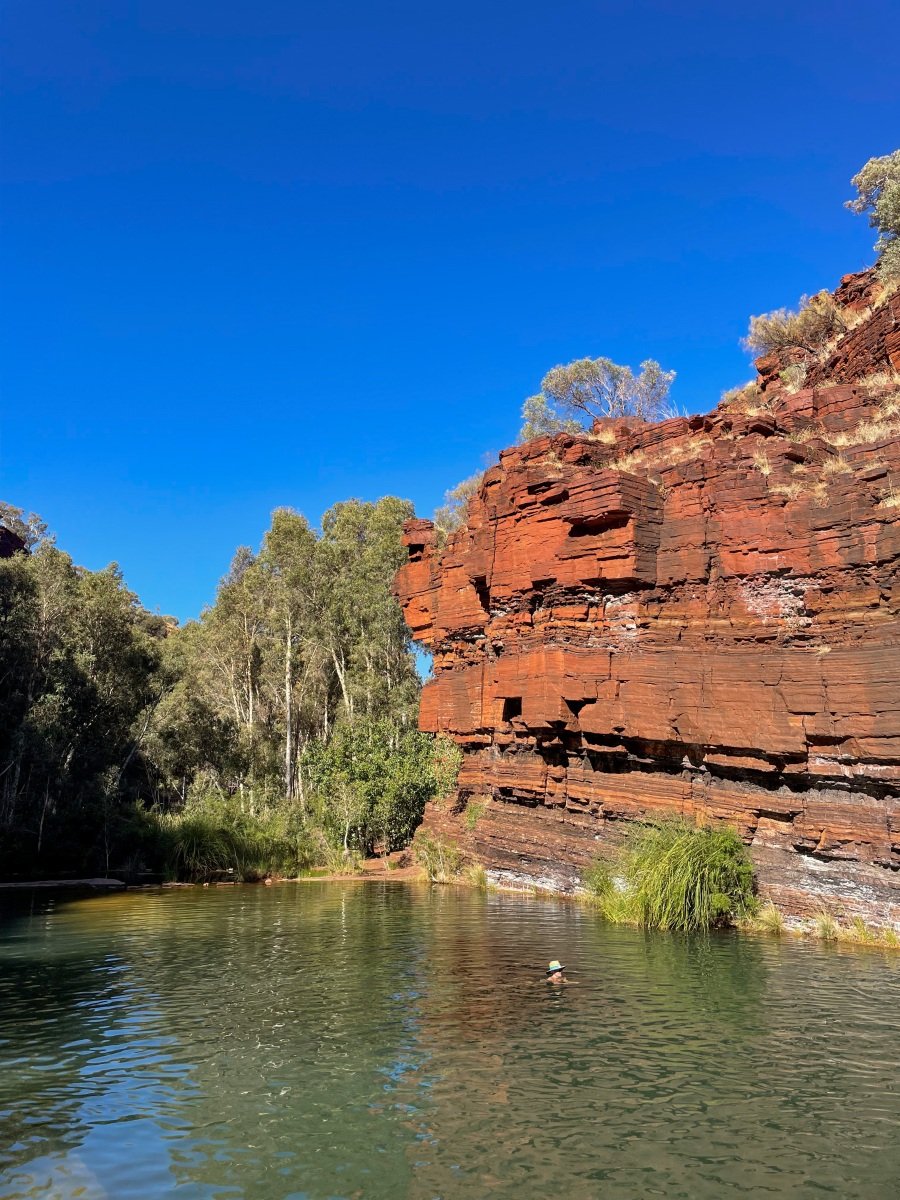
We wind through the gorge, in parts it is soften by green forest; elsewhere it is a harsh combination of water and hard rock. When the water runs higher we tiptoe on small ledges to stay dry. Quite suddenly the gorge opens right up to a big pool and an tiered-seating-like rock formation looking down on us. It’s early afternoon and about 20 groups of people and spread out looking down to the pool below them. We cross the water on a narrow path and climb as past the groups. This is Fortescue Falls.

We have now walked in a big loop back to where we started. There are access stairs from here straight to the carpark above. But before we finish walking, we head a little further along the gorge.

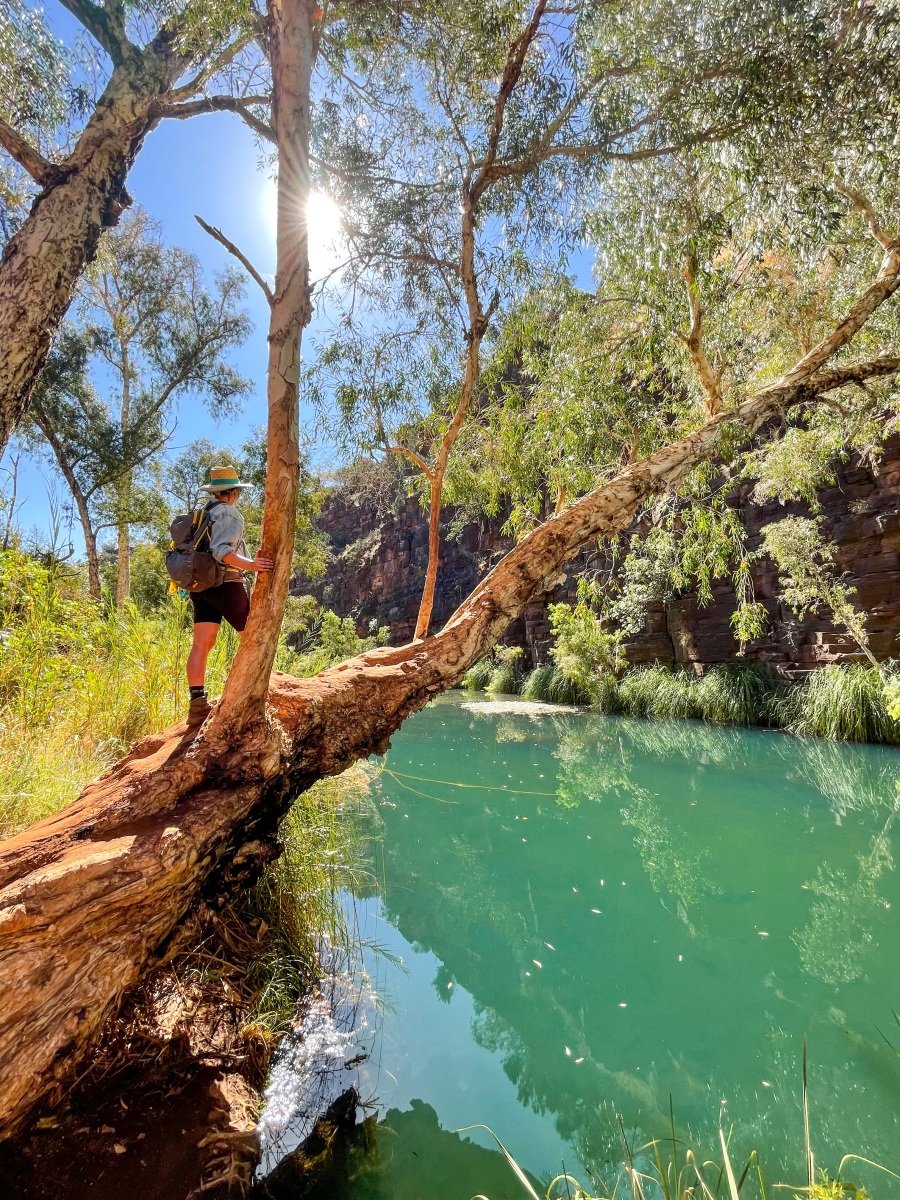
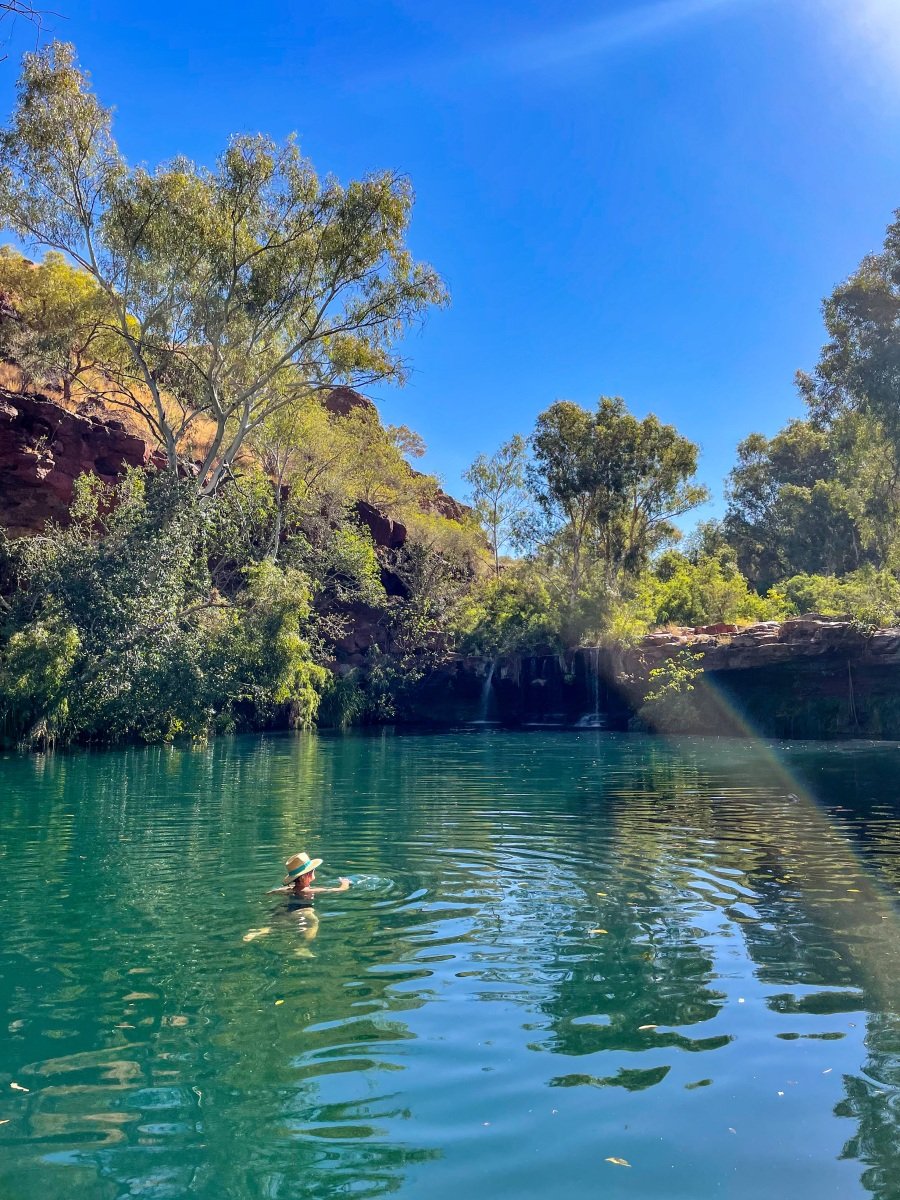
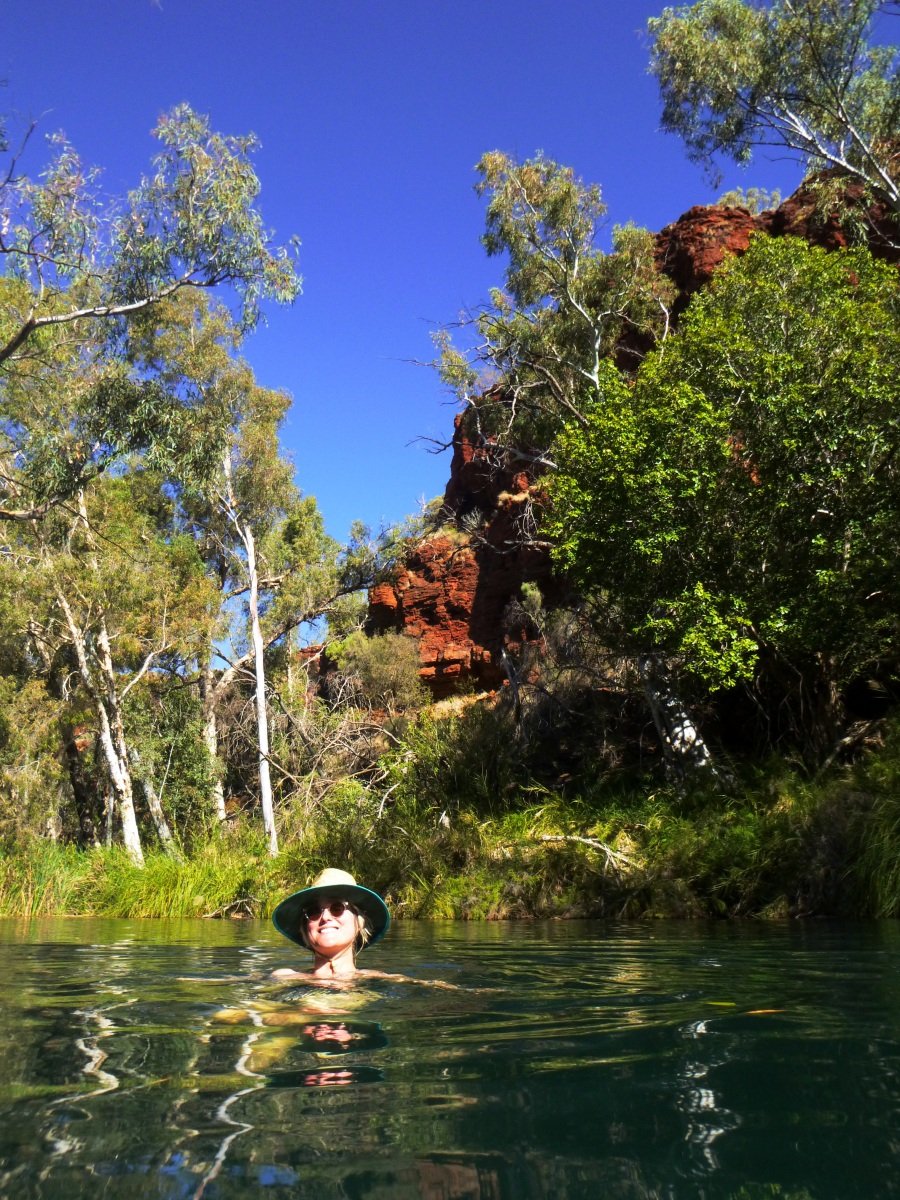
Fern Pool is about another five minute’s walk and presents a shadier place to cool off and eat some lunch. Here we change into swimmers and float about in the tree-covered waters before taking lunch.

Refreshed and rehydrated we set back to Fortescue Falls for another swim and some time to dry off in the hot sun.

Karijini’s reputation really makes sense to me now, it has been so much fun playing and exploring the gorges!

 [Click on a photo to open a full-screen slide show]
Tom Price

Time to head inland for a few days to see Karijini! And we’re ready to get back into the hiking/exploring routine. Today is mostly about getting to the visitor centre to understand road conditions, before buying food and setting up camp.

We know that access to some of the in-park campgrounds is very bad at the moment, much of the road is graded down to the limestone which makes it incredibly unforgiving. So we’re staying in Tom Price instead.

The visitor centre confirms the road conditions, and gives us some info about the ‘adventurousness’ of some of the hikes – we’re much more interested in enjoyable hikes, not higher-risk ledge-clinging acts of courage. (Call us boring, I’m okay with that)

Tom Price is a super cute looking town, and it has a kind of wholesome community feeling about it.

We’ve got a plan for tomorrow, and Anna’s cooking tonight. Excellent!

Port Headland

Driving into Port Headland initially called to mind the port in Newcastle. Arching steel structures in cross-crossed networks in front of blue water. Familiar stacker-reclaimers everywhere. Everything stained with the dust of the once-buried valuable stuff. And I’m torn between awe (ore?) at the scale and magnitude, and a kind of disgust at the impact. Something (probably that it reminds me of work!) triggers memories of the book The Unknown Industrial Prisoner and it’s oozing, dirty, unrelenting portrait of a Sydney oil refinery.

THE EFFECTS OF ENCLOSURE It had been raining for days. The world smelled like a diseased lung. The high wire fence enclosing the Refinery, Termitary and Grinding Works dripped freely in the driving rain.

Why was there no one to investigate the harm done by this high barbed wire? Sometimes it was as if the wire stretched from one side of the 350 acres of rich industrial land to the other at head height, the rusty barbs constantly threatening to furrow vulnerable human skulls. Those that were once men, and still often were when they had gone outside the blue gates, walked about with bowed-down heads as if in a vast, intimidating cathedral.

Would it be inquiring perhaps too closely to ask whether the fumes from the men’s slowly corrosive discontent were not making thinner and more brittle the wires caging them? But it was only an experimental plant; there would be more plants built and new and tougher wires extruded to hold and cage more securely these men who came daily to the blue gates offering their lives in return for the means to continue them.

The Unknown Industrial Prisoner, David Ireland

We’re staying with one of Carla’s friends, Katie, tonight. When we arrive at her house in the afternoon she offers a tour of the town. Our first stop it to pick up her daughter from a friend’s house. Katie’s warmth toward the place as she takes us around the industrial areas, to the local fishing spot, beach, jetty and water tower-come-lookout completely changes my depressing first impression. So does having a shy, giggling kid in the back to goof around with!

It’s so pleasant to stay in someone’s house – not just an airbnb or hotel. The house is a two story colorbond where the living space is open to the top of the building. Then the space is full of art like a gallery (Katie’s in the art world in Port Headland). It’s very cool.

We spend the night with the whole fam, grandparents included before retiring to bed.

18 YEARS OF ASH One of the things he found was that job-creativeness was well rewarded. Men with imagination could put pen to paper and rough in the outlines of a new job any time.

For eighteen years Ashpit Freddie, a sort of clerk, collected details of various heaps of rubbish and ash, wrote reports and supervised them in a far corner of the company’s land, tended them with a long-handled rake, kept them in order so they were a joy to him to behold, and occasionally moved them a little farther on. Sometimes he would amalgamate two or three, make the ground in between shipshape, and even requisition a helper or a new rake. He dressed neatly in a pair of overalls that were a credit to him, and made trouble for no one. At his presentation nice, wise things were said about the dignity of labour and the beauty of a labourer going to his retirement.

After he had gone, some fool cleaned up the yard with a fleet of trucks. No new ashpiles accumulated, no heaps of any sort replaced Ashpit Freddie’s. The rubbish and ash tended by Freddie were eighteen years old, the same heaps at the end as at the beginning.

In the morning we meet Katie at her work (The Junction Co) for a behind the scenes tour. Anna goes to a lovely Optometrist down the road to get some contact lenses in preparation for snorkelling. They are giving her testers because it’ll take too long to get her prescription – and they insist that they can’t charge for them – so we buy a glasses strap just so we’ve paid something!

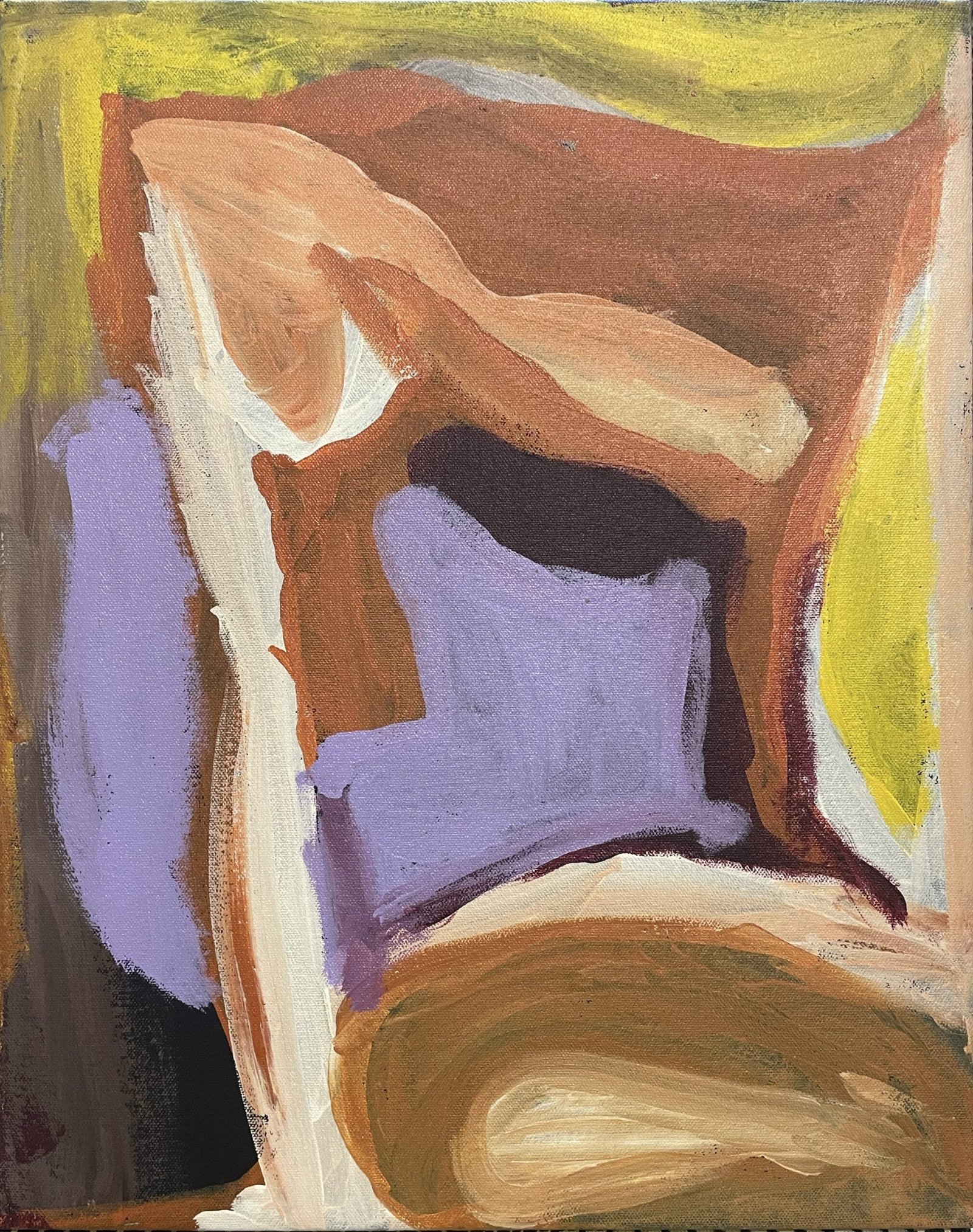
Back at the gallery one of the painting has caught our eye, so there’s another excellent souvenir.

We take a final drive by the giant salt pile on our way out…

Amy French, Martumili Artists

Salt pile

The Samurai was happy to hear the first result of the landslide. Most increases in pay had been absorbed into their above-award wages for some years until they were back on award rates; entry to the Union changed all that. The threat of a white-collar strike – unheard of – put the next wage increase into their pockets. The Samurai smiled when he thought of the distaste with which most of those trusties would have approached a defiant attitude to almighty Puroil, and of the wonder in their struggling hearts when they saw Puroil back off from all its righteous protests and offer five dollars it didn’t have.

The Samurai was a little ashamed he hadn’t stayed with them to fight, but had the good sense to realize that his action in leaving their ranks spoke more eloquently than words.

The two things were of course not connected, but shortly after this, in the interests of economy, white-collar prisoners were denied the use of their separate dining-room and were obliged to eat the company lunch in the larger mess-hall, rubbing reluctant white shoulders with storemen and packers, fitters, electricians, riggers, drivers, gardeners, drum-rollers – anyone. Khaki overalls, boots, ragged shorts and buttonless shirts, grease on the chairs, chipped tables; there was a lot to put up with. The trusties were no longer separate. The staff dining-room was no longer. And for those whose lives were bounded by Puroil and felt a glow when they saw its advertising on television and who used to feel they were dining out in society when they sat elegantly at the staff tables with no roughly dressed prisoners in sight, this was bitter punishment. To sit and lunch at their work desks in sight of the depressing evidence of their indeterminate sentence of industrial imprisonment brought on feelings too heavy to be borne and thoughts too sharp and offensive to be allowed to become conscious.

The Unknown Industrial Prisoner, David Ireland